
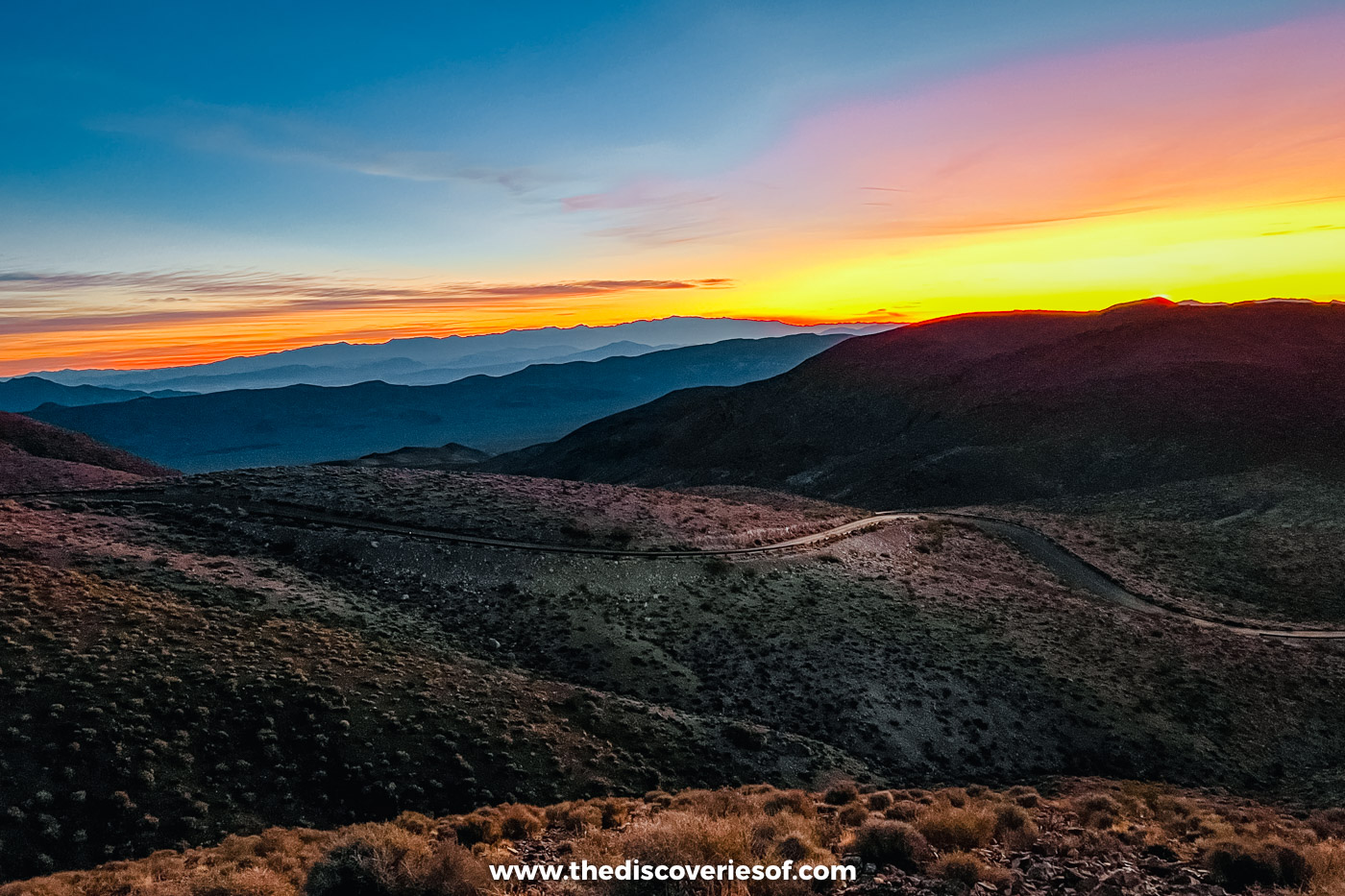

Death Valley is one of the hottest, driest places on Earth, and for an hour either side of sunrise and sunset it becomes somewhere else entirely. Here’s where to stand for each, the viewpoint I’d set an alarm for without a second thought, and what time the sun rises and sets in every month of the year.
Just imagine watching one of the most hostile places on Earth bathed in the fiery glow of a rising or setting sun. It’s imagery to rival Mad Max montages and Martian landscapes.
Sounds dramatic, I know. But, trust me, sunrise and sunset in Death Valley can take things up a notch.
I spent three days in the park on a November road trip through California, and the early starts were the part I’d repeat first. I watched the first light hit the salt flats from high on a ridge, drove down to the badlands while they were still glowing, walked out across the salt late in the afternoon and wandered the dunes in the dark. So, while there are many incredible sights to see and things to do in Death Valley National Park, catching the sun’s heavenly displays is something you shouldn’t overlook.
There can be some controversy over which places are best, though. Some argue it’s the dunes, while others will staunchly stick to Zabriskie Point as the ultimate sunrise location.
My opinion? Well, you’ll have to read on to discover that. Below are the classic spots for each end of the day, how to get to them and when to arrive, plus a month-by-month table of sunrise and sunset times at the end.
The best places to see sunrise in Death Valley
Dante’s View
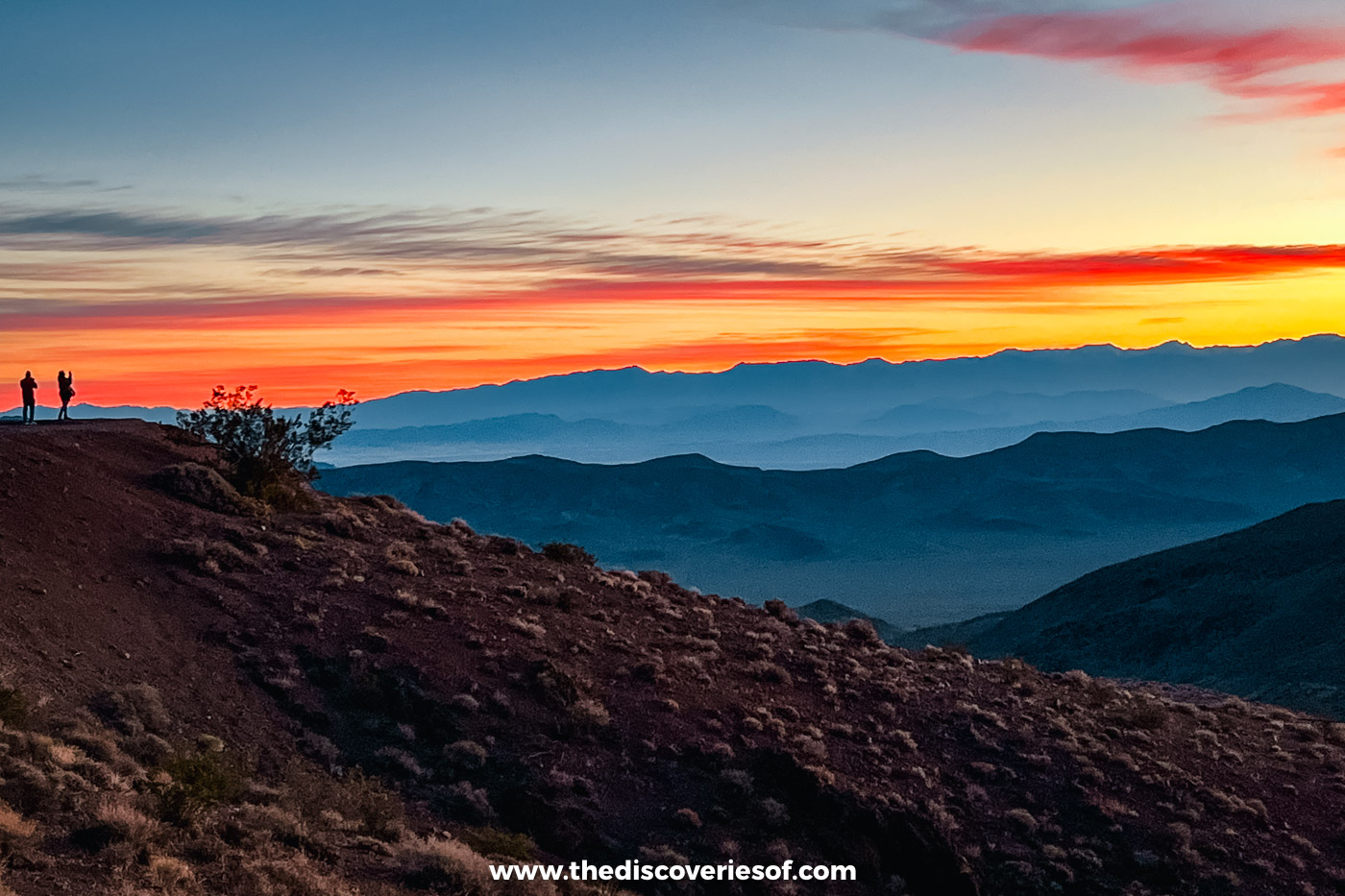
I rate this as the best sunrise in Death Valley, and it was one of the highlights of my whole trip. Dante’s View sits 5,575 feet above Badwater Basin along the ridge of the Black Mountains, with the white salt flats beneath you and the Panamint Range in the west.
It’s an ethereal place to watch colour seep back into the world, from the tips of the mountains to the swirling white basin. Because the sun comes up behind you, the show happens in front of you in stages. First the sky over the valley turns soft pastel pink and lilac, then the highest summits of the Panamints, including 11,049-foot Telescope Peak, catch the light and glow, and finally the sky to the east breaks into bands of orange and red.
I was staying over the Nevada border in Pahrump, a little over an hour’s drive away, and set my alarm for 4am to make it up here in time. Rolling out of bed in the dark was absolutely worth it. I’ll warn you, though: it is bitterly cold up here before dawn, even when the valley floor is mild. I genuinely thought my ears were going to drop off. The viewpoint is 15 to 25 degrees colder than the floor of the valley, so bring a hat, gloves, every layer you own and a flask of something hot.
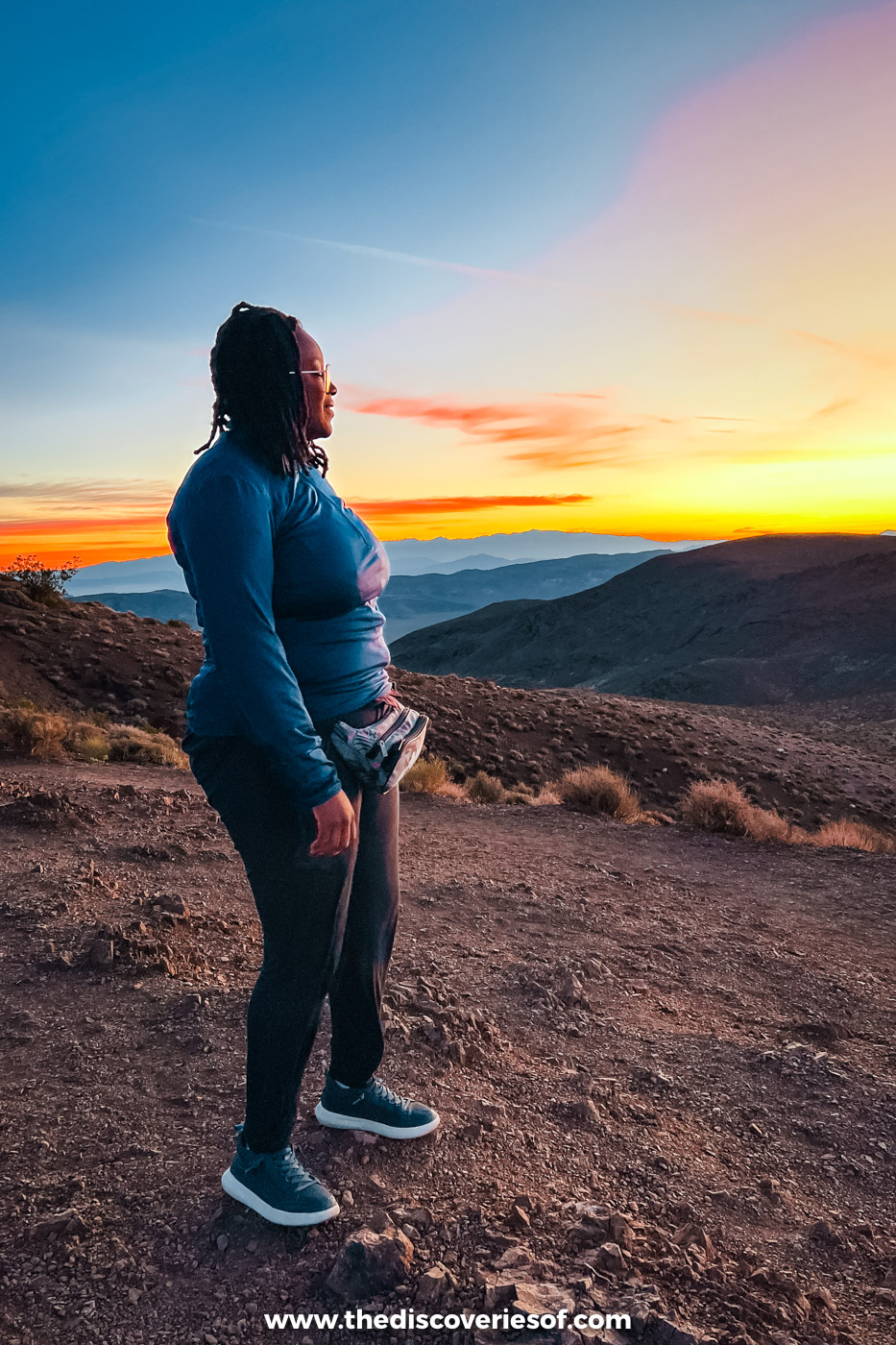
It’s a 45-minute drive from Furnace Creek, the last 13 miles on Dante’s View Road, which leaves Highway 190 and climbs steadily before a final quarter mile at a 14% grade. Vehicles 25 feet or longer (including any trailer) aren’t allowed on the last six miles. The viewpoint itself is right by the car park, with a vault toilet and a few interpretive signs, and it remains one of the most popular sunrise spots in the park for its unparalleled views.
Despite its popularity, you also won’t have trouble finding a spot to cosy down and enjoy an unobstructed view of the vista before you. A Dante’s View sunrise is something you won’t forget in a hurry.
Top Tip
If you’re here to photograph the sunrise, it’s easy to find a people-free shot, especially if you hike north a little along the ridge. The trail carries on to Mount Perry, a 9-mile round trip with about 2,100 feet of climbing, but a few hundred metres is enough to leave the crowds behind.
Zabriskie Point
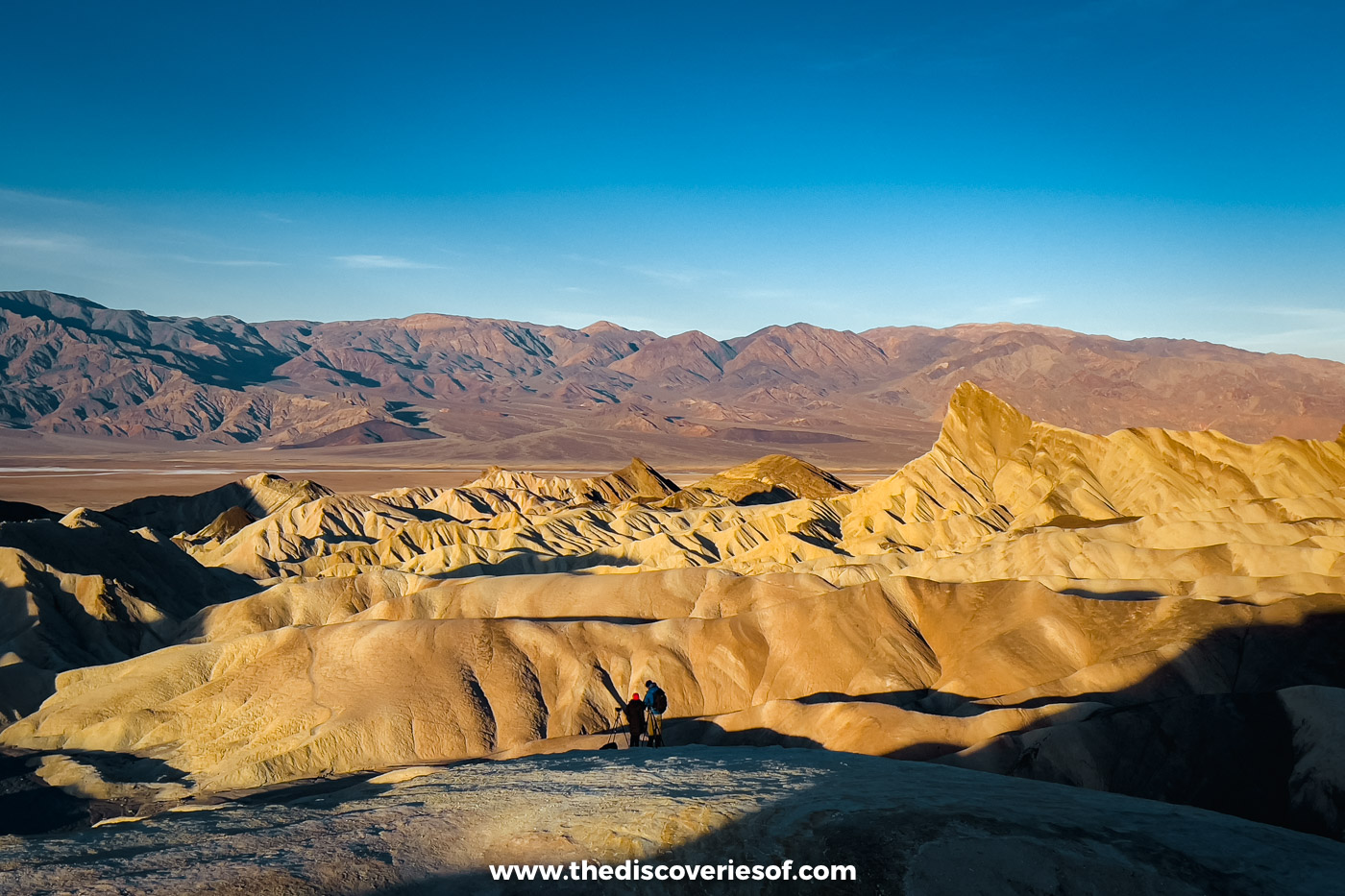
If this is your second or third time, why not consider Zabriskie Point for sunrise? The sun rises from behind you, lighting the tips of the Zabriskie rock formations on fire and slowly igniting the strata from the top down with an amber hue.
I drove straight down here from Dante’s View, about half an hour away, while the light was still low and golden, and it’s the easiest way to see both in one morning: Dante’s View for the sunrise itself, then Zabriskie while the badlands are still glowing. My hood was still up when I got there.
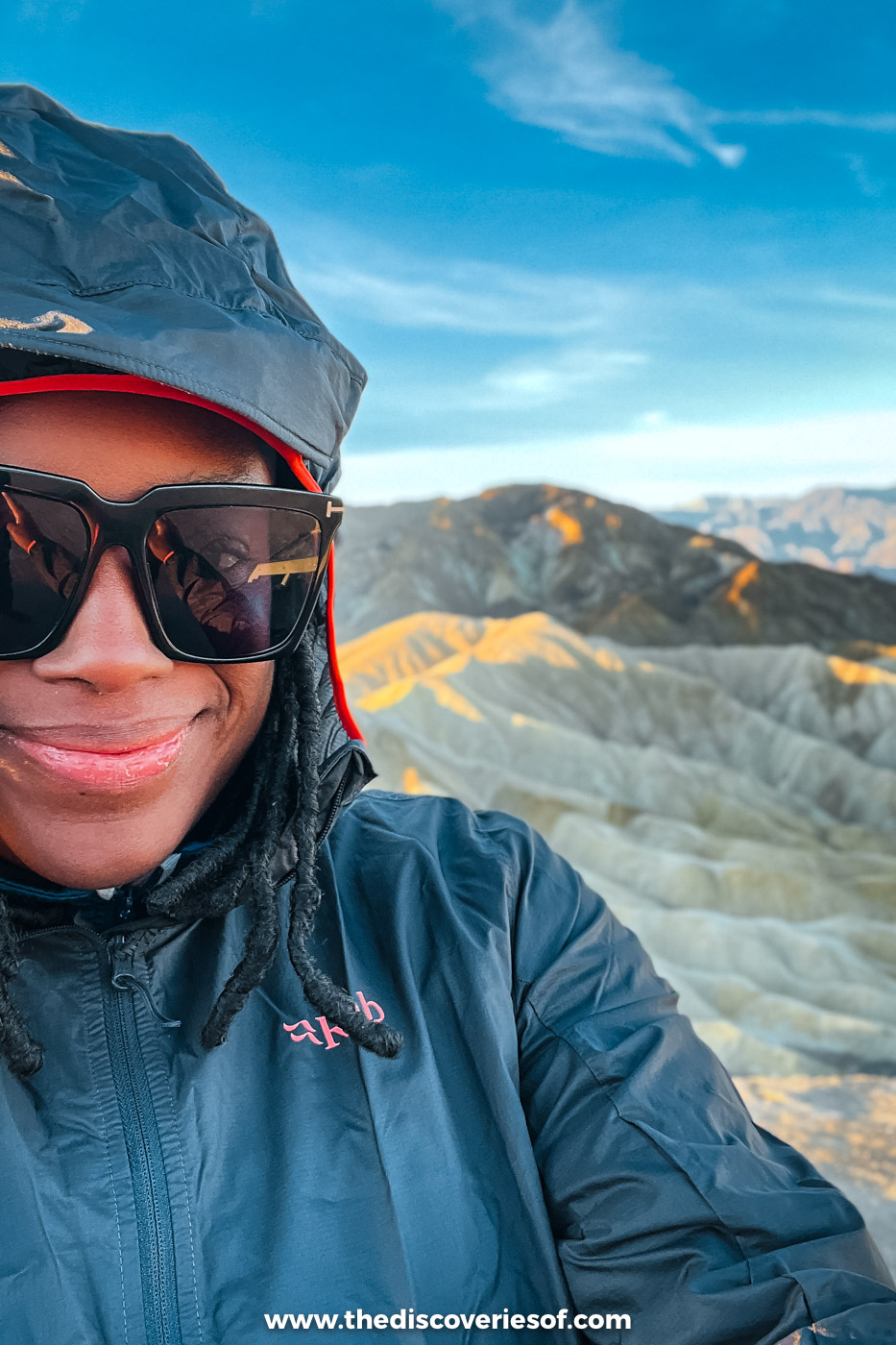
It’s fully worth the hype as one of the best sunrise locations in the park. You’ll likely see a bunch of photographers there to catch the magical landscape come to fiery life. One of the reasons it’s so popular is that it’s only a 15-minute drive from the Furnace Creek Visitor Center, and the overlook is a quarter-mile walk up a paved path from the car park.
The other reason is the play of light and shadow across the badlands and salt flats in the background, with Manly Beacon, the 823-foot shark fin of a peak in the foreground, catching those first golden rays. The view works at sunset too, when the badlands turn a deeper gold, so if you only have one evening near Furnace Creek, it’s a good fallback.
Top Tip
This is the busiest sunrise spot in the park, so even if you arrive early, you might get your view spoiled by people hopping over the lookout fence in front of you. For a quieter angle, walk a few minutes along the Badlands Loop Trail, which starts from the same car park and drops down among the ridges.
Mesquite Flat Sand Dunes
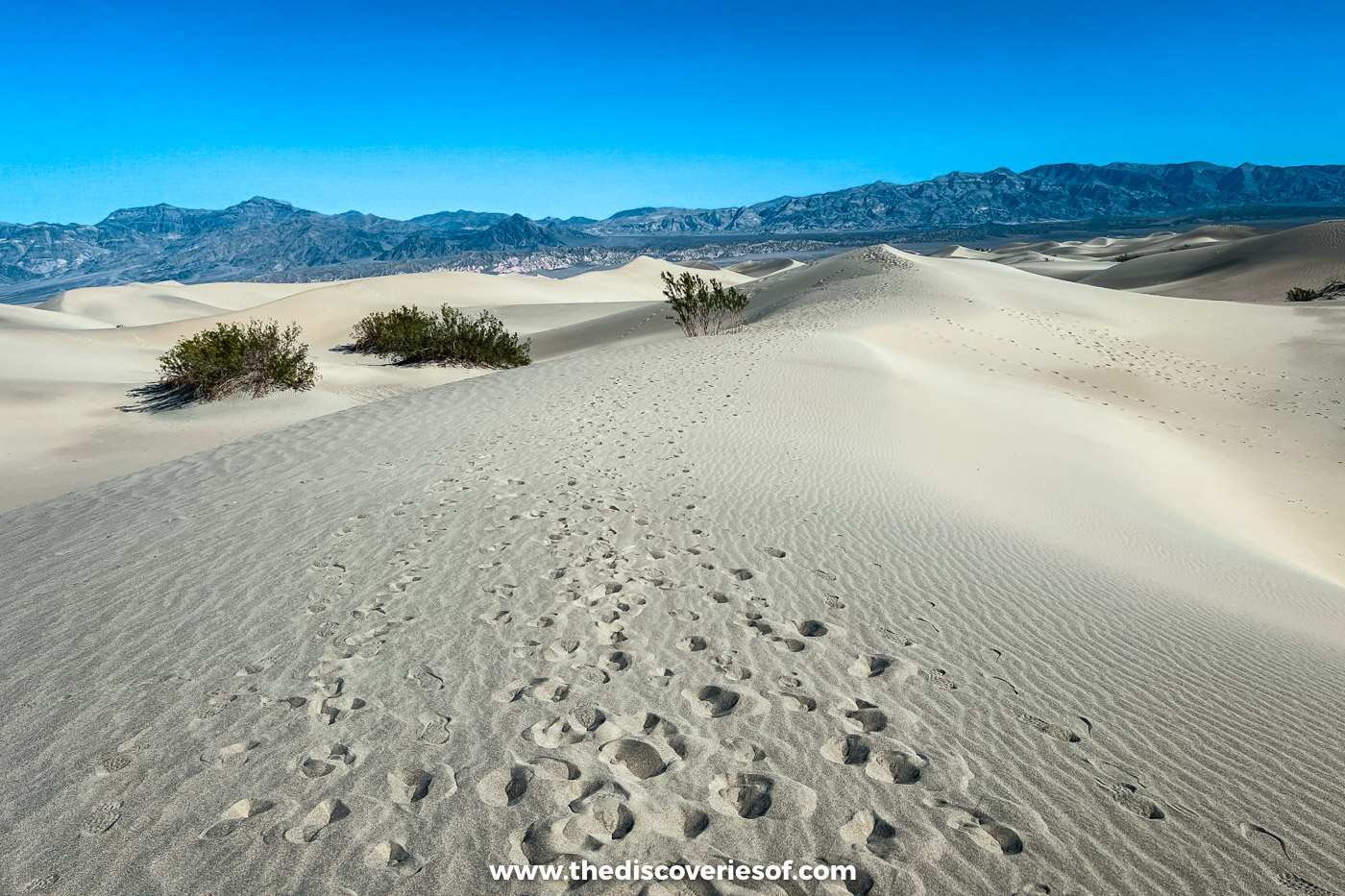
An underappreciated but beautiful spot for sunrise is the Mesquite Flat Sand Dunes, just east of Stovepipe Wells and about 30 minutes’ drive from Furnace Creek.
You only need to walk about 100 yards from the car park to find a decent viewpoint, but you can also arrive earlier and climb to the top of the main dune. There’s no trail: the walk to the tallest dune is about two miles there and back, with around 185 feet of climbing, and you pick your own route across the sand.
Watch the mountains in the background change from purple to pink, then the dull desert ocean of sand with cresting dune waves come to life with warm light and shadow. There’s also plenty of space to spread out even if there are other sunrise seekers there, so you’re practically guaranteed a good show. Low sun is what makes the ripples and ridges stand out, which is why the dunes are just as popular at sunset.
While climbing the dune seems like the best vantage point for the sunrise, I actually think that the view from the bottom is better. And if you can, come back after dark too. The dunes completely transform at night, and walking out onto them in the dark left me speechless, which is quite the feat.
Top Tip
Footprints from the day before fill the dunes nearest the car park, so if you want smooth, unmarked ripples in your photos, walk out further, and go at first light, before anyone else has. There are vault toilets in the car park; pets aren’t allowed on the dunes.
The best places to see sunset in Death Valley
Badwater Basin
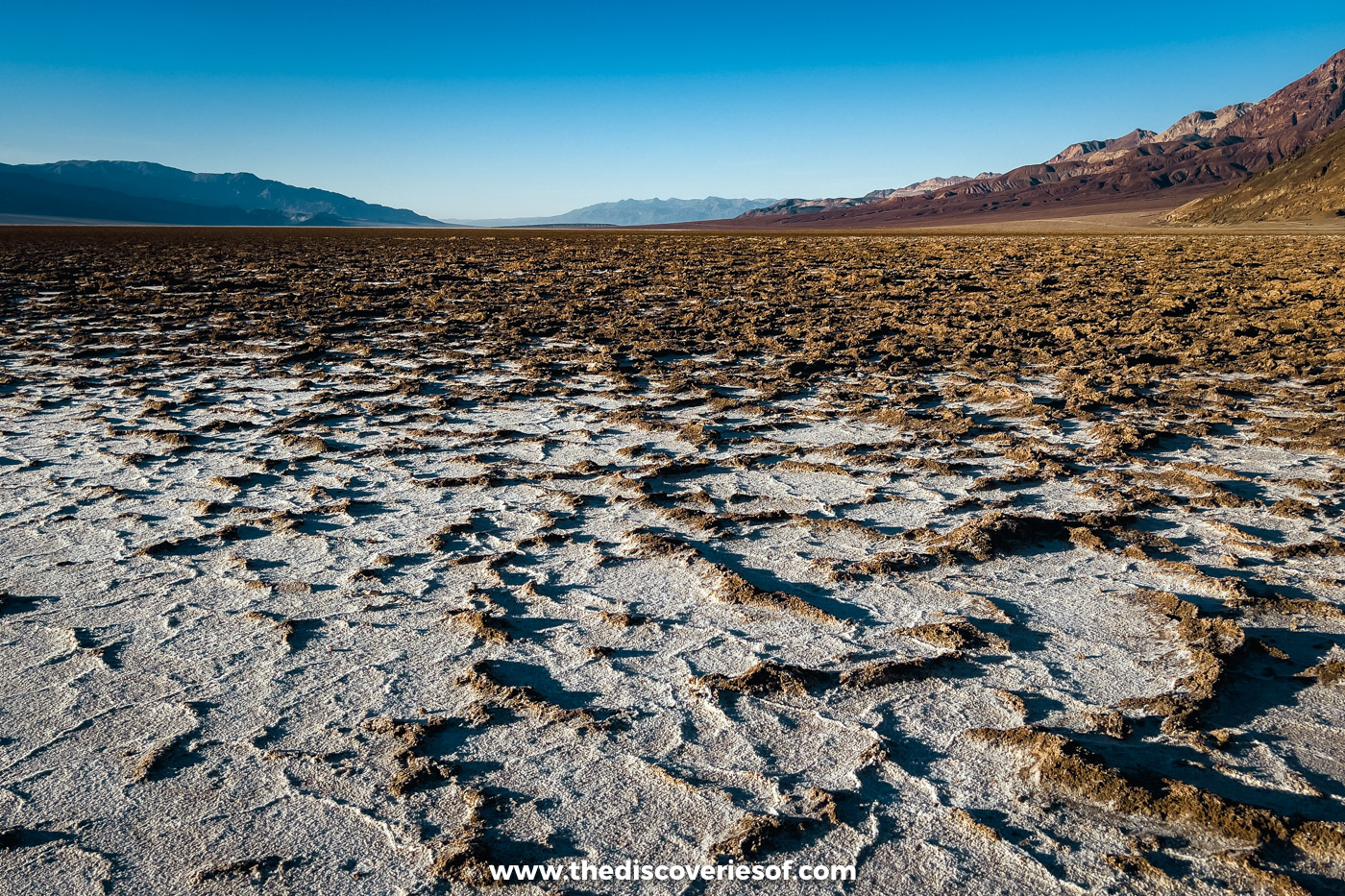
Badwater Basin is the lowest point in North America, 282 feet below sea level. Look up at the cliffs behind the car park and you’ll spot a small sign marking where sea level would be. But the beautiful salt flats that make up its floor will enhance your sunset adventures.
The reflection of the vibrant, fiery sky in the honeycombed salt flats is magical to witness up close. It’s even better if there are scattered clouds. This is a “grab your camera” type of deal and possibly the best sunset spot in the park. As the sun drops behind the Panamints, their shadow races across the salt towards you while the Black Mountains above the car park glow orange.
If you’re like me, you’ll want to go beyond the boardwalk. I walked the 1.8-mile route out into the heart of the basin, where the crust breaks into the hexagonal polygons you see in photos. The National Park Service puts the best polygons at a round trip of 1.5 to 2 miles onto the flats. Make sure you arrive about one to two hours ahead of the sunset, so you have plenty of time for the walk out and to pick your spot.
Badwater is about 17 miles, or 30 minutes, south of Furnace Creek on Badwater Road, with a paved car park and a vault toilet. In summer, the park advises against hiking after 10am, so save it for the cooler months or a short wander at dusk.
Top Tip
Bring a light jacket for the walk back, as the temperatures will cool as soon as the sun goes down. A headtorch helps too: the salt is flat, but the car park is a long way off once it’s dark.
Artist’s Palette
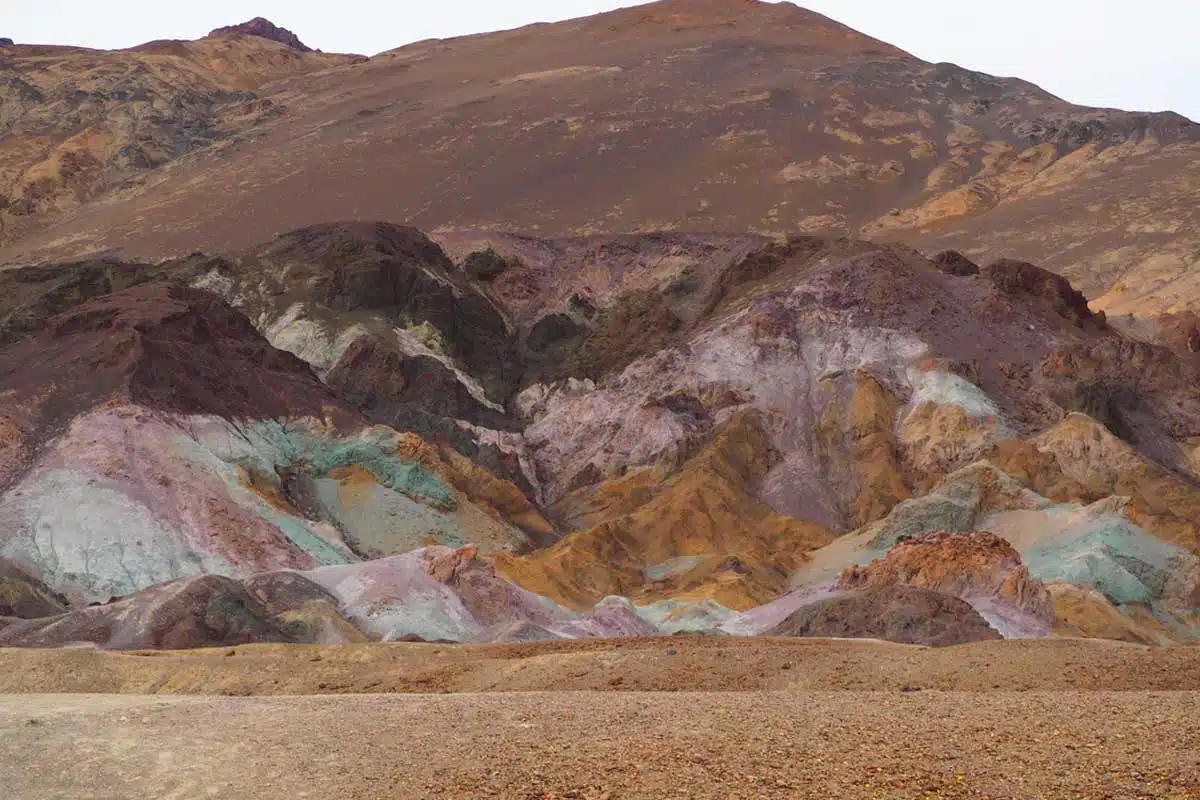
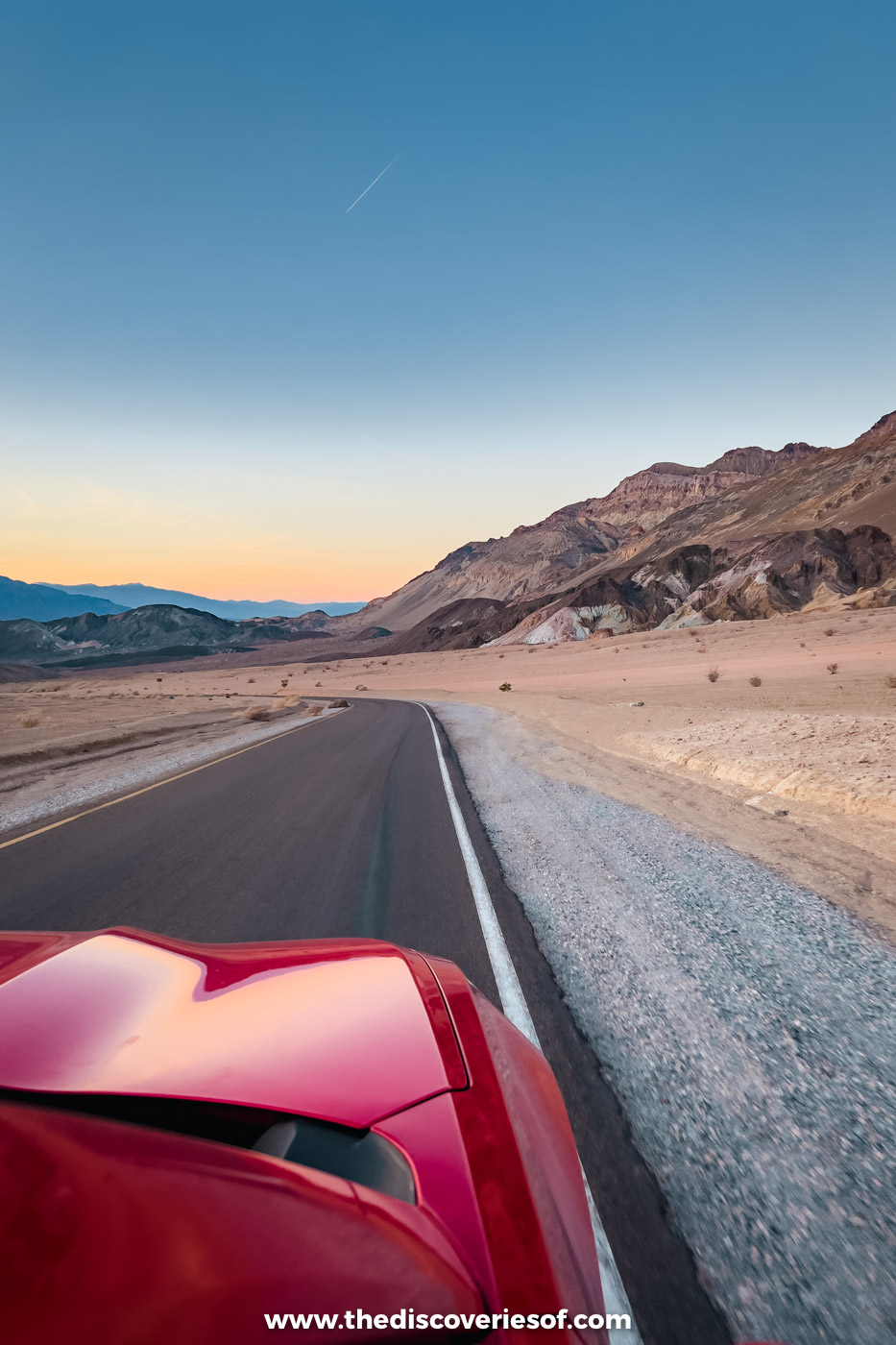
At Artist’s Palette, sunset is the best way to enjoy its unique colouring.
The sunrise simply washes out the beautiful blue, pink and purple hues, while the golden hour of sunset enhances them. Not to mention with scattered clouds in the sky, you’ll have the most intriguing melting of colours in both sky and earth. The colours come from minerals in old volcanic deposits: iron makes the reds and pinks, and the greens come from decomposing mica.
The westward orientation of the sunset also provides a dynamic show of light and shadow on Artist’s Palette, showing it off at its best. You’ll also be able to enjoy a background of the Black Mountains and white salt flats glowing in the last rays of light.
Artist’s Palette sits along Artist’s Drive, a 9-mile paved, one-way loop off Badwater Road a little south of Furnace Creek. Driving it was another of my highlights in the park. The road twists and dips through the hills, with a short spur to the Artist’s Palette car park along the way. Vehicles must be under 25 feet long, so large RVs and trailers can’t use it.
Top Tip
There are no maintained trails, but you can walk about the area away from the main car park and choose your ideal spot. Time it so you’re at the palette for the last hour of light, then finish the loop before dark.
Aguereberry Point
For a sunset with almost nobody else around, head up into the Panamint Range to Aguereberry Point. At 6,433 feet, it looks east over the whole of the valley: Furnace Creek, the salt flats of Badwater and the Funeral and Black Mountains beyond, which turn pink and orange as the sun sets behind you.
It takes some getting to. The point is at the end of a 6.4-mile unpaved road off Emigrant Canyon Road, which passes the remains of the Harrisburg mining camp on the way up. A high-clearance vehicle is recommended: there are rocky stretches, and the last half mile is steep and rough. Allow well over an hour from Stovepipe Wells, and leave yourself time to drive the dirt section back before it’s fully dark.
Top Tip
Check the park’s road conditions page before you set off. The backcountry roads in the Panamints can wash out after storms, and snow and mud are common in winter.
Dante’s View
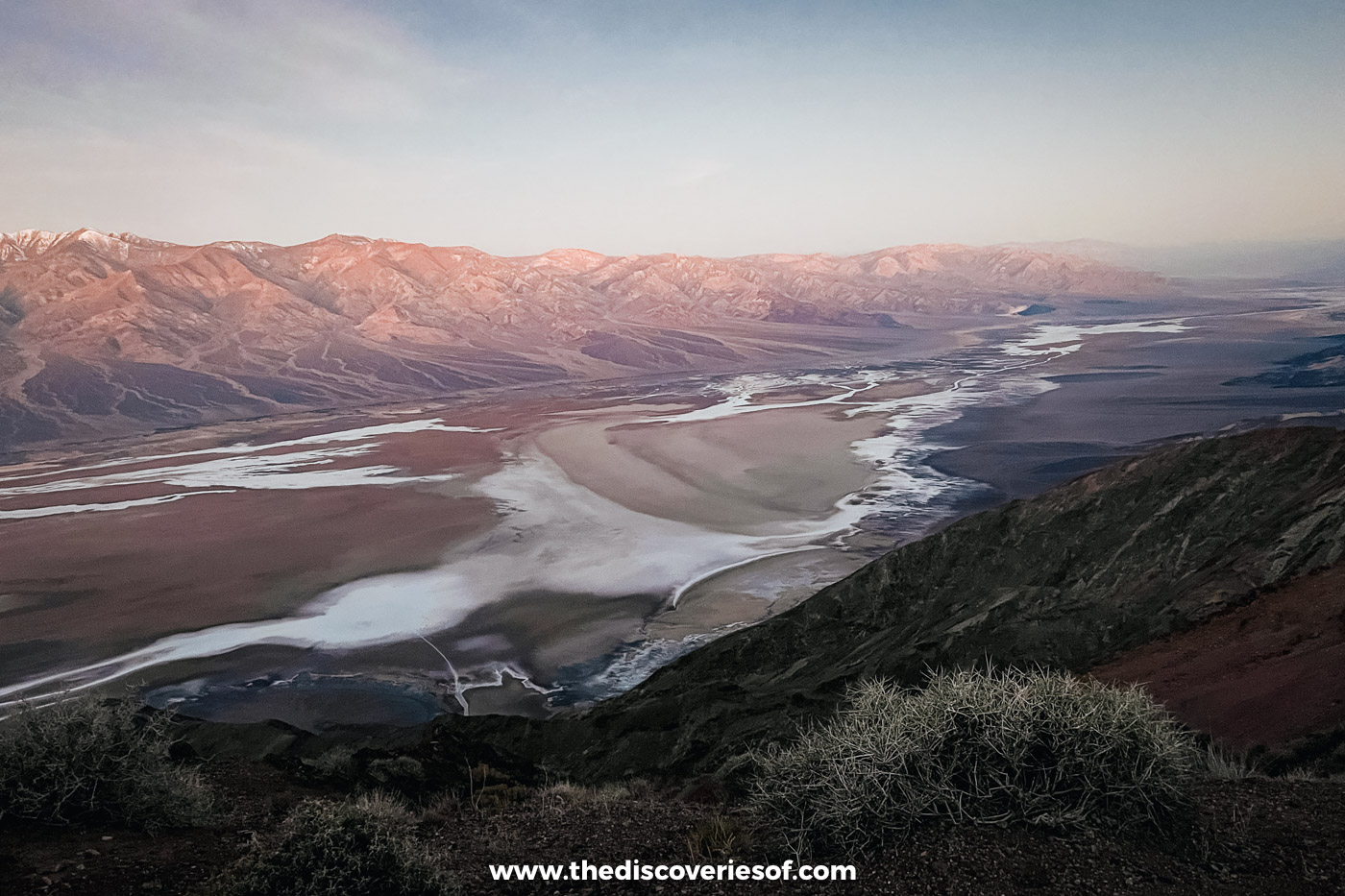
Yes, Dante’s View again. But it makes for one of the best sunset spots in the park too, so I couldn’t leave it out. This time, the sun will be in front of you, slipping behind the Panamint Range and setting the salt flats on fire. Cloudy evenings can be the most spectacular of all.
Stick around to watch the stars begin to twinkle. Death Valley is an International Dark Sky Park, one of the darkest places in the US, and this is a popular stargazing spot. The nights I spent watching the sky in the park were some of the most memorable of the whole trip, and my guide to stargazing in Death Valley covers where and when to go.
The drive down is the catch: the road is steep and winding, so take it slowly in the dark and watch for wildlife.
Do
If you’d rather not drive the park’s roads after dark, sunset and stargazing tours run from Las Vegas, usually taking in Zabriskie Point, Badwater and Dante’s View, with a guide and telescope for the night sky. Browse the Death Valley tours on GetYourGuide.
Practical tips for catching sunrise and sunset
- Arrive early. Aim to be in place at least 45 minutes before sunrise or sunset: the best colour often comes in the half hour before the sun appears, or after it has gone. Some of these spots get crowded quickly, and you don’t want to miss the show because you’re waiting on a parking spot.
- Wear plenty of layers. It’ll surprise you how cold the desert gets in the dark hours before and after sunrise, but the temperature can be high when the sun is up.
- Wear good hiking shoes to manage the terrain well in the dark, and pack a headtorch.
- Pay the entrance fee before you go. It’s $30 per vehicle, valid for seven days, and the park takes cards and digital payments only, no cash. Buy it online or at the Furnace Creek Visitor Center; an America the Beautiful pass covers it too.
- Check the road conditions page on the park’s website the day before, then fill up and download your maps. Flash floods close roads at short notice (Scotty’s Castle remains closed for flood recovery), phone signal is patchy at best and fuel inside the park is expensive.
- Base yourself close to the spots you want. Furnace Creek puts you nearest Zabriskie, Badwater, Artist’s Palette and Dante’s View, Stovepipe Wells is next to the dunes, and Pahrump, where I stayed, is cheaper but over an hour’s drive to most viewpoints.
Sunrise and sunset times in Death Valley by month
Death Valley is on Pacific Time, the same as Las Vegas, so your clock won’t change on the drive in from Nevada. Clocks go forward on the second Sunday in March and back on the first Sunday in November. The times below are for the middle of each month at Furnace Creek; they shift by a minute or two each day, so check the exact time for your date before you go. The mountains also play a part: on the valley floor, the sun clears the Black Mountains a little after the official sunrise and drops behind the Panamints a little before the official sunset.
| Month | Sunrise | Sunset |
|---|---|---|
| January | 7am | 4.55pm |
| February | 6.35am | 5.30pm |
| March | 7am | 6.55pm |
| April | 6.15am | 7.20pm |
| May | 5.40am | 7.45pm |
| June | 5.30am | 8.05pm |
| July | 5.40am | 8.05pm |
| August | 6.05am | 7.40pm |
| September | 6.30am | 6.55pm |
| October | 6.55am | 6.10pm |
| November | 6.25am | 4.40pm |
| December | 6.50am | 4.35pm |
The coolest months, from November to March, are the most comfortable for early starts and late walks, and the short winter days mean you don’t have to get up quite so early. In summer, sunrise comes before 6am and the valley can still be well over 90°F at sunset.
Map
Read next
- Unmissable things to do in Death Valley
- Badwater Basin: the Death Valley salt flats
- A guide to stargazing in Death Valley
- 3 days in Death Valley: the perfect itinerary
- The best hikes in Death Valley
- Mesquite Flat Sand Dunes: exploring Death Valley’s dunes
Love this? Save and share on Pinterest

Discover the top things to do, insider tips and hidden gems in our USA Travel Guides.
Read the guides →




