
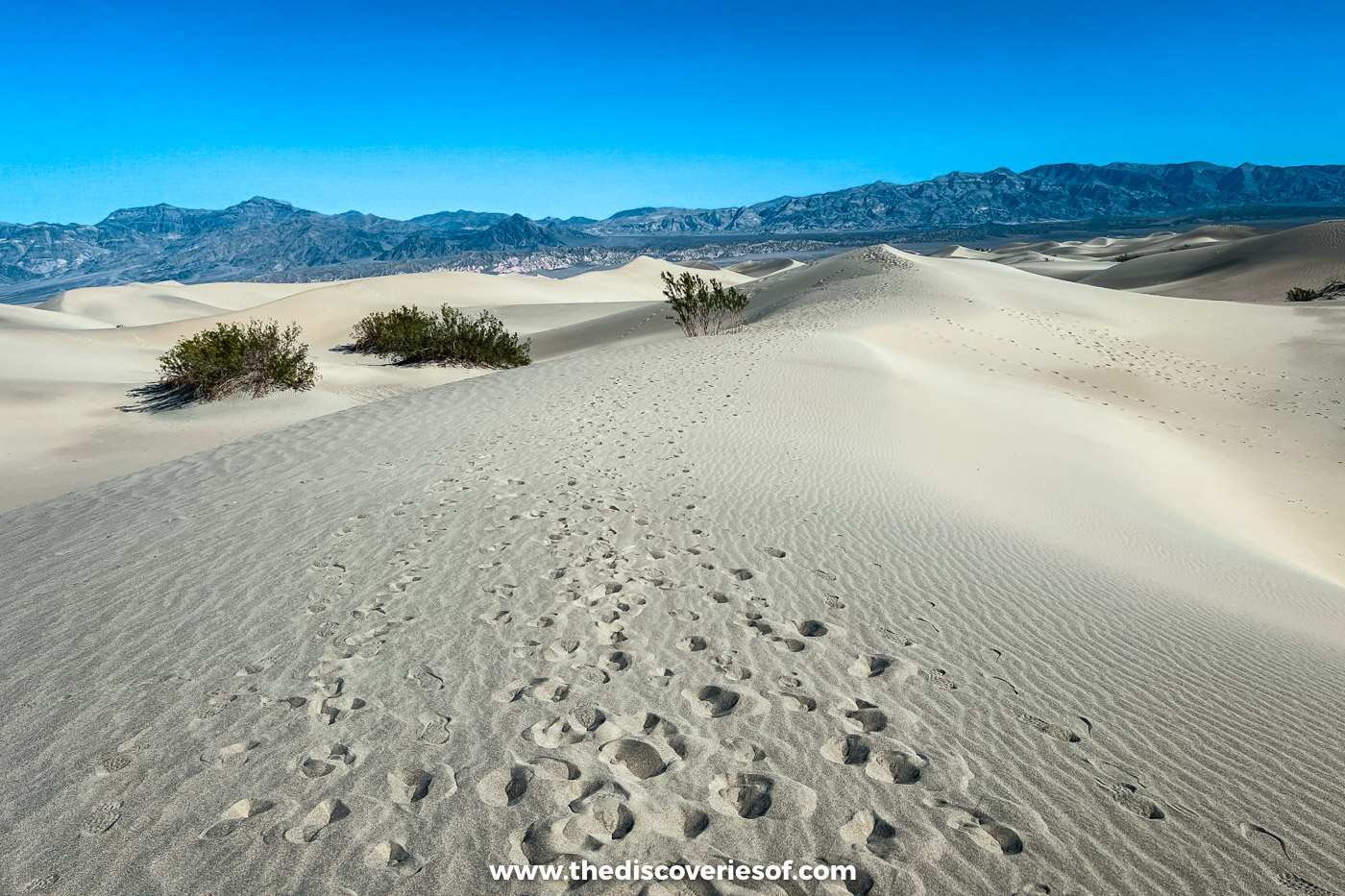

Heard of the Death Valley sand dunes? The most famous of them sit right beside the main road through the park, and you can be out on the sand a minute after leaving your car.
The idea of visiting “Death Valley” might not sound too enticing, but there’s one major reason why you should visit Death Valley National Park: the epic Mesquite Flat Sand Dunes.
Death Valley is an absolute must on any California road trip, and there’s no better introduction to the area than these dunes (you’ll also see them called the Mesquite sand dunes).
I had three days in the park during a November road trip, with Pahrump, over the Nevada border, as my base. I walked out onto the dunes on a cloudless mid-morning, then came back once the sun had gone to stargaze from the sand. Those two visits felt like two different places.
Why the Mesquite Flat Sand Dunes stand out
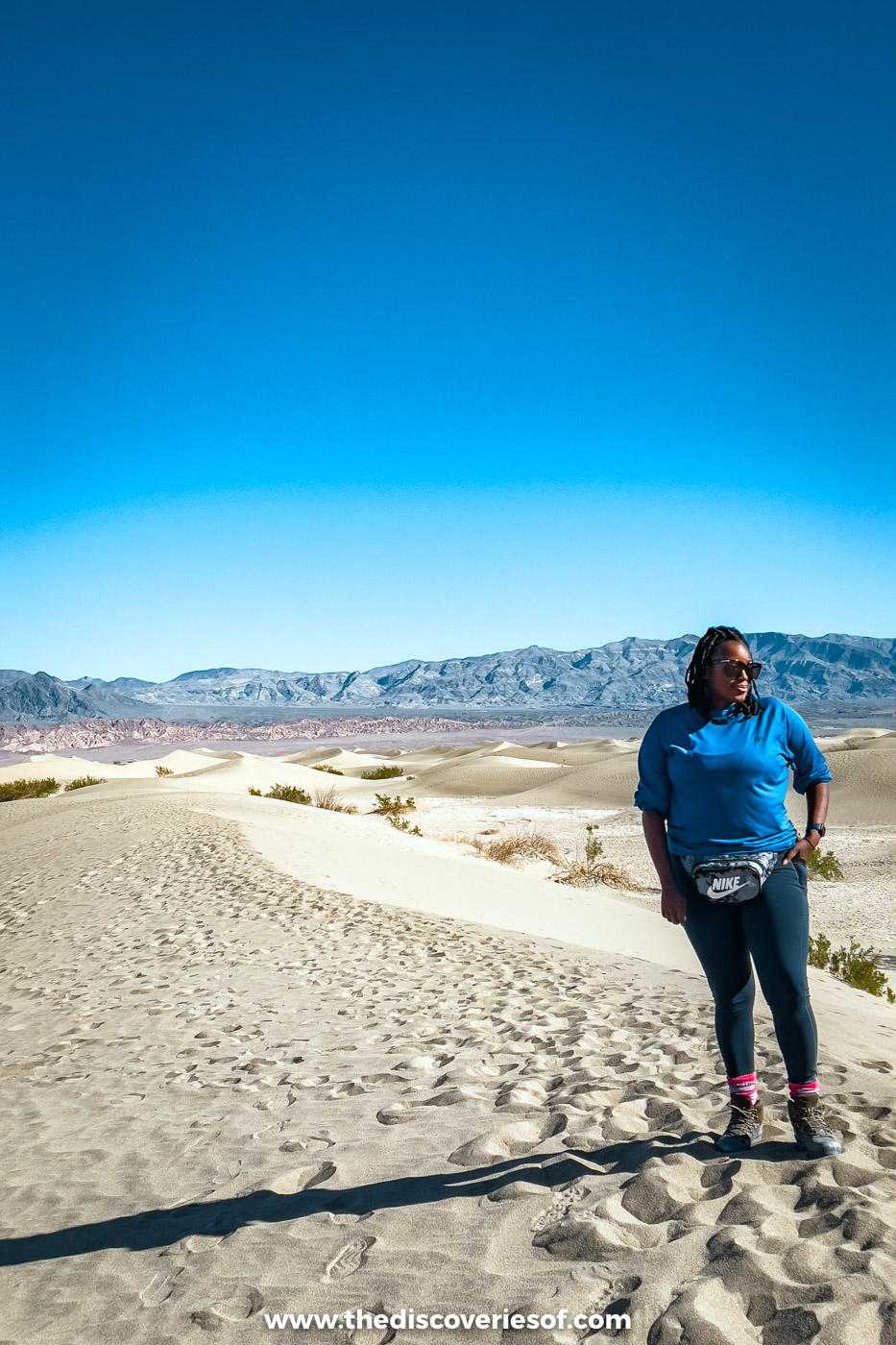
I won’t lie to you; there are other sand dunes in Death Valley National Park that you could visit (four to be exact: Eureka, Saline Valley, Panamint and Ibex). So you might be thinking: what makes the Mesquite Flat dunes unique?
Well, lots of things, actually. For a start, they’re the easy ones. The others are remote: I’ve climbed the Eureka Dunes in the far north of the park, and getting there takes a long drive, much of it on unpaved roads. Mesquite Flat is in the centre of the park, with a paved car park beside the highway.
The main reason to visit these dunes, though, is the dramatic shadow display at sunrise and sunset, when a spectacular display of colour with long shadows and soft light highlights the ripples in the sand.
At night, the area completely transforms once again. Walking out onto the sand in the dark left me speechless (quite the feat). The park is a Gold Tier International Dark Sky Park, so the night sky is extraordinarily clear, and I highly recommend sticking around for this after you’ve watched the sunset…
…Just beware of the rattlesnakes in the summer.
Speaking of snakes, if you’re into wildlife, then this is one place you want to visit. The dunes are home to some surprising creatures, including sidewinder rattlesnakes and nocturnal kangaroo rats (surprisingly adorable).
And last but not least, Mesquite Flat is one of only two dune fields in the park where you’re allowed to sandboard down the slopes. And what could be more fun than that? While tricky to master (I’ve not quite managed to get the hang of it yet), it’s one of the coolest things to do in California. I recommend giving it a go.
How a sea of sand ended up in the middle of the valley
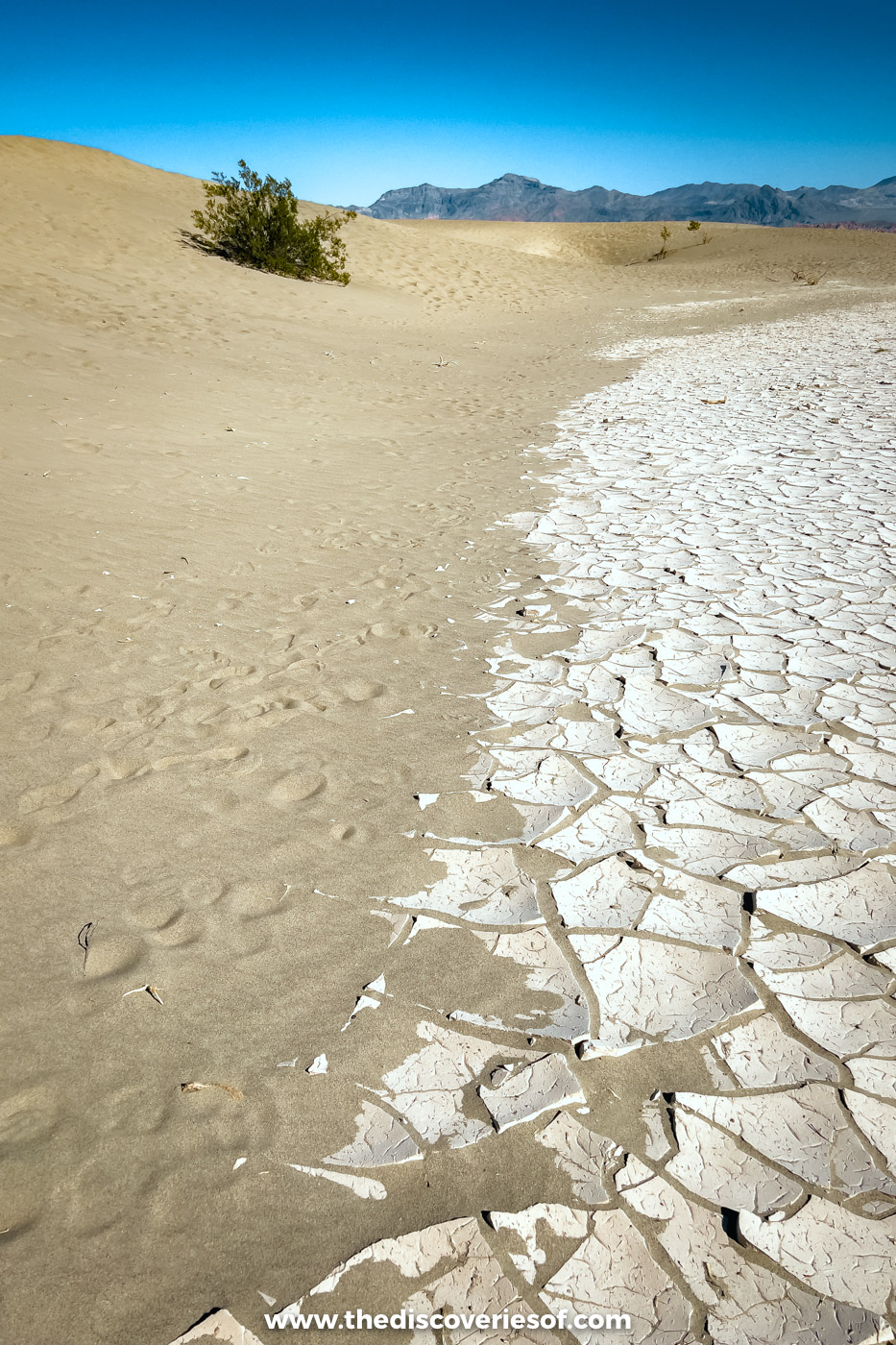
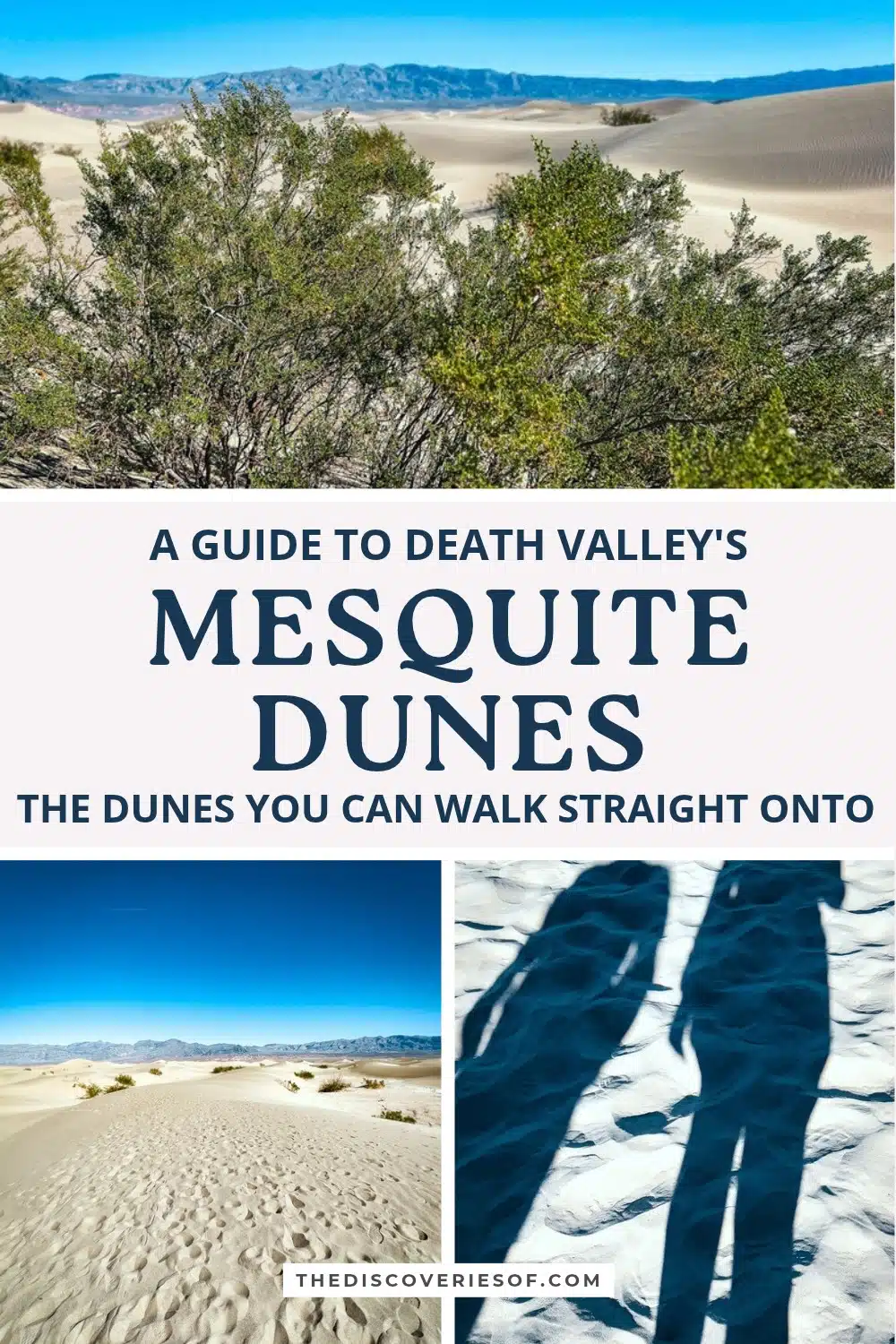
The location is perfect for creating dunes that last. Sand eroded from the mountains to the north washes onto the valley floor, strong winds carry it south, and the mountains to the south stop it blowing away completely, et voilà: the result is the Mesquite Flat Sand Dunes. Crescent, linear and star-shaped dunes sit within walking distance of each other, the highest about 100 feet tall, and between them you’ll see the polygon-cracked clay of an ancient lakebed.
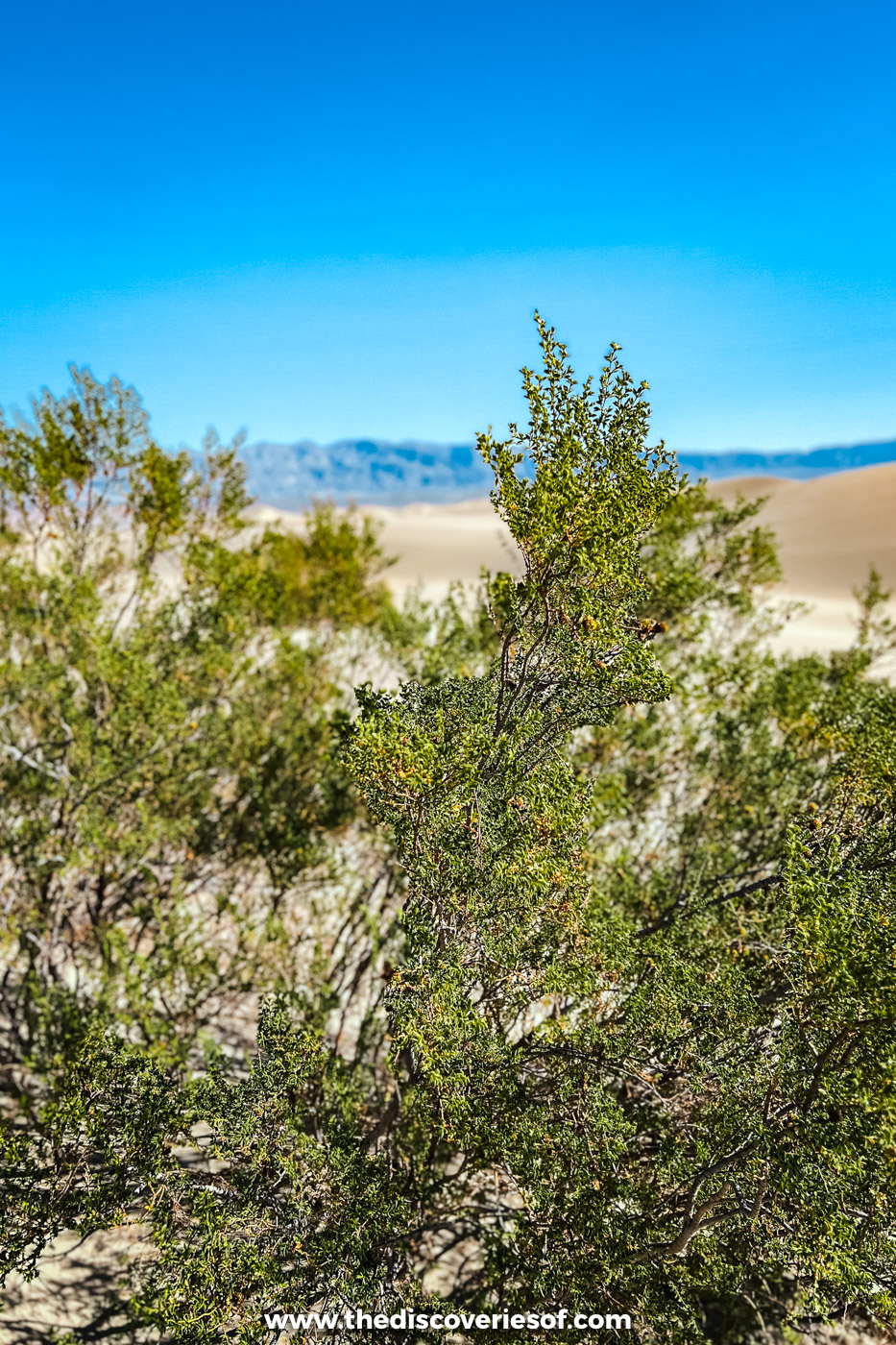
The dunes take their name from the mesquite trees that grow around their edges.
Planning your visit to the Mesquite Flat dunes
Where to find the dunes
CA Highway 190, Death Valley National Park, CA 92328, United States. The car park is on the north side of the highway, about 2 miles east of Stovepipe Wells Village.
Opening times and entrance fee
As it’s a natural landmark, the dunes are open 24 hours a day, all year. If you’re visiting during the summer (don’t!), avoid the middle of the day.
Park entry is $30 per vehicle for seven days, card only, at the Stovepipe Wells ranger station, the Furnace Creek Visitor Center or online; America the Beautiful passes are valid.
Getting there
The dunes are about 22 miles, or half an hour’s drive, west of Furnace Creek on Highway 190. From Pahrump, where I stayed, allow about an hour and three quarters; from Las Vegas, about two and a half hours; from Los Angeles, about four and a half.
The car park has vault toilets and nothing else, but Stovepipe Wells Village, just down the road, has fuel, a general store and a ranger station. Check the park’s conditions page the day before, as flash floods can close roads at short notice.
Visiting independently
If you’re planning on visiting the dunes independently on a self-guided tour (this is what I did), it’s pretty simple. Park off Highway 190 and walk straight out onto the sand.
There isn’t an official trail. The tallest dune is about a mile out (2 miles return with 185 feet of climbing; allow an hour and a half), and soft sand is far more tiring than it sounds, but even a few hundred yards out the dunes open up around you. Mosaic Canyon is just down the road, so I headed straight there afterwards; it’s in my guide to the best hikes in Death Valley.
On a tour
If self-exploration and roughing it out isn’t for you, consider taking a guided day tour from Las Vegas, which also takes in Rhyolite ghost town, Artist’s Palette and Furnace Creek in a 12-hour day. If you’re short on time, this is an epic way to pack in a lot of things in one day.
When to go to the Mesquite Flat Sand Dunes
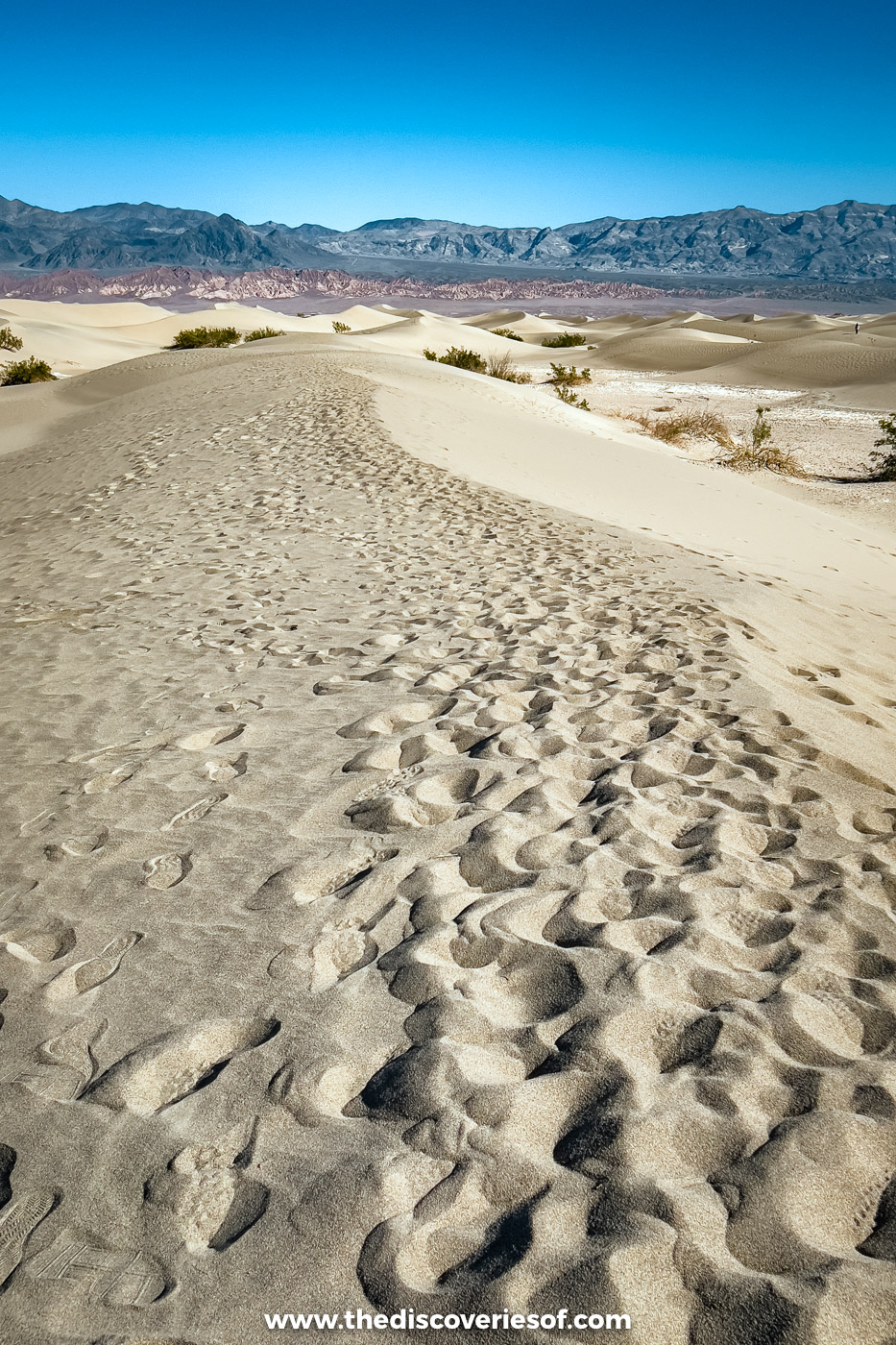
Spoiler alert! If you didn’t already know, it gets hot. And I mean really hot. The highest air temperature ever recorded on Earth, 134°F (56.7°C), was measured at Furnace Creek in July 1913, and Death Valley still claims the title of the hottest place in America, so naturally, I would not recommend visiting in summer.
Sunrise
Sunrise is the most peaceful time to visit: the sand is at its coolest, the night’s animal tracks are still sharp and the ripples are crisp before the wind picks up. My guide to sunrise and sunset in Death Valley has the timings for every month.
Mid-morning and midday
This is when I first went. The sun was already high enough to flatten the shadows, and the sand nearest the car park was criss-crossed with footprints by the time I got there. It’s still a beautiful walk under a clear blue sky, but if you only have one chance, go at either end of the day.
Sunset
Sunset is the busiest time, and for good reason: the low sun picks out every ridge. Get there an hour early to walk out past the crowds, and bring a torch for the walk back.
After dark
Once the day-trippers have left, the sand goes quiet and the sky fills with stars right down to the horizon. My nights in the park fell in the days before a new moon, so the evening sky was properly dark. My stargazing in Death Valley guide has the moon dates.
Top Tip
Drop a pin on your phone’s map at the car before you head out in the dark. Every dune looks the same at night.
The best months
November to March is the comfortable window, though spring is the busiest and windiest season. October and April reach around 90°F (32°C), so go early or late. From May to September, when the sand gets far hotter than the 116°F (47°C) average July high, the park advises against hiking on the dunes after 10am.
What you can and can’t do on the sand
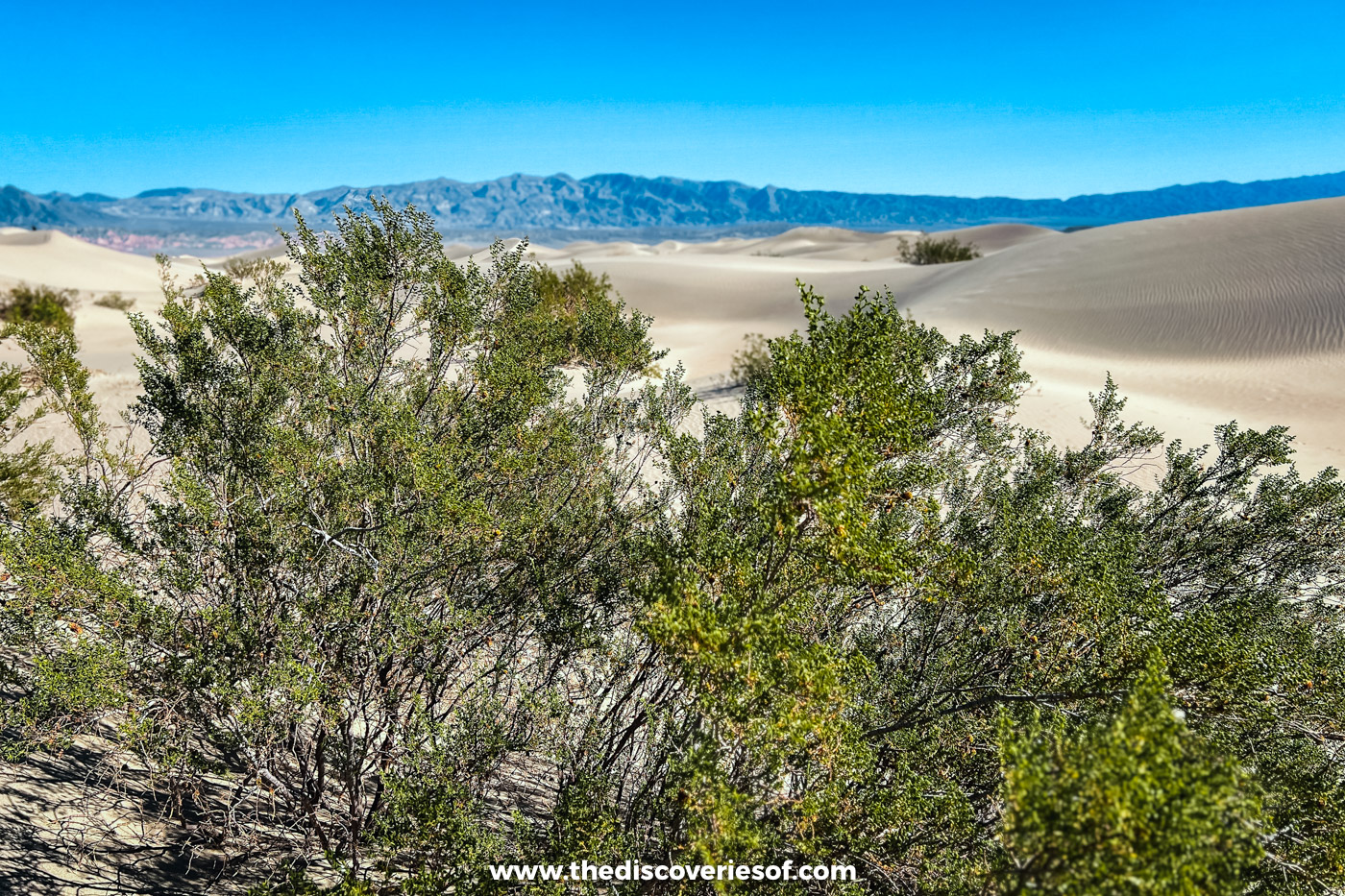
- Sandboarding is allowed (Saline Valley is the only other dune field in the park where it is), but there’s nowhere to hire a board, so bring your own and keep off the plants.
- No pets. Dogs are banned from the dunes and every trail, even if you carry them.
- No vehicles or drones. Off-road driving is illegal in the park, and drones are banned in all US national parks.
- Leave no trace. Don’t disturb burrows, take your rubbish home and use the car park toilets.
How to photograph the ripples (and avoid everyone’s footprints)
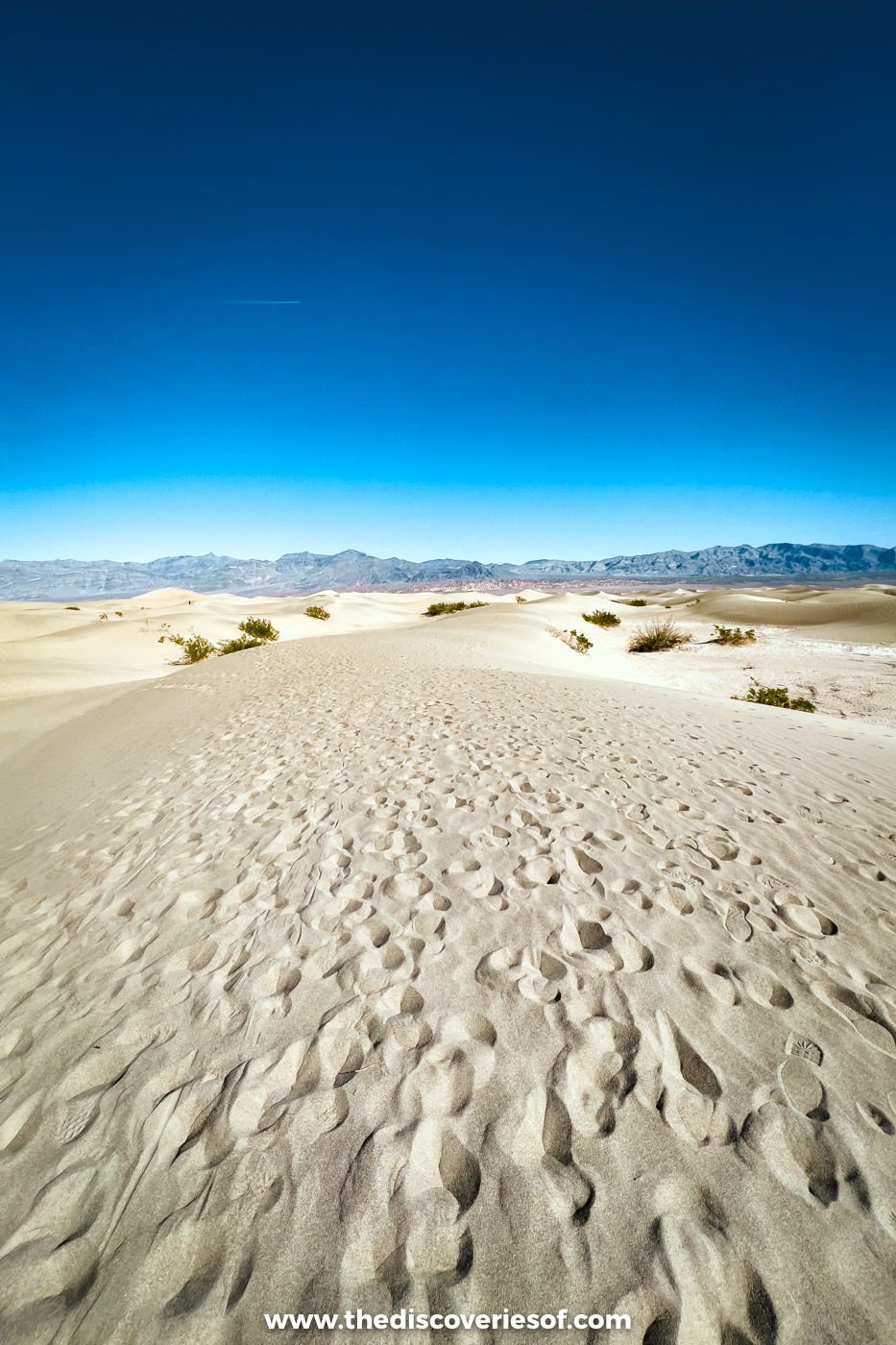
- Walk further than you think. The dunes nearest the car park are trampled daily, so allow half an hour before you start shooting seriously.
- Go after a windy night, which wipes out footprints and lays down fresh ripples, and shoot in low side light: at midday the same view looks flat.
- Protect your camera. Change lenses in the car, as fine sand gets everywhere.
What to pack for the dunes
- I cannot overstate how hot it can get. A good sunscreen is key to protecting yourself from the harsh sun in Death Valley. Remember, it’s called Death Valley for a reason. A wide-brimmed sun hat is another thing that you’ll need to minimise any sunburn.
- A good pair of comfortable walking shoes is an absolute must. The hike up to the dunes is no joke, as climbing through soft sand is hard work and the hot surface can get harsh on the feet.
- Carry more water than you think you’ll need, plus a headtorch and a warm layer for after dark.
Map
Read next
- The best things to do in Death Valley National Park
- The best places for sunrise and sunset in Death Valley
- Why stargazing in Death Valley is worth staying up late for
- The best hikes in Death Valley National Park
- Walk out onto the Death Valley salt flats
- The ultimate California road trip
Love this? Save and share on Pinterest

Discover the top things to do, insider tips and hidden gems in our USA Travel Guides.
Read the guides →




