

Sky Lagoon takes Iceland’s centuries-old bathing culture and sets it on the edge of the ocean, 15 minutes from central Reykjavik. Here’s what the seven-step ritual is really like, plus the passes, prices, opening hours and how to get there.
It’s no secret that I have fallen head over heels with Iceland, a country where nature is so drastic that it feels mythical, where the Northern Lights light up the dark nights and long hikes lead to rolling panoramas dotted with stunning waterfalls.
Let’s face it, Iceland is not a country that needs hyping up, yet hype it up I have, raving about hidden gems, glacial lagoons and black sand beaches along the way.
Still, even though my December trip was my third to the country, there was an element of Icelandic life that I’d only flirted with on previous trips: that of bathing. On my first visit I’d spent a lovely couple of hours in the local pool at Hella, but I’d never given myself over to the whole ritual. A day at Sky Lagoon put that right. I arrived around midday, worked my way through all seven steps, and was still floating in the warm water when the sun went down over the sea.
The short version: it’s the most beautiful place to soak this close to Reykjavik, and the seven-step ritual turns a dip into far more than a swim. It isn’t cheap, and children under 12 can’t go, but if you want one lagoon that fits into a city stay, even on the shortest winter day, this is the one.
My rating: 5/5
Why bathing sits at the heart of Icelandic life

Bathing sits at the heart of Icelandic culture, with today’s bathing customs the result of the slow evolution of local practice.
Look back through Icelandic history and you’ll find this culture intertwined within it: there are even records of the Vikings bathing in the country’s prolific geothermal waters.
Similarly, one of the country’s most famous historians, Snorri Sturluson, the 13th-century chieftain whose writings helped to preserve the sagas and Norse mythology, had a hot pool built at his farm at Reykholt. Snorralaug, as it’s known, survives to this day, and the fashion it set has never gone away.
Yet, like many local customs, it can be difficult for those visiting to get a true sense of this culture and to immerse themselves in the rituals Icelanders take for granted.

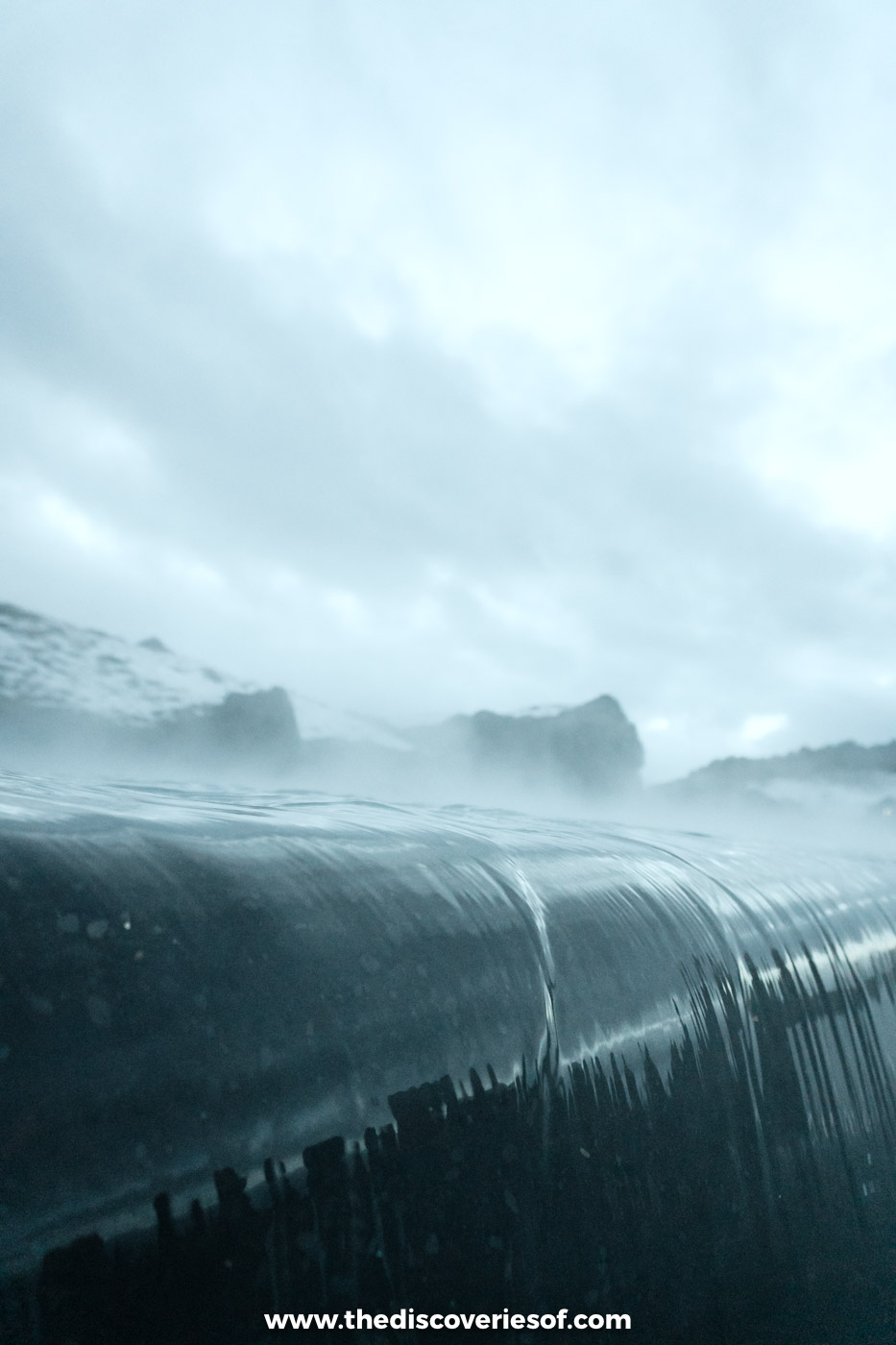
Of course, you’re welcome to visit the local pools, those central hubs of Icelandic social life. There are more than 120 of them across the country, and a swim costs a fraction of a lagoon ticket. The catch? Unless you’re visiting with a local, it can be difficult to know the intricacies, to follow the rhythms Icelanders have built over centuries of experience.
Until Sky Lagoon stepped onto the scene.
A lagoon built on the edge of the ocean

The lagoon draws on this deep-seated Icelandic bathing tradition to create a fully immersive experience.
Picking up elements of the social and physical benefits of bathing, they’ve created a seven-step ritual that brings all of the benefits of bathing culture to visitors, in the midst of a jaw-dropping location.
It opened on 30 April 2021 at Kársnes harbour in Kópavogur, a short drive south of central Reykjavik, and quickly built a loyal following of locals, no small feat in a country where bathing is sacrosanct. Visitors have since caught on too, and it’s now one of the most popular things to do around the capital.
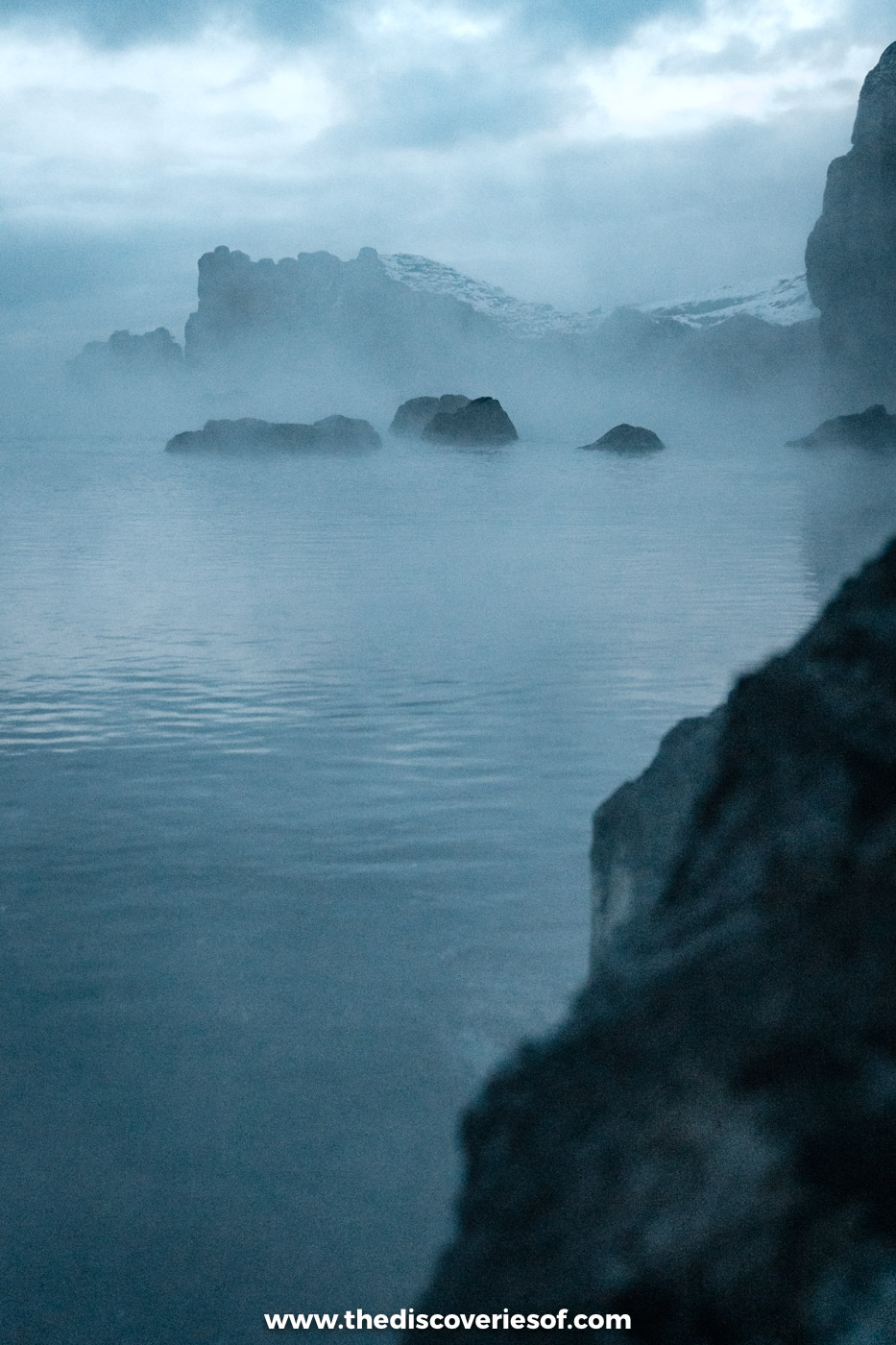
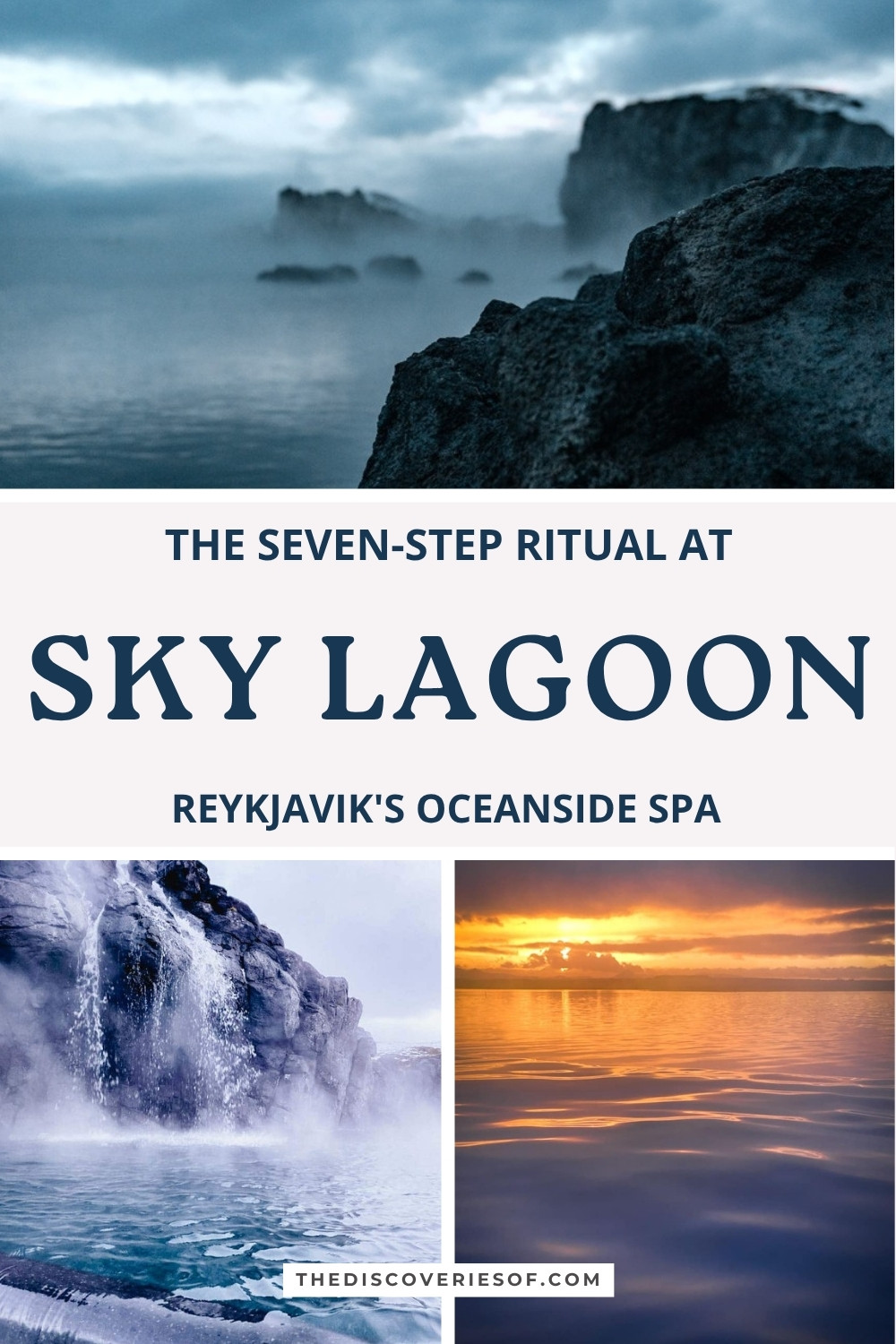
The location is stunning. On what used to be a stretch of bare land on the shore of Skerjafjörður, they’ve created a place of wonder. It’s a maze of dark rocks, turf walls, smooth wood and crystal-clear water, not to mention the vast views that no doubt gave the lagoon its name. The water is kept at around 38 to 40°C and is no more than 120cm deep, so you can wander rather than swim, and the infinity edge seems to pour straight into the sea.
In a world where the visual aesthetic reigns supreme, it would have been easy to leave it there, but the lagoon is about much more than visuals alone.
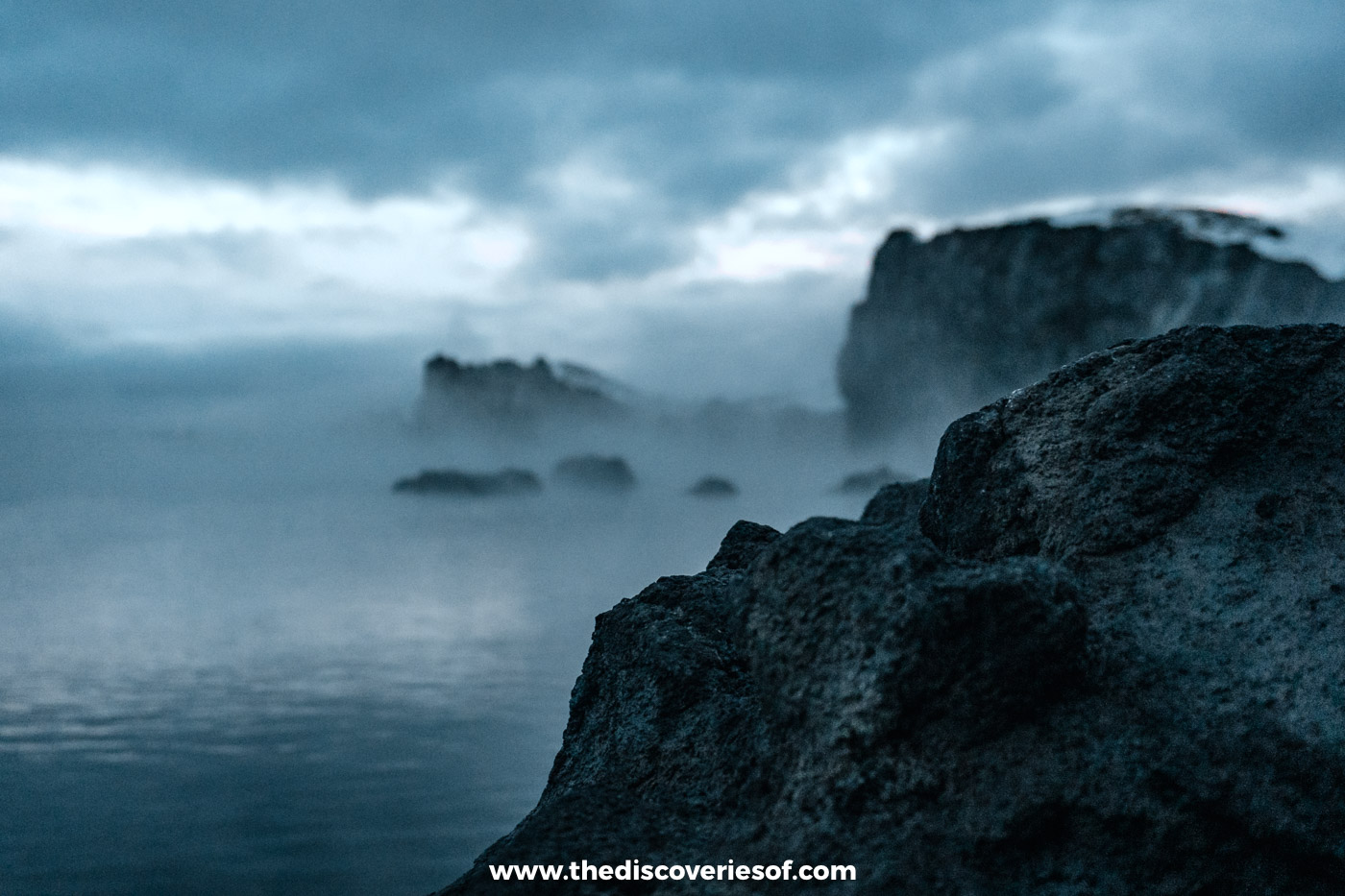
Instead, they take the mysteries of Icelandic bathing culture and make it accessible through the ritual, which begins with time in the lagoon before moving through a cold plunge pool, a sauna, an energising mist, a scrub and a steam room.
Quite frankly, it sounded delightful and I was very eager to give it a try.
What the seven-step ritual is really like
When I visited, it was called the Sky Ritual. It has since been renamed the Skjól ritual, after the Icelandic word for shelter, and each of its seven steps now has an Icelandic name: Laug (the lagoon), Kuldi (the cold plunge), Ylur (the sauna), Súld (the cold mist), Mýkt (the scrub), Gufa (the steam room) and Saft (a sip of crowberry elixir). The first two steps are outdoors and the rest are inside the turf house. Both passes include one run through the ritual.
It’s no accident that the ritual starts with time in the lagoon.
Ever had that experience where you’ve booked in for a massage then ended up in such a rush to get there on time that by the time you collapsed onto the massage bed, you were a hot and flustered mess?
That’s not going to happen here.
Time in the lagoon

Beginning the ritual with time in the lagoon is a deliberate choice: doing so forces you to disconnect from the outside world as you pass through the waters, baptised in an aura of calm contentedness.
From the moment I stepped in, the cosy embrace of the lagoon waters chipped and chipped away at the hurries and stresses of day to day life.


If you’d like a drink in the water, there’s a swim-up bar, Gelmir. Each guest can buy up to three alcoholic drinks.
Taking the plunge
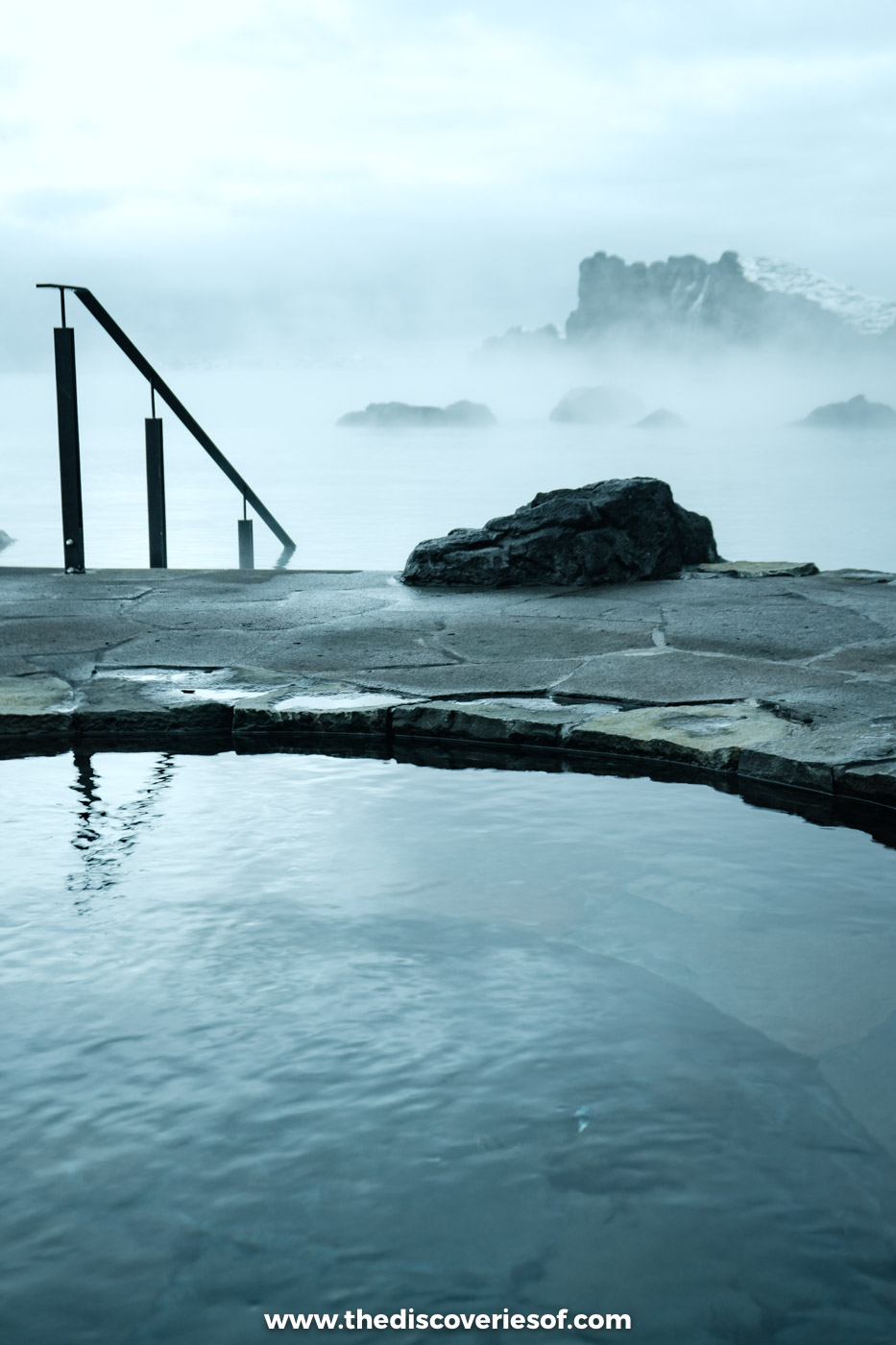
After the lulling warmth of the lagoon waters, the next step, a plunge pool that was about 10°C when I went, came as something of a shock to the system. Icelanders believe you should stay as long as you can bear, as it helps fortify the system and shows your inner strength.
The fact that my inner strength only seemed to extend to 10 seconds is probably telling of something, though I don’t care to dwell on what.
Sauna with a view
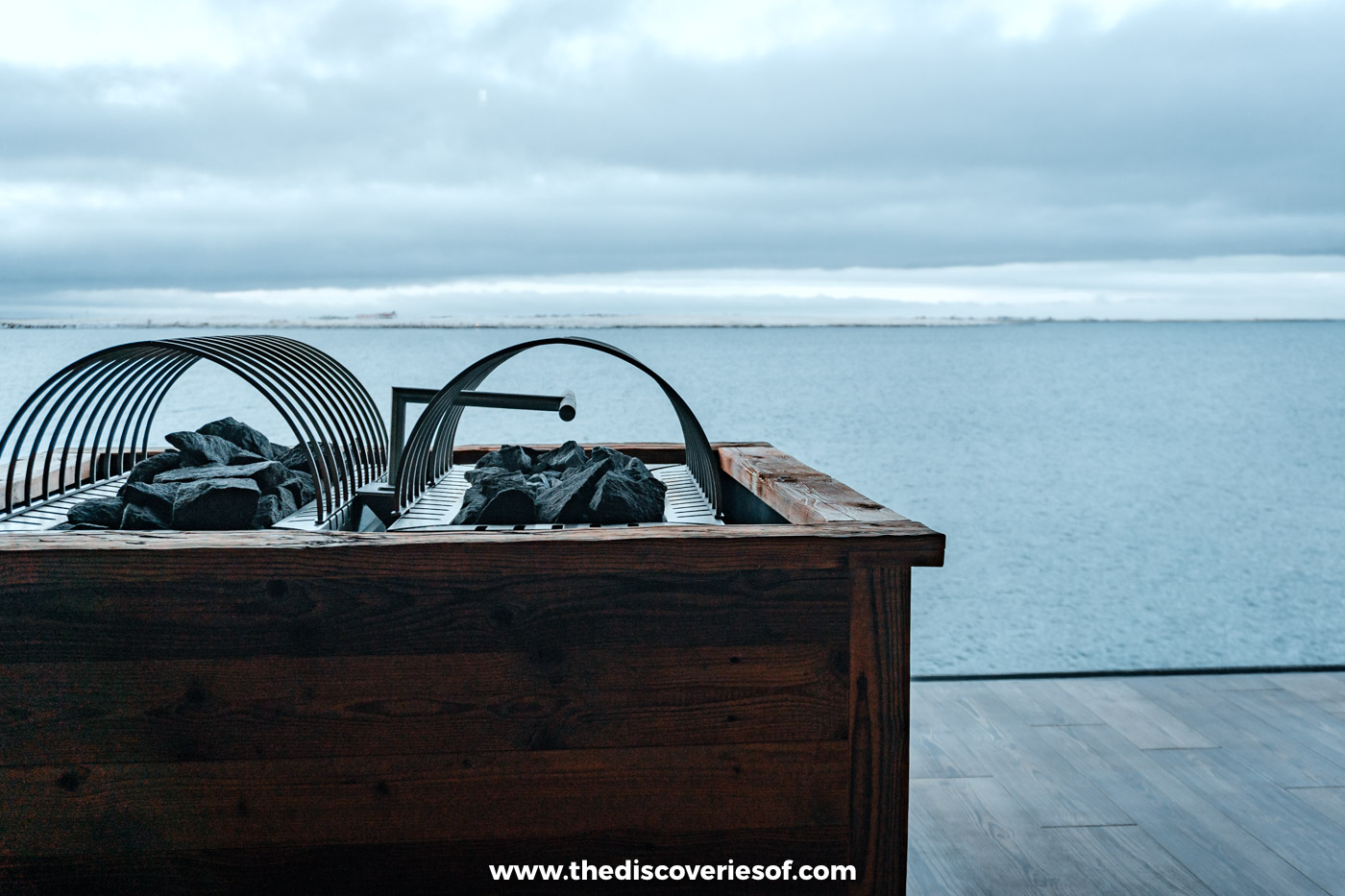
From one extreme to another, the heat of the sauna was a welcome change from the plunge pool, as were the views that came with it.
The sauna’s crystal-clear floor-to-ceiling windows were a welcome break from the normal cloying closeness you find in others, swapping the familiar gloomy darkness for panoramic views of the fjord that invited me to stay a fraction longer than was comfortable, just so I could soak them all in.
Bathing in mist

After the sauna came what was to be my favourite part of the experience: an open-air enclosure where you’re bathed in an energising (and cold) mist.
While other steps in the ritual thus far had been familiar, this felt new, although it’s actually meant to emulate the natural coolness of the chilly fogs that often shroud the island and which locals have to wade through as they make their way between different parts of the bathing experience.
The shock of the coldness forced me into the present, but it came with a sense of almost childish delight: the glee of surprise set my skin atingle as it washed me in the refreshing chill.
The finishing touches
It’s not a spa ritual without a good scrub, and this one, a custom blend of sea salt with almond, sesame and grape seed oils paired with local botanicals, felt simultaneously indulgent and wholesome.
If any remnant of the outside world had managed to cling to me thus far, the scrub finished it off until I headed, still coated in the salty mixture, into the steam room for one of the final stages of the process.
Where the sauna had been about soaking up the exterior views, by contrast the steam room was a retreat into myself: the steam so dense I had to feel my way to my seat where I sat, shrouded in the scent of the botanicals from the scrub as it melted into my skin and baked on.


After a brief shower, I’d finished the ritual and felt all the better for it. Today there’s one more step: a small glass of Saft, a crowberry elixir, to round things off. All that was left to do was to return to the lagoon, lazing around as I watched the sunset then the darkening skies before I emerged into the outside world.
Is it worth the price?

It isn’t cheap: a Saman pass costs around nine times as much as a swim at a Reykjavik pool, and if all you want is a hot soak, a local pool will do the job. But that isn’t what you’re paying for here. The ritual gives your visit a shape, the cold plunge and the mist jolt you wide awake, and floating at the infinity edge as the light fades over the sea is hard to beat this close to a capital city.
It’s at its best when you give it time. Rush in for an hour between other plans and you’ll miss the point; arrive a couple of hours before sunset, take the ritual slowly and leave yourself time to drift back in the water afterwards.
My rating: 5/5
Visiting Sky Lagoon: passes, prices and opening hours
Every visit is booked in advance for a set time slot on the Sky Lagoon website, so book ahead, especially for a sunset slot in winter. Both passes include lagoon entry, one run through the ritual, a towel and shower products:
- Saman pass: shared changing rooms, from ISK 14,990 (around £93).
- Sér pass: private changing rooms with Sky Lagoon’s own toiletries and body lotion, from ISK 17,990 (around £111).
- For two: both passes come in a package for two, with drinks and a tasting platter from the bar.
Prices change with the day and time of your slot, so check when you book. You can change or cancel up to 24 hours before your visit.
Tickets
Book direct on the Sky Lagoon website, or compare Sky Lagoon tickets and combo tours on GetYourGuide, including passes with a hotel transfer from Reykjavik.
Age limits: children under 12 aren’t admitted, with no exceptions, and 12 to 14-year-olds must be with an adult aged 18 or over. Youth tickets for 12 to 14-year-olds are half the adult price.
Opening hours: these change with the season. From 21 October to 30 April, the lagoon is open from 10am to 9pm; from 1 May to 20 June, 10am to 10pm; from 21 June to 20 August, 8am to 11pm; and from 21 August to 20 October, 9am to 10pm. You need to be out of the water 30 minutes before closing.
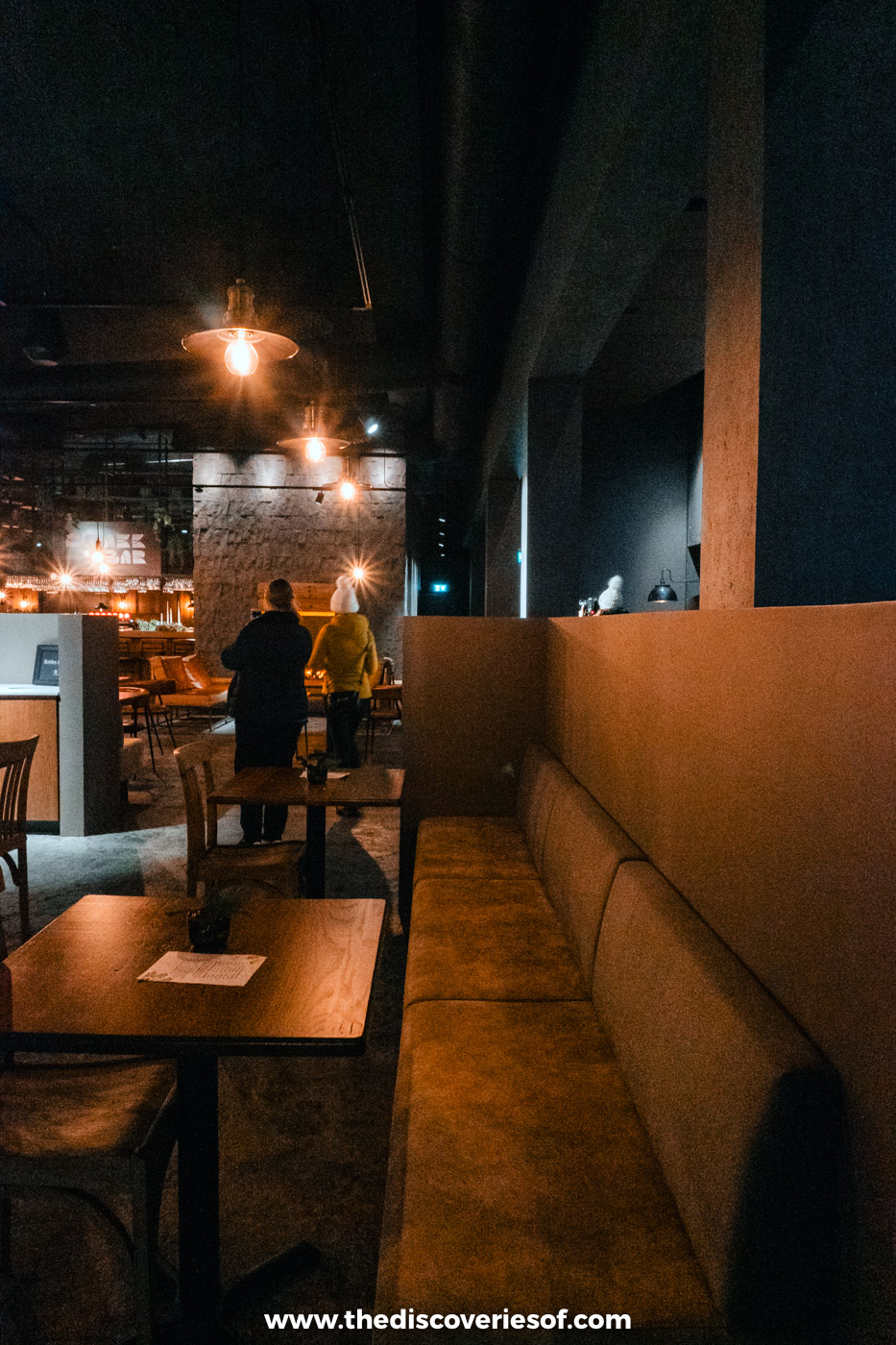
Food and drink: as well as Gelmir in the lagoon, there’s Keimur Café for coffee and pastries and Smakk Bar, which serves Icelandic tasting platters of cheese, cured meats and smoked fish from midday. Outside food and drink isn’t allowed.
The unique filtration system and pure geothermal water mean that they don’t have to chlorinate the water to the same degree you might encounter in other places, which is a real plus when you’re staying in the water for long periods of time.
Address: Vesturvör 44 to 48, 200 Kópavogur.
How to get there from Reykjavik
The lagoon is about 7km from the centre of Reykjavik, and you’ve got four options:
- By car or taxi: it’s around 15 minutes’ drive from the centre, and parking is free. From Keflavík airport it’s about 45 minutes, so it’s an easy stop on the way into the city or on your last day.
- By shuttle: Reykjavik Excursions runs a shuttle from the BSÍ bus terminal, with pick-ups from many hotels, that you can add when you book your pass for about ISK 2,500 each way. Your return is at a set time, roughly two and a half hours after you’re dropped off, so it suits a shorter visit.
- By public bus: from Lækjartorg in the centre, take Strætó bus 1 or 4 to Hamraborg, change to the 35 and get off at Hafnarbraut, then walk about 15 minutes. Allow about an hour, and check the times on straeto.is.
- On a tour: several day tours from Reykjavik finish with a soak here, which saves you the trip on a short stay.
How long to spend and the best time to go
Give yourself at least two hours: about 90 minutes for the ritual and the lagoon, plus time to change and shower. Half a day is better, especially if you want to eat or just float. The ritual is the same whenever you go, so plan around the light.
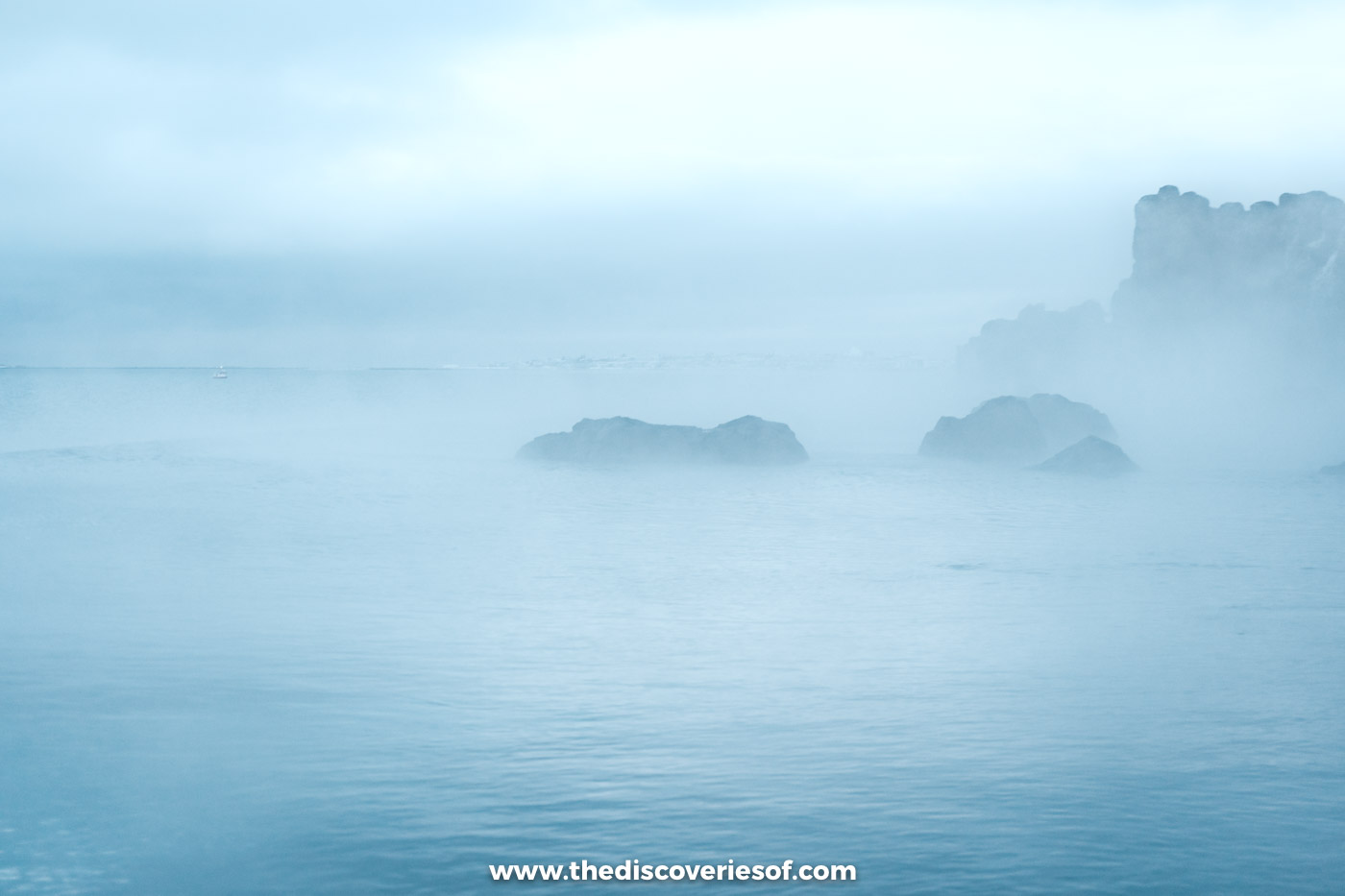
Sunset is the best time to go. In early December the sun sets at around 3.30pm, so a slot from about 1pm gives you the ritual in daylight and the sunset from the water. The low winter sun turns the sea gold, and on a cold day the steam rising off the lagoon is magical. In summer, when the sun sets close to midnight, the late-evening slots (the lagoon stays open until 11pm from late June to late August) give you the long golden light instead.
If you’re visiting in winter, my guide to the best time to visit Iceland covers what else the short days are good for.
Sky Lagoon vs Blue Lagoon: which should you choose?
I’ll be upfront: I’ve never been to the Blue Lagoon. On my first trips I skipped it in favour of a local pool, put off by the price and the crowds, and in December it was Sky Lagoon I visited. So I can only vouch for one of them, but here’s how they compare on the facts:
- Location: this lagoon is on the edge of the capital, 15 minutes from the centre. The Blue Lagoon is in a lava field on the Reykjanes peninsula, about 20 minutes from Keflavík airport and 45 to 50 minutes from Reykjavik.
- The experience: here, it’s the view over the sea and the seven-step ritual. At the Blue Lagoon, it’s the milky blue, silica-rich water and the mud mask included with every ticket.
- Price: the Blue Lagoon’s Comfort package starts from ISK 11,990, a little less than the Saman pass, but it doesn’t include a ritual.
- Children: the Blue Lagoon admits children from the age of 2 (and under-14s go free with a paying adult); here, the minimum age is 12.
- Volcanic activity: this is the big one. The Blue Lagoon sits next to the Sundhnúkur crater row near Grindavík, which erupted nine times between December 2023 and August 2025, most recently from 16 July to 5 August 2025. The lagoon was evacuated and closed several times, and in November 2024 lava swallowed its car park. Magma has kept building up beneath the area since, and the Icelandic Met Office considers another intrusion likely, so the lagoon can close at short notice. If you book, check bluelagoon.com and safetravel.is on the day and read the refund terms first.
If you’re travelling with young children, or want a soak on the way to or from the airport, the Blue Lagoon is the obvious choice. If you’re staying in Reykjavik and want a lagoon that feels like an experience rather than a photo stop, choose Sky Lagoon. And if you’d simply like to bathe like a local, the city’s public pools cost about ISK 1,500.
Tips for your visit
- Bring a swimsuit and not much else. Towels, shower products and a locker are included. Getting your hair wet is fine here, unlike in the silica water of the Blue Lagoon.
- Shower first, without your swimsuit. As at every pool in Iceland, you must wash thoroughly before you get in.
- Take your phone into the lagoon if you like, ideally in a waterproof pouch, but photos aren’t allowed in the changing rooms or showers.
- Book the sunset slot early, especially from November to February, when the days are shortest. If you’re planning more of the city, my guide to the best things to do in Reykjavik has the rest of my December trip.
My December visit was hosted by Pursuit and Sky Lagoon. As ever, all opinions are my own.
Map
Read next
- The best things to do in Reykjavik
- Brilliant things to do in Iceland
- Is Iceland expensive? What things really cost
- The best time to visit Iceland
- When’s the best time to see the Northern Lights in Iceland?
- Iceland’s hidden gems
- Iceland travel guide
Love this? Save and share on Pinterest

Discover the top things to do, insider tips and hidden gems in our Iceland Travel Guide.
Read the guides →




