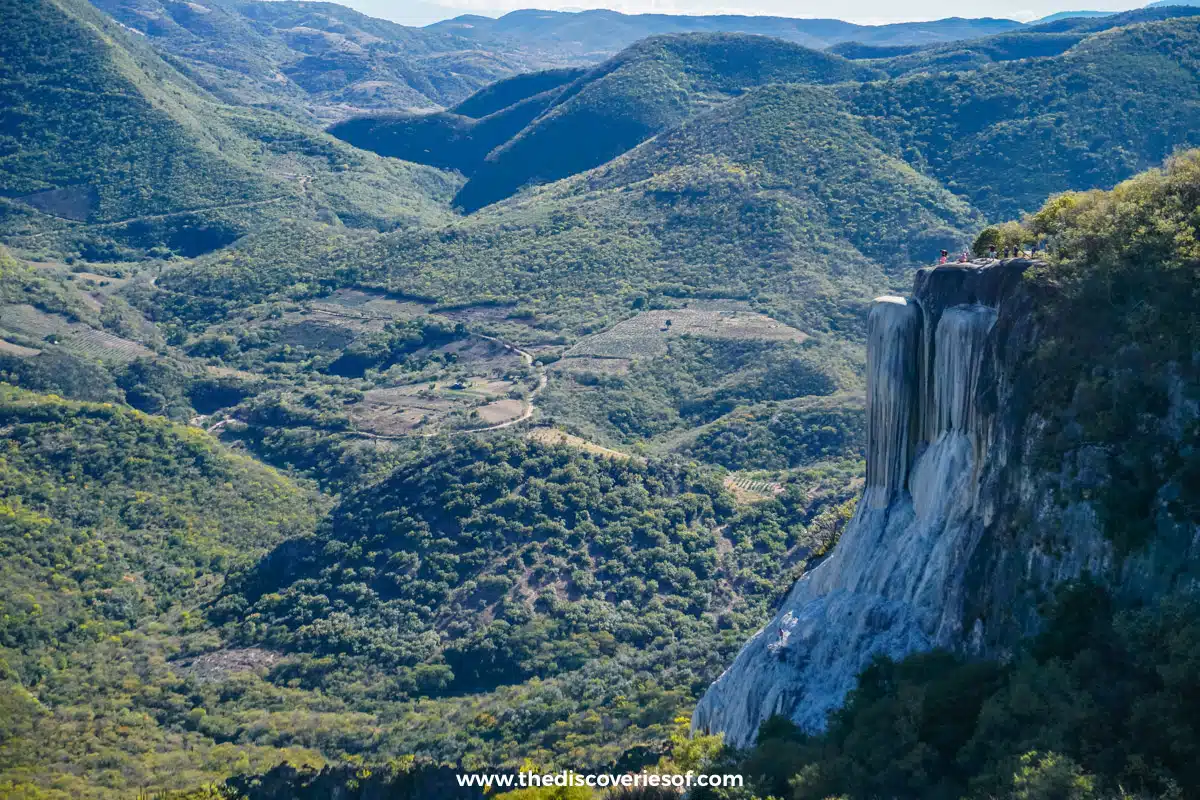
High in the hills east of Oaxaca, a cliff edge drips with what looks like a frozen waterfall: a wall of white stone, rippled and streaked, hanging over a valley that falls away for hundreds of metres. Above it, mineral pools sit right on the lip of the drop, and you can swim in them while looking out over the mountains.
OK, so this is pretty epic. I’d seen a couple of pictures before I went, but nothing prepared me for the scale of it, and even from the main pools the views are absolutely stunning. It’s one of the most beautiful places in the state of Oaxaca, and you won’t regret making the trip from the city. This guide covers how the falls formed, whether the site is open, how to get there from Oaxaca, the fees, the trail and the pools, the best time to go and what to bring.
Why visit Hierve el Agua?
It’s genuinely unlike anywhere else in Mexico. There are only a handful of places in the world with formations like these, and few of them come with a swim. The pools above the cliff shift between pale blue and lime green with the light, the landscape around them is wild and mountainous, and the whole place has a slightly surreal quality that photos don’t quite capture.
It’s also a brilliant counterpoint to the city. After a few days of markets, mezcal and mole in Oaxaca, a morning or afternoon out here, with fresh air, a short hike and a cold dip, is the perfect reset.
How the petrified waterfalls formed
The name means “the water boils”, which is a little misleading. There’s no hot water here: the springs bubble up through the rock, but the water is cool. What makes it special is how much calcium carbonate and other minerals it carries. As the spring water trickles over the cliff edge, the minerals settle and harden, layer upon layer, in much the same way stalactites form in a cave. Over thousands of years, that slow build-up has produced two great frozen-looking cascades of stone.
The smaller one, the Cascada Chica, is where the pools are: its formation hangs about 12 metres down the cliff. The bigger Cascada Grande, further round the hillside, drops about 30 metres and is the one you see in most photos from across the valley.
There’s history here too. The Zapotecs cut irrigation canals and terraces into the slopes more than 2,500 years ago, and remnants of them survive around the springs.
Is Hierve el Agua open?
Usually, yes, but check before you go. The site sits on land claimed by two neighbouring communities, San Lorenzo Albarradas and San Isidro Roaguía, which have been in dispute over who runs it and who gets the income for more than two decades. That dispute closed the site from 2005 to 2007, and the road has been blocked several times since.
The most recent long closure came in March 2021, when San Lorenzo Albarradas declared the site shut to tourism, on top of the closure that started during the pandemic. San Isidro Roaguía reopened it in October 2021, after about 19 months, without a formal agreement between the two. As of November 2026 it’s open daily, but closures can still happen at short notice, and they’ve historically been more likely in the rainy season.
Top Tip
Ask your hotel or a tour agency in Oaxaca the day before you go whether the road and the site are open, and check the most recent reviews online. If you’re driving and hit a closed checkpoint, there’s no way round it.
How to get to Hierve el Agua from Oaxaca
Hierve el Agua is about 70km east of Oaxaca city. The last stretch is a narrow, winding mountain road, so it takes longer than the distance suggests.
By car
Take Highway 190 east towards Mitla, then Highway 179 towards San Lorenzo Albarradas, and follow the signs for the final turn-off. Allow about one hour and 40 minutes each way. The road is narrow and twisting, with speed bumps and rough patches, so take it slowly and avoid driving it after dark. You’ll pay a small community road fee at a checkpoint on the way in, and parking at the top costs extra.
By bus and colectivo
It’s cheap but slow. Green buses marked “Mitla” leave Oaxaca every 10 to 20 minutes from the second-class bus terminal by the Central de Abastos and from beside the Eduardo Vasconcelos stadium, cost about 20 to 25 pesos and take around an hour. In Mitla, shared pick-up trucks run up to the springs for about 75 pesos a person each way, but they only leave once they’re full, usually with 12 passengers, and the ride takes about 45 minutes on a bumpy road. Budget around two and a half to three hours each way door to door, plus the road fee.
On a tour
The easiest option if you don’t have a car. Most day tours from Oaxaca pair the falls with the giant Tule tree and the ruins at Mitla, and some add a mezcal distillery.
Do
This day tour to Hierve el Agua, the Tule tree and Mitla takes in all three stops with transport from the city and a buffet lunch, so nobody has to drive the mountain road. The community entry fees are usually paid separately on the day.
Entry fees and opening hours
You pay twice, both in cash: once to San Lorenzo Albarradas for the road, and once at the site itself. Toilets cost a few pesos extra.
Tickets
In 2026, expect around 20 to 30 pesos a person for the road and 50 to 70 pesos for the site, so roughly 100 pesos in total. There are no cash machines and no card payments, so bring small notes. The site is open daily until 5pm; reported opening times vary between 7am and 9am, so don’t plan on arriving much before 9am, and don’t count on getting in after about 4pm.
Exploring the pools and the falls

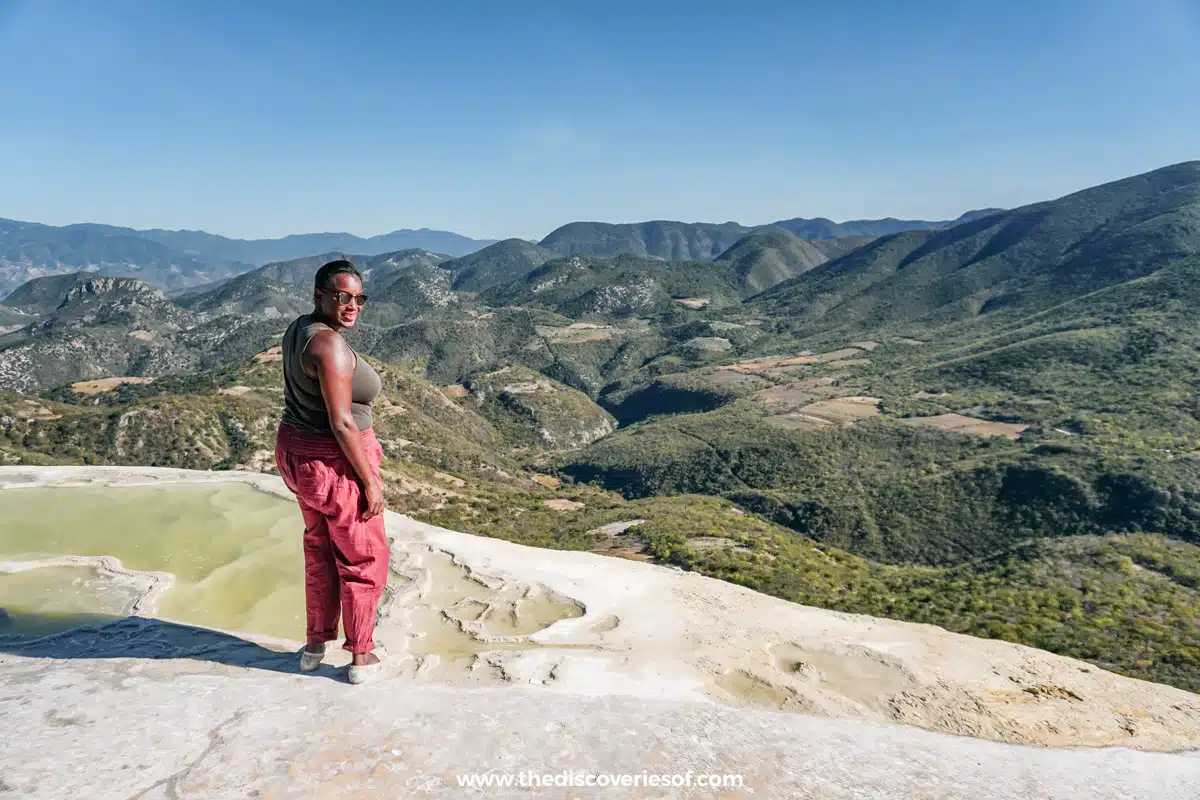
Most people head straight for the pools at the top of the Cascada Chica. The infinity-edge pool on the lip of the cliff is the famous photo spot, and it’s shallow, at around a metre to a metre and a half deep. The water is cool and slightly milky from the minerals, and the white terraces around it are smooth in places and rough in others, so take care where you step.
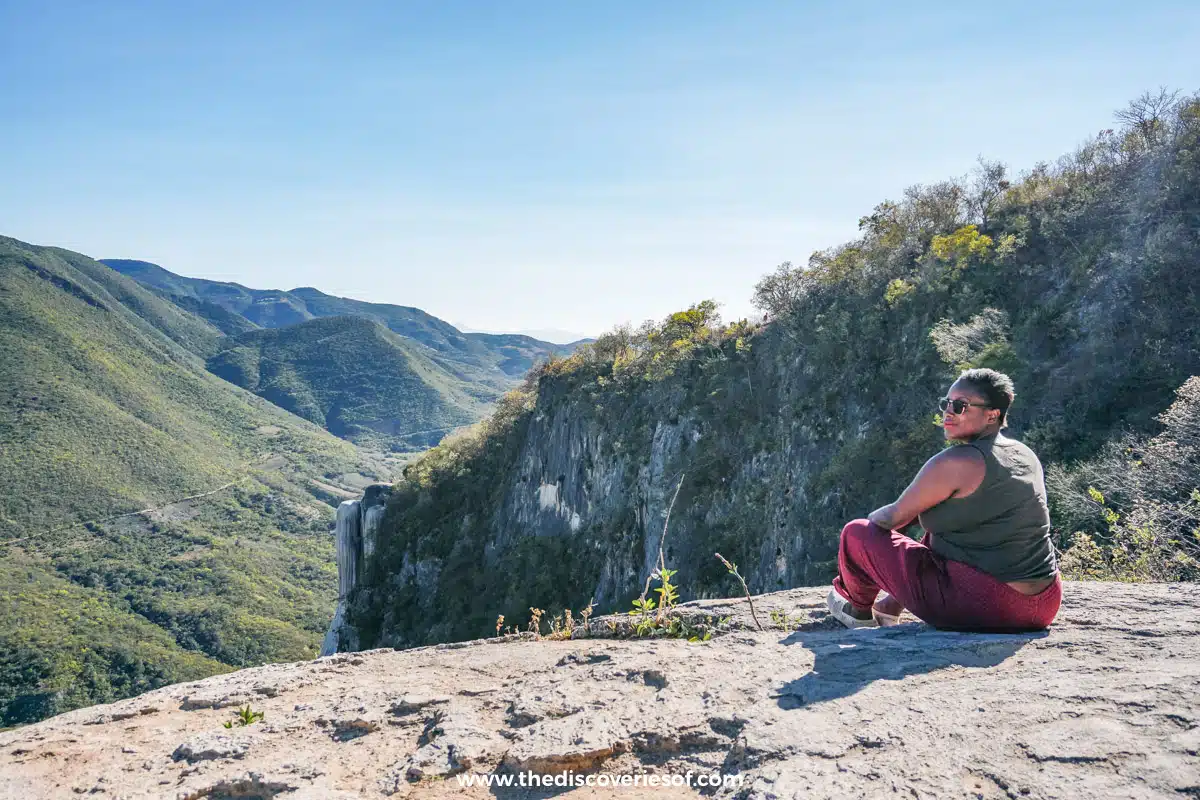
Beyond the main pools, a rocky trail loops down the hillside to the base of the falls and round to viewpoints across to the Cascada Grande. It’s uneven and steep in places, so wear proper trainers rather than flip-flops. Allow at least an hour and a half to two hours on site to swim, walk the trail and take it all in.
There are changing rooms, palapas for shade and small stalls selling food and drinks near the pools. The formations are fragile, so stay off the edges of the cascades themselves and use a reef-safe or biodegradable sunscreen if you’re swimming.
The best time to go
November to April is the best time to go. It’s the dry season, the skies are usually clear, the pools are at their most colourful and the road is in its best condition. From June to October the rains make the road muddier and the water cloudier, and closures have historically been more frequent.
Whenever you go, arrive early. Tour groups from Oaxaca tend to arrive between about 10.30am and 2pm, and weekends, Sundays in particular, and Semana Santa are busiest.
Combining it with Mitla and mezcal
The falls sit at the end of the same road as some of the best day-trip stops from Oaxaca, so it’s worth making a day of it. Mitla, with its Zapotec palaces covered in intricate stone mosaics, is right on the way. So is Santiago Matatlán, the self-proclaimed world capital of mezcal, where I visited the Gracias a Dios palenque to learn how mezcal is made. Read my guide to mezcal in Oaxaca for the full story, and my guide to things to do in Oaxaca for the rest of the trip.
Tips and what to pack
- Bring cash: at least 200 to 300 pesos a person in small notes for the road fee, entry, parking, toilets, food and drinks. There’s no cash machine.
- Pack swimwear and a towel: don’t forget your swimsuit. A dip in the pools on the edge of the cliff is the whole point.
- Wear trainers: the trail down to the falls is rocky and uneven.
- Cover up from the sun: there’s very little shade, so bring a hat, sunscreen and plenty of water.
- Go early: you’ll beat the tour groups and the midday heat.
- Check it’s open: ask your hotel or a local agency the day before, as the communities can close the road at short notice.
Watch my Oaxaca video
Map
Read next
- 3 days in Oaxaca: the perfect Oaxaca itinerary
- The best things to do in Oaxaca (grasshoppers included)
- Mezcal in Oaxaca: why it’s more than smoky tequila
- Tlacolula Sunday market, the real heart of Oaxacan food
- Oaxaca food: what to eat in Mexico’s foodie paradise
- 2 weeks in Mexico: the perfect road trip itinerary
- 34 famous landmarks in Mexico that are worth crossing the country for
Love this? Save and share on Pinterest

Discover the top things to do, insider tips and hidden gems in our Mexico Travel Guide.
Read the guides →