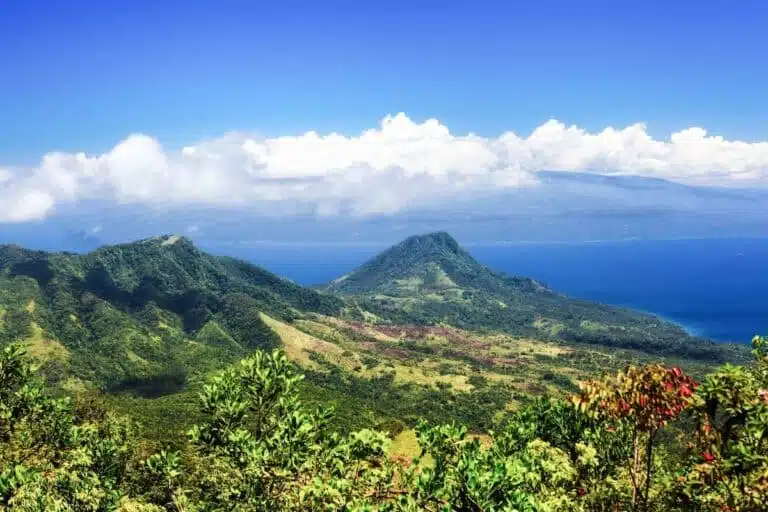
Planning a trip to El Nido? This El Nido travel guide covers the best things to do, from the Big Lagoon and the island-hopping tours to Nacpan Beach, the Taraw canopy walk and rooftop sunsets, plus where to eat, where to stay (and the mistake I made), fees, getting there and how many days you need.
El Nido is the place most people picture when they dream of the Philippines. Sheer black limestone cliffs rise straight out of Bacuit Bay, lagoons glow an unreal shade of green, and every morning dozens of bangkas head out from the town beach to islands you can only reach by boat. It has a reputation for being busy, and it is, but it’s busy for a reason.
I’d wanted to come to El Nido for years, and the reality didn’t disappoint. I spent three nights here at the end of May, on the way north through Palawan from Puerto Princesa to Coron. I did the two island-hopping tours most people recommend, Tour A and Tour C, kayaked through lagoons so green they don’t look real, watched the sunset from a rooftop bar two nights running, and learned the hard way why it matters where you stay. This guide combines what I did with everything else worth knowing, from the other tours to the beaches, waterfalls and viewpoints on land, so you can plan the perfect stay.
Some links in this article may be affiliate links, which means we may receive a small commission, at no additional cost to you, if you decide to purchase through one of my recommended partners.

Things to do in El Nido
Go island hopping
Island hopping is the reason to come here. El Nido sits at the northern tip of mainland Palawan, looking out over Bacuit Bay and its scatter of more than 40 islands and islets. The limestone is ancient, formed in the Permian period more than 250 million years ago, and it has weathered into the cliffs, lagoons and hidden beaches that make the bay so extraordinary. Since 1998, the bay and the coast around it have been part of the El Nido-Taytay Managed Resource Protected Area, which is why you pay an environmental fee and why the most popular lagoons have visitor limits. It’s that protection that keeps the water so clear.
The tours are refreshingly simple. There are four main day trips, named Tours A, B, C and D, each visiting a set of lagoons, beaches and snorkelling spots, and every agency in town sells the same routes. Shared tours cost about ₱1,200 to ₱1,800 per person, with Tour C usually the most expensive, and include the boat, a guide, lunch, water and a life jacket. Boats leave at around 9am and are back by 4 or 5pm.
| Tour | Highlights |
|---|---|
| Tour A | Big Lagoon, Secret Lagoon, Shimizu Island, Seven Commandos Beach |
| Tour B | Snake Island, Cudugnon Cave, Cathedral Cave, Pinagbuyutan Island |
| Tour C | Helicopter Island, Hidden Beach, Secret Beach, Matinloc Shrine |
| Tour D | Small Lagoon, Cadlao Lagoon, Paradise Beach, Pasandigan Cove |
From my research, Tours A and C were the two to do, so I booked both, and I’m so glad I did. They felt completely different. Tour A is all about the lagoons, sheltered behind the cliffs, while Tour C goes further out to beaches and islands on the open sea. By the end of the second day, I felt like I’d seen a real slice of the islands around El Nido.

I booked both through GetYourGuide with the same local operator, Corazon Travel and Tours, and I’d happily use them again. You meet at Jarace Grill in town between 8 and 9am, wait while the guide sorts the permits and coastguard clearance, then head out for the day, with lunch on a beach.
Kayak into the Big Lagoon
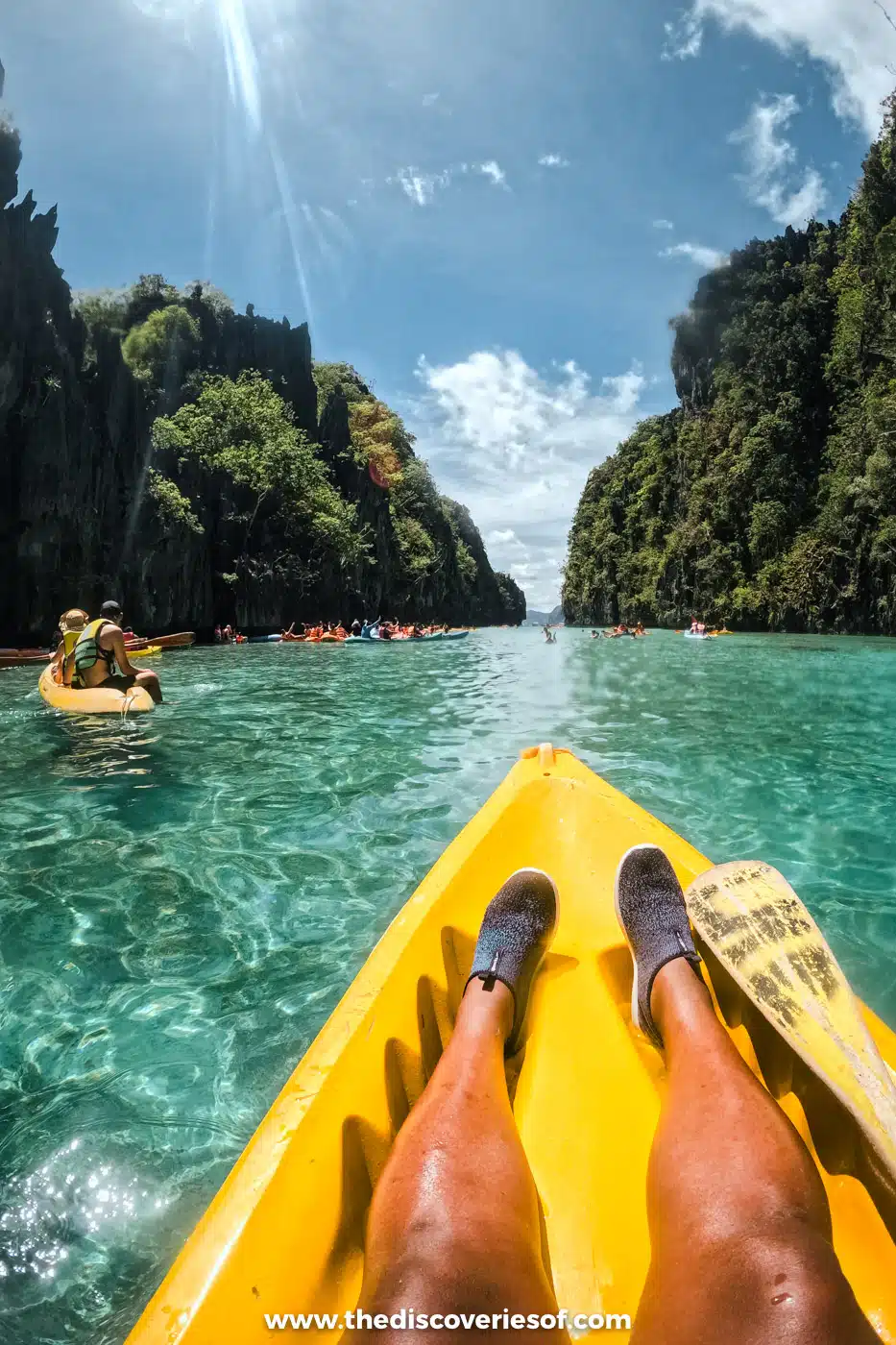
The Big Lagoon on Miniloc Island is El Nido’s most famous sight, and it lives up to the hype. Miniloc is where tourism here began: in 1982, a small dive camp of 15 cottages opened on the island, long before El Nido was on most travellers’ radar. Today the lagoon is so popular that visitor numbers are capped, and tour boats have to stop at the entrance, so you swim or kayak in.
The entrance can be choppy, but inside the water turns calm and a shade of turquoise that totally doesn’t look real, ringed by sheer grey walls. We paddled around in the sun and found a secret little tunnel through the rocks, which was one of my favourite moments of the whole trip. “This place is paradise” is genuinely what I said out loud.

Kayaks cost about ₱300 to ₱400 per two-person kayak on top of a ₱200 lagoon fee, which you pay even if you stay on the boat. You can swim in from the boat, but kayaking lets you explore the far corners, away from everyone else. Expect an hour to an hour and a half inside.
Do
Book a shared El Nido Tour A with Big Lagoon and Secret Lagoon, which is the tour I did, or read my El Nido Tour A guide for every stop.
Squeeze into the Secret Lagoon
Also on Tour A, and also on Miniloc, the Secret Lagoon is hidden behind a wall of rock with an entrance so small you can’t see it from the boat. You swim over, lie flat on your back, and the guides glide you through the gap, like being posted through a letterbox. On the other side is a small pool surrounded by rock, completely cut off from the bay.
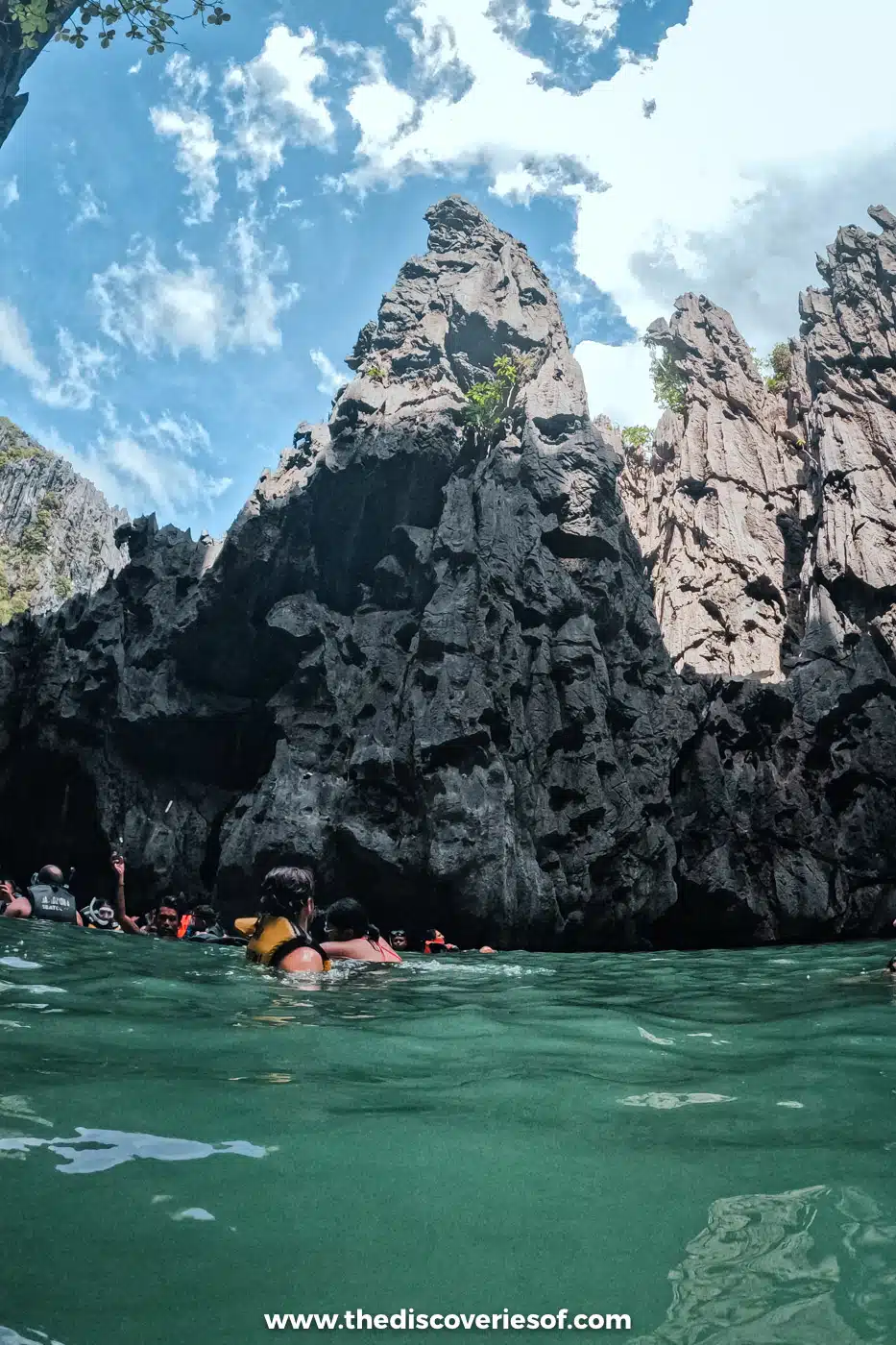
The swim over can be rough, and you’ll do it in a life jacket, which I hate, but it’s one of the quirkiest experiences in El Nido.
Top tip
Leave your camera on the boat unless it’s waterproof and on a strap. You’ll be swimming and sliding through the gap, with nowhere to put anything down.
Snorkel at Shimizu Island and land at Seven Commandos Beach
The other two stops on Tour A are just as typical of El Nido. Shimizu Island, just south of Miniloc, is a snorkelling stop with coral and fish right below the boat. It’s said to be named after a Japanese diver who drowned exploring its caves. The water can be choppy, and after about half an hour I started to feel queasy, so take something before you set off if you get seasick.
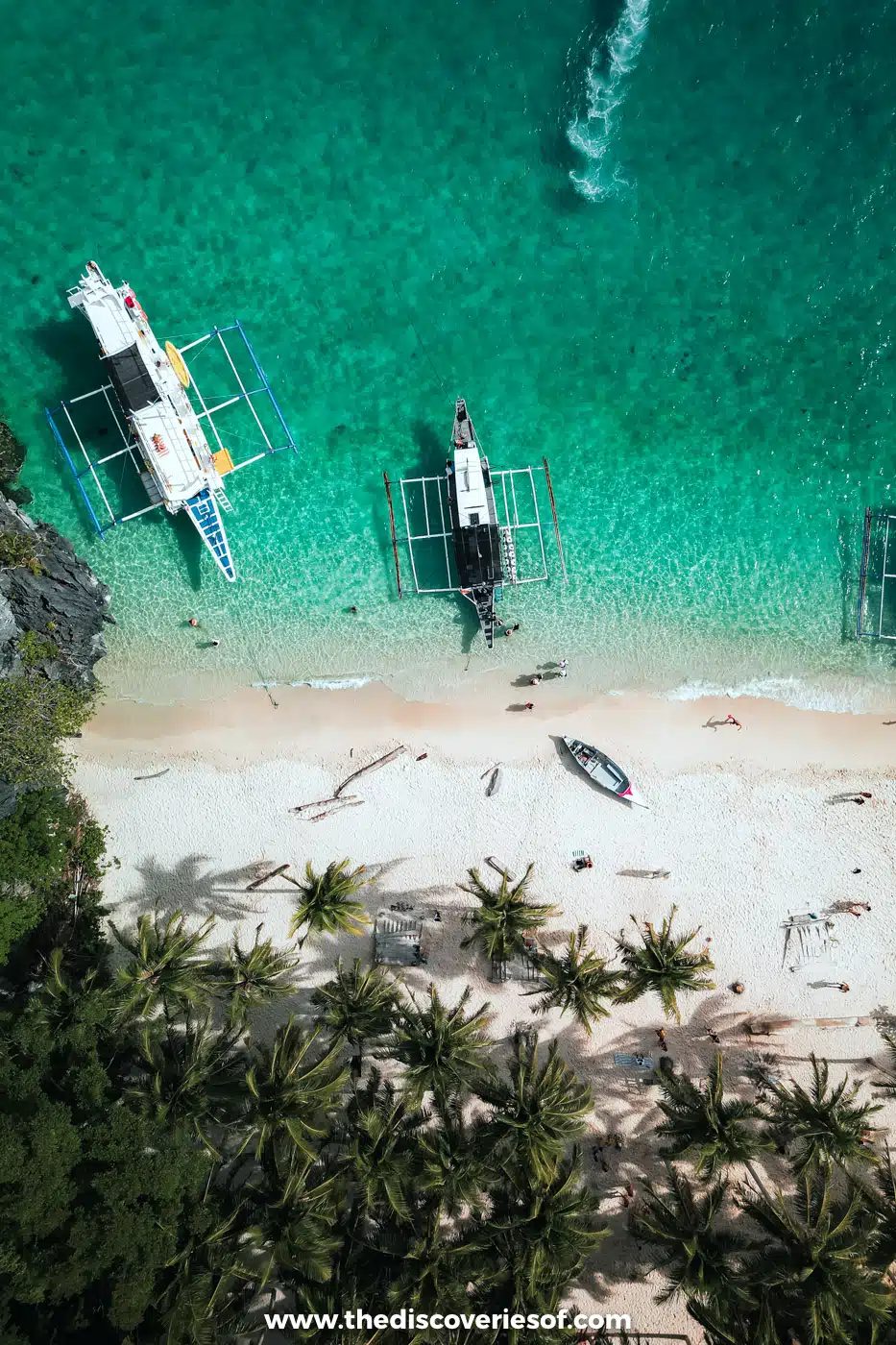
Tour A usually finishes at Seven Commandos Beach, a long stretch of white sand backed by palms on the mainland near town. The name is said to come from seven Japanese soldiers who stayed on there after the Second World War, though the story is hard to pin down. It’s one of the more developed tour beaches, with drinks shacks and a volleyball net, and it’s quite crowded, so don’t come expecting it to be quiet. It rained as we landed, then the sun came out, and the drone shots were absolutely worth it.
Top tip
Take your hat and cover-up ashore. I left mine on the boat at Seven Commandos Beach and was roasting within minutes when the sun came out.
See Helicopter Island
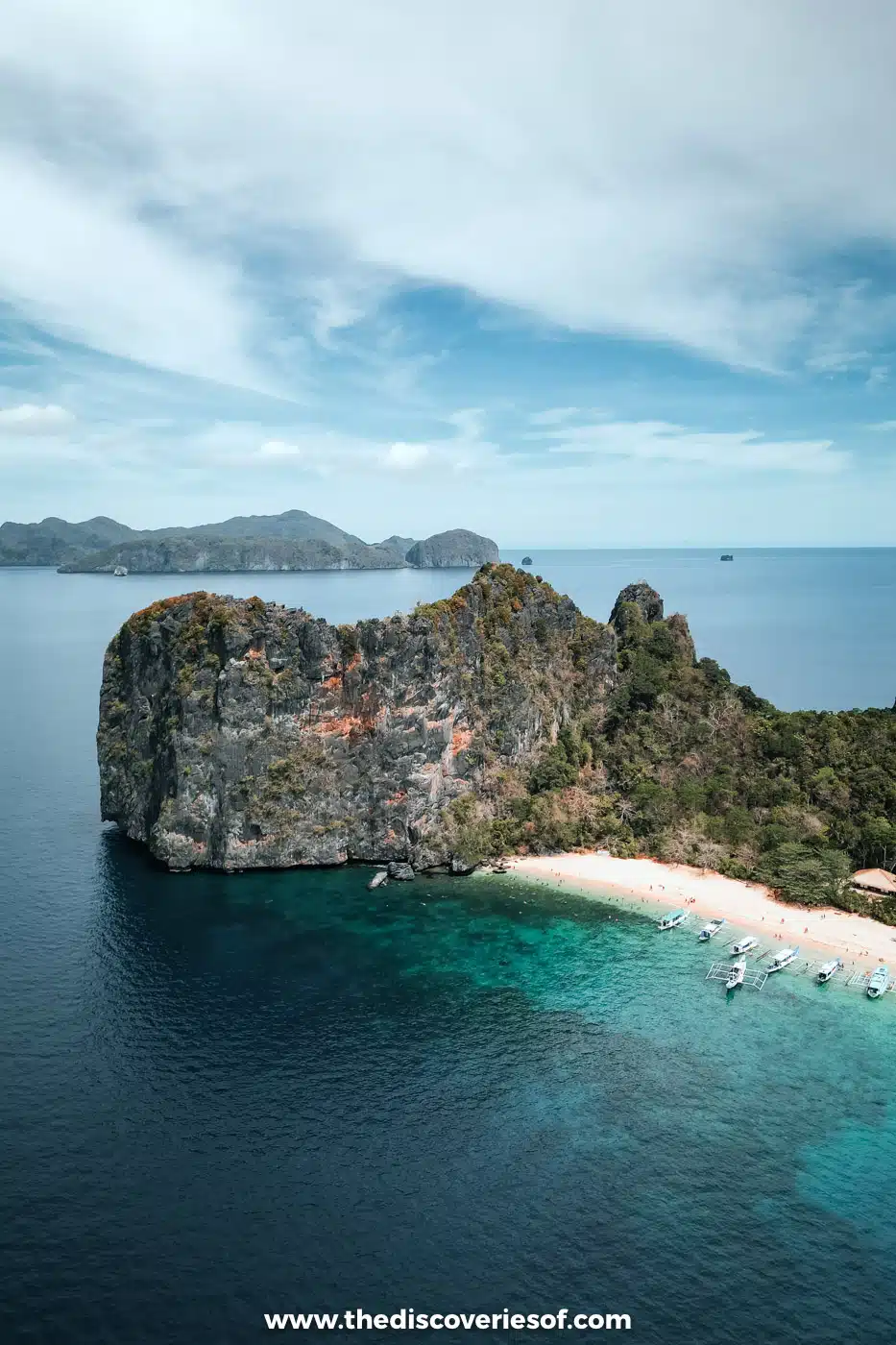
Tour C starts at Helicopter Island, or Dilumacad, named because its silhouette is said to look like a helicopter from the right angle. It’s very dramatic as you sail towards it, with a long white beach at the foot of a big limestone rock. The snorkelling around the rock at the end of the beach is good, and the crew told me turtles are sometimes spotted there. It was also the hottest drone flight I’ve ever done, and the view from above is spectacular.
Swim into Secret Beach and Hidden Beach
The most famous stops on Tour C are on Matinloc Island. Secret Beach is a small white-sand beach completely enclosed by cliffs, reached by swimming through a hole in the rock, and visitor numbers are capped. Hidden Beach is a cove tucked away behind a wall of limestone, where the boat stops outside and you swim or wade in.
Both need calm water. On my Tour C, the sea was too choppy to land at Secret Beach, so the crew swapped in a lagoon instead, and I wasn’t disappointed. Go in with an open mind: the crews know which stops are safe on the day, and the swaps are often just as good.
Visit Matinloc Shrine
The last stop on Tour C is Matinloc Shrine, an abandoned shrine to the Virgin Mary on Matinloc Island. It was built in 1982, and the story goes that a local woman believed the Virgin had asked her to build it on a heart-shaped island. Today its white buildings stand empty in a cove below the cliffs, with a small museum underneath and a short climb to a viewpoint over the cliffs and the sea. Entry costs ₱200 to ₱300.
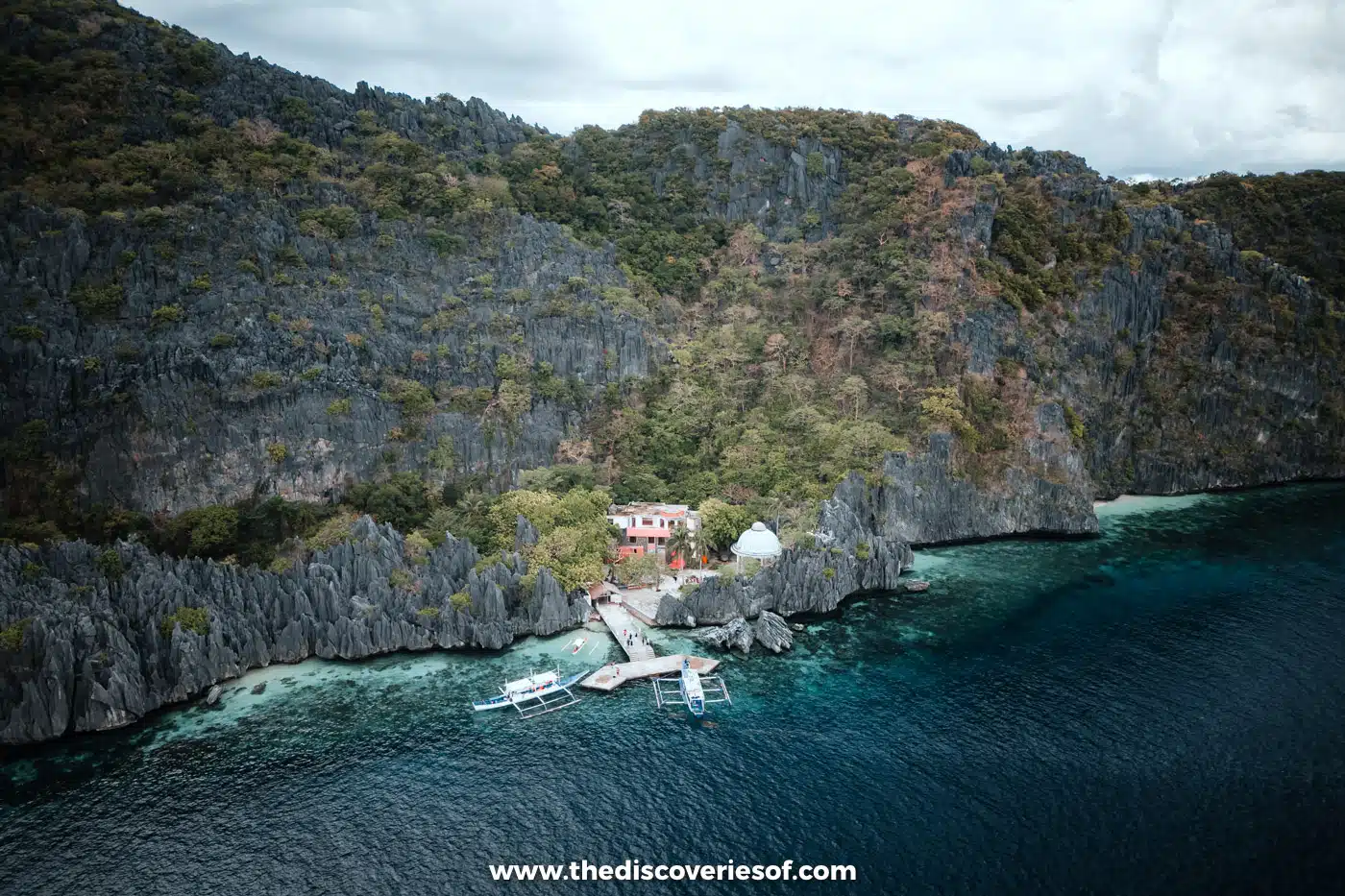
I went ashore but skipped the shrine itself to fly my drone and take photos, and the view from above is worth it if you have one.
Paddle your own kayak in Cadlao Lagoon
The lagoon the crew swapped in on my Tour C was Cadlao Lagoon, on the west side of Cadlao Island, the big, jagged island that looms over El Nido town. It’s usually on Tour D, along with the Small Lagoon on Miniloc, a narrow, enclosed lagoon you kayak into through a channel in the rock, which moved from Tour A to Tour D because it had become too busy.
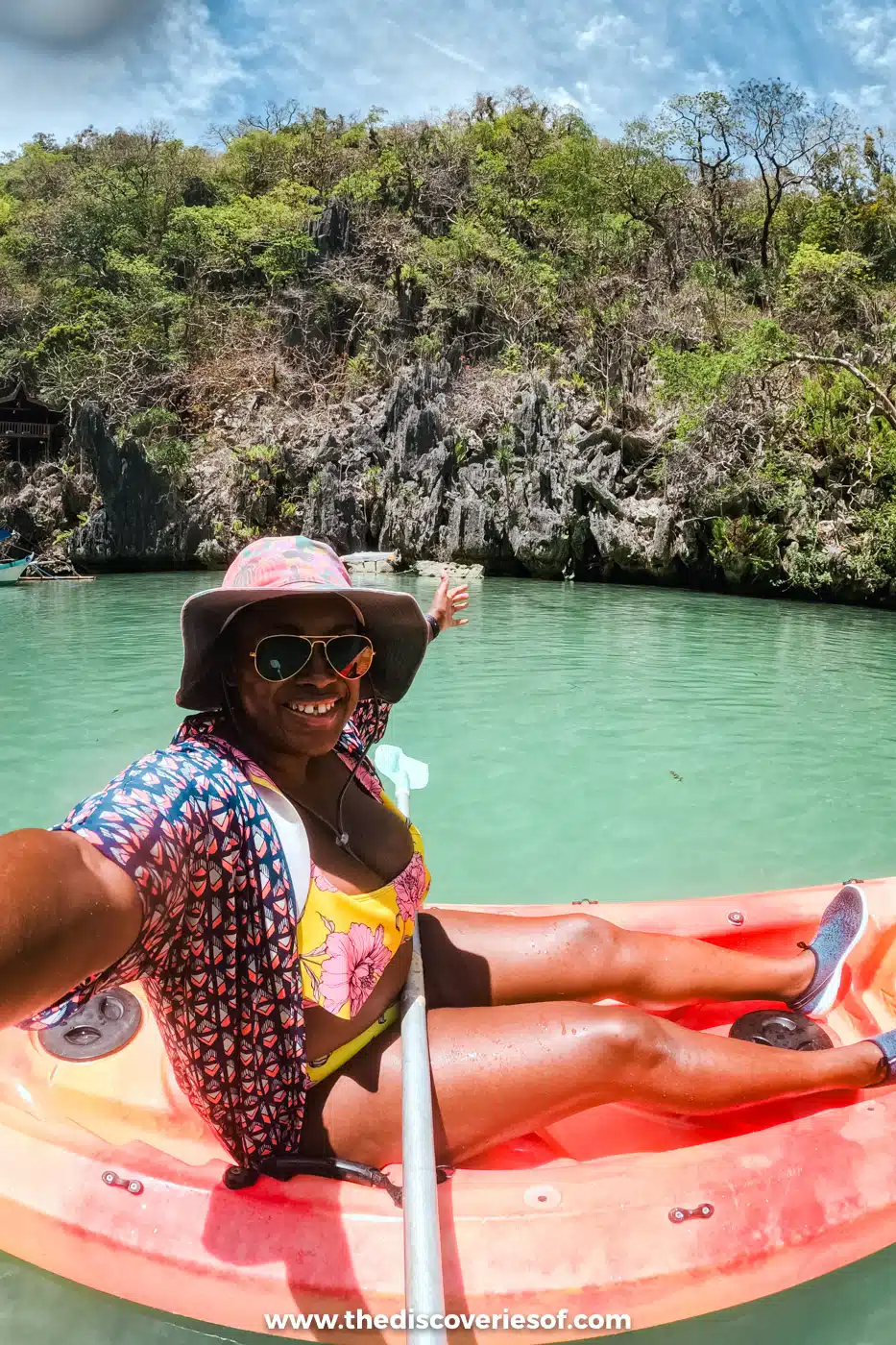
I rented my own kayak for ₱300 and had the most peaceful hour of the trip, floating in the middle of a still green lagoon below the cliffs. I will never get over the colour of the water in the Philippines. If your tour offers kayaks, a single is easier than coordinating with a whole group.
Top tip
The Small Lagoon has a ₱200 fee and its own visitor cap. If you want to see both the Big Lagoon and the Small Lagoon, you’ll need Tour A and Tour D.
Explore the caves and Snake Island on Tour B
Tour B is the one I didn’t do, and it’s the best choice if you’ve already done A and C. Its highlight is Snake Island, a winding sandbar that links Vigan Island to the mainland and looks like a snake from the viewpoint at the top of the island. You’ll also crawl into Cudugnon Cave, a limestone cave on the mainland where locals hid during the Second World War, and sail up to Cathedral Cave, a sea cave too narrow for most boats to enter. Lunch is usually on Pinagbuyutan Island or at Entalula Beach.
Watch the sunset from a rooftop
The bay faces west, so sunsets here are spectacular, and the best way to see one is with a drink in hand. I watched it two nights running from Piece of Sky, the rooftop bar at H Hotel, with views across the main beach and the bay. Some people I met were heading to a bar with cheap drinks, but I wanted drinks with mad sunset views, and I’d make the same call again.

For a sunset on the sand, Las Cabañas Beach, about 20 minutes south of town by tricycle, faces straight out to the islands and is free to visit. Corong-Corong, just south of town, is good for a sunset walk.
Zipline to Depeldet Island
At Las Cabañas, a zipline runs from the beach out over the water to Depeldet Island, a tiny rocky islet just offshore. You can ride sitting up or lying flat “superman” style, one way or there and back, for about ₱500 to ₱1,100, and it runs from 9am to 5.30pm. Time it for late afternoon and you can stay on the beach for sunset afterwards.
Spend a day at Nacpan Beach
Nacpan is the beach to head for once the boat trips are done: a long, quiet curve of sand, about 4 kilometres long, backed by coconut palms. Together with Calitang Beach next door, it forms the “twin beaches”, and a short climb of 15 to 20 minutes to the viewpoint at the end shows off both. There’s no entrance fee, and a handful of beach bars serve food and drinks.
It’s about 17 kilometres north of town, around 45 minutes by road, with the last stretch unpaved. Shared shuttles run from town for about ₱400 to ₱450 each way, or a tricycle will take you there and back, with waiting time, for about ₱1,000 to ₱1,500. I spent my days on the water, so I didn’t make it, but with a fourth day it would be top of my list.
Top tip
Check the time of the last shuttle back before you settle in, usually early evening, or agree a pickup time with your tricycle driver.
Walk the Taraw Cliff canopy walk
The jagged cliffs behind town are Taraw, and the safest way to get up them is the canopy walk, a via ferrata run by Palawan X Adventure. Clipped into a fixed cable with a harness and helmet, and with a guide, you climb over the limestone for views over the rooftops and the bay. It takes about 1 to 1.5 hours, costs about ₱400 to ₱450, and runs daily from 8am, with the last entry at 3pm.
Climbing to the summit of Taraw itself is a different matter. It has been restricted since a tourist was badly injured in a fall in 2018, and permission is needed from the protected area authorities, so stick to the canopy walk.
Hike to Nagkalit-kalit Falls
For a change from the sea, Nagkalit-kalit Falls is a waterfall about 10 metres high in the forest about 21 kilometres north of town, near the road to Nacpan. The trail takes about 40 minutes and crosses the river around seven times, so wear shoes that can get wet. Entry is ₱250, plus a fee for a local guide at the trailhead.
Dive Bacuit Bay
There are more than 40 dive sites within a short boat ride of town, and the diving is a good reason to stay longer. South Miniloc is the most famous site, while Natnat, the closest to town, is good for night dives, Helicopter Island is known for turtles, and North Rock attracts larger fish and the occasional whale shark. Several PADI 5 Star dive centres are based in town, including Submariner Diving Center and Palawan Divers, and a day of two dives costs around US$100, including equipment.
Take the slow boat to Coron
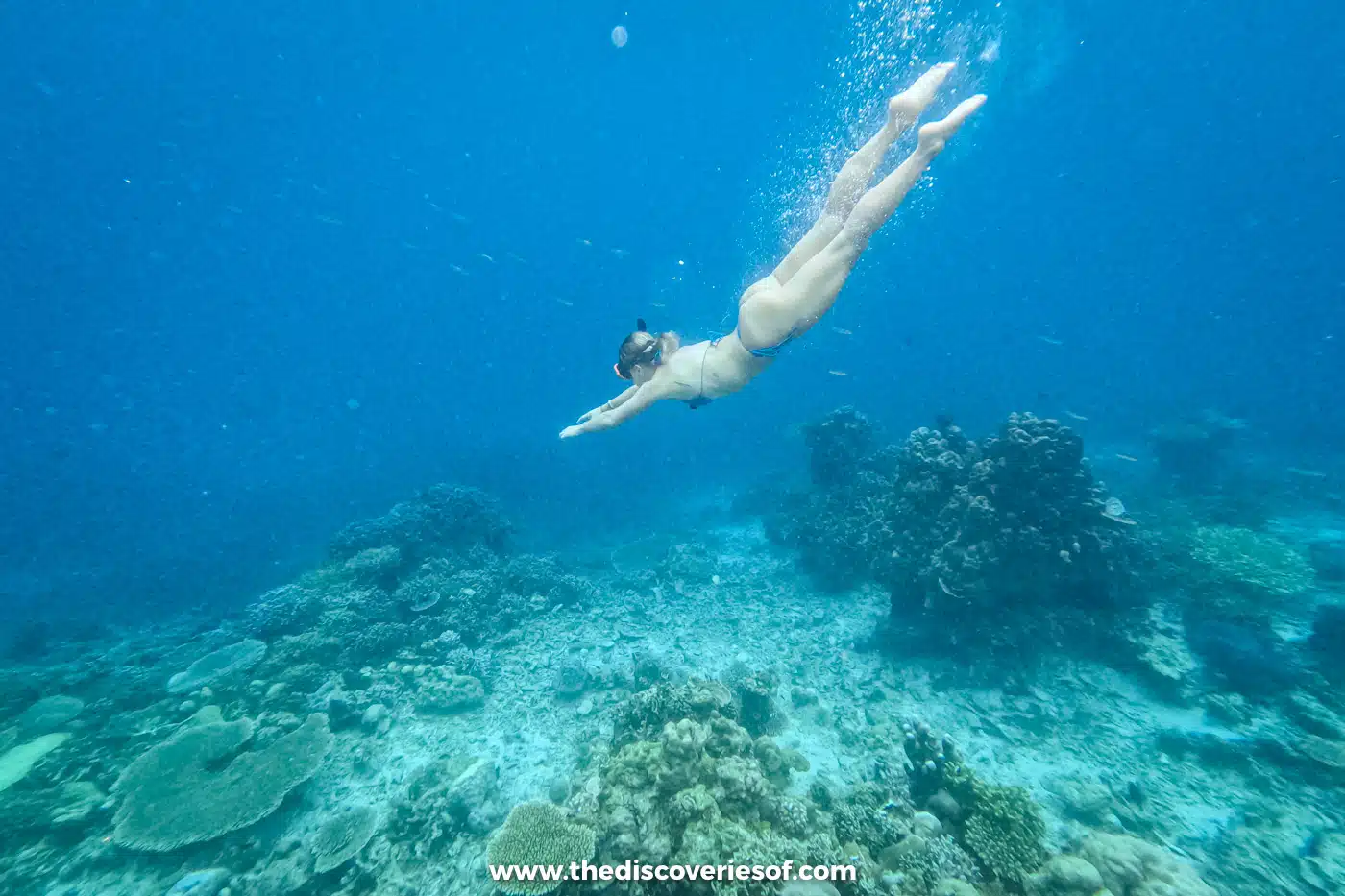
If you’re travelling through Palawan, you’re probably heading to Coron next, and how you get there is one of the biggest decisions of the trip. The fast ferry takes about three and a half hours. I took three days instead, on a boat expedition with Keelooma, snorkelling at remote islands by day and sleeping at simple beach camps by night. It was one of the highlights of my time in the Philippines.
Best places to eat and drink in El Nido
Piece of Sky (££)
The rooftop bar at H Hotel became my evening ritual. It looks out over the main beach and the bay, with the islands silhouetted against the sunset, and on both my evenings there was a saxophonist playing smooth jazz, including Anita Baker as the sky turned orange. Come for a cocktail before sunset, and get there early: on my first night I only caught the tail end.
Ver De (££)
H Hotel’s restaurant is vegan-friendly, and breakfast is entirely plant-based. I had a burrito filled with tofu scramble, black beans and cashew ricotta, with a coffee, and it was a great start to a day on the water. It’s a welcome change if you’ve had your fill of rice and grilled meat, and you don’t need to be vegan to enjoy it.
Lunch on the beach
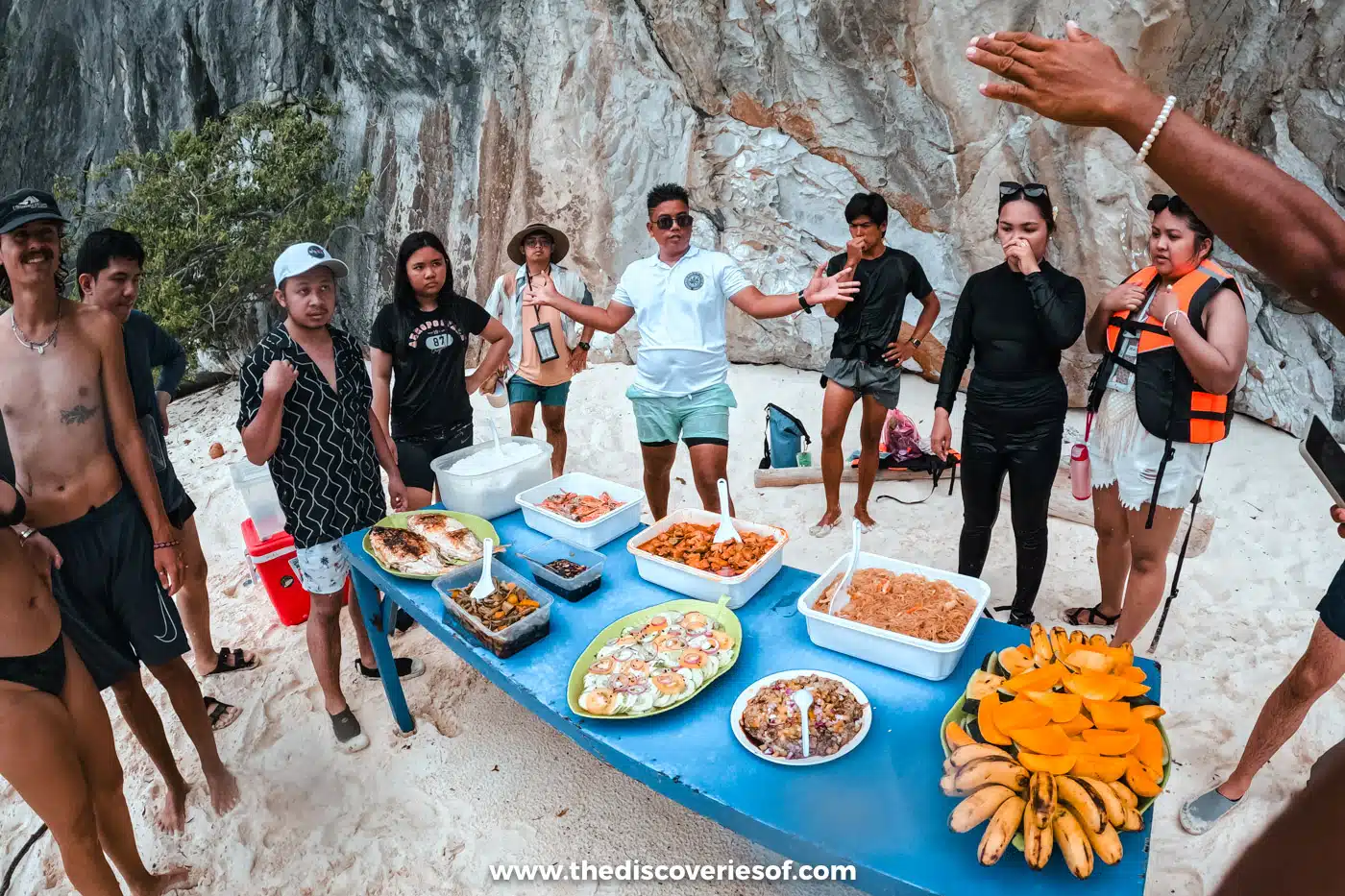
You’ll eat lunch on a beach most days, as part of your tour, and these are a real highlight: on Tour C, ours was laid out on the sand, and the crew couldn’t have been lovelier. My operator warned that crews can no longer cook on board, so lunch is now prepared in advance and may be served cold. Bring snacks if you’re a big eater.
Know before you go
Typical costs
El Nido isn’t the cheapest place in the Philippines, but it’s still good value. Shared island-hopping tours cost ₱1,200 to ₱1,800, a simple Filipino meal ₱80 to ₱150, grilled fish in a local restaurant ₱200 to ₱450, a beer from a shop ₱55 to ₱75 and a beachfront cocktail ₱250 to ₱450. A dorm bed costs ₱500 to ₱1,200 a night and a private air-conditioned room ₱2,200 to ₱4,500. Allow about ₱2,000 to ₱2,500 a day (about £27 to £33, or US$35 to US$45) on a backpacker budget, and ₱4,000 to ₱6,000 a day (about £55 to £80, or US$70 to US$105) for a mid-range trip.
How long to stay
Three or four nights gives you two island-hopping tours and a day to explore on land. With a week, you can do all four tours, spend a day at Nacpan and add a dive or the Taraw canopy walk.
Best time to visit
The dry season, from December to May, is the best time to visit, and February to April usually has the calmest, clearest water. December is the busiest month, and Chinese New Year and Holy Week bring crowds of domestic visitors, so book tours and rooms early then. From June to October or November, rougher seas mean tours are cancelled or rerouted more often, with Tour C usually the first to go, and late-season typhoons can reach northern Palawan.
I visited at the end of May, just before the rainy season, and had mostly good weather with a few rainy patches: the day I left Puerto Princesa it was pouring, and the next morning Tour A ran in perfect sunshine.
Where to stay
This is where I made my one mistake. Where you stay matters here more than almost anywhere else in the Philippines, because the town is tightly packed and the roads beyond it are slow.
- El Nido town: Walking distance to the tour meeting points, restaurants and bars. It can be noisy, and there’s no good swimming beach in town, but for a short stay it’s the most convenient by far.
- Caalan: A short tricycle ride from the centre, facing Cadlao Island, and quieter than town.
- Corong-Corong: About 10 minutes south by tricycle, quieter, with sunset bars, and where the vans from Puerto Princesa arrive.
- Marimegmeg and Las Cabañas: Further south, for sunsets and a beach.
- Lio and Nacpan: Further north, for a resort or beach holiday rather than daily boat tours.
Outpost Beach Hostel (budget)
I started at Outpost Beach Hostel, on the beach at Corong-Corong. The staff were lovely, but the double room was so small that I couldn’t move once my bag was in, and the way in was either along the beach or through a stretch of rubbish, which isn’t fun with a suitcase. After one night, I moved into town.
H Hotel El Nido (mid-range)
I swapped to H Hotel El Nido on Real Street, and it really paid off. My mountain-view room was stylish and spacious, there was a welcome drink and Filipino snacks, the beach was a few steps away, and the rooftop bar became my evening ritual. I wanted to walk to dinner and bars, and I wanted some space before two nights of basic camps on the boat to Coron, and it was perfect for both.
Top tip
If you’re booking cheaply on the edge of town, check how you’ll get in and out with luggage, and how far it is to the tour meeting point. A bargain room 15 minutes out of town costs you in tricycle fares and evenings.
You can compare places to stay in El Nido on Booking.com, and book early for December to April.
How to get there
- By air: El Nido’s small airport at Lio, about 15 to 20 minutes from town by tricycle (₱150 to ₱400), has flights with Cebgo from Clark, Cebu, Caticlan for Boracay, Bohol and Coron. Since March 2026 there are no flights from Manila: connect via Clark, which has a free shuttle bus from Manila’s Terminal 3 if you have a Clark flight within 24 hours. The planes are small turboprops, and the 15 kg baggage allowance is strictly weighed.
- By road from Puerto Princesa: Fly to Puerto Princesa, which has frequent flights from Manila, then take a shared van, which takes five to five and a half hours and costs around ₱650 to ₱790, or a Cherry Bus, which is cheaper but slower. They arrive at the transport terminal in Corong-Corong, a short tricycle ride from town. I came this way after visiting the Underground River.
- By sea from Coron: Fast ferries take about three and a half hours, or you can take a multi-day boat expedition.
My guide to getting around the Philippines has the full details on flights, ferries and vans, and my guide to getting from El Nido to Coron compares the options north. Once you’re there, my Coron travel guide covers what to do.
Getting around
Town is small enough to walk. Tricycles go everywhere else, at about ₱50 to ₱150 for short hops, ₱100 to ₱250 to Las Cabañas and more for Lio and Nacpan. Agree the fare before you set off. You can rent a scooter for about ₱350 to ₱700 a day, or a kayak from the town beach for about ₱300 to ₱400 an hour and paddle about 30 minutes to the beaches on Cadlao Island.
Fees
Everyone pays the ₱400 Eco-Tourism Development Fee, valid for 10 days. Keep the receipt, as you’ll need it every time you board a tour. On top of that, each tour has its own user fees, such as ₱200 for the Big Lagoon on Tour A, ₱200 for the Small Lagoon on Tour D and ₱200 to ₱300 for Matinloc Shrine on Tour C, and kayaks cost extra. Fees are cash only, and some operators include them in the price, so check what you’re paying for. Crews also appreciate a tip of about ₱100 to ₱200.
Money and practical tips
- Bring cash. Tours, fees, tricycles and many restaurants are cash only, and the ATMs in town can run dry at weekends and busy times. Larger hotels and dive shops take cards.
- Expect power cuts. El Nido isn’t on the main grid, and outages are common. Keep your phone and camera batteries topped up when you can.
- Use the laundries. There are laundries all over town. I dropped mine off before Tour C and picked it up that evening, in time for the boat trip to Coron.
- Pack for the boats. Water shoes, a dry bag, reef-safe sun cream and a hat are essential. My Philippines packing list has the rest.
Suggested itineraries
El Nido in 3 days: Arrive and watch the sunset – Tour A – Tour C. The classic short stay, with the lagoons and the open sea.
El Nido in 5 days: Tour A – Tour C – Nacpan Beach – Tour B or D – Taraw canopy walk and Las Cabañas at sunset. Adds the beaches and a viewpoint.
El Nido in a week: All four tours – Nacpan Beach – Nagkalit-kalit Falls – a day of diving. Time to see it all, with a buffer for the weather.
Recommended tours
- El Nido Tour A: lagoons and beaches: The tour I did, with the Big Lagoon and the Secret Lagoon.
- El Nido Tour C: hidden beaches and shrine: The tour I did, with Helicopter Island and Matinloc Shrine.
- El Nido Tour B: Cudugnon Cave and more: Snake Island and the caves.
- El Nido Tour D: hidden beaches and lagoons: The Small Lagoon and Cadlao Lagoon.
- El Nido Tours A and C in one day by speedboat: The two best tours in a day, if you’re short of time.
- Private paraw sunset sailing: Sunset on a traditional sailing boat.
Map
Read next
- Puerto Princesa Underground River: how to visit
- How to get from El Nido to Coron
- Coron travel guide
- 3 days in El Nido: the perfect El Nido itinerary
- The perfect 3-week Philippines itinerary
- Best places to visit in the Philippines
- Philippines travel tips
- Getting around the Philippines
Love this? Save and share on Pinterest

Discover the top things to do, insider tips and hidden gems in our Philippines Travel Guides.
Read the guides →