
Planning a trip to Coron? This Coron travel guide covers the best things to do, from the Twin Lagoon and the coral gardens to Kayangan Lake and the Second World War wrecks, plus where to eat, where to stay, the tours worth booking and how to get there.
Jagged black limestone rises straight out of the sea around Coron Island, the water in its lagoons glows emerald, and below the surface lie some of the best coral gardens and wreck dives in Asia. Coron is El Nido’s wilder, more rugged neighbour, and for many people it’s the grand finale of a trip through Palawan.
It was the last stop on my three weeks in the Philippines. I arrived at the start of June after a three-day boat expedition from El Nido and spent four nights in Coron town. I snorkelled a coral garden so bright it looked electric, paddled my own kayak into the quiet back of the Twin Lagoon, ate a gigantic plate of kare-kare and watched the rainy season arrive with the loudest thunderclap I’ve ever heard. This guide combines what I did with everything else worth knowing, so you can plan the right tours, find the best snorkelling and avoid the scrum at the port.
Some links in this article may be affiliate links, which means we may receive a small commission, at no additional cost to you, if you decide to purchase through one of my recommended partners.
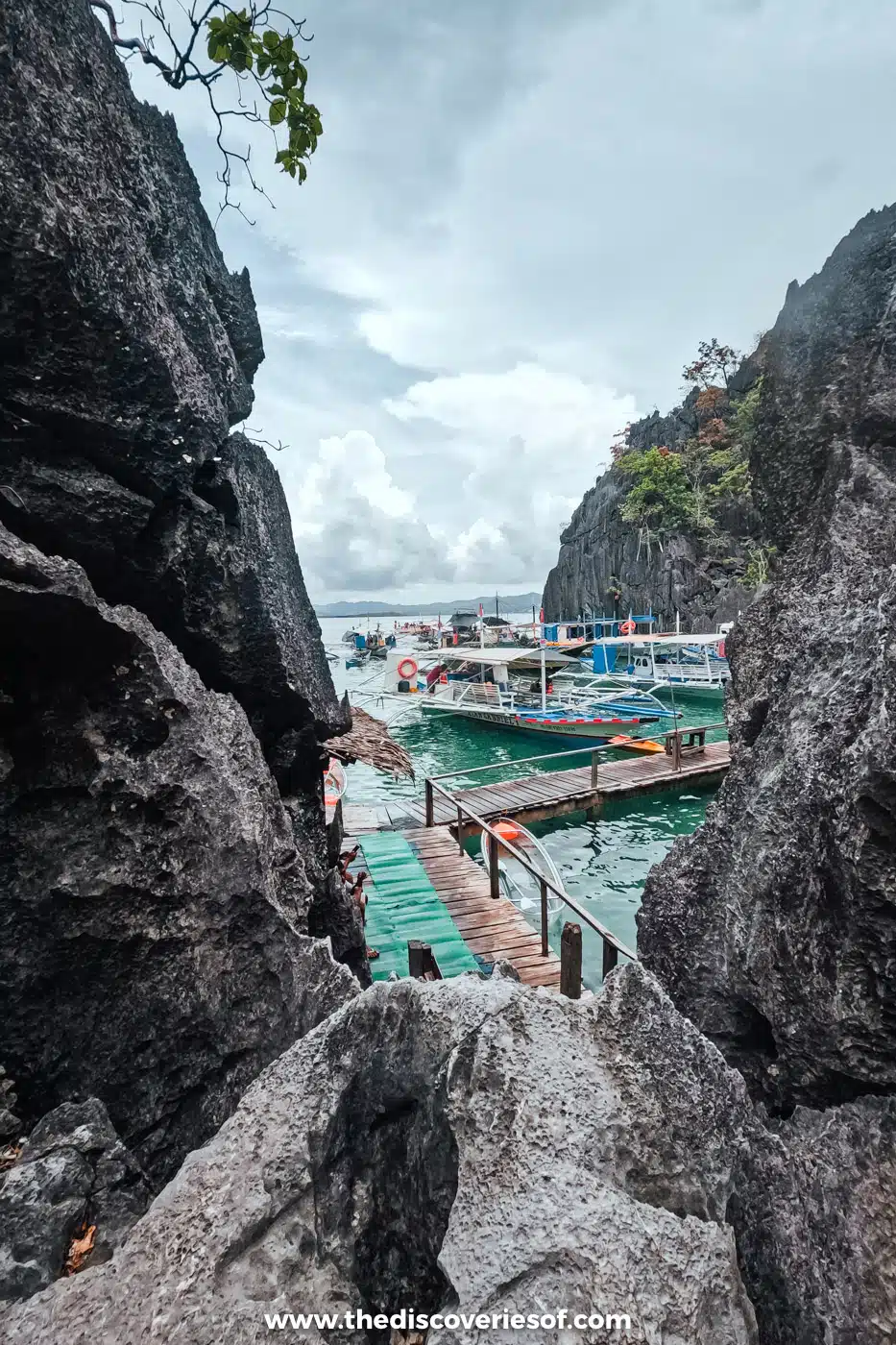
Things to do in Coron
Kayak through the Twin Lagoon
The Twin Lagoon is the sight that sums Coron up: two lagoons on Coron Island, separated by a thin wall of limestone, with water so green it barely looks real. Boats moor in the outer lagoon, and to reach the inner one you either swim through a low gap in the rock at low tide or climb a wooden ladder over the wall at high tide. The ladder was built by the Tagbanua, Coron Island’s indigenous people, who look after the lagoon and collect the ₱200 entrance fee.
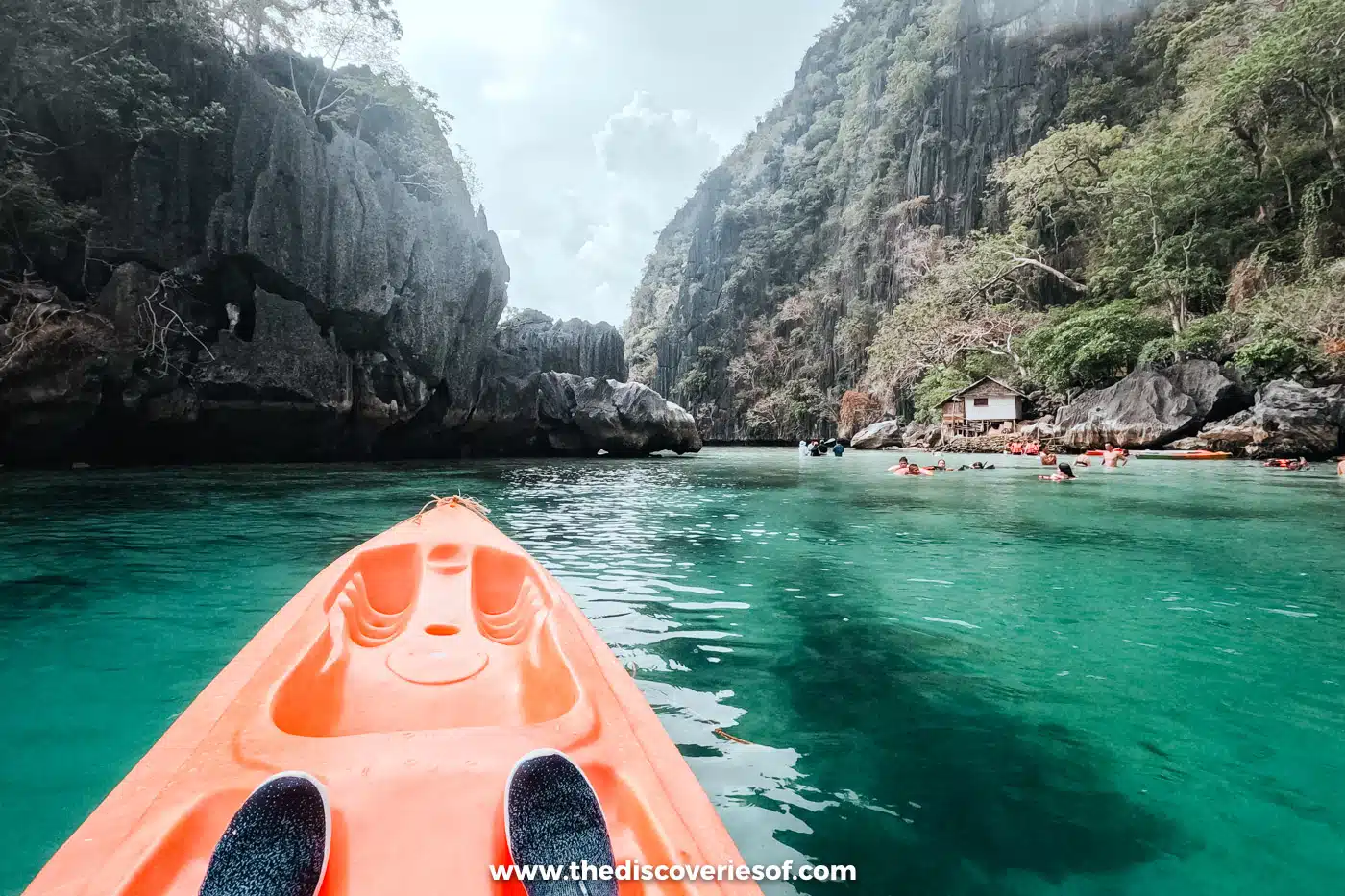
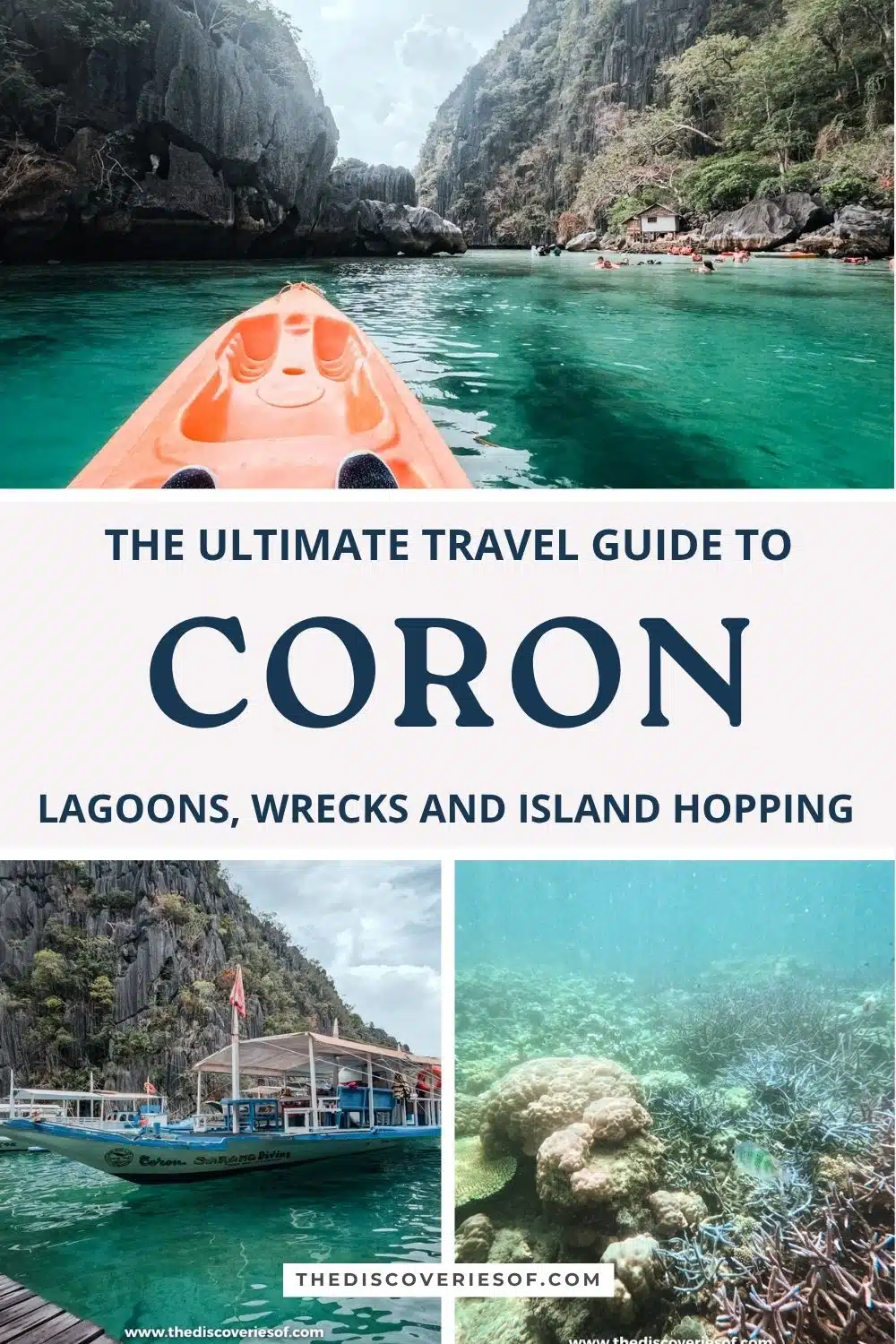
Many people swim through, take a few photos and swim back. I rented a kayak instead, and it was the best decision of my day. It gets you away from where the boats drop everyone off and into the wider, quieter inner lagoon, with much better views of both. At one point I had the whole lagoon to myself. I paddled over a shallow reef covered in more sea urchins than I’ve ever seen, taking care not to touch the coral, then raced back when a thunderstorm built up behind me.
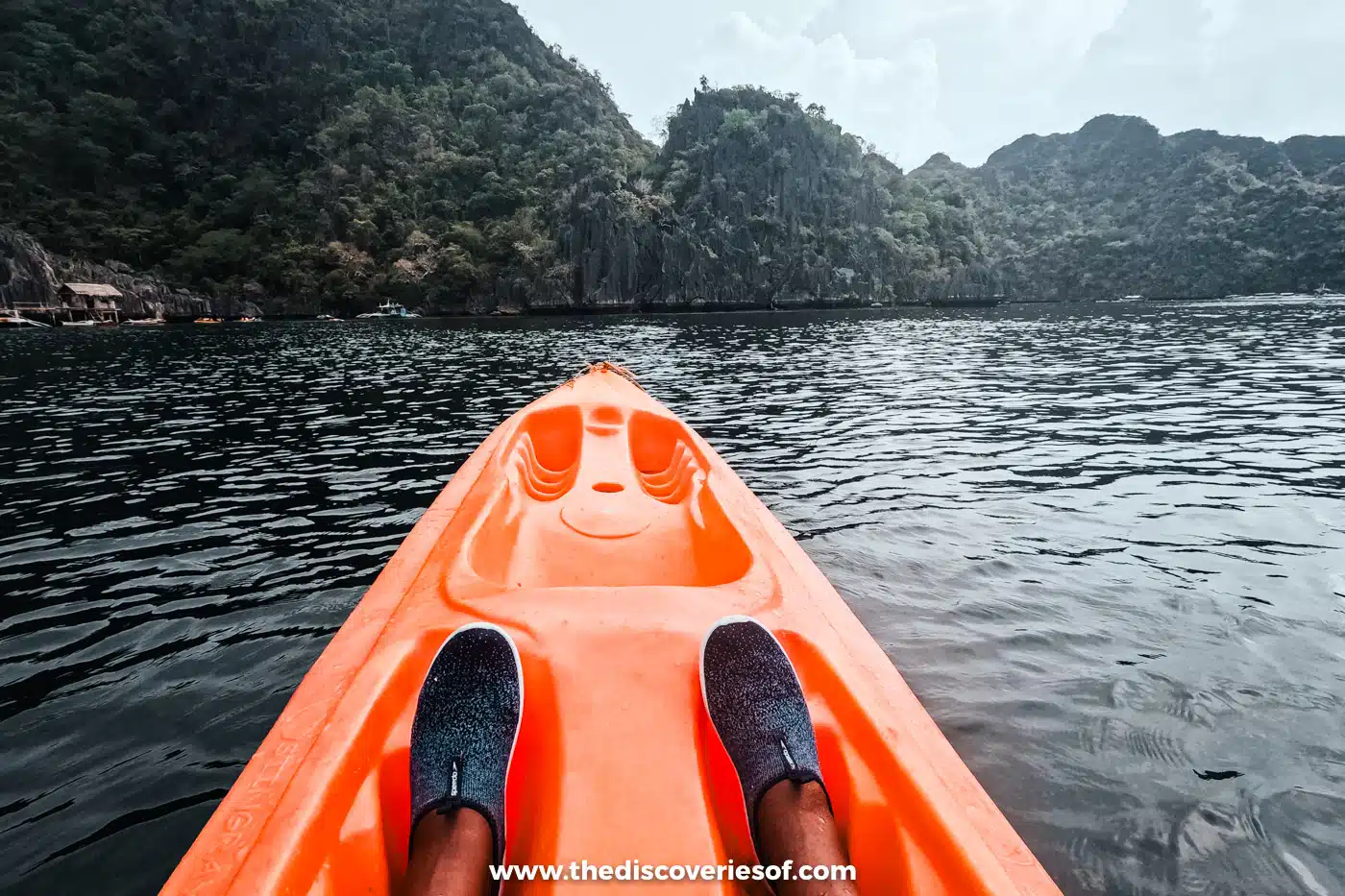
I paid ₱1,000 for a standard kayak. The crystal-bottomed ones were ₱1,500, but the crew said there’s little to see below the surface in the lagoon, so I skipped it. Kayak prices vary a lot between operators, and some agencies quote less, so ask before you book. Swimming isn’t allowed in the outer lagoon, which is kept for boats and kayaks.
Top tip
Rent a kayak and head straight for the far side of the inner lagoon. The crowds stay by the gap, and five minutes of paddling buys you peace and the best views of the cliffs.
Snorkel the coral gardens
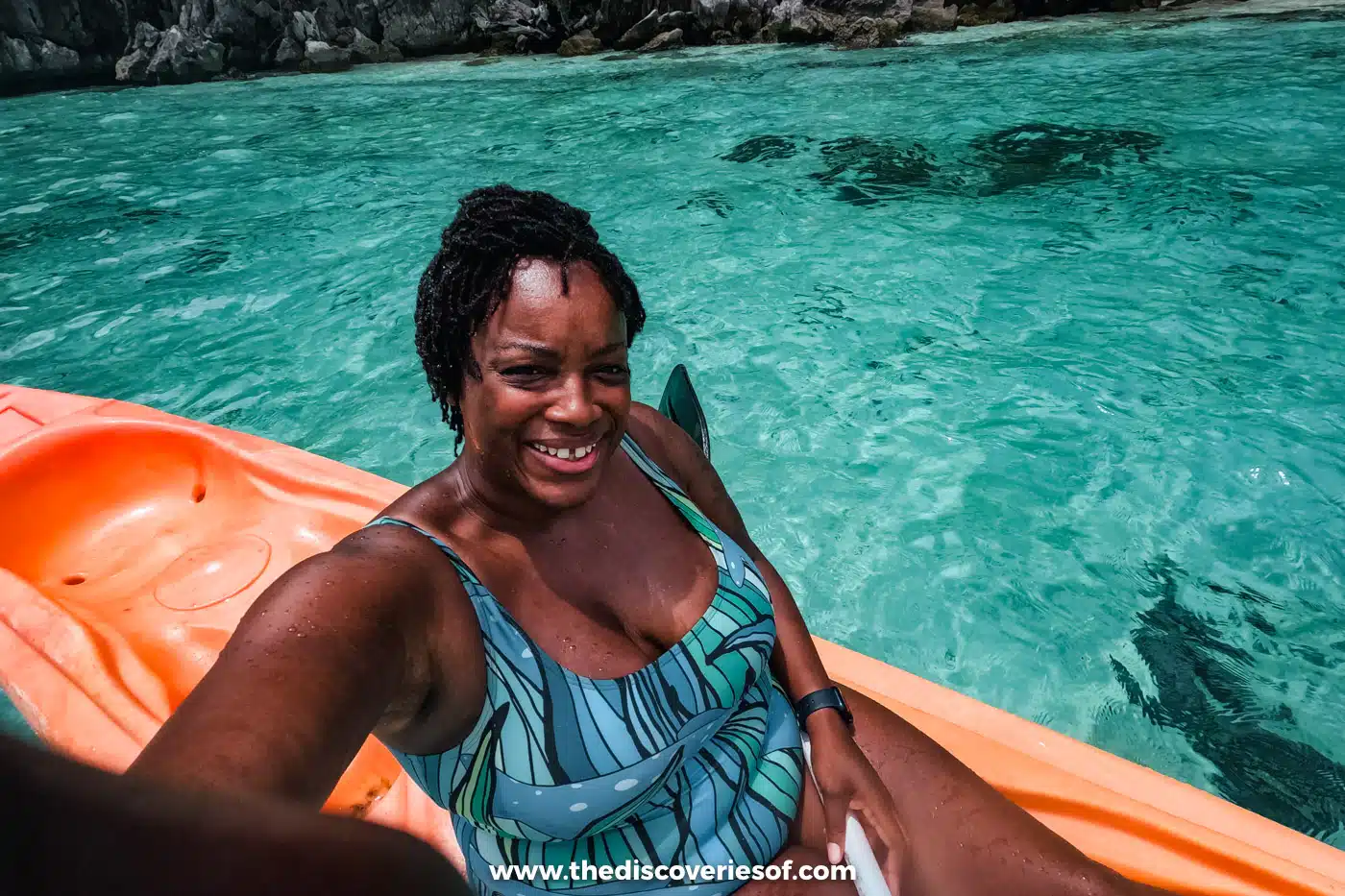
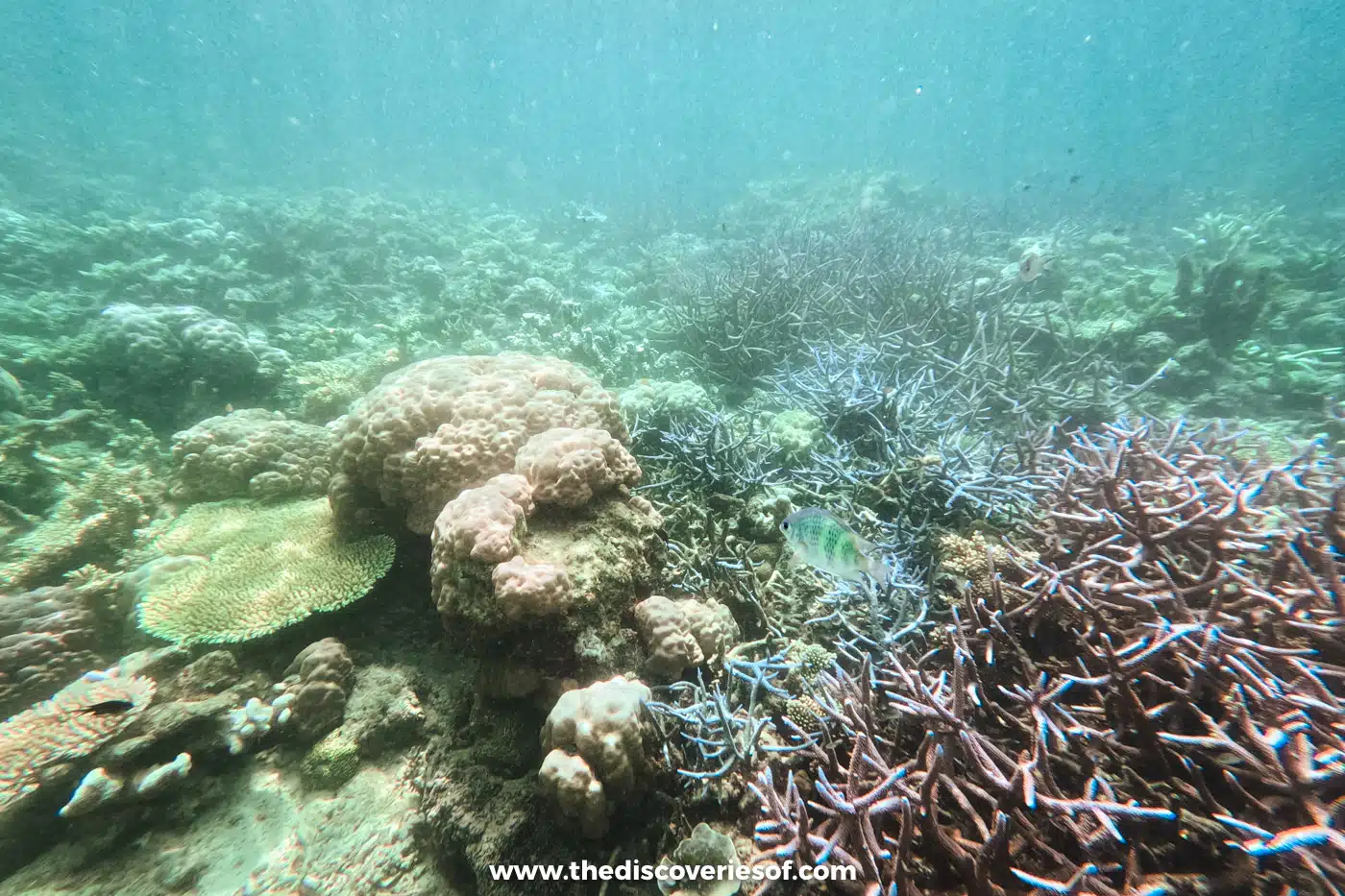
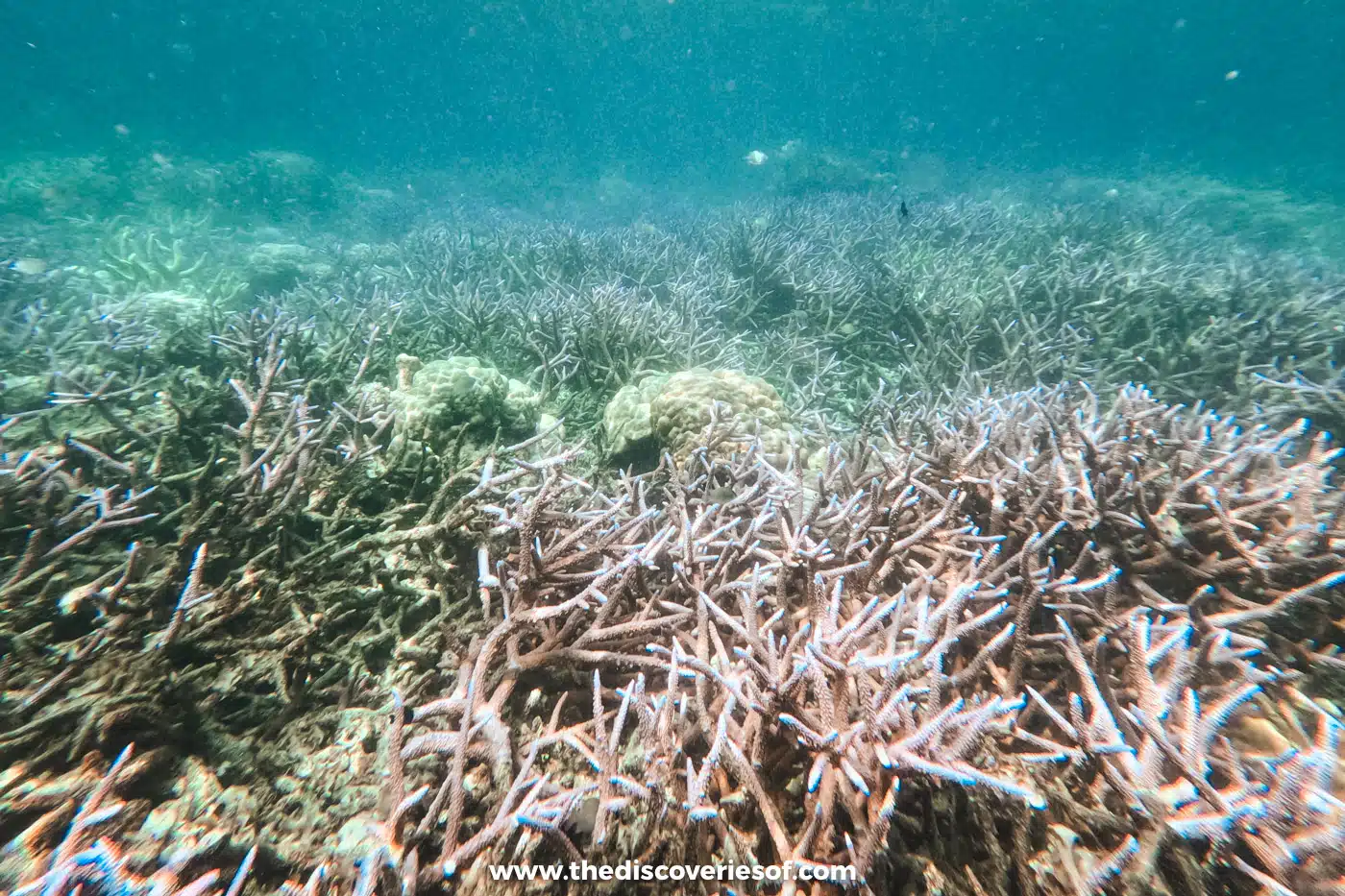
Coron Bay is dotted with shallow coral gardens, and they’re the most underrated thing about it. Every island-hopping tour stops at at least one, whether it’s Twin Peaks, Atwayan, Malwawey or Lusong, and the entrance fees are small, usually ₱100 to ₱150.
The coral garden on my tour was the best snorkelling I did in Coron and some of the best of my whole trip. As soon as I jumped in, there were fish everywhere I looked, and coral in a bright, electric blue I’d never seen before. I even found anemones with clownfish, which are my absolute favourites. If you only snorkel one place in Coron, make it a coral garden.
Top tip
Bring your own mask if you can. Snorkel sets cost about ₱150 to rent on most tours, and a mask that fits makes a big difference in a place this good.
Climb to Kayangan Lake
Kayangan Lake is Coron’s most famous sight, and the view on the way up to it is one of the most photographed in the Philippines. Coron Island has a dozen freshwater lakes, all sacred to the Tagbanua, and only Kayangan and Barracuda Lake are open to visitors. Kayangan was once a burial ground and was off limits to outsiders until the Tagbanua opened it to tourism.
From the boat landing, a path of around 300 to 350 steps climbs over the ridge, which takes 5 to 10 minutes. The famous viewpoint, with a small cave beside it, is part of the way up, and it actually looks back over the boat lagoon and the bay rather than the lake itself. Over the top, the lake itself is calm and very clear. Life jackets are compulsory when you swim, the entrance fee is ₱300, and the lake is open roughly 7am to 4pm. Drones aren’t allowed over the lake, where birds nest.
Kayangan wasn’t on my tour, as I chose the trip with Barracuda Lake instead. If it’s your first time in Coron, pick a tour that includes it: it’s on Tour A and on the Ultimate and Super Ultimate tours.
Top tip
Kayangan is busiest from mid-morning to early afternoon. Book a tour that goes there first, or charter a private boat for a 7am start, and you’ll have the viewpoint almost to yourself.
Swim in Barracuda Lake
Barracuda Lake is the stranger of Coron Island’s two open lakes. It sits in a bowl of jagged limestone, reached by a short climb of about 40 steps over the rocks from the jetty. Fresh water from the rain lies on top of salt water that seeps in from the sea, and at about 14 metres down there’s a thermocline where the temperature suddenly jumps from about 28°C to 38°C. Divers come for that sudden warmth and the eerie underwater landscape, which drops to about 35 metres.
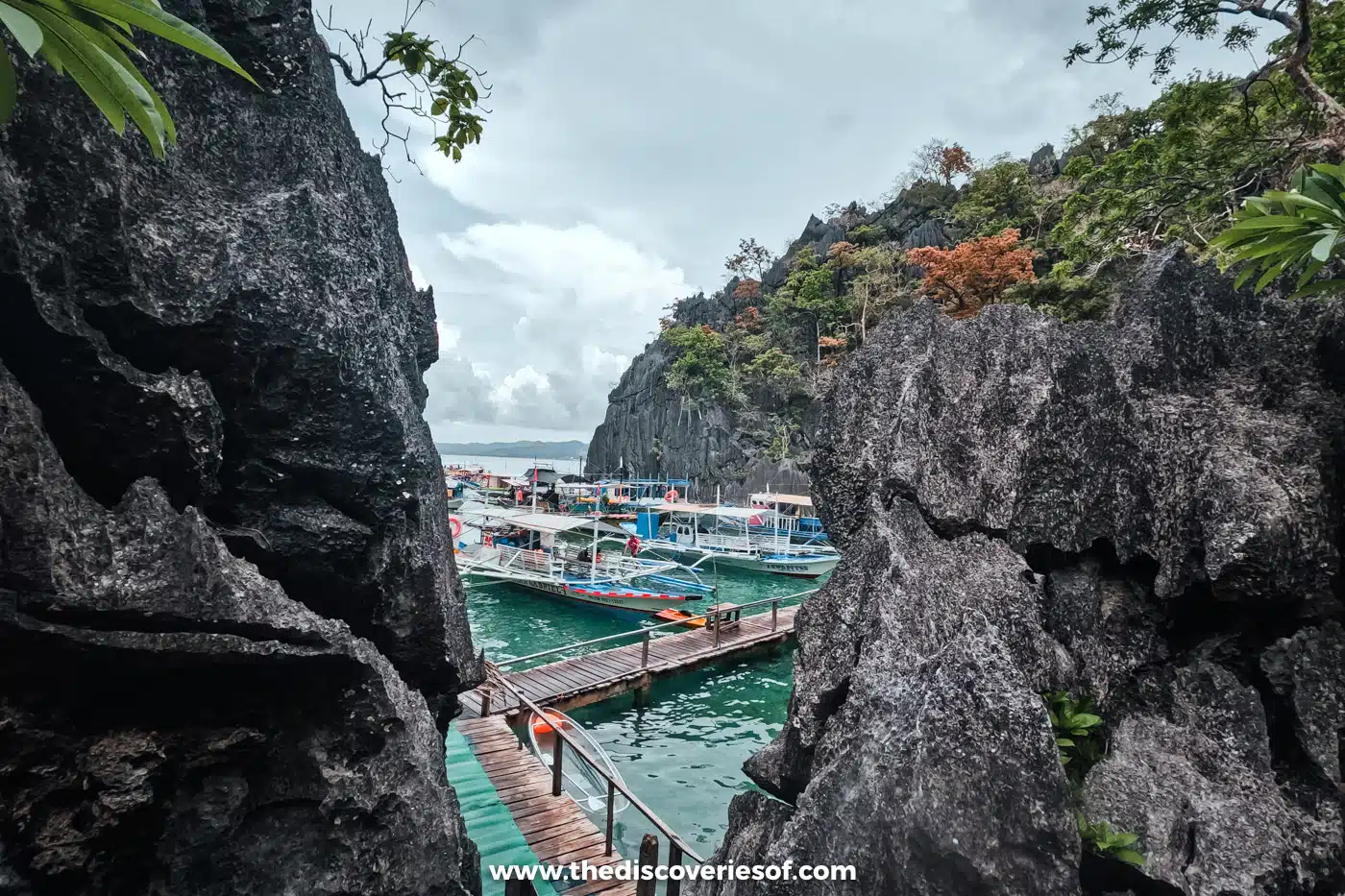
As a snorkeller, I’ll be honest: it was my least favourite snorkelling in the Philippines. The setting is spectacular and the water is a beautiful colour, but the visibility wasn’t great, I saw two fish in 20 minutes, and the single small platform for getting in and out gets crowded. Go, by all means, but don’t expect it to blow you away. It might be better on a bright, sunny day, and it’s more rewarding as a dive. The entrance fee is ₱200 for snorkellers, with a slightly higher fee for divers.
Dive or snorkel the Second World War wrecks
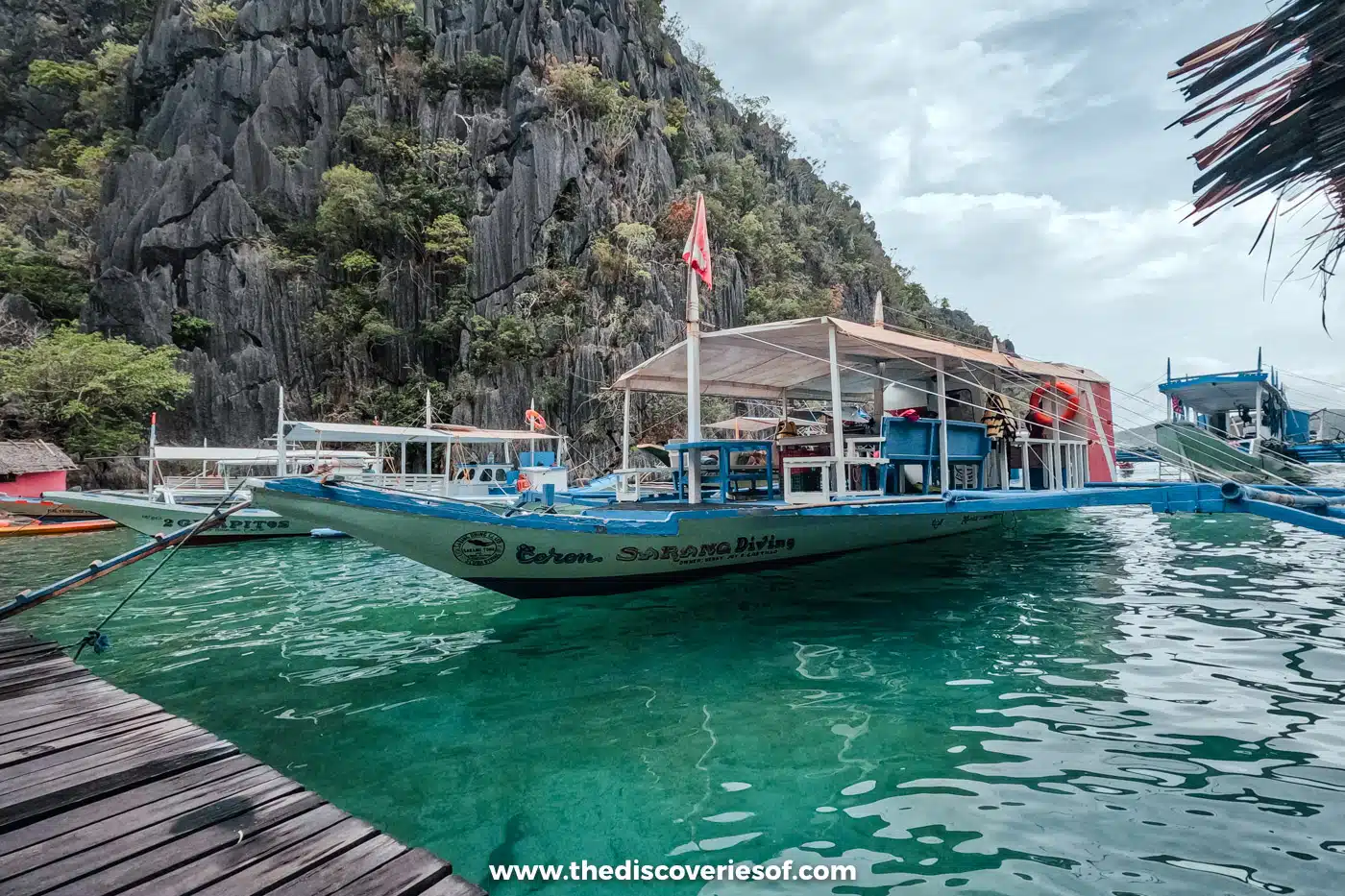
Coron Bay is one of the best wreck-diving destinations in the world. On 24 September 1944, aircraft from the US Navy’s Task Force 38 attacked 11 Japanese ships sheltering in the bay, in a raid that spent only about 15 minutes over the target. Today the wrecks are covered in coral and full of fish.
Most lie too deep for snorkelling. The Irako, a refrigerated supply ship, sits upright at about 43 metres; the Akitsushima, a seaplane tender, lies on its side at about 35 metres; and the Olympia Maru and Kogyo Maru are cargo ships at around 25 to 35 metres. You’ll need Advanced Open Water for most of them. Dive centres in town charge from about ₱4,000 to ₱5,500 for two or three dives, including equipment, guide and fees.
Snorkellers still get a taste. The Skeleton Wreck, a small ship near Coron Island, starts just 5 metres down and is a stop on several tours, and the Lusong Gunboat breaks the surface at low tide. I snorkelled around a wreck on my boat expedition from El Nido, my first time doing so, and seeing the ship’s outline covered in coral and fish was incredible.
Do
Snorkellers can book a Reefs and Wrecks tour, which visits the Lusong Gunboat, Lusong Coral Garden and East Tangat Wreck for about ₱1,700 per person.
Snorkel Siete Pecados
Siete Pecados, meaning the “seven sins”, is a marine park around seven small rocky islets less than 3 kilometres from Coron town, which makes it the easiest snorkel site to reach. The reef is home to plenty of fish, clownfish and the occasional turtle. There can be a current, and it gets crowded when lots of boats arrive at once. The entrance fee is ₱100, and it’s on the Ultimate tour and some versions of Tour A.
Top tip
Siete Pecados is so close to town that it’s easy to visit early in the morning on a private boat, before the tour boats arrive.
Spend a day on the beaches
Coron is more about lakes and lagoons than beaches, but there are some beautiful ones if you know where to look. The best are on a separate day trip, usually sold as Tour C or the Island Escapade, which heads about an hour and a half south-west to Malcapuya, a white-sand island off Culion, with stops at the Bulog Dos sandbar and Banana Island. It costs about ₱1,700 per person, with beach fees of around ₱200 to ₱250 each.
Closer to town, Banol Beach and Smith Beach on Coron Island are pretty coves on several tours, and CYC Beach, a tiny islet about 6 kilometres from town, is free.
Lunch on my tour was served on a tiny white-sand cove ringed by dramatic rocks. We jumped off the boat and waded a few metres to the beach, where the crew served barbecued fish, crab, chop suey and rice, followed by mangoes. If you’re a mango person, the mangoes in the Philippines will change your life.
Climb Mount Tapyas for sunset
Mount Tapyas is the hill behind Coron town, topped by a large cross and an illuminated CORON sign. A staircase of 721 steps, numbered as you go, climbs about 210 metres to the top, which takes 20 to 30 minutes. It’s free, and the view over the town, the bay and the islands is one of the best in Coron.
Top tip
Start the climb at about 4.30pm, so you’re at the top for sunset, and bring water. If you’re staying near Hop Hostel, the start of the steps is only a few minutes’ walk away.
Soak in Maquinit Hot Spring
Maquinit is said to be the only saltwater hot spring in the Philippines, about 7 kilometres from town. The water collects in stone pools at around 38 to 40°C. It’s open from 8am until early evening, and entry costs around ₱200 to ₱300 in cash.
A tricycle takes 20 to 30 minutes on a bumpy road and costs about ₱300 to ₱400 for the return trip, including waiting time. I’d planned to go, but after so many days in the sun I spent my first days in Coron resting instead.
Top tip
Go in the evening, when the air is cooler and the hot water feels best. A shared town tour (about ₱800) combines the hot spring with Mount Tapyas and the sights in town.
See giraffes at Calauit Safari Park
Calauit is one of the strangest places in the Philippines: a safari park on an island in the far north of Busuanga, with giraffes and zebras roaming the hills. In 1976, President Ferdinand Marcos declared the island a game reserve and shipped in 104 animals from East Africa. The Tagbanua families who lived there were moved off the island, and in 2010 they were granted ancestral domain title over the land. Today, of the African animals, only the giraffes and Grévy’s zebras survive.
It’s a long day out, about two hours by road and a short boat crossing each way. Shared tours cost about ₱2,700 per person and run from about 7am to 4pm, usually with a stop at a beach or Black Island on the way back. Entrance fees are around ₱400 to ₱600 for foreign visitors. I didn’t go, but it’s worth knowing the history before you decide.
Wander around Coron town
Coron town is a working port rather than a resort, with tricycles buzzing along the main road and boats coming and going all day. Lualhati Park, the waterfront promenade, is where many tours start. Look out for the stalls selling Palawan cashews near the port, a popular thing to take home, and the busy public market.
Best places to eat and drink in Coron
El Kuvo (££)
On my last night in the Philippines, I went to El Kuvo on Comesaria Street, just down the road from my hostel, for its famous mango margaritas, which were dangerously good, with a spiced rim. I had the kare-kare, pork belly in a rich peanut sauce served with beans, for about ₱350, and garlic rice for about ₱100. It was huge, great value and a fitting last Filipino meal. It’s also known for its chicken inasal kebabs and sisig, and it’s open from 11am to 10pm.
Inasal Eats Co. (£)
For a casual dinner, this grill on San Agustin Street does excellent chicken inasal, marinated and grilled over charcoal, on and off the bone. I’d definitely recommend it. It also serves pork barbecue and grilled squid, with unlimited rice for a few extra pesos.
Lunch on your island-hopping tour
Lunch is included on almost every tour, and it’s often the best meal of the day: grilled fish, seafood and Filipino dishes laid out on a beach. Whatever you eat in Coron, order garlic rice. Filipino garlic rice is elite: I loved it so much that I now make it at home.
Know before you go
Typical costs
Coron felt pricier than elsewhere in the Philippines. Shared island-hopping tours cost about ₱1,200 to ₱1,900 per person, including lunch and entrance fees, with kayaks and snorkel gear extra. A simple meal is about ₱80 to ₱150, a meal in a mid-range restaurant ₱200 to ₱400 and a beer ₱80 to ₱150. Private air-conditioned rooms in town start at about ₱1,000 to ₱1,800 a night. Allow roughly ₱3,000 to ₱4,000 a day (about £40 to £55, or US$50 to US$70) for a mid-range trip with a tour each day, and more if you stay at a resort.
How long to stay
Three or four nights is ideal. That gives you two days of island hopping, for example a lakes and lagoons tour and a beach or wreck day, plus a day for the hot spring, Mount Tapyas or Calauit, and a buffer in case the weather cancels a tour.
Best time to visit
The dry season, from December to April, brings the calmest seas and the most reliable tours. December is the busiest month, and November is the quietest of the good months. The rainy season runs from June to October, when storm warnings can cancel tours and ferries, especially from July to October.
The rainy season arrived right on cue while I was there in early June. One beach day was cut short by rain after a couple of hours, and on my last night there was a thunderclap so loud that people around me flinched and the power went out. I was so grateful I’d done the boat expedition from El Nido before it broke.
Where to stay
Most people stay in Coron town. It’s where the tours pick up, the restaurants and bars are, and the port and market are. Almost nothing in town is on the beach, but you’ll spend your days on the water anyway. If you want a beach, there are a handful of resorts on private islands and on the Busuanga mainland, but they’re expensive and you’ll need a boat or van for everything.
Hop Hostel (budget to mid-range)
I stayed at Hop Hostel for four nights, in a superior queen private room. Despite the name, it has private rooms as well as dorms, and it’s on the hillside above the centre, a short walk from El Kuvo and the start of the Mount Tapyas steps. It has a rooftop bar with views over the bay and a pool, and it’s for adults only.
You can also compare places to stay in Coron on Booking.com. Book ahead for December to April.
How to get there
By air: Coron’s airport, Francisco B. Reyes Airport, is on Busuanga, about 23 kilometres from town. Since March 2026, there have been no flights from Manila’s main airport: flights now leave from Clark and Cebu, with Cebgo, PAL Express and Sunlight Air, and Cebgo also flies from El Nido in about 40 minutes. The runway has no night operations, so flights run in daylight only and can be delayed by bad weather. Shared vans to town take 30 to 45 minutes and cost about ₱150 to ₱250 per seat. Coron also charges a ₱200 environmental fee (₱150 for children), collected in cash when you land.
Top tip
Leave a buffer before any international connection. My flight out of Coron was delayed by a thunderstorm, which left me with a very tight connection on the other side.
By sea from El Nido: Fast ferries take about three and a half hours and cost around ₱1,700 to ₱3,000, depending on the operator. Or you can do as I did and spend three days sailing from El Nido on a boat expedition, snorkelling and camping on remote islands along the way.
Read next
By sea from Manila: 2GO runs an overnight ferry from Manila to Coron about once a week, taking around 13 hours, though sailings can be suspended in the rainy season.
Getting around
Tricycles are the way to get around town, at about ₱20 per person for a short ride. You can rent a scooter for about ₱400 to ₱600 a day to explore Busuanga, or hire a van with a driver, which costs about ₱5,500 for a day, for Calauit or the far side of the island. Island-hopping tours include a pickup from your hotel, usually by tricycle.
Money and practical tips
- Bring cash. Tours, fees, tricycles and many restaurants are cash only. There are ATMs in town, including BPI, Metrobank and Landbank, but they can run dry in peak season or go down in a power cut, and foreign cards pay a fee of about ₱250 per withdrawal.
- Expect a scrum at the port. Confirm what’s included before you hand over any cash. On my tour, a man who said he was my guide asked me to pay for a kayak and a snorkel the moment I arrived, though the snorkel was included, then disappeared for ten minutes. It all worked out, but it was the most disorganised start to any tour of my trip.
- Check the stop list. Tour letters aren’t standardised, so one agency’s Tour A can be another’s Tour B. Check exactly which stops you’re getting before you book. My guide to Coron island-hopping tours compares them all.
- Pack for the water. Water shoes, a dry bag, reef-safe sun cream and a hat are essential, and a rain jacket from June. My Philippines packing list has the rest.
- Don’t rely on signal. Globe is usually stronger than Smart in town, there’s little or no signal on the water, and wifi drops with the power.
Suggested itineraries
Coron in 3 days: Lakes and lagoons tour – coral gardens and Siete Pecados – Mount Tapyas and Maquinit Hot Spring. The classic first visit, with the Twin Lagoon, Kayangan or Barracuda Lake and the best snorkelling.
Coron in 4 days: Ultimate tour – Malcapuya beach day – Calauit Safari Park – Mount Tapyas at sunset. Adds the beaches and the giraffes, with Tapyas squeezed in after the safari.
Coron for divers: Two days of wreck diving – Barracuda Lake – a lagoons tour. Built around the wrecks, with a day above water to see the lagoons.
Recommended tours
- Barracuda Lake, Skeleton Wreck, Twin Lagoon boat tour: The tour I did, with Corazon Travel and Tours, including a coral garden and lunch on the beach.
- Coron Ultimate tour: 7 destinations with lunch and transfers: The best-reviewed way to see Kayangan Lake, the Twin Lagoon and the coral gardens in one day.
- Coron Tour A: Kayangan Lake and Quin Reef with lunch: A cheaper day built around Kayangan Lake.
- Coron coastal cliffs, beach and Malcapuya island-hopping tour: The beach day, with Malcapuya’s white sand.
- Calauit safari adventure: The giraffes and zebras of Calauit, with Black Island and lunch.
- Private boat hire with guided tour and lunch: Your own boat and route, to beat the crowds at Kayangan.
Map
Read next
- Coron island hopping tours: which tour to choose
- How to get from El Nido to Coron
- Keelooma review: island hopping from El Nido to Coron by boat
- The perfect 3-week Philippines itinerary
- Best places to visit in the Philippines
Love this? Save and share on Pinterest

Discover the top things to do, insider tips and hidden gems in our Philippines Travel Guides.
Read the guides →


