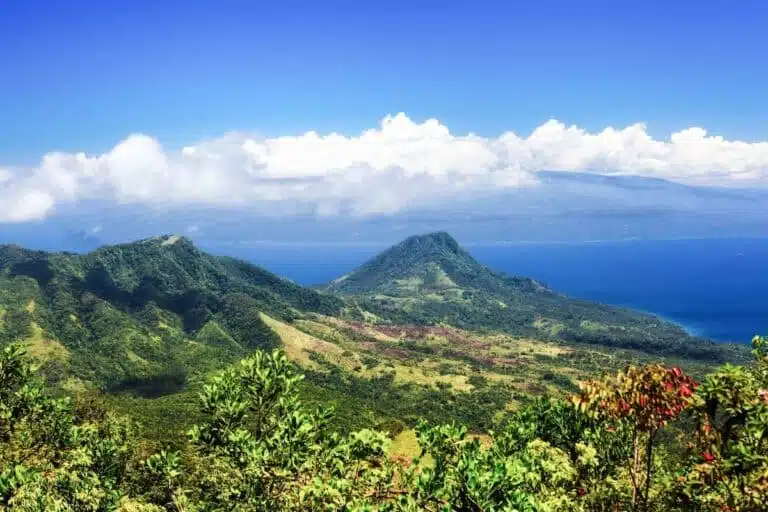
Planning three weeks in the Philippines? This Philippines itinerary takes you from Siargao’s lagoons to Moalboal’s sardine run, the Underground River, El Nido’s island hopping and a three-day boat trip to Coron, with the routes, costs and timings that make it work.
The Philippines is made up of more than 7,600 islands, and that’s exactly what makes planning a trip so hard. Every island looks incredible in photos, the distances between them are bigger than they look on a map, and almost every journey involves a flight, a boat, a long van ride or all three. Pick the wrong combination and you spend half your trip in transit.
I spent just under three weeks in the Philippines, travelling from Siargao to Cebu and then across Palawan, and this is the route I’d recommend to anyone who wants a mix of beaches, lagoons, snorkelling, adventure and downtime. It’s built around one rule: never more than one big travel day at a time, and always somewhere worth arriving at.
Along the way you’ll swim with stingless jellyfish, snorkel in the middle of a swirling ball of sardines, canyoneer down to Kawasan Falls, paddle a boat into one of the longest navigable underground rivers in the world, kayak through El Nido’s lagoons and spend two nights camping on remote islands on the way to Coron.
Some links in this article may be affiliate links, which means we may receive a small commission, at no additional cost to you, if you decide to purchase through one of my recommended partners.
Philippines itinerary at a glance
- Days 1 to 4: Siargao. Cloud 9, the land tour and Sohoton Cove’s jellyfish lagoon.
- Days 4 to 9: Moalboal, Cebu. The sardine run, canyoneering to Kawasan Falls and a few slower days.
- Days 9 to 11: Puerto Princesa. The Underground River and the mangroves at Sabang.
- Days 11 to 14: El Nido. Island-hopping Tours A and C, and rooftop sunsets.
- Days 14 to 16: El Nido to Coron by boat. Two nights at island camps.
- Days 16 to 20: Coron. The Twin Lagoons, the coral garden and a last few days on Busuanga.
This route assumes you fly into Cebu, which has the most domestic connections, and fly home from Coron via Manila or Clark. It works in reverse too, and if you’d rather skip a flight, you can drop Siargao and start in Cebu.
Days 1 to 4: Siargao
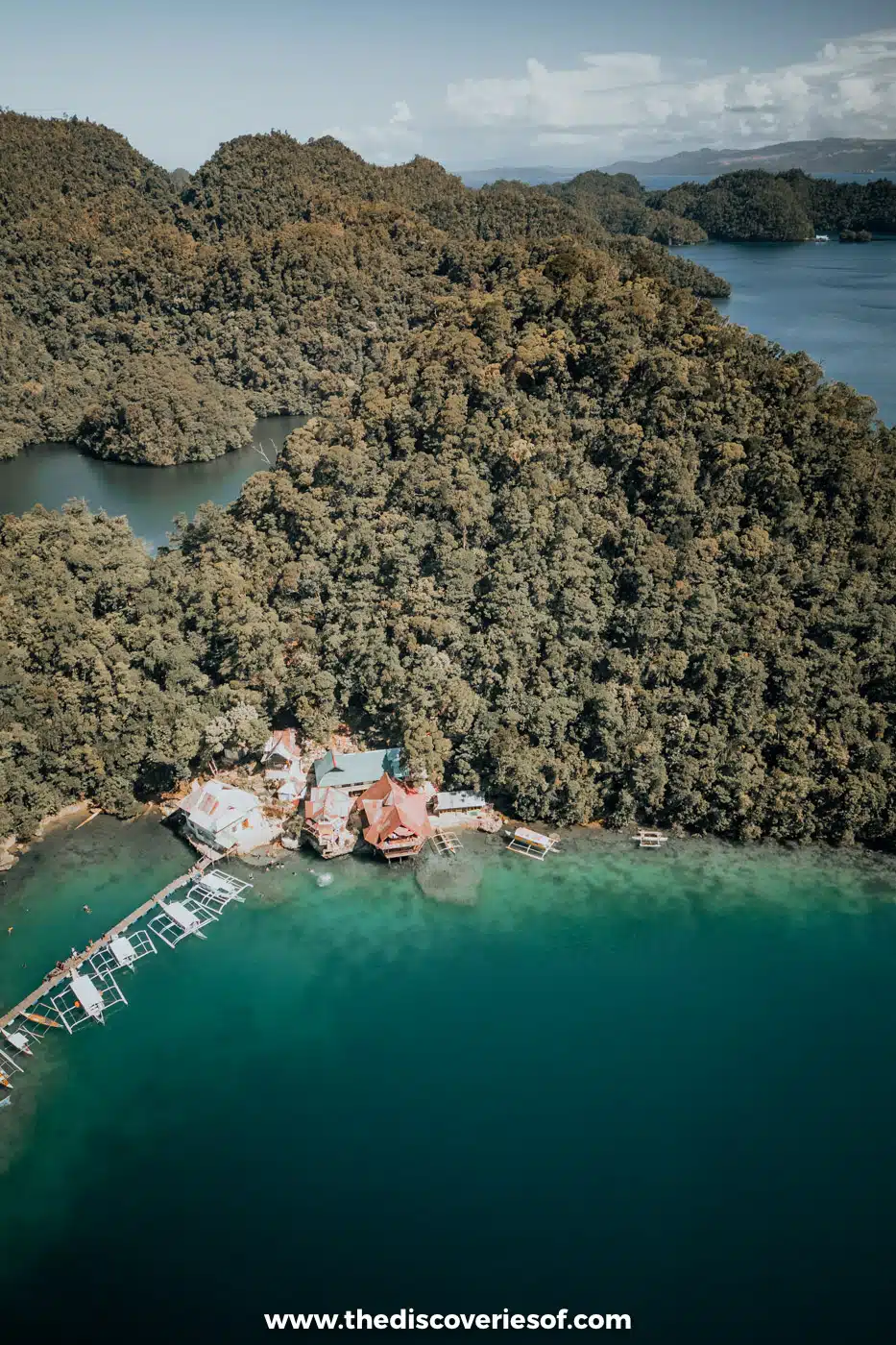
Siargao is famous as the Philippines’ surfing capital, but you don’t need to surf to love it. I didn’t get on a board once. The teardrop-shaped island off the north-east tip of Mindanao has tidal rock pools, an emerald lagoon hidden behind the mangroves, coconut palms as far as the eye can see and, a boat ride away, a lagoon full of jellyfish that can’t sting you.
Base yourself in General Luna, the island’s main hub. Almost every tour picks up there, and Tourism Road, the strip that runs towards Cloud 9, is where you’ll find most of the cafés, bars and places to stay.
Watch the surfers at Cloud 9
Spend your first afternoon at Cloud 9, the reef break that put Siargao on the world surfing map. Even if you never touch a board, walking out along the boardwalk over the reef and watching the sets roll in is a classic Siargao experience. I paid ₱100 to walk out, and you can buy a multi-day pass if you plan to come back at sunrise. Afterwards, walk a few steps to Loka, a beachside café and bar right by the boardwalk, for a flat white and a mango pudding.
Do the land tour
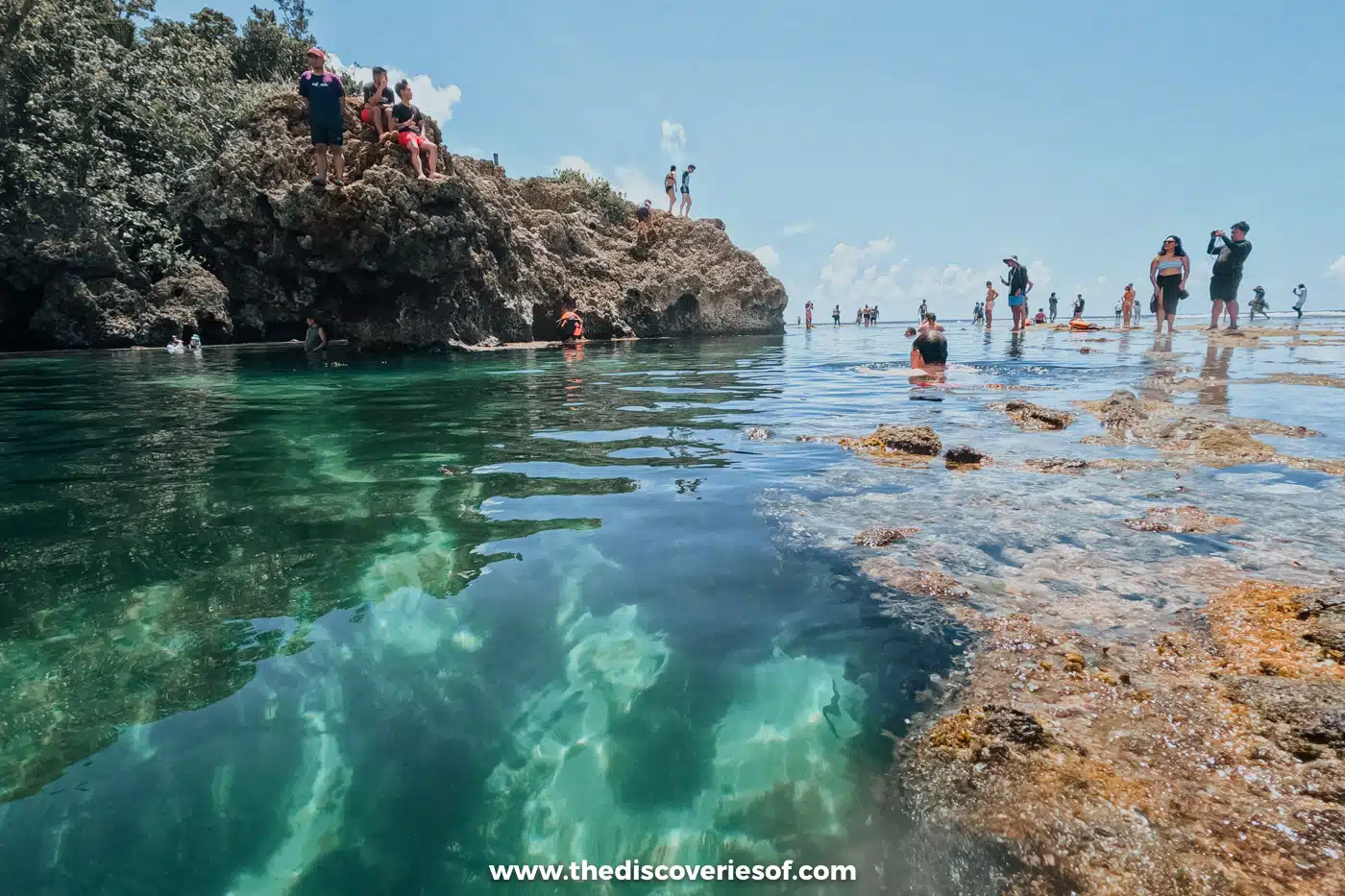
Give your first full day to the land tour, which packs the island’s best natural sights into one long day. Mine started at the coconut viewpoint, where palms stretch to the hills in every direction, then went on to Maasin River, where I jumped straight in to cool off, and on to the Magpupungko rock pools. These natural pools only appear at low tide, so the whole day should be timed around them. Water shoes were an absolute godsend on the slippery rocks.
The highlight is Sugba Lagoon, a 30-minute boat ride through the mangroves from Del Carmen. It reminded me of the karst scenery around Railay in Thailand, and my first reaction was just “oh wow”. Rent a kayak, swim from the floating platform and get there before the afternoon tour groups, as the swimming area is small and fills up fast.
Do
Most guesthouses in General Luna can book the land tour with a driver and lunch, or you can book a Siargao land tour with lunch and transfers. Entrance fees at each stop are small and paid in cash.
Swim with the jellyfish at Sohoton Cove
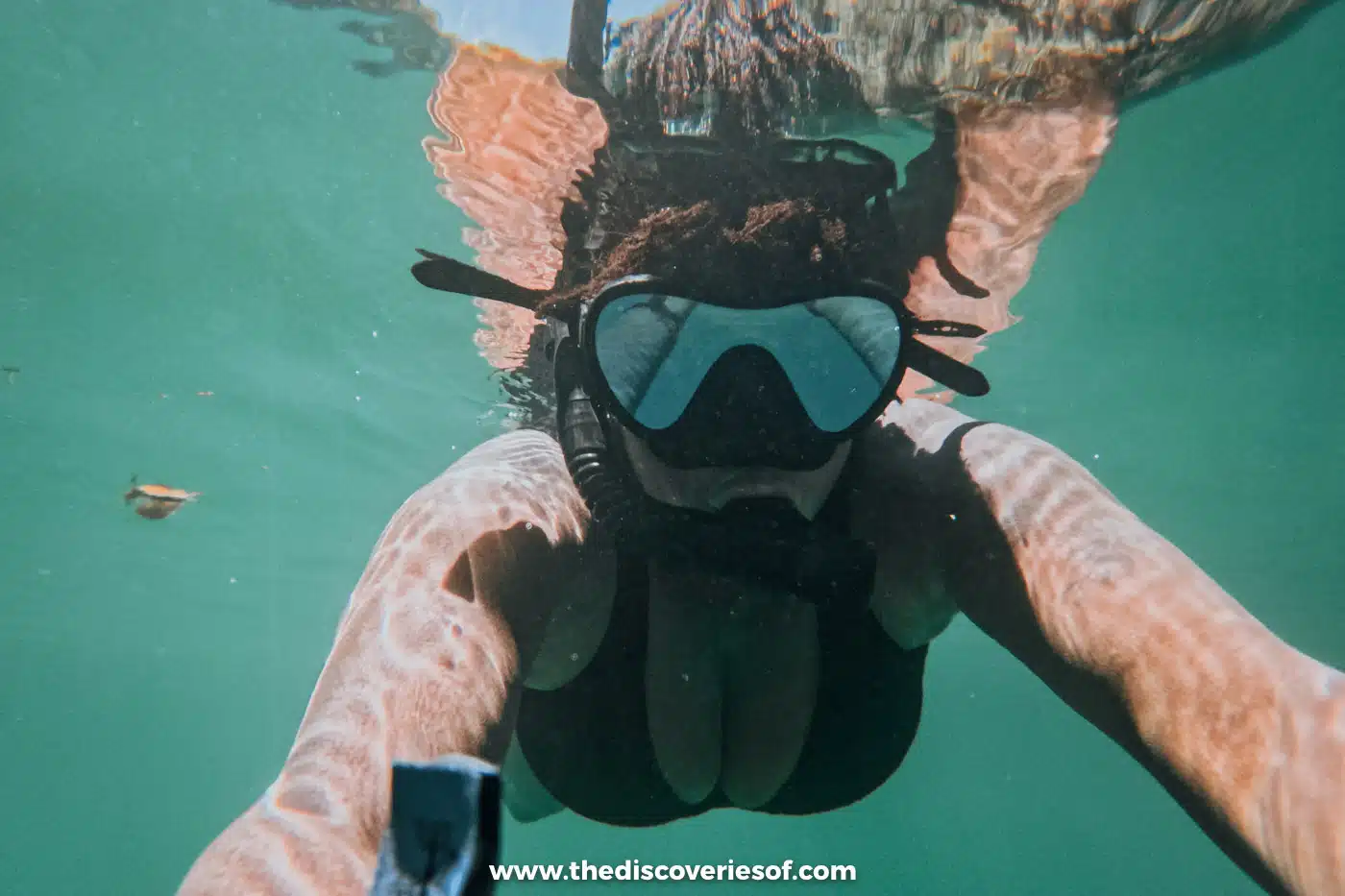
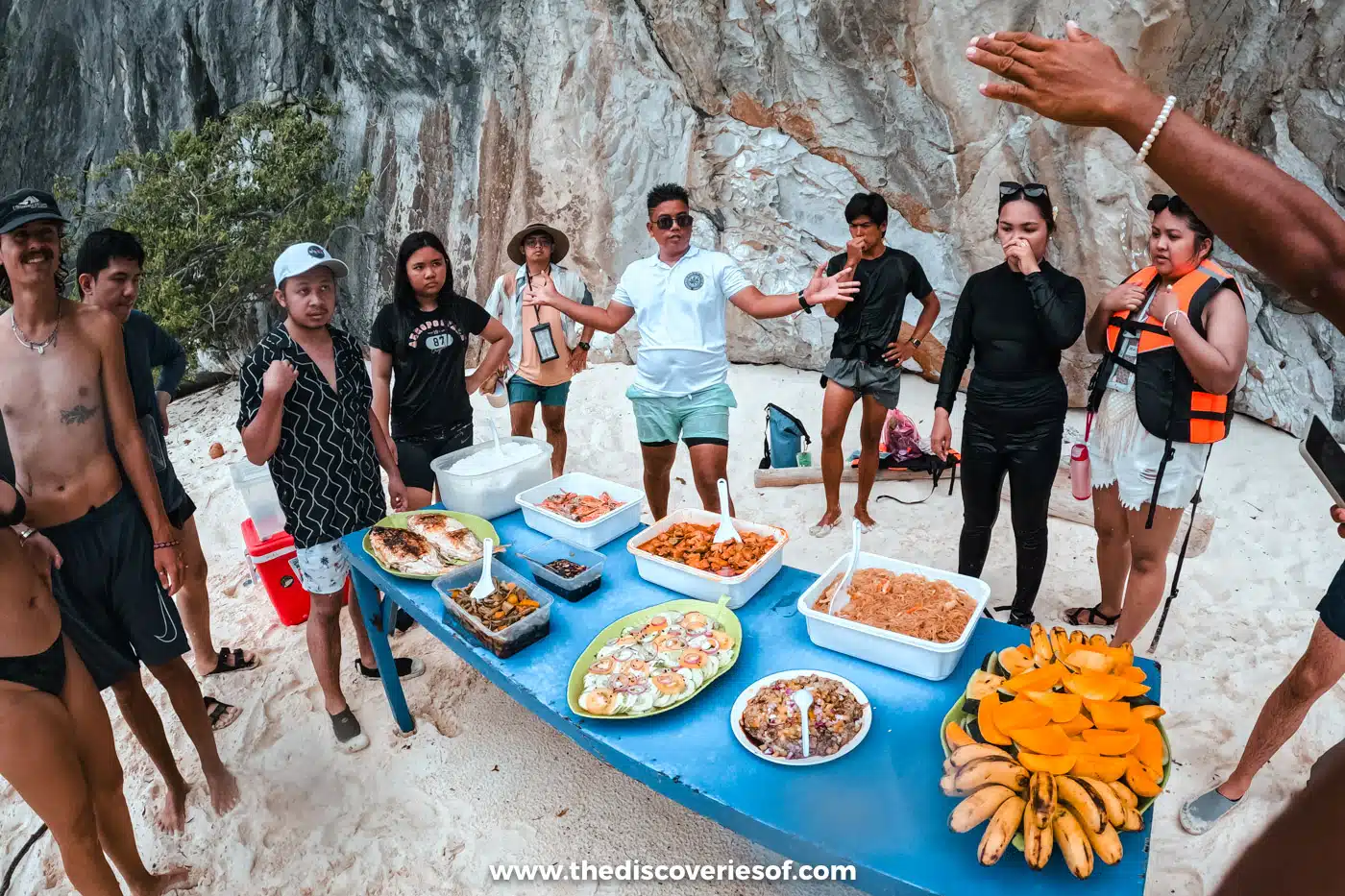
Day three is the big one. Sohoton Cove is on Bucas Grande Island, a long boat ride from Siargao, and it was one of my favourite days of the whole trip. You swim into Hagukan, the “snoring cave”, named for the sound the tide makes inside it, explore jade-green lagoons, and then slip into Tojoman Lagoon, where thousands of stingless jellyfish drift around you. Alongside the white, translucent ones were tiny orange jellyfish, all just chilling out in the water, and I spent a happy 10 to 15 minutes swimming after them.
It really does feel like you’re on a deserted island, Robinson Crusoe meets water park. Expect an early start, a packed minivan to the port and a massive Filipino feast for lunch.
Top tip
The jellyfish are most abundant from around March to June. Splashing and touching them isn’t allowed, so move slowly, and be patient at the photo spots: the selfie game here is out of control.
Getting to Siargao
Siargao’s airport is at Sayak, in Del Carmen, about 45 minutes from General Luna. Since the small turboprop flights left Manila in March 2026, the easiest way in is from Cebu (under an hour), Clark or Davao. I flew in via Manila before that change and out on the 50-minute hop to Cebu, which is how this itinerary continues.
Suggested stay: I stayed at Happiness Hostel Siargao on Tourism Road, in a private double room with a balcony, for three nights. Or browse all accommodation in General Luna.
Days 4 to 9: Moalboal, Cebu
After the rush of Siargao, Moalboal is where this itinerary slows down. This small town on Cebu’s south-west coast is known for one thing above all, the sardine run, and I gave it five nights on purpose: after a lot of early starts, I wanted time to read on my terrace, get a massage and not set an alarm.
Snorkel or dive the sardine run
Just off Panagsama Beach, millions of sardines swirl in huge shoals, like murmurations of starlings underwater. They live there year-round, thanks to the deep drop-off right by the shore, and you can reach them without a boat. I did it as my first ever shore dive, and it’s the reason I came to Moalboal.
My honest advice: you don’t need to dive to see the sardines at their best. Snorkelling from the beach gets you just as close. I also dived Pescador Island, Moalboal’s other big site, and didn’t love it: it’s a wall dive with fairly strong currents, and the visibility wasn’t great when I went.
Canyoneer to Kawasan Falls
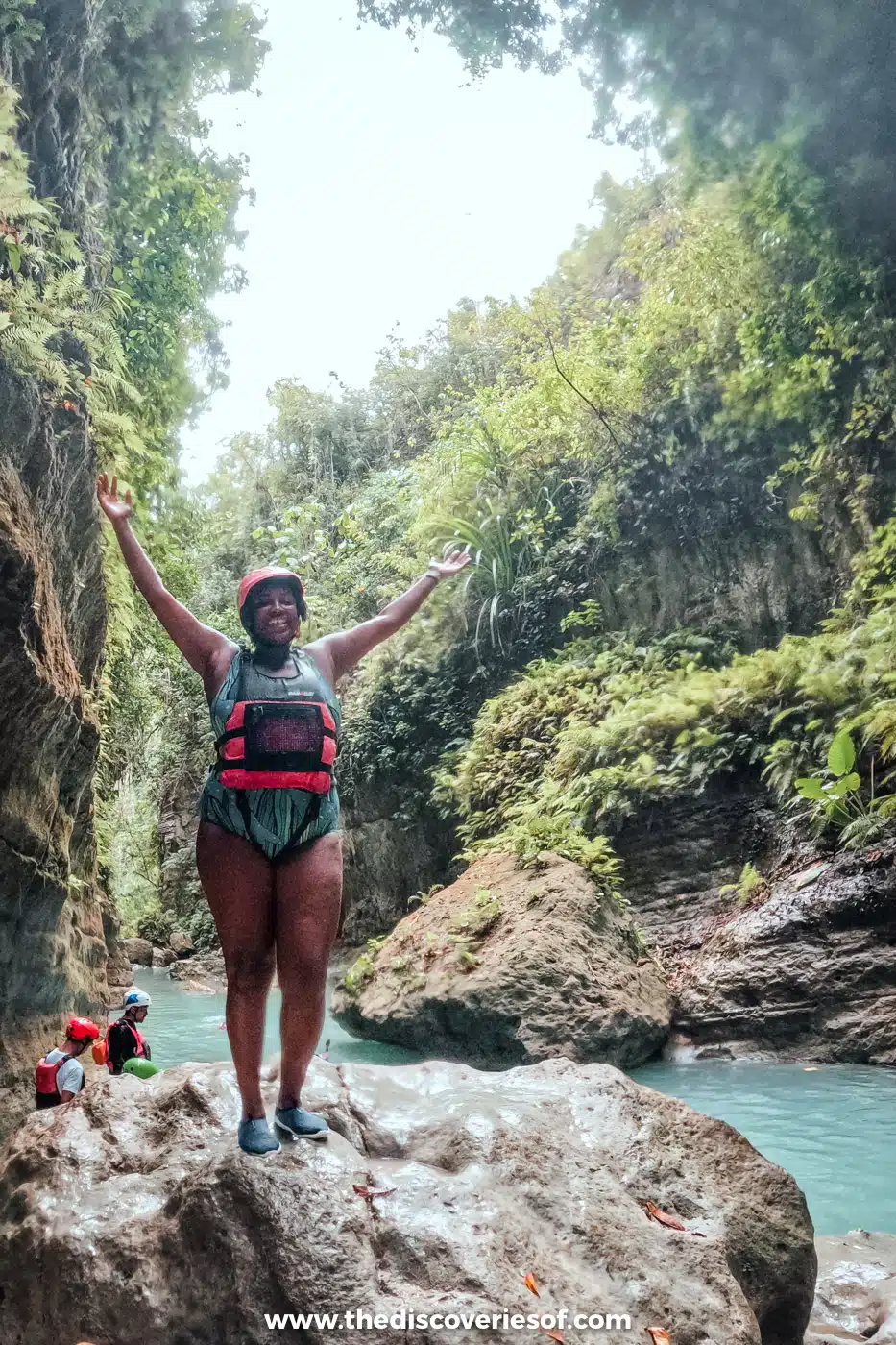
The day I’d tell anyone to book is canyoneering at Kawasan Falls, near Badian, about 30 minutes south. Tours pick you up in Moalboal in the morning and drop you back in the afternoon. You start with a zipline, walk 30 to 45 minutes into the jungle, then jump, slide, swim and scramble your way down a turquoise river canyon, with guides who watch every jump. The highest one I did was around 10 metres, and standing on top of it I felt on top of the world. Halfway down there’s a stall grilling fresh skewers, and the route ends with a swim at Kawasan Falls itself.
I was nervous about doing it alone, and it turned out to be one of the best days I’ve ever had while travelling.

Top tip
The canyon floor gets slippery after rain, so wear proper water shoes rather than sandals, and take a waterproof phone case or leave your phone with the guide.
Eat well in Moalboal
Moalboal’s food is a big part of its charm. At Talao, I had boiled tuna belly with a soy and spring onion sauce that was so fresh I still think about it. The food park near Panagsama has around 20 stalls, from Korean to Japanese to sandwiches, which is handy for groups who can’t agree, and karaoke on stage most nights. Ask the divers you meet where they’re eating seafood and sisig, as the best spots change.
Getting to Moalboal
This is the bit that catches people out. My taxi from Mactan-Cebu airport took almost four hours, against the two I’d expected, because of traffic getting out of Cebu City. Allow most of the day. Private vans and taxis cost around ₱3,000 to ₱4,000. The cheap way is a Ceres bus from Cebu South Bus Terminal towards Bato via Barili, which takes 2.5 to 3.5 hours and costs ₱200 to ₱250, then a tricycle to Panagsama Beach.
Suggested stay: I stayed five nights at Chief Mau Moalboal, in a big private room with a terrace and a hammock chair, and a lovely team. Or browse all accommodation in Moalboal.
Days 9 to 11: Puerto Princesa
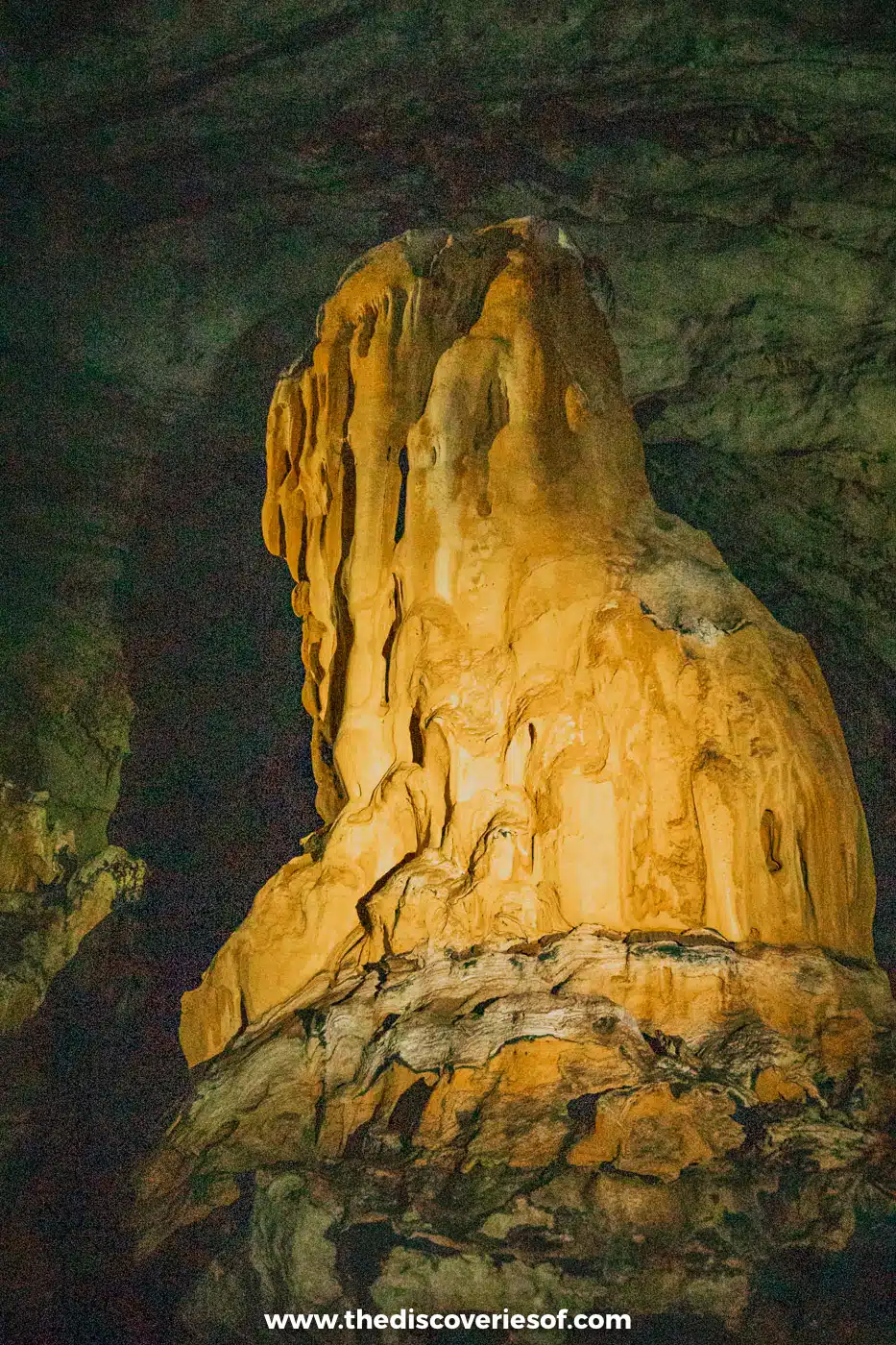
Puerto Princesa is Palawan’s capital and its main airport, and most people treat it as a place to land and leave. Stop for at least two nights, because it’s home to one of the most extraordinary things I saw in the Philippines: the Puerto Princesa Underground River, a UNESCO World Heritage Site where a river runs for kilometres through a vast limestone cave.
Take a boat into the Underground River
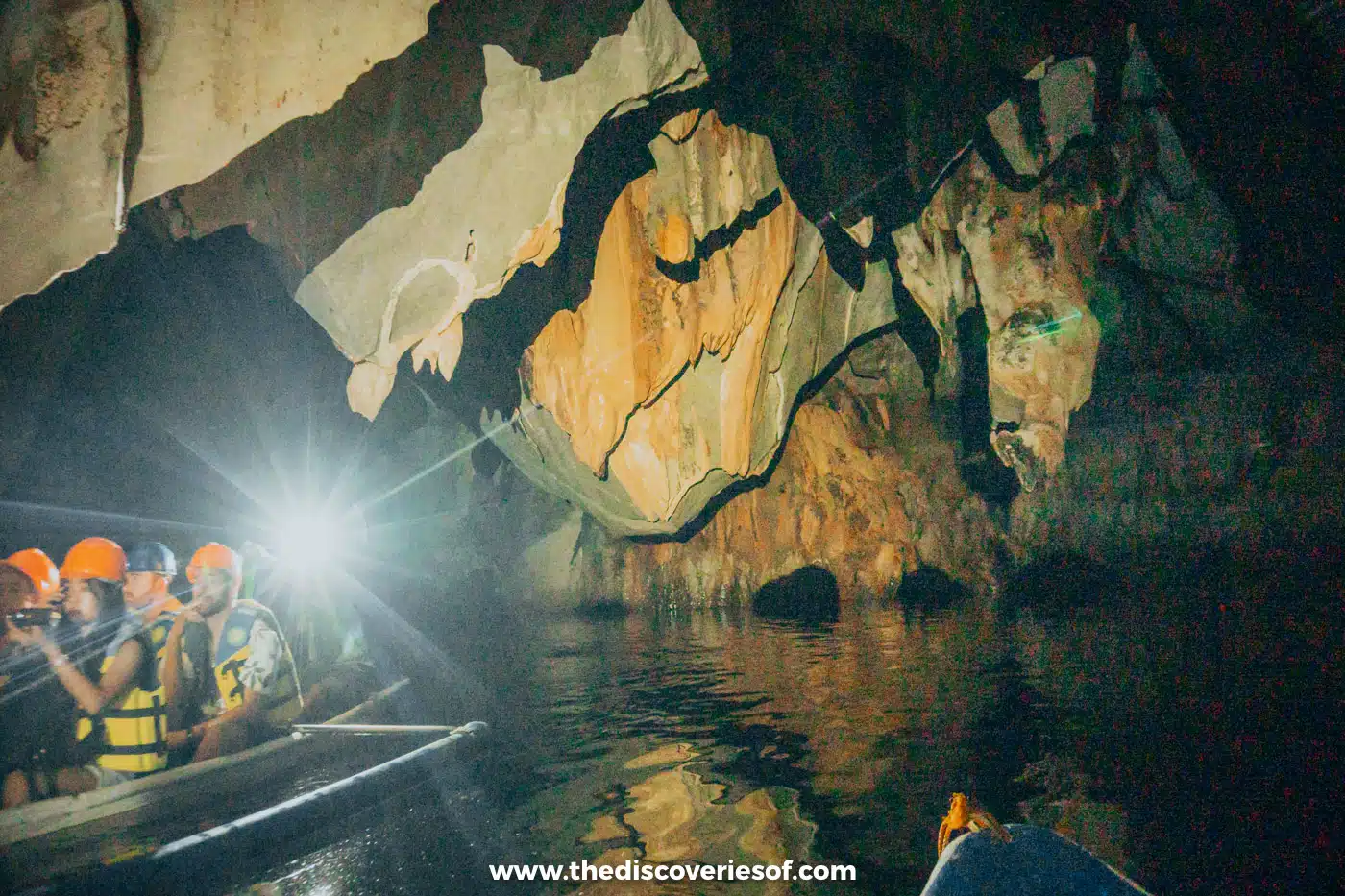
The tour is a full day. Mine picked me up at 8.30am and got me back at about 3.30pm, and cost around ₱2,700 including transport and lunch. It’s about an hour and a half’s drive through forest to Sabang, where your guide registers the group and you wait in the heat for your slot. From there, a short boat ride takes you to the park, and a smaller paddle boat takes you into the cave.
It’s genuinely incredible. The bats are so close that you’re asked to stay silent, and the Cathedral, the biggest chamber, is so vast it’s hard to take in. I’d never experienced anything quite like it.
Top tip
Everyone needs a permit, and numbers are capped, so book a tour or your permit in advance. Ask for a seat at the front of the paddle boat: it really feels like you’re venturing into the unknown.
Paddle through the Sabang mangroves
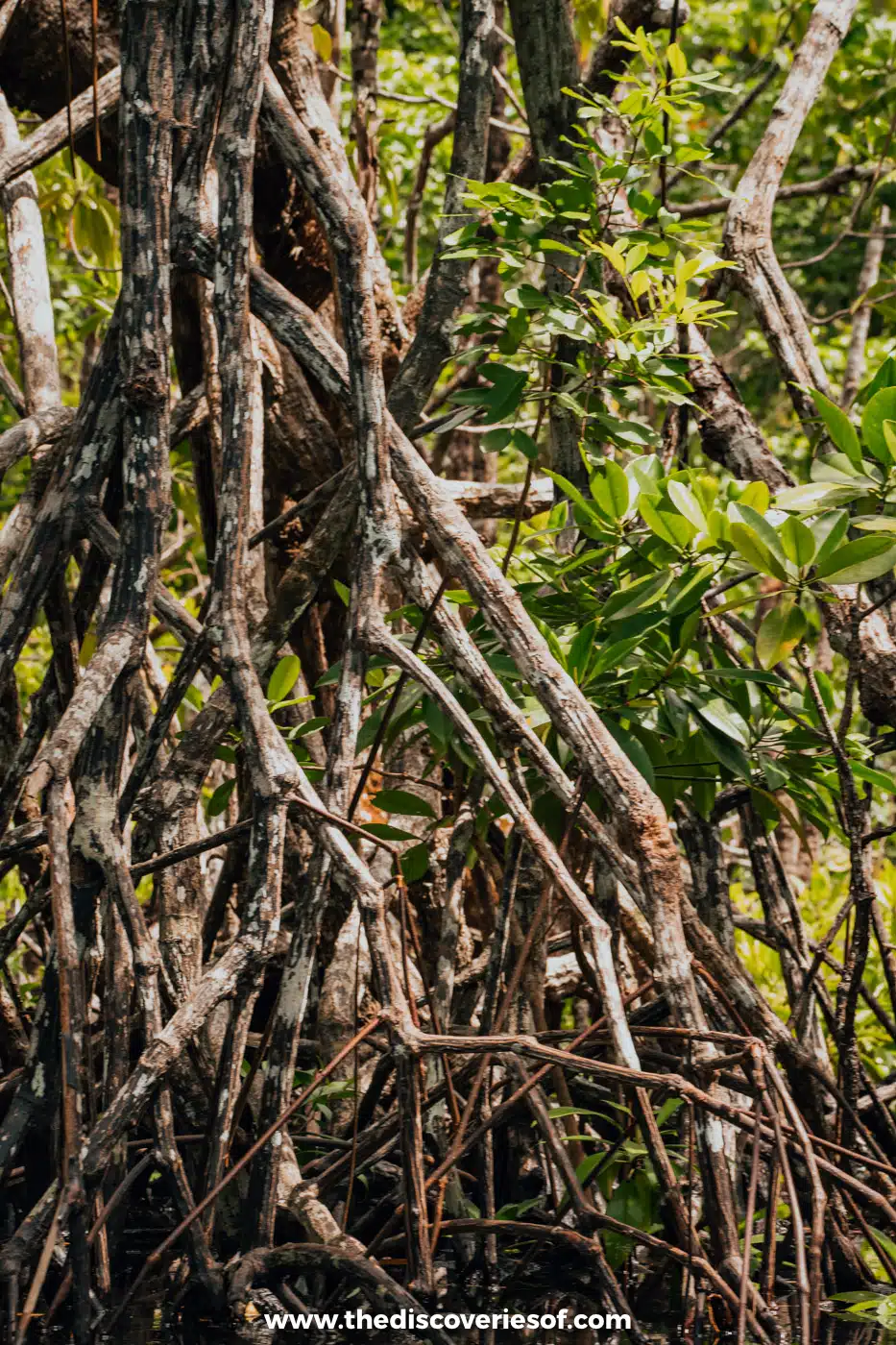
On the same day, add the community-run mangrove paddle, about five minutes’ drive from Sabang. It’s short and simple: a local guide paddles you through the mangrove forest, and I saw monkeys and snakes. It cost ₱350 booked on the spot (₱500 through a tour company), and the money goes almost directly to the village.
Getting to Puerto Princesa
Fly from Cebu: the flight takes about an hour and ten minutes.
Suggested stay: I stayed at Hue Hotels, which was fine for two nights but had a breakfast I wouldn’t go back for. Browse all accommodation in Puerto Princesa and pick somewhere close to the centre for an easy pick-up.
Days 11 to 14: El Nido
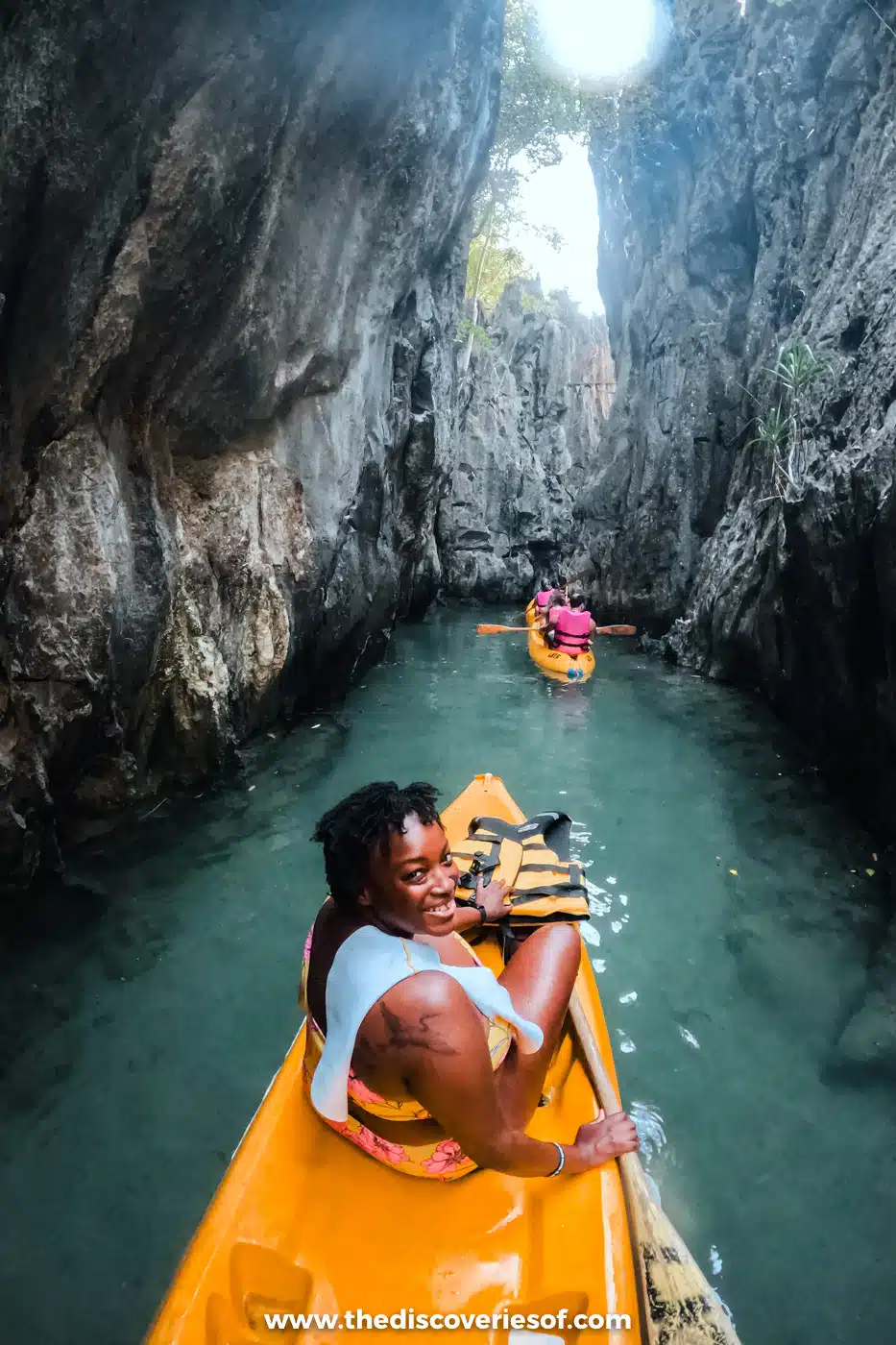
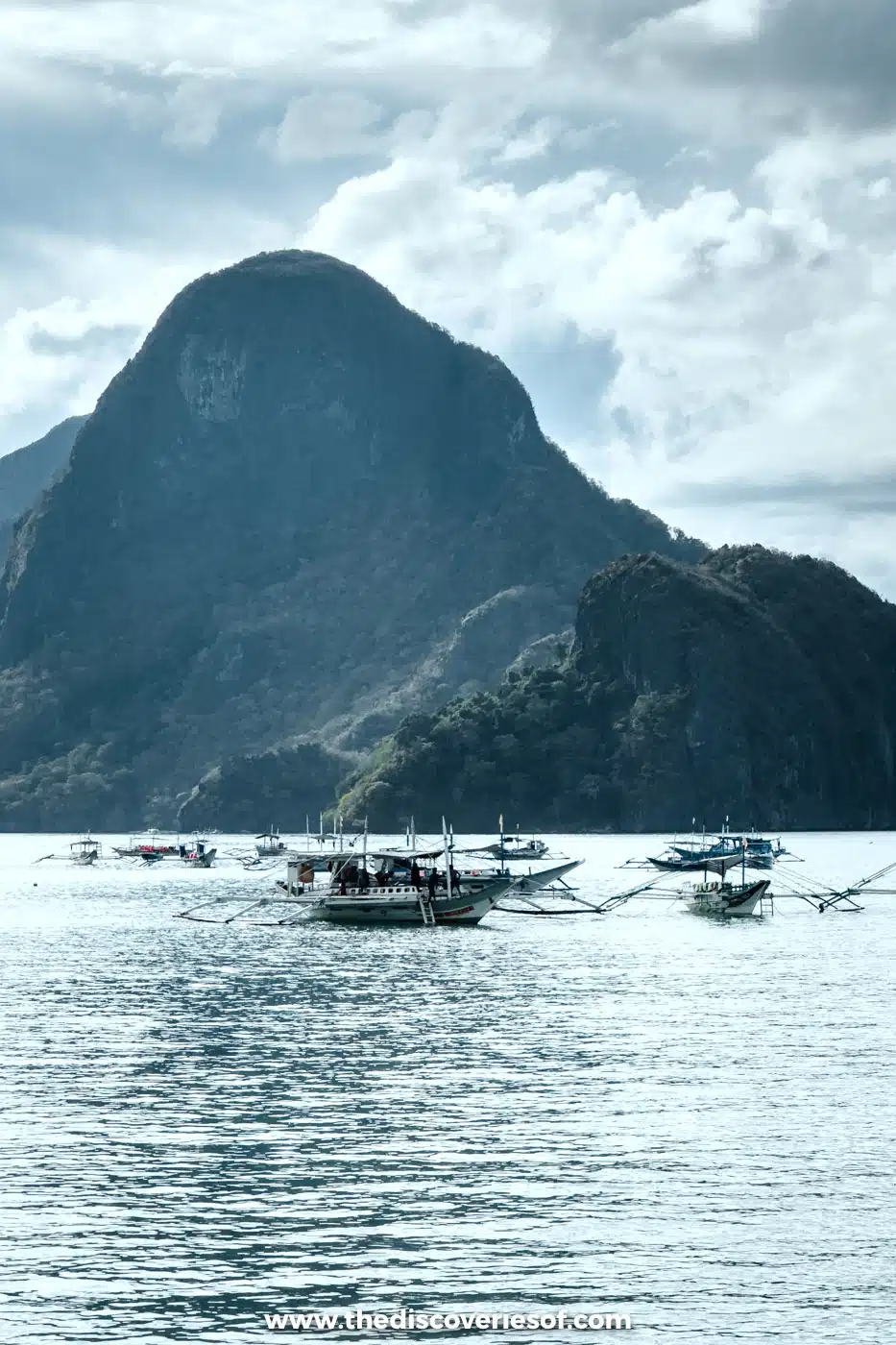
El Nido is the reason many people come to the Philippines, and it lives up to it. I’d wanted to come for years, and on the first morning, kayaking into the Big Lagoon, I thought: this is exactly what I’d hoped the Philippines would be. Towering limestone islands rise straight out of Bacuit Bay, and the island-hopping tours that leave from the town beach every morning take you through lagoons, onto beaches and into some of the clearest water you’ll ever see.
Do Tours A and C
El Nido’s island-hopping tours are named by letter, and A and C are the two most people recommend, so I did both. Tour A takes in the Big Lagoon (the water colour doesn’t look real), the Secret Lagoon, where you lie flat on your back to be pushed through a tiny gap in the rock, a snorkelling stop and Seven Commandos Beach, which is lovely but busy.

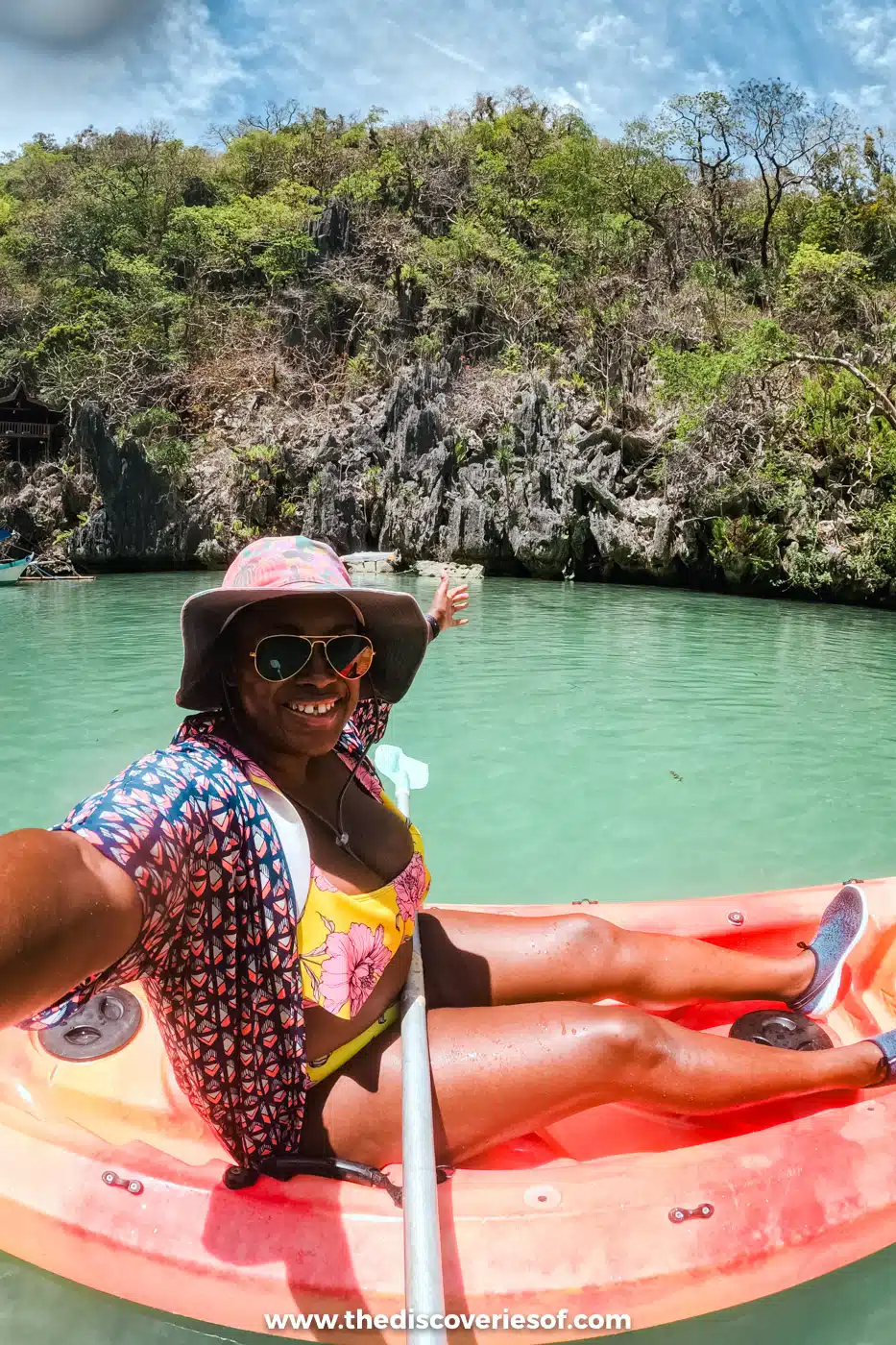
Tour C starts at Helicopter Island, named for its shape, and usually visits Secret Beach and the Matinloc Shrine. The sea was too rough to land at Secret Beach on my day, so we swapped in a quieter lagoon where I rented my own kayak for ₱300 and had a peaceful hour paddling on my own. The two tours felt completely different, which is exactly what you want.
Do
I booked both through GetYourGuide (search for El Nido island hopping tours), and they were run by Corazon Travel and Tours. Meet at the beach before 9am, bring cash for the fees, and rent snorkel gear and water shoes before you leave if you don’t have your own.
Watch the sunset from a rooftop
El Nido town faces west over the bay, and sunset from a rooftop bar is one of its great pleasures. I watched it two nights running from the rooftop of my hotel, with a cocktail and a saxophonist playing smooth jazz, and turned down a cheap-drinks bar to do it. Get up there early for the full show.

Getting to El Nido
From Puerto Princesa, it’s 5 to 6 hours by shared van (about ₱750) or private van. You can also fly into El Nido’s small airport at Lio from Clark, Cebu or Coron. Everyone pays a ₱400 environmental fee, valid for 10 days, and island-hopping tours add user fees of ₱200 to ₱300 a day.
Suggested stay: Stay in town. I started at Outpost Beach Hostel, where the staff were lovely, but the room was tiny and the walk in from the road went past a lot of rubbish, so I moved to H Hotel El Nido, a stylish, vegan-friendly hotel in town with a mountain-view room, a fully plant-based breakfast (I had a tofu scramble burrito) and that rooftop bar. Being able to walk to dinner and back was worth every peso.
Days 14 to 16: El Nido to Coron by boat
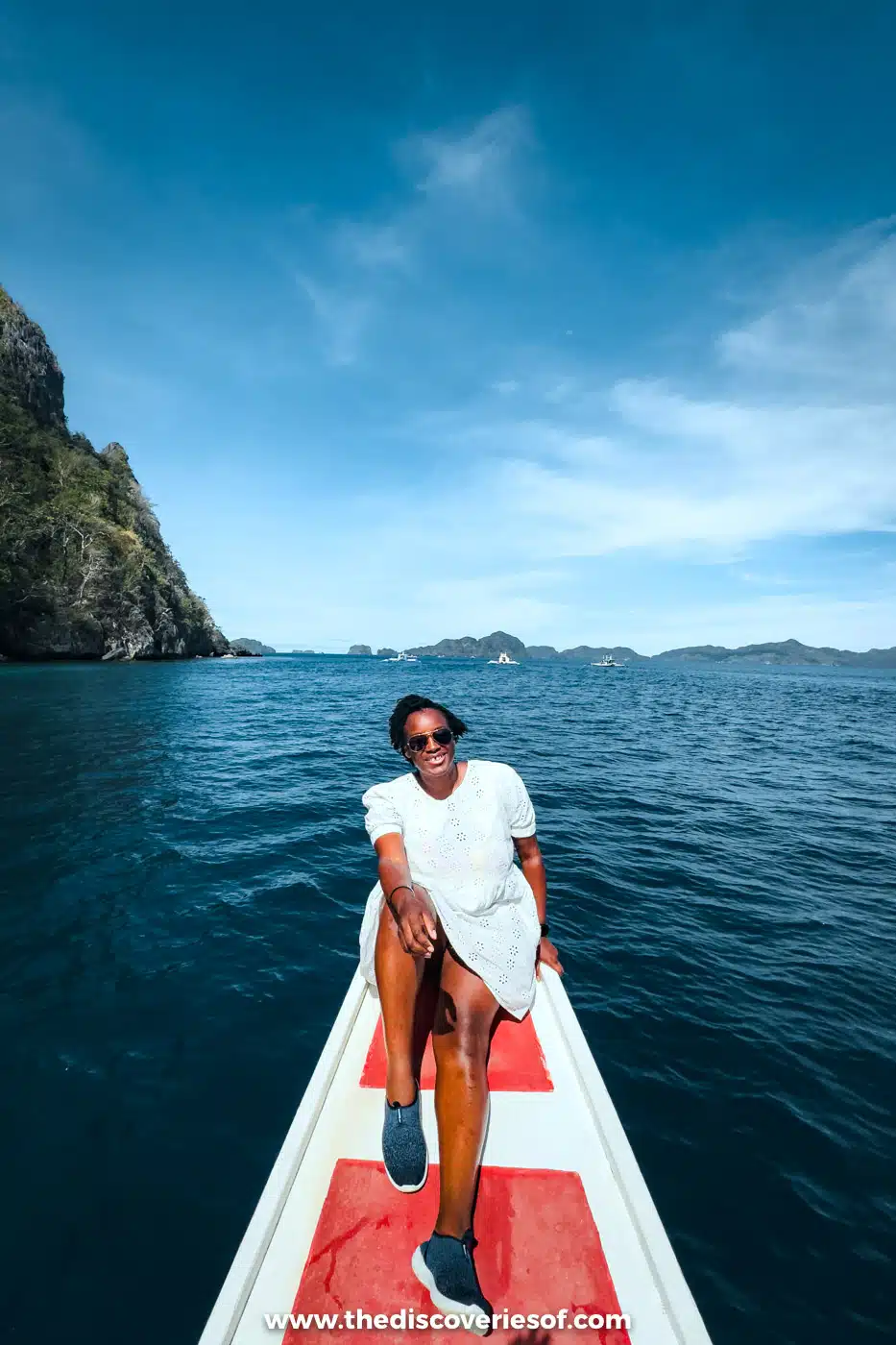
You can take a fast ferry from El Nido to Coron in about three and a half to four hours, for around ₱2,800. But if you only splash out on one thing in the Philippines, make it the slow way: a three-day, two-night boat expedition through the Linapacan and Culion islands, one of the least developed stretches of the country.
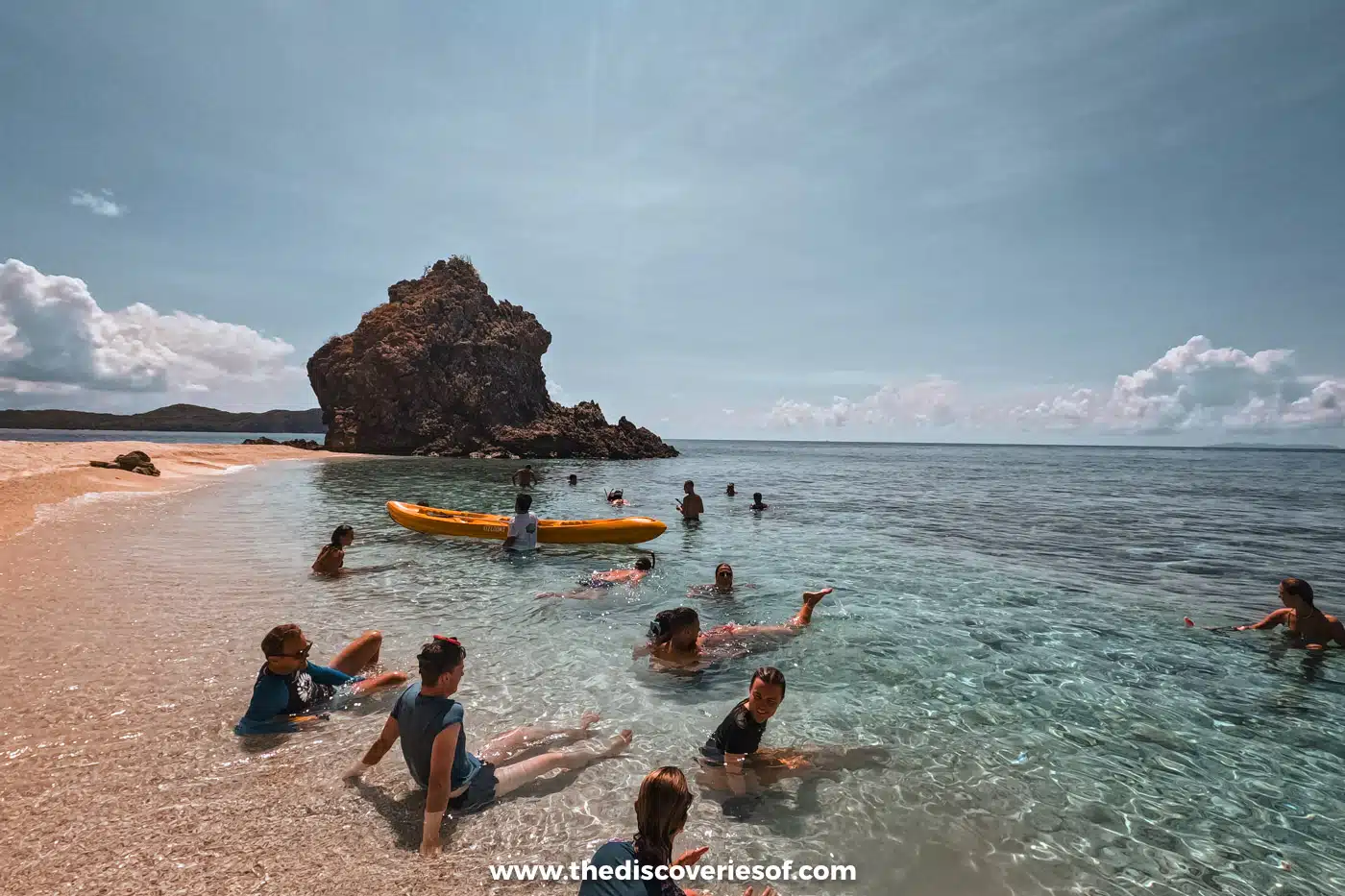
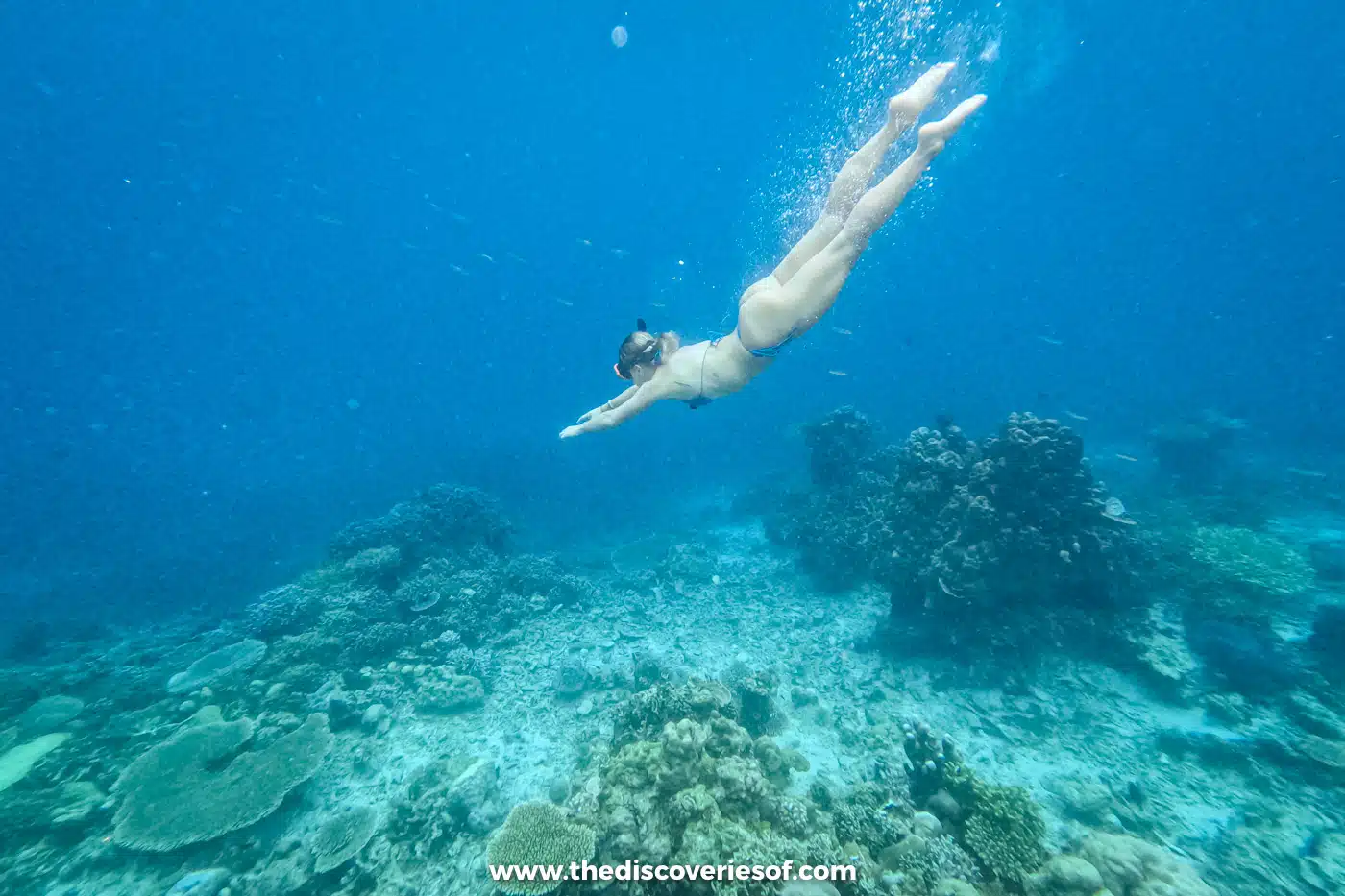
I went with Keelooma, and it was one of the highlights of my trip. Each day brings two or three stops on remote islands: snorkelling over a shipwreck and coral gardens, swimming through a cave into a hidden pool, and beaches with nobody else on them. Nights are spent at the company’s own beach camps, in simple individual cabins steps from the sea, with big dinners of grilled fish, adobo and noodles, and a lot of laughs with a group of strangers who felt like old friends by the end.
It’s basic, there’s no signal and the sun is relentless, but that’s the point. I paid ₱17,100, with a 50% deposit to book, and booked months ahead.
Top tip
Book well in advance for peak season, pack a dry bag, reef shoes and serious sun protection, and keep your drone in its case on the boat. Mine blew into the water on the first day.
Days 16 to 20: Coron
The expedition drops you at Coron Port at about 5.30pm on day three, and Coron town, on Busuanga Island, is your base for the last stretch. After so many days on the water, I gave myself a couple of slow days before heading out again, and I’d recommend the same.
Island-hop to the Twin Lagoons and the coral garden
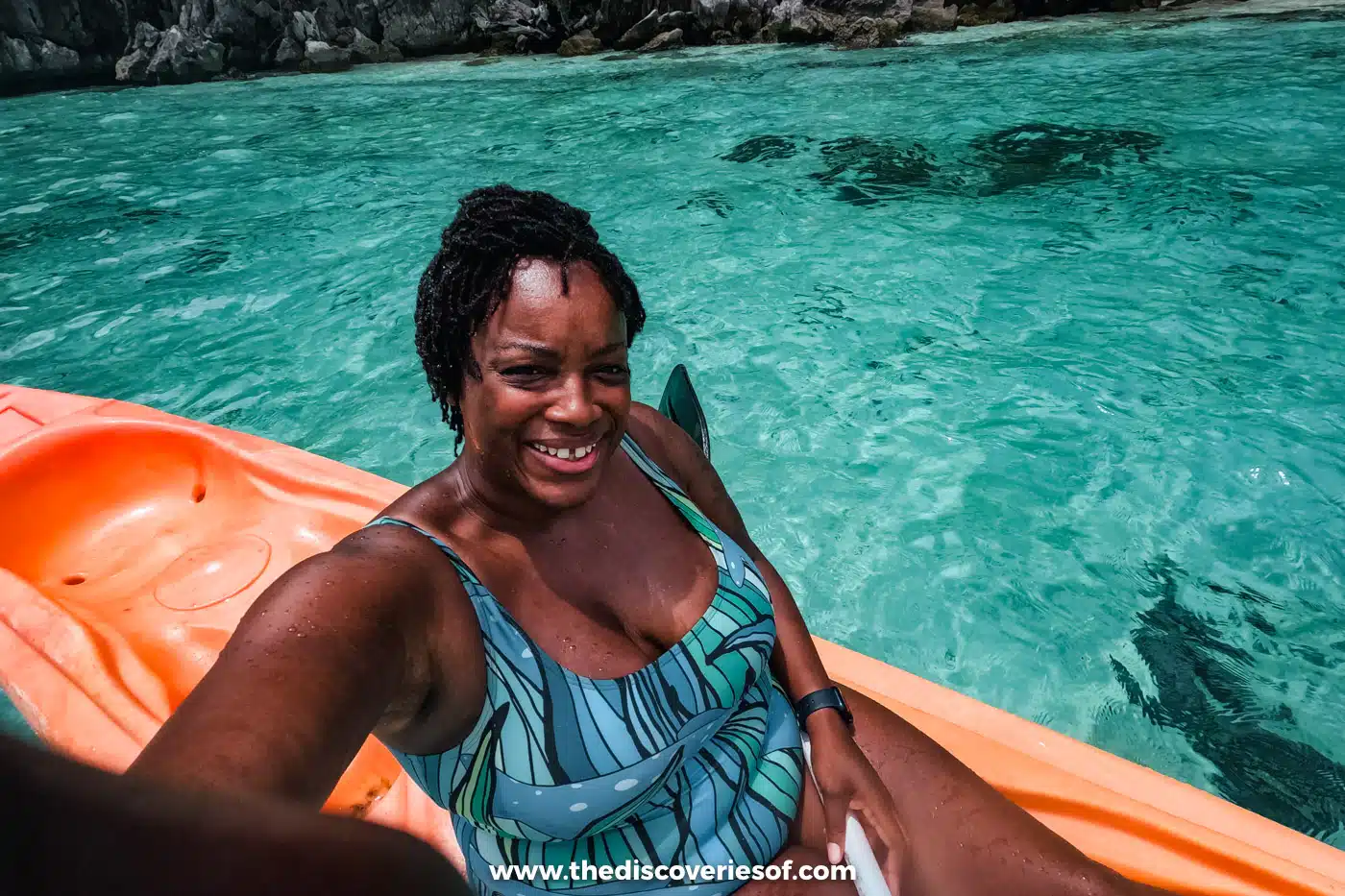
Coron’s island-hopping tours mix and match the same stops, so pick the one with the places you most want to see. Mine (sold as Barracuda Lake, Skeleton Wreck and Twin Lagoon) was the best snorkelling of my trip, at a coral garden with electric-blue coral, anemones and clownfish. At the Twin Lagoons, you duck under a low arch of rock into an emerald lagoon. Pay for a kayak (₱1,000 when I went, or ₱1,500 for a crystal-bottomed one): it takes you away from where the boats drop everyone off, and at one point I had the whole lagoon to myself.
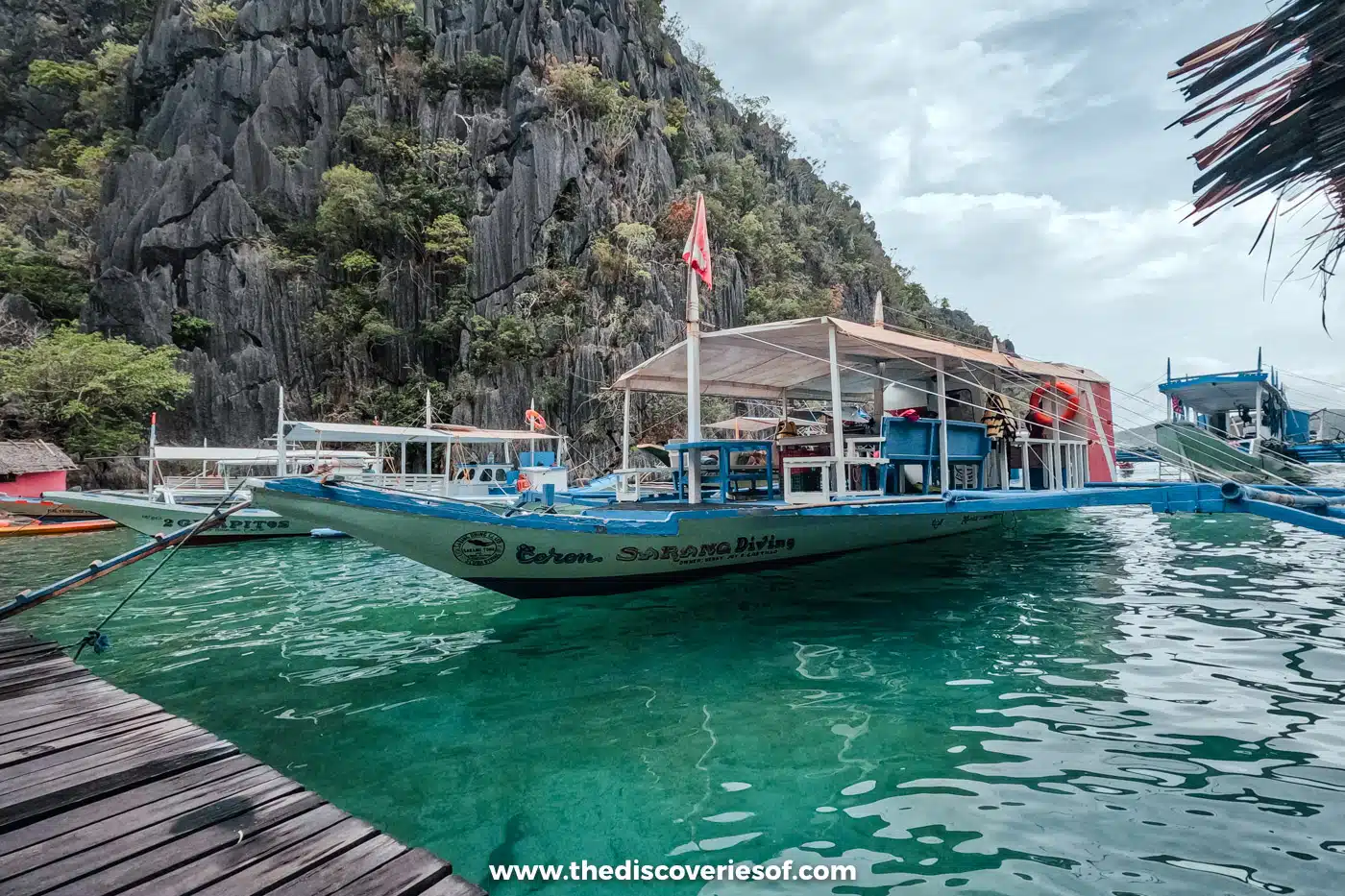
Barracuda Lake was the one disappointment. The water is a beautiful colour, but the visibility was poor, I saw two fish in 20 minutes, and there’s one small, crowded platform to get in and out.
Top tip
The start of my tour was chaotic, with hundreds of people at the port and a man who said he was my guide asking me to pay for a snorkel that was already included. Know exactly what your ticket covers before you hand over any cash.
Eat at El Kuvo
On my last night, I went to El Kuvo for a mango margarita (dangerously good) and kare-kare, pork belly in a rich peanut sauce, with Filipino garlic rice. It came to about ₱450 for a huge plate and the rice.
Getting home from Coron
Busuanga airport is about 30 to 40 minutes from Coron town, with flights to Clark and Cebu. Routes to Manila change often, so check what’s flying when you book. Leave a buffer day before any international flight: my flight out was delayed by a thunderstorm, and I had a tight connection on the other side.
Suggested stay: I stayed at Hop Hostel Coron, in a superior queen room. Browse all accommodation in Coron.
Have more time? Add these to your itinerary
An extra day in Siargao: With one more day, add the island-hopping tour to Naked, Daku and Guyam islands, or a surf lesson at one of the gentler breaks near Cloud 9.
Siquijor: A small island south of Cebu with waterfalls, cliff jumping and a reputation for folk healers. I didn’t make it this time, and everyone I met told me I should have. Ferries leave from Dumaguete, so it fits between Moalboal and Puerto Princesa if you fly out of Dumaguete instead of Cebu.
Port Barton: A quieter beach town between Puerto Princesa and El Nido, with island hopping that many travellers rate as highly as El Nido’s. Break the long van ride with two nights here.
Handy tips for planning your 3 weeks in the Philippines
Top tips: Carry cash. Almost every tour, fee, boat and local restaurant is cash only, and ATMs can run dry on the smaller islands. Register on the free eTravel system within 72 hours before you arrive. And build in buffer days, because boats and small planes are at the mercy of the weather.
What to pack: Water shoes are the one thing I’d tell you not to leave home without: I wore mine on boats, at the rock pools, in the Underground River and canyoneering. Add a dry bag, reef-safe sun cream, a sun hat and a light rain jacket. My Philippines packing list has the rest.
Best time to visit: The dry season runs from roughly December to May, and that’s the best time for this route. I travelled in late May and early June, which was mostly glorious, but the rainy season arrived right on cue in my last few days in Coron. If you travel then, do the boat-based highlights first.
Getting around: This itinerary uses three flights (Siargao to Cebu, Cebu to Puerto Princesa and Coron home), two long road journeys and one boat expedition. Book the flights and the expedition first, as they’re the bits that sell out. My Philippines travel tips cover the rest.
Map
Read next
- Siargao travel guide
- The perfect 3-day Siargao itinerary
- Best places to visit in the Philippines
- Philippines travel tips
Love this? Save and share on Pinterest


Discover the top things to do, insider tips and hidden gems in our Philippines Travel Guides.
Read the guides →