


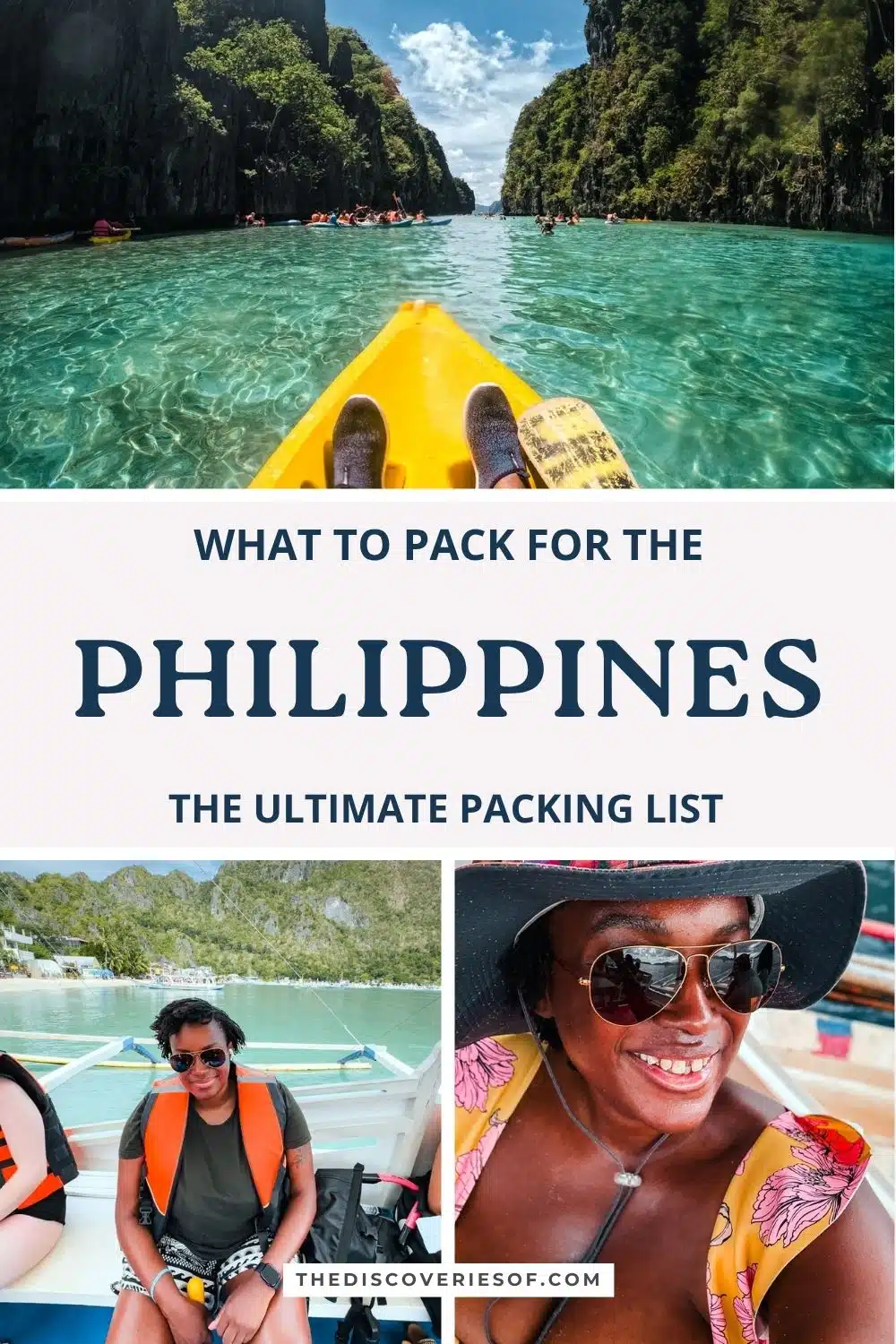
Wondering what to pack for your trip to the Philippines? This Philippines packing list covers everything I bring after seven trips, from reef-safe sunscreen and water shoes to the documents and rules that catch travellers out.
If you’re a fan of sparkling blue water, white sand beaches, fresh coconut juice and lush green spaces, the Philippines is the perfect place to visit. And if you’ve decided to make the trek to this beautiful island nation, you’re probably a pretty adventurous traveller.
But figuring out what to pack for the Philippines, with its diverse terrains and activities, can be somewhat challenging. You might spend a morning on a bangka (outrigger boat), an afternoon hiking to a waterfall and an evening in an air-conditioned mall that feels like a fridge.
After seven trips to this beautiful island nation, mostly to visit family, I’ve (mostly) got my packing down to a science, so I decided to sit down and write this list to help you with your trip planning.
If you’re planning a trip to the Philippines and need some help figuring out how not to massively overpack, read on for my recommendations for clothes, travel gear and other helpful items, plus the airline and entry rules that affect what goes in your bag.
Some links in this article may be affiliate links, which means we may receive a small commission, at no additional cost to you, if you decide to purchase through one of my recommended partners.
What to pack for the Philippines
The absolute essentials

I’ll be going through many of these things in more detail later in the post, but first I wanted to give you a quick version of the absolute essentials for your trip. These are the items you should absolutely not travel without in the Philippines. Forgetting any one of these could be costly or potentially dangerous, so if you read anything in this post, read this!
- Travel insurance: It is absolutely essential to buy travel insurance before travelling to the Philippines (or anywhere abroad). While the country is safe to travel in, like any foreign country, medical issues, flight delays and theft are still very real threats. Make sure you organise comprehensive cover before you leave home, so you’re protected for illness, injury, theft and cancellations. I learned how much it matters when I almost died while travelling solo in Thailand. If you plan to dive, check that your policy covers scuba to the depth you’ll be diving.
- Passport and eTravel QR code: Your passport needs at least six months’ validity from the date you arrive, and you should carry proof of an onward or return flight, as airlines and immigration officers can ask for it. You also need to register on the government’s free eTravel system within 72 hours before you arrive and show the QR code it gives you. Save a screenshot and keep a printed copy as backup, as some airlines refuse boarding without it. Use only the official etravel.gov.ph site; lookalike sites charge a fee for something that is free.
- Cash: While credit cards are becoming more widely accepted in large cities, the more rural areas and small towns are still predominantly cash-based. Bring a debit card for ATM withdrawals (foreign cards are usually charged around 250 PHP per withdrawal, and many machines cap each withdrawal at 10,000 to 20,000 PHP), plus some cash from home as a backup. Small bills are essential: that 500 or 1,000 PHP note you just got from the ATM is basically useless in small towns and locally owned shops, especially if you’re spending 100 PHP or less on something. Break big notes at airports, department stores or hotels, and carry lots of small bills for day-to-day expenses and tips. Bring a money belt to protect your cash as well.
- Reef-safe sunscreen: Most of the activities in the Philippines are outdoors, and you’ll want to protect yourself from the sun. However, many normal sunscreens aren’t safe for the beautiful coral reefs or marine life in the Philippines. Use a reef-friendly sunscreen like Sun Bum (or, better still, a mineral one) to keep the environment clean and avoid looking like a lobster throughout your entire trip.
- Bug spray: Like many tropical countries, mosquito-borne illnesses like dengue fever are a possibility in the Philippines. Pack bug repellent that’s comfortable and that you don’t mind wearing all day (like this lotion blend, which I like because it’s soft and non-greasy on my skin), because you’ll need to have a healthy layer of this stuff on at all times.
- Sweat-wicking clothing: The Philippines is a tropical country that’s warm and humid basically year-round. Therefore, you’ll want clothing that will keep you cool and dry. I’ll cover this in more detail in the next section.
- Durable shoes: You’ll be doing a TON of walking in the Philippines, and often the terrain is gravel or dirt roads or sand. Bring a couple of pairs of durable, lightweight shoes (including water shoes) to keep your feet comfortable at all times. I’ll share my recommendations a bit later in this post.
Warm-weather clothing and durable shoes

Like I mentioned above, the Philippines typically has warm and humid temperatures year-round. The good news? You can rely mostly on super lightweight clothing (so you don’t have to carry around big, bulky bags of clothes).
The bad news? Clothes tend to retain moisture and, if you don’t bring the right fabrics, you might end up with a musty-smelling bag (gross) for most of your trip. Choosing the right fabrics is super important, so you don’t end up with a heavy bag of backpacker stink!
To combat this problem, I always opt for sweat-wicking fabrics like merino wool, lightweight cotton or synthetics. Linen is great too, as it dries fast and stays cool in the heat.
- Sweat-wicking tank tops and t-shirts: Bring a couple of basic, sweat-wicking tops for your trip.
- Rash guard: A long-sleeved rash guard (a quick-dry UV swim top) is one of the most useful things you can pack for island hopping and snorkelling. You can float face down over a reef for an hour without burning your back, and you need far less sunscreen, which is better for the coral too.
- Leggings: I basically live in leggings while I’m in the Philippines, since they’re so lightweight and breathable, thin enough to stay cool but thick enough to prevent mosquito bites. I have a pair of the prAna Transform Crops and a pair of the Lululemon Wunder Unders and those together usually do the trick for me. Both have since been discontinued; lululemon’s Wunder Train tights are the closest current version, and any breathable, quick-dry cropped legging does the same job.
- Shorts: Did I mention the Philippines is HOT?! For the days you’ll be on boats or lounging on the beach, it’s best to bring shorts with you. I live in mine, whether running shorts or quick-dry travel shorts.
- Hiking trousers: Hiking trousers are a great alternative or addition to leggings, as they’re breathable and sweat-wicking. The best part is that you can use them while hiking, or simply lounging around on a breezy beach. Men’s option here.
- Trousers or jeans: Optional, but if you’re planning to go out to a nice restaurant or resort, it’s a good idea to have at least one pair of smarter trousers. I use the Madewell Roadtripper jeans in black for basically all of my travel: they’re stretchy, cosy and versatile and I can dress them up or down! They come in all different lengths (petite, regular, tall and extra tall) to fit basically ANY body type, which I LOVE as a short lady.
- Sundress: Also optional, but I find that dresses are nice and breezy for those hot and humid days. They also dry quickly.
- Modest layer for churches: The Philippines is a deeply Catholic country, and if you plan to visit churches, cover your shoulders and knees. A light shirt or scarf in your daypack does the job.
- Rain shell: Being in the tropics, it can sometimes rain a lot in the Philippines. It’s a good idea to bring a light rain shell to stay dry on rainy days. I use the North Face Tamburello, which is light, wind and waterproof, while Raf uses the Venture 2 rain jacket.
- Lightweight jacket: It’s not cold in the Philippines, but it can be chilly in aeroplanes, shopping malls, buses and restaurants, where the air conditioning is usually set to arctic. Pack a lightweight jacket that you can bring with you to these places. If you’re heading up into the mountains around Baguio or Sagada, nights can be genuinely cool, so add a fleece.
- Swimsuit: Duh. It’s an island nation. Bring your swimsuit and prepare to get wet! I’d recommend bringing at least one sturdy, wave-proof bikini or one-piece for more adventurous days (so, you know, you don’t accidentally flash someone or lose your top or something). Bring two if you can, so one can dry while you wear the other.
- Cover-up: You’ll likely go island hopping or take boat rides to swimming spots during your trip. It’s smart to pack a cover-up for when you’re not swimming but you’re not ready to change out of your swimsuit. Outside the beach resorts, put a cover-up on before you walk into town, a shop or a restaurant.
- Brimmed hat and sunglasses: It’s sunny in the Philippines and most beaches don’t have a lot of tree cover. Bring a brimmed hat and a durable pair of sunglasses you can wear on sunny days. A strap for both saves them from blowing off the boat.
Additionally, you’ll want some durable shoes to cover you on basically any kind of terrain (except ice and snow; you won’t find those in this tropical nation!). You’ll be doing a lot of water activities, so having shoes that can protect your feet in the water is highly recommended.
- Durable outdoor sandals: Your feet will mostly live in sandals in the Philippines, between beaches, boats and swimming. Although it was totally unnecessary, I brought two pairs of durable sandals on my last trip: a pair of Birkenstocks and a pair of Chacos. I didn’t regret bringing either one! If you only take one pair, make it a strappy, waterproof pair like the Chacos, as classic cork-soled Birkenstocks don’t like being soaked.
- Lightweight hiking shoes: For hiking in the Philippines, I don’t recommend the usual, clunky pair of hiking boots. In fact, I didn’t bring any on my last trip there. Instead, bring a pair of lightweight, breathable trainers for your hiking. This way, your feet can breathe and you won’t be lugging around giant shoes the whole time.
- Water shoes: It’s very important to bring water shoes if you’re doing any kind of water activities. You should never tread on coral itself, but water shoes are invaluable on boat trips where your feet are getting wet all day, and for the rocky, shell-strewn entries to many beaches and swimming spots, where it’s easy to cut your feet. You protect yourself and the corals by wearing closed-toe water shoes whenever you get in the water. I recommend a water shoe like this one that covers the entire foot. They’re the one thing you really shouldn’t leave behind: you’ll want them for wet landings off boats, the slippery rocks at Magpupungko, the Underground River and canyoneering at Kawasan Falls.
- Indoor and shower shoes: The Philippines has a culture of taking your shoes off before you enter a home, and it makes sense: roads and pavements can be dusty and full of gross things that your shoes will track in. A lightweight pair of rubber flip-flops is helpful for walking indoors or using hostel and guesthouse showers.
Toiletries and personal items

Packing toiletries and hygiene items for the Philippines isn’t too different from any other trip. However, getting your toiletry bag right here is extremely important, especially when you’ll be swimming around coral every day.
There are a few items you should make sure to bring in your toiletry bag that you might not be aware of, especially when it comes to protecting the fragile marine environments in the country.
The items below are my recommendations for environmentally friendly, must-have items for travelling in the Philippines.
- Reef-safe sunscreen: It should be obvious that you need sunscreen for your trip, but one thing to note is that many types of sunscreen are VERY harmful for marine life. Swimming, snorkelling and diving are popular activities in the Philippines, so if you’re planning on getting in the ocean, please be kind to the corals and fish and wear reef-safe sunscreen. No packing list for the Philippines should be without it. We use Sun Bum: it works well and smells good, and it leaves out oxybenzone and octinoxate, the two ingredients Hawaii banned to protect its reefs. It isn’t mineral-based, though (it uses chemical filters including octocrylene, which some marine scientists also worry about), so if you want the gentlest option for coral, choose a mineral sunscreen made with non-nano zinc oxide. Sunscreen is expensive and hard to find in reef-safe versions outside the big cities, so bring enough from home.
- Bug spray or lotion: Mosquitoes thrive in the hot, humid environments of the Philippines. You should always try to protect yourself from itchy bites and harmful mosquito-borne illnesses like dengue and chikungunya by wearing bug spray or lotion. Look for one with DEET, picaridin or IR3535, and put it on after your sunscreen.
- After Bite: You’re still probably going to get bitten. Be sure to bring After Bite or some other kind of anti-itch cream to soothe your irritated skin.
- Permethrin spray: Did you know you can get bug spray for your clothes, too? Permethrin spray is made specifically for fabrics and can help you repel bugs even more effectively. You can even buy pre-treated mosquito repellent shirts (for women and men).
- Stomach medicine: While the food in the Philippines is amazing, sanitation conditions can vary and travellers often report getting bouts of diarrhoea, nausea or food poisoning. I’d recommend bringing some Imodium and Pepto-Bismol to help treat any stomach problems, plus a few sachets of oral rehydration salts. You might also want some Dramamine or other seasickness tablets if you get motion sickness on buses or boats; the open-water crossings between islands can be rough.
- Small first aid kit: Plasters, antiseptic cream and a few blister pads go a long way. Small cuts from rocks and coral get infected quickly in the heat and humidity, so clean them straight away. Pack any prescription medicines in their original packaging with a copy of the prescription.
- Hand sanitiser and wet wipes: Filipinos often eat with their hands (at a boodle fight, the whole feast is served on banana leaves and eaten without cutlery), so you’ll likely eat with your hands at some point too. Come armed with hand sanitiser or wipes for cleaning up before meals.
- Tissues or a travel toilet roll: Public toilets (called CRs, or comfort rooms) often have no toilet paper, just a tabo (a water scoop). A pack of tissues in your daypack saves a lot of awkwardness.
- Solid toiletries: Be a responsible traveller and minimise your plastic use by using plastic-free toiletries. Ethique has a fantastic line of solid shampoos and conditioners for different hair types, as well as soap and face care items. Solid bars also don’t count towards your liquids allowance in your hand luggage.
Useful travel gear

- Snorkel and mask: You can rent these in any beach shop, but the costs can start to add up quickly, and rental masks don’t always fit well. If you’d rather use your own mask and snorkel, be sure to bring them with you.
- Head torch: Streets in the Philippines can get really dark at night, and power cuts (brownouts) still happen on the smaller islands. We always recommend bringing a head torch (our favourite head torches are from Black Diamond) everywhere to be safe.
- Dry bag: For days at sea or island hopping, you’ll want a way to ensure your electronics and clothes stay dry. A dry bag is the solution! We usually use a 5L or 10L Ocean Pack dry bag that works like a charm at keeping our clothes, electronics and documents dry.
- Waterproof phone pouch: A clear waterproof pouch on a lanyard lets you keep your phone on you (and take photos) on boat days without worrying about spray.
- Waterproof luggage cover: A dry bag protects your essentials, but on island-hopping days your whole backpack can end up sitting in a puddle in the bottom of a bangka, or getting splashed the entire boat ride. A waterproof rain cover or wrap that goes over your full pack is a lifesaver for keeping everything inside dry when the boat trips get wet (and they will).
- Quick-dry towel: Regular beach towels are bulky and smell bad when it’s humid out. Bring a lightweight quick-dry microfibre towel like this one instead, which comes in all kinds of cute colours!
- Portable clothes line: After a day at the beach all your clothes will be wet. A travel-friendly portable clothes line is perfect for hanging wet clothes in your hotel room or out on a balcony.
- Money belt: Keep your valuables safe and secure at all times by putting them in a money belt! Raf usually holds our stuff in this RFID-safe money belt, but when I travel alone, I usually opt for a slim-fit running money belt.
- Reusable bottle and filter: We talk a lot about reducing plastic, and the easiest way to do this is by using a reusable bottle and filter. Tap water quality varies a lot from island to island: in some places it’s perfectly clean, in others it’s full of chemicals and sediment, and you never know which you’ll get. I have a Hydro Flask, a USB-chargeable SteriPen and a Sawyer Mini water filter with me on every trip, so I always have access to clean water (without buying plastic bottles). Many resorts and dive shops also have refill stations.
- Reusable shopping bag and food container: Trash is a huge problem in the Philippines, and you’ll see it on roadsides and washed up on beaches. Refuse plastic bags when they’re offered, and bring a foldable tote and a lightweight container for takeaway food and market fruit.
- Unlocked mobile phone: Many Filipino tour companies, hotels and restaurants do not have websites, and can only be reached by phone or Facebook Messenger. I strongly recommend bringing an unlocked mobile phone and buying a local Globe or Smart SIM card when you arrive (there are counters at the main airports). Every SIM now has to be registered under the SIM Registration Act: as a tourist you’ll need your passport, and a tourist SIM normally only works for 30 days unless you show a visa extension. If your phone takes an eSIM, you can also buy a Philippines data eSIM before you fly.
- Travel adapter: The Philippines uses type A and B sockets (the American flat-pin kind) and sometimes type C, at 220 to 230 volts and 60Hz. UK and European visitors need an adapter. Americans’ plugs will fit, but check your chargers say 100-240V before you plug them in, as the voltage is double what you have at home.
- Power bank: Long boat days and brownouts drain phones fast, so a power bank is worth its weight. Pack it in your hand luggage, never in checked bags, and see the airline rules below.
- Carry-on backpack: Most airlines in the Philippines have strict limits on how much you can carry on, and domestic flights are where you’ll feel it. Pack all of your important stuff into a comfortable, carry-on sized backpack, and see the baggage rules below.
Extras you’ll be thankful for later

- Gifts for hosts and people you meet along the way: There’s a gift-giving tradition in the Philippines called “pasalubong”, the small gifts you bring back for family and friends when you return from a trip. Whenever I visit the Philippines, my mum sends me with a giant suitcase full of gifts for every family member. As a tourist, you should be aware of this too: if you’re planning on staying with locals or interacting with them in a meaningful way, bring some small gifts from home (like postcards, magnets, sweets or a snack from your home city) to give as a thank you.
- GoPro and holder: A GoPro is the perfect adventure companion for water activities (and there are a LOT of these in the Philippines). We took our GoPro with us while diving, snorkelling, hiking and surfing in the Philippines, and it barely has a single scratch on it. Plus, the photos are awesome! Add a floating hand grip, so it bobs back up if you drop it over the side of a boat.
- Travel camera: Again, not totally necessary if you’re already bringing a GoPro, but I like having a mirrorless camera to take beautiful shots of my surroundings and the people I meet.
What to pack for the time of year
The Philippines is warm all year, but the seasons still change what goes in your bag. The drier months generally run from December to May, with March to May the hottest. From around June to November the rainy season brings heavier downpours, and on average about 20 tropical cyclones enter Philippine waters each year, most of them between July and October.
- Dry season: Pack for heat and sun: more sun protection, more water, lighter clothes and a hat you won’t take off. The east-facing coasts, Siargao included, can still get plenty of rain around December and January, so keep the rain shell in your bag.
- Rainy and typhoon season: Add a proper waterproof jacket, a pack cover, extra dry bags and quick-dry everything. Boats and flights are often cancelled when the weather turns, so budget a few spare days between islands, and pack enough medicine and contact lenses to cover a delay.
Rules that affect what you pack
A few rules catch travellers out every year, so check these before you zip up your bag.
- Hand luggage on domestic flights: In September 2026 Cebu Pacific raised its free hand-carry allowance on its own flights from 7kg to 10kg, split across one bag of up to 56 x 36 x 23cm for the overhead bin and one small under-seat item. Cebgo flights (operated with smaller planes to many island airports) keep the 7kg limit, and other airlines have their own limits, so check your ticket and weigh your bag before you go. Checked bags are usually an add-on on the cheapest fares, and it’s far cheaper to add one when you book than at the airport.
- Power banks: Power banks must go in your hand luggage, not checked bags. Under Philippine aviation rules, up to 100Wh needs no approval, 100 to 160Wh needs the airline’s approval and anything over 160Wh is banned. Airlines including Cebu Pacific don’t allow you to use them during the flight or to keep them in the overhead bin, so keep yours in the bag at your feet.
- Liquids: The usual 100ml rule applies to hand luggage on flights, so decant toiletries or go solid.
- eTravel: Register on etravel.gov.ph within 72 hours of arriving and keep the QR code handy. It’s free.
- Cash limits: You can’t bring in more than 50,000 PHP without permission from the central bank, and foreign currency worth more than US$10,000 has to be declared on arrival.
The complete Philippines packing list at a glance
- Passport (six months’ validity), onward ticket and eTravel QR code
- Travel insurance details
- Debit card, some cash and lots of small notes
- Money belt
- Reef-safe sunscreen
- Bug spray, After Bite and permethrin spray
- Sweat-wicking tops and a rash guard
- Leggings, shorts and hiking trousers
- One smarter outfit and a modest layer for churches
- Sundress
- Rain shell and a lightweight jacket
- Two swimsuits and a cover-up
- Brimmed hat and sunglasses
- Outdoor sandals, lightweight hiking shoes, water shoes and flip-flops
- Stomach medicine, rehydration salts and seasickness tablets
- Small first aid kit and prescription medicines
- Hand sanitiser, wet wipes and tissues
- Solid toiletries
- Snorkel and mask
- Head torch
- Dry bag, waterproof phone pouch and pack cover
- Quick-dry towel and portable clothes line
- Reusable bottle and water filter
- Reusable shopping bag and food container
- Unlocked mobile phone (SIM or eSIM)
- Travel adapter and power bank
- Carry-on backpack
- Small gifts for hosts
- GoPro and travel camera
Did you catch all that? I hope so.
If you couldn’t tell from the gorgeous photos or my crazy enthusiasm, the Philippines is a gorgeous and friendly country to visit, and has something for any kind of traveller. However, figuring out what to pack for the Philippines can be tricky (as always).
It can be somewhat difficult to find travel and eco-friendly items there, so it’s important to plan ahead. By packing well for your trip, you’ll save a lot of time and hassle and have a fabulous adventure in one of the most stunning countries in the world!
Read next
- Philippines itinerary: 3 weeks from Siargao to Coron
- Essential things to know before travelling in the Philippines
- The best places to visit in the Philippines
- Things to do on Camiguin Island: a local’s guide
Love this? Save and share on Pinterest

Discover the top things to do, insider tips and hidden gems in our Philippines Travel Guides.
Read the guides →




