
An emerald lagoon hidden behind limestone cliffs, a 30-minute boat ride through the largest continuous mangrove forest in the Philippines, and a diving board on a floating house in the middle. How do you get to Sugba Lagoon without a tour, what’s the real cost once the boat and three separate fees are added up, and when can you have it without a hundred other people? Here’s how it all works.
Sugba Lagoon is Siargao’s most beautiful sight: a sheltered emerald lagoon on Caob Island, off Del Carmen on the island’s west coast, ringed by jungle-covered limestone cliffs and reached only by boat through a vast mangrove forest. You can swim, kayak, paddleboard and jump off the diving board on its floating platform, and it’s the highlight of most Siargao land tours.
I visited on a land tour from General Luna, rented a kayak, got rained on and loved it anyway. This guide covers how to get there on a tour or on your own, the fees and boat packages, what to do at the lagoon and what it costs, the rules, and how to time your visit to beat the crowds.
Some links in this article may be affiliate links, which means we may receive a small commission, at no additional cost to you, if you decide to purchase through one of my recommended partners.
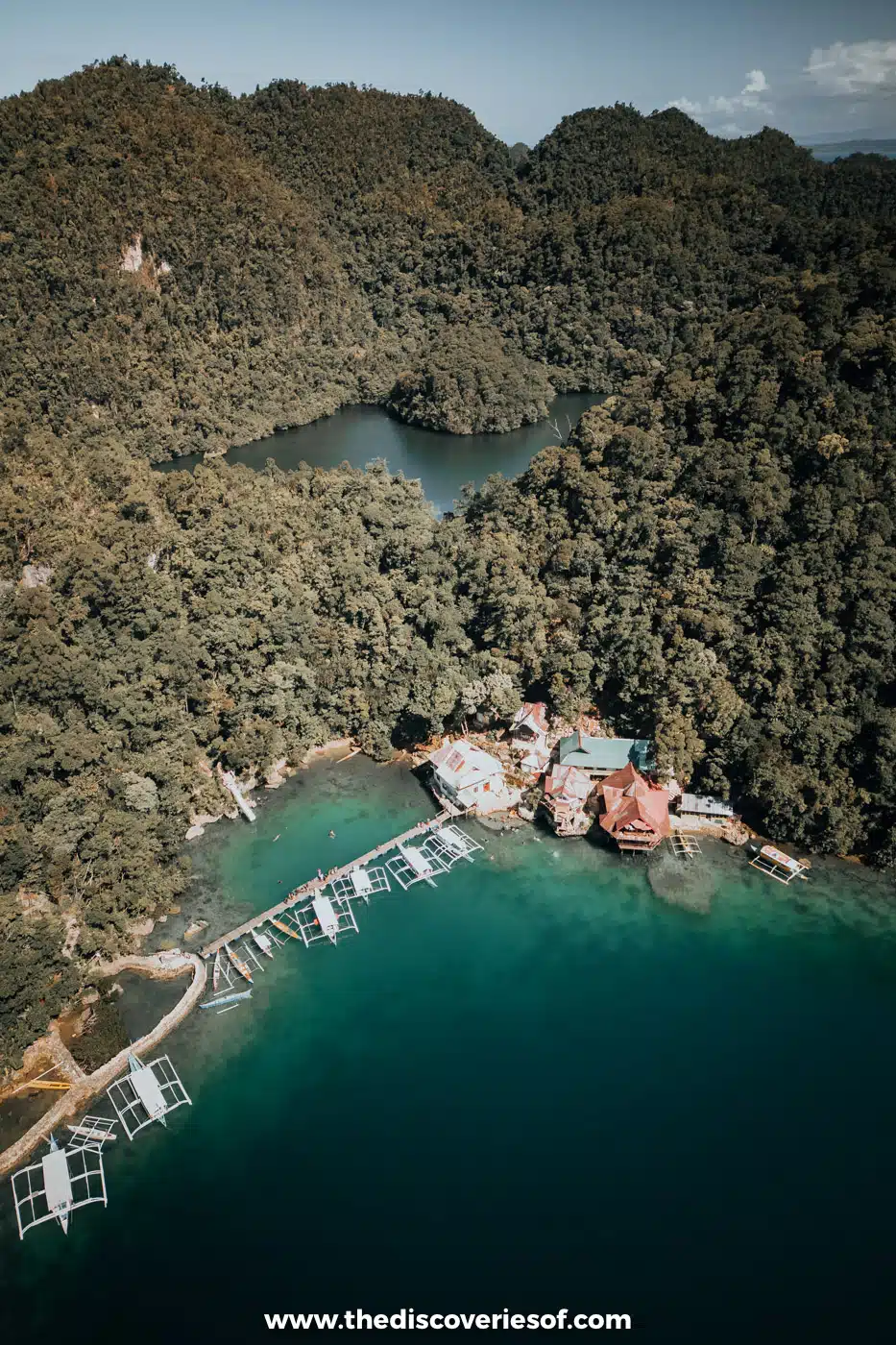
Sugba Lagoon at a glance
- Where: Caob Island, Del Carmen, on Siargao’s west coast, about 45 to 60 minutes by road from General Luna.
- Getting there: by boat from Del Carmen port, 20 to 30 minutes each way.
- Cost: ₱170 per person in fees, plus ₱2,150 for a boat for up to six people, or included on a land tour.
- Hours: about 7am to 5pm, with the first boats from 8am and a three-hour limit at the lagoon.
- Best time: first thing in the morning, or from about 2.30pm, on a weekday.
- Closed: every year from 10 January to 10 February, and when a storm warning is raised.
Why visit Sugba Lagoon?
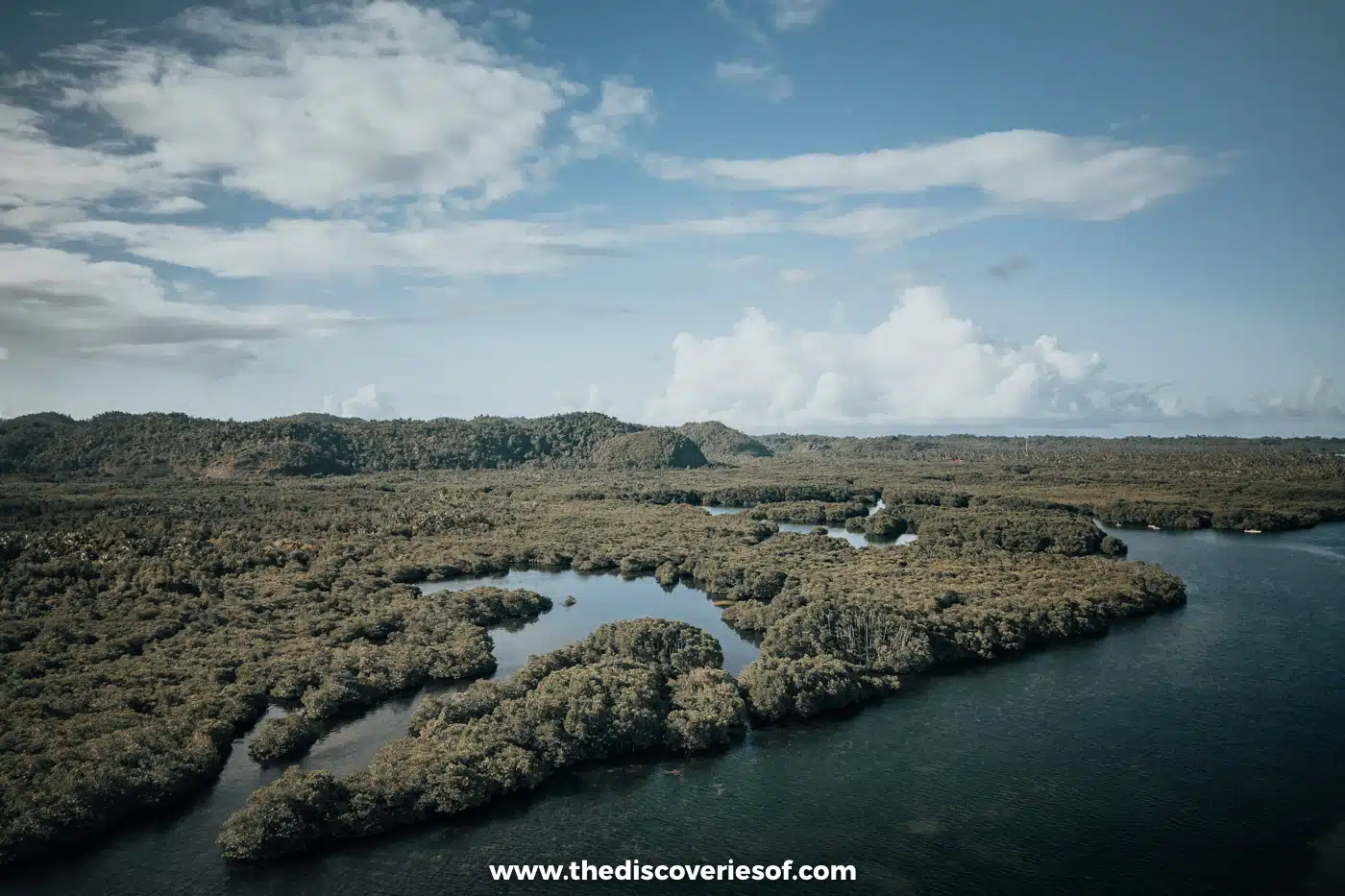
The boat ride is half the experience. From Del Carmen port, you wind through narrow channels in the Del Carmen Mangrove Reserve, 4,871 hectares of mangroves that make up the largest continuous mangrove forest in the Philippines. It became a Ramsar Wetland of International Importance in 2024 and is a habitat for the endangered saltwater crocodile.
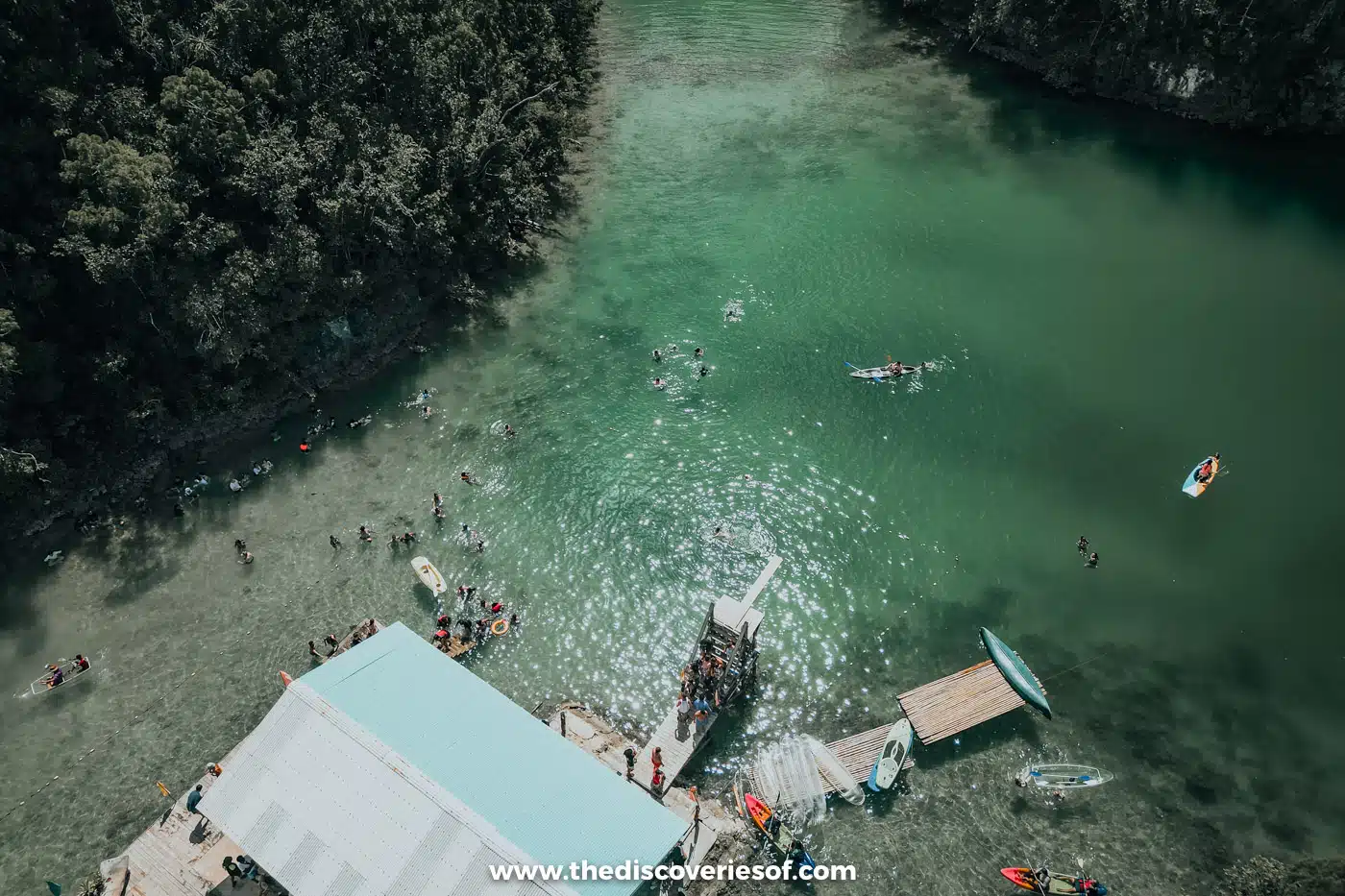
Then the channels open out into the lagoon: clear, green water enclosed by tall cliffs covered in jungle. It reminded me of the karst scenery around Railay in Thailand, and my first reaction was just: oh wow. In the middle, a floating house on stilts has a jetty, a diving board, tables and rentals, and there’s a designated swimming area around it.
How to get to Sugba Lagoon
On a land tour
Most visitors see Sugba Lagoon as part of a Siargao land tour, which also covers the Coconut View, Maasin River and the Magpupungko rock pools. Tours include the transfer, the boat and the fees, so it’s the easiest option, though you’ll arrive with all the other tours from late morning. Shared land tours from General Luna cost about ₱1,900 to ₱2,200 per person, including lunch.
On your own
You can go independently, and it’s a good way to beat the crowds.
- Get to Del Carmen. It’s about 45 to 60 minutes from General Luna by scooter (about ₱350 to ₱450 a day to hire), habal-habal (motorbike taxi, about ₱300 to ₱400 each way) or tricycle (₱400 to ₱600). Parking at the port is free.
- Register at the Del Carmen tourism centre by the port, near the municipal hall, and pay the fees and boat in cash. You can’t book ahead, and there’s no ATM nearby.
- Take the boat. Boats are run by the municipality and carry up to six. If you’re on your own or a couple, ask at the desk about sharing with other visitors to split the cost.
Top tip
Bring enough cash for everything, including kayaks and drinks at the lagoon. There are no ATMs at the port, and General Luna’s ATMs can run dry at weekends.
What it costs
Fees
| Fee | Price |
|---|---|
| Entrance fee (foreign visitors) | ₱100 per person |
| Environmental fee | ₱50 per person |
| Terminal fee | ₱20 per person |
| Life jacket rental | About ₱50 |
Boat packages
The tourism centre sells set boat packages, priced per boat for up to six people:
- Sugba Lagoon only: ₱2,150.
- Sugba plus Kawhagan or Pamomoan Island: ₱2,700. Both are small white-sand islands off Del Carmen, with a docking fee of about ₱30 to ₱150 per person.
- Sugba plus the Mangrove View Deck: ₱3,050.
- Everything (Sugba, the islands and the view deck): ₱3,650.
Packages are labelled with letters at the desk, but the letters vary between sources, so go by what each one includes.
Things to do at Sugba Lagoon
Kayak or paddleboard
Kayaks, glass-bottomed kayaks, paddleboards and bamboo rafts are all rented from the floating house. When I visited, a single kayak cost ₱200 for an hour, a double ₱300 and a glass-bottomed kayak ₱500; current prices are around ₱200 to ₱300 an hour for a kayak or paddleboard and ₱500 for a glass-bottomed kayak.
I rented a kayak, and it immediately started to rain, which seems to happen every time I rent a kayak. You get wet kayaking anyway, though, and paddling round under the cliffs was lovely.
Swim
There’s a designated swimming area around the floating house, and the water was a perfect temperature. Life jackets are recommended for anyone who isn’t a confident swimmer, and you can rent one on the platform. Snorkels are available too, though there’s more to see above the water than below it.
Jump off the diving board
The diving board on the floating house is about 4.5 metres (15 feet) high, and feels higher at low tide. Expect to queue: about 10 minutes if you’re on the first boat, 30 minutes or more by late morning. Skip the higher, unofficial jumps from the trees, which land close to rocks.
Add an island or the mangrove view deck
If you have more time, a bigger boat package adds Kawhagan or Pamomoan, two small white-sand islands off Del Carmen, or the Mangrove View Deck, a viewpoint over the mangrove forest. They make a good half-day trip, and they’re quieter than the lagoon.
When to go
Sugba Lagoon is small, and it gets very busy. When I was there it was packed, and it would have been even nicer a little quieter. The land tours arrive from late morning, and it’s busiest from about 10am to 2pm.
- Go early: be at the tourism centre before the first boats at 8am.
- Or go late: the crowds thin out from about 2.30pm, and by mid-afternoon you may have it almost to yourself, though the wind picks up and makes the return boat choppy.
- Choose a weekday: at weekends the boats can be three deep at the jetty.
- Season: March to October is the best time, with the calmest weather. Boats don’t run when a storm signal is raised.
- Annual closure: the lagoon closes every year from 10 January to 10 February to let it recover.
Top tip
If you’re on a land tour, ask whether your operator can do Sugba first thing and the Magpupungko rock pools later, depending on the tide. It makes a big difference to how busy the lagoon is.
Rules
- No single-use plastic. Bags are checked at the pier, so decant drinks into a refillable bottle before you go.
- No food or alcohol at the lagoon. Eat before or after your visit; only water is sold.
- Reef-safe sun cream only.
- A three-hour limit at the lagoon, strictly enforced.
- No fishing, anchoring or touching the coral, and take all your rubbish home.
What to bring
- Cash for fees, the boat and rentals.
- A refillable water bottle and a dry bag.
- Reef-safe sun cream and a hat, as there’s little shade on the water.
- Water shoes for the platform and boat landings.
- A light rain jacket, just in case: it started raining the moment I got into my kayak.
Recommended tours
- Siargao land tour with lunch and hotel transfers: Sugba Lagoon, Magpupungko and lunch on a shared tour.
- Sugba Lagoon escape private tour: Your own boat to the lagoon and the islands nearby.
- Siargao land tour with lunch and Sugba Lagoon: The full island loop, with Maasin River.
Map
Read next
- Siargao land tour: what’s included, prices and tips
- Sohoton Cove tour from Siargao: the jellyfish lagoon, caves and what to expect
- Siargao travel guide
- 3 days in Siargao
- The perfect 3-week Philippines itinerary
- Philippines packing list
Love this? Save and share on Pinterest


Discover the top things to do, insider tips and hidden gems in our Philippines Travel Guides.
Read the guides →


