
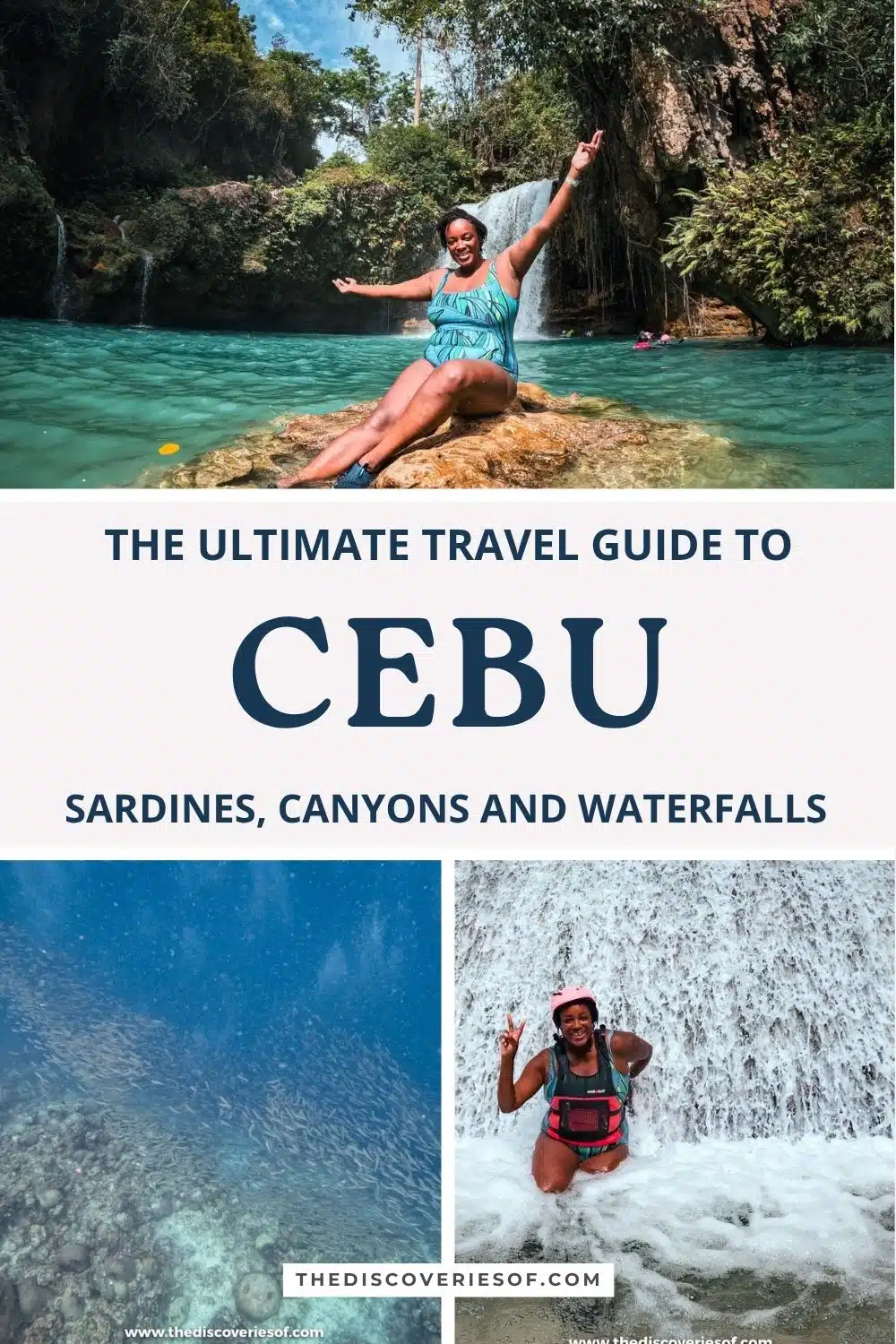
Millions of sardines a few metres off the beach, a jungle canyon you jump your way down to a turquoise waterfall, and thresher sharks rising at dawn: Cebu packs more into one island than you’d think. So where should you base yourself, and are Oslob’s whale sharks worth the controversy? Here’s everything you need to plan a trip, from the best things to do to the bus you need, and the one you don’t.
Cebu is the island at the centre of the Philippines, and for many travellers it’s the gateway to everything else: its airport has more international and domestic connections than anywhere outside Manila. But it’s well worth stopping on the island itself. The south-west coast has the Moalboal sardine run and the canyon that leads to Kawasan Falls, the far south has whale sharks and waterfalls, the north has thresher sharks and white-sand islands, and Cebu City has the oldest Catholic church in the country.
I flew into Cebu around sunset, struck by how lush and green the island looked from the air, and spent five nights in Moalboal on the south-west coast, diving the sardine run and canyoneering down to Kawasan Falls, which turned out to be one of the best days I’ve ever had while travelling. This guide combines what I did in the south-west with everything else worth knowing about the island, so you can decide where to base yourself.
Some links in this article may be affiliate links, which means we may receive a small commission, at no additional cost to you, if you decide to purchase through one of my recommended partners.
Where to go in Cebu
Cebu is long and thin, about 200 kilometres from north to south, and getting around takes longer than you’d expect. It’s easiest to think of it in four parts:
- The south-west (Moalboal and Badian): the sardine run, turtles, diving and canyoneering. The best base for a first visit.
- The far south (Oslob): whale sharks, Tumalog Falls and Sumilon Island.
- Cebu City: the colonial old town, the hills of Busay and the best lechon.
- The north (Malapascua and Bantayan): thresher shark diving and quiet white-sand beaches.
Things to do in Cebu
Swim with the sardine run in Moalboal
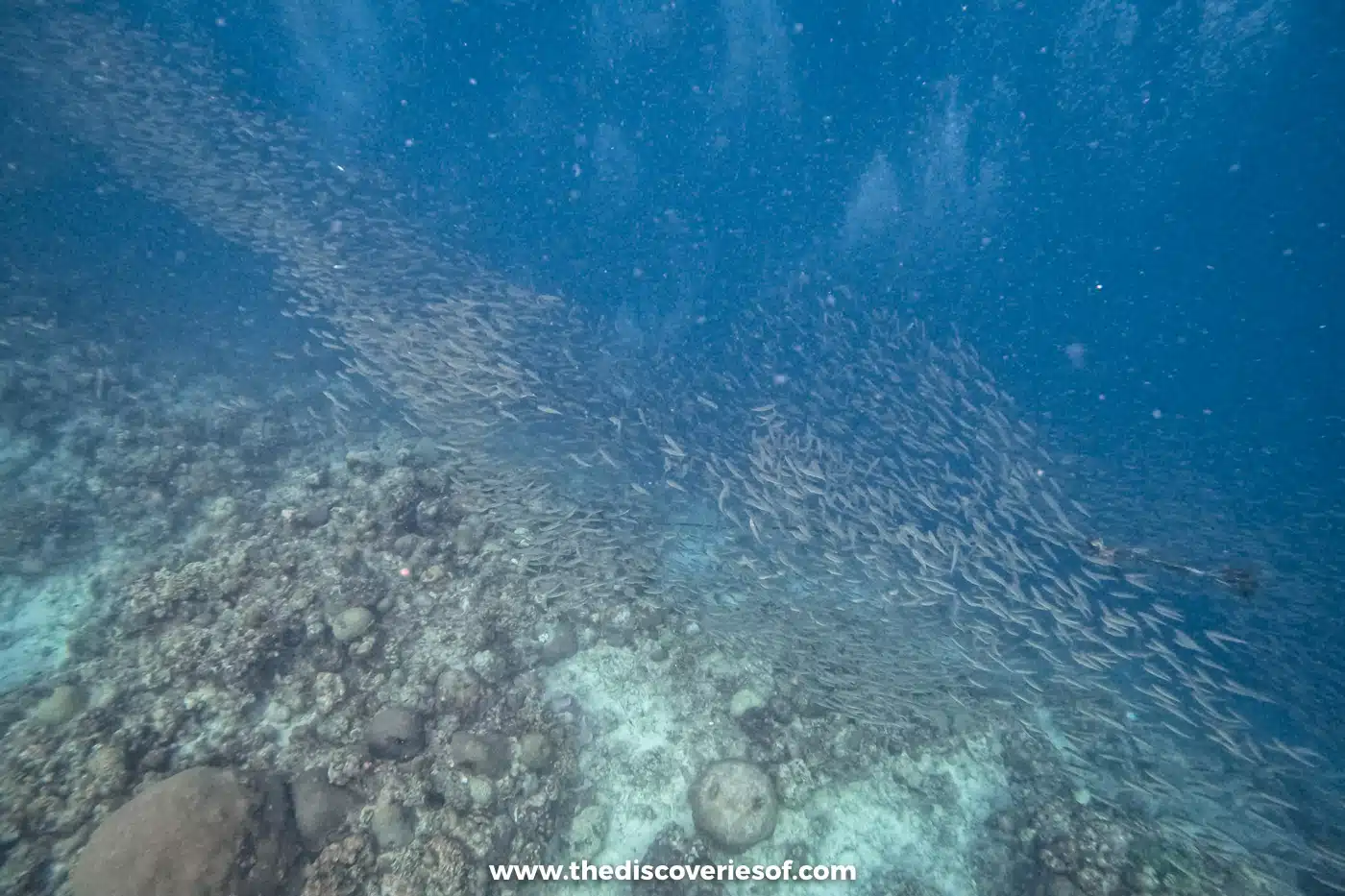
A few metres off Panagsama Beach in Moalboal, millions of sardines swirl together in huge shoals that move like murmurations of starlings. They’re there all year, and you can swim out to them from the beach for free, with snorkel sets for about ₱100 to ₱200. Early morning has the calmest, clearest water. Turtles feed on the seagrass in the shallows nearby.
I dived the sardines on my first ever shore dive, and while it was a cool dive, you don’t need to dive to see them at their best. Snorkelling from the shore is just as good.
Go canyoneering to Kawasan Falls
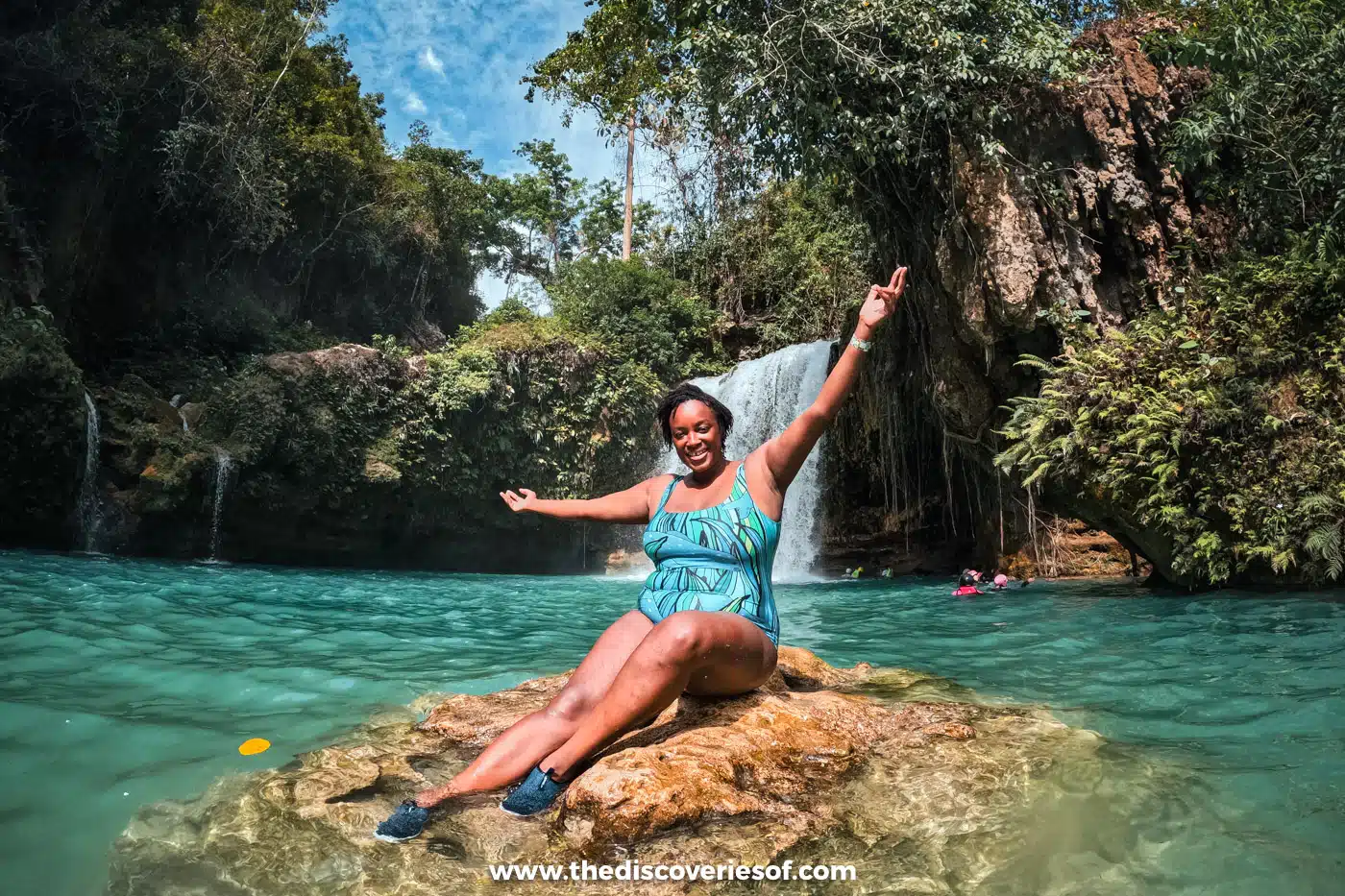
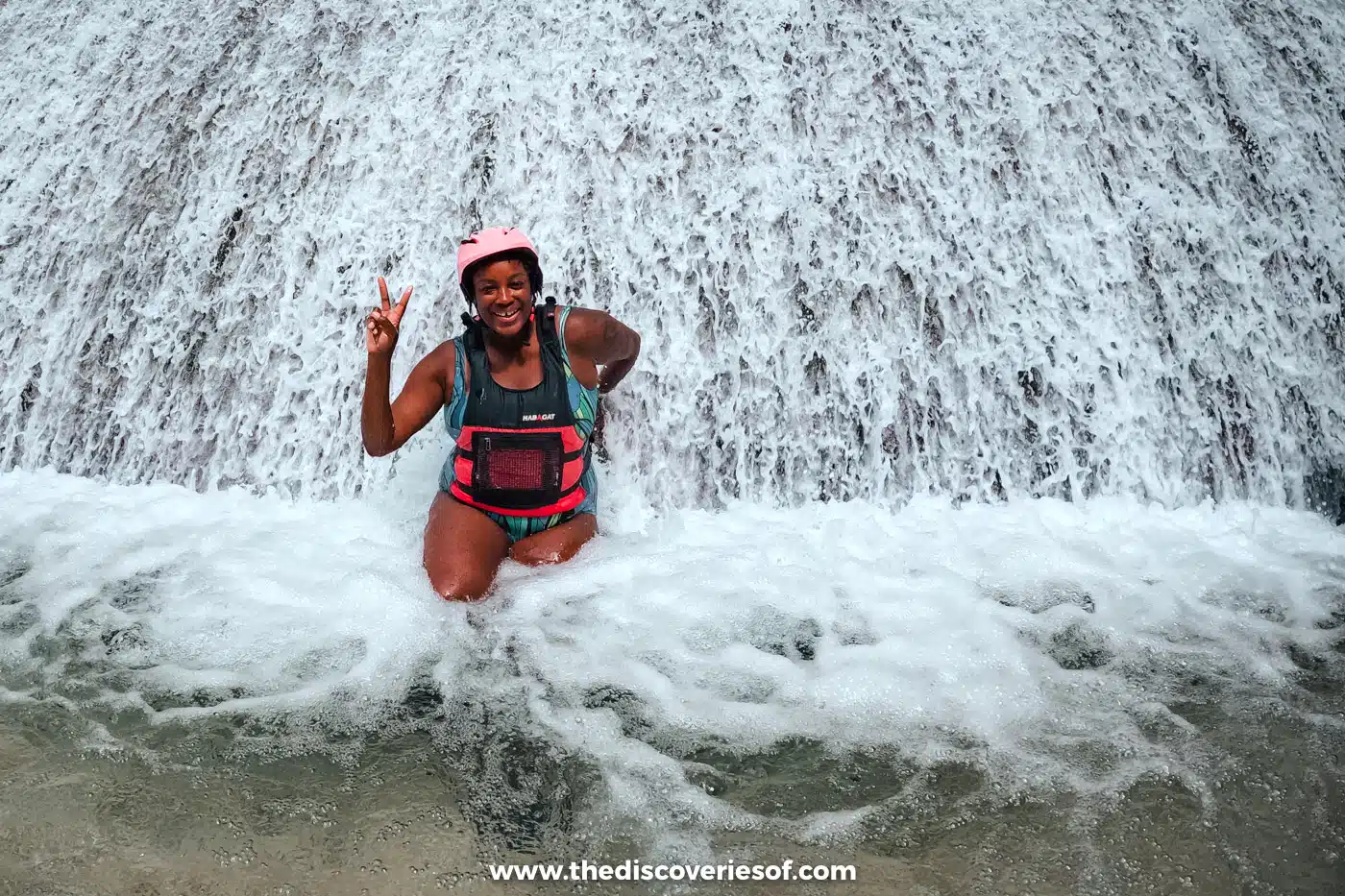
Canyoneering in Badian, just south of Moalboal, was the highlight of my time in Cebu. You start upstream on the Canlaob River and follow it down through a jungle canyon to Kawasan Falls, jumping into turquoise pools, sliding down rocks, swimming and scrambling over boulders for about four hours.
I went on my own on a tour from Moalboal, with an absolutely amazing canyon guide who watched every jump. It started with a zipline, which I was nervous about and then loved, followed by a 30- to 45-minute walk to the first jump. The biggest jump I did was about 10 metres, and when I made it, I felt on top of the world. It ends with a swim at the falls and a rope swing, where I managed a very inelegant belly flop. It was one of the best days I’ve ever had while travelling, and I’m so glad I didn’t let doing it alone put me off.
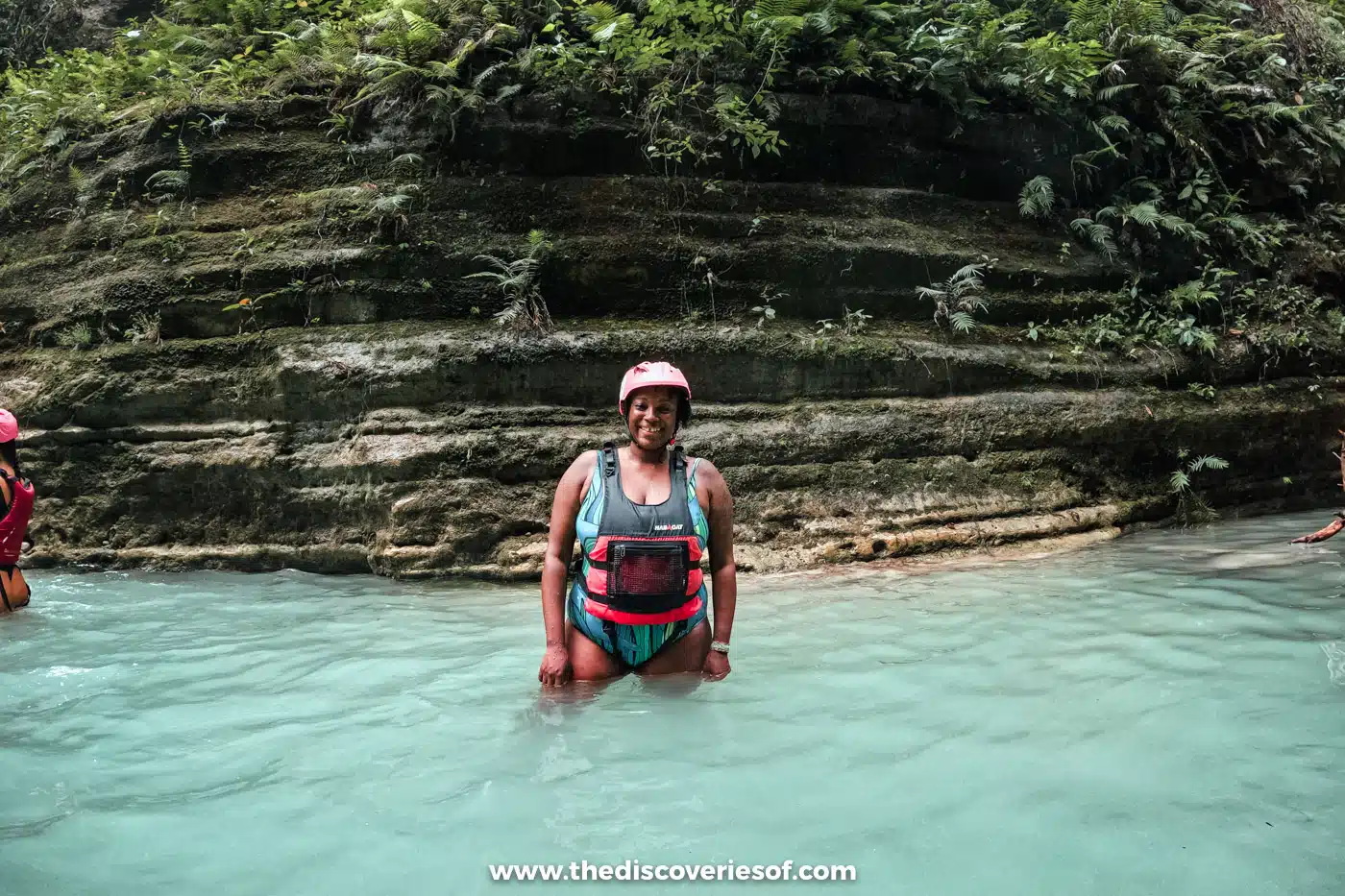
Tours from Moalboal cost about ₱1,500 to ₱2,100, including the guide, helmet, life jacket, transport to the start and lunch. Day trips from Cebu City cost more and start very early. Every jump is optional, and if you’d rather just see the falls, entry is about ₱200.
Top tip
Wear water shoes with a good grip. The canyon was slippery after rain the day before I went, and you’ll be on wet rock all day.
Visit Pescador Island
Pescador Island, about 15 minutes by boat from Moalboal, is one of Cebu’s best-known dive sites, with a coral wall and a large cave called the Cathedral, and it’s also a popular snorkelling stop. Boat trips that combine Pescador with the sardines and turtles cost about ₱500 to ₱1,500 per person.
I dived it, and honestly, it wasn’t for me: the currents were relatively strong and the visibility and marine life weren’t great. I preferred the sardines.
Climb Osmeña Peak
Osmeña Peak, at 1,013 metres, is the highest point in Cebu, with a jagged ridge of green hills that looks especially good at sunrise. It’s in the hills of Dalaguete, about an hour and a half from Moalboal by scooter, and the walk from the trailhead takes only 20 to 25 minutes. Entry is ₱150, including a compulsory guide.
See the whale sharks at Oslob, or don’t
Oslob, at the southern tip of Cebu, is famous for its whale sharks, which gather close to shore every morning to be fed by local fishermen. Visitors watch from boats or snorkel among them from 6am to about midday, for about ₱1,000 to ₱1,500, with strict rules: no touching, no sunscreen and no flash.
It’s also one of the most controversial wildlife experiences in Asia. Research has found that hand-feeding conditions the sharks to the boats, that visitors routinely break the distance rules, and that almost all of the sharks have scars, with more than a quarter cut by boat propellers. Whale sharks have been listed as endangered since 2016. Supporters point out that the fees give former fishermen a living. I didn’t go, and if you’re undecided, it’s worth reading up before you book.
Swim at Tumalog Falls and Sumilon Island
Tumalog Falls is a waterfall a short ride inland from Oslob, with entry for about ₱50. Offshore, Sumilon Island is known for its sandbar, with day packages from about ₱1,500 to ₱2,500.
Explore Cebu City’s old town
Cebu City is where the Spanish first settled in the Philippines, and its small old quarter is walkable in an afternoon. Magellan’s Cross marks the cross planted by Ferdinand Magellan’s expedition in 1521, the Basilica del Santo Niño is the oldest Catholic church in the country, and Fort San Pedro was founded in 1565 and rebuilt in stone in the 18th century (entry about ₱30).
Head into the hills above Cebu City
In the hills of Busay, above the city, the Temple of Leah is a grand Roman-style temple built by a local businessman as a monument to his late wife, with views over the city (about ₱120 to ₱150). Nearby, the Sirao Flower Garden is a hillside of colourful flower beds (about ₱100), though the blooms come and go with replanting.
Eat lechon
Cebu’s lechon is famous across the Philippines: a whole roast pig stuffed with lemongrass and garlic, with crackling skin, and so well seasoned that it’s served without sauce. Market stalls in Carcar and Talisay sell it by the kilo, and Cebu City has dedicated lechon restaurants.
Dive with thresher sharks at Malapascua
Malapascua, a small island off the northern tip of Cebu, is one of the only places in the world where you can reliably dive with thresher sharks, which are now mostly seen at Kimud Shoal. Dives leave at about 5am, and you’ll need an Advanced Open Water certification, as the sharks are below 18 metres. The island itself has white-sand beaches and a laid-back village.
Relax on Bantayan Island
Bantayan, off the north-west coast, is Cebu’s quietest beach island, with long white-sand beaches, island hopping to Virgin Island and a slow pace. Ferries run from Hagnaya to Santa Fe in about 1 to 1.5 hours.
Know before you go
Typical costs
Cebu is good value outside the city’s smarter hotels. A canteen meal costs about ₱60 to ₱100, a beer about ₱50 to ₱65 in a shop, a fan room about ₱300 to ₱500 and a mid-range hotel about ₱1,500 to ₱3,500 a night. The sardines are free, canyoneering costs about ₱1,900 to ₱2,200 and fun dives about ₱1,200 to ₱1,800.
How long to stay
Allow at least three nights in Moalboal for the sardines, a boat trip and canyoneering. Add a night in Oslob if you want the whale sharks or Sumilon, two nights in Cebu City if you want to see the city, and three or four nights in Malapascua or Bantayan for the north. I spent five nights in Moalboal and flew straight on to Palawan from the airport.
Best time to visit
The dry season runs from about December to May, with January to March the calmest months and March to May the hottest. The rainy season runs from June to November, and typhoons are most likely from July to October, though they can come later: Typhoon Tino caused devastating floods in Cebu in November 2025. The Sinulog festival, Cebu City’s huge street parade in honour of the Santo Niño, is held on the third Sunday of January.
Where to stay
For a first visit, base yourself in Moalboal, where the sardines, diving and canyoneering are all close by. Stay in Panagsama, the beach area, where everything is walkable.
Chief Mau, Moalboal
I stayed at Chief Mau for five nights, in a very sizeable private room with a big private bathroom and a terrace with a hammock chair, where I spent my mornings reading. The team were lovely, and I met great people there.
You can also compare places to stay in Moalboal, Cebu City and Malapascua on Booking.com.
How to get there
By air: Mactan-Cebu International Airport, on Mactan Island about 15 to 20 kilometres from Cebu City, is the second-busiest gateway in the Philippines, with direct flights from across Asia and Australia and domestic flights to Palawan, Siargao and beyond. A Grab or taxi to Cebu City costs about ₱250 to ₱500 and takes 25 to 45 minutes.
By sea: fast ferries link Cebu City with Bohol (about 2 hours) and, via Bohol, Siquijor, and there are slower overnight ferries to many other islands. OceanJet cut some sailings in late 2026 because of fuel costs, so check the timetable before you plan around a crossing.
Read next
Getting around
- To Moalboal: Ceres buses signed “Bato via Barili” leave Cebu South Bus Terminal about every 30 minutes and take about 3 hours, for about ₱170 to ₱250. A taxi or private transfer from the airport costs about ₱3,000 to ₱4,500 and should take 3 to 3.5 hours, but mine took almost four.
- To Oslob: Ceres buses signed “Bato via Oslob” take 3 to 4 hours, for about ₱300. Moalboal to Oslob is about 1.5 to 2 hours by road.
- To Malapascua: buses from Cebu North Bus Terminal to Maya take about 5 hours, then a boat takes 30 to 45 minutes. Aim to reach Maya by 3pm.
- In Cebu City: Grab is the easiest option, and jeepneys cost about ₱13.
- Elsewhere: tricycles and habal-habal (motorbike taxis) for short hops, and scooters for about ₱300 to ₱500 a day.
Money and practical tips
- Bring cash from Cebu City. The south is largely cash only, and the ATMs in Moalboal and Oslob are few and unreliable.
- Expect power cuts outside the city. I had an all-day blackout in Moalboal.
- Leave a buffer on travel days. Journeys on Cebu’s roads take longer than the maps suggest.
- Pack water shoes. You’ll need them for canyoneering, rocky shore entries and boat landings. My Philippines packing list has everything else.
- Grab a Jollibee at the airport. I had the Super Meal for breakfast before my flight out: the fried chicken was great, spicy and juicy, but skip the spaghetti.
Suggested itineraries
Cebu in 3 days: Sardine run and Pescador Island – canyoneering to Kawasan Falls – Osmeña Peak or White Beach. The best of the south-west, from a base in Moalboal.
Cebu in 5 days: Moalboal for three nights – Oslob or Sumilon for one – Cebu City for one. The south-west, the far south and the old town.
Cebu for divers: Moalboal for the sardines and the reef – Malapascua for the thresher sharks. Two very different kinds of diving at either end of the island.
Recommended tours
- Kawasan canyoneering adventure with lunch: The best-reviewed canyoneering trip, from Moalboal.
- Kawasan Falls canyoneering tour with ziplining and lunch: The day trip from Cebu City.
- Moalboal sardines run snorkel and Kawasan canyoneering: Moalboal’s two highlights in one day.
- Moalboal: Pescador Island snorkelling and sardine run: By boat, from Cebu City.
- Cebu private car transfer with driver: The easiest way to get from the airport to Moalboal or Oslob.
Map
Read next
- Moalboal travel guide: the best things to do in Moalboal
- The Moalboal sardine run: should you snorkel it or dive it?
- The perfect 3-week Philippines itinerary
- Best places to visit in the Philippines
Love this? Save and share on Pinterest

Discover the top things to do, insider tips and hidden gems in our Philippines Travel Guides.
Read the guides →


