
Millions of sardines swirl a few metres off Panagsama Beach every day of the year, and you can swim out to them for free. So do you need to dive to see Moalboal’s sardine run at its best? I dived it, with a mask that kept filling with water, and came back with a clear answer. Here’s where to get in, when to go, what it costs and the turtles waiting in the shallows.
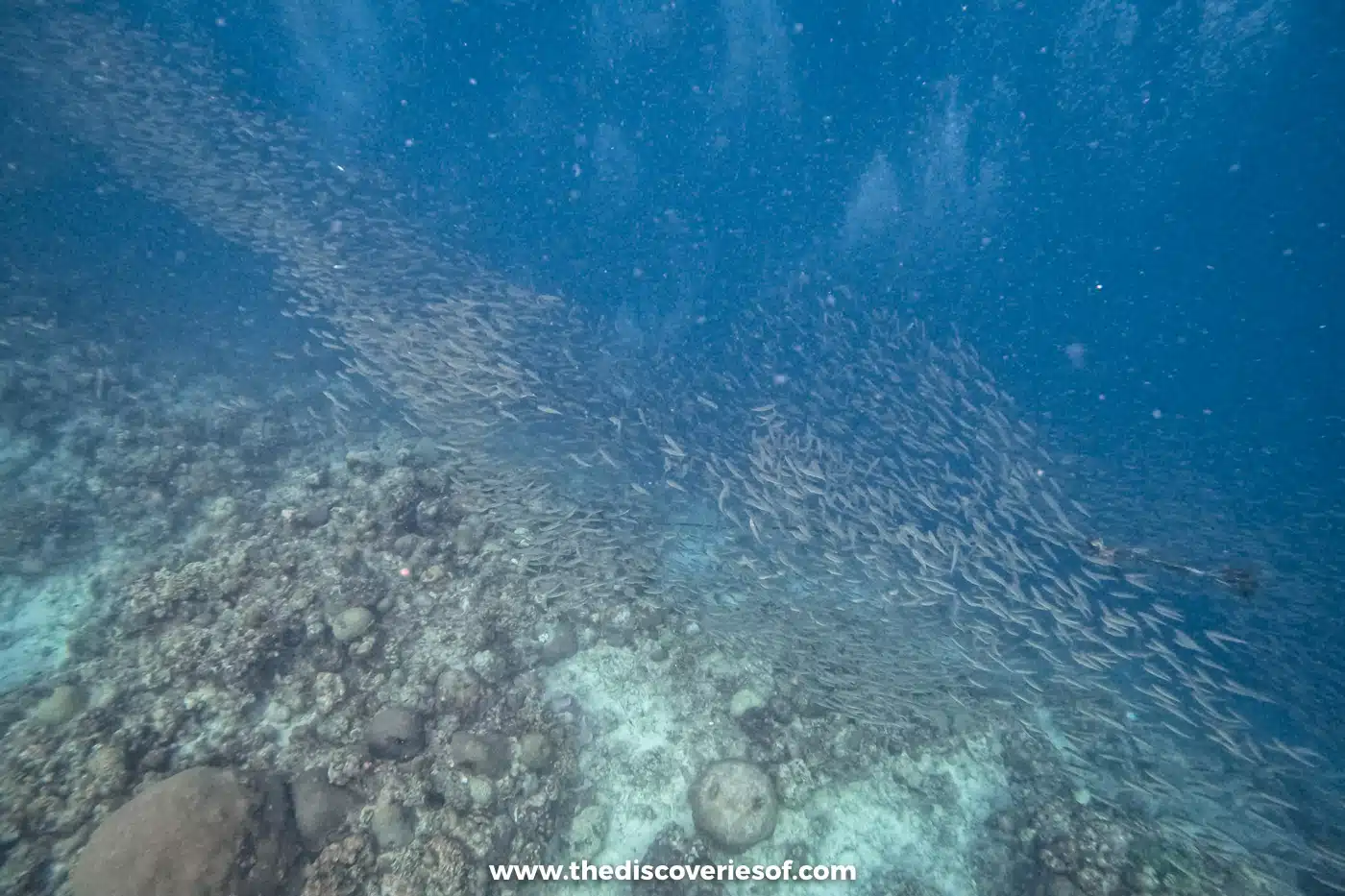
Just off Panagsama Beach in Moalboal, a few metres from the shore, millions of sardines swirl together in huge, shifting balls that move like murmurations of starlings. It’s one of the very few places in the world where you can swim with a sardine run, it happens all year, and you don’t need a boat, a tour or even a dive certificate to see it.
The sardines were the reason I stayed in Moalboal, and I dived them on a two-dive morning, my first ever shore dive, followed by Pescador Island. It was a cool dive, but I came away convinced that most people will get just as much from snorkelling it, if not more. Here’s how to see the sardine run, and which option I’d choose.
Some links in this article may be affiliate links, which means we may receive a small commission, at no additional cost to you, if you decide to purchase through one of my recommended partners.
The sardine run at a glance
- Where: off Panagsama Beach, Moalboal, on the south-west coast of Cebu.
- When: all year, with the best visibility in the dry season and in the morning.
- Cost: free from the shore; snorkel hire about ₱100 to ₱200; dives from about ₱1,200 to ₱1,800.
- How deep: the shoals sit anywhere from just below the surface to about 10 metres, along the edge of a reef wall that drops away steeply.
- Do you need to dive? No. Snorkelling works brilliantly.
What is the Moalboal sardine run?
Moalboal’s sardines are a resident shoal of millions of fish that live along the reef wall off Panagsama Beach. They gather in dense, swirling bait balls for protection, constantly changing shape. The fish are here all year, a short swim from the beach.
Panagsama is a protected municipal heritage site, and net fishing and spearfishing are banned off the beach, which is a big part of why the shoal has stayed.
Snorkelling the sardine run
Where to get in
You don’t need a boat. Walk in from Panagsama Beach, near the long pier in front of Marina Village Dive Resort, and swim out about 20 to 30 metres until the seabed drops away at the edge of the reef wall. The sardines are usually just along the drop-off. If you can’t find them, ask at any dive shop, as the crews know exactly where they’ve been that morning.
The shoreline at Panagsama is rocky rather than sandy, and the entry points are a mix of steps and rocks, so wear water shoes or fins with booties.
The best time to go
The sardines are there all day, but go early. From about 7am to 9am, the water is calmest and clearest, and you’ll beat the tour groups and boat traffic that build up later in the day. Late afternoon is quieter again, and the low sun lights up the shoal from the side.
What it costs
Nothing. Swimming with the sardines from the shore is free. Snorkel sets cost about ₱100 to ₱200 to rent from the shops along the beach, and local snorkel guides work the beach, at rates set by the municipality, if you’d like someone to show you where the shoal is.
Turtles
Turtles feed on the seagrass in the shallows near the entry points, often within minutes of getting in, so keep an eye on the seabed on your way out to the sardines. Taking turtles is banned, and you should give them plenty of space.
Top tip
Bring your own mask if you have one. My dive mask kept filling with water, and a leaky mask is the quickest way to ruin the experience.
Diving the sardine run
What the dive is like
I booked two dives with Savedra Dive Center, meeting at 7am, and the sardine run was the first. It was my first ever shore dive: you walk in from the shore rather than jumping off a boat.
The sardines were incredible, huge balls of fish that moved like murmurations of starlings, and it’s a very unique and crazy thing to be underneath them. But my mask kept filling with water, which was so annoying, and wall dives aren’t my favourite: the steep drop-off freaks me out a little. It was a short dive, about 25 minutes, to a maximum of 18 metres. Overall, it was a cool dive, but I’m not sure it was better than seeing the sardines from the surface.
Why dive it?
Diving does give you a different perspective: you can get below the shoal and look up at it, and you’ll see more of the reef wall itself, which is home to frogfish, pipefish and the occasional turtle. Dive centres along the beach charge about ₱1,200 to ₱1,800 for a fun dive, including equipment, and many offer the sardines as a shore dive.
Pescador Island
Many dive centres pair the sardines with Pescador Island, a small island about 15 minutes offshore that’s Moalboal’s best-known dive site, with a coral wall that drops from about 10 to 40 metres and a large cave known as the Cathedral. I did it as my second dive that morning, and it wasn’t for me: there were relatively strong currents, I struggled with my buoyancy, and the visibility and variety of marine life weren’t great. I saw clams, lots of fish and flatworms, but I’d read that the shallow coral had been damaged by a typhoon, and it wasn’t my favourite dive ever. I preferred the sardines.
Pescador can also be snorkelled on a boat trip, usually combined with the sardines and the turtles, for about ₱500 to ₱1,500 per person depending on the boat.
Snorkel or dive: my verdict
If you’re not a certified diver, don’t let that stop you: snorkelling the sardine run is free, easy and genuinely spectacular, and the shoal is often closer to the surface than to the seabed. Even as a diver, I’d say you don’t need to dive to see the sardines at their best.
Dive it if you’re already certified and want the experience of being underneath the shoal, or you want to explore the reef wall and see the critters that live on it. Otherwise, grab a mask, walk in from the beach early in the morning, and put the money towards canyoneering at Kawasan Falls instead, which was one of the best days I’ve ever had while travelling.
Know before you go
How to get to Moalboal
Moalboal is about 90 kilometres from Cebu’s airport, on the south-west coast. Ceres buses signed “Bato via Barili” leave Cebu South Bus Terminal about every 30 minutes and take about 3 hours, for about ₱170 to ₱250. A private car or taxi from the airport costs about ₱3,000 to ₱4,500, but allow plenty of time: my taxi from the airport took almost four hours. From the bus stop on the highway, a tricycle to Panagsama costs about ₱50 to ₱150.
Where to stay
Stay in Panagsama, where the sardines, the dive shops and most of the restaurants are, and you can walk to the beach for an early swim. I stayed at Chief Mau, in a big private room with a terrace and a hammock chair, where I spent my mornings reading. The team were lovely, and I met great people there.
What to bring
- Water shoes for the rocky entries.
- Your own mask, if you have one.
- Reef-safe sun cream and a rash vest for sun protection.
- Cash. Moalboal has only a couple of ATMs, and they can run dry.
Recommended tours
- Moalboal: Pescador Island hopping and sardine run: The sardines, the turtles and Pescador Island by boat.
- Moalboal sardine run scuba dive and turtle snorkel: For divers, with Pescador Island.
- Moalboal sardines run and Kawasan Falls canyoneering: The two best things to do in Moalboal in one day.
Read next
- Moalboal travel guide: the best things to do in Moalboal
- Cebu travel guide
- The perfect 3-week Philippines itinerary
- Philippines packing list
Love this? Save and share on Pinterest

Discover the top things to do, insider tips and hidden gems in our Philippines Travel Guides.
Read the guides →


