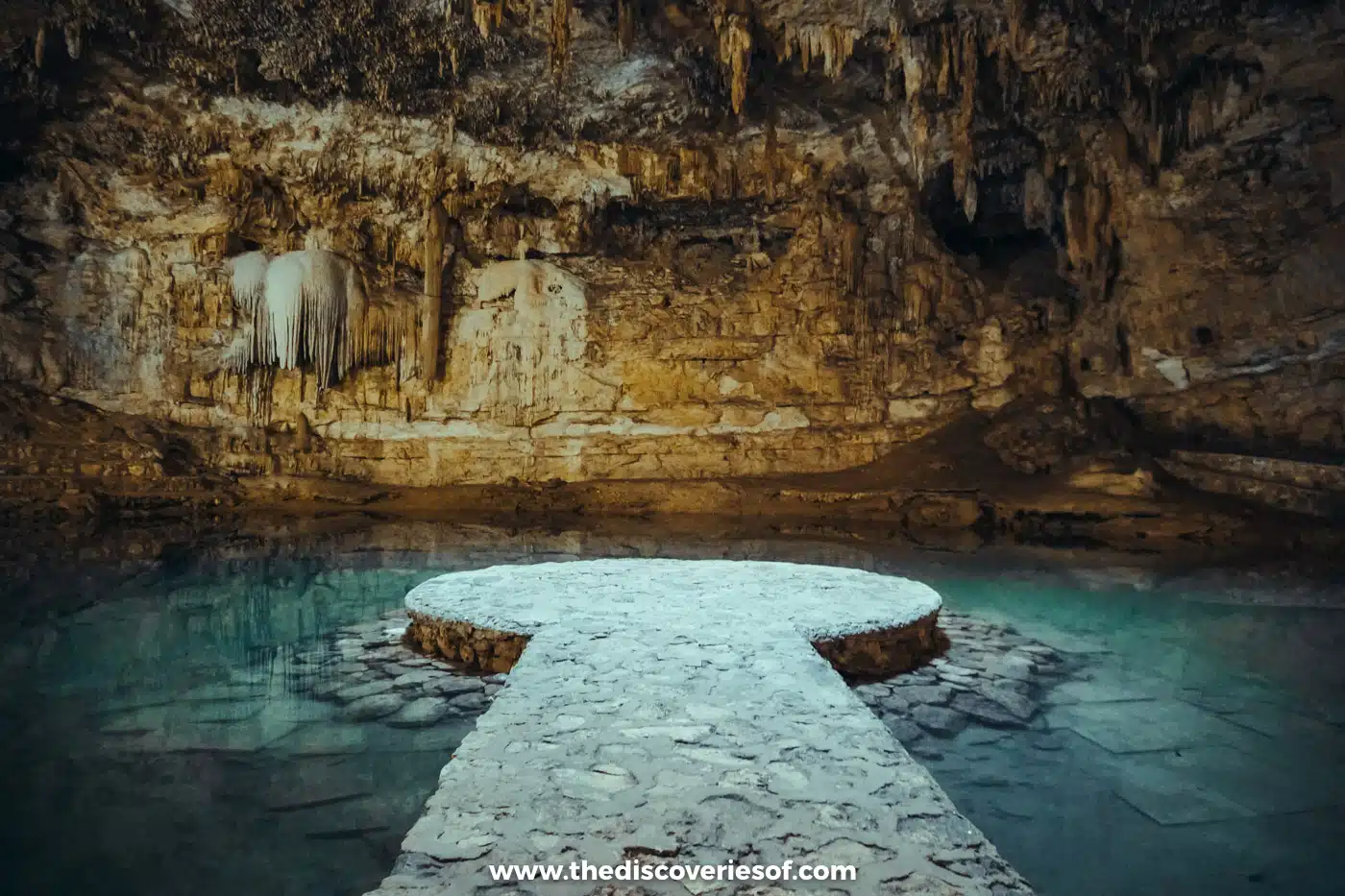
A stone path runs out across a pool of blue water to a round platform, deep inside a cave hung with stalactites. That’s Cenote Suytun, and it’s one of the most photographed places in the Yucatán. I stopped here on my Mexico road trip, and these photos are from my morning in the cave.
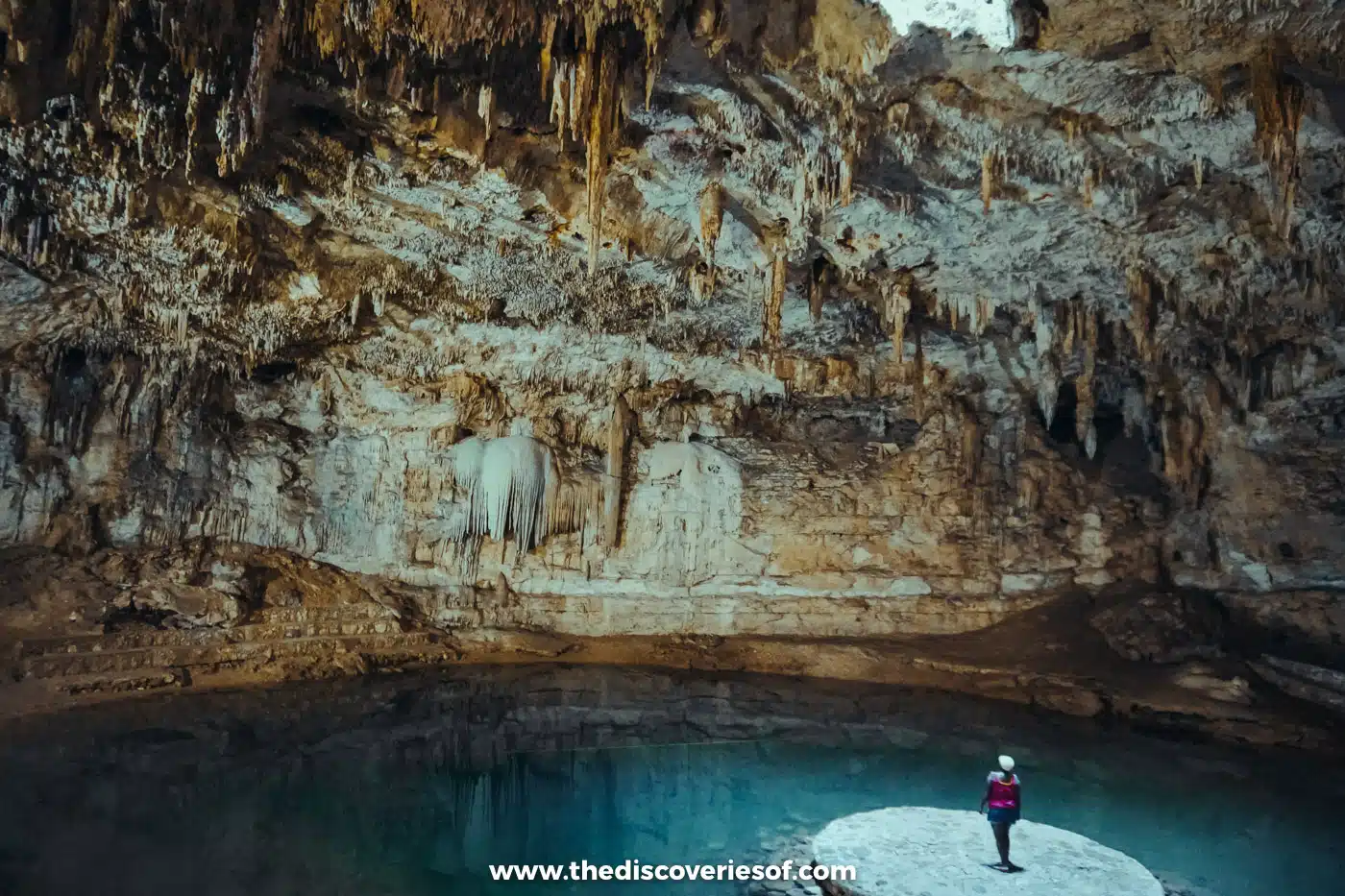
Exploring cenotes, the Yucatán’s natural freshwater sinkholes, was a bucket-list item for me, and I packed in as many as I could on my trip to the peninsula. Here’s what it’s like, when to go for the famous beam of light, what it costs in 2026 and how to fit it into a trip around Valladolid.
What is Cenote Suytun?
Cenotes are sinkholes that form when the limestone crust of the Yucatán collapses into the groundwater below. They were sacred to the ancient Maya, who saw them as gateways to the underworld, and today there are thousands of them across the peninsula.
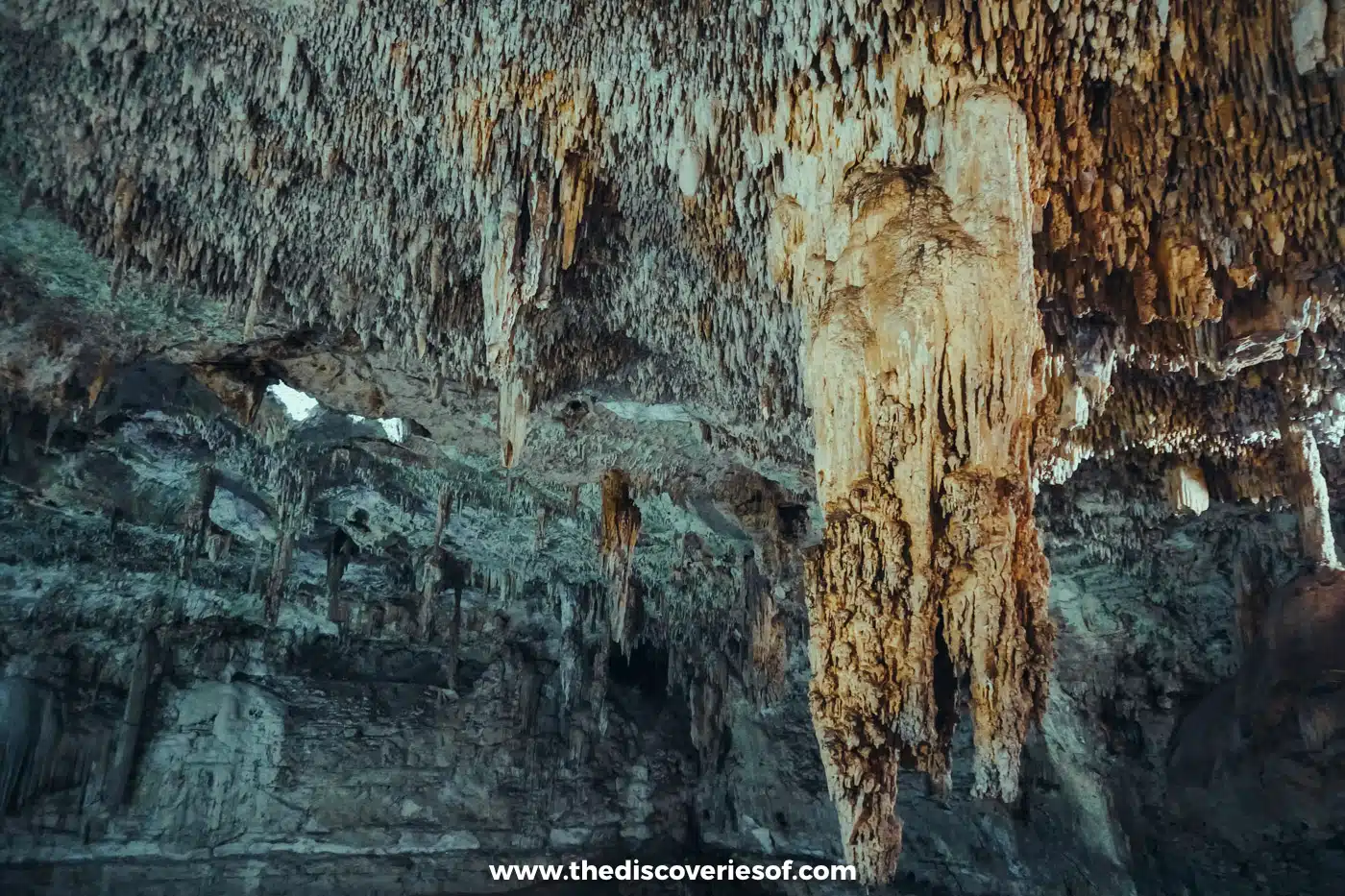
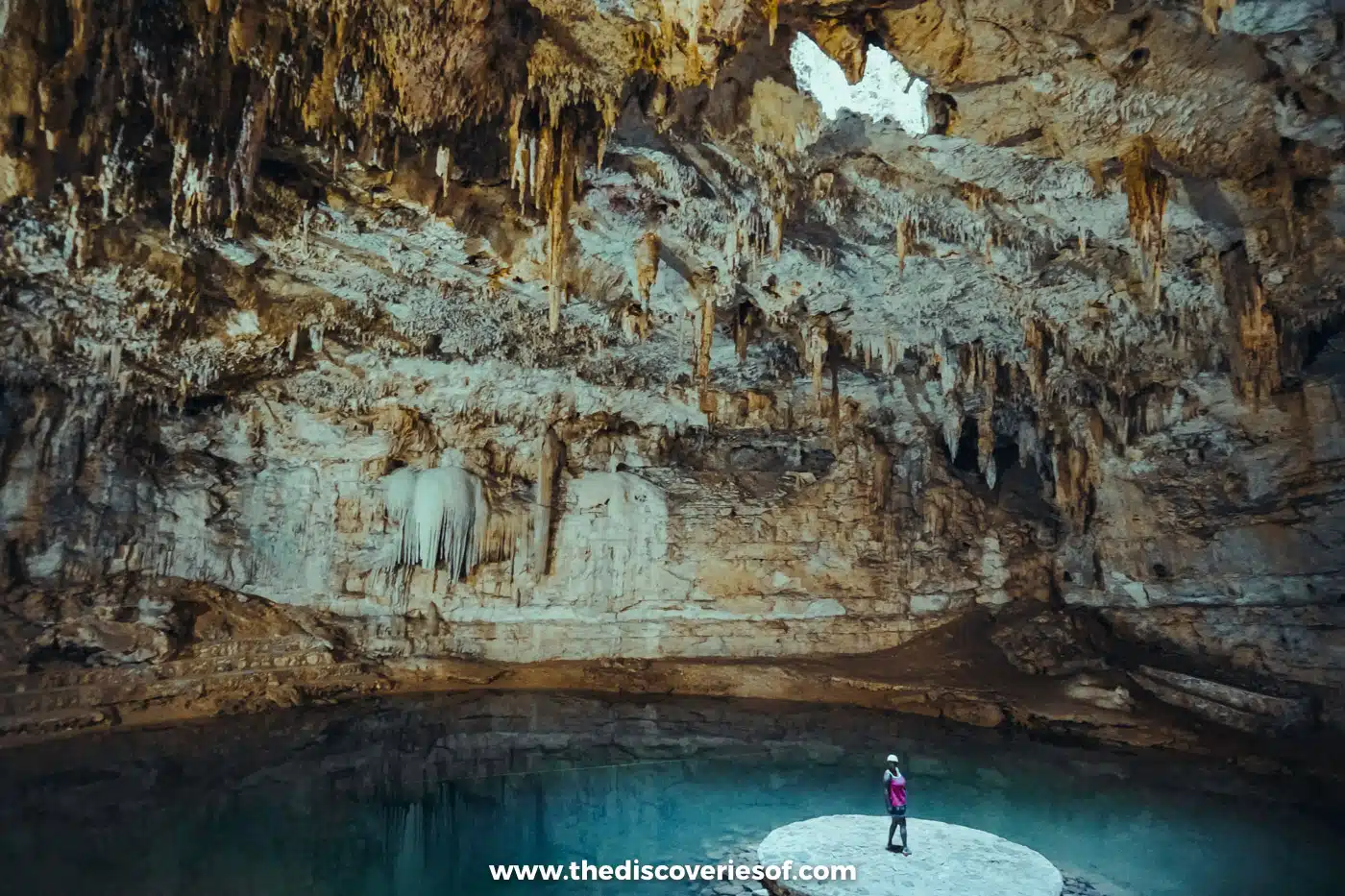
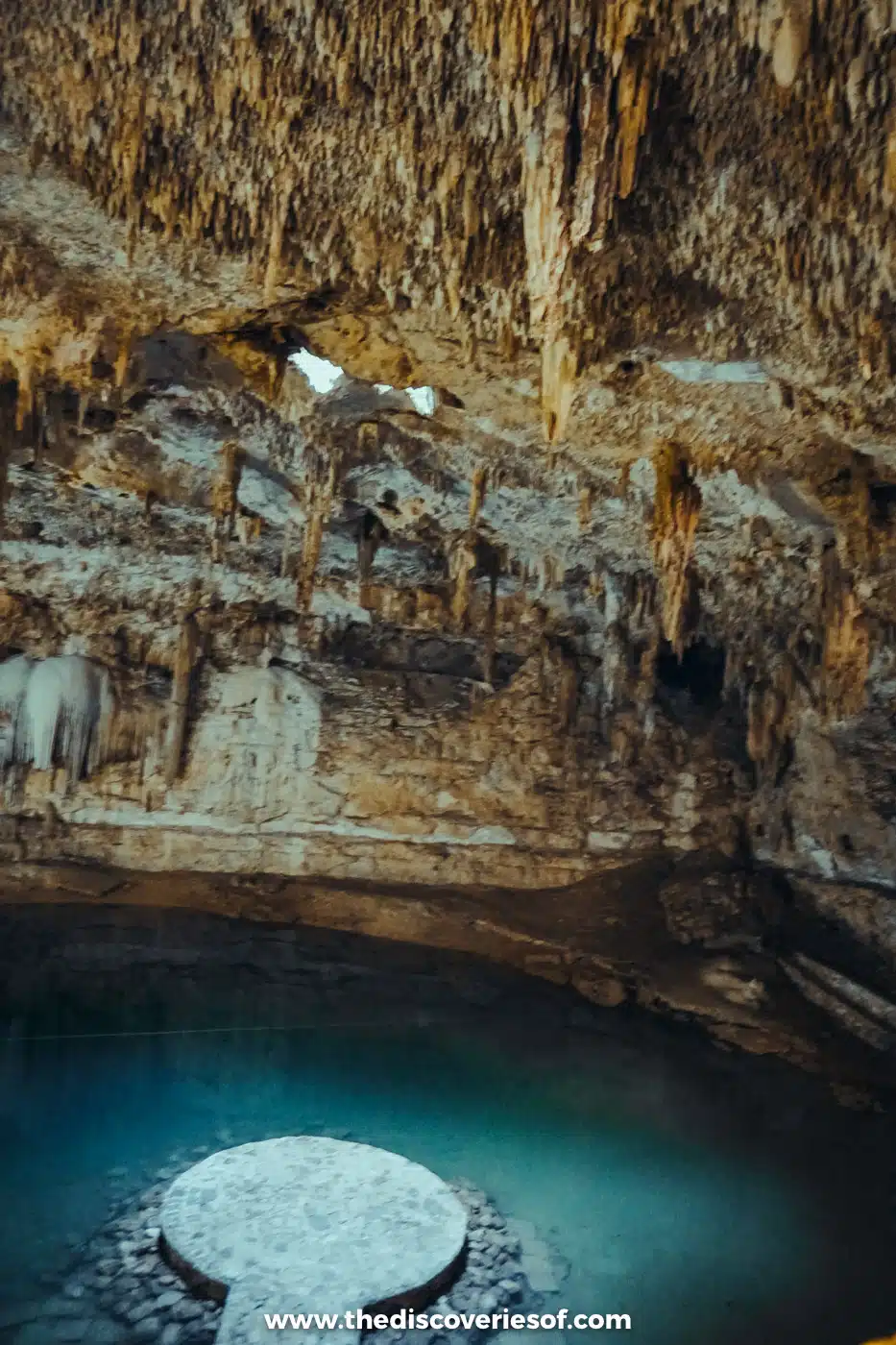
Suytun is a closed cenote, which means it sits inside a cavern rather than in an open hole in the ground. You walk down a rock staircase through a tunnel into a huge chamber, its ceiling dripping with stalactites. A stone walkway leads out over the water to a circular platform in the middle, and a hole in the roof lets the daylight in.
My visit to Cenote Suytun
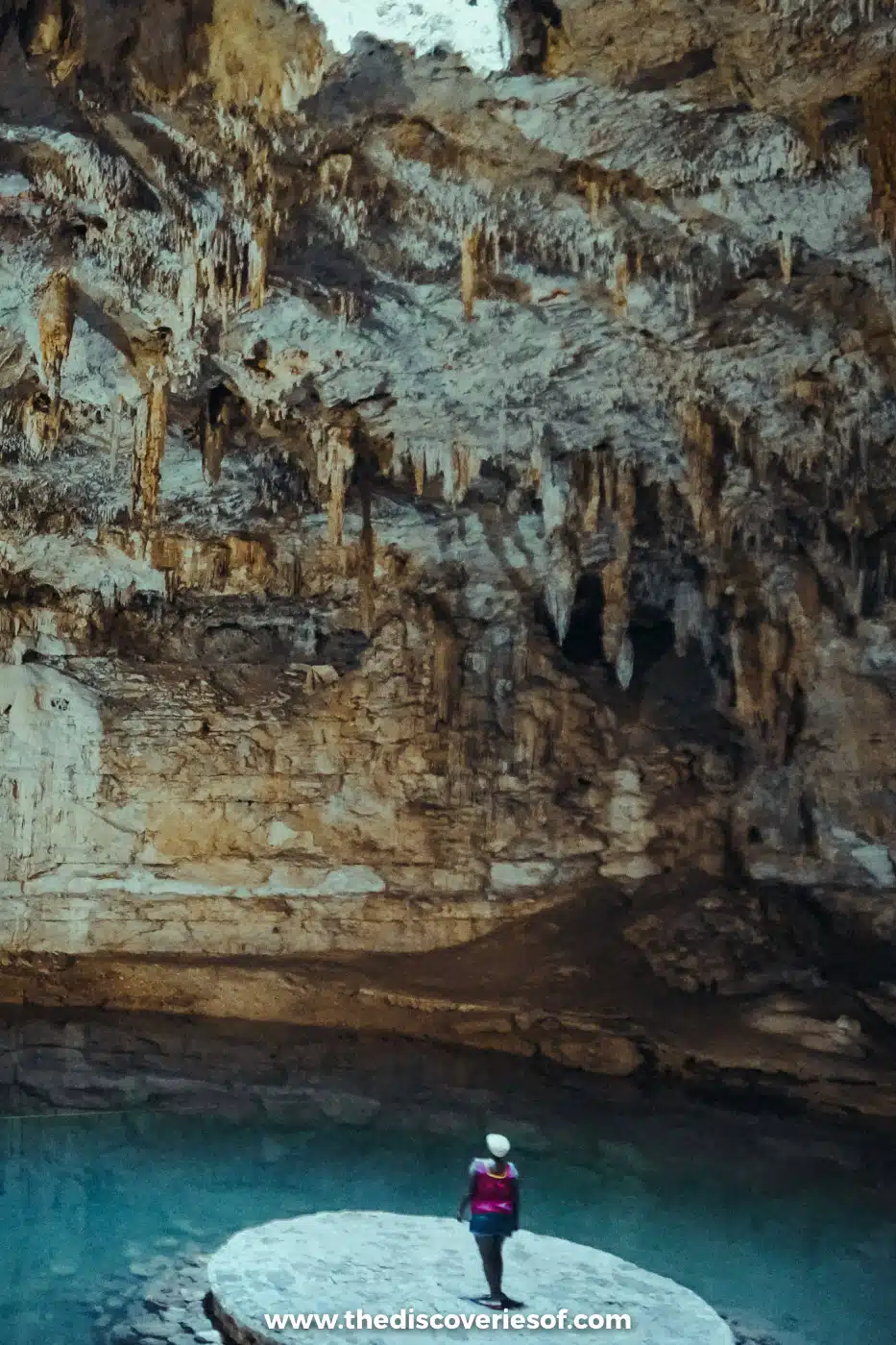
I drove over from Mérida as part of my Mexico road trip and got there in the morning. There was no beam of light yet (that comes later in the day), but the trade-off was a quiet cave, and I could stand out on the platform with nobody else in shot.
There’s far more to look at than the platform. The ceiling is covered in stalactites, some of them huge, the water is a deep, clear blue and the light from the roof catches the rock in shades of gold and cream. I didn’t swim: I walked out along the path to the platform and took my photos from there.
When to see the light beam at Cenote Suytun
The famous shot is a single shaft of sunlight falling through the hole in the roof and landing on the platform. It happens around the middle of the day, roughly 11am to 1pm, when the sun is high enough to shine straight down, and it’s clearest on bright days in the drier months.
The catch is that midday is also when the coach tours arrive, and everyone wants their turn on the platform. So you have a choice:
- Go first thing: for a quiet cave and photos with the platform to yourself, as I did. No beam, but the cave is beautiful in the softer light.
- Go at midday: for the beam, and be ready to queue and share the platform.
Top Tip
Bring a wide-angle lens or use your phone’s 0.5x setting. The cave is enormous, and you’ll want to get the stalactites, the water and the platform in one frame.
Can you swim at Cenote Suytun?
Yes. You can swim in the pool around the platform, and you’ll need to wear a life jacket to do it (you can pick one up on site). Diving and jumping off the platform aren’t allowed. Shower before you go in, and if you wear sunscreen, make it biodegradable, as chemicals damage the water.
There’s a second, smaller cenote on the same site, but you can’t swim in that one.
Tickets
Cenote Suytun is open daily from 9am to 5pm, with last entry around 4pm. Entry is around 200 to 250 pesos (2026), and it’s best to bring cash. There are changing rooms, lockers, a restaurant and parking on site.
How to get to Cenote Suytun
Suytun is about 9km outside the colonial town of Valladolid, around 10 to 15 minutes by car or taxi. Valladolid sits roughly halfway between Mérida and Cancún, so the cenote slots easily into a road trip across the Yucatán.
- From Valladolid: a taxi costs around 100 to 150 pesos each way. Agree the price before you get in.
- From Mérida: a little over two hours by car, mostly on the toll road. This is how I did it.
- From Tulum: about an hour and a half by car.
- From Cancún: around two and a half hours by car.
- On a tour: plenty of day trips from Cancún, Tulum, Playa del Carmen and Mérida combine Suytun with Valladolid, other cenotes or Chichén Itzá.
If you’re driving the Yucatán, my two-week Mexico road trip itinerary has the full route.
Base yourself in Valladolid
I stopped in Valladolid on the same trip, and it’s the natural base for Suytun. It’s a pretty colonial town of pastel streets, and staying overnight means you can be at the cenote the moment it opens. A few things to see while you’re there:
- The main square: the Parque Francisco Cantón Rosado, with the twin towers of the Iglesia de San Servacio on one side.
- Calzada de los Frailes: a cobbled street of colourful colonial houses, now lined with boutiques and cafés.
- The Convento de San Bernardino de Siena: a 16th-century Franciscan convent at the end of the Calzada.
- Cenote Zací: an open cenote right in the middle of town.
Valladolid is also about 40 minutes from Chichén Itzá and around half an hour from the ruins of Ek Balam, so it works well for a couple of nights. Have a look at hotels in Valladolid.
Tips for visiting Cenote Suytun
- Go early or go at midday, not in between: you either get the empty cave or the beam.
- Wear shoes with grip: the stairs and the walkway can be wet and slippery.
- Bring cash: for entry, lockers and the life jacket.
- Don’t stay on the platform too long at busy times: people queue for their photo, so take yours and move on.
- Combine it with other cenotes: Xkekén and Samulá are a short drive away, near Valladolid.
Map
Read next
- 2 weeks in Mexico: the perfect road trip itinerary
- 15 things to do in Mérida, Mexico (and 3 to skip)
- 12 things to do in Tulum that still make it worth the hype
- 34 famous landmarks in Mexico that are worth crossing the country for
- Swim, eat and dance your way through the 38 best things to do in Mexico
- Things to do in Campeche, Mexico’s walled Rainbow City
Love this? Save and share on Pinterest

Discover the top things to do, insider tips and hidden gems in our Mexico Travel Guide.
Read the guides →