

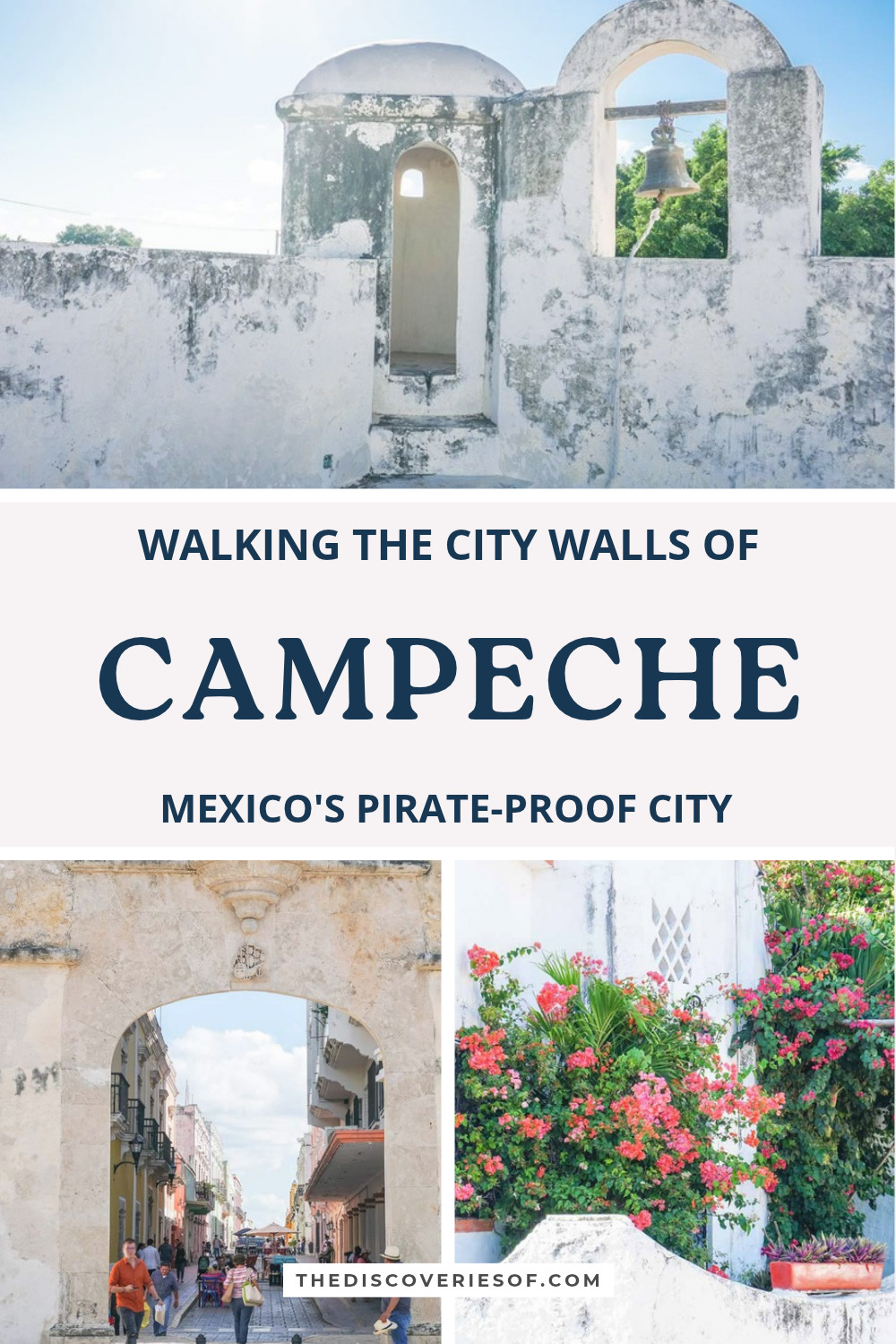
After a century of pirate raids, Campeche did something no other city in Mexico did: it walled itself in. Much of that wall still stands, with its gates, sentry boxes and seven of its eight bastions, and walking it is one of the nicest ways to spend an afternoon in the city.
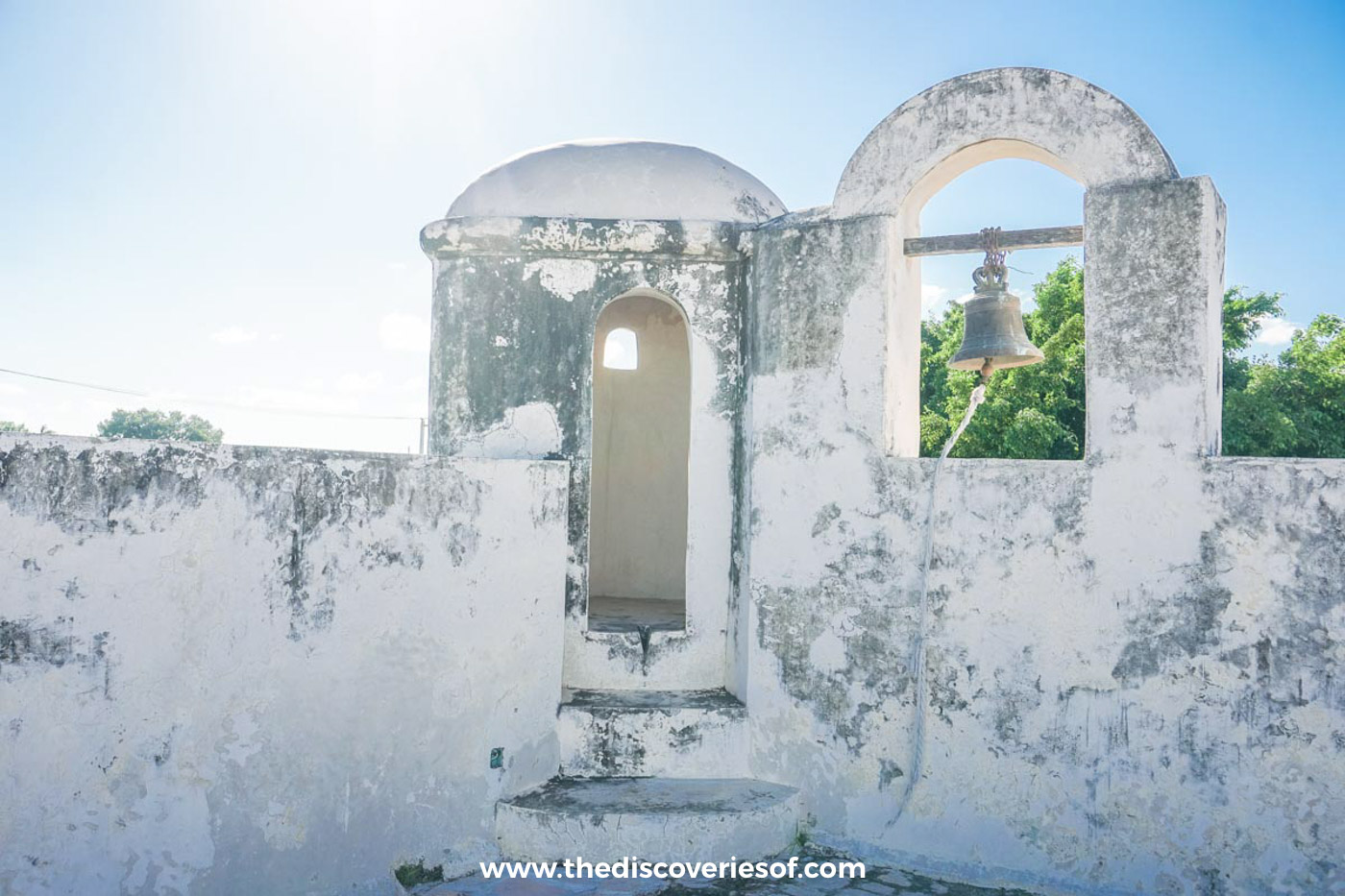
I walked the walls on my Mexico road trip, and it was such an enjoyable way to pass the time. Pop into the little city museum on the way, because the people there are so friendly, and from the top you get great views of the colourful city spread out below. Here’s the story behind the walls, the stretches you can walk, what’s inside each bastion and how to fit it all into a day.
Why Campeche has city walls
The Spanish founded Campeche in 1540, on the site of the Maya settlement of Ah Kin Pech, and it quickly became Spain’s main port on the Yucatán Peninsula. Ships loaded with silver, logwood and other riches made it one of the most tempting targets in the Caribbean, and the pirates came again and again.
The worst attack came in 1663, when English buccaneers led by Christopher Myngs, with a young Henry Morgan among them, landed a fleet of more than a dozen ships and sacked the city. Another raid followed in 1685, led by the Dutch pirate Laurens de Graaf, known locally as Lorencillo. The year after, work began on the walls.
What went up was an irregular hexagon of stone around the whole city centre, about two and a half kilometres long, with eight bastions at the corners and four gates. Campeche became one of the most heavily defended ports in the Americas, and the raids eventually stopped. Most of the wall was pulled down as the city grew in the late 19th and early 20th centuries, but the surviving stretches, gates and bastions are a big part of why the historic centre became a UNESCO World Heritage Site in 1999.
Walking the ramparts
There are two main stretches where you can climb up and walk along the top of the walls.
- The Puerta de Tierra: the walkway between the Baluarte de San Francisco and the Baluarte de San Juan runs right over the top of the old Land Gate. It’s one of the longest stretches you can walk, and there’s a small fee.
- The Baluarte de la Soledad: a ramp leads up from the Maya architecture museum to the bastion’s upper terrace, with its battlements, gun ports and corner lookouts, looking over the main square and the cathedral.
Up on top, you walk between the merlons and past little domed sentry boxes, with the pastel streets of the old town on one side and the modern city running down to the sea on the other.
Top Tip
Go in the morning or late afternoon. There’s next to no shade on top of the walls, and the Campeche sun is fierce in the middle of the day. Take water and a hat.
The bastions of Campeche, one by one
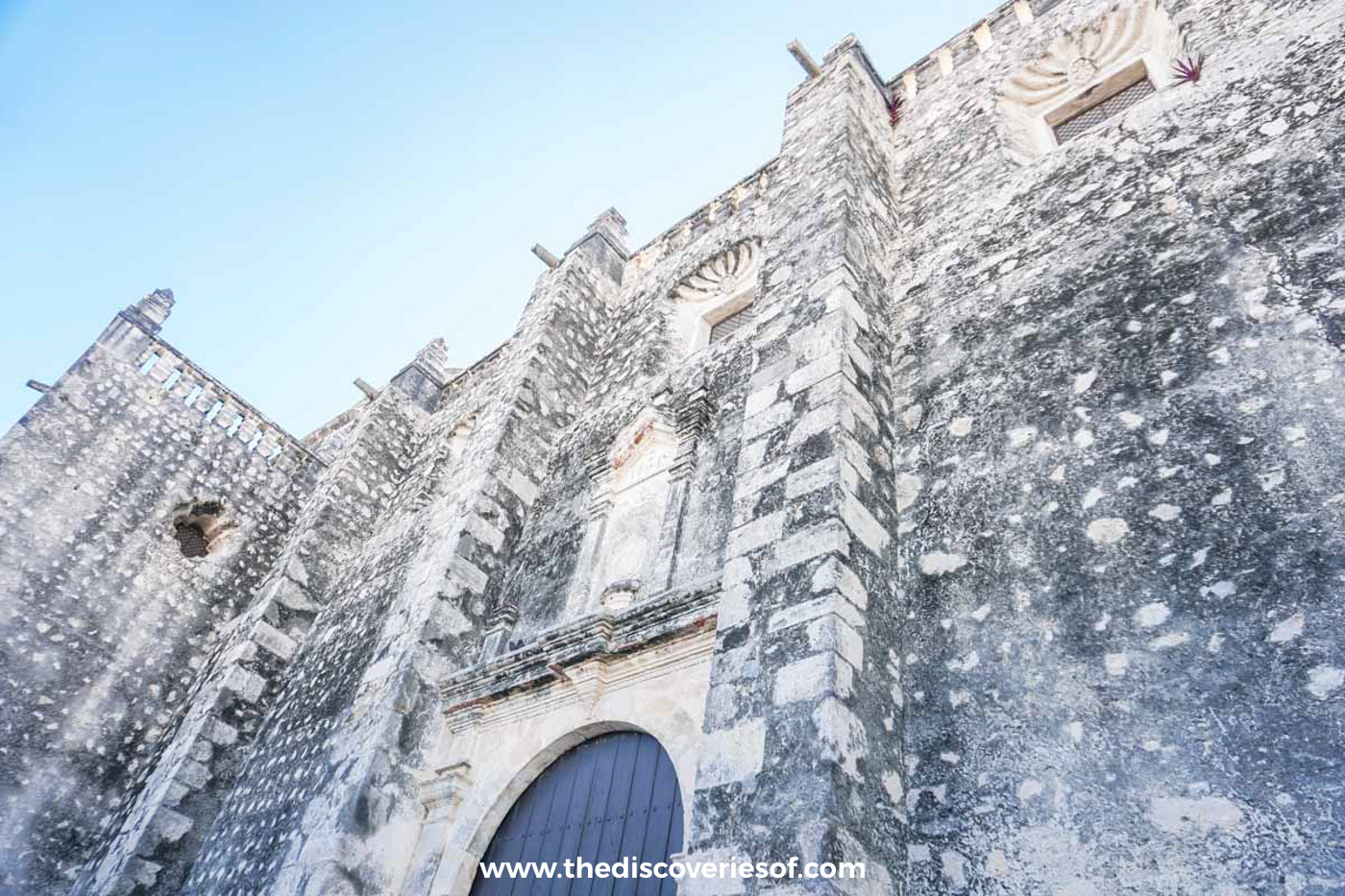
Seven of the eight original bastions survive, and most of them have something inside. In order around the walls, starting by the sea:
- Baluarte de Nuestra Señora de la Soledad: the biggest bastion, beside the Puerta de Mar and the main square. It houses the Museo de Arquitectura Maya, with carved stelae, columns and lintels from Edzná, Calakmul and other Maya sites in Campeche state, and the ramp up to the terrace.
- Baluarte de San Carlos: the first bastion built, facing the sea. It’s home to the Museo de la Ciudad, a small museum on the history of the city, with the title granted to Campeche by Carlos III in 1777. The basement once held a prison.
- Baluarte de Santa Rosa: the quieter bastion on the south side of the old town.
- Baluarte de San Juan: one of the two bastions guarding the Puerta de Tierra, at one end of the wall walk.
- Baluarte de San Francisco: the other guardian of the Puerta de Tierra, at the far end of the wall walk.
- Baluarte de San Pedro: on the north-east side, next to the Mercado Principal, and once used as a prison.
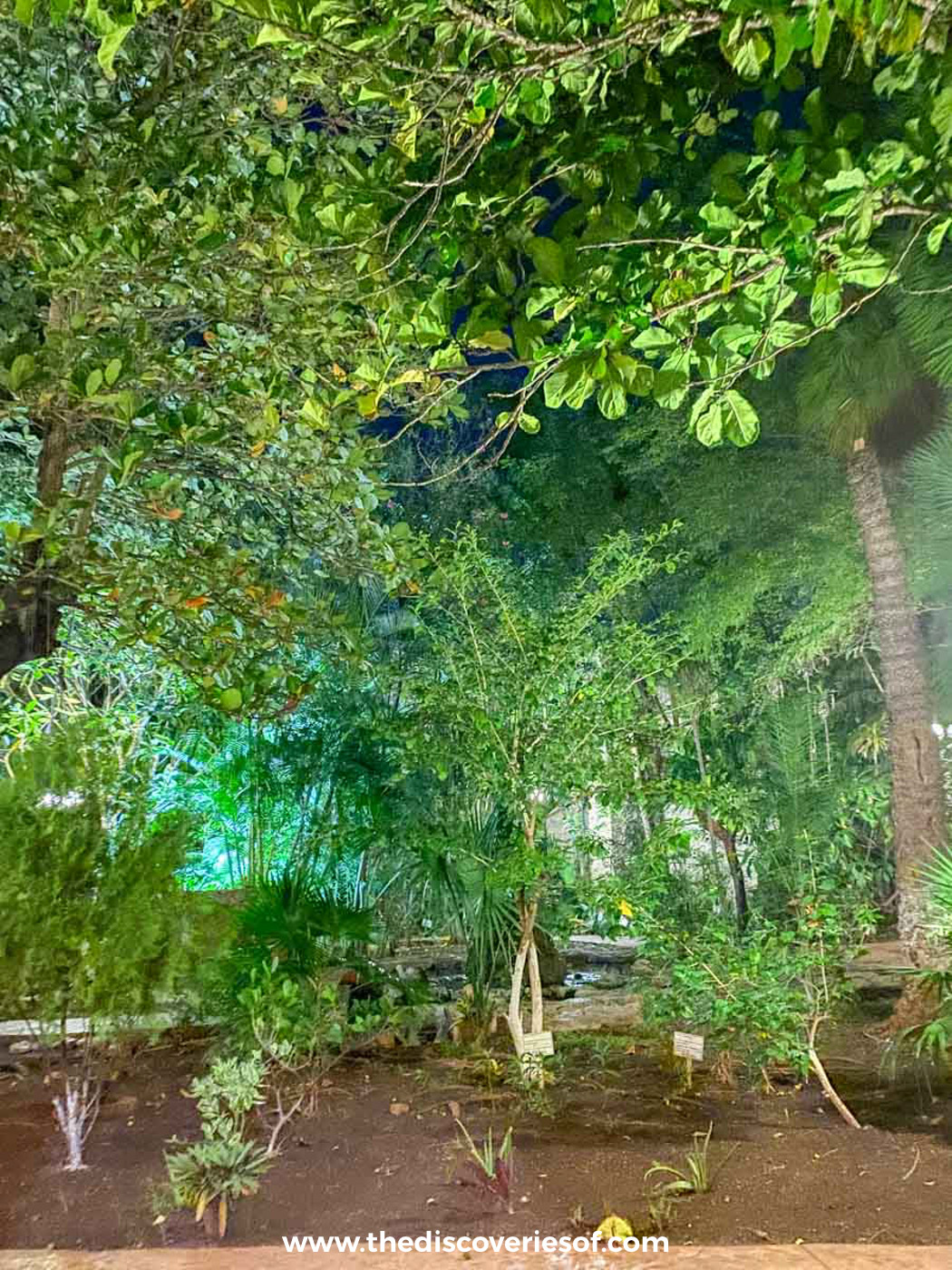
- Baluarte de Santiago: rebuilt to house the Xmuch’haltún botanical garden, whose Maya name means “water that springs from the earth”.
Tickets
The Museo de Arquitectura Maya in the Baluarte de la Soledad is run by INAH and opens Tuesday to Sunday, 8am to 5pm. Entry is 145 pesos, or 80 pesos for Mexican nationals and residents. The other bastions and the Puerta de Tierra wall walk charge small fees, and their hours change, so take cash and check on the day.
The Puerta de Tierra and the night show
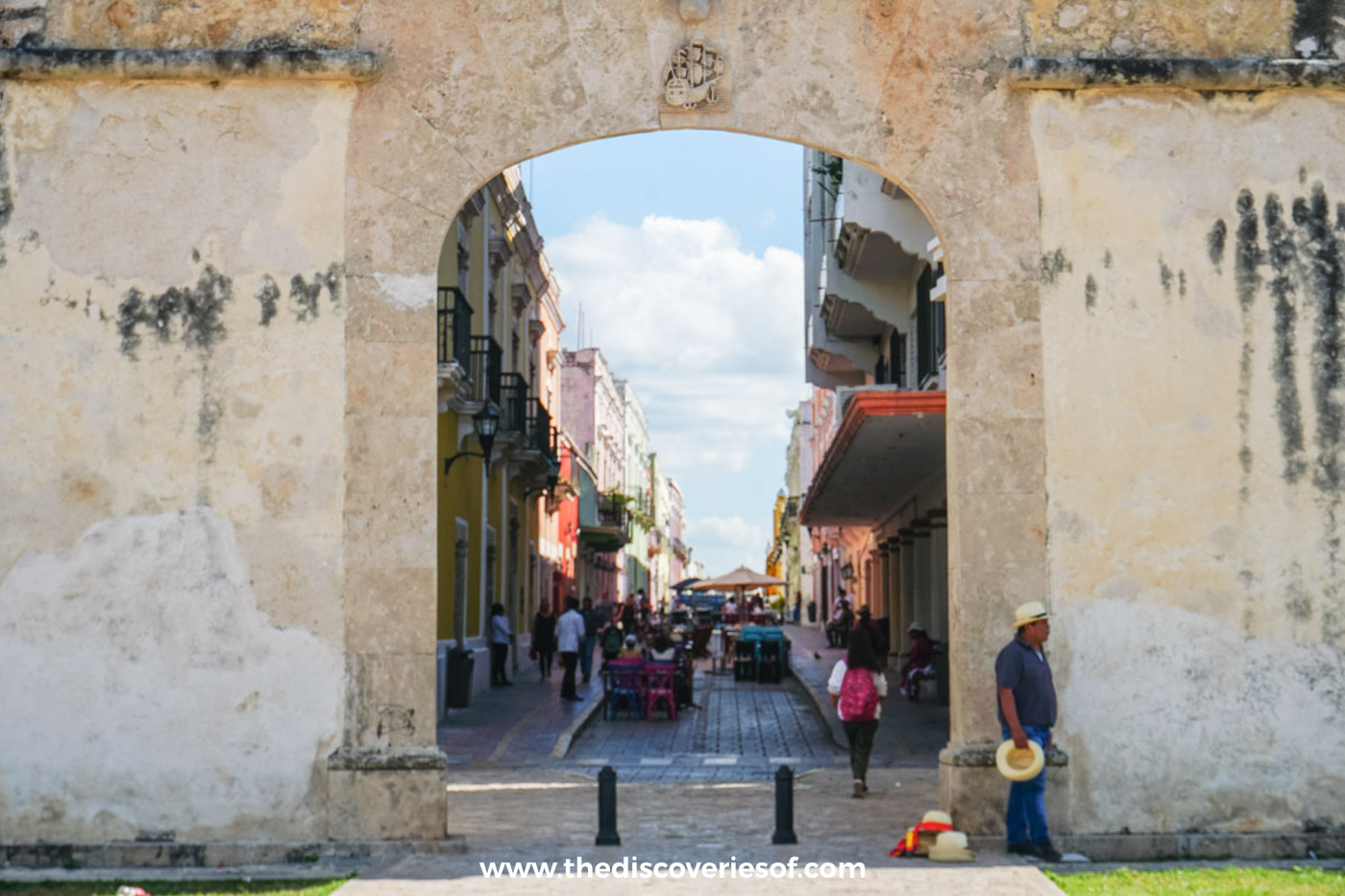
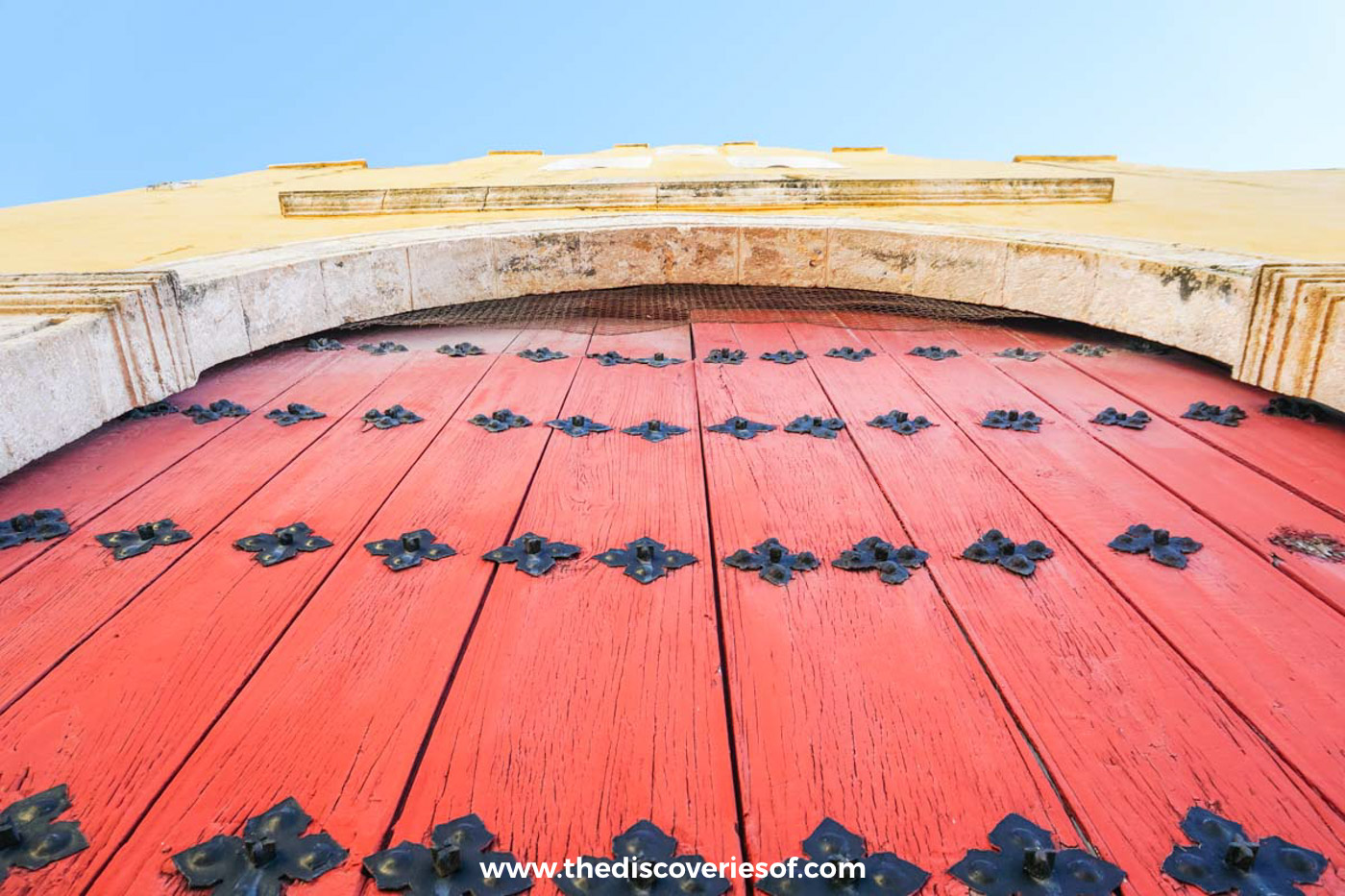
The Land Gate was finished in 1732 and was the main way into the city from the land side, with a heavy wooden door, a moat and battlements for cannons. It’s at the far end of Calle 59 from the sea, and it’s the best place to start a walk along the ramparts.
Come back after dark for the light and sound show, El Lugar del Sol, which tells the story of the pirate attacks with lights and music on the gate and walls. It usually runs in the evening at weekends, but the programme changes, so check times and buy tickets at the gate earlier in the day.
The Puerta de Mar and Calle 59
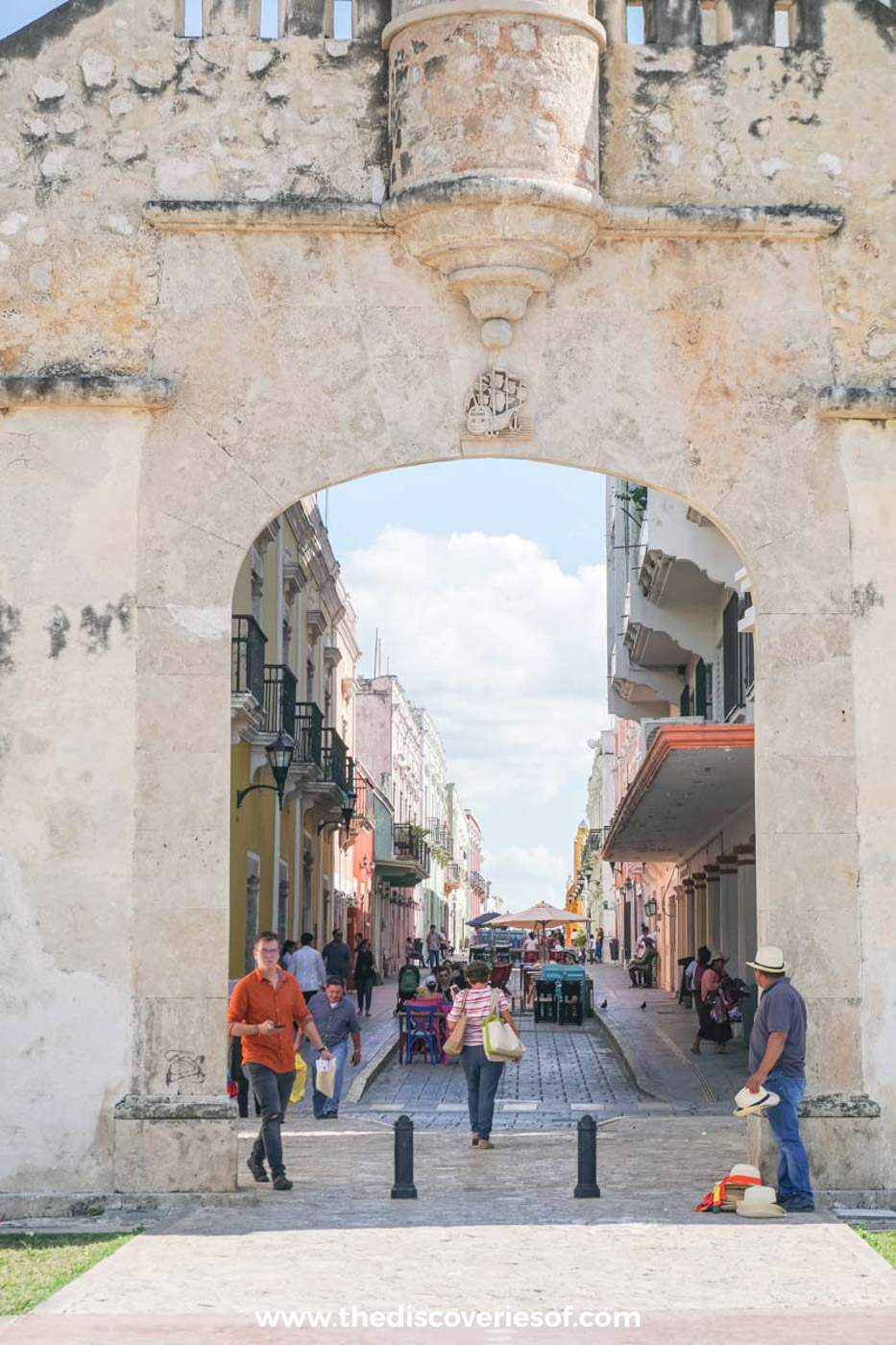
At the other end of Calle 59, the Puerta de Mar (Sea Gate) was the way in for anyone arriving by ship, back when the sea came right up to the walls. The land in front of it has since been reclaimed, so it now opens onto the main road and the malecón rather than the water.
Calle 59 runs straight between the two gates, and its pedestrian stretch is one of the prettiest streets in Campeche, lined with houses painted in every colour you can think of. Walking it from gate to gate is the easiest way to see how small, and how complete, the walled city is.
Beyond the walls: the forts
The walls weren’t Campeche’s only defence. Two forts on the hills either side of the city kept watch over the sea:
- Fuerte de San Miguel: south-west of the centre, with a drawbridge, moat and cannons, and the Museo de Arqueología Maya inside. Its star piece is a jade funerary mask from Calakmul. It’s open Tuesday to Sunday, 8am to 5pm, and entry is 145 pesos, or 80 pesos for Mexican nationals and residents.
- Fuerte de San José el Alto: north-east of the centre, with a museum of underwater archaeology and ship models.
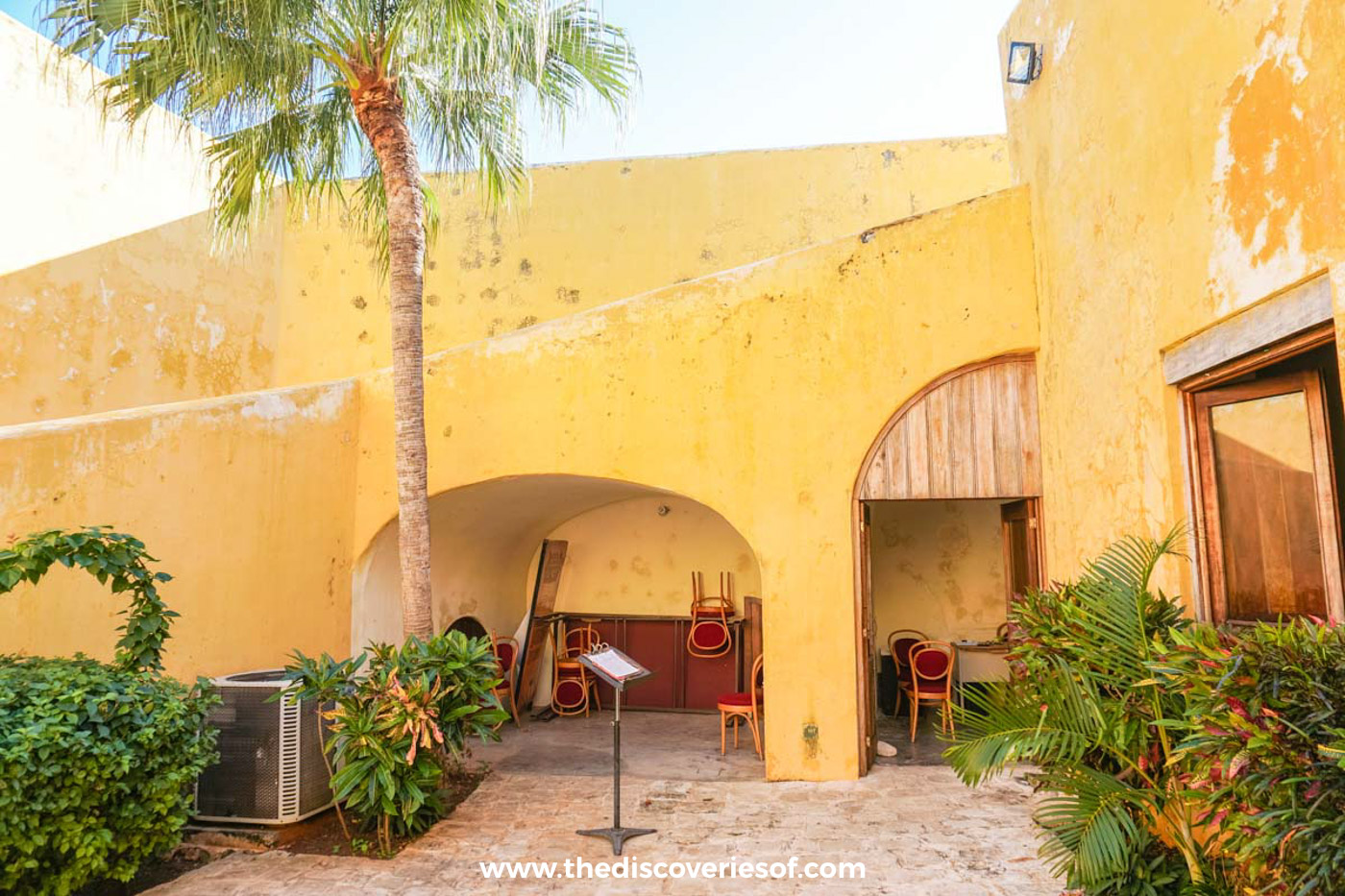
Both are a short taxi ride from the walled centre. My guide to things to do in Campeche has more on the forts and the rest of the city.
A walking route around Campeche’s walls
The whole circuit of the Campeche city walls is about two and a half kilometres, flat and easy, and you can see all seven bastions in a morning or afternoon. Allow longer if you want to go into the museums.
- Start at the Baluarte de Santiago: a quiet half hour in the botanical garden.
- Walk south along Calle 8: to the Baluarte de la Soledad for the Maya architecture museum and the terrace, with the cathedral and the main square just behind it.
- Carry on to the Baluarte de San Carlos: for the city museum.
- Cut across to the Baluarte de Santa Rosa: and on to the Baluarte de San Juan.
- Walk the ramparts: from San Juan over the Puerta de Tierra to the Baluarte de San Francisco.
- Finish at the Baluarte de San Pedro: and the Mercado Principal next door, for something to eat.
Tips for visiting the Campeche city walls
- Avoid Mondays: the INAH museums, including the Maya architecture museum and the forts, close on Mondays.
- Bring cash: for the museums and the small fees at the bastions.
- Wear shoes with grip: the ramps and steps are old stone and can be smooth underfoot.
- Stay inside the walls: so you can walk everywhere, and come back after dark for the show at the Puerta de Tierra. Have a look at hotels in Campeche.
- Get there by car or bus: Campeche is about two and a half hours’ drive from Mérida, and it slots neatly into a road trip around the Yucatán. My two-week Mexico road trip itinerary has the full route.
Map
Read next
- Things to do in Campeche, Mexico’s walled Rainbow City
- 2 weeks in Mexico: the perfect road trip itinerary
- 15 things to do in Mérida, Mexico (and 3 to skip)
- 34 famous landmarks in Mexico that are worth crossing the country for
- Swim, eat and dance your way through the 38 best things to do in Mexico
Love this? Save and share on Pinterest

Discover the top things to do, insider tips and hidden gems in our Mexico Travel Guide.
Read the guides →




