
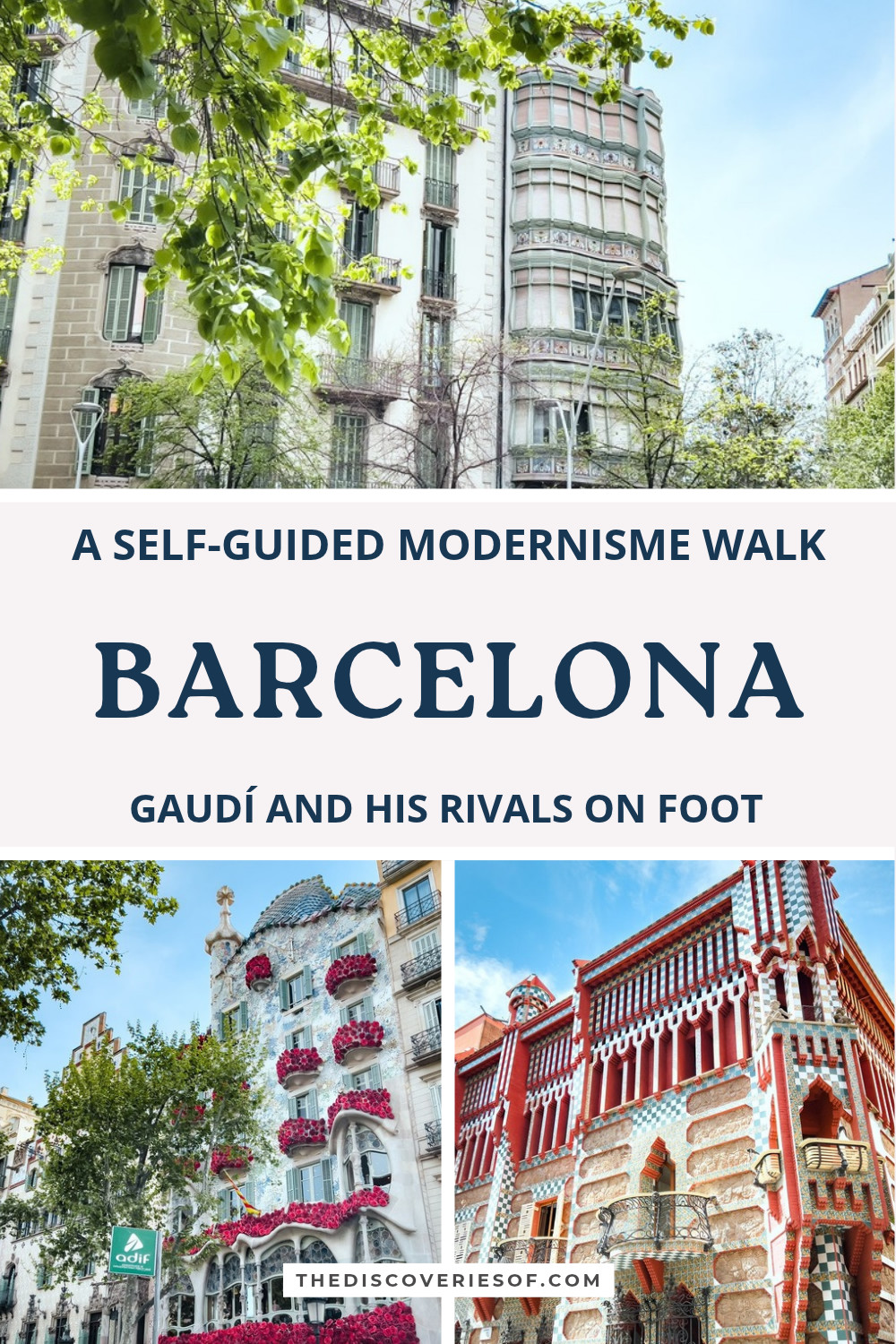
Casa Batlló’s skeleton balconies, a tiled house hiding a back facade like a jewellery box, a building squeezed onto a plot the size of a flat and Gaudí’s very first house at the finish: a self-guided Modernisme walk through Eixample and Gràcia.
Barcelona’s Modernisme buildings are a big part of why people come to the city, and yet most visitors only see two or three of them: the Sagrada Família, Park Güell and one of Gaudí’s houses on Passeig de Gràcia, each with its own ticket, time slot and queue.
But Gaudí wasn’t working alone. Around the turn of the 20th century, the new grid of the Eixample filled with houses by architects who were competing to outdo each other: Lluís Domènech i Montaner, Josep Puig i Cadafalch, Salvador Valeri, Josep Maria Jujol. Their buildings are free to admire from the street, and you can link the best of them in a single walk.
I lived in Barcelona for three months, part of it in an apartment right across the street from Casa Milà, and there’s something special about stepping out of your front door and seeing Gaudí’s rippling stone façade first thing in the morning. One April day I set off with my camera from Casa Batlló and walked all the way up to Casa Vicens.
This guide covers the route stop by stop, which buildings are worth paying to go inside, and how to time your walk.
The route at a glance: nine houses in a morning
- Start: Passeig de Gràcia metro (L2, L3 and L4), at Casa Lleó Morera.
- Finish: Casa Vicens in Gràcia, near Fontana and Lesseps metro (L3).
- Distance: about 5 kilometres.
- Time: about an hour and a quarter of walking at a gentle pace, or a full day if you go inside a couple of the houses.
- The stops: Casa Lleó Morera, Casa Amatller, Casa Batlló, La Pedrera, Casa Comalat, the Palau del Baró de Quadras, Casa de les Punxes, Casa Planells and Casa Vicens.
Top Tip
Walk it on a weekday morning. The light is soft, the pavements of Passeig de Gràcia are quieter, and you can book a morning slot at Casa Batlló or La Pedrera before the crowds.
The Modernisme walk, stop by stop
Casa Lleó Morera and Casa Amatller
Start at the corner of Passeig de Gràcia and Carrer del Consell de Cent. The stretch of Passeig de Gràcia between here and Carrer d’Aragó is known as the Illa de la Discòrdia, the Block of Discord, because three of Modernisme’s greatest architects built houses within a few doors of each other, each in a completely different style.
On the corner, Casa Lleó Morera (number 35) is Domènech i Montaner’s, remodelled between 1902 and 1906 and covered in sculpted flowers, with a round tower on the corner. A few doors up, Casa Amatller (number 41) is Puig i Cadafalch’s, with a stepped gable that looks as if it has wandered in from a Flemish town square. It was built for the chocolate maker Antoni Amatller, and its tours can end with a cup of thick hot chocolate.
Casa Batlló
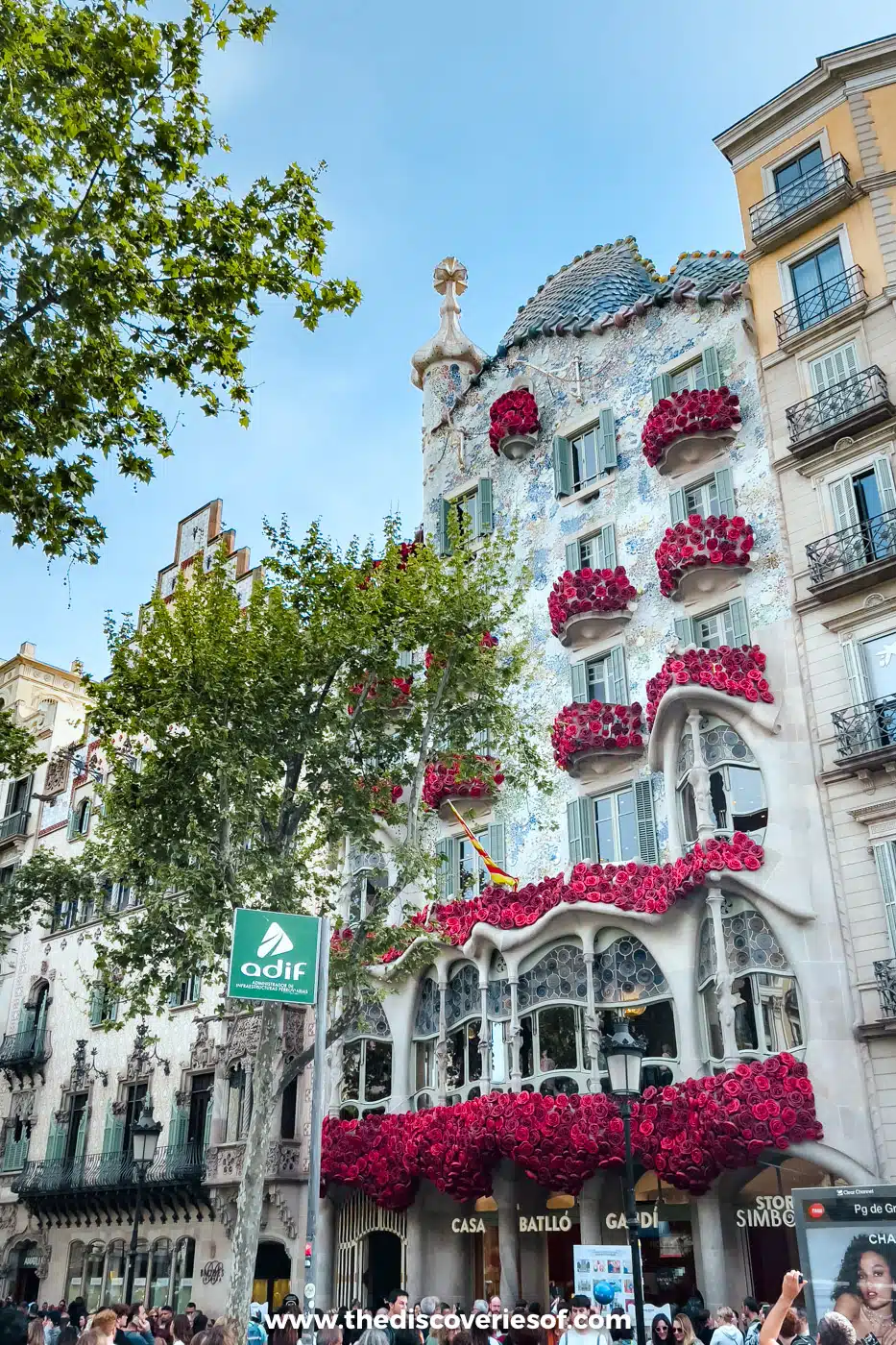
Next door is the house that steals the show. Casa Batlló, which Gaudí remodelled between 1904 and 1906, is known as the house of bones thanks to its skeletal balconies and bone-like pillars (not dissimilar to parts of the Passion Façade on the Sagrada Família), and its front is a mosaic of broken ceramic tiles that shimmers as the light moves. This is Gaudí at his weirdest and most wonderful.
Read the façade as the legend of Sant Jordi, Catalonia’s patron saint, and it all clicks into place: the scaly roof is the dragon’s back, the cross on top is Sant Jordi’s sword and the balconies are the skulls of the dragon’s victims. I happened to be in the city for Sant Jordi on 23 April, when the balconies are dressed in red roses for the day, and it’s a sight.
Casa Batlló is among the best (in my not-so-humble opinion), and it’s worth going inside, but expect it to be busy. Tickets start at about €29 online and cost more at the door.
Do
Book a Casa Batlló ticket ahead, or see both of Gaudí’s Passeig de Gràcia houses with a guide on this private Casa Batlló and Casa Milà tour.
La Pedrera (Casa Milà)
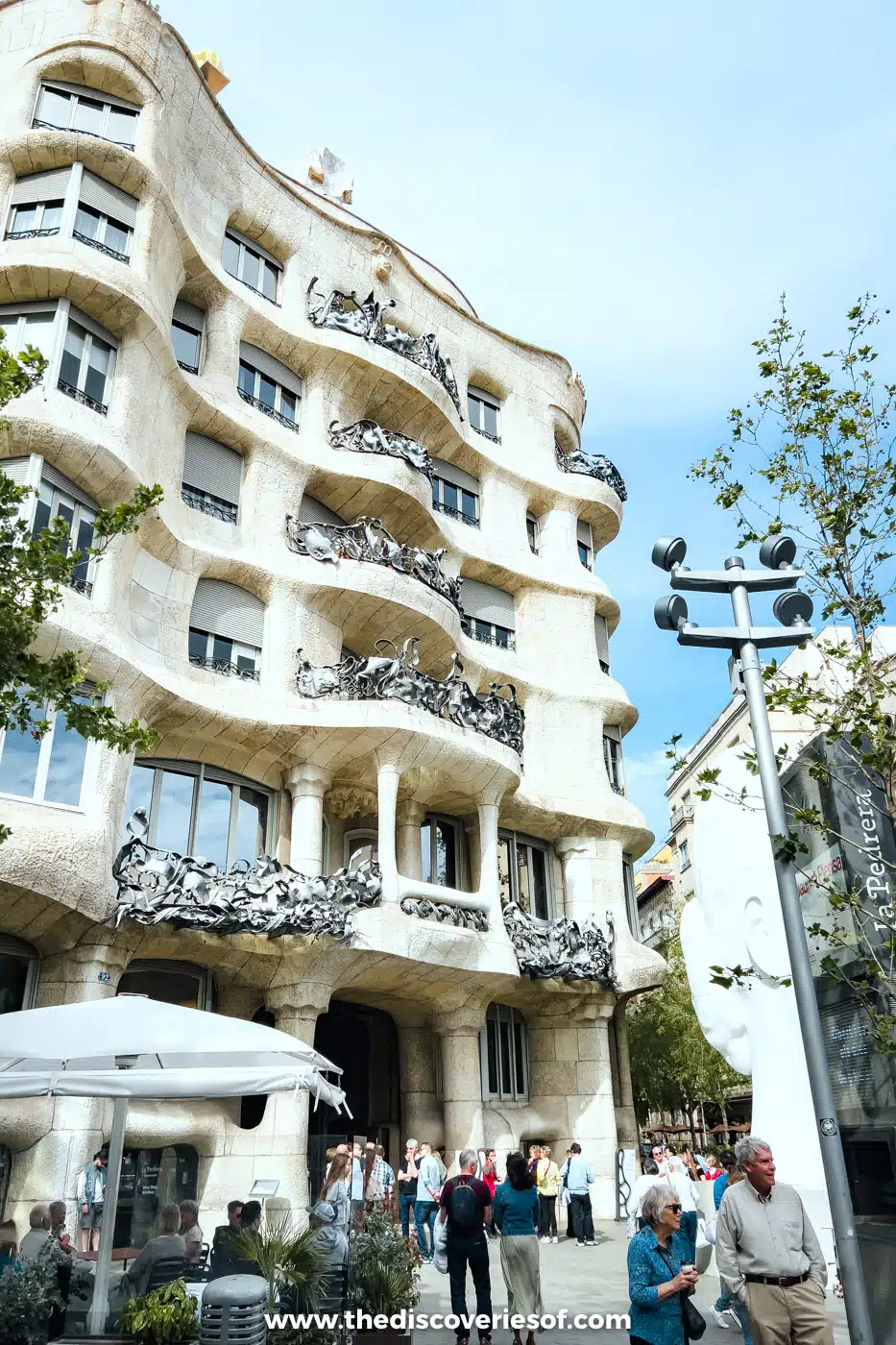
Walk five minutes up Passeig de Gràcia to the corner of Carrer de Provença and you’ll see why the people of Barcelona called Casa Milà “La Pedrera”, the stone quarry. Its façade ripples like a cliff face, with balconies of twisted iron that look like seaweed. It was the last civic project Gaudí ever worked on, built between 1906 and 1912, so it’s a nice bookend to Casa Vicens at the end of this walk: you can see how far his work came.
Inside, every ticket includes a really interesting self-guided tour about Gaudí’s work and inspiration, and the rooftop, with its warrior-like chimneys, is straight up beautiful. Day tickets start at about €25 online. In summer, keep an eye out for the evening jazz concerts on the roof: it’s certainly one of the more unique places you can hear live music.
Casa Comalat
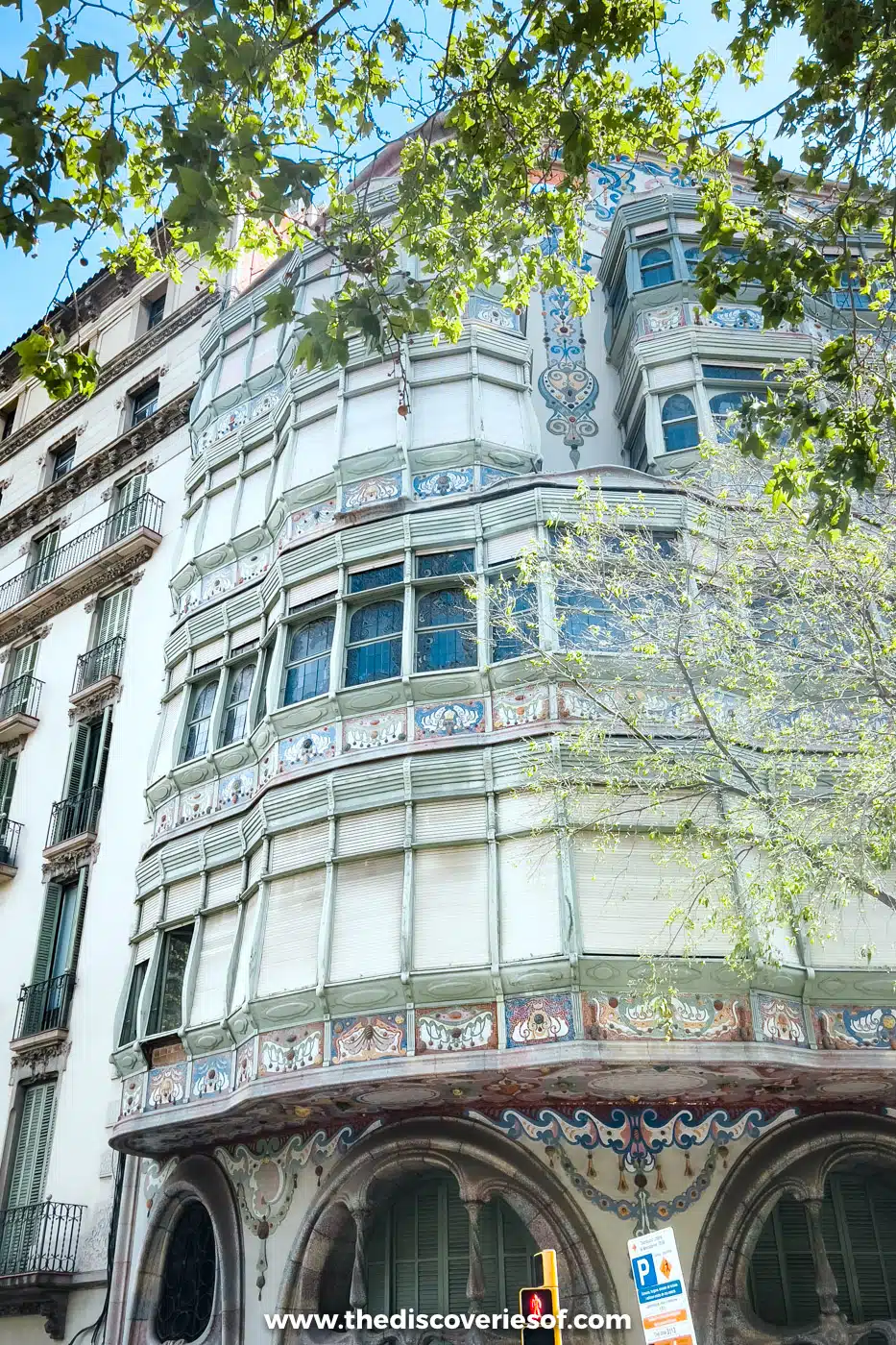
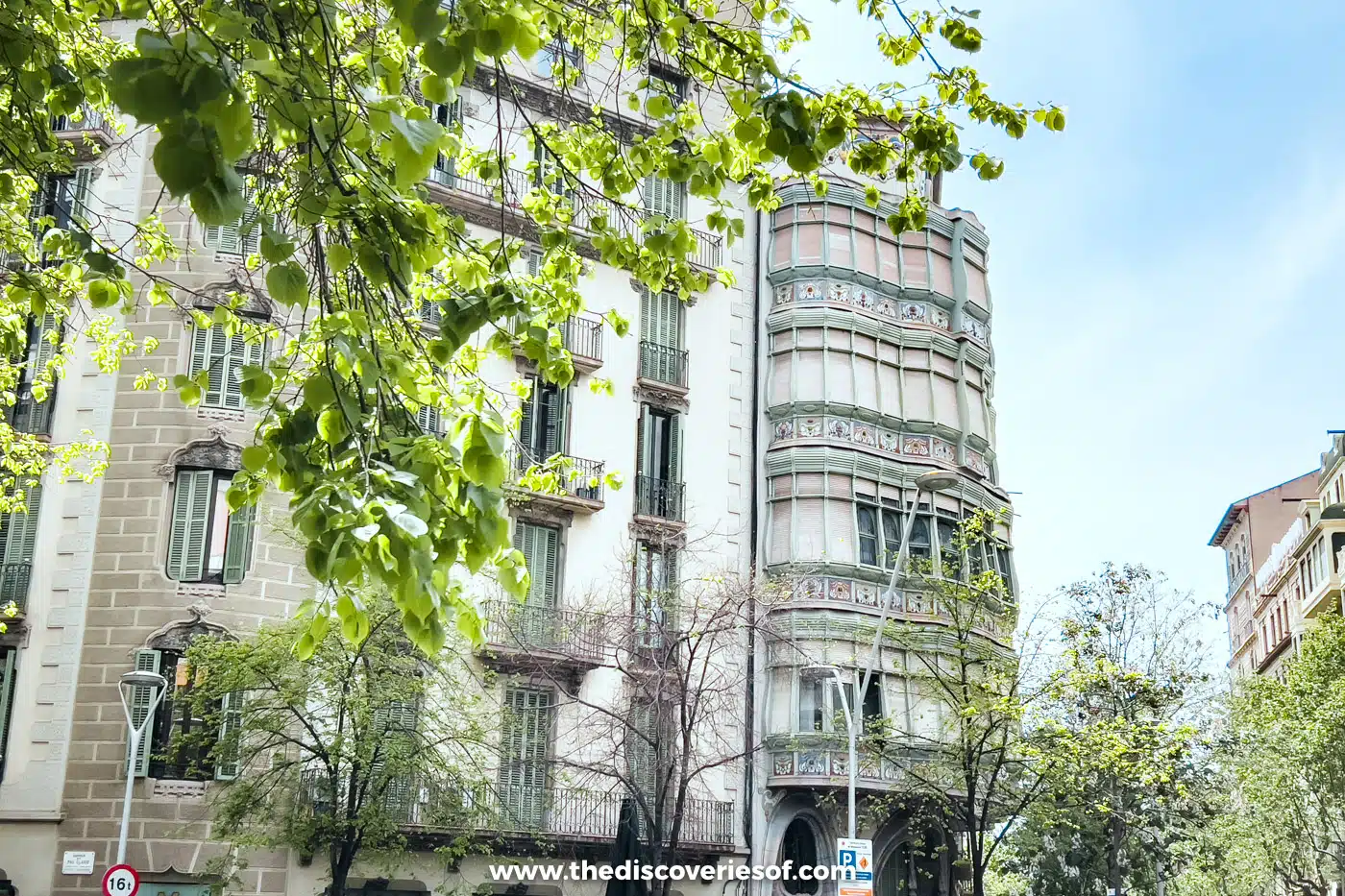
Carry on to the top of Passeig de Gràcia and turn right along Avinguda Diagonal. At number 442 is Casa Comalat, a colourful Art Nouveau building designed by Salvador Valeri i Pupurull between 1909 and 1911. It’s heavily influenced by Gaudí, but it very much has an identity of its own, particularly thanks to the strips of ornate tilework that run across it at regular intervals.
The trick is to see both sides. The front on the Diagonal is elegant and restrained. Then walk round the block to Carrer de Còrsega for the back, where the building lets its hair down: curved wooden galleries, green and blue tiles and windows like the inside of a jewellery box. It’s a private building, so you can only admire it from the street.
Top Tip
A few minutes from Casa Comalat, at the very top of Passeig de Gràcia, Casa Fuster was Domènech i Montaner’s last building in Barcelona. It’s now a hotel, and its café is a grand spot for a coffee break halfway along the walk.
Palau del Baró de Quadras
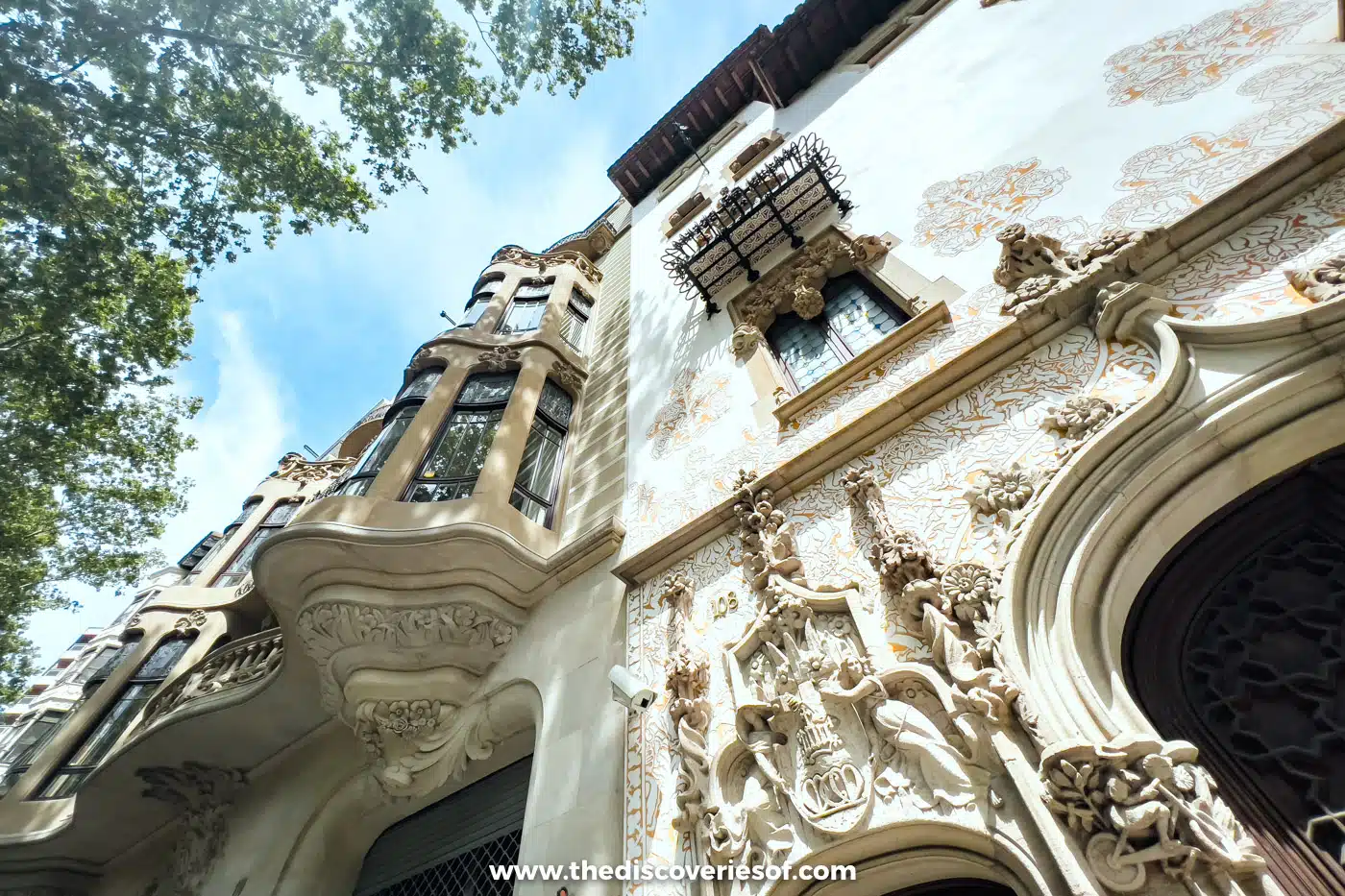
Right across the Diagonal from Casa Comalat, at number 373, is a Puig i Cadafalch house, the Palau del Baró de Quadras. Its narrow façade is carved with so much stone detail, from gargoyles to a glazed bay window, that it’s easy to walk straight past the building and miss how small it is. Today it houses the Institut Ramon Llull, and it opens for occasional guided visits.
Casa de les Punxes
A few minutes further east along the Diagonal, at numbers 416 to 420, Casa de les Punxes looks like a castle from a fairy tale that has landed in the middle of the Eixample. Puig i Cadafalch, again, designed it in 1905 for three sisters, as three houses disguised as one building, and its six pointed towers gave it the name: the house of the spikes. It’s now offices, but you can visit inside and go up to the roof terrace.
Casa Planells
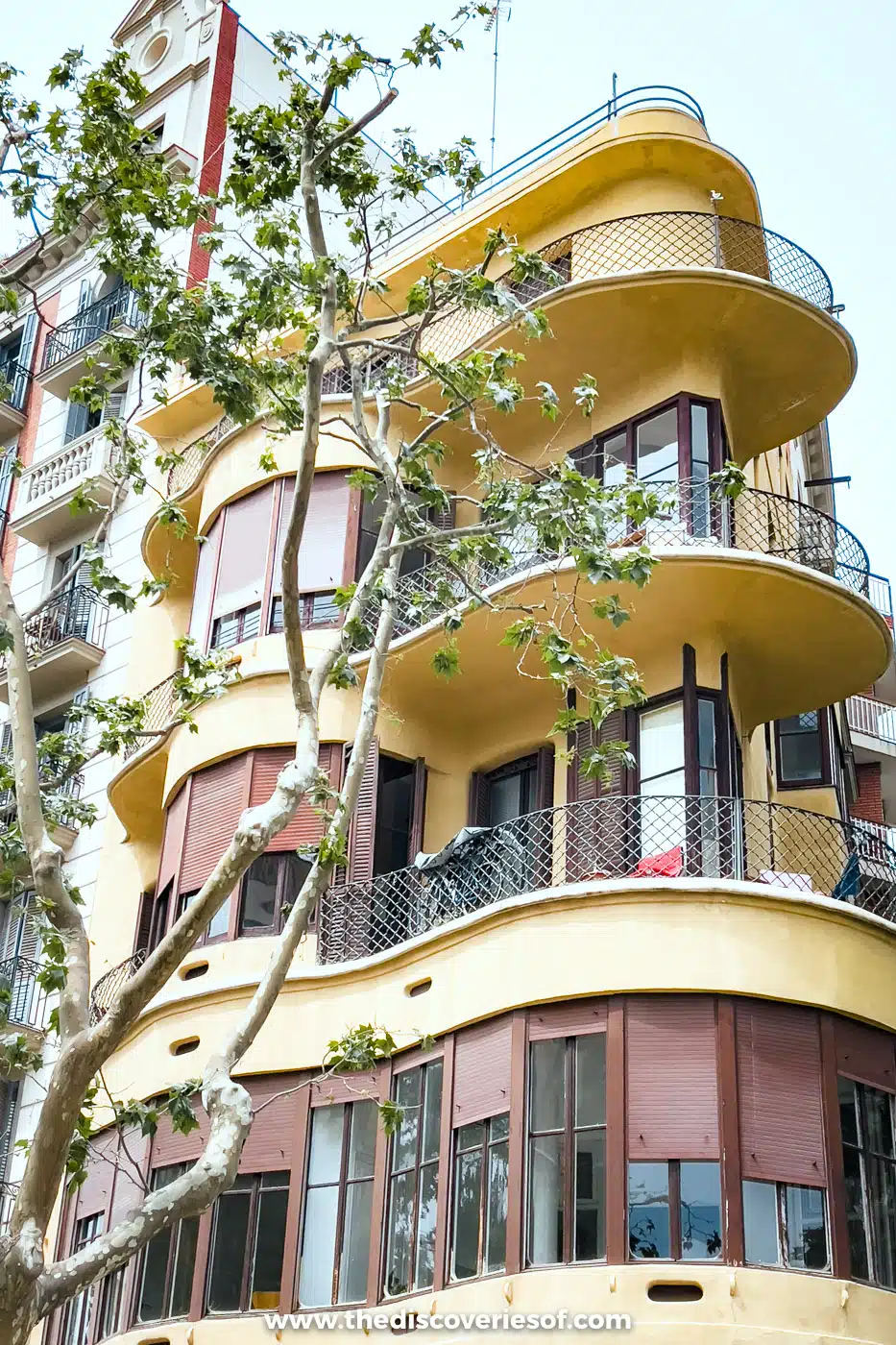
The last stop on the Diagonal, about 15 minutes further east at number 332 near Verdaguer metro, is the curious Casa Planells by Josep Maria Jujol, who worked alongside Gaudí on Park Güell and Casa Batlló. It’s a later building (1923 to 1924), and you can see Modernisme turning into something more modern in its smooth curves. It’s quite a clever design: Jujol took a tiny corner plot with a footprint of 80 square metres and used it to design apartments of 120 square metres.
Walk up through Gràcia to Casa Vicens
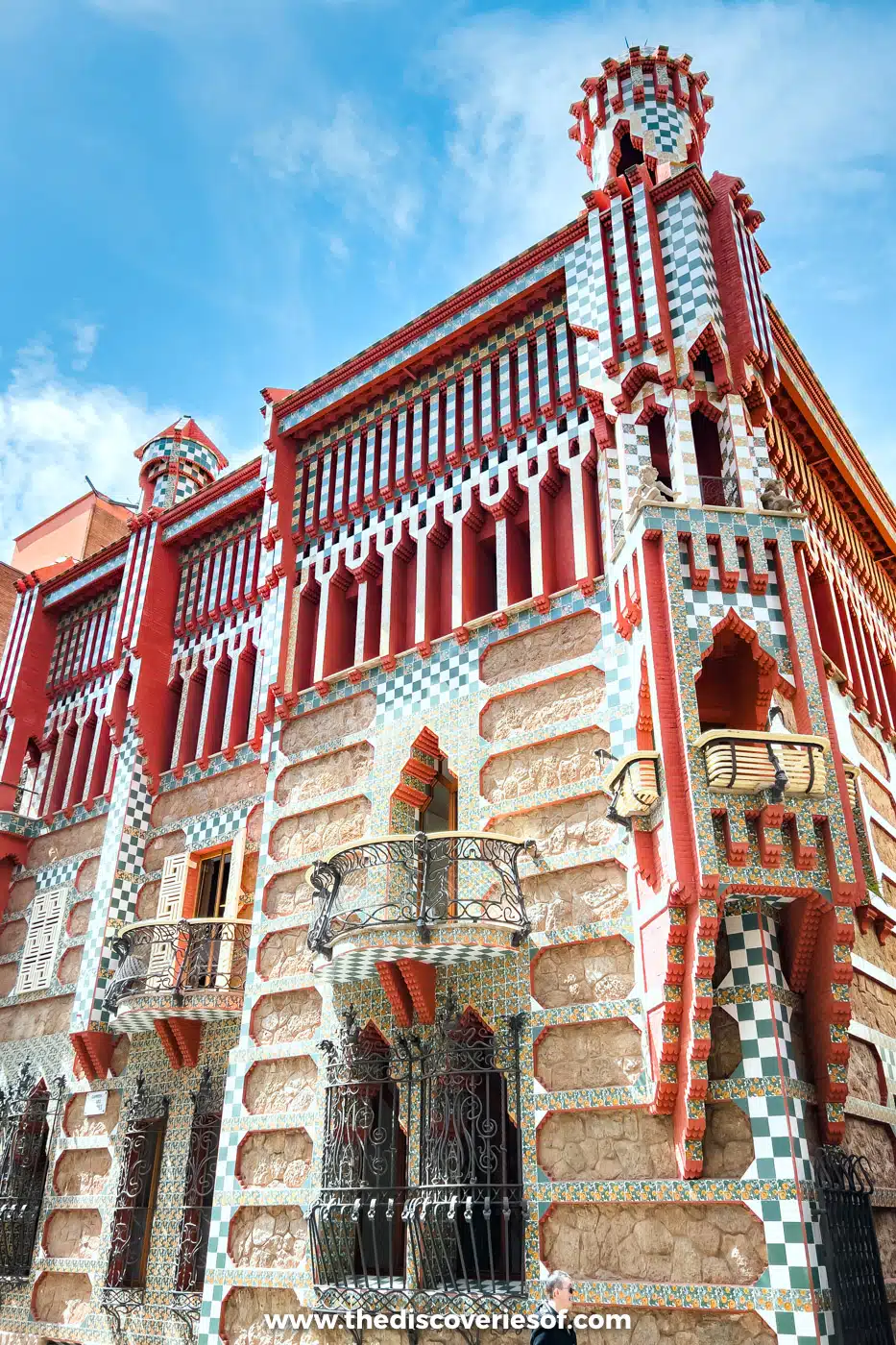
From Casa Planells, it’s about 35 minutes on foot west into Gràcia, through the neighbourhood’s squares, to finish where Gaudí started (or take the metro: L5 from Verdaguer to Diagonal, then L3 to Fontana). Casa Vicens, on Carrer de les Carolines, was his very first house, a summer villa built between 1883 and 1885, and it’s one of my favourite spots in the city.
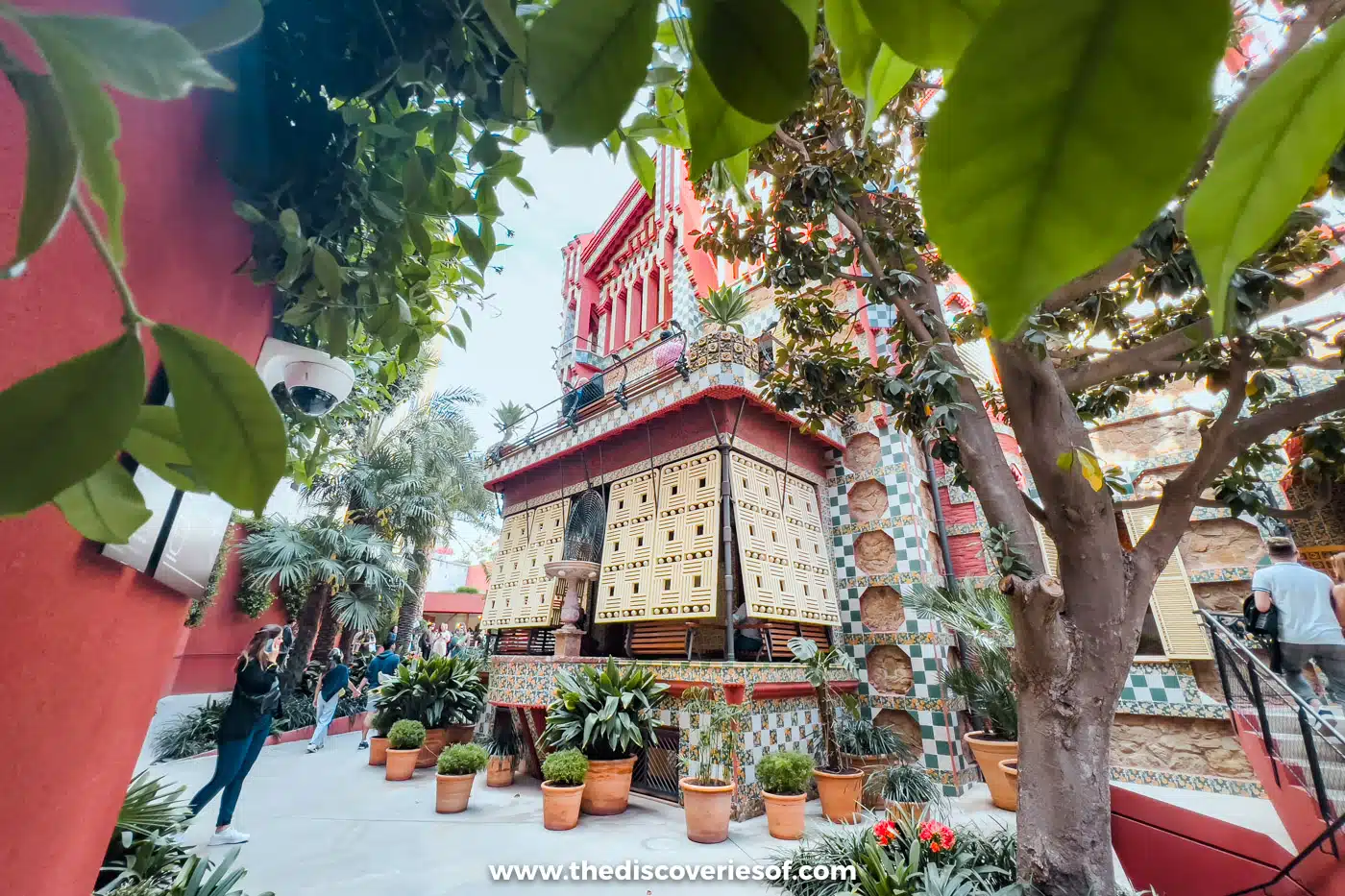
Even though it’s one of his earliest works, you can see his signature use of colour, light and pattern. The bright carmine-coloured tiles are covered in yellow flowers, and the palm trees in the garden inspired the fan-shaped leaves of the iron fence (keep an eye out during your trip, and you’ll see he uses the same pattern in Park Güell much later). Because it’s nowhere near as well known as the Sagrada Família or Park Güell, it’s far less crowded, and you can usually get tickets on the door.
Tickets
general admission to Casa Vicens costs about €22 with an audio guide. Book a skip-the-line Casa Vicens ticket ahead.
Have more time? Add these to the walk
- Palau de la Música Catalana: Domènech i Montaner’s concert hall in Sant Pere, with its stained-glass skylight, is the most dazzling Modernisme interior in the city. It’s off this route, in the old town, so pair it with a day in El Born. Book a self-guided tour or catch a concert.
- Sant Pau Recinte Modernista: Domènech i Montaner’s former hospital, a garden city of tiled pavilions, is a 10-minute walk from the Sagrada Família. Book Sant Pau tickets.
- The Sagrada Família: Casa Planells is only about five minutes’ walk from the basilica, so you can detour there before heading over to Gràcia. Read my Sagrada Família guide before you book.
How to time it, what to book and where to look up
- Book the big two ahead: Casa Batlló and La Pedrera both sell timed tickets, and both are cheaper online. Casa Vicens is quieter, and you can usually buy tickets on the day.
- Pick your interiors: you don’t need to go inside everything. If you only do one, make it Casa Batlló for the drama. If you do two, add Casa Vicens to see where it all began.
- Look up: most of the best details, from Casa Comalat’s tiles to the turrets of Casa de les Punxes, are above the shop fronts.
- Time it for Sant Jordi: on 23 April, Casa Batlló is dressed in roses and Passeig de Gràcia fills with book and rose stalls. My Sant Jordi guide has the rest.
- Go further with Gaudí: my guide to Gaudí’s Barcelona covers every one of his buildings, including the ones out of town.
Map
Read next
- Gaudí’s Barcelona: the buildings to see and how to visit them
- Casa Vicens, Gaudí’s first house
- Gràcia, Barcelona
- Things to do in Barcelona
Love this? Save and share on Pinterest
Discover the top things to do, insider tips and hidden gems in our Spain Travel Guide.
Read the guides →