


Plenty of people fly to Cyprus for a week on a sunlounger and never see the island beyond it. That’s a shame, because the best of it is a short drive from the sand: mountain villages with bakeries that sell out by lunchtime, a cheese you’ll never look at the same way again and an ancient theatre with the sea for a backdrop.
Do you ever have one of those places that you remember with such pleasant memories that you’re almost worried about going back?
I had memories of a heady trip to Cyprus as a young teenager. I was smitten by the island’s stunning beaches, rugged landscapes and friendly people.
Fast forward quite a few years and my recent trips to Cyprus haven’t let my memories down. On one of them, in early October, the sea was still warm enough to swim in without a second thought, and I spent five days eating my way from the wine villages of the Troodos to the halloumi makers of Pissouri.
With its stunning beaches and crystal-clear waters, ancient ruins and vibrant nightlife, it’s little wonder that the island has cemented its reputation as a European escape with a difference. But the places that stayed with me were the ones most visitors drive straight past.
So this guide mixes the classics (Kourion, the Tombs of the Kings, Aphrodite’s Rock) with the more unusual things to do in Cyprus that I’d plan a trip around. Read this practical AF guide (what to do, where to go and how to do it) to help you plan yours.
The best things to do in Cyprus
Spend time in picture-perfect Pissouri


I couldn’t write a guide to places to visit in Cyprus and not mention gorgeous Pissouri.
Set on winding streets on a ridge above the coast, about 3km inland from its bay, the village is an enchanting combination of small shops, tavernas and bars, with a long-standing tradition of halloumi making that has flourished in the modern day.
It’s this contrast between tradition and contemporary life that makes these villages so alive.
On the one hand, you can (and should) have a traditional Cypriot lunch in Vrakas Taverna, the first taverna in the village to have a radio and then a TV and the long-time hub of Pissouri’s laid-back social life. Its tables sit under the vines across from the church, and owner Haris Stylianides knows just about everything there is to know about the place. Order the keftedes: small fried meatballs of pork and beef with grated potato, parsley and a hint of cinnamon. They were the last thing I ate on my trip, and I couldn’t have asked for a better send-off.
On the other hand, you can walk around the corner for stellar views and perfectly-made cocktails whilst watching the sun set over Pissouri Bay.
Down by the shore, the bay itself is a sheltered cove with a wealth of water sports, and if you walk along the coastline you can find a few small beaches which are rarely inhabited by other sunseekers.
Top Tip
Come on a Wednesday between June and September, when the village square hosts a Cyprus night with music and dancing.
Learn how halloumi is made

If you think you’ve had halloumi and haven’t eaten halloumi in Cyprus, I hate to break it to you, but you’ve been deceived.
I thought I’d eaten halloumi (you know, tasty, a bit squeaky, great for a bbq), until I visited Vasilis Agathokleous, a small halloumi producer on the outskirts of Pissouri.
I don’t want to sound dramatic but this halloumi may change your life.

Creamy, salty, tangy, smooth and rich, you can eat this halloumi moments after it’s been made, or age it for up to a year to help it develop more intense flavours.
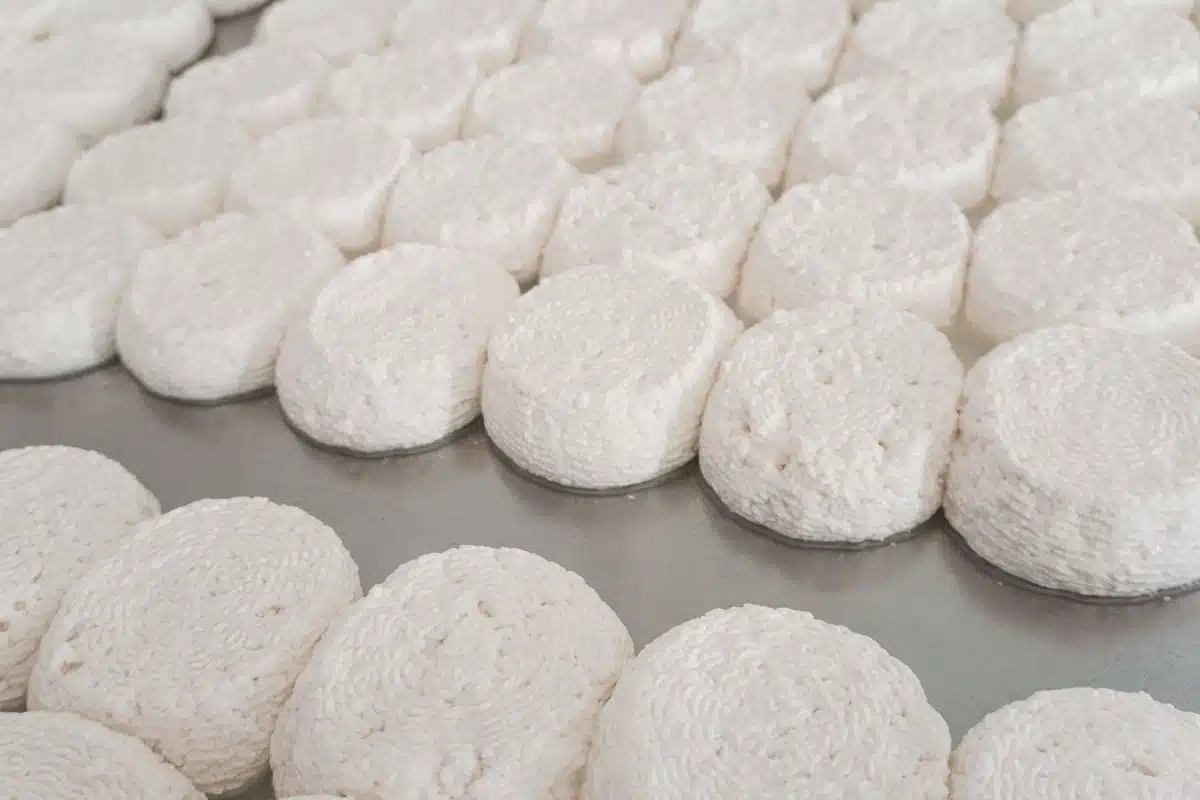
The milk comes from goats that roam the hills around the village, and Vasilis told me it changes with the seasons: in the rainy months it’s thinner, so it takes around 10 litres to make a kilo of cheese, against about 8 litres when the milk is richer in the dry season. I tasted the curds side by side with the finished cheese, and it’s hard to believe that less than an hour of heating in whey is all that separates the mild, ricotta-like curd from the sharp, tangy halloumi.
Vasilis didn’t export his halloumi when I visited, so the only way to take it home was to fill a suitcase from his small factory.
Believe me, it was very much worth it.
Pissouri is proud enough of its halloumi to have opened the House of Halloumi, a small museum above the village with a halloumi statue at its entrance, and it’s a good place to learn how the cheese has been made here for generations.
Halloumi has been a protected designation of origin (PDO) in the EU since 2021, so the real thing has to be made in Cyprus from sheep’s or goat’s milk (cow’s milk is allowed in the mix).
Do
If you can’t get to a small producer yourself, this cheesemaking day trip with brunch takes you to the mountain villages to make halloumi and anari with a local family.
Explore the Akamas region on a jeep safari

For a lot of people, Cyprus starts and ends at the beach.
Those people are missing out on a lot.
Sure, the beaches in Cyprus are gorgeous, but there’s so much more to the island than its shoreline. After one of the more unusual things to do on the island?
I’d recommend spending a day or two exploring the Akamas region with George’s Jeep Safari. If you’re lucky, you might even get George himself. Having grown up locally, there’s nothing (and no one) in the region that George doesn’t know about, so he can take you to places you’d never think of finding yourself.
George creates a tailor-made itinerary depending on your preferences, so no two safaris are the same.
On mine, I went wine tasting and off-roading, learnt how to make Cypriot coffee the traditional way, stopped at a quiet Byzantine church and finished by watching the sun go down over what George promised would be a show-stopping location.

I think we can all agree from the picture above that he was right. That’s the Evretou reservoir, where the dam has flooded a web of valleys in the hills south-east of Polis, and the views from the ridge are something else.
The Akamas peninsula itself is a national park of scrubby hills, sea caves and turtle-nesting beaches at Lara, and most of it is only reachable on dirt tracks. One thing to know before you go: the Avakas Gorge, usually a highlight of Akamas safaris, has been closed by the Forestry Department since December 2025 because of rockfall risk, so check whether it has reopened before you book a tour that promises it.
Do
For a group tour from Paphos, this Akamas jeep safari takes in the sea caves, Lara Bay and the turtle conservation station.
Sail to the Blue Lagoon from Latchi

An island with calm and warm waters is always going to attract watersports lovers and Cyprus is no exception. Scuba diving, parasailing, snorkelling, water skiing: you name it, you can do it.
Those wishing for a slightly more sedate time can take a boat tour for some off-shore swimming and snorkelling. There are daily boat tours from the small village of Latchi along the wild Akamas coast to the Blue Lagoon, and it’s pretty much impossible not to dive in and explore the warm waters once the boat anchors down. I took the trip in October and the water was crystal clear and still warm enough that swimming wasn’t a problem.
The glass-bottom boats run daily from roughly late March to the end of October, weather permitting, and the bay is shallow and sheltered enough for confident children.
If the weather’s right, the bay at Latchi is perfect for a spot of parasailing and kitesurfing, but if not, sailing along the coastline with the wind whipping through your hair and a spot of swimming here and there is adventure enough.
Do
Staying in Paphos? This Blue Lagoon boat trip with bus transfer picks you up from your hotel and takes care of the drive to Latchi.
Hang out on some incredible beaches

Let’s start off with this. If you’re somewhere cold and dreary, the idea of being on a beach somewhere in Europe might feel utterly insane, but it’s not.
One of the most obvious ways to spend a day here is to settle down on a beach with a good book and enjoy the sunshine, which lasts long past the British summer: the beach season runs from around April to November.
There’s a seemingly endless number of beaches, complete with warm turquoise waters and fine, white sand.
Nissi Beach is the best-known. Just west of Ayia Napa on the east coast, it’s a crescent of golden sand about 500 metres long, with shallow waters (perfect for families), a small islet you can wade out to, and plenty of things to keep you occupied: water sports, bars, restaurants and, in summer, foam parties.
If you’re looking for somewhere a bit more rugged, Governor’s Beach, between Limassol and Larnaca, boasts some of the clearest water on the south coast, with dark sand set against white chalk cliffs.
There are also tons of beautiful beaches in Paphos to visit if you plan to get some rest and relaxation.
If I had to pick one, I’d probably opt for Latchi, thanks to the smaller number of visitors but picture-perfect views from your sun lounger. Alternatively, Larnaca also has some cool beaches too.
Your biggest problem? Which beach to pick.
Visit Omodos, a traditional wine village

You’re likely to hear a lot of talk about the larger towns and cities: Nicosia, Limassol, Larnaca, Paphos. But what about the island’s villages?
If you’re looking for the true heart of Cyprus, head to villages such as Omodos, Pelendri and Pissouri.
Each village boasts a unique culture and identity of which they are fiercely proud.
Omodos, in the heart of the winelands in the foothills of the Troodos Mountains, has a long winemaking history (it’s still known for its wine and for zivania, the local grape brandy) but today thrives as a tourist destination and a welcome retreat from the coastal heat in the hot summer months.


Stop in Katoi for lunch, it’s fabulous, then browse the village’s quirky array of shops and boutiques selling handmade lace and jewellery, and call in at George’s Bakery (a different George this time), which makes some of the island’s best bread.
Its speciality is arkatena, a lightly spiced bread risen with fermented chickpeas rather than yeast, which has a light, chewy crumb and a dense crust. My guide told me she’d sometimes drive 40 minutes from Limassol on a Sunday just to buy a loaf, and she was right to tell me to buy mine on the way into the village: when I walked past a few hours later, it had sold out.
At the top of the main street, the Monastery of Timios Stavros (the Holy Cross) is worth a look for its gilded iconostasis, made in 1817, and the small icon and folk museums in its halls.
Top Tip
Katoi opens for lunch only on most days (it adds dinner on Fridays and Saturdays) and is closed on Mondays, so plan your Omodos visit around it and book ahead at weekends.
Go wine tasting


Cyprus has a history of winemaking that stretches back more than 5,000 years: archaeologists have found traces of wine in pottery from around 3500 BC at Erimi, near Limassol.
You can visit traditional winemaking villages such as Omodos (see above), but get a little outside of these and you can find contemporary wineries such as Zambartas, in Agios Amvrosios in the Limassol hills, and Vasilikon, near Kathikas on the Laona plateau above Paphos, making world-class wines.
Unlike visiting vineyards in other countries, Cyprus has and uses a lot of its own grape varieties (Lefkada and Maratheftiko being two examples), so you get a chance to try something really different. At Vasilikon I tasted a rosé made from Maratheftiko and Shiraz, a style that’s only been made here in recent years, and their first Maratheftiko bottled on its own.
Don’t leave without trying Commandaria, the sweet dessert wine from the villages north of Limassol, which is said to be the oldest named wine still in production.
Unsurprisingly, these wines pair well with Cypriot food. Speaking of which…
Do
For a full day without the drive, this Troodos villages and wineries tour visits three family-run wineries in a group of six, with a meze lunch.
Eat all the Cypriot food


Cypriot food is a delicious blend of Greek, Middle Eastern, Venetian, Turkish, French and British influences, paired with the freshest ingredients and bold flavours.
Food is abundant. You could say that it’s the true heart of the island.
Mealtimes are as much a social gathering and celebration as they are about the actual food you are eating.

Traditional Cypriot dishes range from sheftalia, a delicious herbed sausage of lamb and pork that’s cooked on a charcoal grill, to stuffed vine leaves and keftedes: meatballs made from mincemeat, fried potatoes, parsley and a hint of cinnamon.
As an island, there’s plenty of seafood but also a wide variety of vegetarian bean and pulse-based dishes. No one goes hungry in Cyprus.
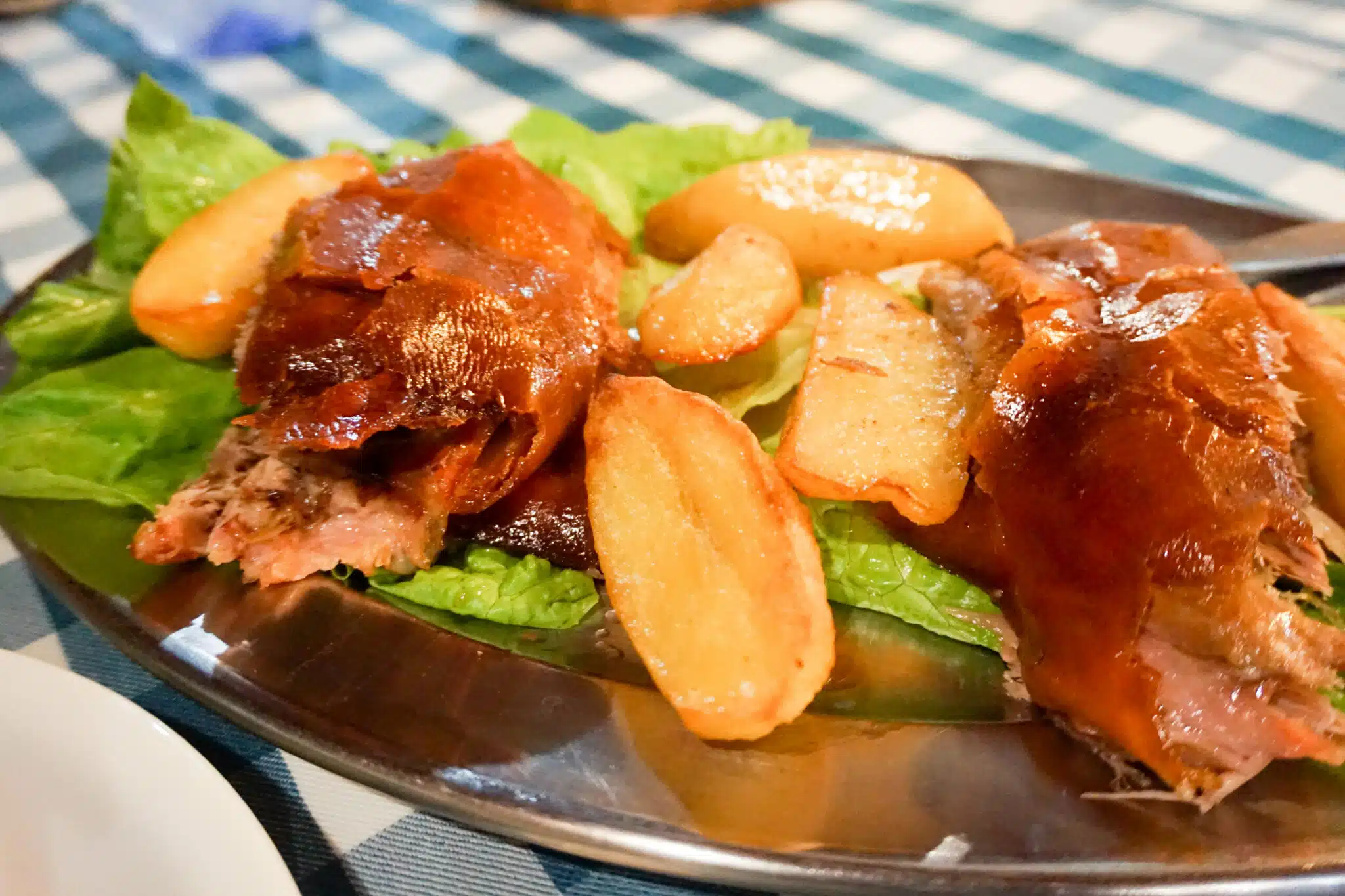
The most memorable meal of my trip was at Periklis Tavern, in the tiny village of Nata about 20 minutes inland from Paphos. Periklis himself greeted me at the door, and the dining room felt like (a very large) family’s, with locals and visitors packed around tables groaning with food. The star was suckling pig, slow-roasted all day so it was ready for dinner: tender meat and properly crunchy crackling. Then the rest of the meze kept coming, from courgettes fried in olive oil and scrambled with eggs to rice cooked in stock, tahini and tzatziki.
Where I ate and would happily go back to:
- Vrakas Taverna, Pissouri: traditional Cypriot food with a modern touch in the village square (see above).
- Katoi, Omodos: hearty, beautifully made dishes in a light, airy dining room.
- George’s Bakery, Omodos: arkatena bread, koulouri and almond sweets.
- Periklis Tavern, Nata: the suckling pig, and plenty of it.
By the end of the trip my suitcase was full of olives, wine, cheese and oil as I tried to take the flavours home with me. It never tastes quite the same, but I still try.
Stand on the stage at the ancient town of Kourion

Cyprus has a long and interesting history.
When I say long, I mean it: there’s evidence of people living on the island from around 10,000 BC. Over the centuries it has been ruled by the Romans, the Byzantines, the French Lusignans, the Venetians, the Ottomans and the British (to name a few), and all of them have left their stamp on the island.
Few places can match it for the sheer number of historical sites dotted around. So if you love to discover ancient sites, you could spend your whole trip doing that.

If you only have time for one historical site on the island, the ancient town of Kourion should be at the top of your list.
The Greco-Roman theatre still stands today with far-reaching views out over the beach and valley below. It was first built in the 2nd century BC and later enlarged by the Romans, and it still hosts open-air performances in summer.
Away from the theatre, look for the mosaic floors in the House of Eustolios (a villa turned bath house in the early 5th century), the gladiator mosaics in the House of the Gladiators and the Earthquake House, left as it fell in the great earthquake of AD 365. The Sanctuary of Apollo Hylates is about 3km further west and has its own small entry fee.
Do
Short on time or without a car? This guided tour from Paphos spends about 75 minutes at Kourion before Limassol old town and Aphrodite’s Rock.
Visit the Tombs of the Kings (and Paphos’s many historical sights)

If you want to explore a little bit of history, the Tombs of the Kings is a great place to start.
Located in Paphos, it was here that some of the most wealthy and powerful citizens of ancient Paphos (not kings, despite the name) were buried during the Hellenistic and Roman periods.

It is a fascinating labyrinth of ancient tombs and burial chambers cut into the rock from the 4th century BC. The tombs are still remarkably well preserved, and the grandest have sunken courtyards ringed with Doric columns, built to look like the houses of the living.

Similarly, the mosaics in the House of Dionysos, in the Kato Paphos Archaeological Park by the harbour, offer a glimpse into the everyday aristocratic life of days past. The park, a UNESCO World Heritage Site since 1980, also has the mosaics of the Houses of Theseus, Aion and Orpheus, an odeon and the ruins of Saranta Kolones castle. The Tombs of the Kings are about 2km north of the harbour, so you can walk between them in 30 to 40 minutes.
Spend time exploring Paphos and take a few excursions to its surrounds.
Top Tip
Both sites open daily from 8.30am (until 7.30pm in summer and 5pm from mid-September to mid-April). Arrive at opening time in summer: there’s very little shade at either.
See the birthplace of Aphrodite

There is no shortage of mythological and legendary sites here, but of all of these, Aphrodite’s Rock is the most iconic.
Whether or not you believe that this is where Aphrodite was born (myth has it that she rose from the sea foam here, at Petra tou Romiou, on the south coast), you can certainly see why this place could be deemed as special.
I won’t delve into the stories behind the legend of Aphrodite’s birth (in true mythological style, some of them are pretty grim), but many still believe today that if you swim around the rock you will be blessed with long life, beauty and true love.
Guess it’s always worth a go.
If not, you can settle for appreciating the crystal-clear waters and beautiful landscape instead.
The rock sits on the old coast road between Paphos (about 25km away) and Limassol, with a free car park and a tunnel under the road to the pebble beach. Come for sunset, when the crowds thin out and the light is at its best.
Top Tip
There’s no lifeguard and the currents around the rock can be strong, so only swim round it on a calm day and if you’re a confident swimmer.
Find the frescoes in the painted churches of the Troodos

Many visitors make it to the Troodos for the hiking and the wine villages and miss the region’s real treasure: its painted churches.
Ten of these small mountain churches are on UNESCO’s World Heritage list, and from the outside many look like barns, with steep timber roofs built to shed the winter snow. Inside, almost every surface is covered in frescoes painted between the 11th and the 16th centuries.
The Church of Timios Stavros (the Holy Cross) in Pelendri is a good one to start with, a short drive from Omodos. Its oldest paintings, in the apse, are dated by an inscription to 1171 or 1172, and the rest of the church was painted by at least two artists in the second half of the 14th century.
If you have time for more, head to Panagia tou Araka in Lagoudera, Panagia Forviotissa at Asinou and Agios Nikolaos tis Stegis near Kakopetria, whose name means “St Nicholas of the Roof”.
The churches open from Tuesday to Sunday (Tuesday to Saturday, 10am to 4.30pm in winter, with a lunch break in summer; Sunday, 11am to 4.30pm) and entry is free. Photography of the frescoes is usually not allowed, and dress modestly, with shoulders and knees covered.
Climb to Kykkos Monastery
The richest and most famous monastery in the country sits at 1,318 metres on the north-west slopes of the Troodos, surrounded by pine forest.
Kykkos was founded at the end of the 11th century under the Byzantine emperor Alexios I Komnenos, and its prize possession is an icon of the Virgin that tradition says was painted by the Apostle Luke. It’s kept covered, so you won’t see it, but the mosaics and gold of the church and the courtyards are impressive enough.
Archbishop Makarios III, the first president of the Republic of Cyprus, began his life in the church here as a novice monk, and his tomb is at Throni, a hilltop about 3km west of the monastery with views across the mountains.
The winding drive up is part of the fun. Combine it with the painted churches, or with a walk in the forests around Troodos square.
Go hiking in the Troodos Mountains

The Troodos Mountains run across the centre of the island, providing a welcome cool in the hot summer months and brimming with hiking opportunities.
Whether you’re looking for a multi-day expedition, or a short morning’s hike, the Troodos are the best place to start.
Some popular hikes in the Troodos mountains include:
- Caledonia Trail: about 3km one way through the pines, crossing the Kryos river several times, down to the Caledonia Waterfalls near Pano Platres. It’s easiest walked downhill from the Platres to Troodos road, so arrange a lift or allow time to walk back up, and wear shoes that can cope with wet stepping stones.
- Artemis Trail: a 7km loop around the summit of Mount Olympus (Chionistra), at 1,952 metres the island’s highest point, with big views on clear days. The summit itself is a military area, so the trail circles it rather than climbing to the top.
- Atalante Trail: a longer circuit of about 14km from Troodos square, through black pines that are among the oldest trees in the mountains. Expect snow in winter.
Away from the mountains, there are a number of coastal and inland routes to choose from, and the island’s nature trails are well marked and easy to follow if you’re a relatively seasoned hiker.
Explore Nicosia, a charming divided capital

Nicosia (Lefkosia in Greek) is the last divided capital in the world: it’s split between the Republic of Cyprus and the north, a state only recognised by Turkey. It has been the capital since the 10th century, and people have lived here since the Bronze Age.
Today, it’s a charming mix of old and new, with Venetian walls, Gothic churches and Ottoman mosques sitting alongside sleek high-rise buildings.
Take a wander through its narrow streets, pop into a cafe for some Cypriot coffee (strong and sweet, just the way I like it) and people-watch.


While you can read lots of interesting facts about Nicosia, it’s only in walking its streets and visiting its attractions that you can appreciate the history of the city.
There are several museums dedicated to a range of subjects from archaeology to Byzantine art, but if you only have time to visit one, CVAR should be your priority. The CVAR (Centre of Visual Arts and Research) Foundation has collected a range of paintings, books, memorabilia and clothing to tell the story of the island through time. Entry is €5, and it closes on Mondays in winter and Sundays in summer.
The observatory on the 11th floor of the Shacolas Tower on Ledra Street offers panoramic views over the city and a peek over to what lies on the other side of the dividing line.
At the end of Ledra Street, you can walk across the Green Line to the north side of the city on foot. Take your passport or EU ID card, and remember that the crossing points can change their hours at short notice.
Do
For the stories behind the walls, book this private walking tour of Nicosia with a local.
See the beauty of the convent of Agios Georgios Alamanos

If you find yourself between Limassol and Larnaca, make a stop at the convent of Agios Georgios Alamanos, about 20km east of Limassol and south of the village of Pentakomo.
It was founded as a monastery in the 12th century, but its domed, cross-shaped church in the Byzantine style and most of the buildings you see today are far more recent. The community later became a convent, and the nuns paint icons, keep bees and grow the flowers and herbs that fill its beautiful gardens.
It’s open at any reasonable hour and entry is free; dress modestly. It’s also only a short drive from Governor’s Beach, so you can pair the two in an afternoon.
Indulge in a thalassotherapy treatment
If all that food has got you feeling a little bit sluggish, why not try a thalassotherapy treatment?
Thalassotherapy is the use of sea water and marine plants in spa treatments. It’s said to be good for stress, skin and aching joints.
It’s not a new phenomenon: many of the things that thalassotherapy does today were things people used to go to the seaside for anyway. But here, you can experience it all with an extra layer of luxury and relaxation.
The Anassa hotel, on a hillside near Latchi on the north-west coast, is particularly famous for its Thalassa Spa, which pipes in sea water from Chrysochou Bay for its indoor pool and treatments.
Dive the Zenobia wreck and snorkel an underwater museum
Cyprus is a world-renowned dive destination thanks to a wide array of marine life, interesting wrecks and near-perfect visibility.
The most famous dive site is the wreck of the Zenobia, a Swedish ro-ro ferry that capsized and sank in Larnaca Bay in June 1980 on her maiden voyage. She lies on her side about 1.5km offshore at around 42 metres, with more than 100 lorries still on board, and is regularly listed among the best wreck dives in the world.
For something gentler, the Museum of Underwater Sculpture Ayia Napa (MUSAN), off Pernera beach, has 93 sculptures by Jason deCaires Taylor at 8 to 10 metres, close enough to the surface to see them on a snorkel. Visits are booked through partner dive centres.
Walk the sea caves at Cape Greco
The south-eastern tip of the island is a national forest park of low cliffs, juniper scrub and water so clear it looks unreal.
Short, easy paths lead along the clifftops to the sea caves, carved by the waves, and to viewpoints over the arch known as the Kamara tou Koraka. Nearby Konnos Bay is a sheltered cove with sunbeds and calm water that suits families.
Go early or late in summer, as there’s little shade. And however tempting the turquoise water below looks, stay behind the barriers: cliff jumping here has led to serious injuries and the authorities have been clamping down on it.
Getting There
Cape Greco is about 15 minutes’ drive east of Ayia Napa and 10 minutes south of Protaras, with free car parks near the main viewpoints.
Watch the flamingos on Larnaca Salt Lake
Most people only see Larnaca from the airport, but the salt lake right beside it is one of the island’s most surprising sights.
From around November to March, when the winter rain fills the lake, thousands of greater flamingos arrive to feed, and in a wet year their numbers can run into the tens of thousands. A 4km nature trail runs along the shore from the Kamares aqueduct, and the sunsets over the water are spectacular.
On the lake’s western shore, the Hala Sultan Tekke is one of the most revered Muslim shrines anywhere, built around the tomb of Umm Haram, said to be a relative of the Prophet Muhammad. With the flamingos in front of it, it’s one of the most photographed views in the country.
Wander Limassol’s old town and marina
Cyprus’s second city is better known for its seafront hotels and its nightlife, but its old town is worth an afternoon.
Start at the medieval castle, which houses the Cyprus Medieval Museum (€4.50), then wander the lanes around it: the Grand Mosque, the covered municipal market and the shops and cafes of the old town. From there, it’s a short walk to the old port, where warehouses have been turned into restaurants, and on to the marina.
Limassol also makes a good base for the south coast, with Kourion, the Omodos wine villages and Governor’s Beach all within about 40 minutes.
How to make the most of your trip
- Hire a car. Driving is fairly straightforward: the roads are well maintained and signposted, and you drive on the left. Public transport isn’t always convenient (especially for the villages, wineries and mountains on this list), so it’s best to hire a car for the duration of your stay. Most of the island is within a day trip of Limassol or Paphos.
- Go in spring or autumn. Winter is short (essentially December and January) and mild on the coast, but April, May and October give you warm seas and sunshine without the peak-summer heat and crowds. I went at the start of October and the sea was still warm enough for a swim.
- Buy a heritage pass if you’re seeing a lot of sites. The Department of Antiquities sells one-, three- and seven-day passes (€8.50, €17 and €25) covering Kourion, the Kato Paphos park, the Tombs of the Kings and its museums.
- Visiting the north? You can cross the Green Line on foot in Nicosia with your passport. If you’re driving across, you’ll need separate insurance for the north, bought at the crossing, and check first that your hire company allows it.
- Where to stay: Paphos is the best base for the west and Limassol for the south coast and the Troodos; little Pissouri sits neatly between the two. For a splurge, try Columbia Beach Resort on Pissouri Bay or Anassa near Latchi. For more areas and hotels, see my Cyprus travel guide.
Map
Read next
- Incredible landmarks in Cyprus you have to see
- Unmissable hikes in Cyprus
- My Cyprus travel guide: when to go, where to stay and more
- The best places to go in October
- Best winter sun destinations in Europe
- The ultimate Europe bucket list
Love this? Save and share on Pinterest

Discover the top things to do, insider tips and hidden gems in our Cyprus Travel Guide.
Read the guides →




Love your comments and love Cyprus, thank you for taking me there in your dialogue . I’ve visited twice, my oarents birthplace and my ancestory, my cousins etc and can’t wait for more of what you just described fun fun fun.??
I’m so glad you love it – it’s such a beautiful island, am already planning my next trip 🙂
Hi,
Where exactly is Vasilis Agathokleous located? Google Maps doesn’t return anything… 🙁