
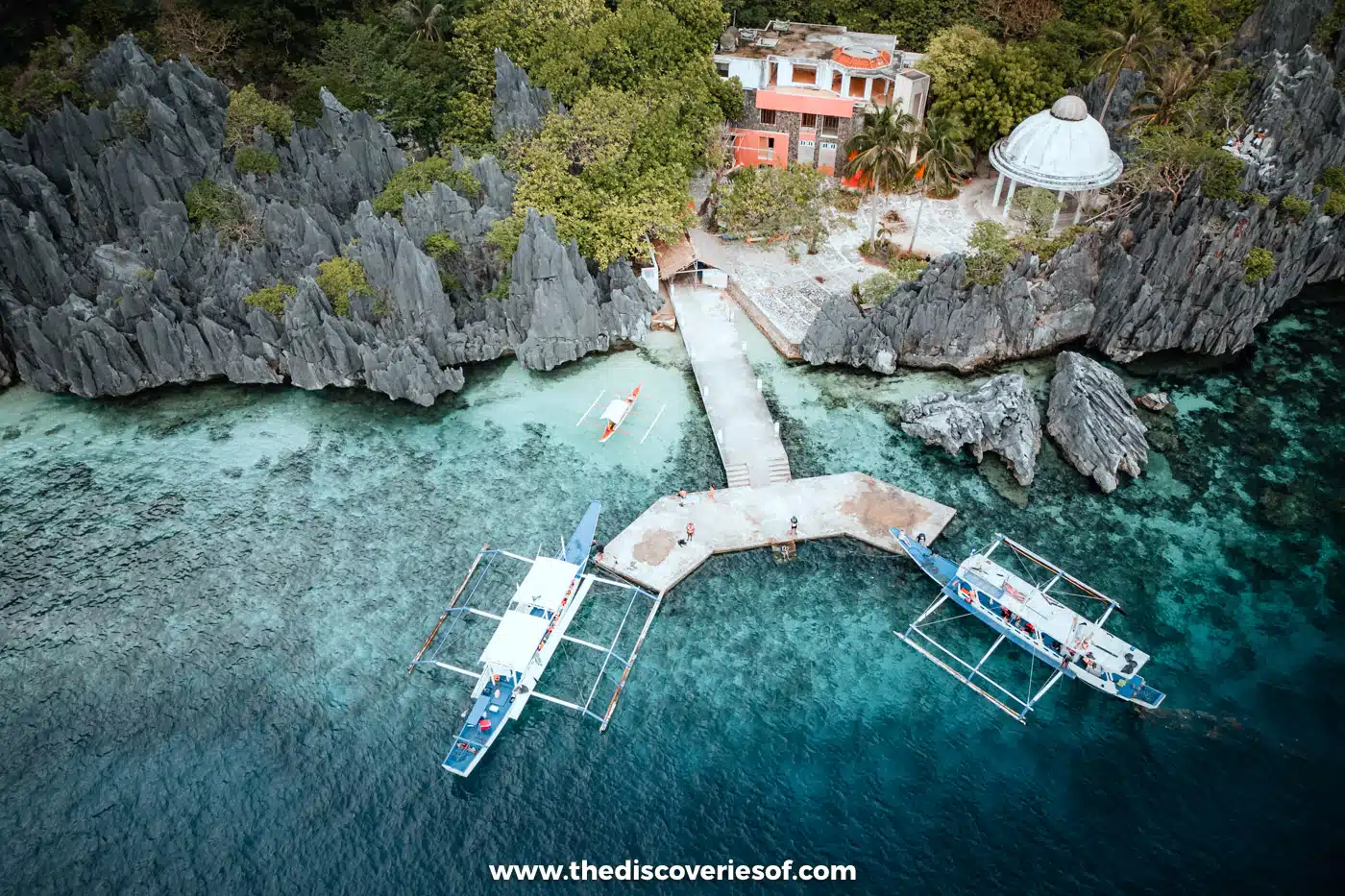

Siargao is the Philippines at its most spectacular: a teardrop-shaped island of legendary surf, emerald lagoons, cave pools and deserted sandbanks. This Siargao travel guide covers the best things to do, what they cost and everything you need to know to plan your trip.
Siargao had been on my radar for years before I finally made it there, and it absolutely lived up to every expectation. Known the world over as the Philippines’ surfing capital, and home to the legendary Cloud 9 reef break, Siargao is also, if you dig a little deeper, an island of extraordinary natural variety. Stingless jellyfish lagoons, tidal rock pools you can only reach at low tide, an emerald lagoon hidden behind a boat ride through the mangroves, and deserted sandbanks that appear from the sea and disappear again with the tide.
You don’t need to surf to love Siargao. Honestly, you don’t. The island is full of people who came for the waves and stayed for everything else, and I’d count myself among them. I came in May, straight from a week of diving in Raja Ampat, and based myself in General Luna, the island’s main hub.
Here’s what to do, where to eat, where to stay and everything you need to know before you go. If you’d like the highlights in a day-by-day order, my 3 days in Siargao itinerary lays them out.
Some links in this article may be affiliate links, which means we may receive a small commission, at no additional cost to you, if you decide to purchase through one of my recommended partners.
Things to do in Siargao
The land tour: Magpupungko, Maasin River, Sugba Lagoon and more
The classic Siargao land tour packs five of the island’s best natural sights into one long, brilliant day, and it’s the single thing I’d most recommend doing on your first trip. Here’s what it covers, and my Siargao land tour guide has the operators, prices and timings.
Any guesthouse in General Luna can arrange it with a driver, or you can book a land tour with lunch and hotel transfers. Check exactly what’s included before you pay, because the Sugba Lagoon boat and the small entrance fees at each stop are often extra, and almost all of them are cash only.
Magpupungko rock pools
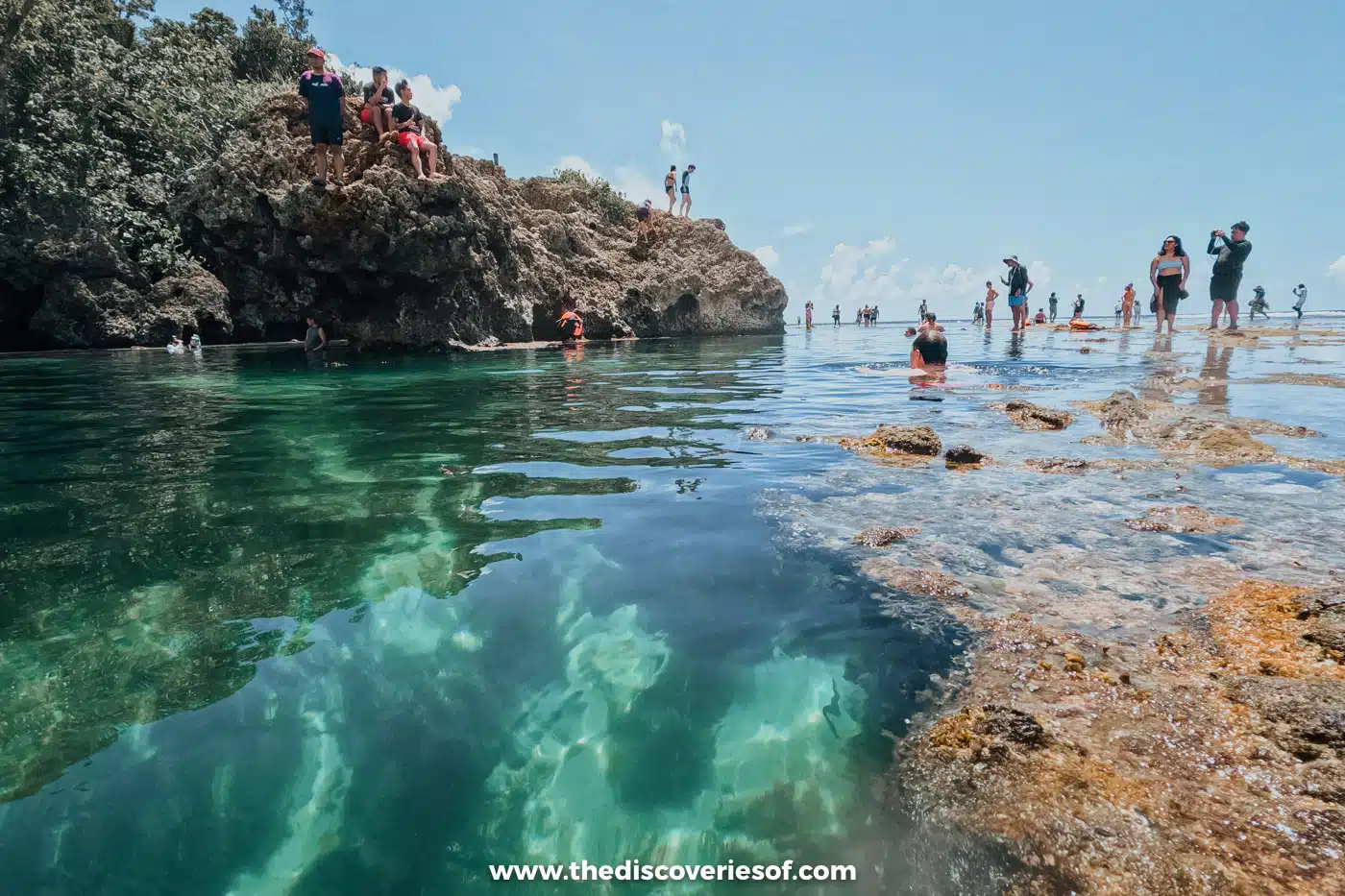
Start early at Magpupungko. These extraordinary natural tidal pools, carved into flat volcanic rock on the eastern coast near the town of Pilar, are one of Siargao’s most spectacular sights: a series of beautiful pools of impossibly clear water perfect for swimming and (if you dare) cliff-jumping. I didn’t jump: I’m a baby when it comes to climbing up the rocks, not the jumping in. The scale of them, and the colour of the water against the dark rock, is genuinely stunning.
The critical detail: you can only access the pools properly at low tide. At high tide the rocks are submerged and the pools are invisible. This is non-negotiable: check the tide chart before you book anything, and make sure your tour is timed for a low-tide morning visit. Get there early too, as tour groups arrive in force later in the day. My Magpupungko rock pools guide explains how to read the tides.
Entry costs ₱50 per person, and you can rent a life vest on site if you’re not a confident swimmer. There are simple food stalls near the entrance if you need something after an early start.
Top tip
Wear wet shoes or sandals with good grip. The rocks leading down to the pools are beautiful but they can be genuinely slippery, and flip-flops won’t cut it. My water shoes were an absolute godsend here. The entry to the pools is the bit to be careful on, so take it slowly.
Maasin River
A lovely, laid-back stop with a cool river location and a few jumping-off points to launch yourself into the water. It was boiling hot when I arrived, so I went straight in: you can hop in from the steps or jump from a platform, and the water is cool and so refreshing. It’s one of the spots on Siargao you really should visit. You can rent a kayak and paddle along the river if you fancy it. I didn’t have time on my visit, as our guide gave us half an hour, but it’s been recommended to me by pretty much everyone who has. If you’re going independently, budget a leisurely hour here. Entry is around ₱50, simple bamboo kayaks cost next to nothing, and you can also hire a small boat to take you along the river.
One honest update worth knowing: the famous bent coconut palm at Maasin, with its rope swing, collapsed into the river in February 2023, so if that shot was specifically on your list, manage expectations accordingly. The river and the jumping spots are still well worth stopping for.
Sugba Lagoon
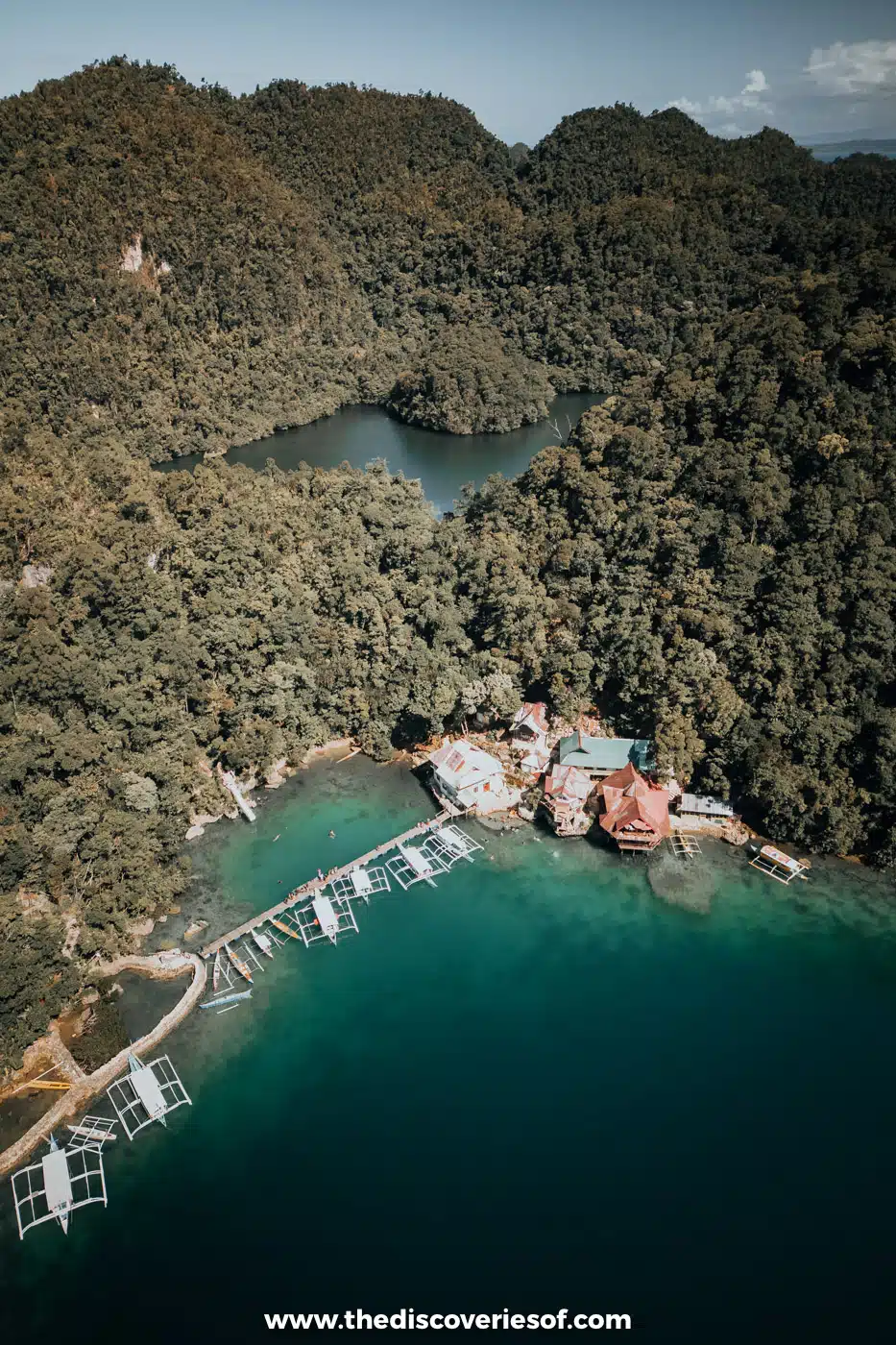
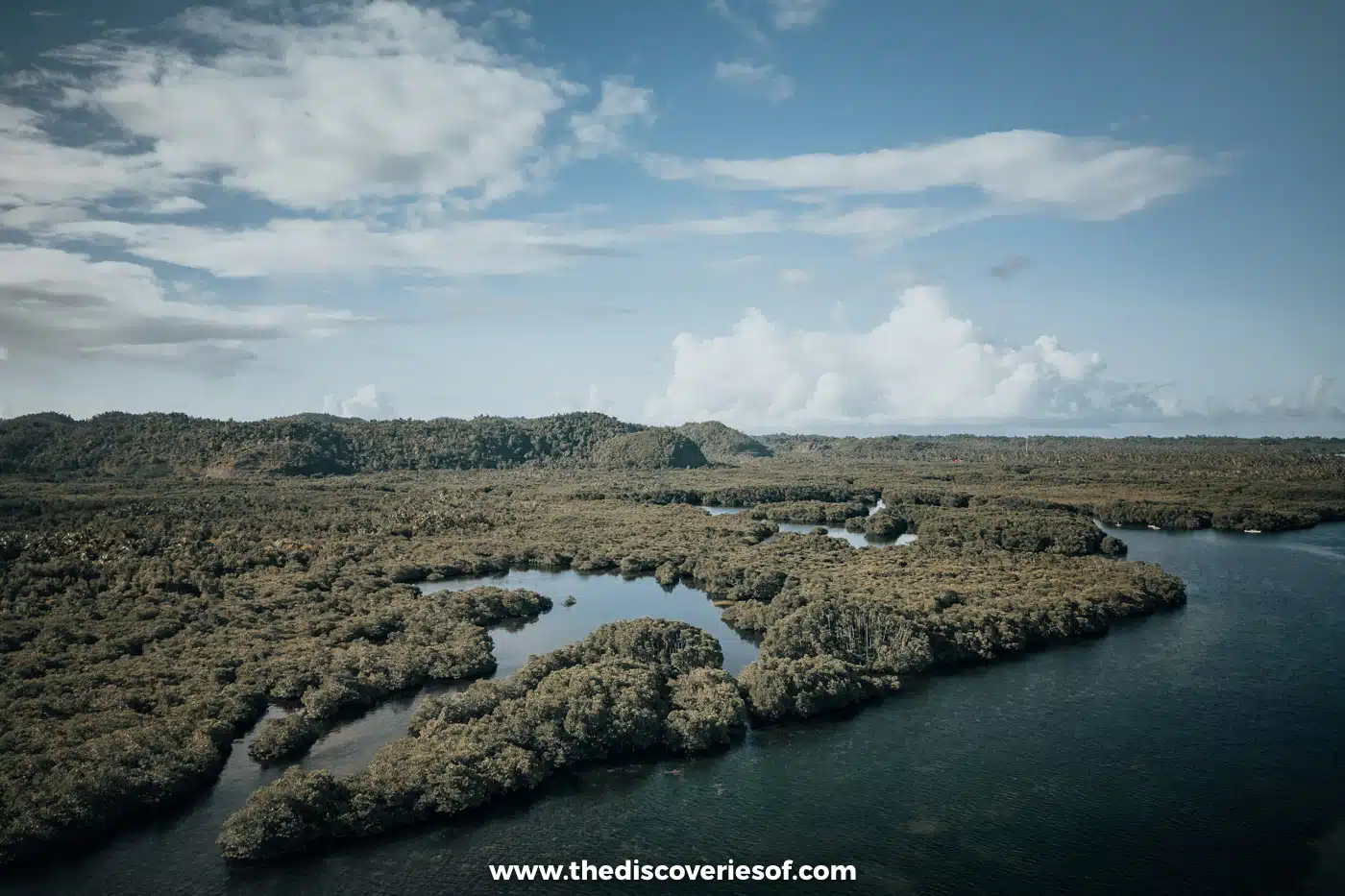
Sugba Lagoon is the kind of place that makes you stop and just look. A 20 to 30-minute boat ride from Del Carmen across the mangroves (that part is lovely in itself, as Del Carmen’s mangrove forest is one of the largest in Mindanao) brings you out into an emerald-green lagoon enclosed by tall cliffs. It reminded me of the karst scenery around Railay in Thailand. My first reaction, honestly, was just “oh wow”. My Sugba Lagoon guide covers the boats, fees and how to go without a tour.
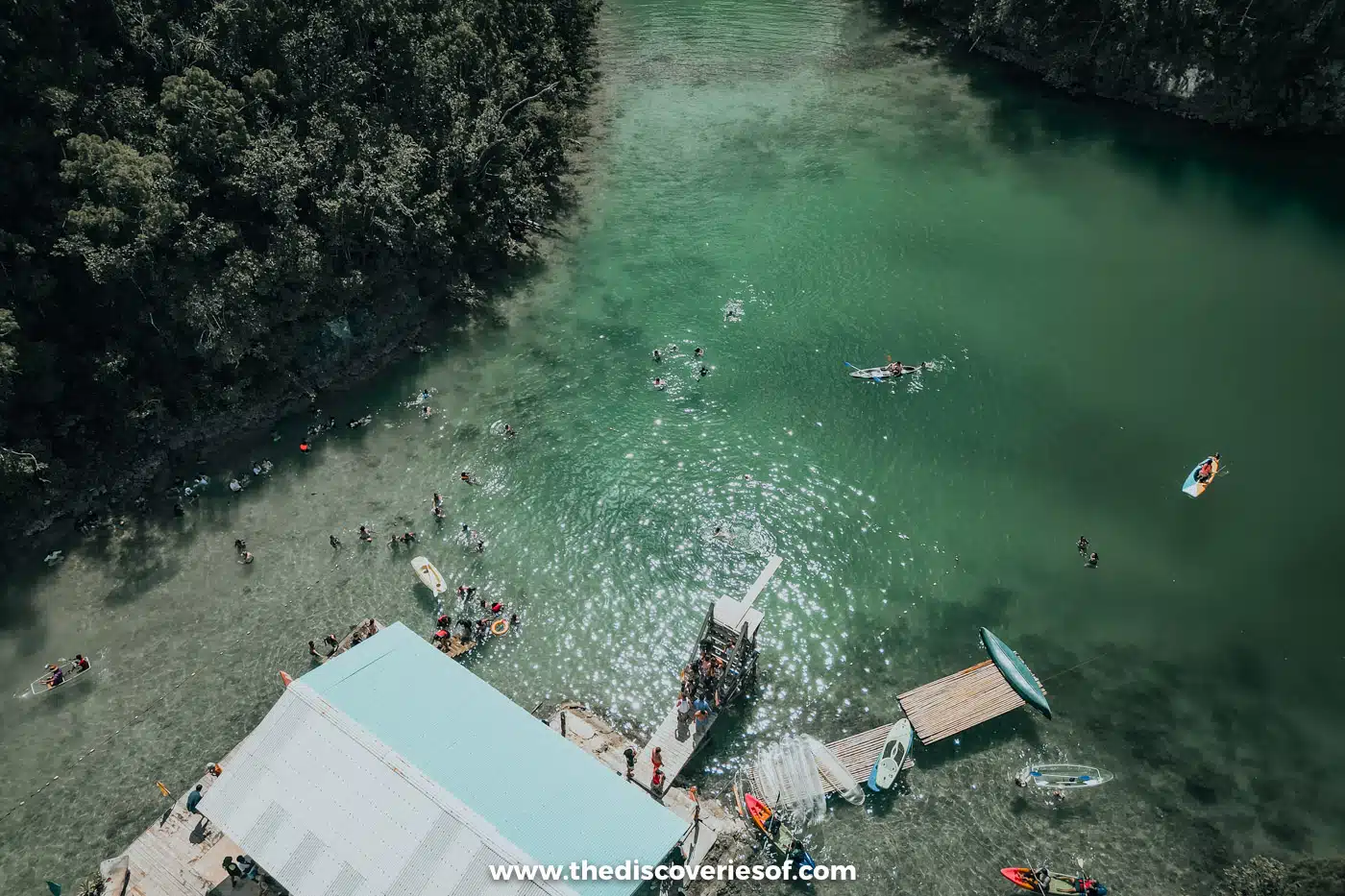
Once you’re there, rent a kayak and paddle around. The moment I rented mine it started to rain, which seems to happen every time I get in a kayak, but the water was a perfect temperature for swimming anyway. When I visited, a single kayak was around ₱200 for an hour, a double ₱300, and the crystal-bottomed kayak ₱500 if you want to see what’s underneath you; standard kayaks are now more often ₱300, so budget a little extra. Alternatively there’s stand-up paddleboarding. There’s also a designated swimming area and a jumping-off point for those who want it.
Boats leave from the tourism centre at Del Carmen port, about 45 minutes to an hour from General Luna by road. A boat costs around ₱2,150 for up to six people, plus a ₱100 entrance fee, a ₱50 environmental fee and a ₱20 terminal fee per person. Visits are capped at three hours, bags are checked for single-use plastic at the pier, and only reef-safe sunscreen is allowed. There’s no ATM at the port, so bring enough cash for the boat, the fees and your kayak.
Top tip
Time this early. Sugba Lagoon gets very busy after lunch when tour groups start arriving in numbers, and the lagoon itself is quite a small area, so it fills up fast: it was busy when I went, and it would have been even nicer a little quieter. If you can be there in the morning and leave before noon, you’ll have a much more peaceful experience.
Secret Beach
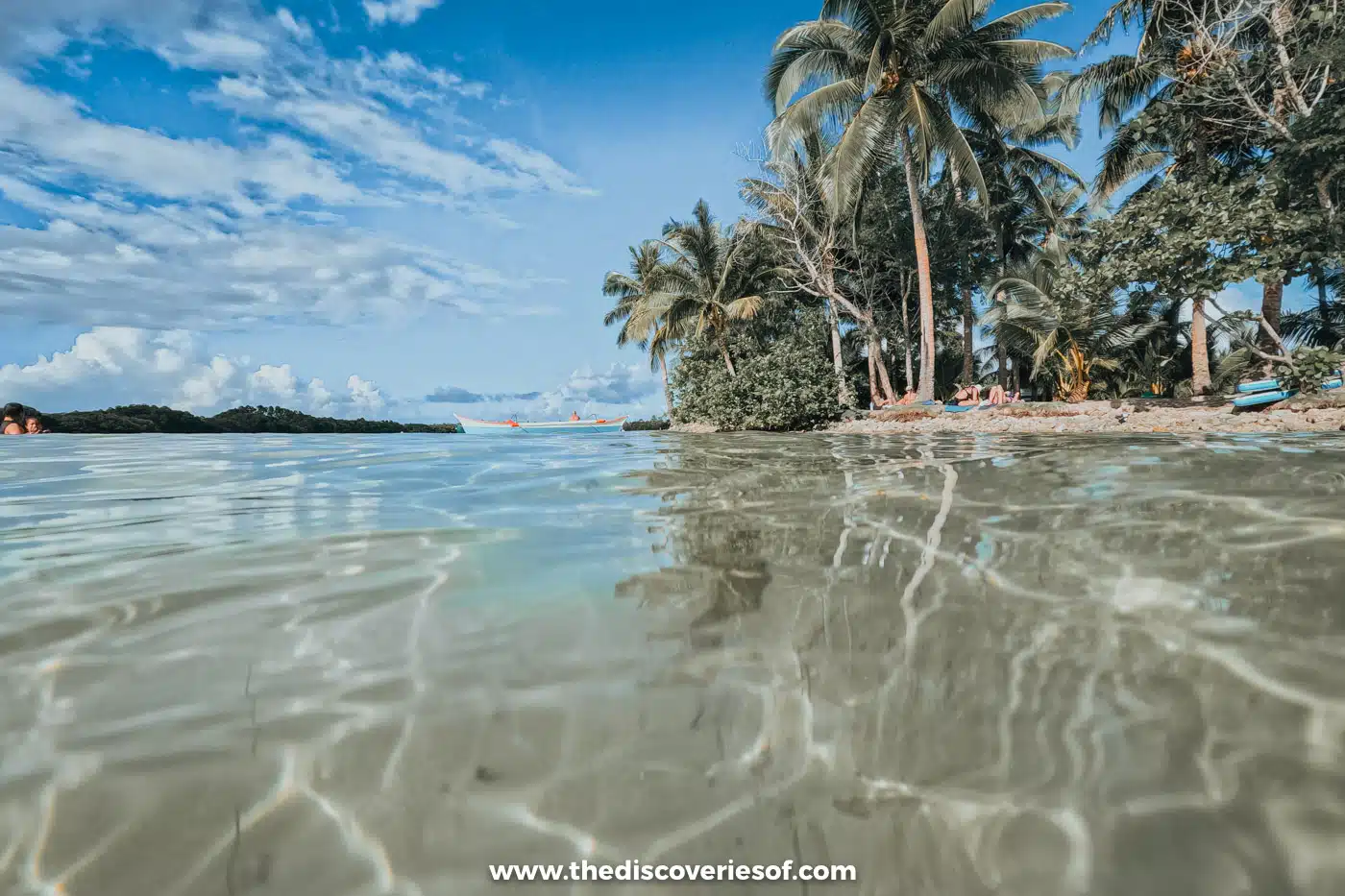
Secret Beach (also called Guiwan or Doot Beach) is in Malinao, just outside General Luna, so most land tours stop here on the way back. It’s a beautiful, quiet beach on the edge of a lagoon, with calm water, great swimming and a genuinely peaceful atmosphere. Kayaks and SUPs are available for hire if you want to explore further along the shoreline. Lovely for a relaxed hour between the more active stops. Entry is free, and if you’re not on a tour, a tricycle from General Luna costs about ₱75 per person.
Coconut view (the sea of palms)
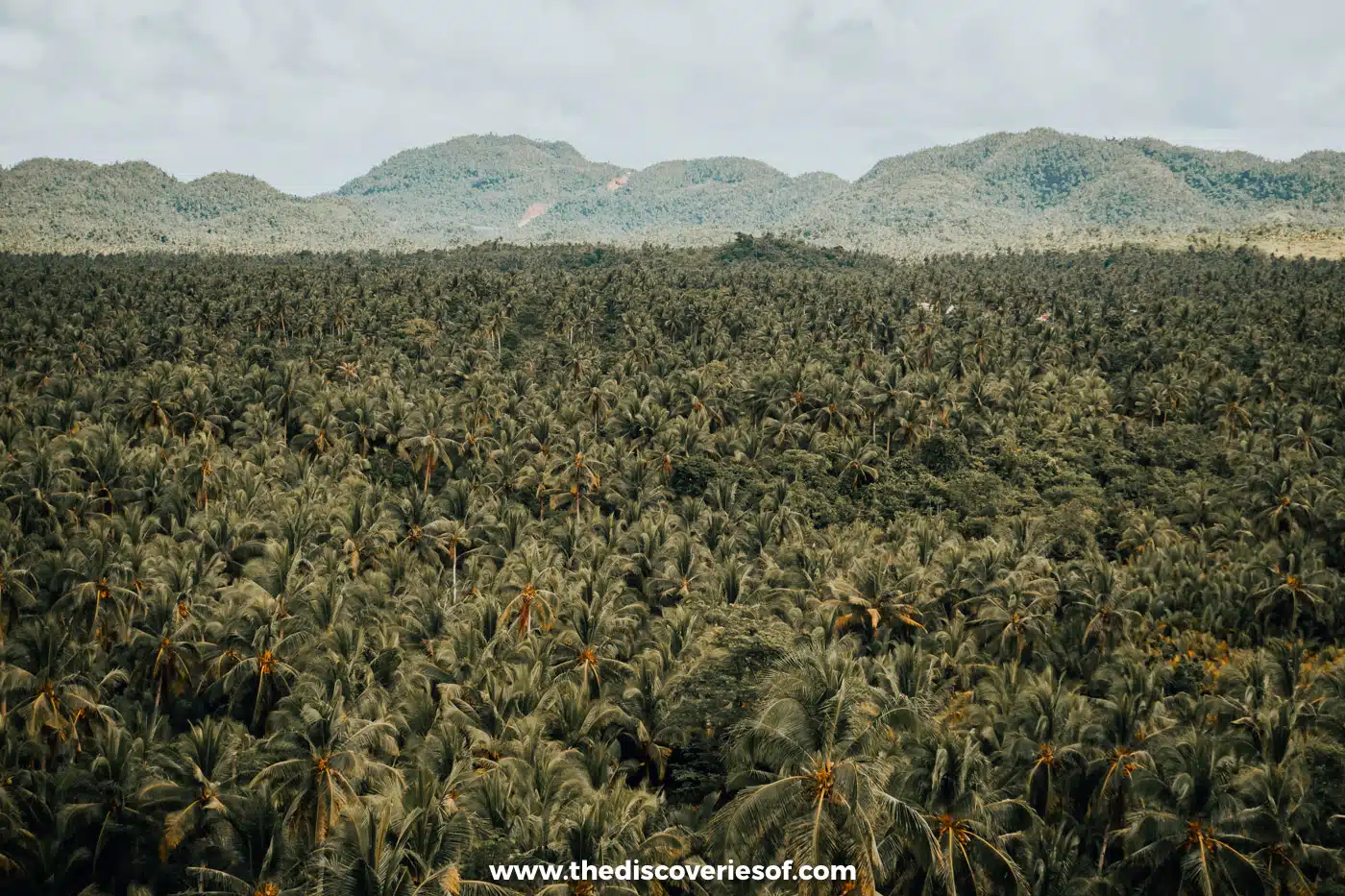
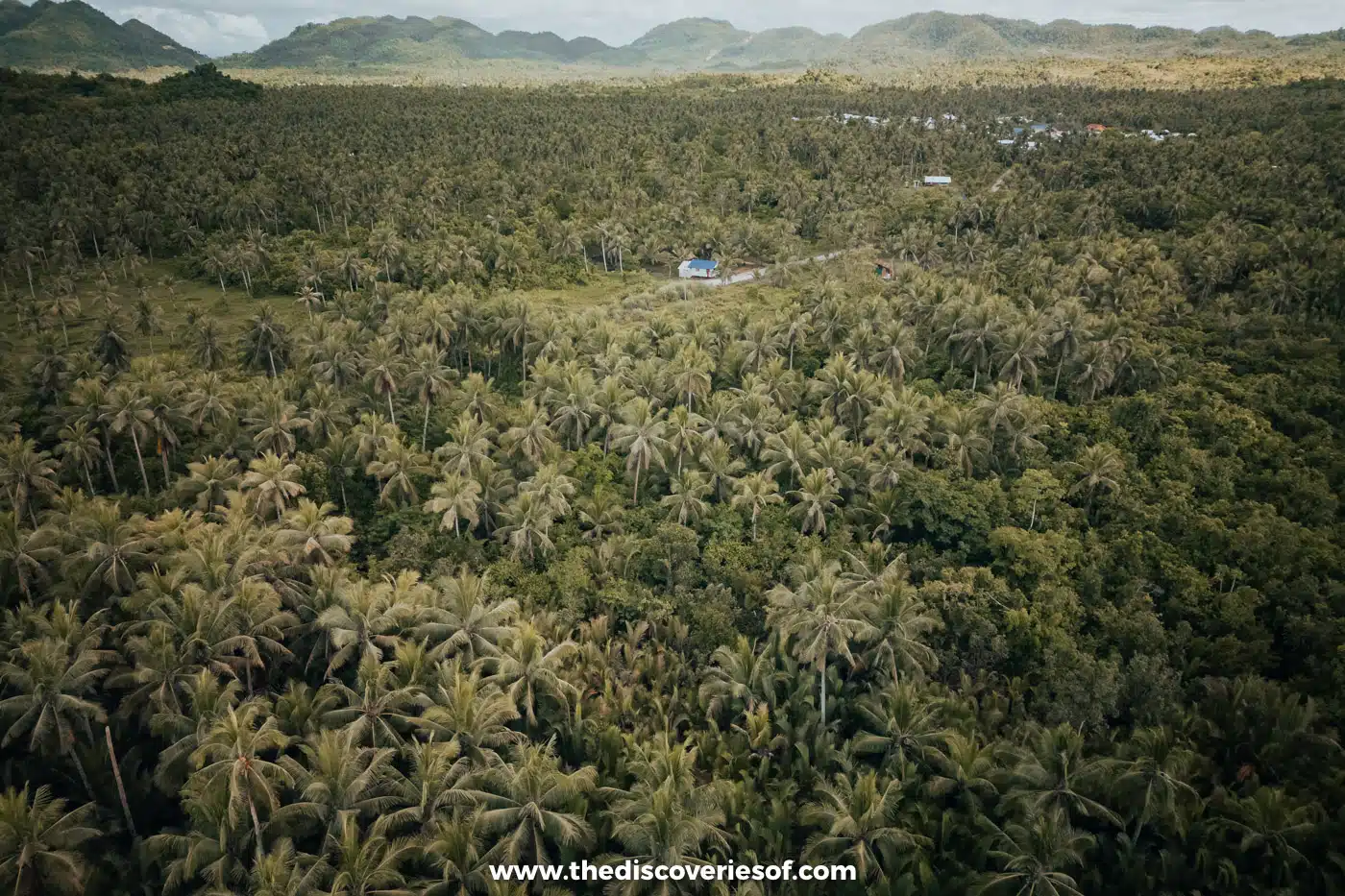
The simplest stop on the tour, but one of the most photogenic: a roadside pull-off where lush coconut palms stretch as far as the eye can see in every direction. It was the first stop on my tour, and it’s a quick one, five or ten minutes, but the scale of it is genuinely striking: coconut trees as far as the eye can see. It’s free, and open whenever you happen to pass.
The island hopping tour (tri-island)
The other must-do day on Siargao is the classic island hopping tour, which visits three very different islands just off the coast.
Naked Island is exactly what it sounds like: a bare, low sandbar rising from the middle of the ocean with nothing on it whatsoever. No trees, no shade, no buildings. Just a crescent of brilliant white sand and the sea. It’s surreal and beautiful, and with no shade at all, it’s the place for a hat, plenty of water and reef-safe sunscreen.
Daku Island is the largest of the three, with palm trees, a small local village and the option for a BBQ lunch on the beach. It’s a proper island rather than a sandbar, and a lovely place to slow down for a couple of hours.
Guyam Island is tiny, photogenic and palm-fringed: the one from all the Instagram shots, with the little thatched shelter on the beach. Small enough to walk around in five minutes, gorgeous enough to want to stay much longer.
Boats leave from General Luna. You can join a shared tour, such as this tri-island tour with lunch, or hire a boat privately, which costs around ₱2,600 including the guide for up to five people. Daku charges a ₱100 entrance fee and Guyam ₱50; Naked Island is free. Some boats add Mam-on or the Corregidor islands for a longer, quieter day.
Top tip
Go for a smaller group boat rather than a large tour boat if you can. The difference in experience between cramming onto a vessel with 20+ people versus a small group is significant, especially on the smaller islands where space is limited.
Surfing at Cloud 9
Even if you’ve never surfed in your life, Cloud 9 is worth seeing. I didn’t surf, and went purely to watch. The legendary right-hand reef break that put Siargao on the world surfing map, a thick, hollow barrel that rolls in from the Pacific, is one of those waves that genuinely takes your breath away to watch up close, even from the safety of the boardwalk.
The boardwalk out over the reef is a classic Siargao experience, and it’s a great place to simply sit, watch and appreciate what’s happening in the water below. It was rebuilt sturdier after Typhoon Odette flattened the old three-storey viewing tower in December 2021, and a full rebuild of the tower began in 2026, so you may find part of it under construction. I paid ₱100 to walk out onto it, and you can buy a multi-day pass if you plan to come back.
Afterwards, I walked the few steps to Loka, a beachside café, bar and restaurant right by the Cloud 9 boardwalk, for a flat white and a mango pudding. It was so chill and so good, and a lovely spot to sit after the boardwalk.
Cloud 9 itself is not a wave for beginners. For beginners and improvers, there are excellent surf schools in General Luna offering lessons and guided sessions at gentler breaks nearby, such as Jacking Horse right next door. Lessons typically cost ₱500 to ₱1,000 an hour, with boards to rent for ₱300 to ₱500 a day. The best conditions are typically in the early morning (6 to 9am) before the wind picks up, and March to May, when the waves are smaller, is the easiest time to learn.
Cloud 9 is also now firmly on the world stage. The World Surf League added it to the Championship Tour for the 2026 and 2027 seasons as the Philippines Pro, held in late October and early November. If your trip overlaps, it’s a thrilling time to watch from the boardwalk, but book your accommodation well ahead.
Top tip
Even if you’re not surfing, come to Cloud 9 at dawn. The wave at sunrise with barely anyone around is a completely different experience from the afternoon bustle, and one of the most beautiful natural spectacles on the island.
Sohoton Cove (including the stingless jellyfish lagoon)
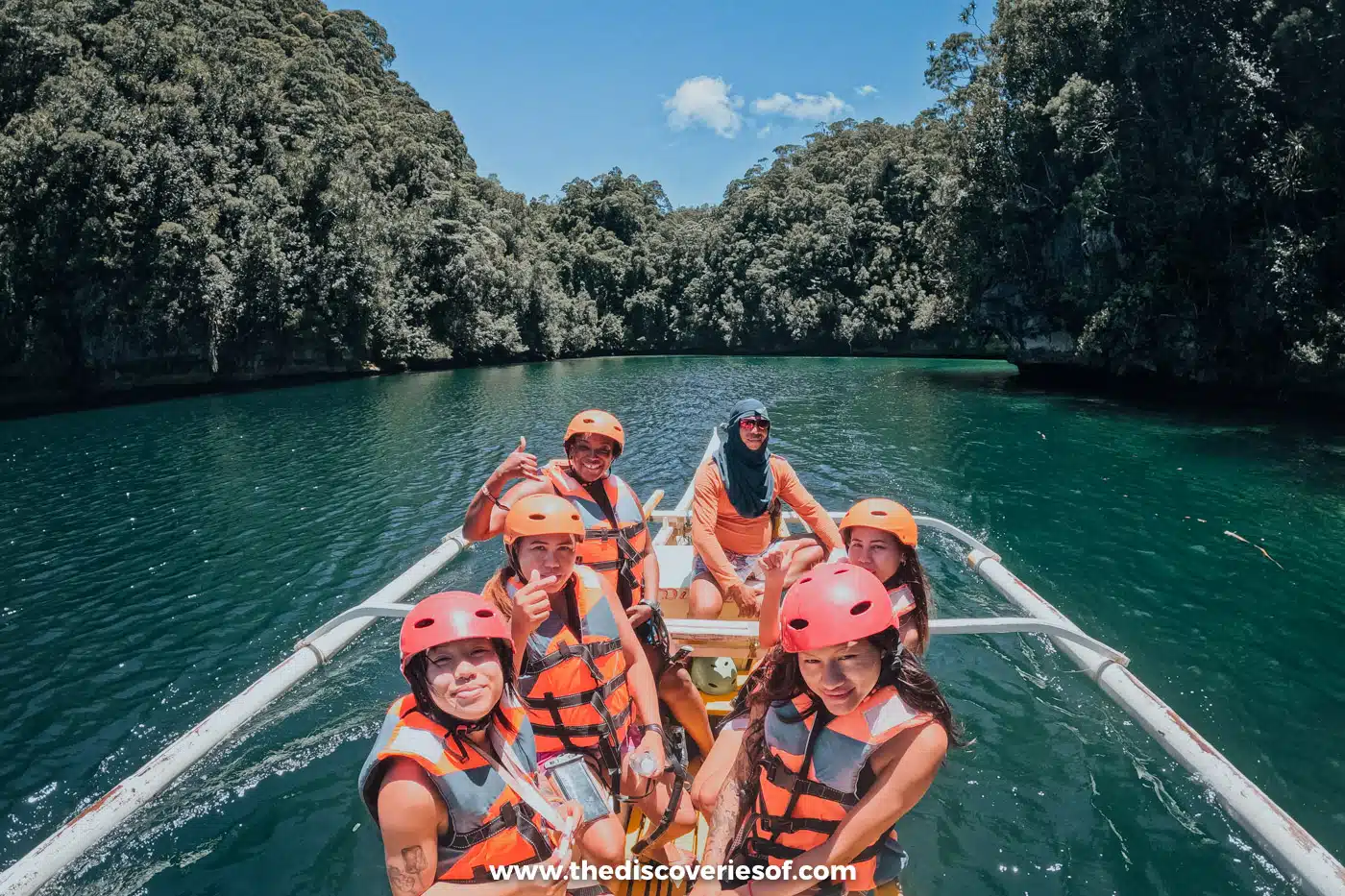
Sohoton Cove is the full-day adventure, and the one that most first-time visitors don’t bother with because it’s a significant commitment. Do not make that mistake.
Sohoton is on Bucas Grande Island. Tours drive you from General Luna to Dapa port (about 35 minutes), then a boat journey of around two hours each way (with a coastguard check-in at Socorro on the way) takes you to a cave and lagoon system of genuine drama: through Hagukan Cave (at low tide only, as the entrance submerges at high tide), past dramatic rock faces and into a series of lagoons of extraordinary colour and stillness.
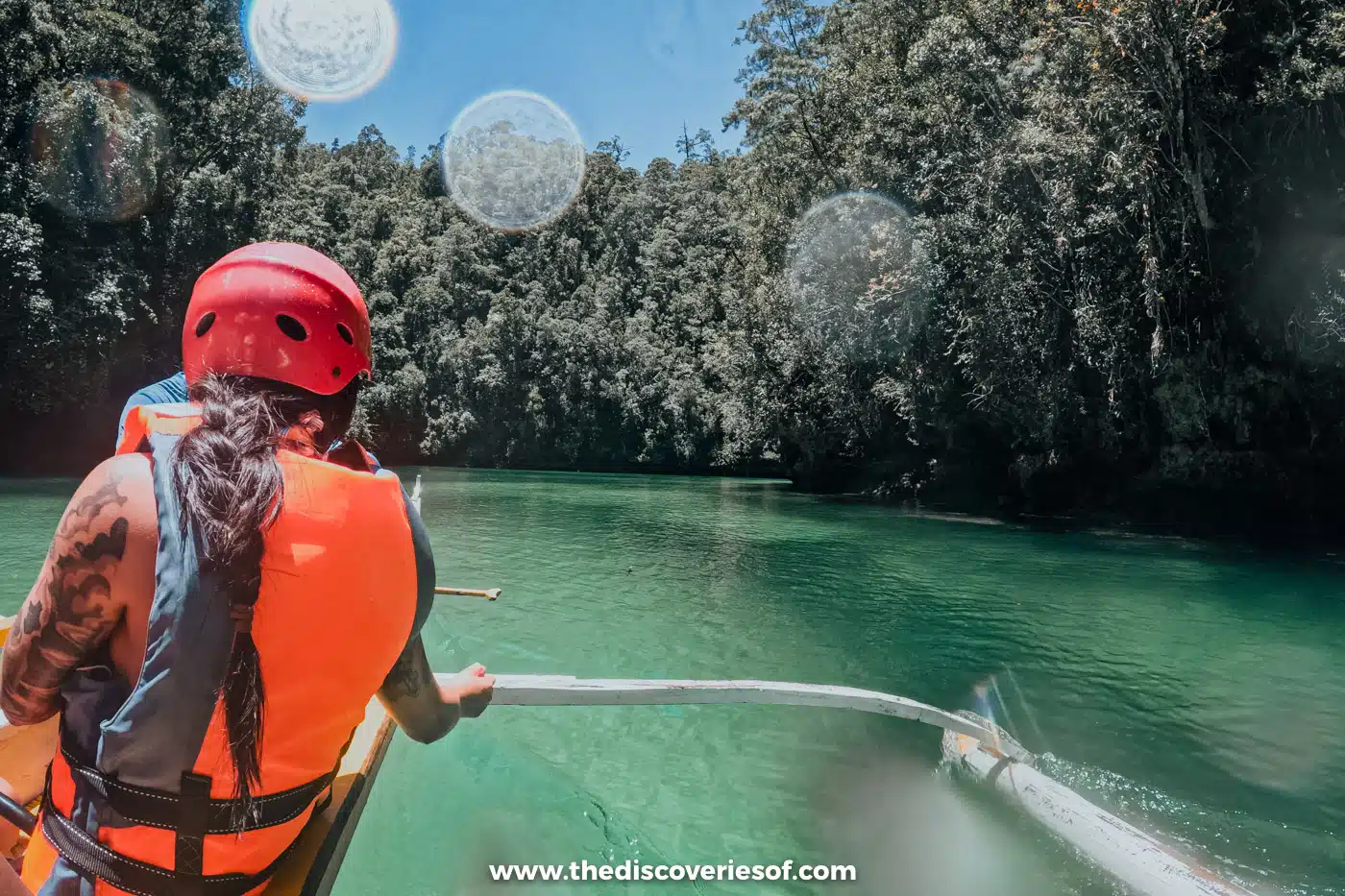
The headline attraction is the stingless jellyfish lagoon: a sheltered, warm body of water in which you can swim freely among thousands of small, translucent jellyfish that have evolved without their sting in this enclosed habitat. It’s an otherworldly experience. These things are genuinely floating around you and on you, and they’re completely harmless. There are only a handful of places in the world where this is possible, and Sohoton is one of the finest. I went in May, right in the middle of jellyfish season.
This was my highlight of the day. The jellyfish (white and translucent, with tiny orange ones among them) were just chilling out in the water, and I spent a happy 10 to 15 minutes swimming around after them.
The rest of the day was just as good. The tour starts at Hagukan, the “snoring cave”, named for the sound the tide makes inside, like an old man snoring. You swim in, and it’s very dark: caves are not my favourite place, but it was really cool to see inside. After the jellyfish came a massive Filipino feast for lunch and a hidden lagoon up a path with a lot of stairs. My one gripe was the crowds’ constant photo-taking. Otherwise, I’d 100% recommend it: it really does feel like you’re on a deserted island, Robinson Crusoe meets water park, and every time you think you’ve had a once-in-a-lifetime moment, you turn a corner and you’re somewhere else amazing.
The jellyfish are fragile, so splashing and touching them is not allowed. A local guide is compulsory, life jackets are mandatory, and the park fees (around ₱800 per person, covering entrance, the environmental fee, a helmet, a life jacket and the on-site guide) are usually included in tour prices, so check before you pay.
Top tip
The jellyfish are most abundant between March and June, and visibility varies with water clarity and conditions; outside that window you may see few or none. The tour is also tide-dependent for the cave entrance, so it’s a day that requires careful planning, and the best operators will organise the timing around the tidal window. The boat ride is long and the open-sea crossing can be rough, so bring a windbreaker, a sun hat, something to listen to, and seasickness tablets if you need them. Expect a slow start (ours was delayed) and a packed minivan to the port: I wasn’t sure my knees would ever recover. Budget around ₱2,700 to ₱3,000 per person for a shared tour from General Luna with lunch and fees (if the park fees aren’t included, they range from about ₱300 to ₱800), or book a Sohoton Cove and jellyfish day trip in advance. My Sohoton Cove guide has the full day, the operators and when to go for the jellyfish.
The cave tour
Siargao’s cave tour takes you through a series of remarkable underground and semi-underground cave pools: crystal-clear freshwater pools inside dramatic cave formations, perfect for swimming in. The combination of the caves themselves and the quality of the water makes for a very different activity from the tidal and lagoon experiences elsewhere on the island, and a great half-day.
The best known is Tayangban Cave Pool near Pilar, about 30 minutes from General Luna by scooter. You wade waist-deep through a narrow cave, using ropes and bamboo ladders in the deeper sections, and come out at an emerald pool where you can swim and jump from ledges of roughly two and five metres. A guide is mandatory, and entry with a guide costs around ₱100.
Kayaking on Maasin River
If you have a day when you want something lower-key than the full land tour, kayaking the Maasin River independently is a lovely option: just turn up, rent a kayak, and paddle at your own pace along the quiet, tree-lined river. The river setting is genuinely beautiful and it’s a good antidote to the busier tour-group spots. Allow a couple of hours and bring snacks.
Pacifico and the north of the island
Most visitors never make it beyond General Luna, but the north-east coast is worth a day on a scooter. The ride to Pacifico, about an hour away, takes you through the island’s coconut country and past small villages, and the beach at the end is long, quiet and free to visit. Pacifico has its own surf breaks and a slower, more local feel than the Cloud 9 strip, and a few surf camps and guesthouses if you want to stay.
Sunset from the Catangnan bridge
The Catangnan bridge near Cloud 9, often called Sunset Bridge, is one of the island’s favourite places to watch the day end, because unlike most of the east-facing coast around General Luna, it looks west over the mangroves. Pull over, find a spot on the railings and watch the sky change colour over the water. It’s free, it takes half an hour, and it’s the easiest way to end a day on the island.
Mama’s Grill
General Luna
If you ask anyone in General Luna where to eat well on a budget, you’ll almost certainly end up at Mama’s Grill on Tourism Road. It’s a no-frills barbecue joint: pork skewers in a sweet and spicy sauce, grilled tuna belly, garlic prawns and grilled aubergine, eaten at shared tables. It’s the kind of place where the evening stretches out pleasantly without you entirely meaning it to: good food, cold drinks, a friendly, low-key atmosphere, and the social hub energy of somewhere that simply works. My firm recommendation for a night out in town. It’s closed on Wednesdays and there’s often a queue, so go early.
Map
Know before you go: practical tips for Siargao
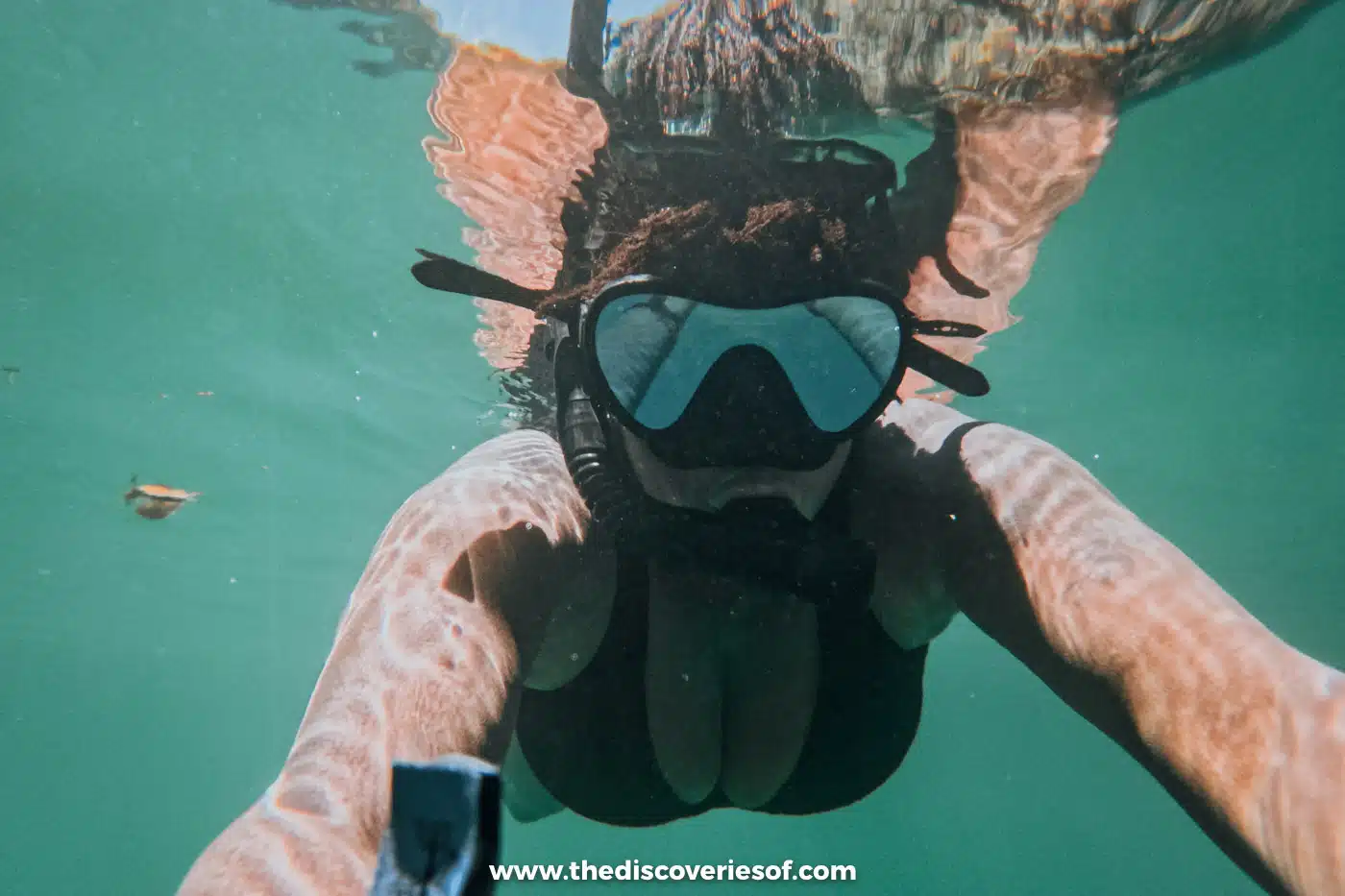
- Bring your own snorkel if you’re planning to do lots of snorkelling. Masks are available to rent, but quality varies and the fees add up over several days.
- Rent a scooter. This is the single best piece of advice for Siargao. The island is spread out and a scooter gives you the freedom to stop wherever you want, reach quieter spots at your own pace, and dodge the van tours. Most rental places in General Luna are inexpensive and easy to find, at around ₱350 to ₱450 a day. Your foreign licence is valid for 90 days after arrival, but it needs to cover motorbikes (an International Driving Permit helps), helmets are compulsory, and police run checkpoints in General Luna and Dapa: riding without a licence can mean a ₱3,000 fine. Check that your travel insurance covers you on a scooter too.
- Tide tables are essential. Magpupungko, the cave entries at Sohoton, and several lagoon activities are tide-dependent. Check the tide chart before booking any activity that involves the rock pools or caves.
- Morning is magic. Cloud 9 at sunrise, Magpupungko before the tour groups arrive, and Sugba Lagoon in the early hours are completely different experiences from the same spots at 2pm. Set your alarm.
- Plan Sohoton as its own day. The boat journey is long and the experience is full-day. Don’t try to combine it with anything else; give it the day it deserves.
- Book the jellyfish lagoon early. The March to June window is peak season for jellyfish numbers, but the tours fill up. Book ahead if your dates fall in this window.
- The bent palm and rope swing at Maasin River are no longer there, so don’t go looking for them if you’ve seen them on older guides or social media.
- Carry cash. Entrance fees, boats, tricycles and most local restaurants are cash only. There are ATMs in General Luna and more reliable ones in Dapa (BDO, Landbank and Metrobank), but they can run out of cash in peak season, and foreign cards pay around ₱150 to ₱250 per withdrawal on top of your own bank’s charges.
- Budget for fees. Visitors arriving at the airport or port pay a small tourism fee, currently ₱100 per person, and almost every sight charges its own entrance or environmental fee, from ₱50 at Magpupungko to about ₱300 to ₱800 in park fees at Sohoton if your tour doesn’t include them.
- General Luna is the main hub and by far the easiest base: most tours, restaurants and accommodation are here or within easy reach.
Where to stay
General Luna is where most people stay, and for a first trip it’s the obvious choice. Tourism Road, which runs from the town towards Cloud 9, is the busiest strip, with most of the restaurants, bars and surf schools; the town itself is a little cheaper and quieter; and Pacifico in the north suits anyone who wants to surf and switch off.
I stayed at Happiness Hostel Siargao on Tourism Road, in a double room with a balcony. Despite the name, it has private rooms as well as dorms, it’s close to the beach, and it’s a short tricycle ride from both Cloud 9 and the centre of General Luna.
Best time to visit Siargao
The drier months run roughly from March to September, with April and August usually the driest, and March to June is also peak jellyfish season at Sohoton. Surf season runs from about August to November, when the Pacific swells arrive; late October and early November is the most reliable window at Cloud 9. November to January is the wettest stretch, with frequent rain and rougher seas that can cancel boat trips.
Typhoons reach Siargao less often than the northern Philippines, but they do happen: Typhoon Odette (Rai) made landfall here in December 2021 and damaged much of the island. If you travel in the second half of the year, keep an eye on PAGASA forecasts and leave some slack in your plans. I visited in May, in the dry, jellyfish-friendly part of the year.
How long to spend
A minimum of 4 to 5 days covers the main highlights comfortably: one day for the land tour, one for island hopping, a day for Sohoton, and a day or two to surf, explore the caves, and simply be on the island at a more relaxed pace. A full week is ideal. I had three nights, which is enough for the three big days if you don’t mind early starts; my 3 days in Siargao itinerary shows how to fit them in.
Getting there
Siargao has its own domestic airport at Sayak (IAO), in Del Carmen. There are no longer direct flights from Manila: in March 2026 the turboprop flights moved out of Manila, so the island is now served from Clark (about two and a half hours), Cebu (under an hour) and Davao (just over an hour), by Cebu Pacific’s Cebgo, PAL Express and Sunlight Air. Routes and frequencies change often, so check the airlines directly. I flew in via Manila, before those flights moved, and left on the 50-minute hop to Cebu, which is still the easiest way to combine Siargao with Moalboal and the rest of the Visayas.
Top tip
If your connection means changing terminals, check how the transfer works before you fly. On my way in, my checked bag went through to the other terminal for my onward flight while I took the shuttle bus between terminals, and with three hours to kill it was fine, but a little research would have made it easier.
From the airport, it’s about 45 minutes to General Luna by van or tricycle. A seat in a shared van costs around ₱300, and a private van ₱2,000 to ₱2,500. Book transfers in advance as the options at the airport are limited.
You can also arrive by sea from Surigao City on mainland Mindanao. Fast craft to Dapa take about an hour and a half and the slower RoRo ferries three and a half to four hours, with fares of roughly ₱350 to ₱680; sailings run from early morning to mid-afternoon. Whichever way you come, international visitors need to register on the Philippines’ eTravel system before arriving in the country.
For more on planning the wider trip, read my Philippines travel tips and Philippines packing list.
Read next
- Philippines itinerary: 3 weeks from Siargao to Coron
- Best places to visit in the Philippines
- The perfect 3-day Siargao itinerary
- Essential Philippines travel tips
- Diving in Raja Ampat
Love this? Save and share on Pinterest
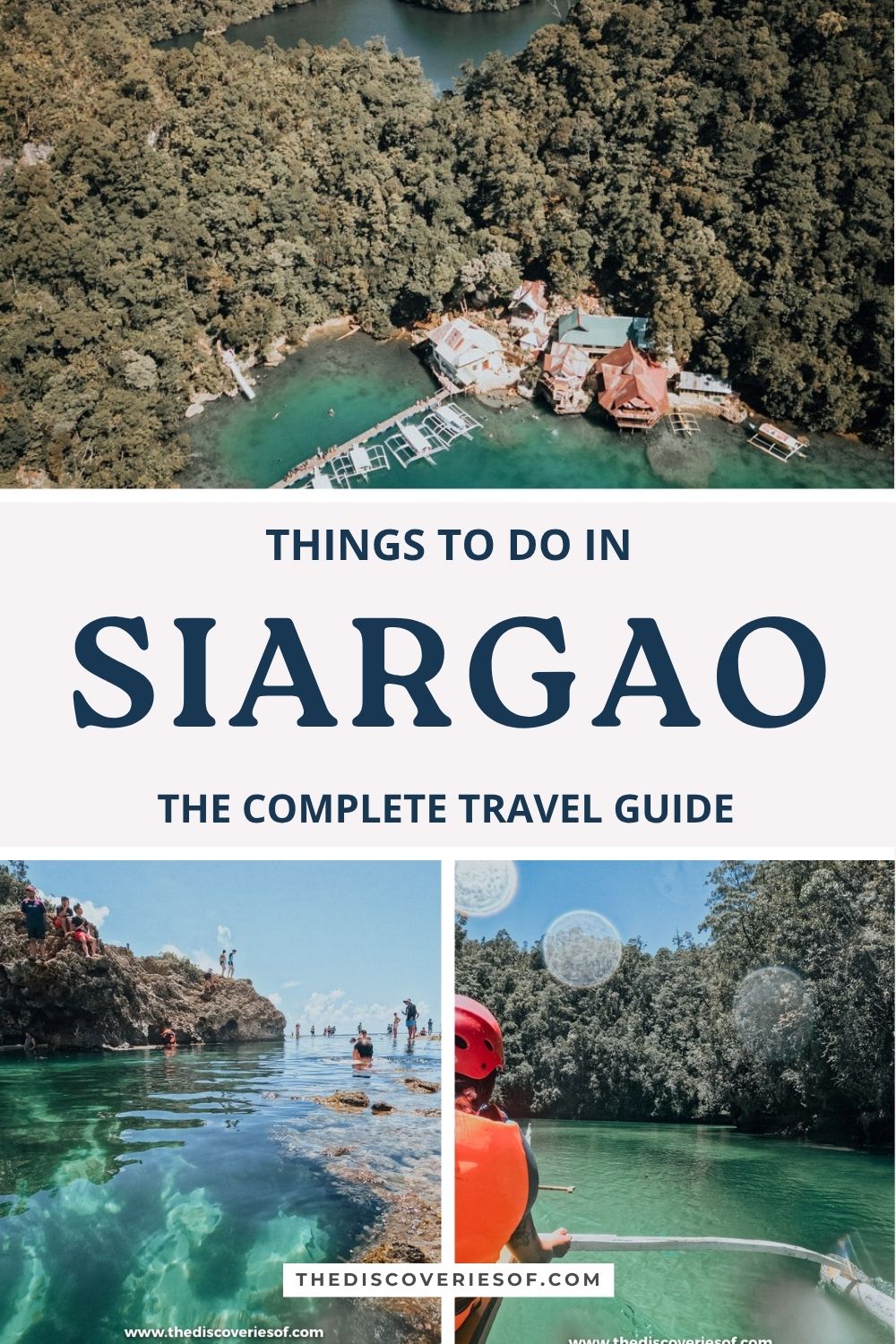

Discover the top things to do, insider tips and hidden gems in our Philippines Travel Guides.
Read the guides →




