Garlic rice so good I now make it at home, a sizzling plate of sisig that marked my first proper Filipino meal, and a fast-food breakfast of fried chicken with a side of sweet spaghetti. What should you eat in the Philippines, what’s actually in each dish, and where will you find it for under ₱150? These are the Filipino dishes I ate and loved on three weeks across the islands, plus the ones I’m saving for next time.
Filipino food is one of the most underrated cuisines in Asia. It’s a mix of Malay, Spanish, Chinese and American influences, built around rice, vinegar, garlic, calamansi and incredibly fresh seafood, and it’s best shared: order lots of dishes and pass them around.
I ate my way from Siargao to Coron over three weeks, at local restaurants, on beaches during island-hopping tours and on a three-day boat expedition. This guide covers the dishes I tried, what’s in them, where to find them and what they cost, followed by the classics I haven’t got to yet and some tips for eating in the Philippines.
Some links in this article may be affiliate links, which means we may receive a small commission, at no additional cost to you, if you decide to purchase through one of my recommended partners.
Filipino food at a glance
- Staples: rice with almost everything, plus vinegar, garlic, soy, calamansi and fish sauce.
- Where to eat: carinderias (local canteens, also called turo-turo, or “point-point”, as you point at what you want), seafood restaurants, and the lunches on island-hopping tours.
- What it costs: about ₱75 to ₱150 for rice and a dish at a carinderia, and around ₱250 at an inexpensive restaurant.
- How to eat: with a spoon and fork, or by hand at a kamayan or boodle fight.
The Filipino dishes I tried
1. Garlic rice (sinangag)
Sinangag is rice fried with lots of garlic, usually made from the day before’s rice, and it’s on breakfast menus everywhere, often as part of a silog: garlic rice and a fried egg (itlog) with a meat, such as tapa (cured beef) in tapsilog or longganisa (sweet sausage) in longsilog. Order it with any meal in place of plain rice.
I’m obsessed with Filipino garlic rice. I have to be honest: I’ve started making it at home.
2. Kare-kare
Kare-kare is a rich stew in a peanut sauce, traditionally made with oxtail and tripe, though pork belly is common, coloured with annatto and thickened with toasted ground rice. It comes with aubergine, banana blossom and string beans, and a side of bagoong, a salty fermented shrimp paste you add to taste.
I had it with garlic rice at El Kuvo in Coron, on my last night in the Philippines, with pork belly in a rich peanut sauce. It came to about ₱450 for a huge plate and the rice. My Coron travel guide has more places to eat.
3. Sisig
Sisig is chopped pork, traditionally from the pig’s ears and cheeks, cooked with onion, chilli and calamansi and served sizzling on a hot iron plate, sometimes with an egg cracked on top. Its modern form comes from Angeles in Pampanga, where Aling Lucing popularised it in the 1970s, and it’s now on bar and restaurant menus across the country.
My first proper Filipino meal of the trip was at Lola Tanciang’s in Moalboal, sharing lots of seafood dishes and a really good pork sisig with people from my dive. My Moalboal travel guide has the details.
4. Adobo
Adobo is more a method than a single dish: meat, usually chicken or pork, braised in vinegar with garlic, black pepper and bay leaves, usually with soy sauce. Every family has its own version, and there are regional twists, such as adobo sa gata with coconut milk. It’s on almost every carinderia counter, for about ₱60 to ₱80 a plate.
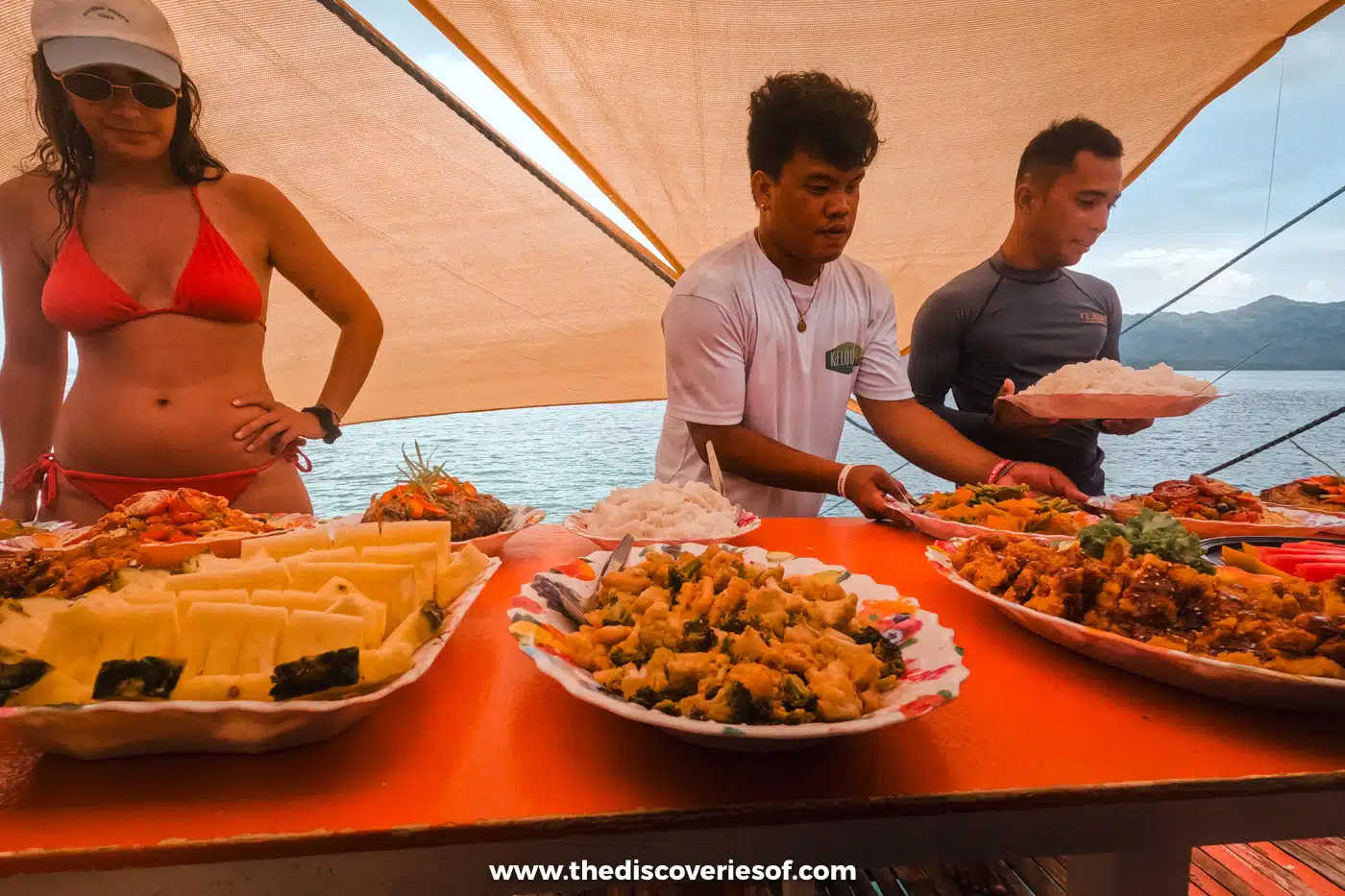
I had it on the Keelooma expedition from El Nido to Coron, where the crew cooked it on board, alongside grilled pork, chicken and tuna.
5. Pancit
Pancit is the Filipino word for noodles, from the Hokkien, and it comes in dozens of styles: pancit canton with thick egg noodles, pancit bihon with thin rice noodles, and pancit palabok with a shrimp sauce. Long noodles stand for long life, so pancit is served at every birthday.
Pancit canton was on the menu on the Keelooma boat too, stir-fried with vegetables. My Keelooma expedition review covers the food on board.
6. Grilled seafood
Inihaw (grilled) fish and seafood is one of the great pleasures of eating in the Philippines, and most island-hopping tours include a beach lunch of it, grilled by the crew. In Cebu, look for sutukil restaurants, where you choose your fish and have it grilled (sugba), cooked in a soup (tula) or served raw (kilaw).
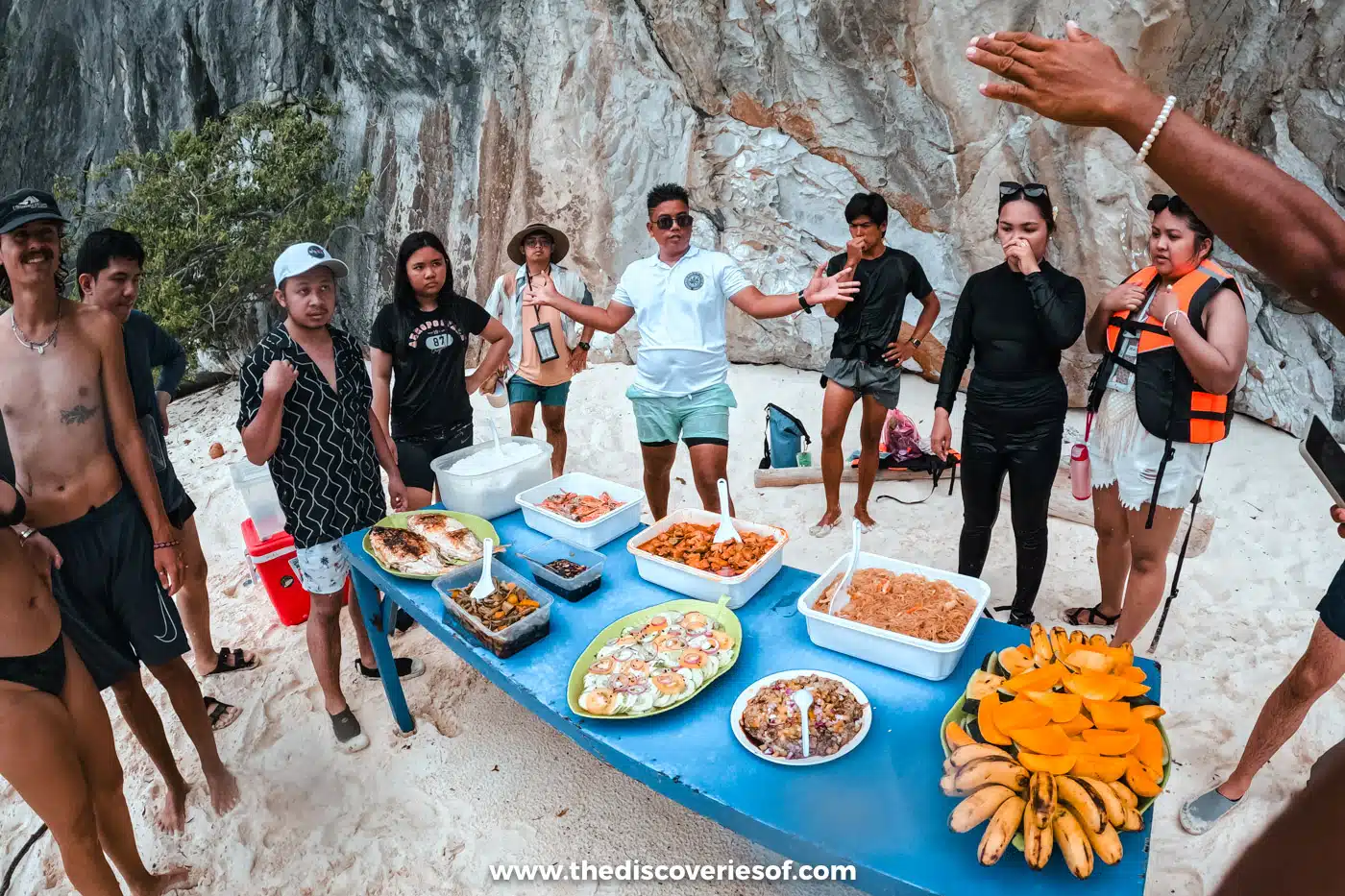
On my island-hopping tour in Coron, we waded ashore to a tiny cove surrounded by dramatic rocks and ate freshly barbecued fish, crab, chop suey and rice. The fish was so good.
7. Tuna belly
Tuna belly is a speciality of the Visayas and Mindanao, served grilled, or boiled in a soy and spring onion broth, as at Tan-aw restaurant in Moalboal. It’s one of the best ways to try the local seafood.
My favourite meal in Moalboal was boiled tuna belly at Tan-aw, with a soy and spring onion sauce and a side salad with calamansi. It was so fresh, and so good.
8. Filipino vegetable dishes
Many Filipino meals come with a vegetable dish, such as pinakbet, vegetables stewed with shrimp paste, or ginataang kalabasa, squash in coconut milk. They’re served at carinderias and on tour lunches.
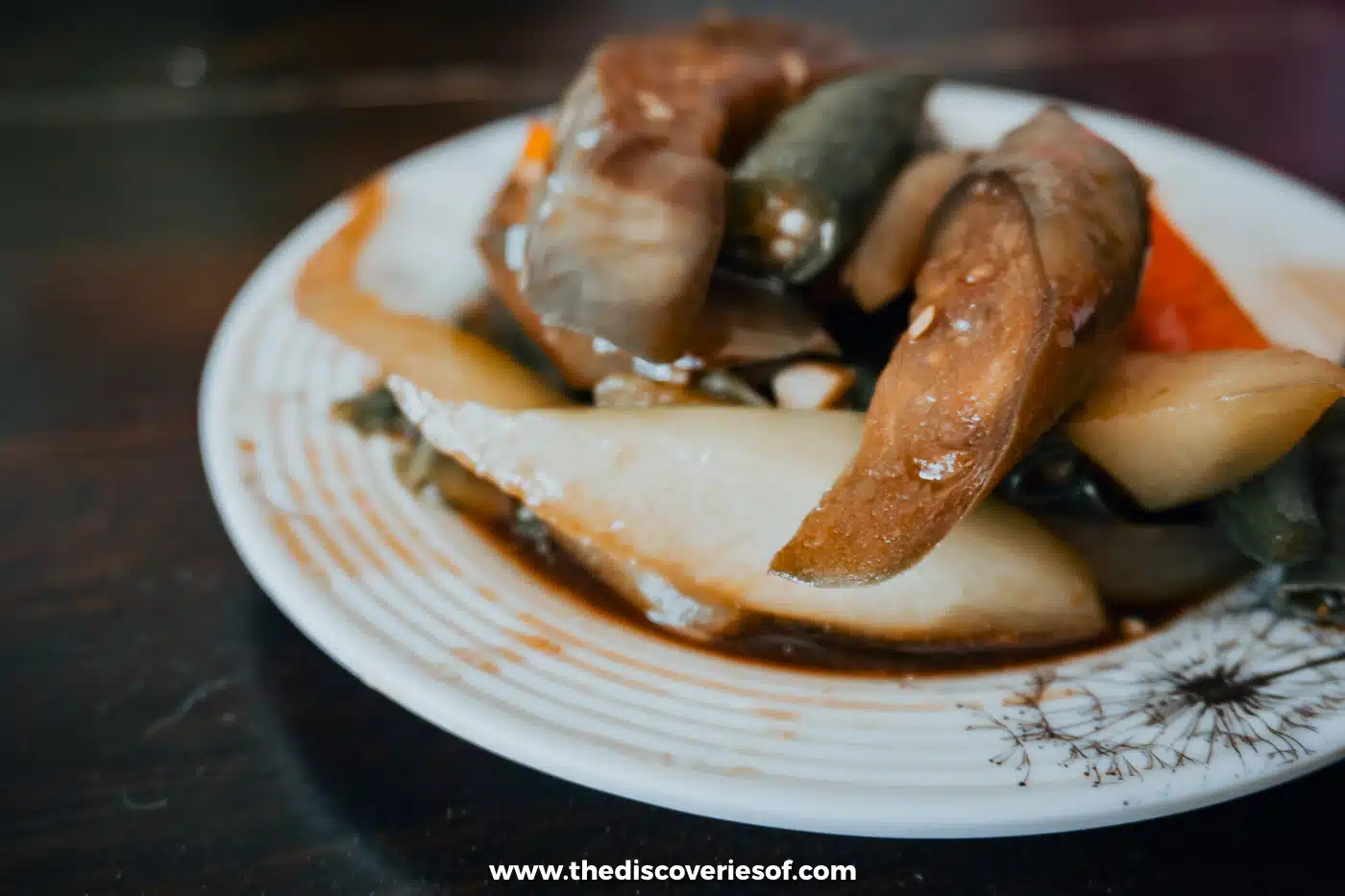
On my Siargao land tour, lunch was a plate of stewed vegetables with aubergine, squash and chilli. After a super active morning, it hit the spot. My Siargao land tour guide has the stops.
9. Filipino feasts
A boodle fight is a Filipino feast laid out on banana leaves and eaten by hand, a tradition borrowed from the military, and it’s often served on tours. Kamayan, eating with your hands, is the Filipino term for the same style of meal.
The lunch on my Sohoton Cove tour from Siargao was a massive Filipino feast, and it was so good.
10. Mangoes
Philippine carabao mangoes are famously sweet, and they’re everywhere: sliced after lunch on every island-hopping tour, in shakes, in desserts and dried for the journey home.
If you are a mango person, wait until you get here: the mangoes in the Philippines are incredible.
11. Calamansi
Calamansi is a small, sour citrus fruit, somewhere between a lime and a mandarin, and it’s squeezed over everything, from noodles to grilled fish, or mixed with soy sauce as a dip (toyomansi). Try calamansi juice, and look for it in cocktails.
On Siargao, I tried a calamansi paloma and a smoky, tangy penicillin made with whiskey and calamansi. In Coron, I had the mango margarita at El Kuvo, which was dangerously good.
12. Jollibee
Jollibee is the Philippines’ own fast-food chain, founded in 1978, and you’ll find a branch in almost every town and airport. The thing to order is Chickenjoy, crispy fried chicken served with rice and gravy, alongside Jolly Spaghetti, a sweet tomato sauce with hot dog. A Chickenjoy meal with rice and a drink costs from about ₱110.
I’d wanted to try Jollibee all trip, and finally did at Cebu airport, for breakfast: fried chicken, spaghetti, rice and fries. The chicken was spicy and perfectly cooked, and Jollibee is an absolute win. I’m skipping the spaghetti next time, though. It’s not for me.
Dishes I haven’t tried yet
These are the classics I’m saving for my next trip:
- Lechon: whole roast pig, at its most famous in Cebu, where it’s stuffed with lemongrass and garlic and served without a sauce. Carcar and Talisay, south of Cebu City, are the places to buy it by the kilo, for about ₱400 to ₱500.
- Kinilaw: the Filipino version of ceviche, raw fish cured in vinegar and calamansi with ginger, onion and chilli.
- Sinigang: a sour soup, usually soured with tamarind, with pork, prawns or fish and vegetables.
- Halo-halo: shaved ice with evaporated milk, sweet beans, fruit, ube (purple yam) and leche flan.
- Lumpia: spring rolls, fried (lumpiang shanghai) or fresh (lumpiang sariwa).
Tips for eating in the Philippines
- Share. Filipino meals are built for sharing, so order several dishes for the table.
- Eat at carinderias for the cheapest, most local food: point at what looks good.
- Don’t drink the tap water. Stick to bottled or filtered water.
- Tipping: about 10% is appreciated in restaurants that don’t add a service charge.
- Vegetarians: it isn’t easy, as shrimp paste and fish sauce are in a lot of dishes, but look for pinakbet without meat, ginataang kalabasa, lumpiang sariwa and munggo (mung bean stew).
- Useful words: masarap means delicious, kain tayo means let’s eat, and maanghang ba ito? means is it spicy?
Read next
- Philippines travel tips
- The perfect 3-week Philippines itinerary
- Moalboal travel guide
- Coron travel guide
- How much does a trip to the Philippines cost?
- Is the Philippines worth visiting? My honest verdict
Love this? Save and share on Pinterest

Discover the top things to do, insider tips and hidden gems in our Philippines Travel Guides.
Read the guides →