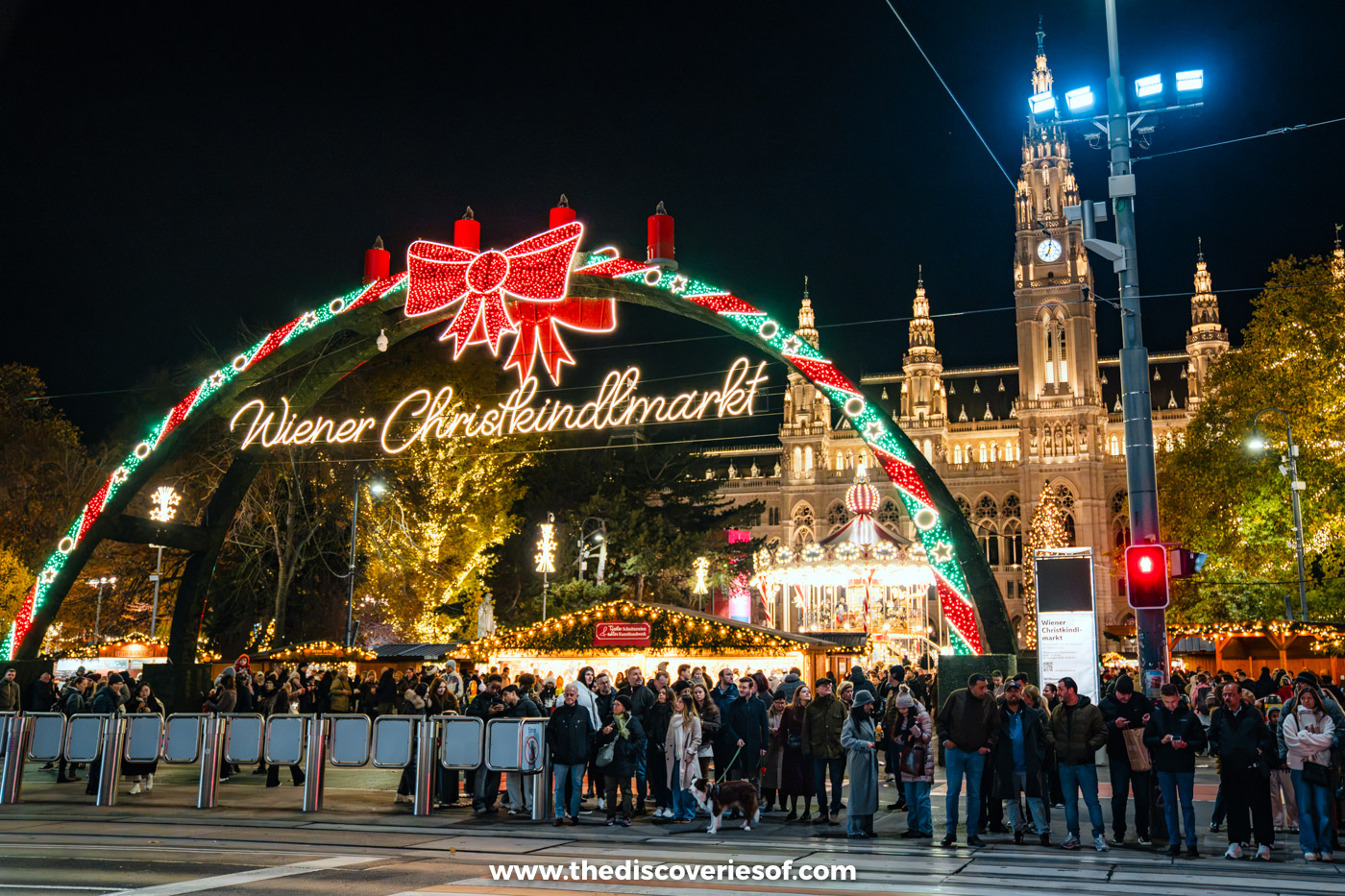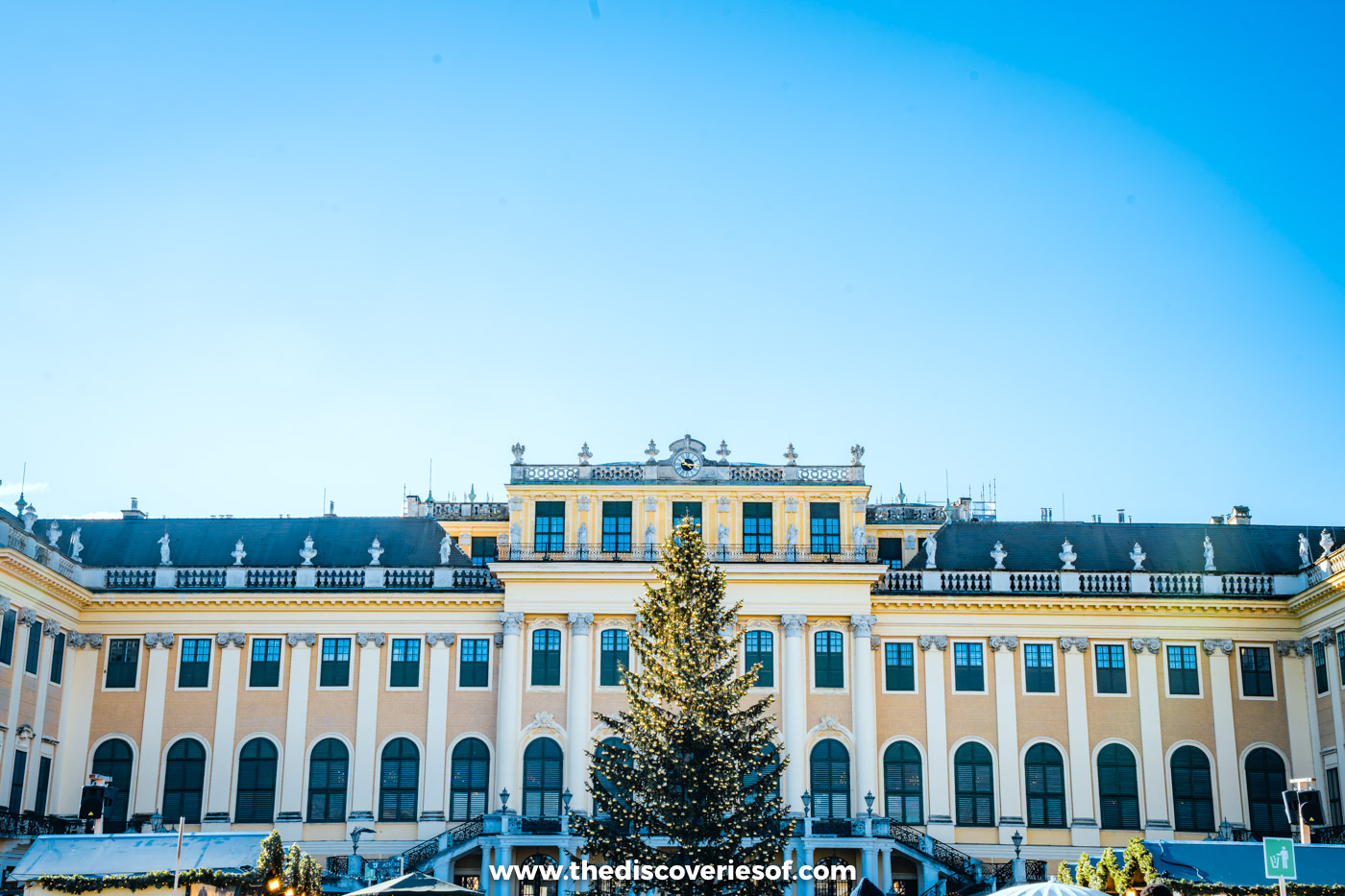

Schönbrunn Palace is where Maria Theresa ran an empire while raising 16 children, where a six-year-old Mozart played for the empress and where six centuries of Habsburg rule came to an end. Here’s how to plan a visit, from the timed tickets and the rooms worth slowing down for to the gardens, the Gloriette and the Christmas market that fills the forecourt each winter.
I visited on a Saturday morning in November, on the first palace slot of the day. It had rained hard overnight, the cobbled forecourt was almost empty and the market huts were still shuttered when I arrived.
By the time I came back out, the sun had broken through, the stalls were open and the crowds were building. It was worth the early start, for sure.
Why Schönbrunn Palace is worth the trip out
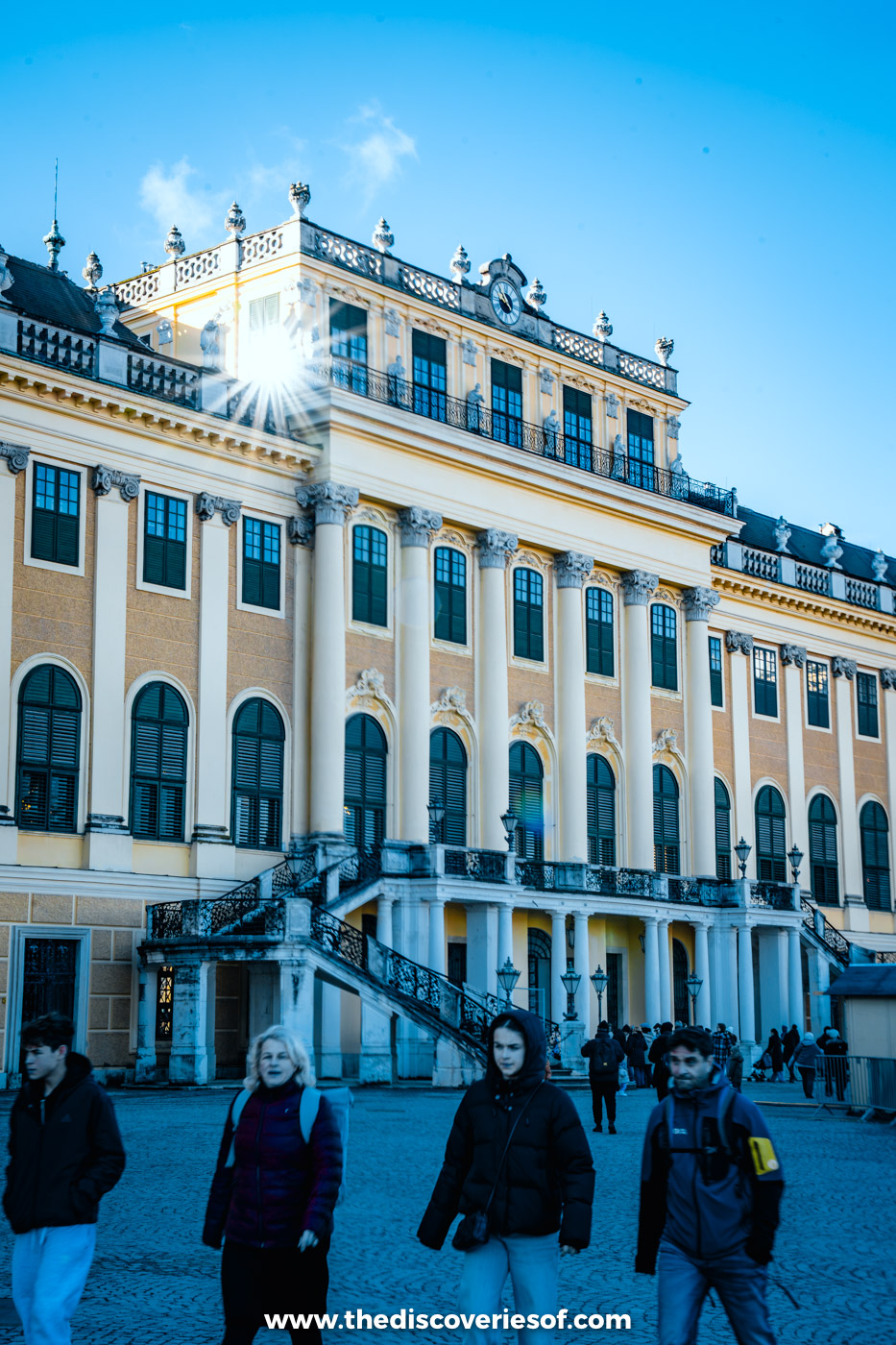
This was the Habsburgs’ summer residence, and it’s vast: 1,441 rooms, 45 of them open to visitors. The palace and its gardens are a UNESCO World Heritage Site together.
What makes it worth the half-hour trip from central Vienna is how different every room is. One is panelled in black and gold lacquer, another is hung with chinoiserie, and then you step into a ballroom more than 40 metres long.
Then there are the stories: Mozart, Napoleon, Kennedy and Khrushchev all have walk-on parts here. Add free gardens, one of the best views over the city from the Gloriette, and a Christmas market from November, and it easily fills a morning.
From hunting lodge to the end of an empire
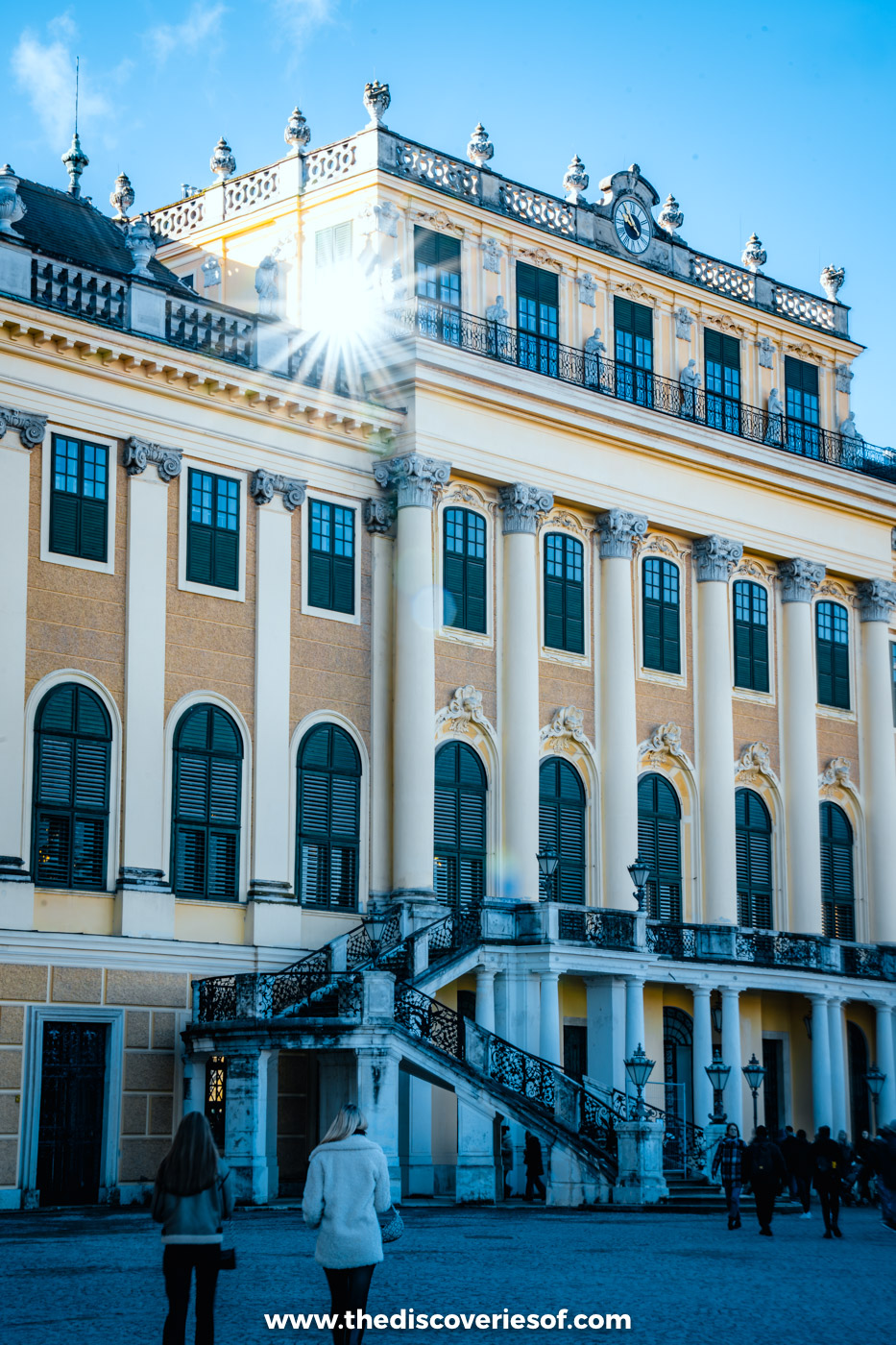
The Habsburgs took over the estate in 1569. Legend says Emperor Matthias named it after a “schöner Brunnen”, a beautiful spring, that he found while out hunting in 1612.
The first château here was destroyed in the Ottoman siege of 1683. Leopold I then turned to the architect Johann Bernhard Fischer von Erlach to design a new residence for his heir.
The palace you see today is largely Maria Theresa’s. From 1743 she remodelled it with her architect Nikolaus Pacassi and made it the centre of court life, governing the empire from here while bringing up 16 children.
In 1762, the six-year-old Mozart performed for her in the Hall of Mirrors. Legend has it he also promised to marry one of her daughters, the young Marie Antoinette (who knows how differently her life might have turned out).
Napoleon made Schönbrunn his headquarters twice, in 1805 and 1809. Emperor Franz Joseph was born here in 1830 and died here in 1916, aged 86, after 68 years on the throne.
Two years later, on 11 November 1918, his successor Karl I renounced any part in government in the Blue Chinese Salon. The republic was proclaimed the next day, and more than six centuries of Habsburg rule were over.
How the timed tickets work, and which one to book
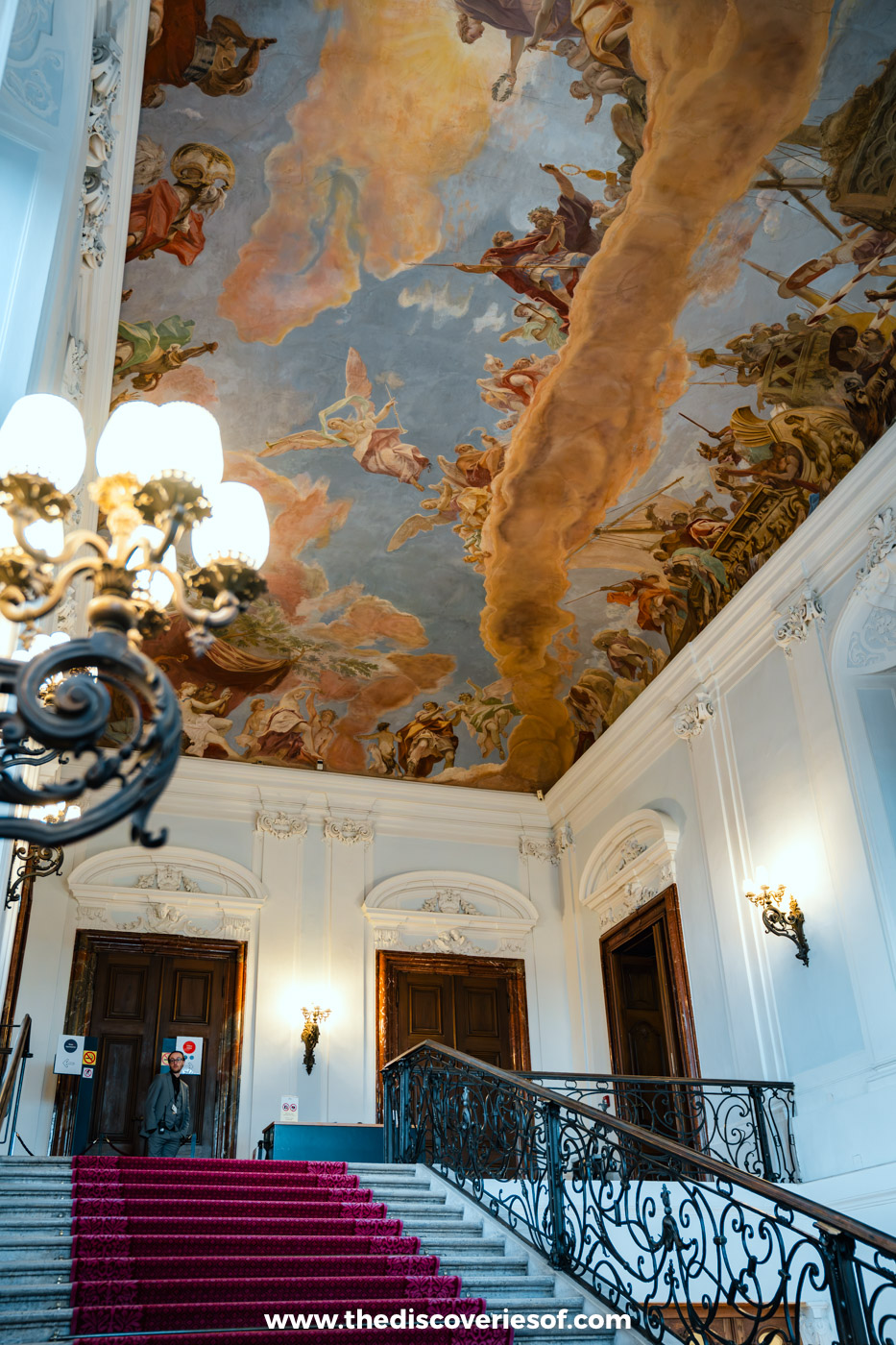
The gardens are free, but you need a ticket for the palace rooms, and every ticket comes with an entry time. They’re very strict on timings: if you miss your slot, you can lose it.
The easiest thing is to book in advance on the official Schönbrunn ticket page, which takes a couple of minutes, and to arrive a little early. These are the main options for adults:
- Palace Ticket (€42, children €30): the whole piano nobile, the main floor, with an audio guide, in about 75 minutes. It covers Franz Joseph and Elisabeth’s apartments, the state rooms and Maria Theresa’s rococo rooms. It used to be called the Grand Tour, it’s the one I booked, and it’s the one I’d choose.
- State Apartments (€30): a shorter selection of rooms in about 40 minutes (the old Imperial Tour). Fine if you’re short of time, but you’ll miss a lot.
- Guided Tour Maria Theresia (€44): a 75-minute guided tour that adds the ground-floor summer rooms painted with exotic landscapes by Johann Wenzel Bergl. English tours run daily at 10am, 12pm and 3pm until 6 January, then at 10.30am, 12.30pm and 3.15pm.
- Winter Pass (€73, 3 November to 31 March): the Palace Ticket plus the zoo, the Palm House and the Desert Experience House.
- Sisi Pass (€69): the Palace Ticket plus the Sisi Museum in the Hofburg and the Furniture Museum, valid for a year.
I booked the Sisi Museum separately for later in the trip. It’s much, much smaller than Schönbrunn, so if you plan to see both, price up the pass first.
The palace opens daily at 8.30am and closes at 5pm from November to March (5.30pm on some December dates and over Christmas), and at 6pm in July and August. Last entry is 45 minutes before closing.
Do
If you’d rather have someone bring the rooms to life, this skip-the-line guided tour of the palace and gardens handles the booking and the timings for you.
Inside the palace: the rooms to look out for
On the early slot I could take my time in each room and really appreciate the differences in decor, and that’s what I’d recommend. Here are the ones not to rush.
Franz Joseph and Elisabeth’s apartments
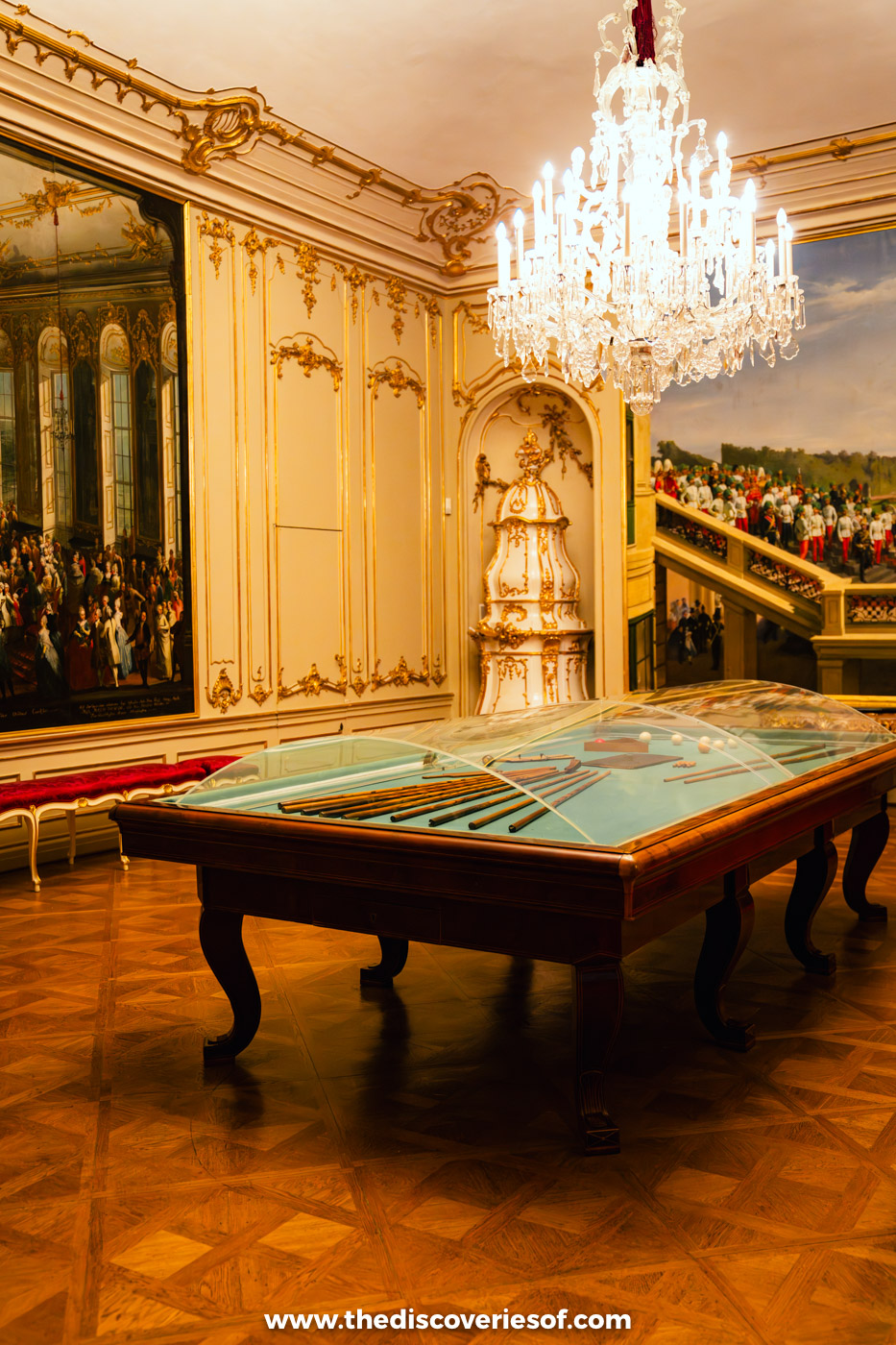
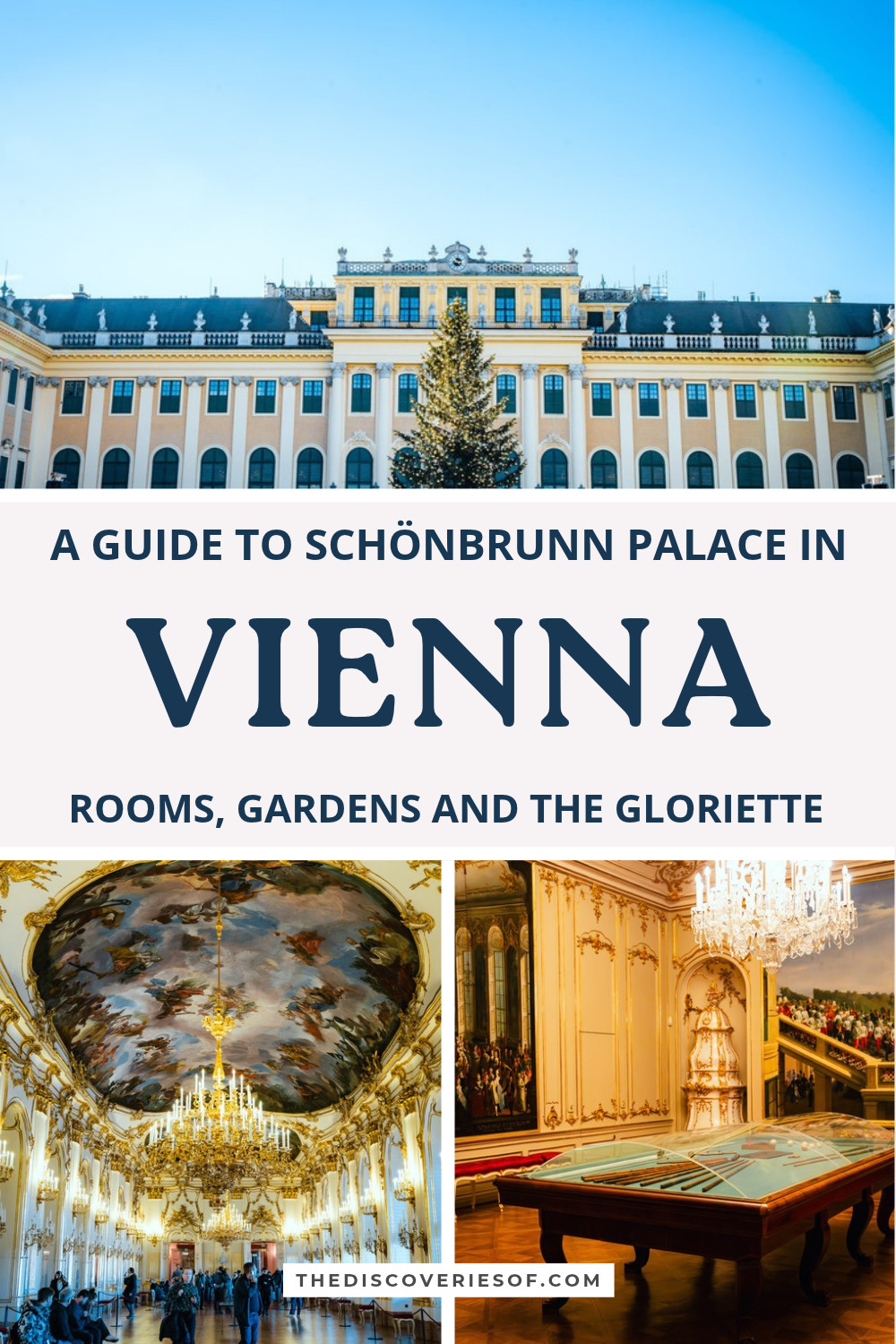
The route begins in the emperor’s rooms, which are surprisingly modest for an emperor. Officers waiting for an audience with Franz Joseph passed the time in the Billiard Room, where his grandfather’s table still stands.
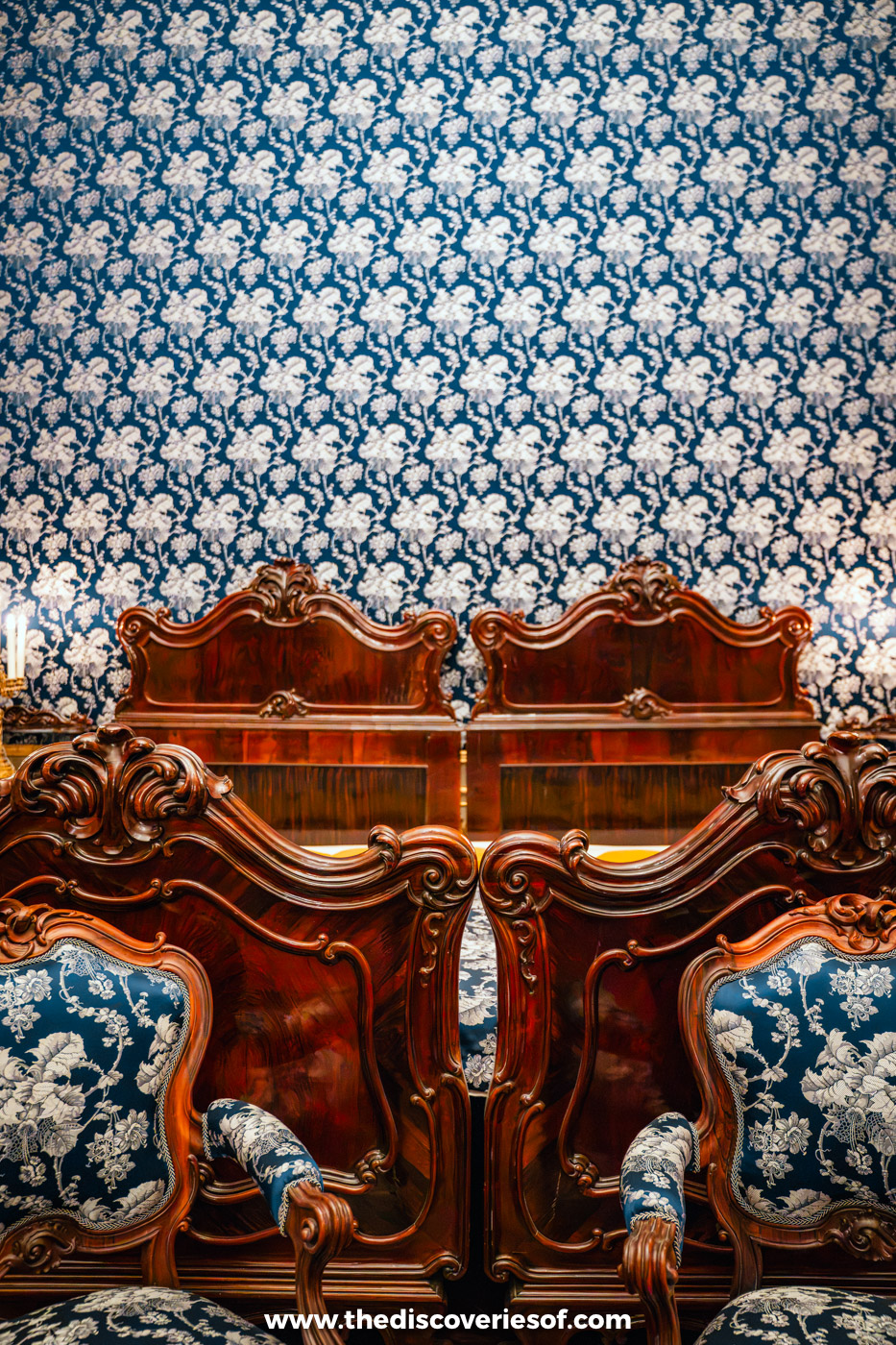
Further on are his study, the bed he died in and the bedroom furnished for his wedding to Elisabeth in 1854. Its twin carved beds sit against walls of blue and white florals.
The Hall of Mirrors, where Mozart played aged six
Under Maria Theresa, this white and gold room hosted family celebrations and small concerts. In 1762, the six-year-old Mozart played a concert here for the empress, and his father wrote that the boy leapt onto her lap and threw his arms around her neck.
Of all the rooms built for such specific purposes, it’s the one I’d make sure not to hurry through.
The Great Gallery and its 70-candle chandeliers
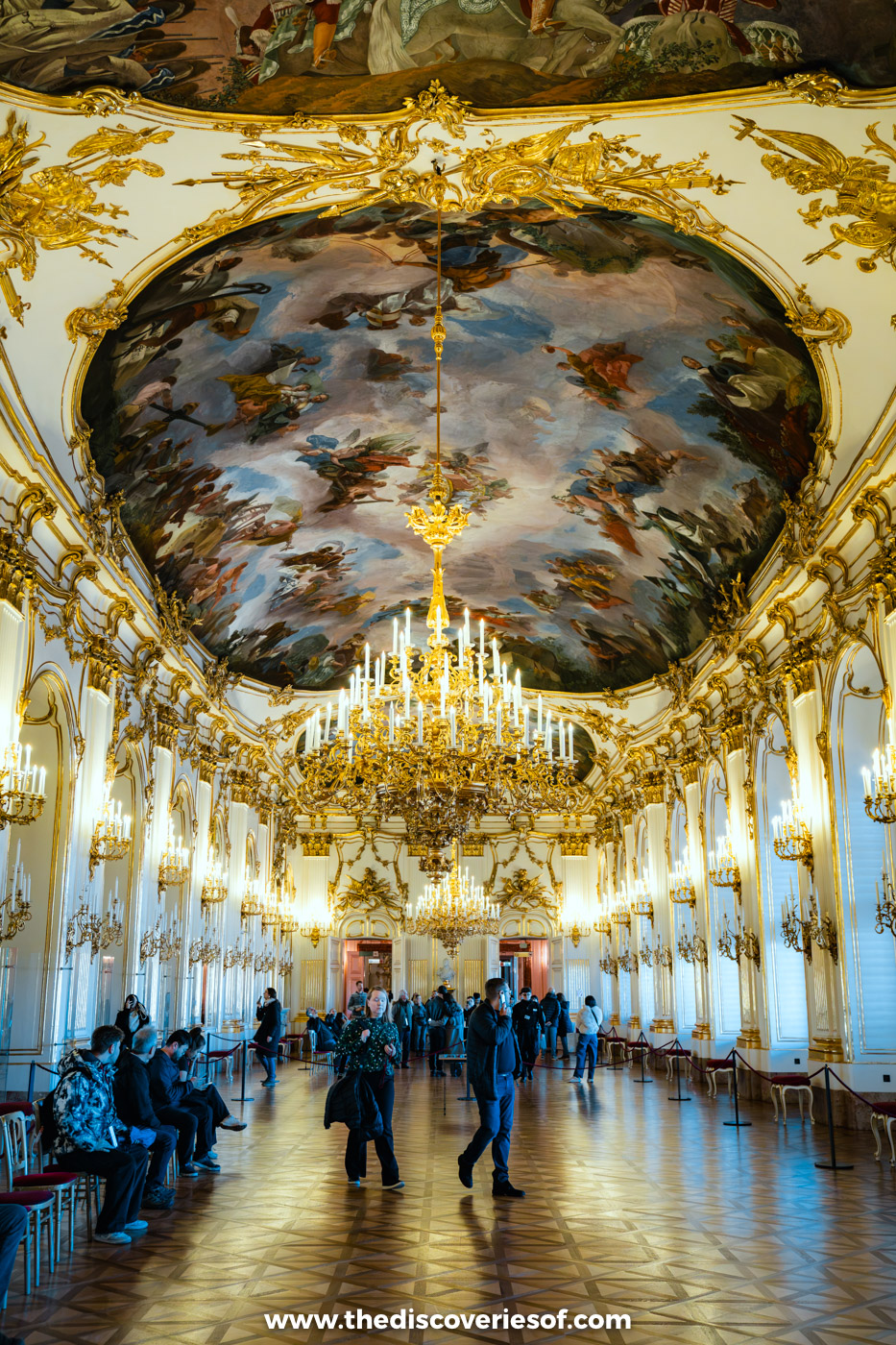
After a run of bedrooms and studies, you walk into the Great Gallery and, wow, it’s just huge.
It’s more than 40 metres long, with Gregorio Guglielmi’s ceiling frescoes glorifying Maria Theresa’s reign. Each of its chandeliers took 70 candles until the palace was electrified in 1901.
The court held its balls and banquets here, and in 1961 it was the setting for the meeting between John F. Kennedy and Nikita Khrushchev. I could just imagine sweeping in for an evening’s dancing in an enormous gown.
Don’t
Don’t bring a selfie stick or tripod, and keep your flash off. Photos for personal use are allowed in the state rooms, but all three of those are banned.
The Vieux-Laque Room, Maria Theresa’s black and gold memorial
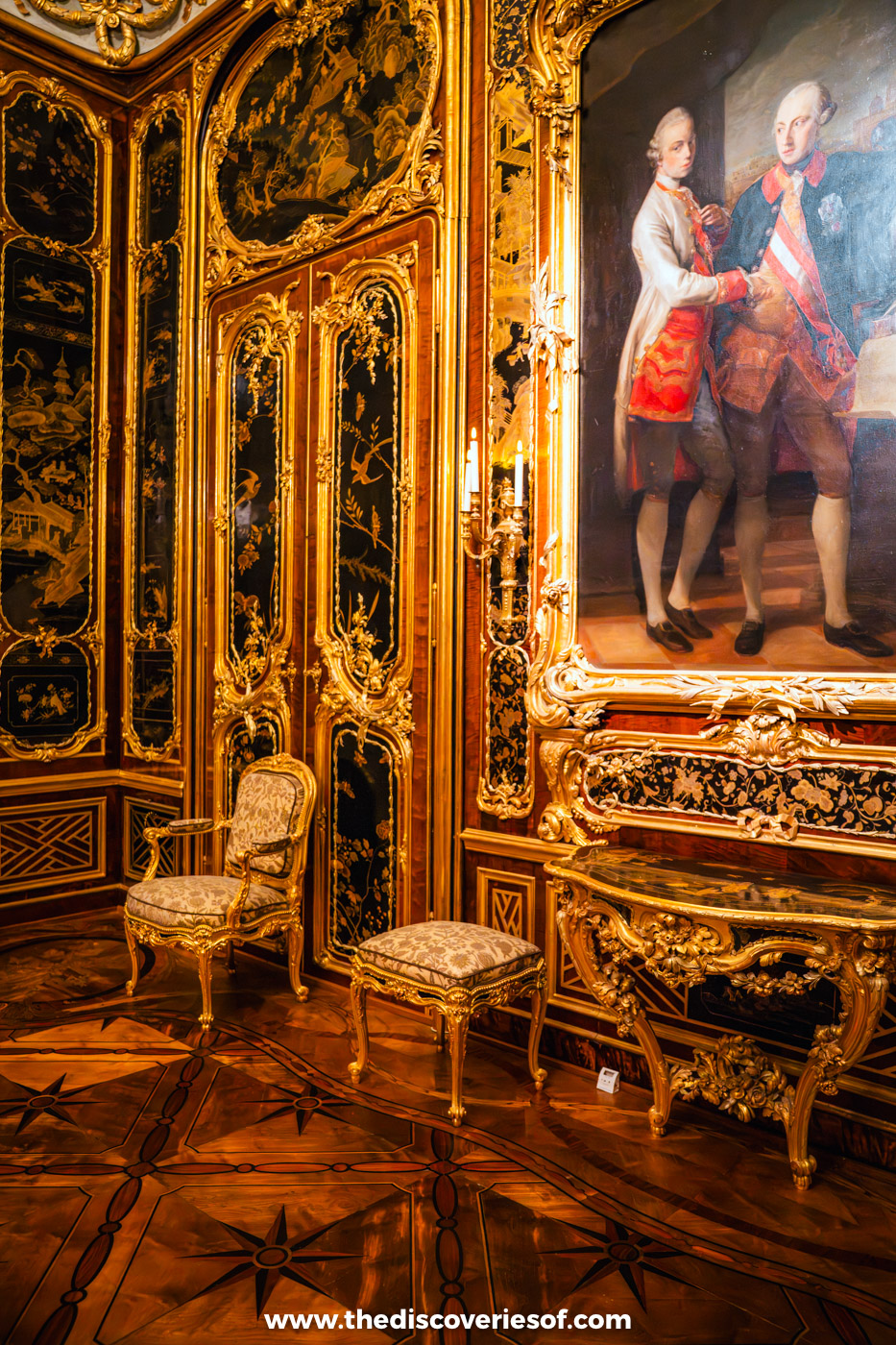
Some rooms are decorated almost entirely in black, others in full chinoiserie, and this one is both. Black lacquer panels from Beijing are set into walnut and framed in gold.
Maria Theresa remodelled it as a memorial to her husband, Franz Stephan, after he died in 1765, and wore mourning for the rest of her life. Look for Pompeo Batoni’s portrait of him and the double portrait of their sons, Joseph II and Leopold, painted in Rome in 1769.
The Rich Room and the last imperial state bed
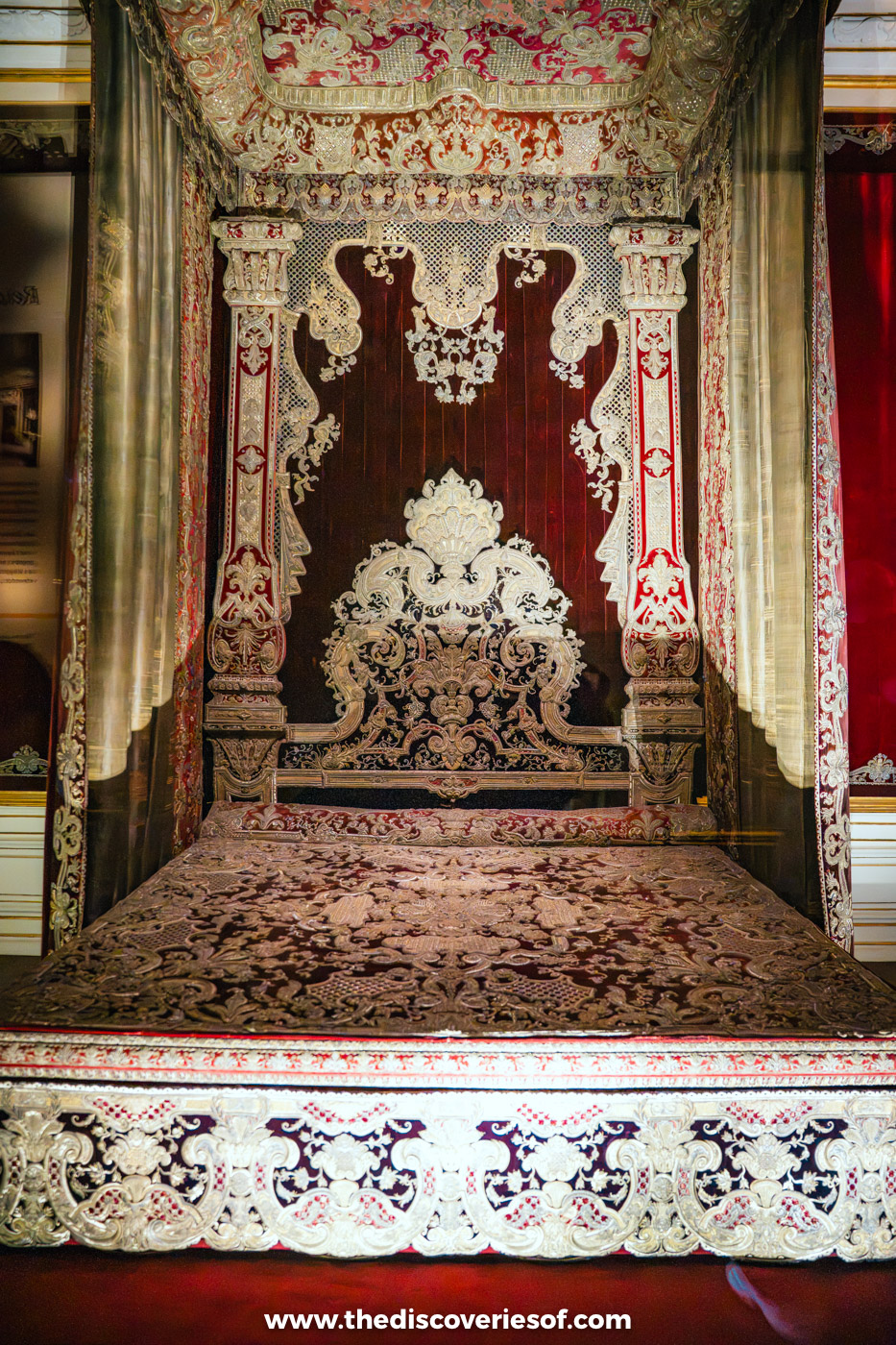
Near the end of the route, the Rich Room holds the only state bed to survive from the Viennese court. It was made for Maria Theresa’s wedding in red velvet, heavy with gold and silver embroidery, and it’s now displayed behind glass.
The gardens, the Neptune Fountain and the Gloriette
The palace park is free and opens at 6.30am every day. It closes at 5.30pm from November to February and as late as 9pm from May to August, and it has been open to the public since 1779.
Behind the palace, the Great Parterre is laid out in neat box-hedge patterns and lined with mythological statues from Johann Wilhelm Beyer’s workshop. It leads you straight towards the hill.
Top Tip
The fountains are switched off from mid-October to mid-April, and the Privy Garden, Orangery Garden, maze and Gloriette roof terrace close from early November to the end of March. For the gardens at their best, come between April and October.
The Neptune Fountain
At the foot of the hill, the Neptune Fountain was finished around 1780, shortly before Maria Theresa died. Wilhelm Beyer carved the sea god in a shell-shaped chariot, with the sea goddess Thetis kneeling to ask him for a safe voyage for her son Achilles on his way to Troy.
In season, the water runs from 10am to 4pm. It’s the natural place to pause before the climb.
Climb to the Gloriette for the view over the city
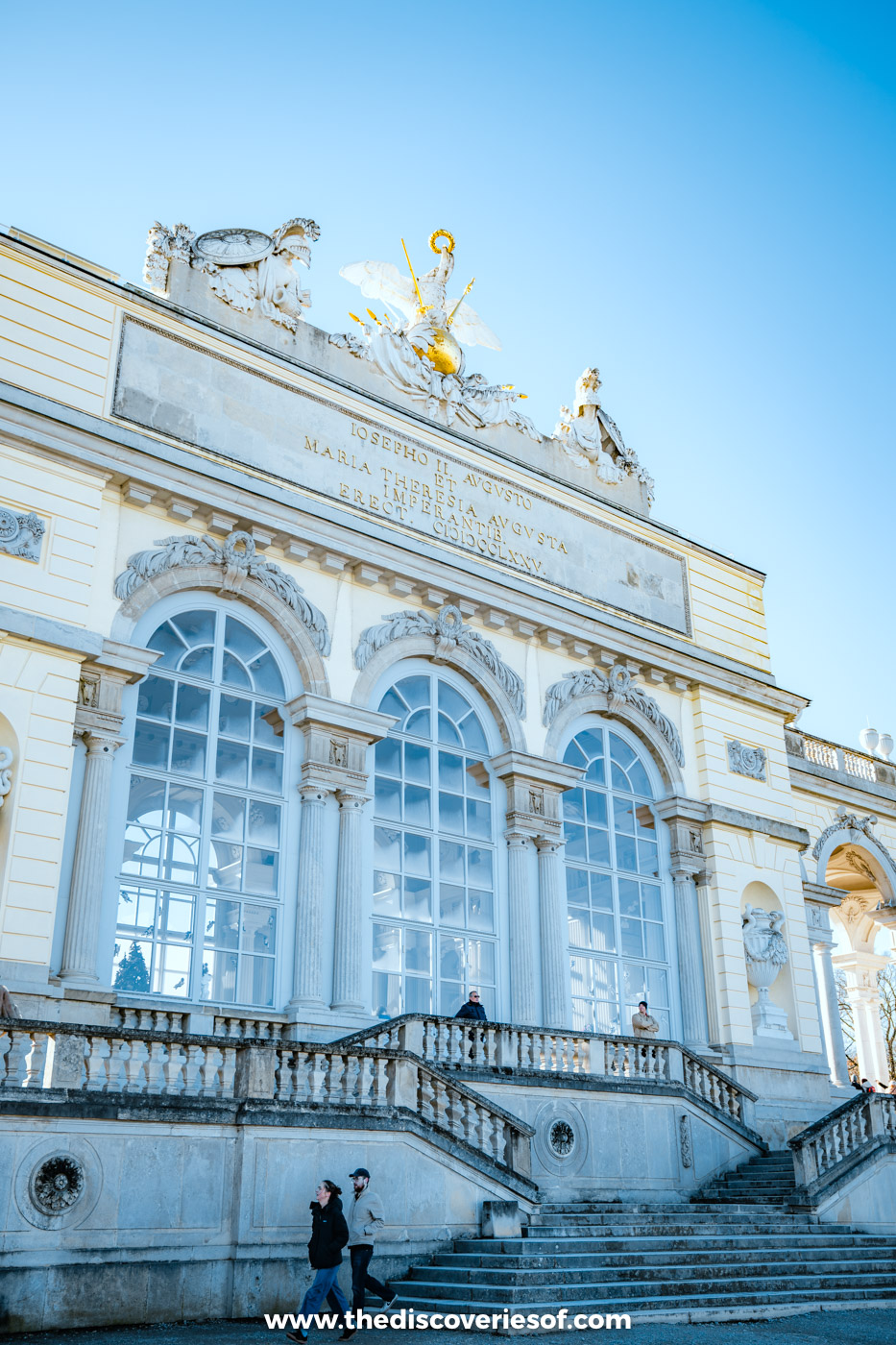
The Gloriette was built on top of the hill in 1775, so the imperial family had something beautiful to look up at. Its arcades reuse columns salvaged from an older Habsburg palace, and the glazed centre is now Café Gloriette.
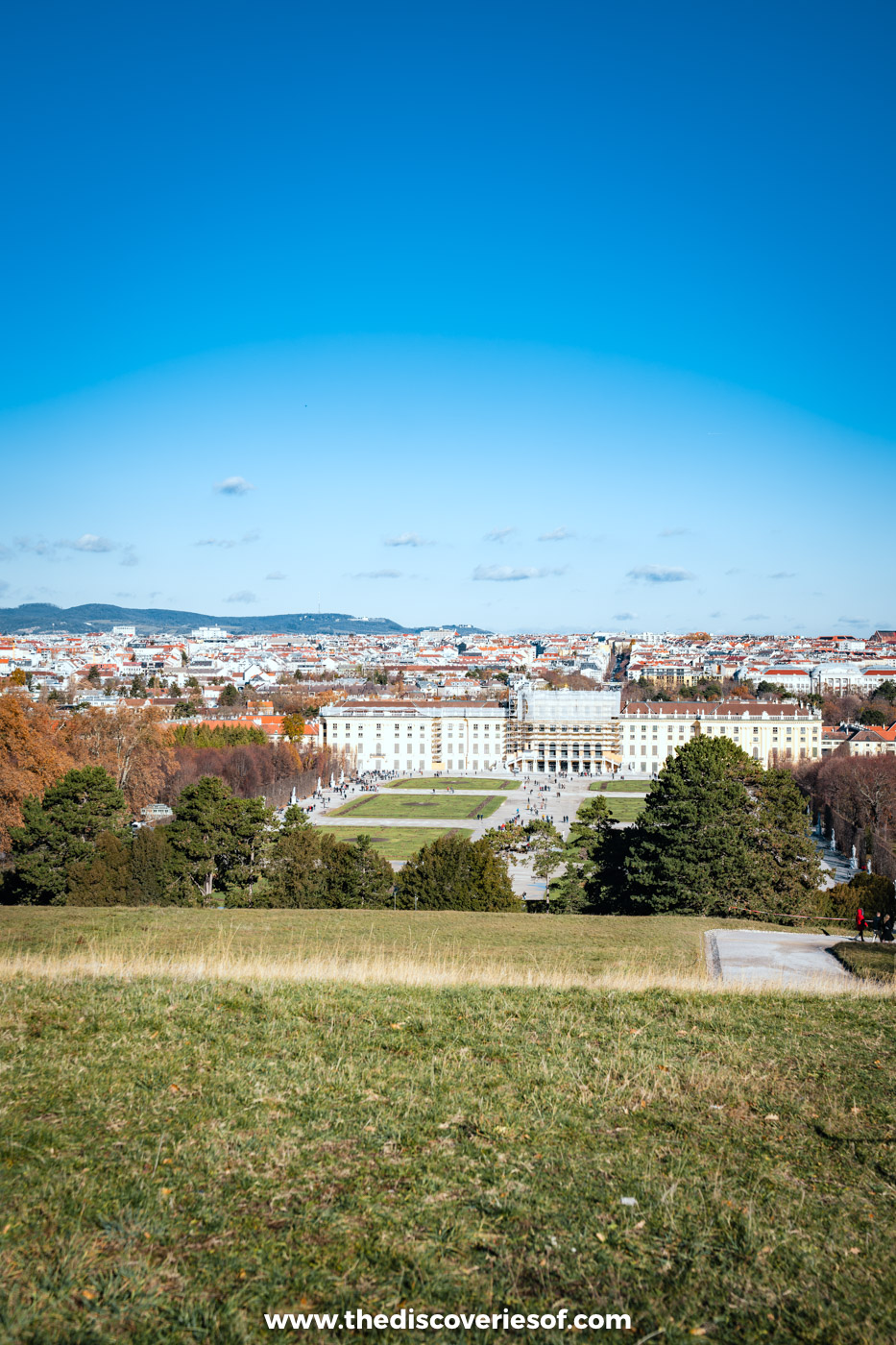
The climb is about the view back down. On the clear, bright morning I was there, I could see the palace below and the whole city skyline spread out beyond it.
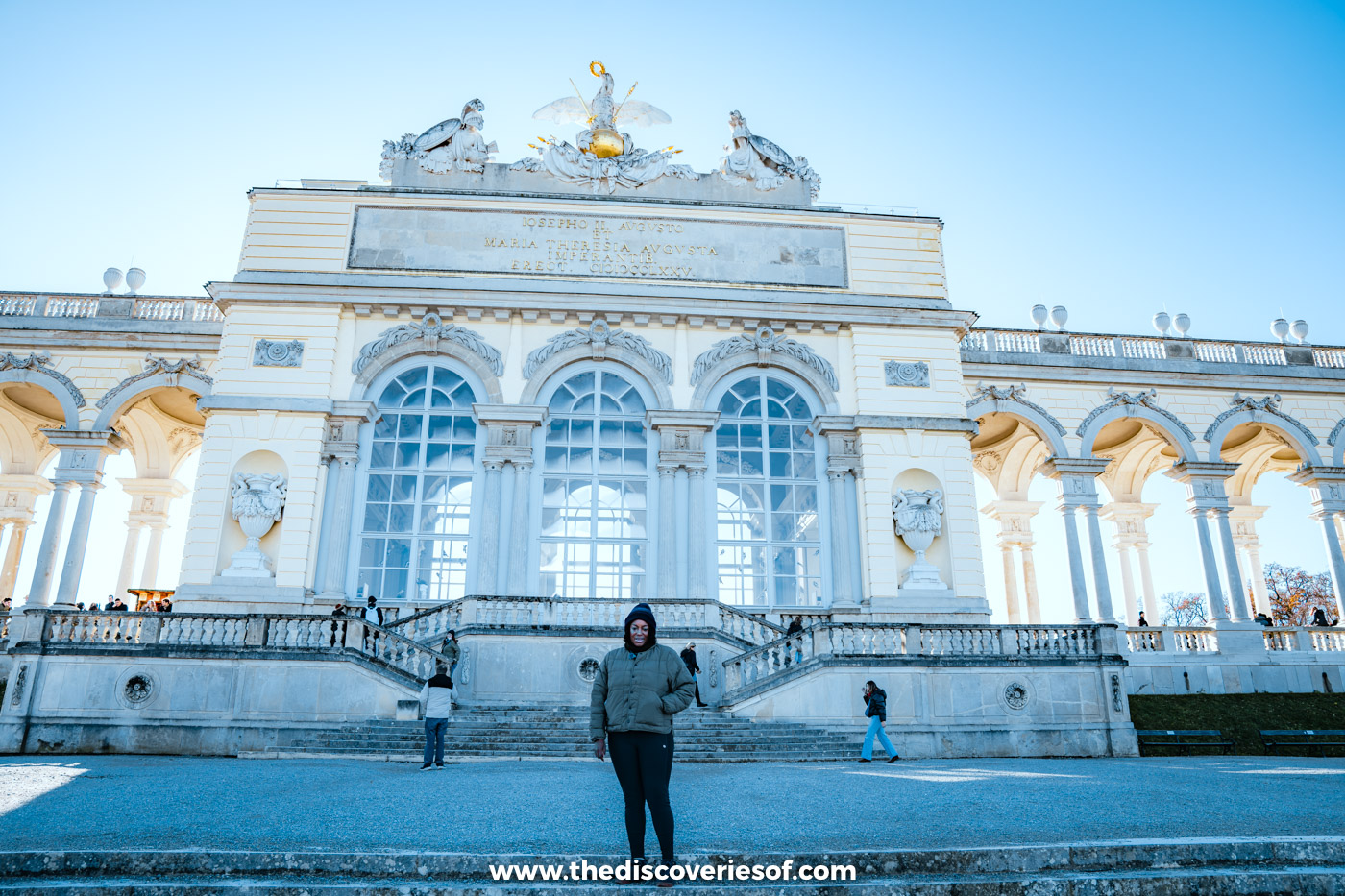
I very much enjoyed the whole morning: the palace, the market and then the Gloriette. Doing them in that order works well, as the market opens while you’re inside.
The Christmas market in the palace forecourt
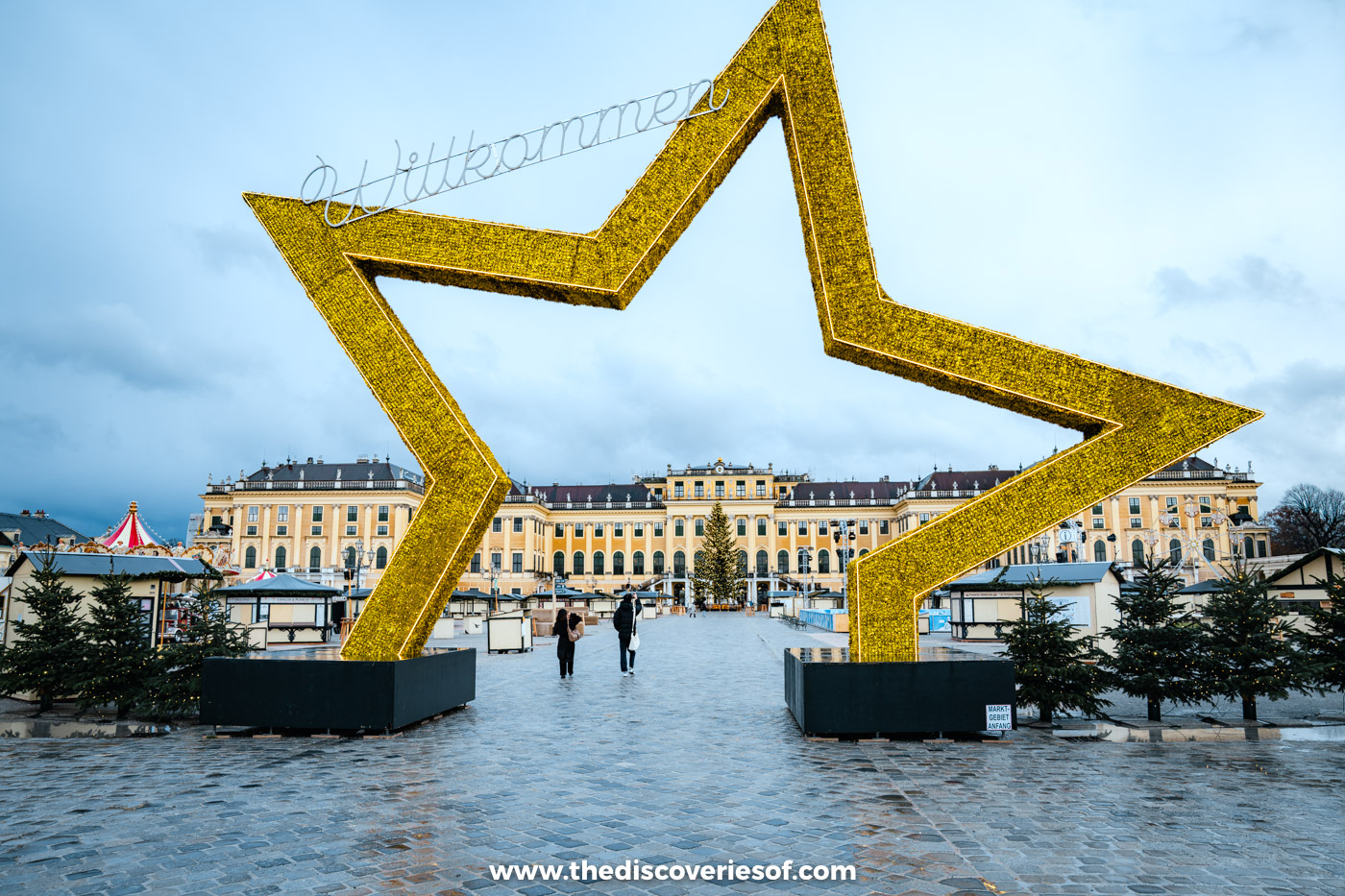
I knew Schönbrunn had a Christmas market, and I was hoping it would be open by the time I’d finished inside. It was, and with the sun out on that yellow façade, it’s hard to imagine a grander backdrop.
Between the gift stalls (ceramics, gloves, incense and garlands of dried oranges), there’s no shortage of hot food, and the air smells of warm spice wherever you go. It’s a good spot for presents as well as a snack.
I came for the punch. My first ever Beerenpunsch had whole berries bobbing in the mug and tasted like a hot cordial, sweet and not overly spiced, with a sharp burst of fruit every few mouthfuls.
The Orangenpunsch was the surprise. I’d half expected it to taste like orange squash, which I’ve always found a strange drink, but it was warm, citrusy and only lightly spiced: Christmas in a cup.
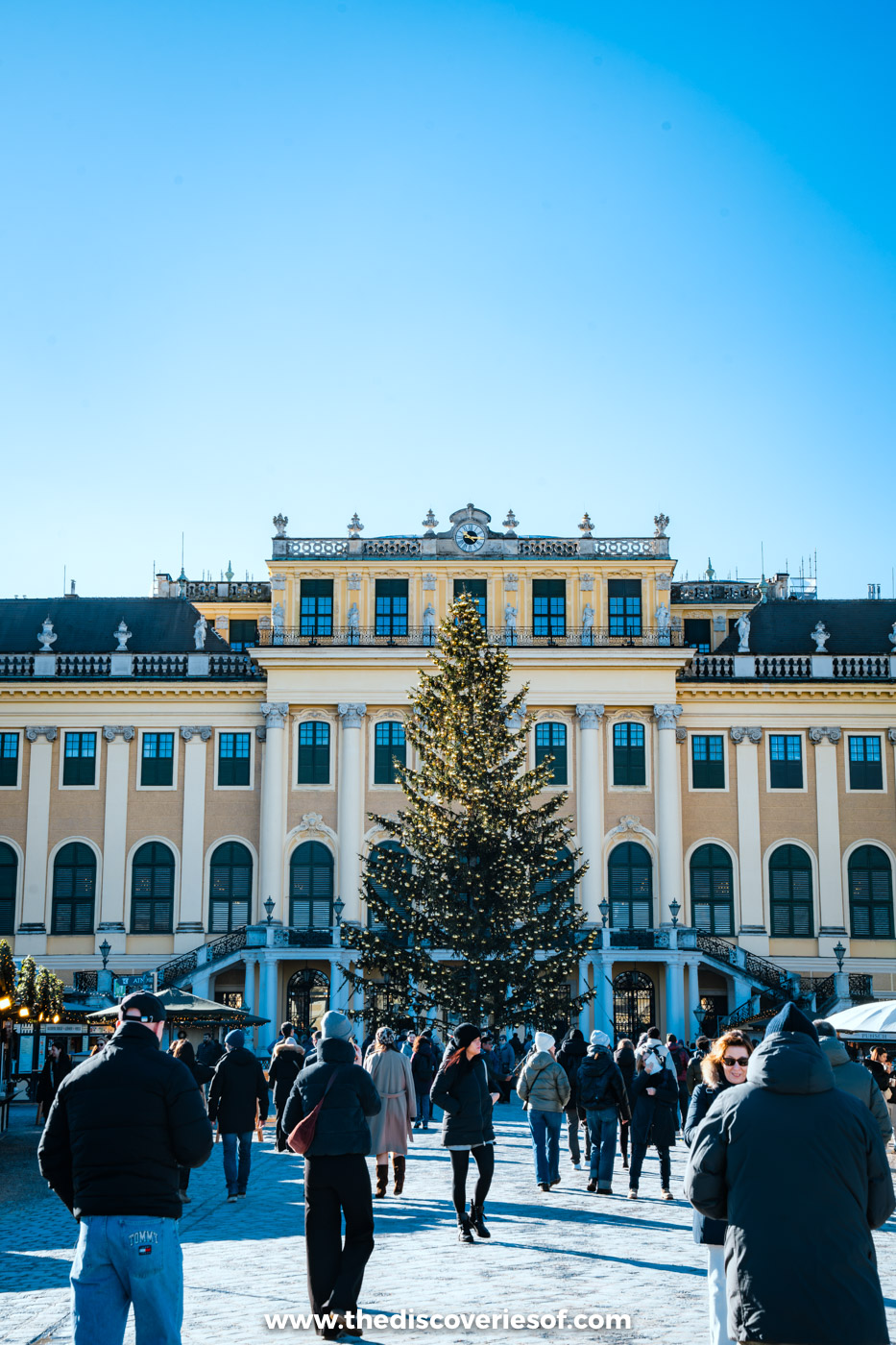
As at every market in the city, you pay a deposit for the mug and get it back when you hand the mug in. The market runs from 6 November to 6 January, daily from 10am to 9pm until 23 December, 10am to 4pm on Christmas Eve, and 10am to 7pm from Christmas Day.
It’s free to wander, and you can book a lane for ice stock sport, Austria’s answer to curling, on the market’s own site. After dark, the Imperial Lights trail fills the Privy Garden with light installations (6 November to 6 January, 4.30pm to 10pm, timed tickets from €24).
Getting to Schönbrunn
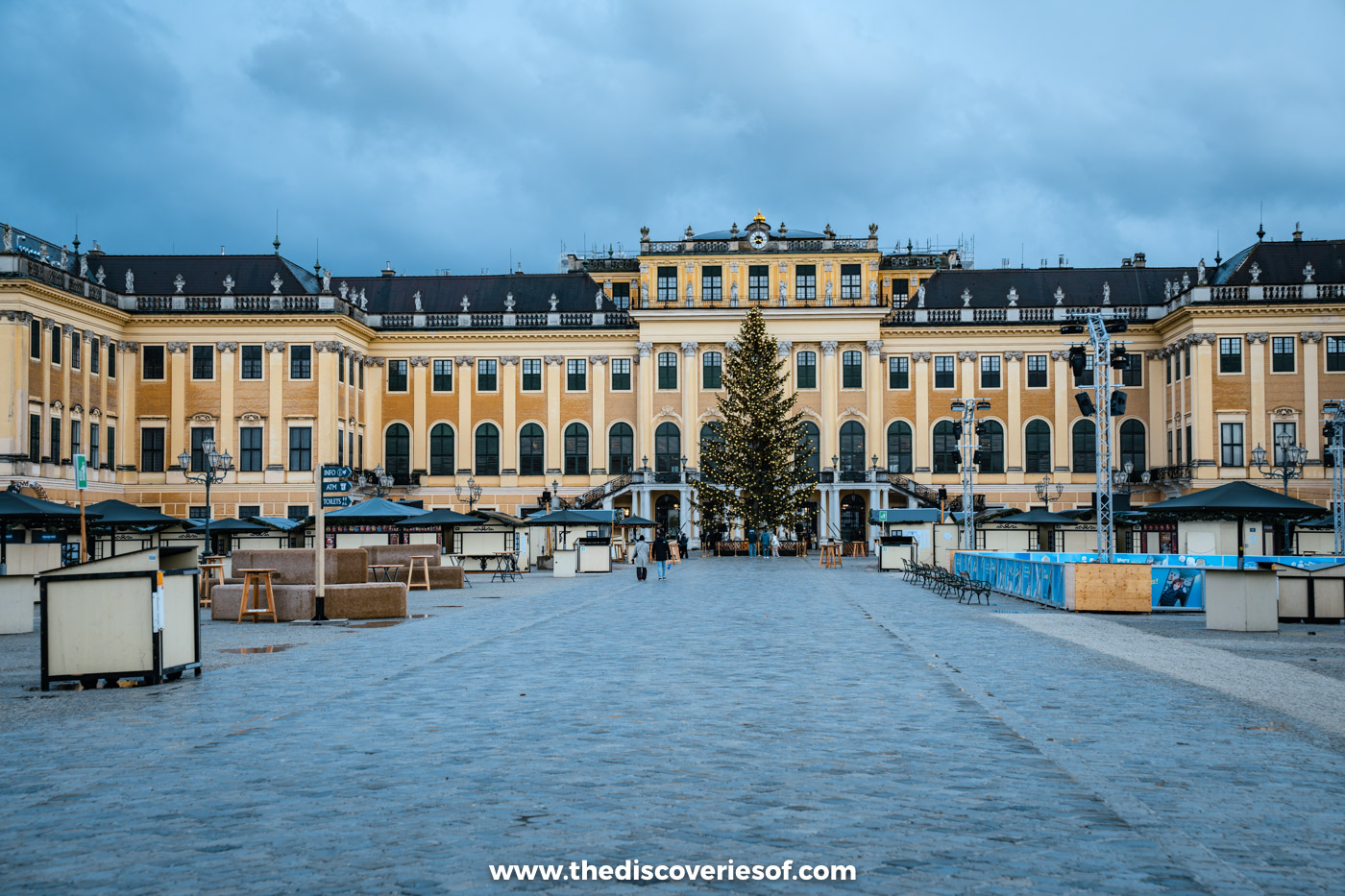
The palace is in Hietzing, south-west of Vienna’s old town. The U4 stops at Schönbrunn station, a short walk from the main gate, and trams 10 and 60 and bus 10A all stop at Schloss Schönbrunn.
Public transport from the centre takes about half an hour. On my morning it was pouring, and with an 8.30am slot I decided to cheat and take an Uber, which got me there in 15 minutes: a bargain well struck.
After all that, I was early, and the palace wasn’t even open yet.
Top Tip
On a dry day, the U4 is the easy option. It runs straight from Schwedenplatz and Karlsplatz to Schönbrunn, with no changes.
When to go, and tips for your visit
Go first thing. When I went in at 8.30am it was not that busy, and when I came out it was so much busier.
I’ll admit I questioned that booking when my alarm went off at 6.30am, the morning after a 3am start. But having the space to appreciate the rooms properly made all the difference, and it was worth it.
Winter brings the market and Imperial Lights, while spring to autumn is the time for the gardens, when the fountains run and the Gloriette terrace and maze reopen.
Top Tip
Book the 8.30am slot. The palace is at its quietest for the first hour, and the market stalls are opening just as you come out.
- Allow half a day. The Palace Ticket takes about 75 minutes, and the gardens, the market and the walk up to the Gloriette easily fill the rest of the morning.
- Pack for the weather. Rain wasn’t forecast for my trip and I hadn’t brought proper rain gear. In winter, bring layers and a waterproof, as the walk to the Gloriette is exposed.
- Add the zoo. Tiergarten Schönbrunn began as Franz Stephan’s menagerie in 1752 and sits inside the park. The Winter Pass bundles it with the palace.
- Check the hours before you go. The official opening times change with the seasons and over Christmas.
Map
Read next
- SO/ Vienna review: spacious rooms, views both ways and breakfast 18 floors up
- Inside the Sisi Museum at Vienna’s Hofburg, where an empress hung gym rings in her dressing room
- 3 days in Vienna, with time for Habsburg palaces, grand coffee houses and two rival Sachertortes
- Sacher or Demel? Where to eat Sachertorte in Vienna, and the cake war behind it
- What Vienna in winter is really like, with Christmas markets, coffee houses, balls and a chance of snow
- St Stephen’s Cathedral in Vienna: exploring the two towers, catacombs and an emperor’s tomb
- How to see Vienna’s Christmas lights in one walk, from ballroom chandeliers to Roman ruins
- 11 Vienna Christmas markets, and the one to save your gift shopping for
- Visiting the Wiener Christkindlmarkt at Rathausplatz, where the ice rink winds through the park
- The Am Hof Christmas market, where Vienna’s makers sell their own work
- 28 of the best city breaks in Europe, and how long to give each one
- The ultimate Europe bucket list, 100 incredible places to visit in Europe from Big Ben to cheese fondue
- 25 stunning places to visit in Europe in winter
- Schnitzel, strudel and a sausage at midnight: what to eat in Vienna, and where to order it
- Trześniewski review: are Vienna’s century-old open sandwiches still the best quick lunch in town?
Love this? Save and share on Pinterest
Discover the top things to do, insider tips and hidden gems in our Austria Travel Guide.
Read the guides →