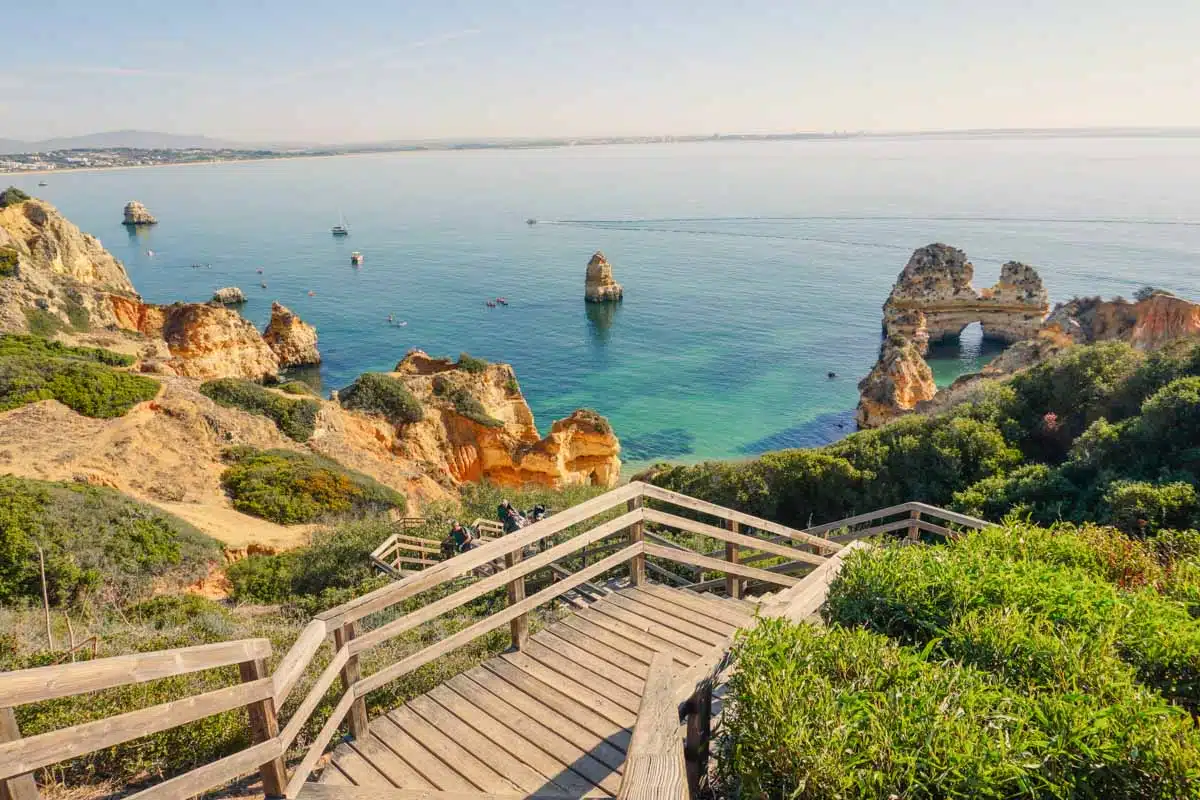

More than 200 wooden steps, a scrap of golden sand and a headland riddled with sea caves: the few kilometres of cliffs just south of Lagos are the Algarve of a thousand postcards. One of the two isn’t quite as it was, though, and that changes how you should plan your visit.
On a separate trip to the Algarve from my week in the east, I hired a villa in Lagos and took my camera and drone out along these cliffs. The Camilo staircase was open then, and I took it all the way down to the sand.
Praia do Camilo and Ponta da Piedade sit side by side on the same stretch of coast, joined by a clifftop path, so they’re best seen together. One is a tiny cove tucked between golden walls of rock; the other is the headland beyond it, where the limestone has been carved into pillars, arches and grottoes that you can explore on foot, by boat or by kayak.
Since the storms of early 2026, though, the Camilo steps have been shut. The cove is still worth the walk, but the way you see it has changed, and the water has become the best way in.
The essentials at a glance
- What they are: a small cove beach at the foot of the cliffs and, about a kilometre further on, the headland of Ponta da Piedade, with its lighthouse, sea stacks and grottoes.
- Where: 2km to 2.5km south of the old town of Lagos, in the western Algarve, along the Estrada da Ponta da Piedade.
- Camilo access: the staircase to the beach has been closed since winter storms damaged the cliff, and no reopening date has been announced. The viewpoint at the top, the car park and the clifftop restaurant are open.
- Headland access: free and open all year, along boardwalks and clifftop paths, with a long stone staircase down to the water.
- By boat or kayak: small boats leave the Lagos marina for 75-minute grotto trips from about €20, and boatmen at the landing below the headland charge about €20 in cash. Guided kayak trips of about two hours cost from about €25 to €40.
- Time needed: an hour or two for the walk, another hour or two for a boat or kayak trip.
- Best time: early morning or the last hours before sunset, outside July and August if you can.
Praia do Camilo, the cove at the bottom of the stairs
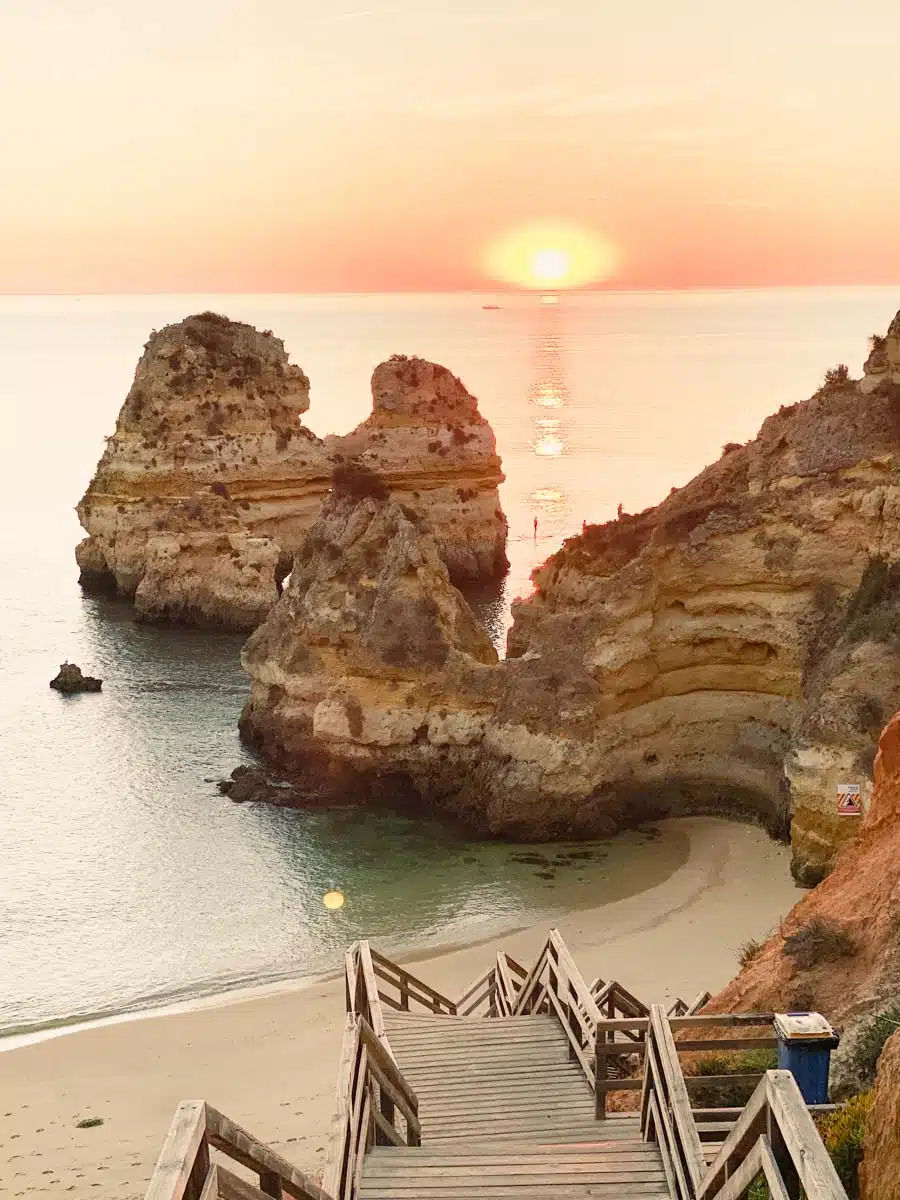
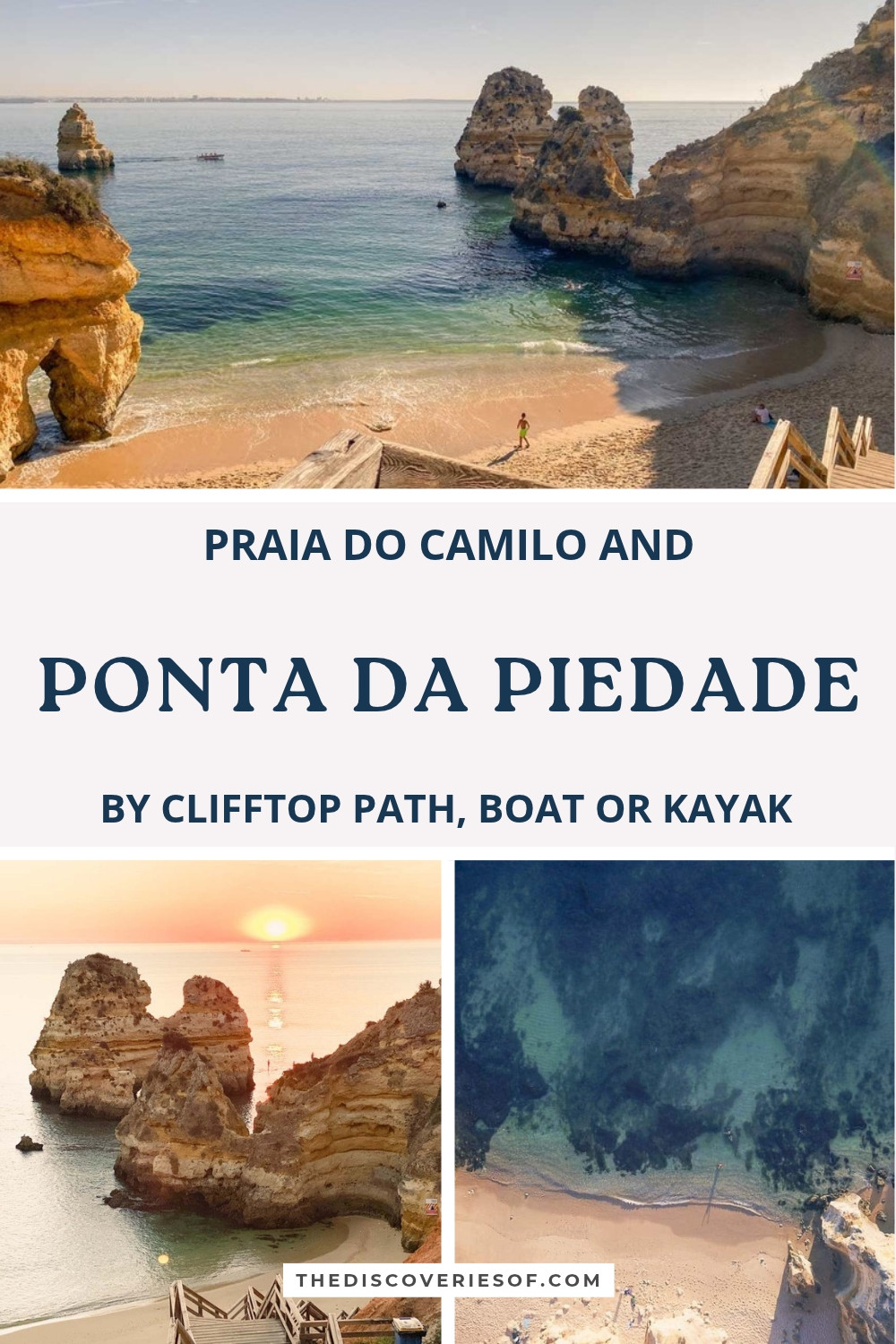
There isn’t much of Praia do Camilo, and that’s the point. A narrow strip of soft, golden sand sits at the bottom of high ochre cliffs, with rock stacks standing in the shallows and the water shading from emerald near the shore to deep blue further out. At the far end, a short tunnel through the rock leads to a second, even smaller cove next door.

The wooden staircase is as famous as the beach. It zigzags down the cliff face in more than 200 steps, with a fresh view of the stacks at every landing, and the climb back up is a proper workout on a hot afternoon. Because the cove is so small, it fills up fast in summer, which is why it has always paid to come early.
What the staircase closure means for your visit
Heavy rain and rough seas over the winter of 2026 undermined the slope beneath the stairs, and the Agência Portuguesa do Ambiente (APA), which manages the coast, closed them as unsafe. In August, the APA confirmed the ban was staying in place while it and Lagos council studied how to make the cliff and the structure safe again, and no date for reopening has been given since.
The council has put up barriers and signs, and the APA has reported people climbing past them every day. Please don’t: the whole point of the closure is that the steps, and the cliff they’re fixed to, could give way. There’s no other way down from the land.
Top Tip
The status of the steps could change once repairs are carried out, so check for news from Lagos council or the APA before you go. Until then, plan your visit around the viewpoint and a trip on the water.
Take in the cove from the viewpoint above
The good news is that the best view of Camilo was always from above. The viewpoint at the top of the staircase looks straight down on the cove, the tunnel and the stacks beyond, and it’s open as normal, as are the car park and O Camilo, the seafood restaurant on the cliff edge, which makes a fine spot for grilled fish or a drink as the light goes golden.

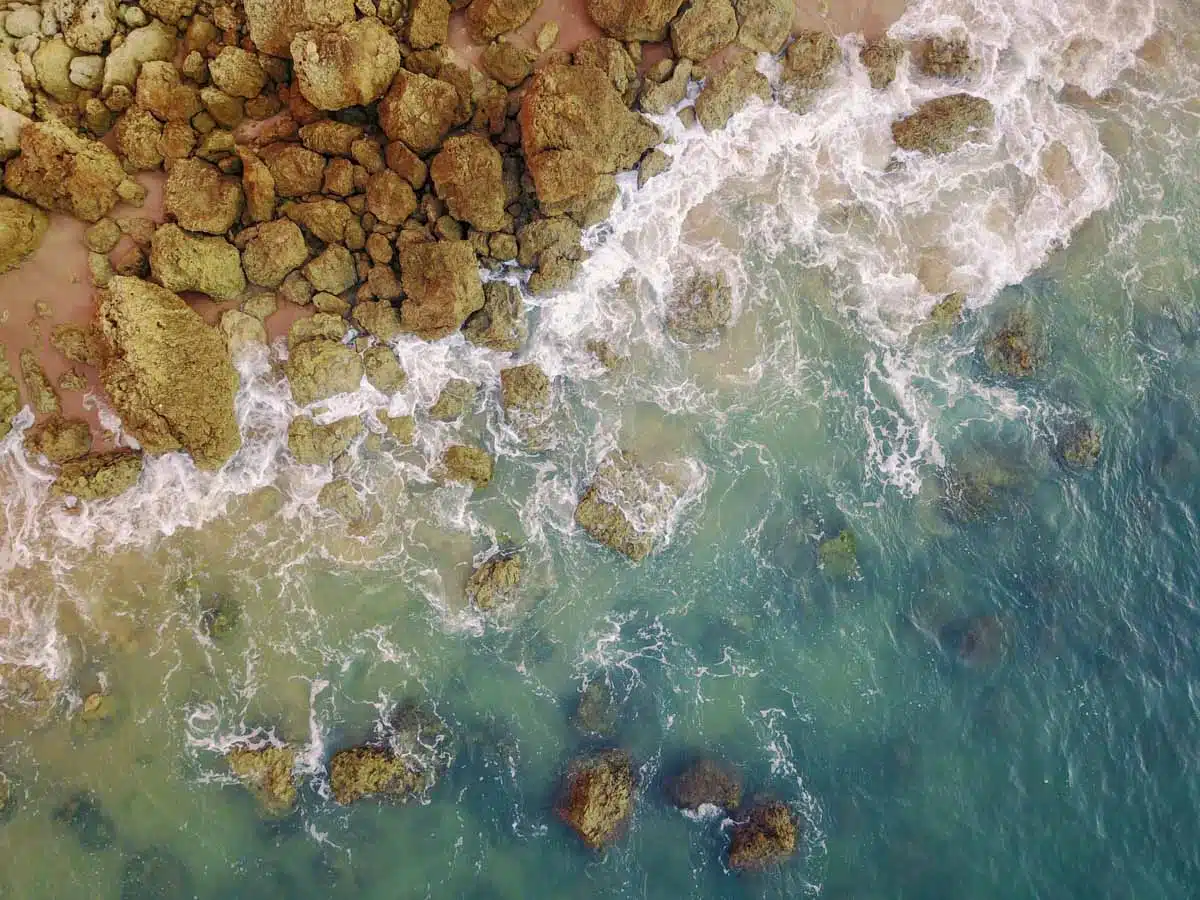
From the air, the coast here is a patchwork of tiny beaches that you’d never guess were there from the path, each one cut off from the next by a wall of rock. And from the water, which is the only way to get close at the moment, the boats and kayaks heading for the point pass right by the mouth of the cove.
Walk the boardwalks to Ponta da Piedade
Lagos council has spent years building a network of wooden boardwalks along these clifftops, starting at Praia Dona Ana, the town’s other famous cove, and running past the top of the Camilo stairs to the lighthouse at the point. After a short flight of steps at the start, it’s mostly level going, with covered viewpoints and benches along the way.
From Dona Ana, it’s less than a kilometre to the Camilo viewpoint and about half an hour’s easy walk to the lighthouse, or allow an hour and a half to two hours for the round trip with stops. Past Camilo, the boardwalk gives way to concrete for a stretch before picking up again near the point, where short spurs lead out to lookouts over the sea.
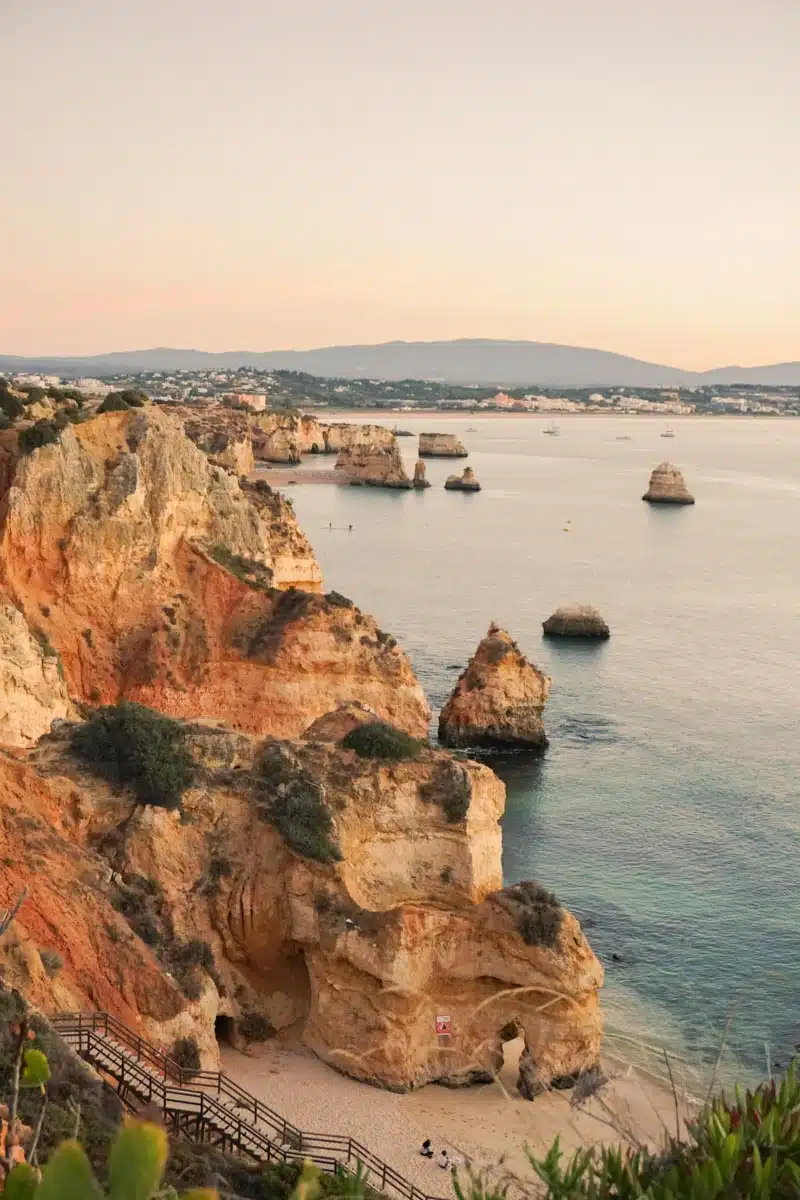
Ponta da Piedade itself is the southern tip of the bay of Lagos, and it’s where the cliffs are at their most extravagant. The limestone has been worn by the sea into a maze of stacks, arches, tunnels and grottoes, some of them barely wider than a rowing boat, and the rock glows orange and gold in low sun.
There’s no shade on the path, so in summer it’s hot work in the middle of the day. If you’d like to keep walking, the clifftop trail carries on west of the lighthouse towards Praia do Canavial and Porto de Mós, and further still to Luz: the last stage of the Rota Vicentina’s Fishermen’s Trail comes into Lagos this way. My guide to walking the Rota Vicentina has the rest of the route.
Climb down to the water below the lighthouse
The lighthouse at the tip of the headland was first lit in 1913, built on the site of a hermitage dedicated to Nossa Senhora da Piedade, which gave the point its name. You can’t go inside, but the boardwalks loop around it to views in every direction, and there’s a restaurant, toilets and a bus stop nearby.
Beside it, a long stone staircase of close to 200 steps winds down the cliff to a small landing at the water’s edge. It’s steep and uneven in places, so take it slowly, especially on the way back up. At the bottom you’re among the rock pillars, looking up at the cliffs, and this is where local boatmen tie up to offer short trips into the grottoes.
Weave through the grottoes by boat
You only really understand the headland from sea level, gliding between stacks you were looking down on an hour earlier. Small boats can slip into caves and through arches that are invisible from the clifftop, and on a calm morning the light bounces off the water and turns the rock walls green and gold.
There are two ways to do it. The simplest is to walk down the steps to the landing below the lighthouse, where small motorboats wait to take you round the grottoes for about €20 a person, paid in cash. Or start from town: several operators run grotto trips from the marina and the riverfront, usually 60 to 90 minutes in a small boat, and pass the mouth of Praia do Camilo on the way.
Do
This 75-minute boat cruise to Ponta da Piedade leaves from Lagos marina in a traditional Portuguese boat, from about €20, and has more than 3,000 reviews averaging 4.8.
BlueFleet runs a similar 1 hour 15 minute grotto trip from the marina for €22.50. Bigger catamarans and sailing boats also head out this way, often with swimming stops further along the coast, but they’re too large to get into the caves, so if the grottoes are what you’ve come for, pick a small boat.
Paddle into the sea caves by kayak
A kayak gets you closer still. Guided trips paddle through the arches and into the grottoes, low enough to touch the rock, and into coves that you can’t reach from the land. You don’t need experience, as the guides set the pace and the route around the conditions on the day.
Most trips leave from Lagos marina and last about two hours. AlgarExperience’s tour paddles out from the marina with a support boat, from about €25, while BlueFleet’s Grutas em Kayak trip (€40) takes you out to the point by boat first, so you spend more of your two hours among the caves.
Do
Book this two-hour kayak trip from Lagos marina, which has more than 2,300 reviews averaging 4.8, with a guide and a support boat.
Go early, when the sea is usually at its calmest: trips are cancelled when the swell is up, and a stiff breeze can make the paddle back hard work. Wear things you don’t mind getting wet, and leave anything precious in a dry bag or on dry land.
When to go for quieter paths and calmer water
The path and the boats are busiest from about 9am to 4pm, and July and August are the most crowded months by far. Come in the early morning, when the light on the cliffs is soft and the sea is usually flat, or in the hours before sunset, when the rock turns its deepest gold and the day-trippers have gone.
Spring and autumn are the sweet spot: warm enough to be out on the water, quiet enough to have a viewpoint to yourself. Boats and kayaks run whenever the weather allows, so there are fewer departures in winter and some days with none at all.
Getting to Praia do Camilo and Ponta da Piedade
From the old town of Lagos, it’s about half an hour on foot to the lighthouse, out past the Ponta da Bandeira fort and up the hill to Dona Ana, where the boardwalks begin. It’s an easy walk, and it saves you the hunt for a parking space.

By car, follow the Estrada da Ponta da Piedade south from the town. There are car parks by Dona Ana, near the top of the Camilo stairs and close to the point, but they fill up quickly on summer days. There’s a bus stop by the lighthouse, too.
Lagos is about an hour’s drive from Faro airport on the A22. By train from Lisbon, change at Tunes for the regional line to Lagos: allow three and a half to four hours in all. It’s also the obvious base for this stretch of coast: I stayed in a villa, which gives you room to spread out, and there’s more on the town and its stays in my guide to where to stay in Portugal.
A few things worth knowing before you go
- Wear shoes with some grip. The boardwalks are easy, but the stone steps down to the water and the rocky stretches of path are not, and flip-flops are a liability on both.
- Bring water, sun cream and a hat. There’s no shade on the clifftops and little to buy between Dona Ana and the point.
- Carry some cash. The boatmen at the landing below the lighthouse don’t take cards.
- Keep back from the edge. The APA counted 35 Algarve beaches affected by unstable cliffs or lost sand after the storms of early 2026. Stay behind the barriers, and never spread your towel right under a cliff, on any beach.
- Check the Camilo steps before you set out. If they reopen, go early: the cove is tiny and fills fast.
More cliffs and coves around Lagos
This is just one stretch of a coastline that’s full of surprises. Closer to town, Praia Dona Ana is the easiest cove to reach on foot, down about 100 steps from the clifftop. Further east, the Benagil coast has the most famous sea cave of all: read my guide to Benagil Cave for how to visit it under the current rules, and look out for my guide to Praia da Marinha and the Seven Hanging Valleys Trail.
If you’re planning a longer trip, my week in the Algarve starts with a day on these cliffs, and my guide to the best beaches in the Algarve rounds up the coves either side. And there’s plenty more to Lagos itself, from its old walls and gilded church to its seafood restaurants.
Map
Read next
- A week in the Algarve, from sea caves to a desert island
- The best beaches in the Algarve
- Benagil Cave and how to visit it now
- The best things to do in the Algarve
- Walking the Rota Vicentina
Love this? Save and share on Pinterest
Discover the top things to do, insider tips and hidden gems in our Portugal Travel Guides.
Read the guides →