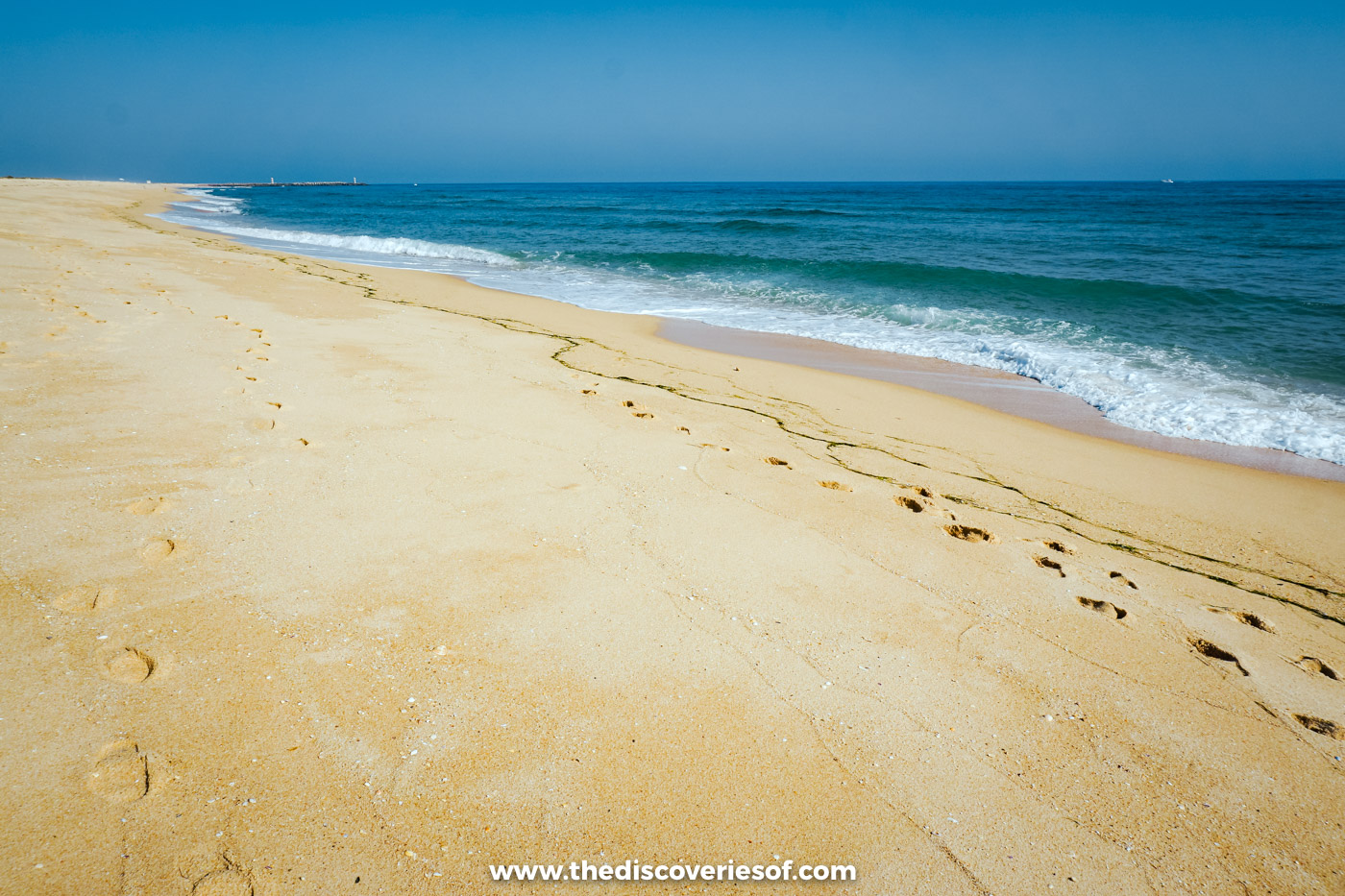

A sliver of sand with no roads, no houses and a single restaurant, a short boat ride from the Algarve’s main airport. The crossing is part of the magic, as long as you don’t rush it. Here’s how to reach the island, what you’ll find when you land, and why the slow boat beats the speedboat every time.
It’s hard to believe a place like this survives so close to a regional capital. Board a boat at the edge of Faro’s old town, and within the hour you’re stepping off onto a barrier island where the only sounds are the wind in the dune grass and the Atlantic rolling in on the far side.
I came out here on an October trip to the eastern Algarve, when I spent a week in a villa at Quinta do Lago, just along the lagoon. I’d go as far as calling it pretty much my favourite stretch of sand anywhere in the Algarve, and certainly the best within easy reach of the city.
The reason is simple. It’s big and it’s wild, and because it’s so big, it never feels crowded, even at the height of summer. Add a boat trip through the lagoon on the way, with a guide who knows every bird and shellfish by name, and you have one of the best days out on this stretch of coast.
Ilha Deserta at a glance
- What it is: an uninhabited barrier island in the Ria Formosa Natural Park, officially called Ilha da Barreta, just south of Faro.
- Getting there: boats run all year from the Cais das Portas do Mar (also called Cais da Porta Nova), beside Faro’s old town. The ferry crossing is about 45 minutes (€5 each way, €2.50 for children); the speedboat shuttle does it in about 15 minutes for €10 each way.
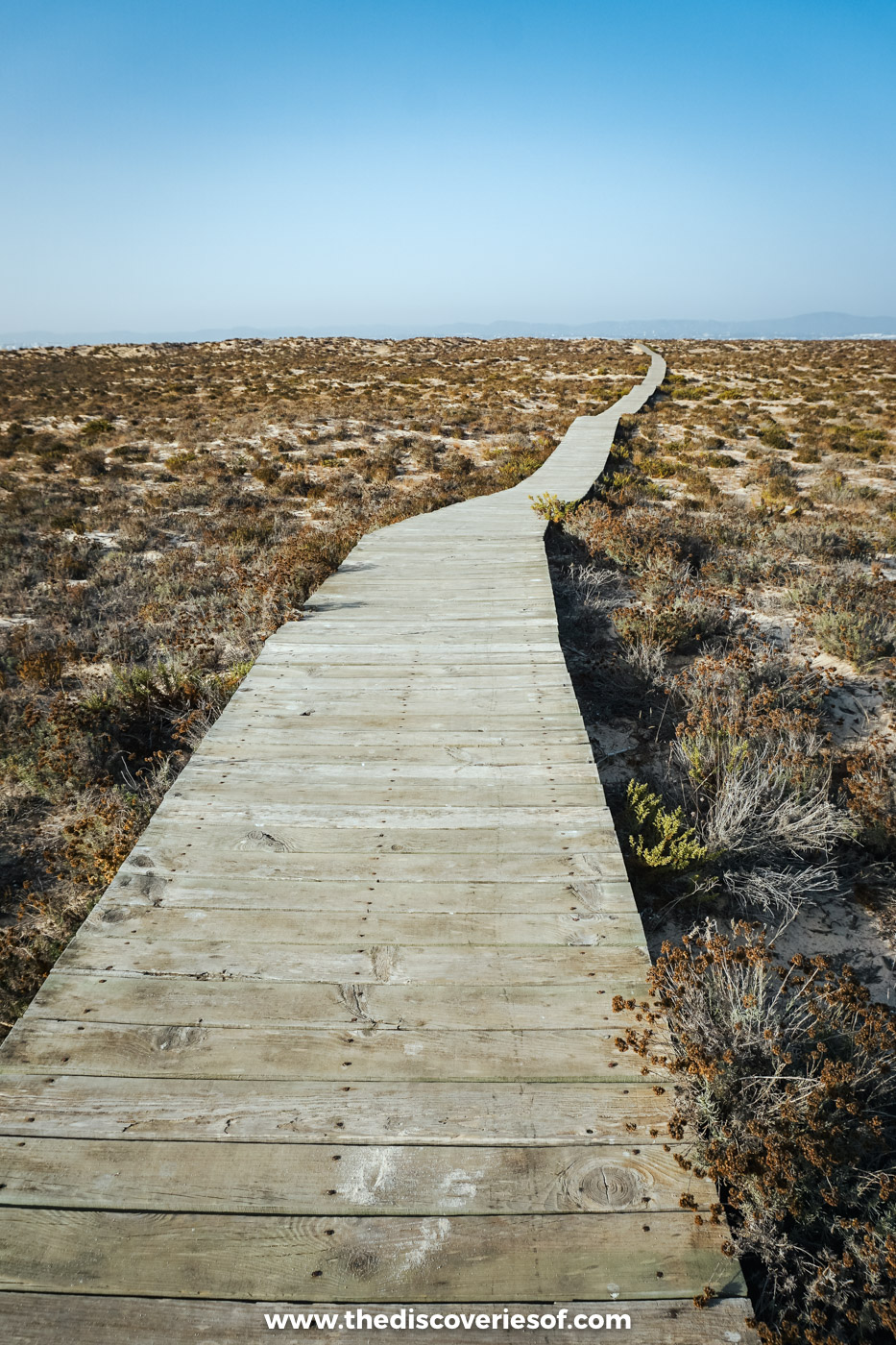
- What’s there: a beach of about 7km on the ocean side, a boardwalk across the dunes, Cabo de Santa Maria, mainland Portugal’s most southerly tip, and one restaurant, Estaminé.
- Facilities: toilets at the restaurant, sunbeds to rent and lifeguards in the summer bathing season. There’s no natural shade.
- Time needed: half a day at least; a full day if you’re having lunch and walking to the cape.
- Best time: May, June, September and October, on the first boat of the day.
Take the slow boat across the lagoon
The speedboat will get you to the island in a quarter of an hour, and in high summer that’s tempting. But the trip comes alive when you go slowly. I went out with Animaris, which has run boat trips out here since 1987, on a small catamaran with a professional nature guide on board, and it turned the crossing into the highlight of the day.
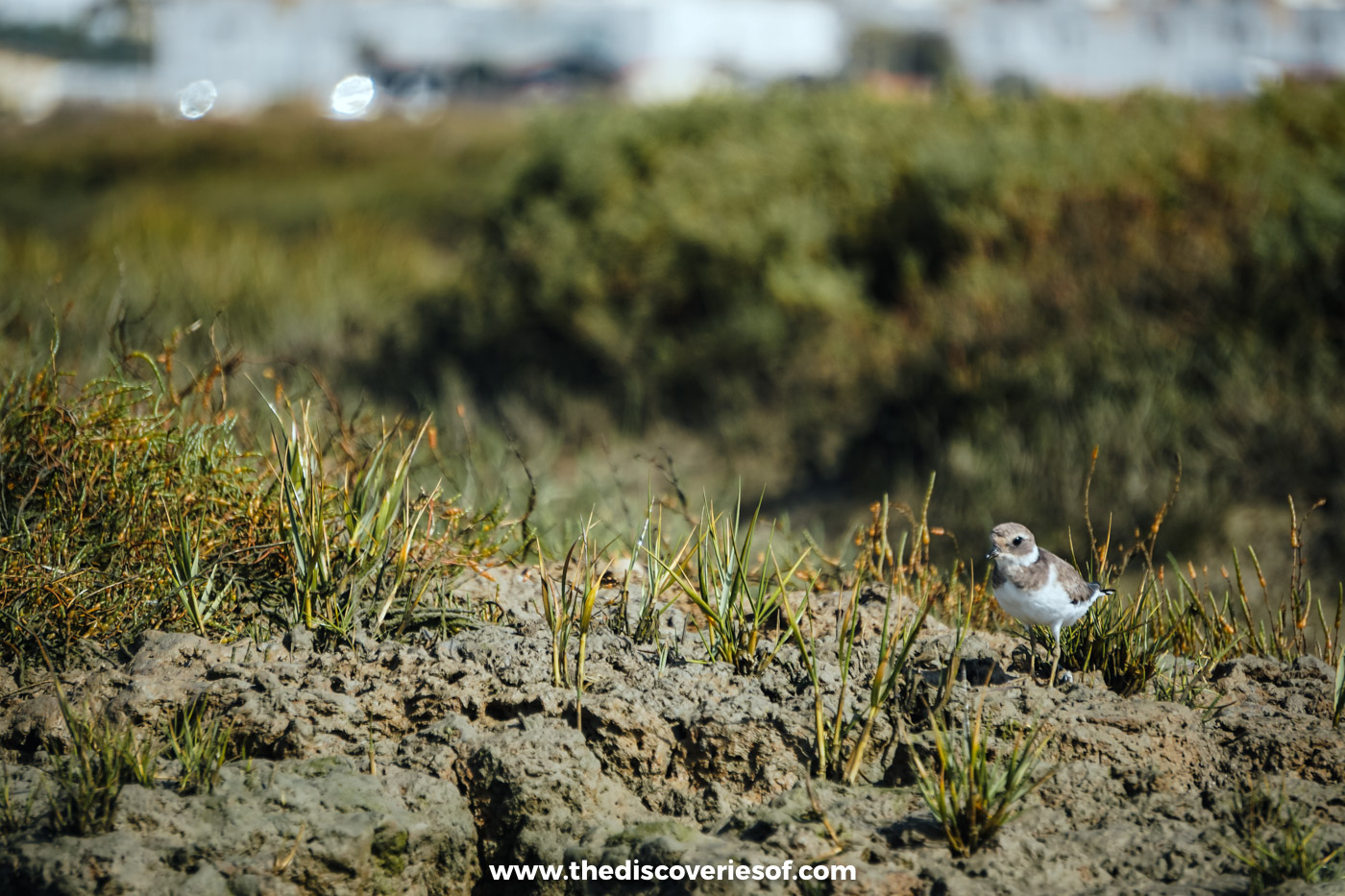
The Ria Formosa is a maze of mud flats, sandbanks, salt marsh and channels, sheltered from the ocean by a chain of barrier islands, and the boat drifts between them at a gentle pace. My guide pointed out oysters in the shallows, shore crabs scuttling across the mud, teals and curlews feeding at the water’s edge, details I’d have sailed straight past on my own.
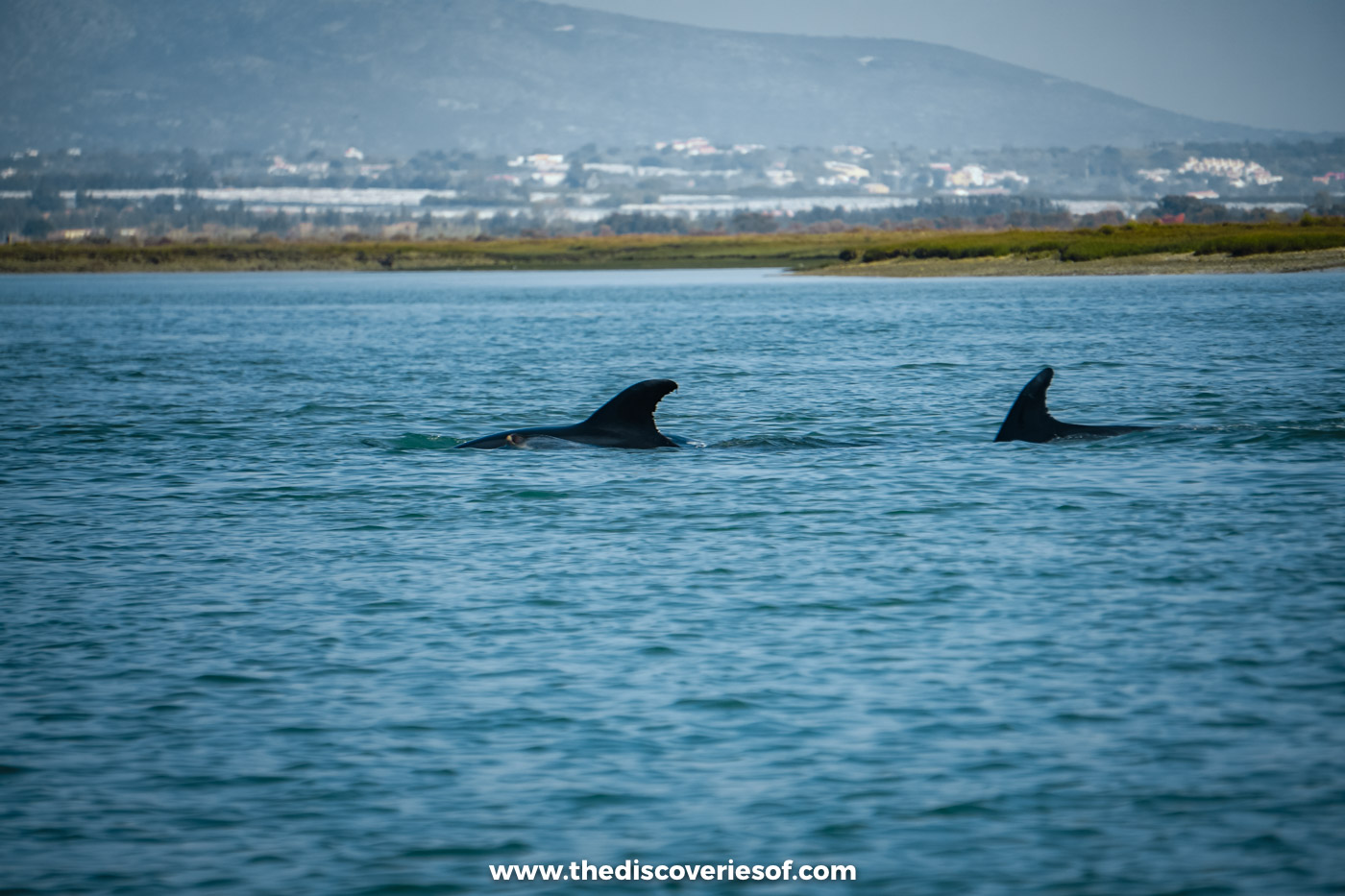
Then came the extra-special surprise: a few dolphins that had wandered into the lagoon from the open sea. They didn’t hang around, finding their way back out again with surprising speed. Dolphins aren’t a regular sight inside the lagoon, so don’t book a trip expecting them, but it’s a reminder of how close the ocean is.
Animaris still runs a guided version of the crossing: a two-hour eco tour with a marine biologist, which spends about an hour among the channels before stopping at the island, with a return boat whenever you’re ready. It’s the trip I’d recommend to anyone with an interest in wildlife. The lagoon is one of the most important wetlands in Europe for birds, with more than 300 species recorded, from flamingos and spoonbills to the waders working the mud at low tide.
Top Tip
Book the guided tour or the ferry rather than the speedboat if you can. You’ll see far more of the lagoon, and the ferry has a covered deck and toilets on board.
A beach that seems to go on forever
Once you land, a wooden boardwalk leads from the jetty, past the restaurant and out across the protected dunes. Then the dunes part and there it is: kilometre after kilometre of fine, pale sand, with the Atlantic on one side and nothing much on the other.
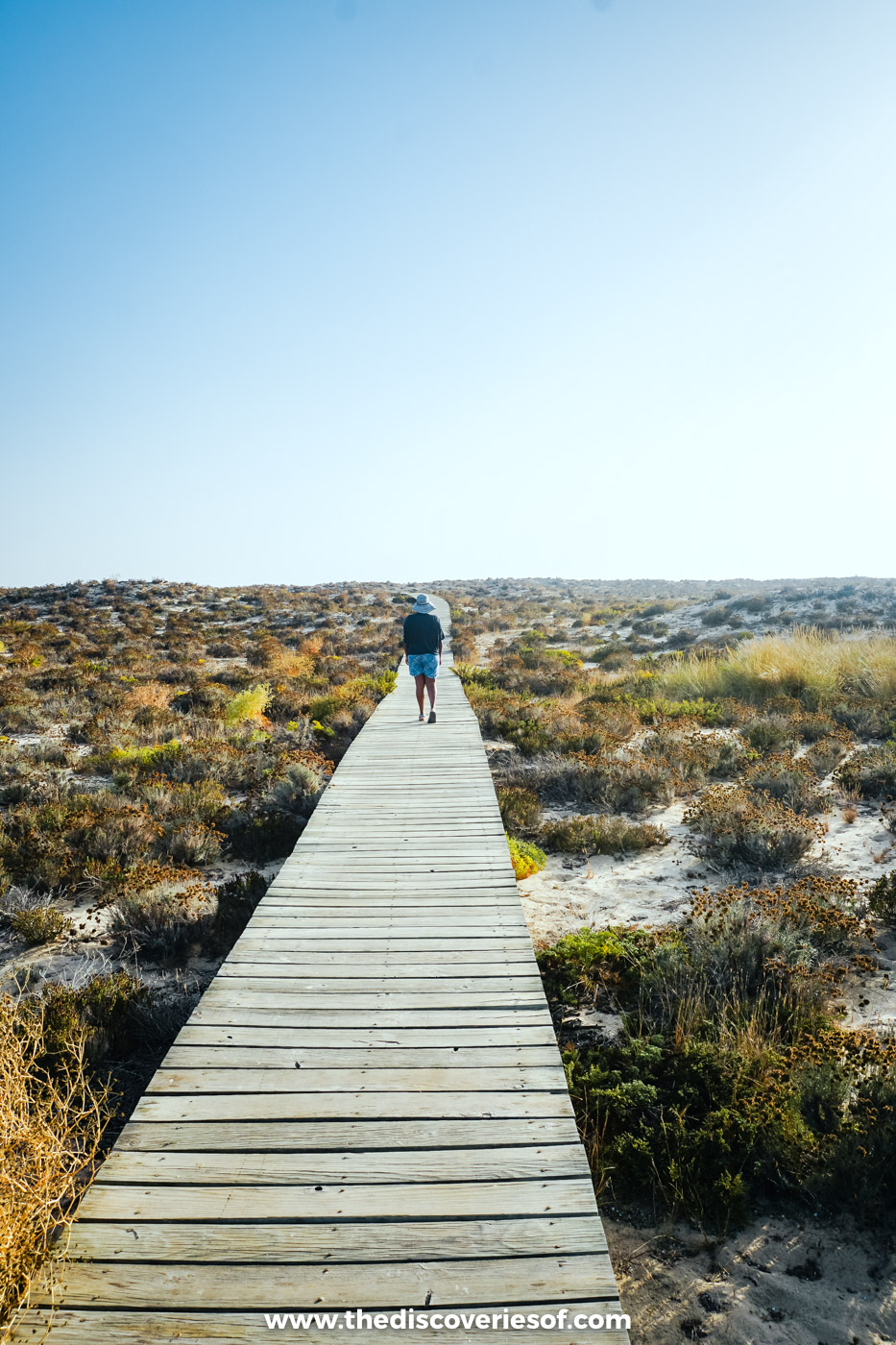
What I love most is the scale. The beach runs for about 7km along the ocean side of the island, and even when the boats are full, the crowds soon thin out once you walk away from the end of the boardwalk. Outside the school holidays, it’s easy to find a stretch with nobody else in sight. Pick a spot, plant your parasol and the island really does feel like the deserted place its nickname promises.
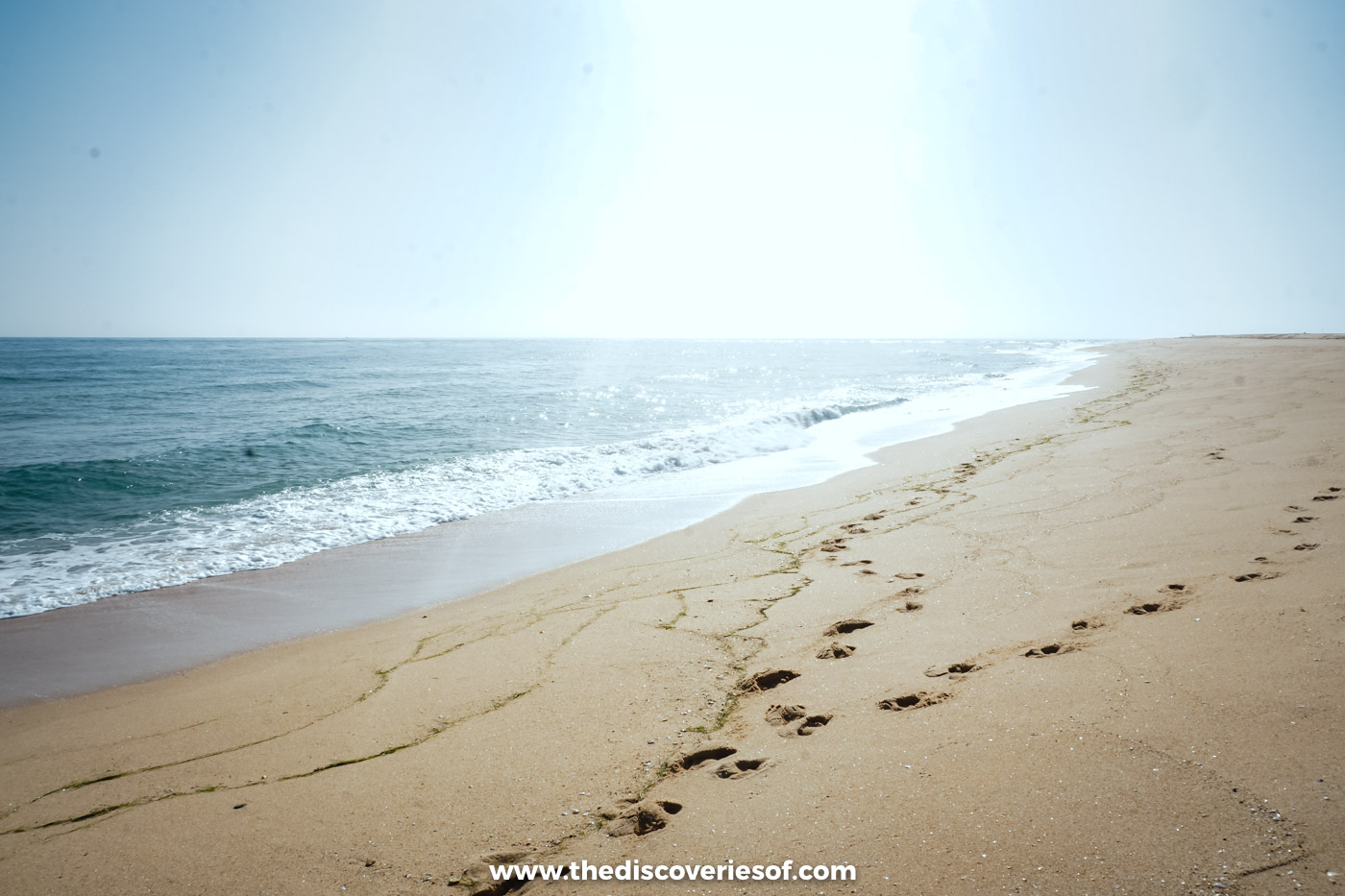
A few practical things to know about the beach:
- It flies the Blue Flag. Ilha da Barreta was one of four Faro beaches to receive one in 2026, and there are lifeguards in the summer bathing season.
- The sea is livelier on the ocean side. For calmer water, swim on the lagoon side, which faces Faro, but watch the currents in the channels.
- There’s a naturist stretch. Part of the island is legally designated for naturism, on the western side, about 30 minutes’ walk from the landing point. The beach by the boardwalk is a regular beach.
- Bring shade. There are sunbeds to rent near the landing point, but beyond them there’s no shelter at all from the sun or the wind.
Walk to the southernmost point of mainland Portugal
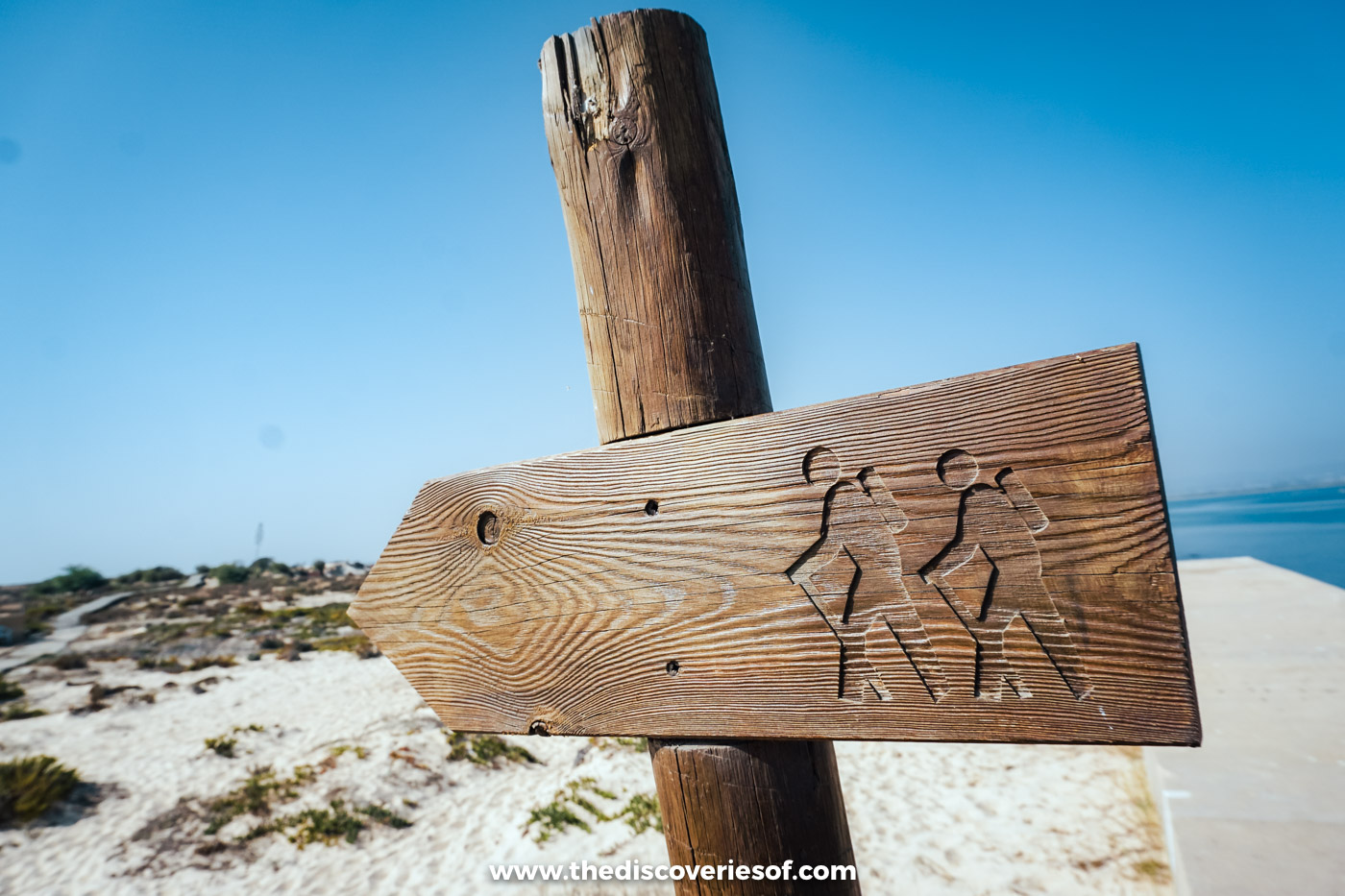
Ilha Deserta holds a small record: Cabo de Santa Maria, at its tip, is the southernmost point of mainland Portugal. Don’t expect a dramatic headland. The cape is little more than a gentle curve in the sand, marked by a wooden structure with signposts, which somehow makes it more charming.
It’s about 2km from the jetty, along the boardwalk built across the dunes in 1999 or barefoot on the beach. Allow around an hour there and back with a paddle on the way, and go in the late afternoon if you can, when the light softens over the dunes.
Lunch at Estaminé, the island’s only restaurant
There’s just one building on the island, and it’s a restaurant: Estaminé, which sits beside the jetty with views across the lagoon. It’s the reason many people make the trip, and I’d tell anyone who loves seafood to put it at the very top of their list.
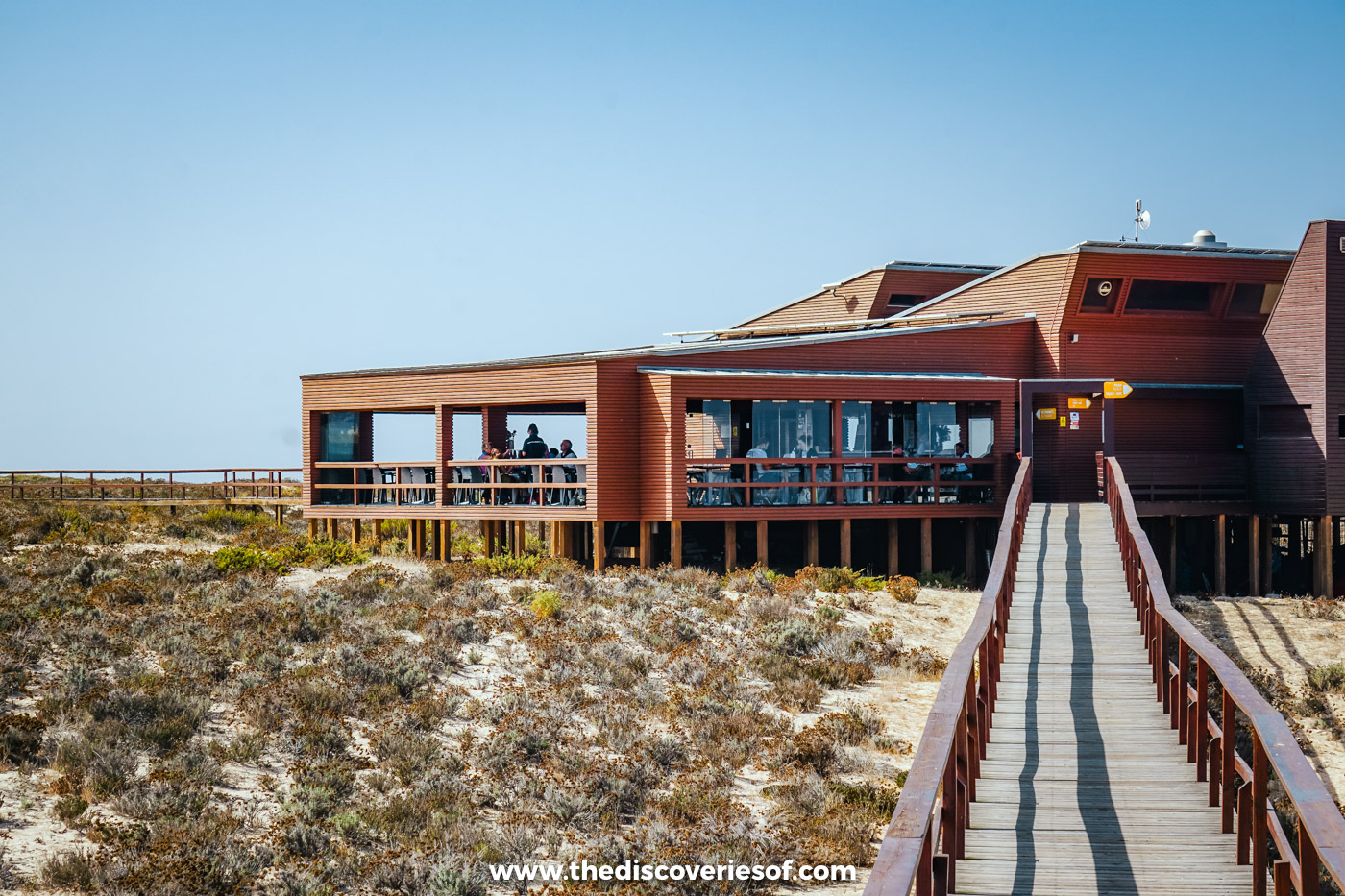
Its owner, Isabel, is something of a genius with seafood. Oysters, octopus, clams, prawns: every dish that came out of her kitchen showed off her deft touch. The restaurant is also impressively self-sufficient, producing its own solar power and its own drinking water.
A fire destroyed the old building in March 2021, and the rebuilt restaurant was serving again by that August. It serves lunch daily, generally from noon until 5pm, and booking ahead is wise, especially in summer and at weekends. A lunch here is the perfect excuse to stay on the island for the afternoon.
How to get to Ilha Deserta from Faro
All the boats are run by Animaris and leave from the Cais das Portas do Mar, a pier on the waterfront just outside the walls of Faro’s old town. It’s an easy walk from the train station and the bus station, and about 15 minutes by taxi from the airport. Tickets are sold at the booth on the pier, and you can also book online through the operator’s website, which is sensible in July and August.
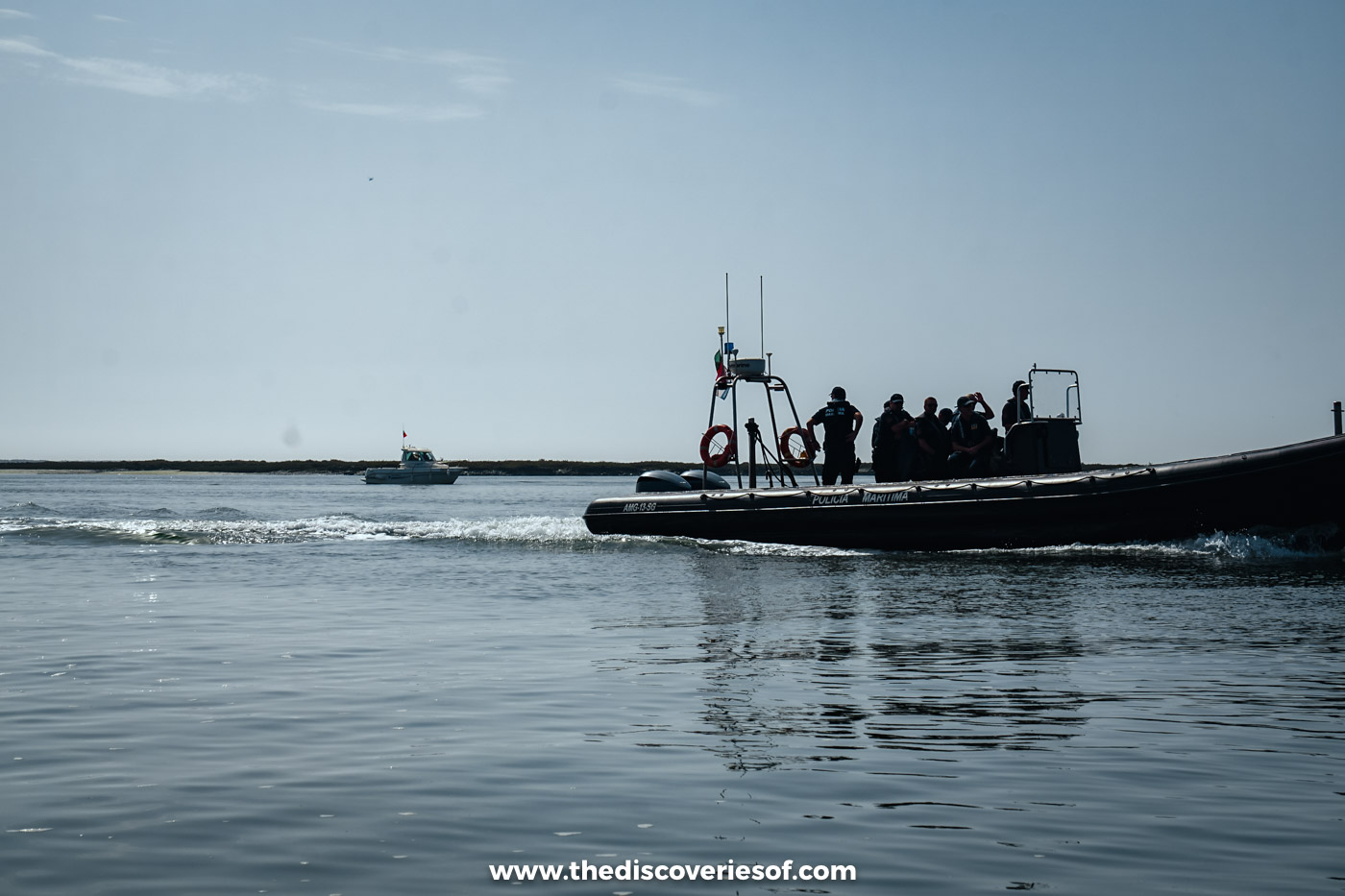
- Ferry: a covered catamaran for up to 96 people, with toilets on board. Allow around 45 minutes for the crossing, at €5 a head each way (€2.50 for children). There are around five departures a day, starting at about 10am, with the last boat back in the early evening.
- Speedboat shuttle: the quick option, about 15 minutes each way for €10 (€5 for children), with up to 18 passengers, running alongside the ferry with the most departures in summer.
- Eco tour with a marine biologist: about two hours on the water, stopping at the island, with a flexible return.
- Hop-on hop-off: a pass that adds the fishing villages of Farol and Culatra, on the neighbouring island, so you can hop between all three in a day.
- Private boat: if you miss the last boat back, a private speedboat costs about €50.
Timetables change through the year, with fewer boats in winter, so check the times on the day and plan your day around the last boat back.
Getting There
If you’re driving, park in Faro and walk to the pier, as you can’t take a car anywhere near the island. From Quinta do Lago or Vale do Lobo, it’s about 20 minutes to Faro by car.
When to go, and how to make the most of it
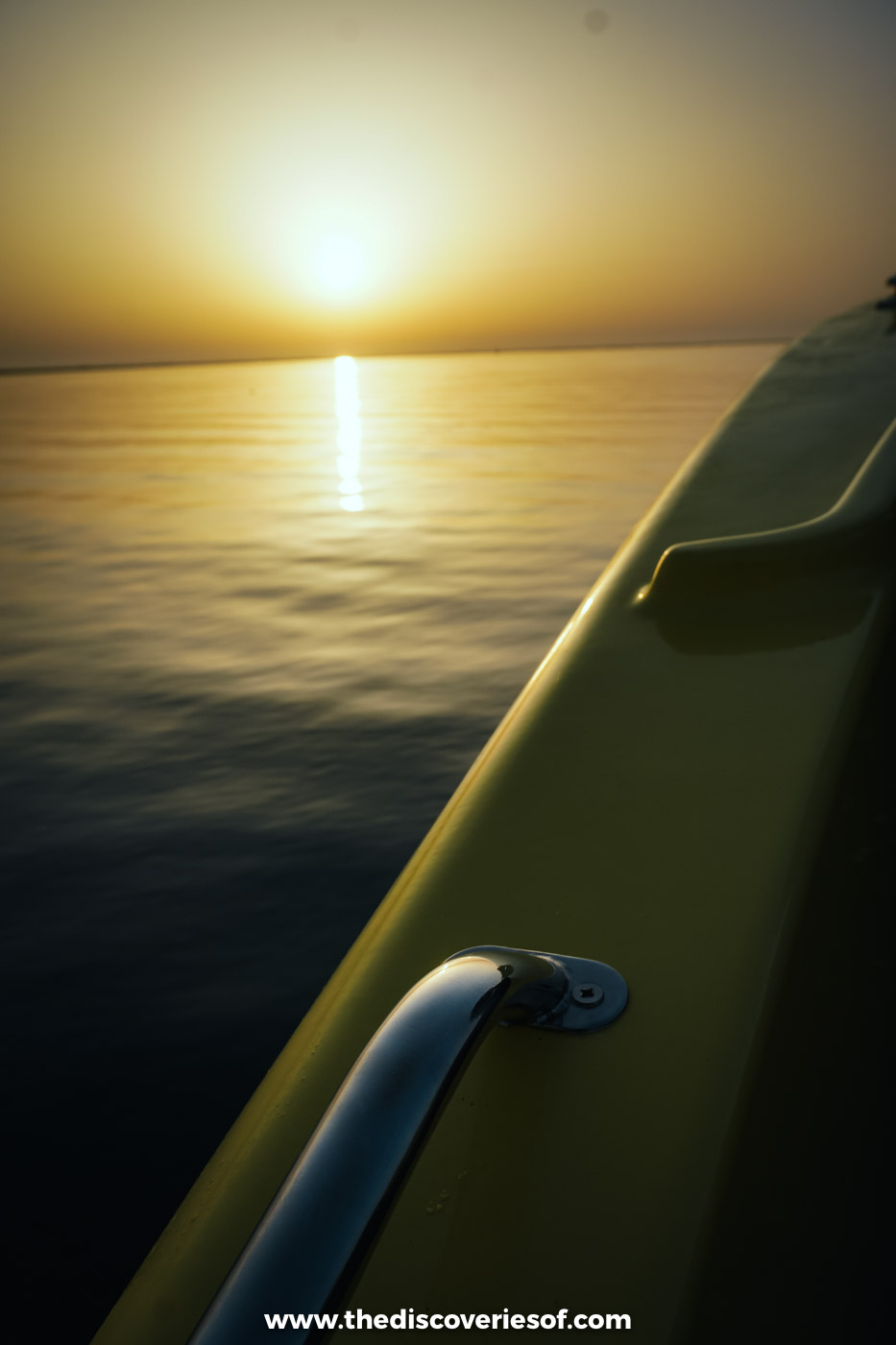
The boats run all year, but the island is at its best from May to June and again from September to October, when the sea is warm enough for a swim and you’ll have long stretches of beach to yourself. I went in October, and it’s the month I’d pick: the beaches are quiet, the light is golden and autumn brings migrating birds through the lagoon. In July and August, the boats fill up, so book ahead and take the earliest departure you can.
Winter brings fewer boats and a cooler breeze, but it’s a lovely time for a walk and a long lunch. My guide to the best time to visit Portugal goes through the Algarve month by month.
A few tips for the day:
- Take the first boat out. You’ll have the beach almost to yourself for the first hour or two.
- Pack water, sun cream and a parasol. Apart from the restaurant, there’s nowhere to buy anything on the island.
- Book lunch before you leave Faro. Estaminé is the only place to eat, and it fills up in summer.
- Keep to the boardwalk in the dunes. The island is part of a protected natural park, and the dune plants are fragile.
- Watch the clock in the afternoon. The last scheduled boat back leaves in the early evening, and the alternative is a pricey private speedboat.
Make more of the Ria Formosa
The island is only one part of the Ria Formosa, a lagoon that runs for about 60km along the eastern Algarve. On the same October trip, I also explored it by bike from my villa at Four Seasons Fairways, following the paths through the salt marsh to the beach at Quinta do Lago.
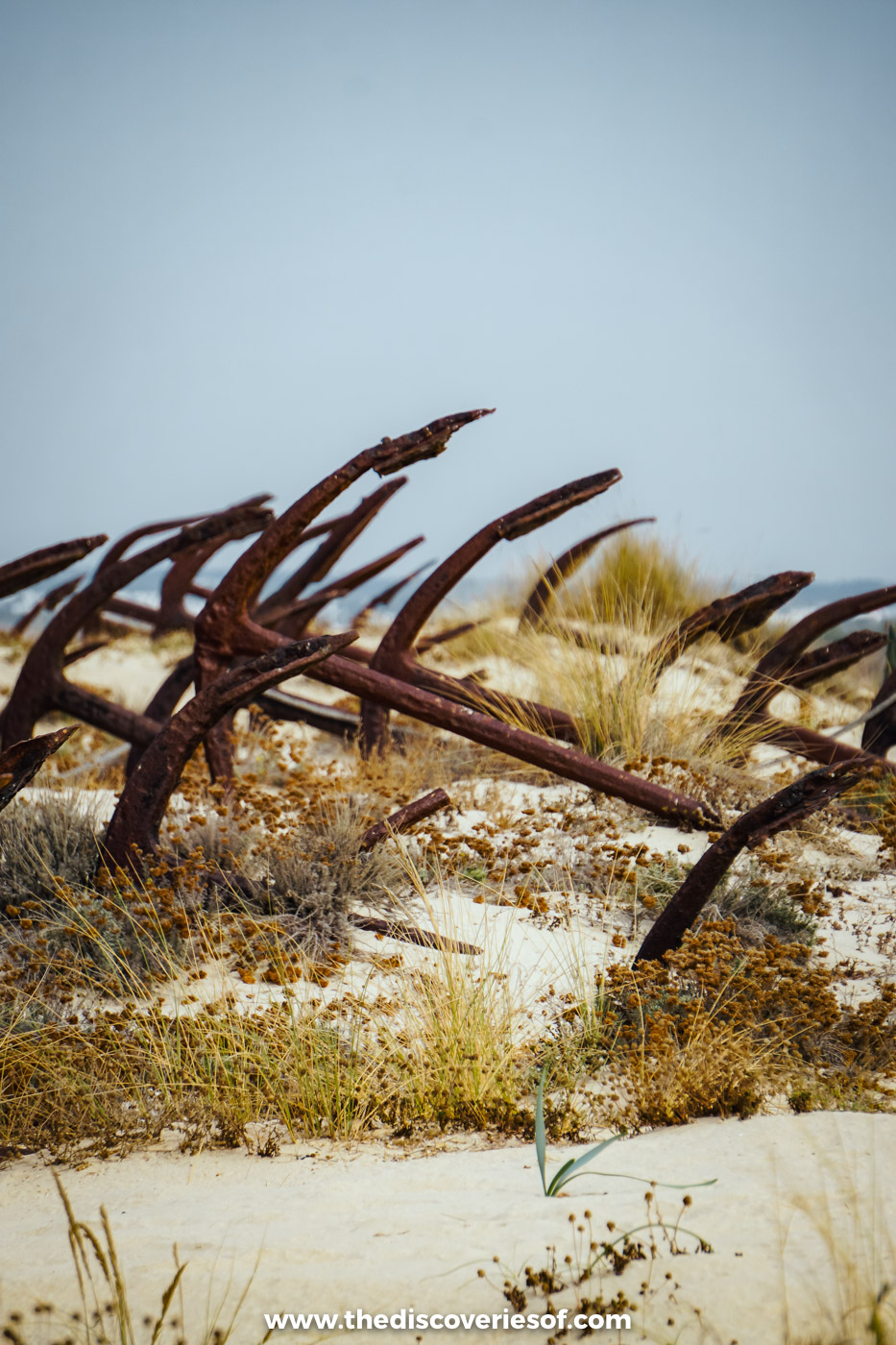
Further east, near Tavira, a little train carries you across the marshes to Praia do Barril and its haunting cemetery of rusting tuna-fishing anchors. And back in Faro, the walled old town with its storks’ nests, cathedral and chapel of bones is worth a morning before or after your boat. For more ideas along the coast, see my guide to the best things to do in the Algarve.
Map
Read next
- The best things to do in the Algarve
- The best beaches in the Algarve
- A villa at Four Seasons Fairways in Quinta do Lago
- An insider’s guide to Tavira
- One week in Portugal: the perfect itinerary
Love this? Save and share on Pinterest
Discover the top things to do, insider tips and hidden gems in our Portugal Travel Guides.
Read the guides →