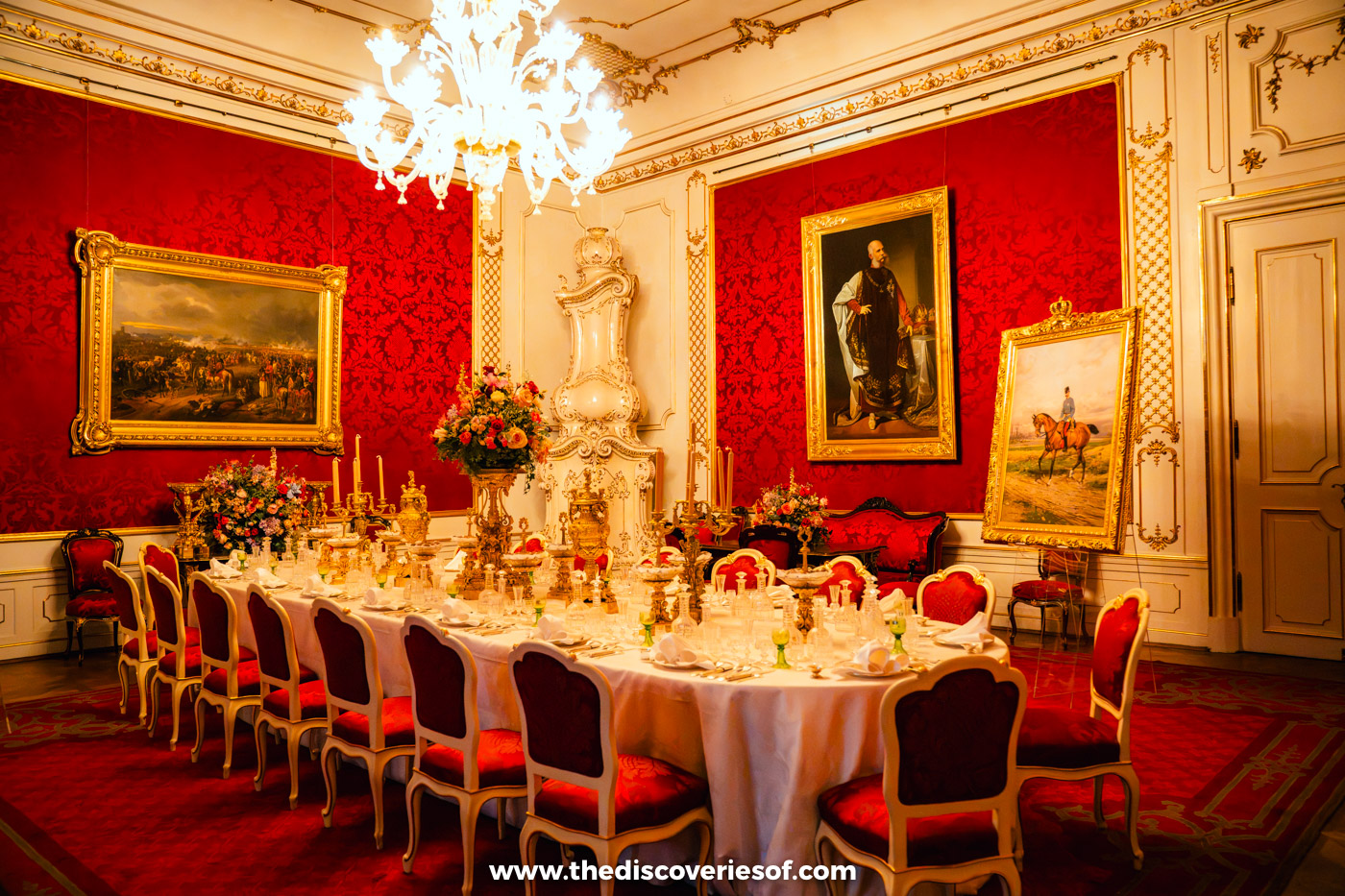

Vienna’s most famous cake has two homes a short walk apart, and they spent years in court arguing over which one could call its slice the original. Here’s how the Sacher and Demel versions differ, what each café is like on the day, and how to taste both without losing half your trip to a queue.
I queued for Café Sacher on my first afternoon in the city, in November, and saved Demel for lunch on my last day, a few hours after snow had started to fall outside the Hotel Sacher.
I should admit something first: chocolate cake isn’t usually my first choice. I like it, and I wouldn’t order something I knew I wouldn’t enjoy, but it meant both cafés had a high bar to clear.
This guide to Sachertorte in Vienna covers what the cake actually is, how the feud between the two houses played out, how their slices compare, and my honest verdict on each.
What makes a Sachertorte a Sachertorte
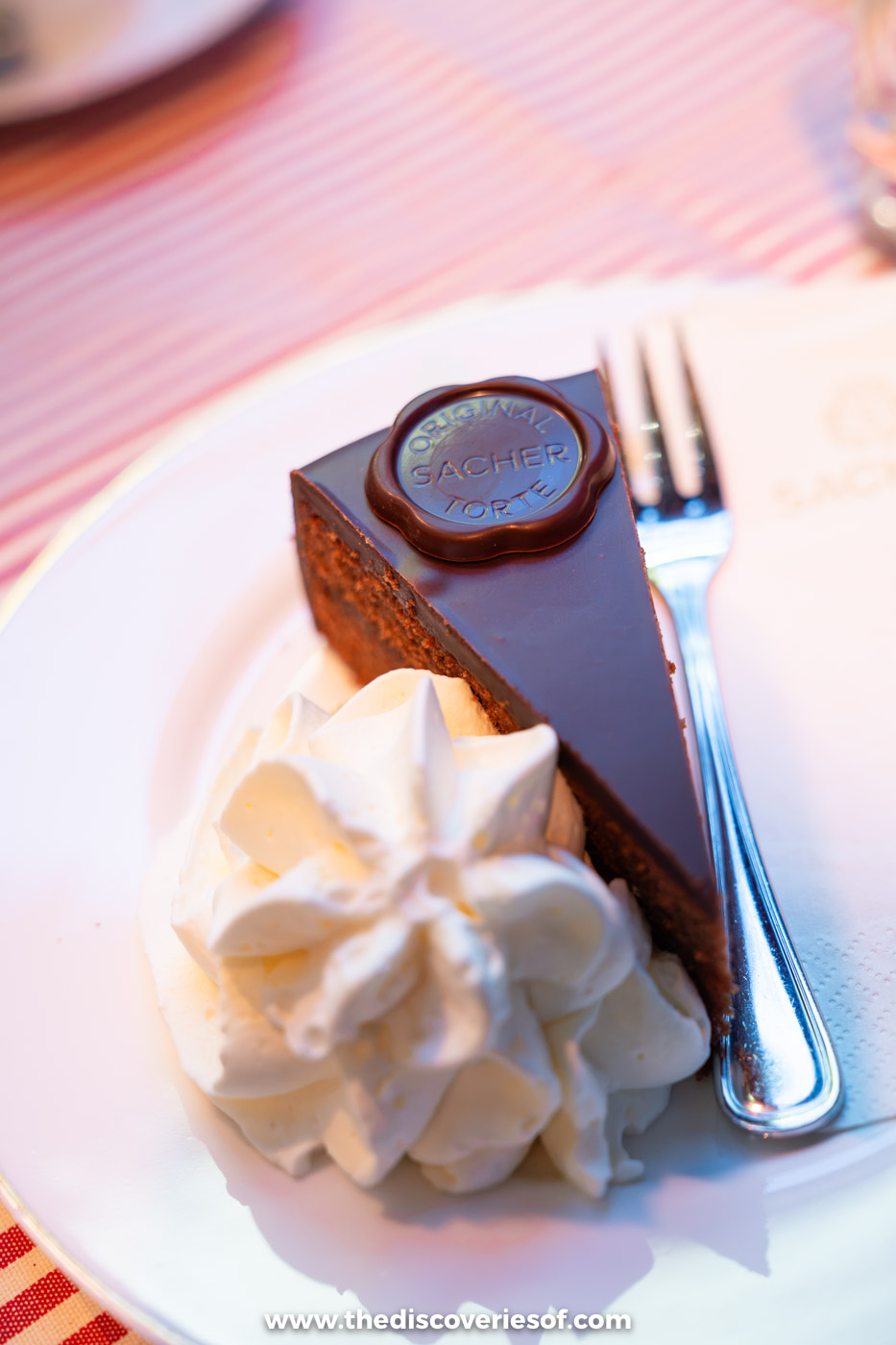
At heart, it’s a chocolate sponge brushed with apricot jam and sealed under a dark chocolate glaze. Austria’s national register of traditional foods sets out the rules: chocolate must make up at least 15 per cent of the sponge mix, and the top edge is gently rounded, a hangover from the round-bottomed tins it was first baked in.
The glaze is the tricky part. The classic version is cooked from sugar and chocolate, then tempered so that it sets with a soft, satin sheen rather than a hard gloss.
Every slice comes with a mound of unsweetened whipped cream on the side. As I found out, that cream is doing far more work than it looks.
How a cake war landed Sacher and Demel in court
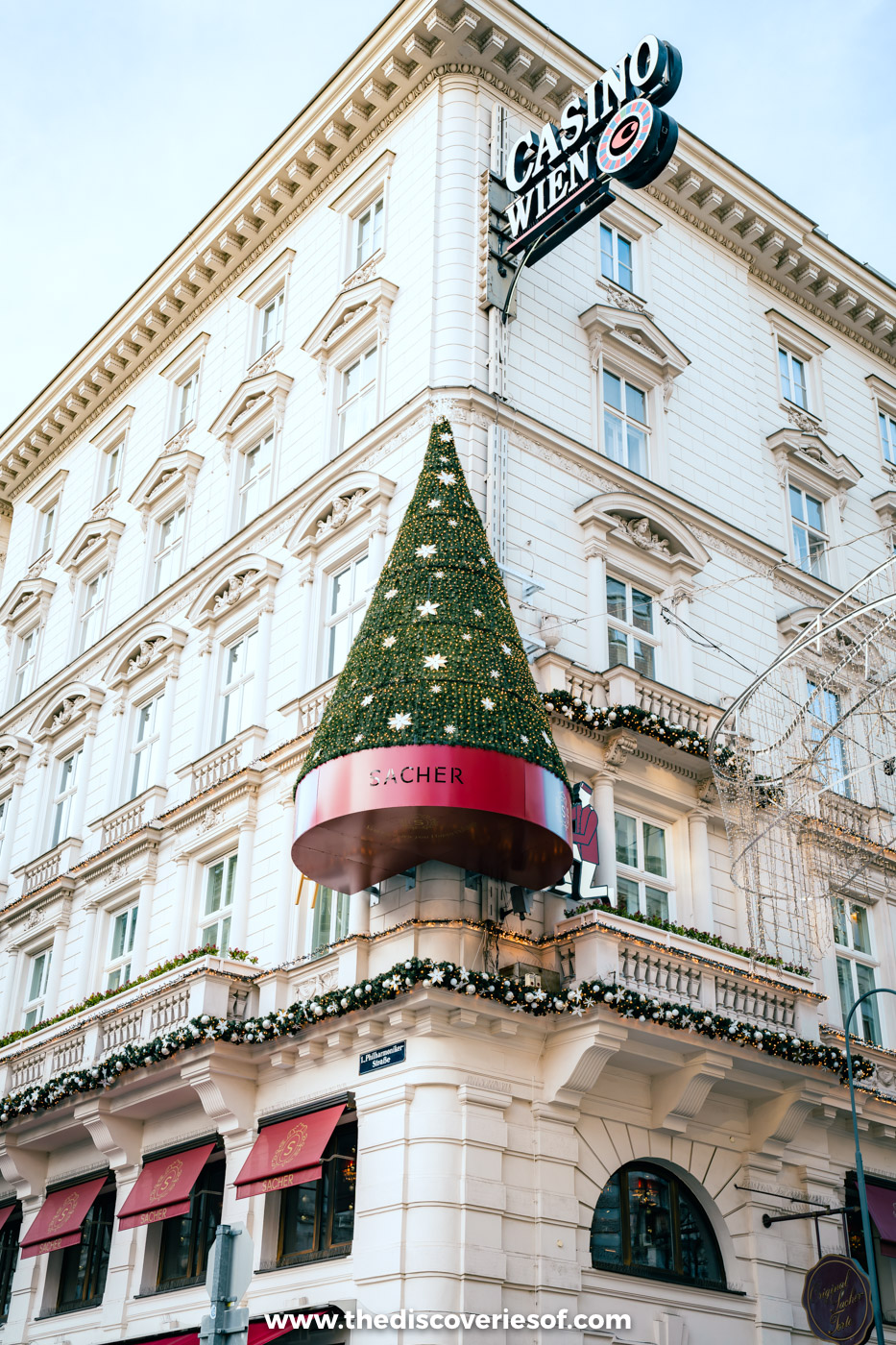
The story begins in 1832, when Prince Metternich asked his kitchen for a special dessert to impress his guests and his head chef was off sick. The job fell to a 16-year-old apprentice, Franz Sacher, and the chocolate cake he came up with is still the basis of every Original Sacher-Torte baked today.
His son, Eduard, trained at Demel, which was then the imperial court confectioner, and made his father’s cake there during his apprenticeship. Demel sold it as the original from then on.
In 1876, Eduard opened the Hotel Sacher opposite the State Opera. After he died in 1892, his widow Anna took over, running it strictly but fairly by the hotel’s own account.
The trouble started in the 1930s. In 1934, the year the Gürtler and Siller families took over the hotel, Eduard’s son passed the family recipe to Demel. Four years later, the hotel’s new owners began selling the cake to take away and registered “Original Sacher-Torte” as a trademark.
What followed is known in Vienna as the Tortenkrieg, the cake war. Through the 1950s the two houses fought in the commercial court over the name, and over a second layer of apricot jam, until the dispute was finally settled in 1963.
Under the settlement, only the hotel’s cake can be called the Original Sacher-Torte. Demel’s was sold as the Eduard-Sacher-Torte and today goes by Demel’s Sachertorte, under a triangular chocolate seal of its own.
I told this story to camera outside the hotel on my final morning, just as the snow began. Within minutes it was coming down so heavily that I had to take shelter. I was thrilled all the same: on a winter trip, part of you always hopes for snow, and so often it never comes.
Sacher vs Demel: how the two slices compare
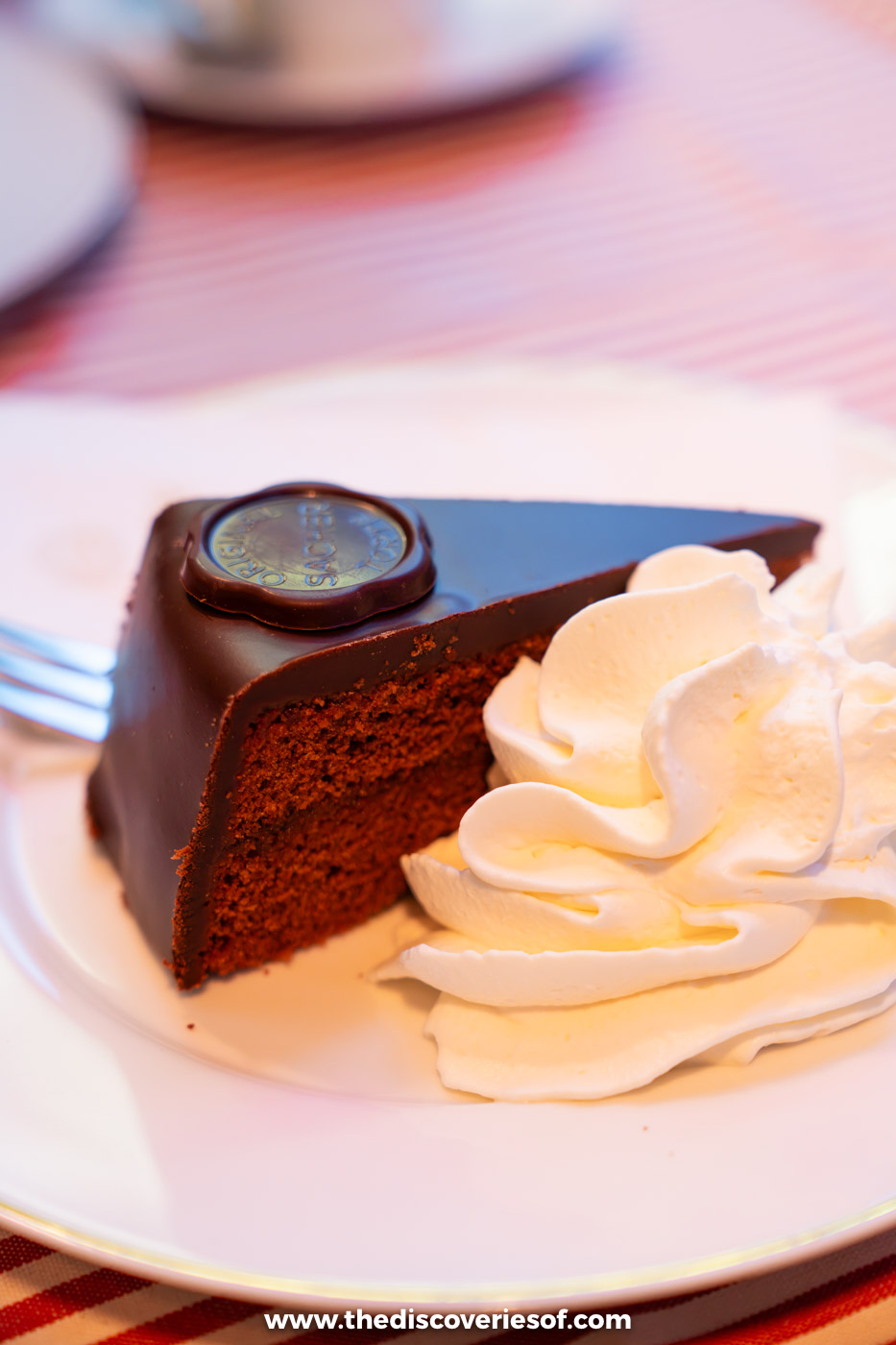
On paper, they’re near enough the same cake. These are the differences that matter when you’re sitting down to one:
- The name and the seal: Sacher’s is the Original Sacher-Torte, topped with a round chocolate seal. Demel’s is Demel’s Sachertorte, with a triangular one.
- The apricot: Sacher’s has a thin layer of apricot jam running through the middle as well as under the glaze. At Demel, the apricot sits just under the icing, and where Sacher has jam, I found a line of chocolate.
- The texture: Sacher’s sponge is light and fluffy rather than fudgy, and not especially moist on its own. Demel’s looked moist the moment I cut into it and tasted more chocolatey.
- The price: a slice with cream is €11.50 at Café Sacher. Demel doesn’t publish its café prices online.
- Booking: Café Sacher takes reservations online. Demel takes none at all.
- Taking one home: both sell whole cakes in a wooden box and ship abroad. Sacher’s keep for at least 18 days, Demel’s for about six.
Don’t
Don’t go in expecting a dense, gooey chocolate cake from either café. A Sachertorte is lighter and drier by design, which is exactly why the cream is served with it.
Queuing for the original at Café Sacher
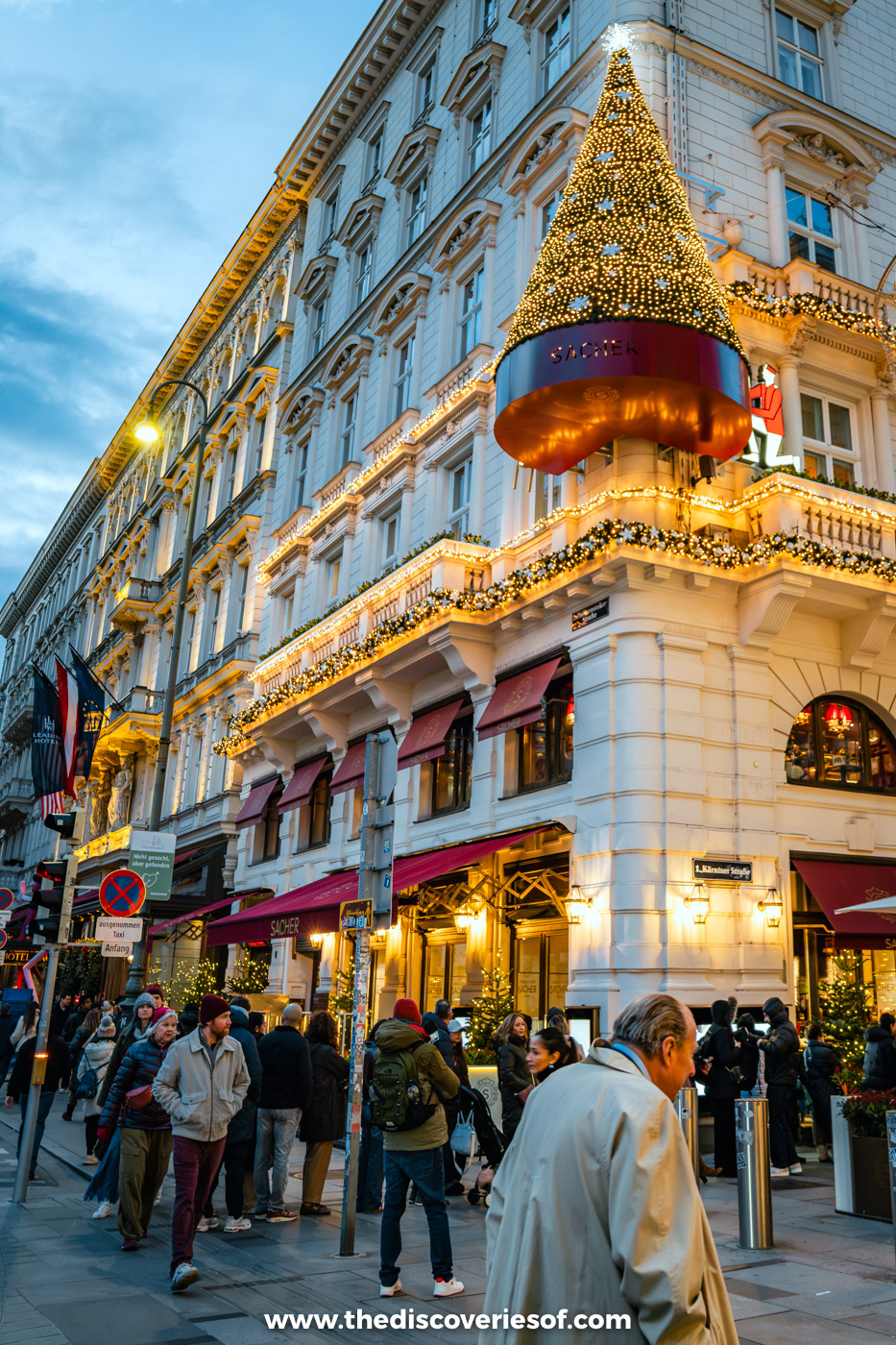
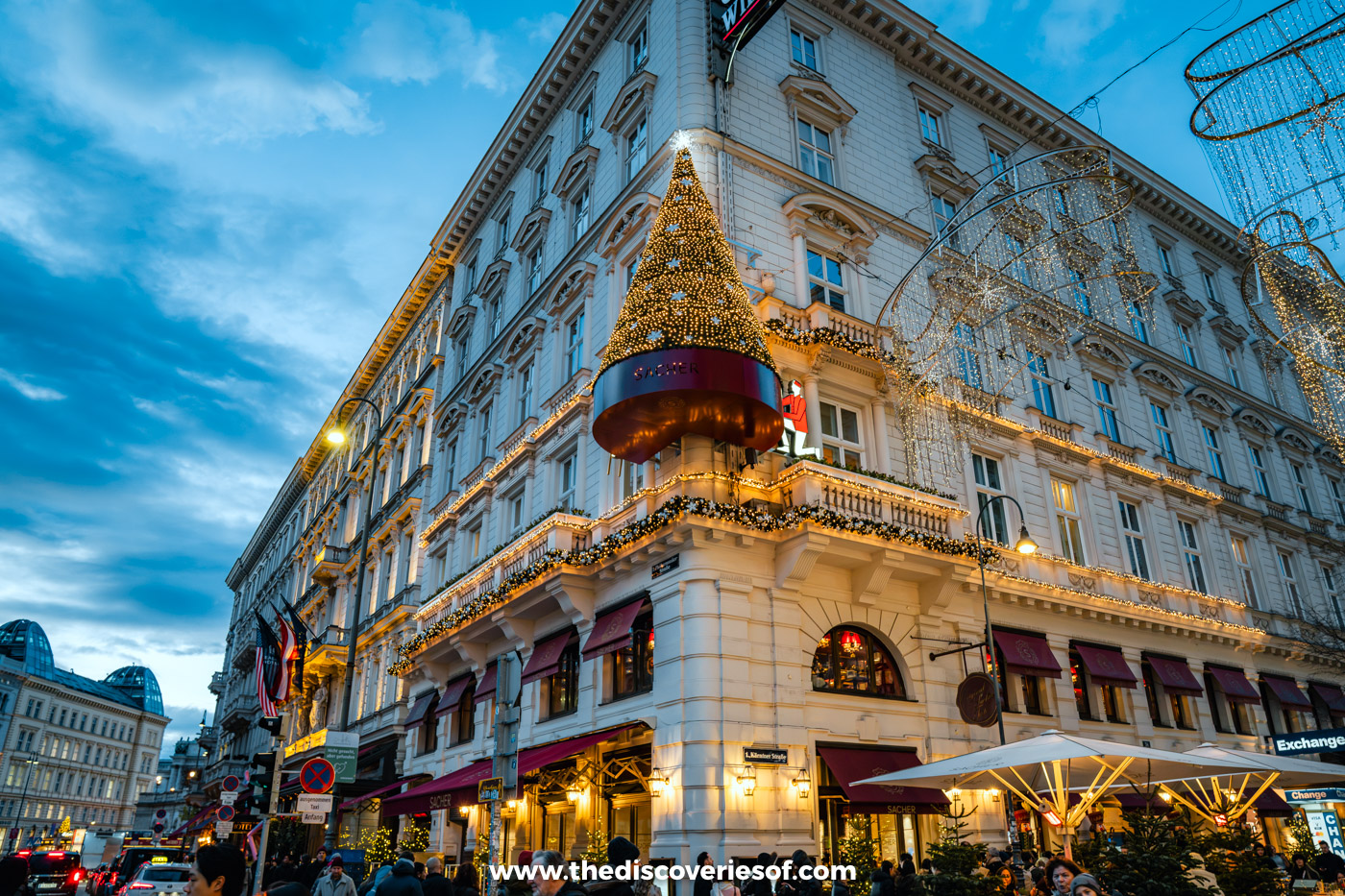
There are two ways in. Café Sacher is the hotel’s traditional coffee house, with its entrance on Philharmoniker Straße, while Café Bel Étage on the Kärntner Straße corner serves the same cake across two floors.
When I arrived mid-afternoon, the corner café was the busier, more touristy option, with a hectic queue and a crowd on both floors. I chose a quieter queue for the more authentic coffee house instead.
It wasn’t too bad, at around 20 minutes. Café Sacher now asks guests to reserve a table in advance, and that’s what I’d do next time.
Top Tip
Book through the official Café Sacher page before you go. It’s open daily from 7am to 11pm, so a table at breakfast or after dinner is easy to fit around sightseeing.
Tasting the Original Sacher-Torte
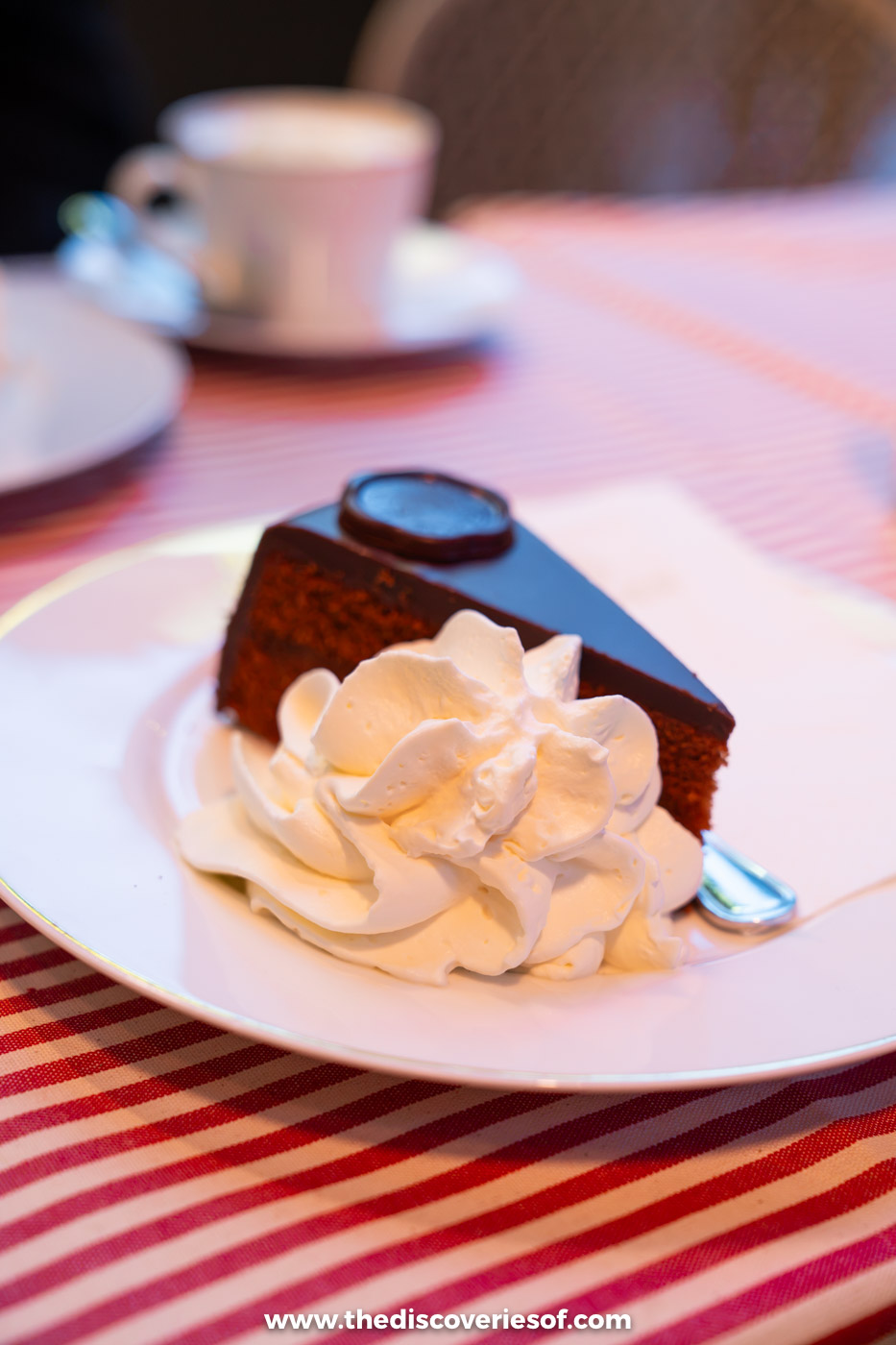
For speed, I took a table outside, right under the heaters, because I wanted to be done in time to catch the Christmas lights at blue hour. I ordered a slice and a melange, the Viennese espresso topped with whipped cream.
The thin layer of apricot jam through the middle was lovely. It really stands out against the cocoa of the sponge.
Would I call it my favourite chocolate cake? Probably not. On its own it isn’t the moistest (I wouldn’t say dry, exactly), and it’s nothing like the dense, fudgy, indulgent chocolate cake you might be picturing: it’s much lighter and fluffier.
That’s why the cream matters. With it, the slice is perfect; without it, I don’t think it would hit in quite the same way.
So I enjoyed it very much, but honestly, I wouldn’t write home about it. Perhaps that’s the fate of a cake that was a marvel in its day: now everyone takes it for granted.
Inside the coffee house
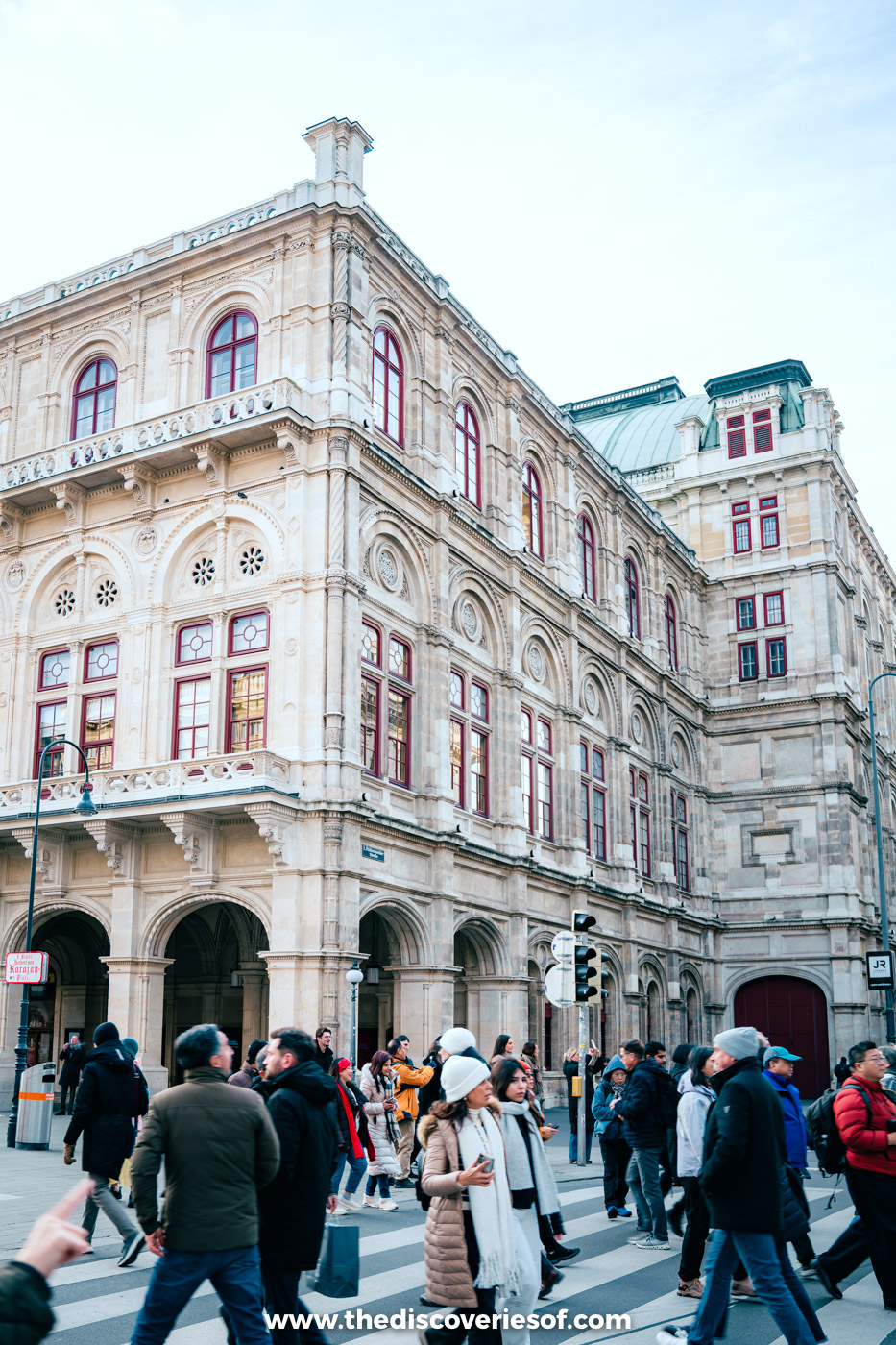
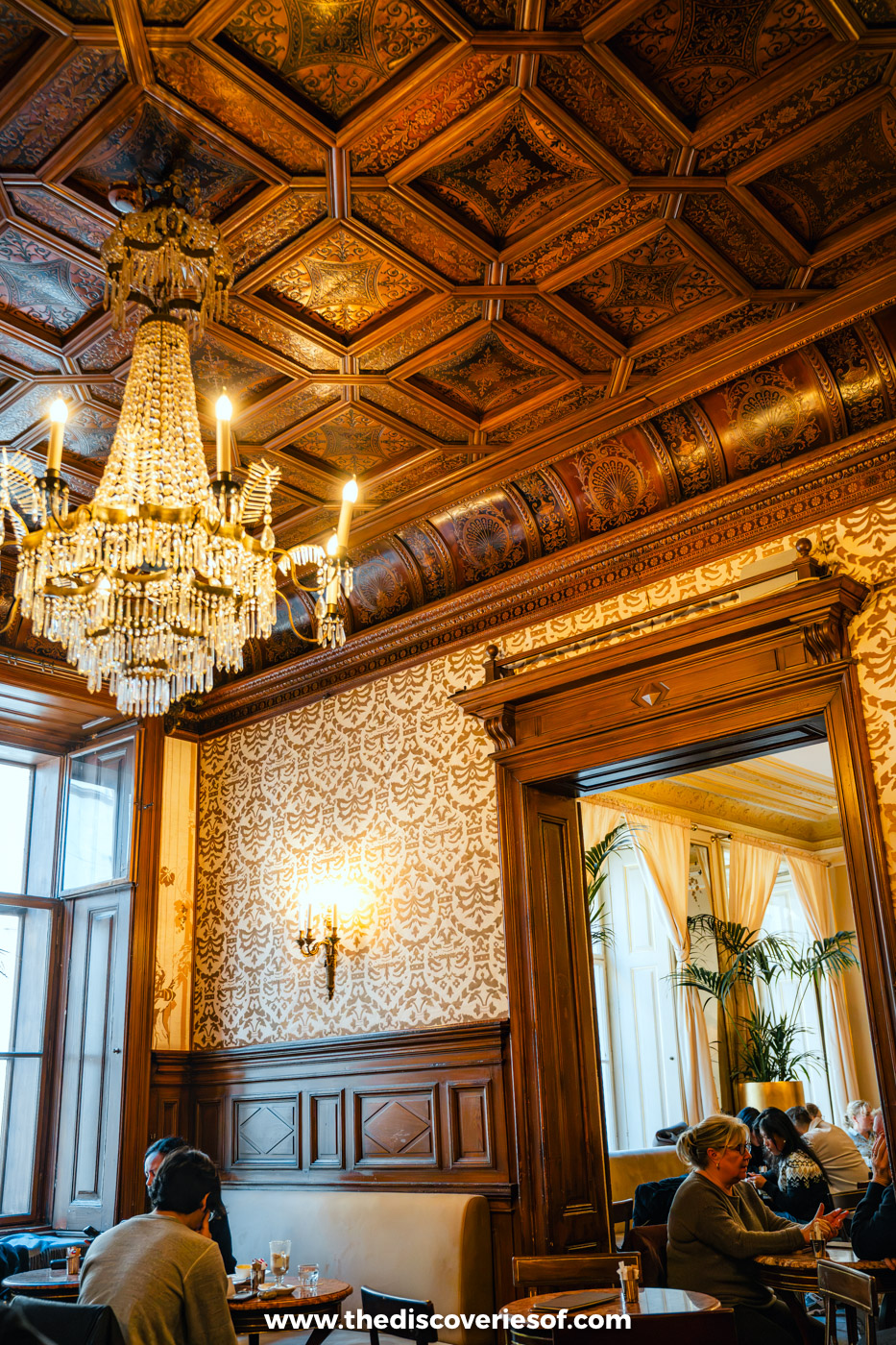
Even if you sit outside, pop in to see the room. It’s all red velvet seating, marble tables and chandeliers, and I thought it was beautiful.
The winter garden looks across to the State Opera, and in summer it opens up as a terrace. Alongside the €11.50 slice, a Sacher Melange is €7.50, or there’s a set with the cake, a hot drink and mineral water for €24.50.
Going to Sacher is absolutely one of the things to do in Vienna, for the setting as much as the slice. I just wouldn’t be honest if I told you the cake itself is a must.
Demel, the old court confectioner on Kohlmarkt
Demel goes back to 1786, when the confectioner Ludwig Dehne opened a shop on Michaelerplatz, opposite the old Burgtheater. Christoph Demel, the business’s former apprentice, bought it in 1857, and his sons won the title of court supplier in 1874.
It moved to Kohlmarkt 14 in 1888, as Michaelerplatz was being redesigned, and it’s been on that elegant street leading up to the Hofburg ever since. The waitresses, the Demelinerinnen, still wear black and keep the old habit of addressing you indirectly (“is madam ready to order?”).
Top Tip
Demel doesn’t take reservations, so make it a lunch stop. The savoury menu is worth your time, and you can finish with cake. It’s open daily from 10am to 7pm (see the official Demel café page).
Tasting Demel’s Sachertorte
It was always going to be time to try the other Sacher. Cutting into Demel’s slice, it already looked very moist.
It’s definitely more chocolatey, with a line of chocolate running through where the Sacher slice had its apricot jam. Demel keeps its apricot to a single layer, right under the icing.
Other than that, I hate to say it, they’re very similar. And why wouldn’t they be, after so many years fighting over who had the original? I do like them both.
Stay for the goulash
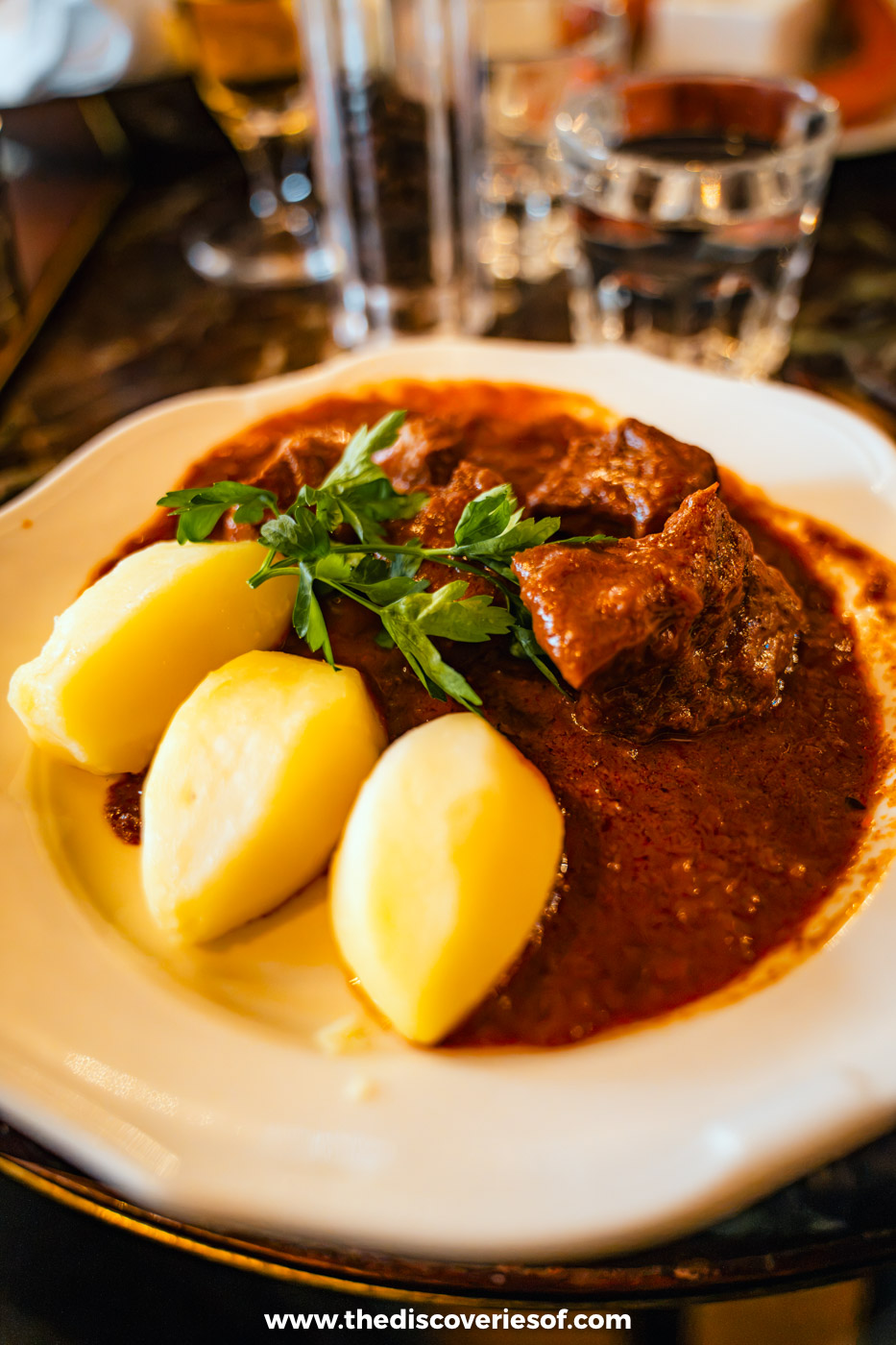
The surprise of my visit wasn’t the cake. With a little time before my flight home, I made Demel my lunch stop, and the goulash was so tasty.
The beef was meltingly tender and the sauce rich, with boiled potatoes on the side. I’m not normally a fan of a boiled potato, but these were waxy ones cooked until soft and absorbent, and they were perfect with the sauce.
Then came the Sachertorte, or rather Demel’s Sachertorte. (I caught myself making that slip on camera. Heaven forbid.)
Demel also has a street-side stand selling Kaiserschmarrn to take away. It’s known, too, for the Demeltorte and for candied violets, said to have been Empress Elisabeth’s favourite.
So, Sacher or Demel?
In all honesty, the difference between the two is pretty minimal. Part of the joy is going to both and reaching your own verdict.
For me, Sacher just pipped it to the post, though it was close. The best way, and the only way, to decide for yourself is to eat cake in two of the city’s most illustrious cafés.
If you’d rather a richer, more chocolatey slice, Demel may suit you better. If you want the original in its most famous room, it has to be Sacher, and if you’re hungry, Demel’s lunch menu makes the decision easy.
How to taste both on one trip
- Spread them out. I had Sacher on my first afternoon and Demel on my last day. If you’re short of time, they’re less than 15 minutes apart on foot, up Kärntner Straße towards St Stephen’s Cathedral, then along the Graben to Kohlmarkt.
- Book one, time the other. Reserve Café Sacher online, then arrive at Demel for lunch, when you can make a proper meal of it.
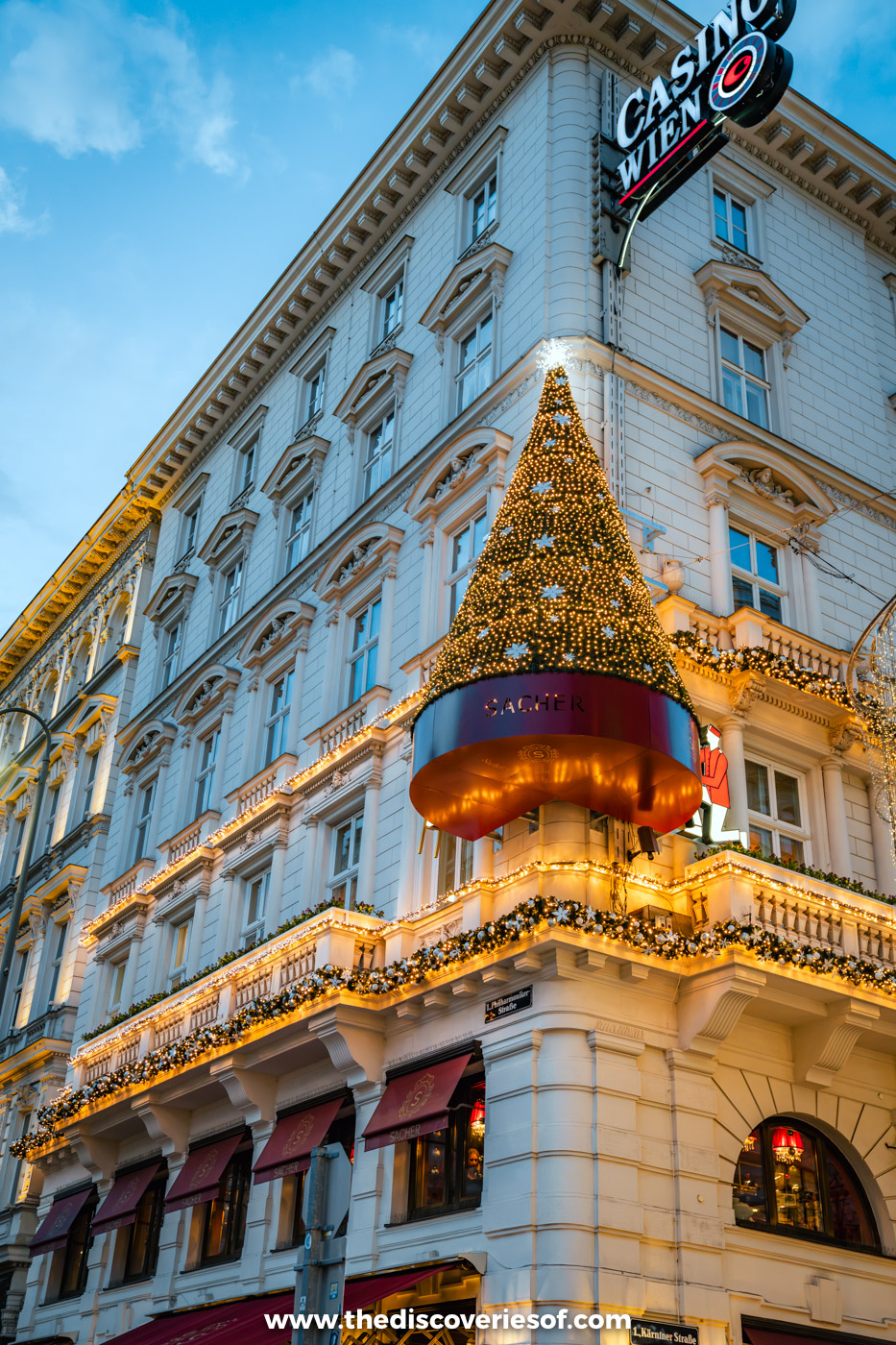
- Go in winter. The Sacher corner was dressed up for Christmas when I visited, and the heaters make the outdoor tables a treat. I sat out on a mild afternoon, and by my last morning snow was falling hard outside the hotel.
- Take one home. The Sacher Shop in the hotel sells whole cakes in several sizes, and Sacher also ships worldwide. Demel’s online shop delivers to 39 countries, and it has two counters at Vienna Airport if you leave it to the last minute.
Do
For more of the city’s coffee culture with a local guide, this food and coffee tour takes in a market, lunch and street food stops.
Sachertorte in Vienna: your questions answered
Which café has the original Sachertorte?
Legally, the Hotel Sacher. Since the 1963 settlement, only its cake can be sold as the Original Sacher-Torte. Demel’s, which Eduard Sacher made there as an apprentice, is sold as Demel’s Sachertorte.
Do you need to book Café Sacher?
Café Sacher asks guests to reserve in advance through its website, and without a booking you should expect a queue (mine was about 20 minutes in November). Demel doesn’t take bookings.
How much is a slice?
At Café Sacher and Café Bel Étage, a slice with whipped cream costs €11.50, or €24.50 with a hot drink and mineral water. Demel doesn’t list its café prices online.
Is it always served with cream?
Yes, with unsweetened whipped cream, and both cafés serve it that way. The sponge is fairly light, so don’t leave the cream on the plate.
How many cakes does Sacher make?
Around 360,000 a year, all made by hand. In the Christmas season, its bakers separate up to 21,000 eggs a day, and the recipe itself is kept locked in a safe.
Map
Read next
- SO/ Vienna review: spacious rooms, views both ways and breakfast 18 floors up
- Inside the Sisi Museum at Vienna’s Hofburg, where an empress hung gym rings in her dressing room
- 3 days in Vienna, with time for Habsburg palaces, grand coffee houses and two rival Sachertortes
- 11 Vienna Christmas markets, and the one to save your gift shopping for
- How to see Vienna’s Christmas lights in one walk, from ballroom chandeliers to Roman ruins
- St Stephen’s Cathedral in Vienna: exploring the two towers, catacombs and an emperor’s tomb
- A guide to Schönbrunn Palace, the Habsburgs’ 1,441-room summer home
- Visiting the Wiener Christkindlmarkt at Rathausplatz, where the ice rink winds through the park
- The Am Hof Christmas market, where Vienna’s makers sell their own work
- 28 of the best city breaks in Europe, and how long to give each one
- Schnitzel, strudel and a sausage at midnight: what to eat in Vienna, and where to order it
- Trześniewski review: are Vienna’s century-old open sandwiches still the best quick lunch in town?
Love this? Save and share on Pinterest
Discover the top things to do, insider tips and hidden gems in our Austria Travel Guide.
Read the guides →