
Planning a visit to Petroglyph National Monument in Albuquerque? Here’s how the four areas compare, which trail to pick, opening and car park hours, how to look after the rock art and the tips that make the walk.
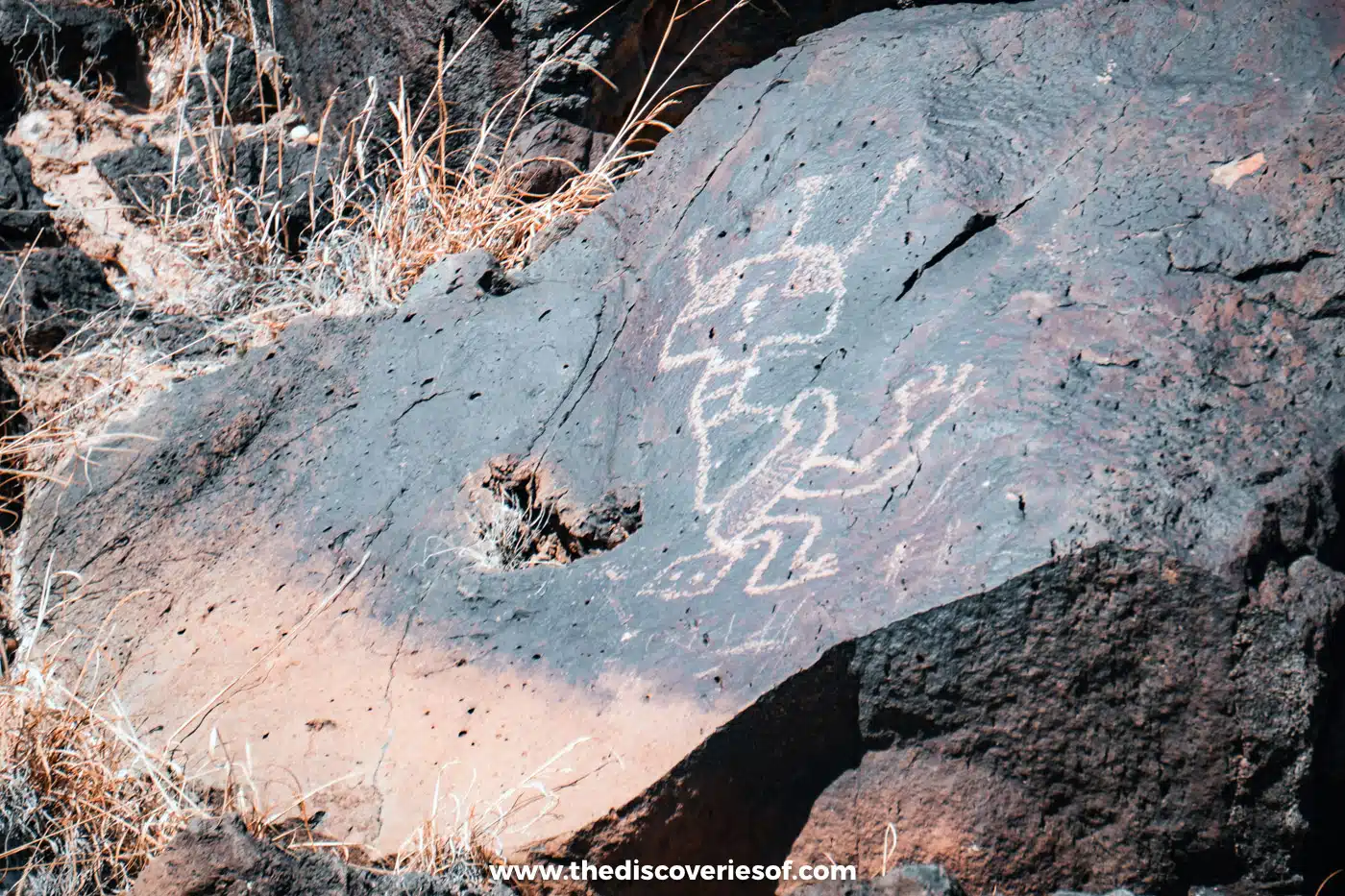
On the city’s West Mesa, a long, low wall of black volcanic boulders runs along the edge of the suburbs. Look closely and the rocks are covered in pictures: spirals, stars, birds, masked faces and hand prints, pecked into the stone by Ancestral Pueblo people hundreds of years ago. It’s one of the largest collections of rock art in North America, and it sits within sight of ordinary streets and shopping centres.
It’s another Albuquerque must. I visited in February, on a day that was sunny but freezing, and walked the Rinconada Canyon Trail. It turned out to be my favourite walk in the city. There are around 300 carvings to find along the way, half the fun is finding them yourself, and it’s completely free.
The catch is that the monument isn’t one site but several, strung out along a 17-mile escarpment, and none of the petroglyph trails start at the visitor centre. So here’s how the canyons compare, which one to choose and everything you need to know before you drive out.
Want a sneak peek? Watch my Albuquerque video
Subscribe on YouTube and discover new destinations.
Petroglyph National Monument at a glance
- Where: the West Mesa on the west side of Albuquerque, about 15 minutes’ drive from Old Town
- What: an estimated 20,000 to 24,000 petroglyphs carved into a volcanic escarpment, plus a row of dormant cinder cones
- Entry: free, with no pass or ticket needed
- Hours: trails are open daily; the gated car parks open 8am to 5pm at Rinconada Canyon, 8:30am to 4:30pm at Boca Negra Canyon (last entry 4pm) and 9am to 5pm at the volcanoes; Piedras Marcadas is open sunrise to sunset
- Visitor centre: 8:30am to 4:30pm daily
- Closed: Thanksgiving, 25 December and 1 January
- Best trail: Rinconada Canyon, 2.2 miles round trip with about 300 petroglyphs
- Time needed: 1 to 2 hours per trail, or half a day to see two areas
- Dogs: leashed dogs are welcome everywhere except the trails at Boca Negra Canyon
Stories in the stone: what you’re looking at
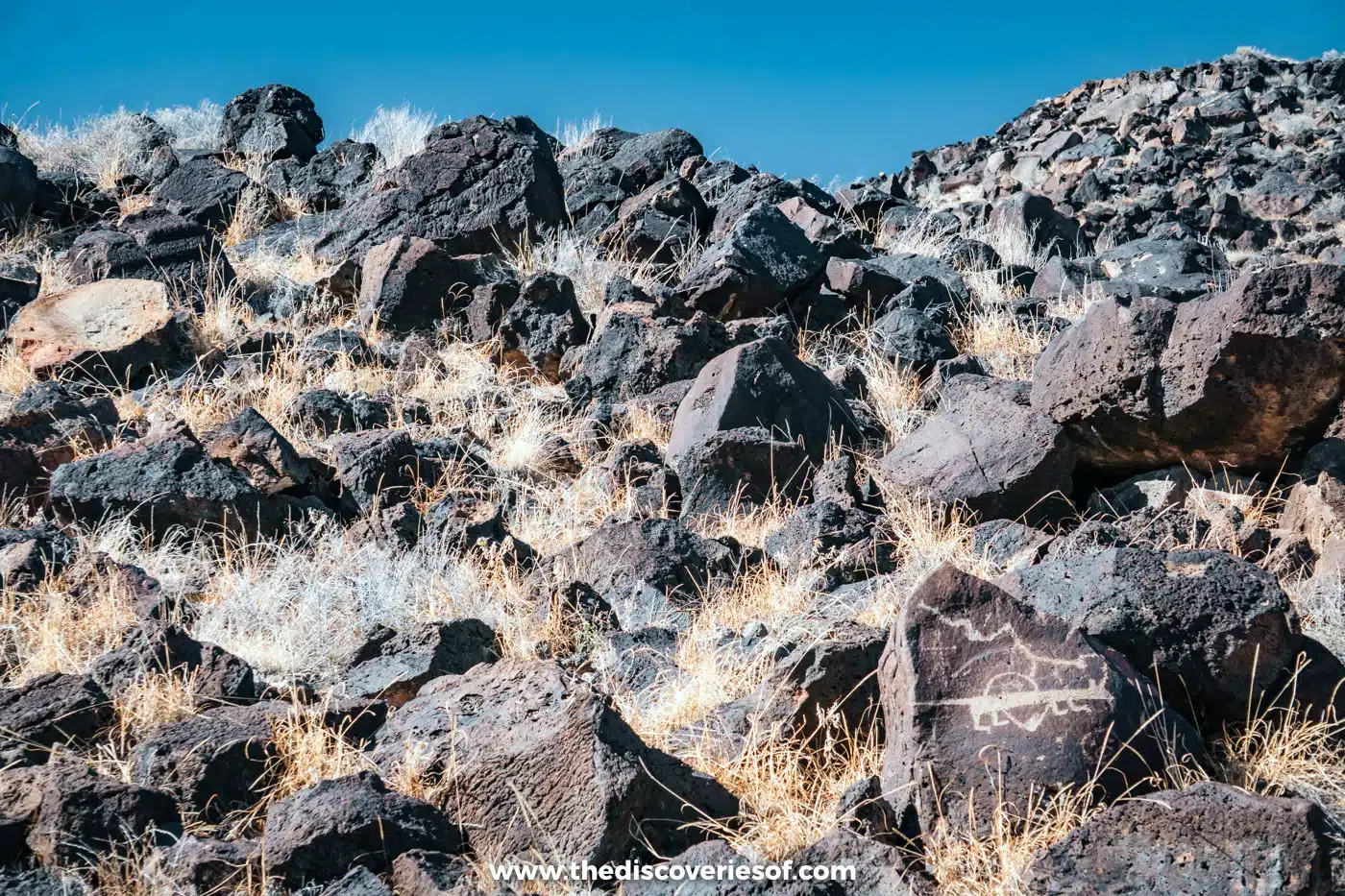
The monument’s rock art owes everything to volcanoes. Between about 200,000 and 155,000 years ago, eruptions to the west of the Rio Grande sent basalt lava flowing towards the valley. As the river and the weather ate away at the edge of those flows, the cliff broke up into the jumble of boulders you see today, a dark escarpment that runs for about 17 miles along the West Mesa.
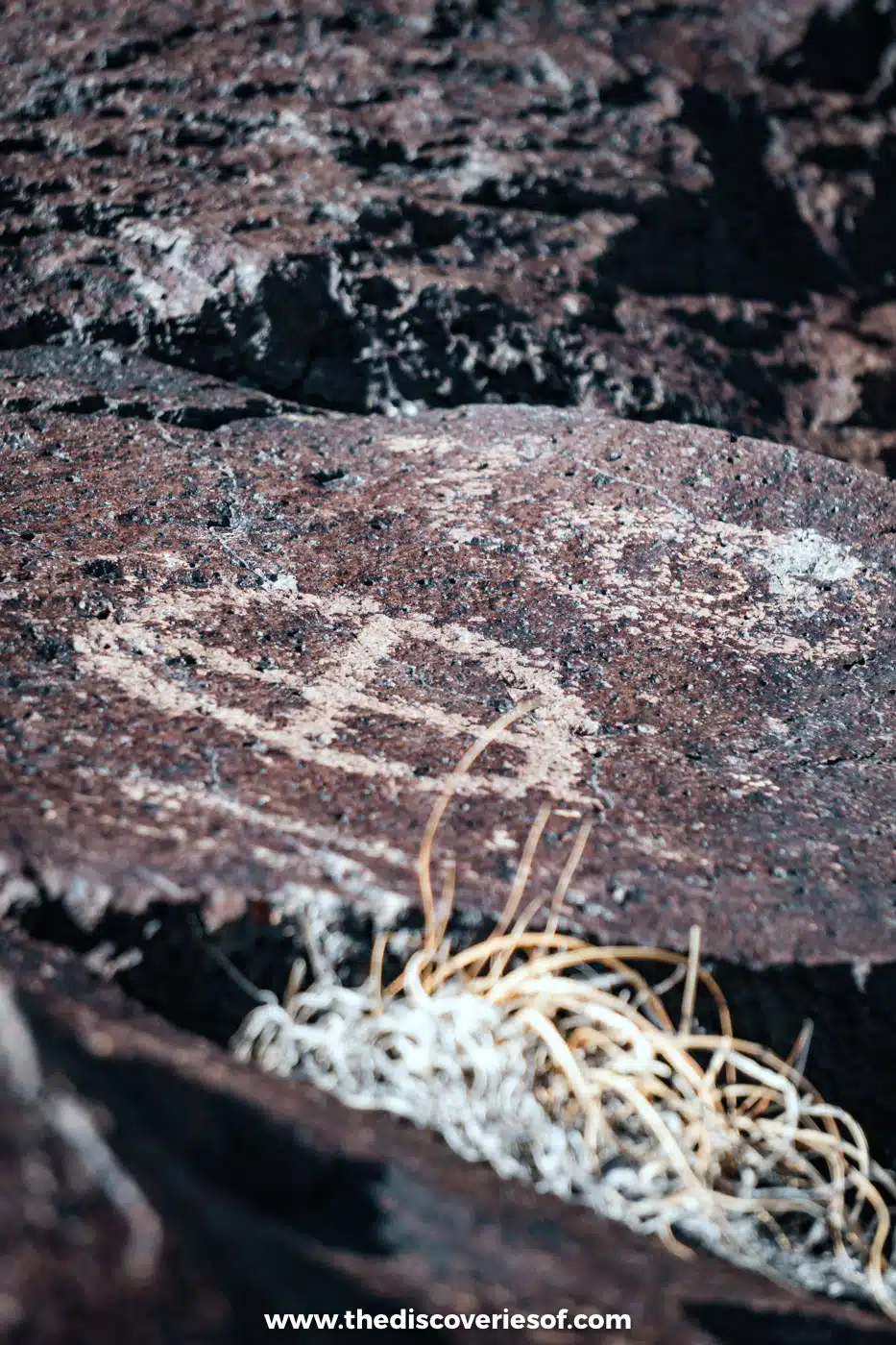
Over thousands of years, the exposed basalt developed a thin, near-black coating of desert varnish, made of clay and iron and manganese oxides. Strike through that coating with a hard hammerstone and the paler rock beneath shows through. That’s how most of the carvings were made: by pecking, rather than painting or scratching.
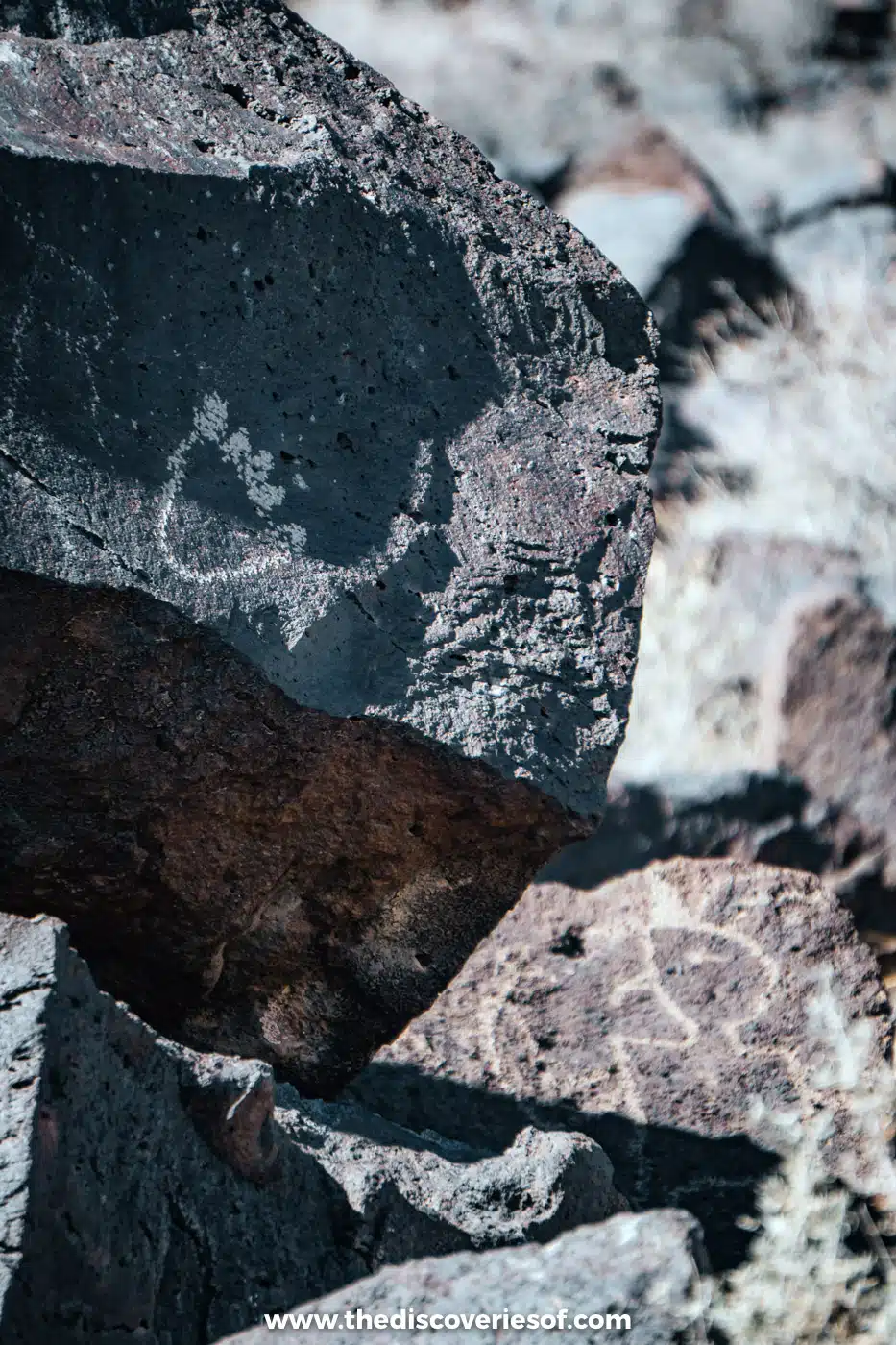
About 90 per cent of the petroglyphs were made by Ancestral Pueblo people between about 1300 and the late 1600s. A few, mostly around Boca Negra Canyon, are thought to be up to 3,000 years old. Early Spanish settlers added their own marks from around the 1700s, including crosses and livestock brands, and you’ll spot those among the older images if you look closely.
What do they mean? Some are easy to read, such as birds, snakes, handprints and stars. Others, like the masked faces and abstract shapes, carry meanings that are known to the Pueblo communities whose ancestors made them, and many still hold deep spiritual significance today. The trail signs explain what they can, but this is a sacred landscape first and a tourist attraction second.
The area became a national monument in 1990. It’s managed jointly by the National Park Service and the City of Albuquerque’s Open Space Division, which is why the different areas keep slightly different hours and rules.
Which canyon should you visit?
There are four petroglyph viewing areas, between 1 and 6 miles from the visitor centre: Rinconada Canyon, Boca Negra Canyon, Piedras Marcadas Canyon and the smaller South Point, with about 100 carvings. A fifth area, around the volcanoes, has trails but no rock art. Each has its own car park, so you’ll need to drive between them.
If you’ve only got time for one trail, make it Rinconada Canyon. If you’re short on time or visiting with young children, Boca Negra is the quickest win. If you want the most carvings and the fewest people, head north to Piedras Marcadas.
Rinconada Canyon: play spot the petroglyph
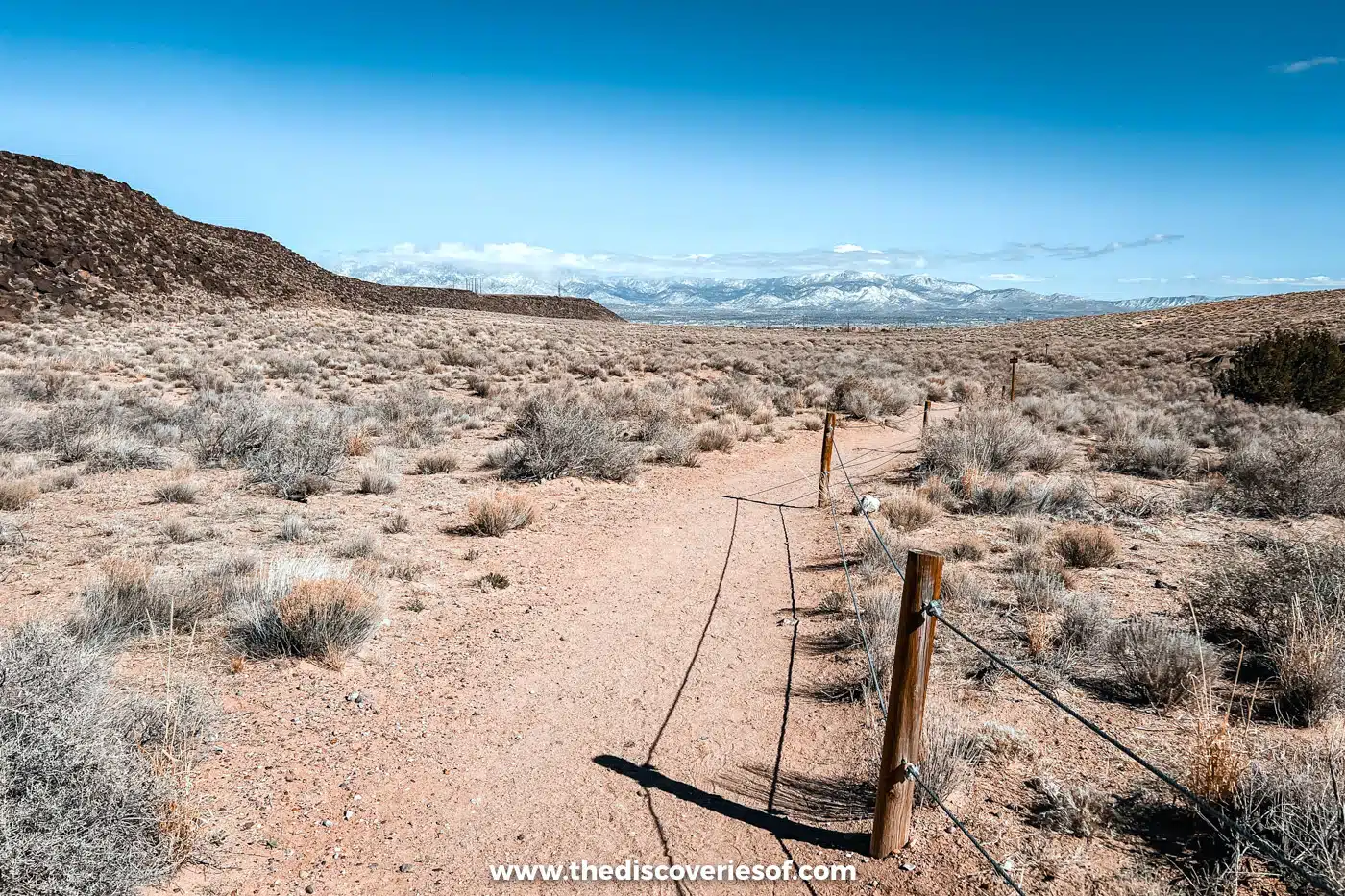
Rinconada Canyon was my favourite walk in Albuquerque, and it’s the trail I’d point anyone towards first. It’s a 2.2-mile round trip from the car park to the head of the canyon and back, on a sandy, natural-surface path that runs along the foot of the escarpment.
Archaeologists believe there are about 1,200 petroglyphs in the canyon, and around 300 of them are visible from the trail. They’re largely clustered on one half of the route, along the north side of the canyon, so you can either walk it as a loop, coming back through the middle of the canyon, or as an out-and-back that lets you look at the carvings twice.
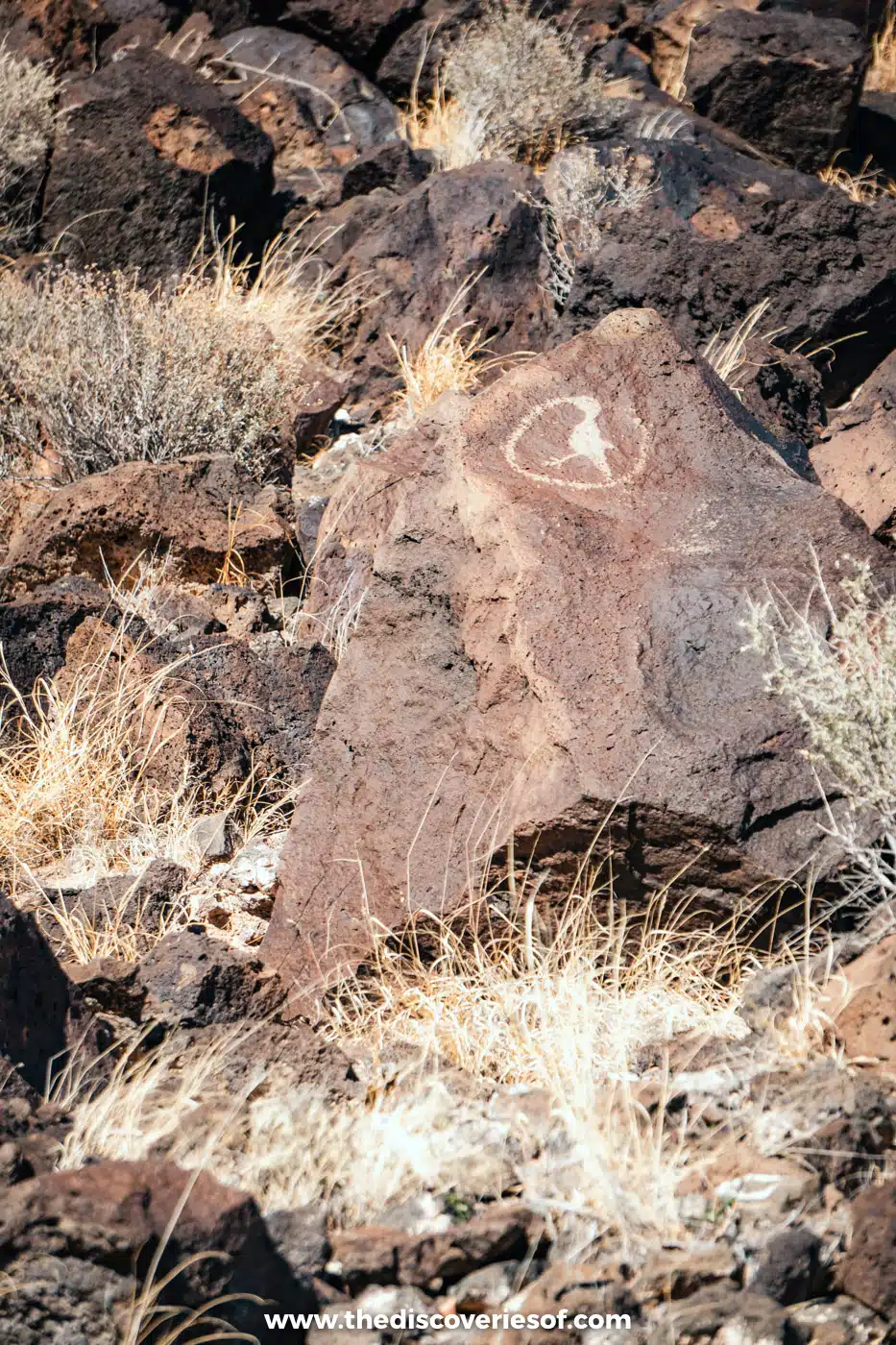
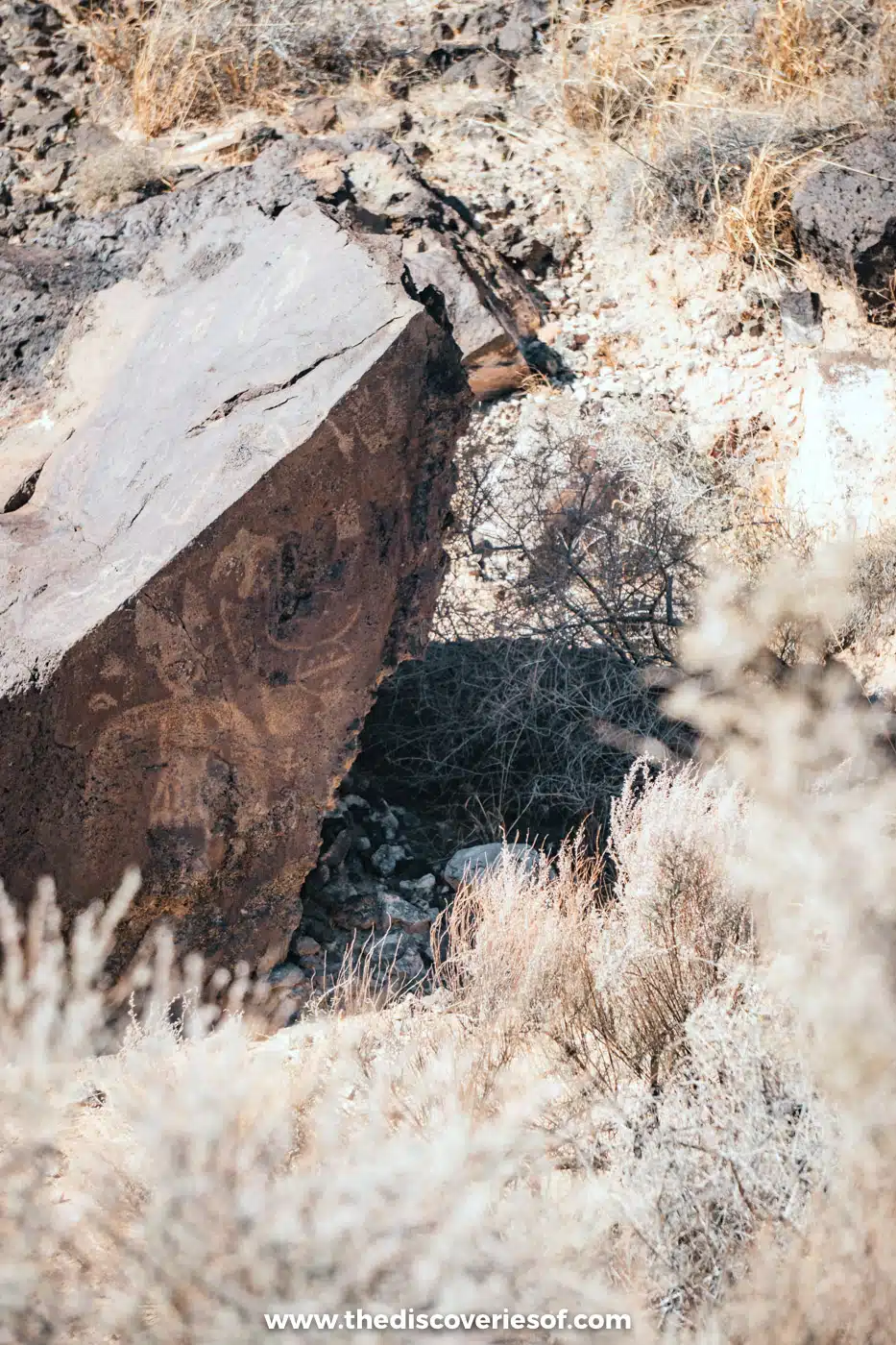
The carvings aren’t on display. They’re scattered among the boulders on the slope beside the trail, so you have to hunt for them, and the further you go, the more you see. This is where you play spot the petroglyph: scan each boulder, try to work out what each image shows before you read the signs, and see how many you can find. Bring binoculars, as plenty of the best ones sit high up the slope where you can’t (and shouldn’t) climb.
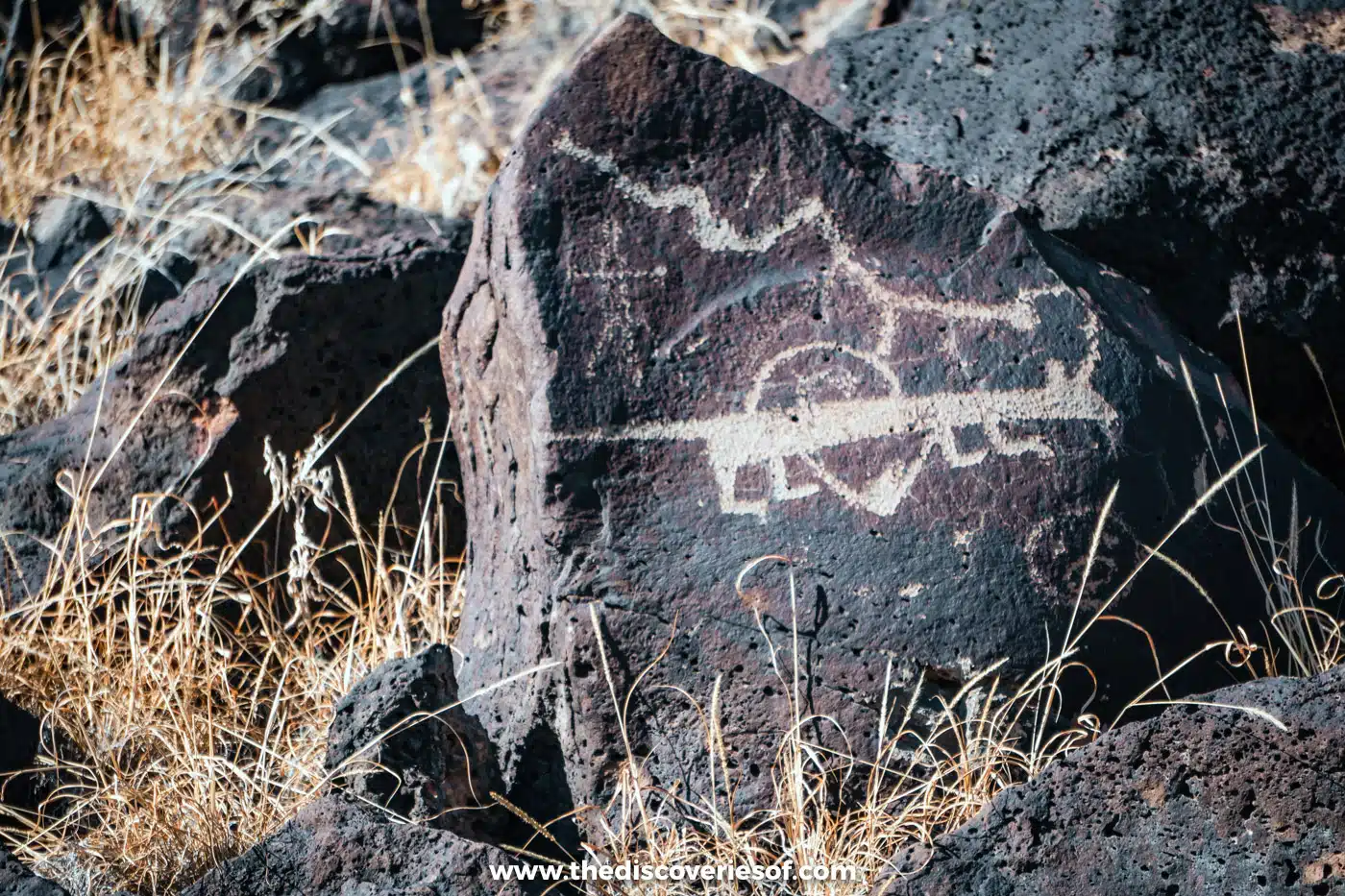
The ranger I spoke to suggested allowing about an hour and a half. The National Park Service suggests 1.5 to 2 hours, and rates the trail moderately strenuous, mainly because walking on soft sand is harder work than it looks. There’s no shade at all, but there are good views east to the Sandia Mountains, which were covered in snow when I visited.
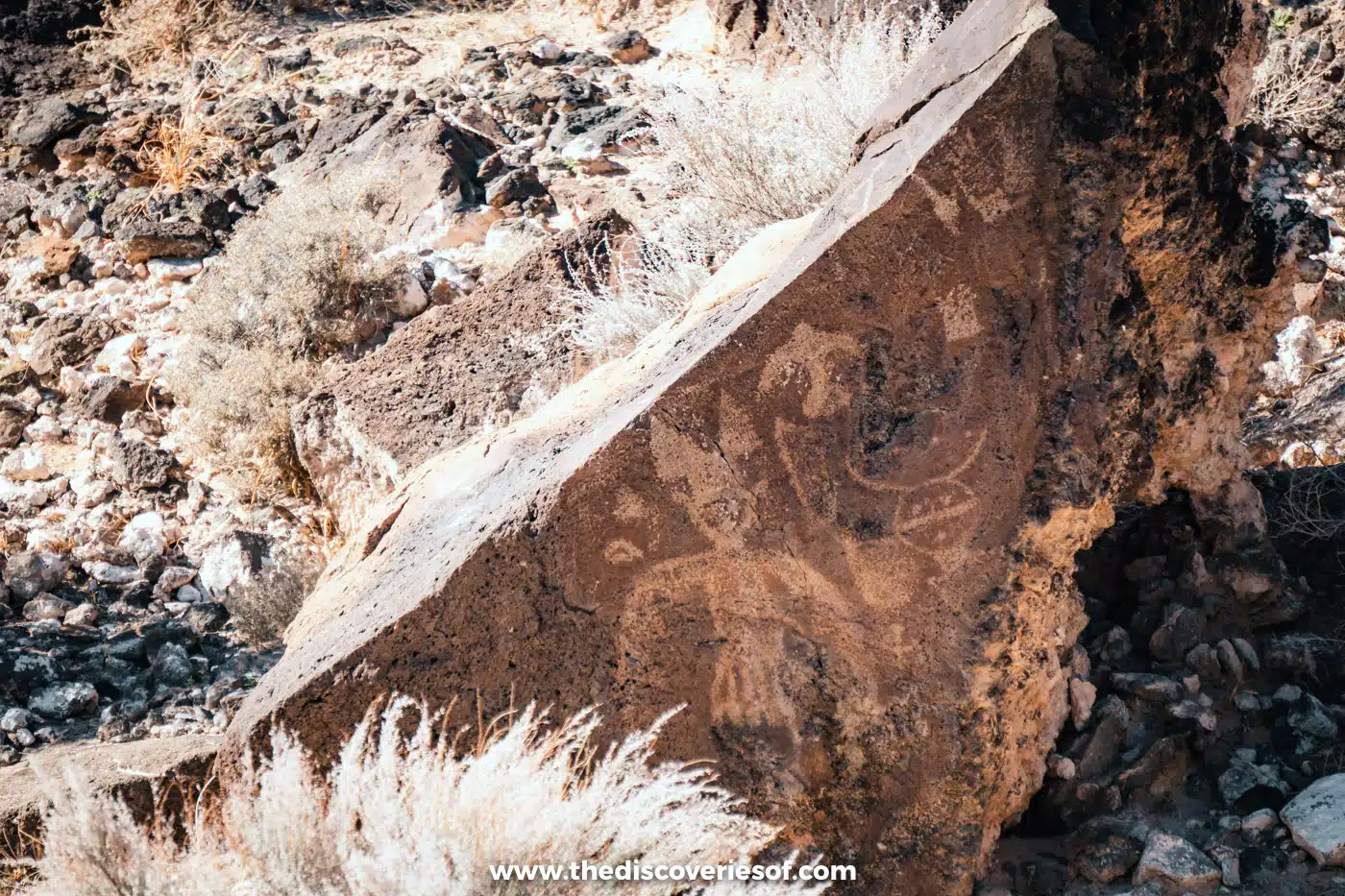
- Parking: the free car park is on Unser Boulevard NW at St Joseph’s Avenue NW, open 8am to 5pm daily. Outside those hours, you can park outside the gate and walk in from sunrise to sunset.
- Facilities: a vault toilet at the trailhead, but no water.
- Dogs: leashed dogs are allowed on the whole trail.
- On foot from the visitor centre: the 1-mile Escarpment Trail links the visitor centre entrance gate with Rinconada Canyon if you’d rather walk than drive.
Top Tip
Try to work out what each carving shows before you read the interpretive signs. It’s a fun game, and you’ll look far more closely at the rock.
Boca Negra Canyon: the quickest fix
Boca Negra is the smallest and most developed corner of the monument, and the easiest place to see a lot of rock art in a short time. About 100 petroglyphs line three short, self-guided trails, and you can walk all three in about an hour:
- Mesa Point Trail: about 30 minutes and the most strenuous, climbing to the top of the mesa for views across the city
- Cliff Base Trail: about 15 minutes along the bottom of the cliff
- Macaw Trail: about 5 minutes, the shortest of the lot
Some of the oldest carvings in the monument are here. The paths are partly paved but uneven, so they aren’t suitable for wheelchairs or pushchairs, though there’s an accessible viewing scope on the patio by the toilets. There’s also a drinking fountain, shaded seating and picnic tables, which makes it the best option on a hot day or with children.
Boca Negra is run by the City of Albuquerque and keeps stricter hours than the rest of the monument: 8:30am to 4:30pm daily, with last entry at 4pm, which is strictly enforced. It’s off Unser Boulevard, about a quarter of a mile north of Montaño Road (6900 Atrisco Drive NW). Pets aren’t allowed on the trails.
Entry is free. Boca Negra has long charged a small parking fee (several guides still quote $1 on weekdays and $2 at weekends), but the city and park service pages no longer list one, so carry a few dollars in cash just in case.
Piedras Marcadas Canyon: the most carvings
The name means “marked rocks”, and this northern canyon lives up to it, with up to 400 petroglyphs, the most of any area in the monument. It sees far fewer visitors than Rinconada or Boca Negra, so it’s the one to choose if you’d like the carvings to yourself.
The petroglyph viewing trail is a 1.8-mile round trip along the base of the escarpment, rated easy to moderate. If you want more of a walk, the North Rim Trail climbs to the top of the mesa for wide views (1.4 miles one way, with no carvings), and combining the two makes a 2.5-mile outing. Allow 1.5 to 2 hours.
The small car park is at 9421 Jill Patricia Street NW, behind an oil change shop, about 15 minutes’ drive north of the visitor centre. If it’s full, park on Jill Patricia Street rather than in the shopping centre car park next door. There are no toilets and no water. It’s open sunrise to sunset, and leashed dogs are welcome.
The volcanoes: climb the cinder cones
West of the escarpment, a line of dormant cinder cones marks where the lava that formed it came from. The three you can walk around in the Volcanoes Day Use Area are JA, Black and Vulcan, the largest. There’s no rock art here, but the trails are a good contrast to the canyons, with sweeping views back over the city, the Rio Grande valley and the Sandia Mountains.
- JA Volcano and Albuquerque Overlook: an easy 1-mile round trip to the viewpoint, with shaded benches on the way
- Vulcan Volcano Loop: a moderate 2-mile loop around the biggest cone
- Volcanoes Trail: the full 3.5-mile loop past JA Volcano to the overlook and Vulcan
- North Volcanoes Loop: a 2.3-mile extension to the remains of an old corral
The car park is off Atrisco Vista Boulevard NW, about 4.8 miles north of I-40, and is open 9am to 5pm (the area itself is open sunrise to sunset if you park outside the gate). There’s a vault toilet but no water, bikes aren’t allowed on the trails and leashed dogs are fine.
Start at the visitor centre
The Las Imágenes Visitor Information Center is at 6510 Western Trail NW, where it meets Unser Boulevard, about 3 miles north of I-40. It’s open 8:30am to 4:30pm daily, with a park store open 9am to 4pm. Don’t expect a museum: there are no exhibits, no café and no petroglyph trails here. What you do get are free trail maps and brochures, and staff on the information kiosk who’ll recommend a trail based on your time and fitness and give you driving directions.
It’s still worth stopping by to chat about the trails and find out which one suits you best, especially if you’re deciding between two canyons. If you’re arriving by taxi or rideshare, though, go straight to the trailhead: the park asks drivers not to drop visitors at the visitor centre, as there’s nowhere to walk to from there except the Escarpment Trail.
The monument doesn’t sell America the Beautiful passes (it’s free, so you won’t need one), but staff can issue the free Access Pass, Military Pass and Every Kid Outdoors pass with the right documents.
Look, don’t touch: how to treat the rock art
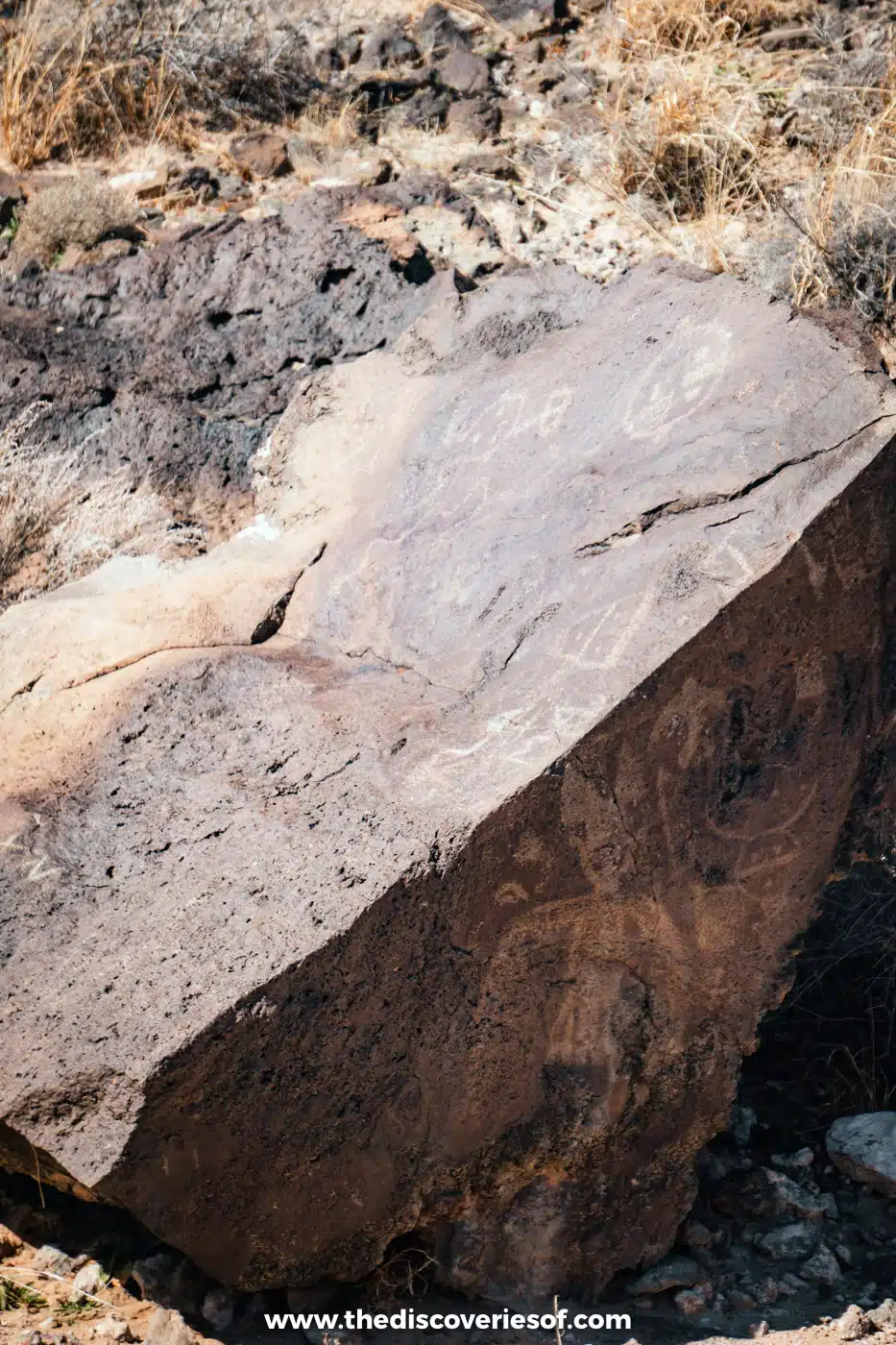
These carvings have survived hundreds of years of desert weather, but they’re fragile, and they matter enormously to the communities whose ancestors made them. A few simple rules keep them that way:
- Never touch the petroglyphs. The oils on your skin damage the varnish, and the damage builds up with every hand. No chalking, tracing or rubbings either.
- Stay on the trail. Climbing on the boulders or the escarpment can set off rock falls and damage carvings you can’t see.
- Leave everything where it is. Rocks, pottery fragments and other artefacts are protected by law.
- Report damage. If you see vandalism, tell a ranger or call the Archaeological Resources Protection Act hotline on 1-800-227-7286.
Photos are fine, and binoculars or a zoom lens are the best way to get close without stepping off the path.
Staying safe: heat, snakes and locked gates
The petroglyph trails are short, but they’re exposed desert walks on the edge of a big city, so it pays to go prepared.
- Lock up. The park service advises locking your car, setting the alarm and keeping valuables out of sight at every trailhead.
- Watch the gate times. The Rinconada, Boca Negra and volcano car parks are gated. If you think you might be back late, park outside the gate instead. If your car does get locked in, call the city’s non-emergency line on 242-COPS (505-242-2677).
- Carry water. There’s none at Rinconada, Piedras Marcadas or the volcanoes, and no shade either.
- Wear proper shoes. The trails are sandy and uneven, so shoes with ankle support make life easier.
- Mind the wildlife and weather. Rattlesnakes are about in the warmer months, and summer thunderstorms can build fast in the afternoon. Head back to the car at the first sign of lightning.
When to visit
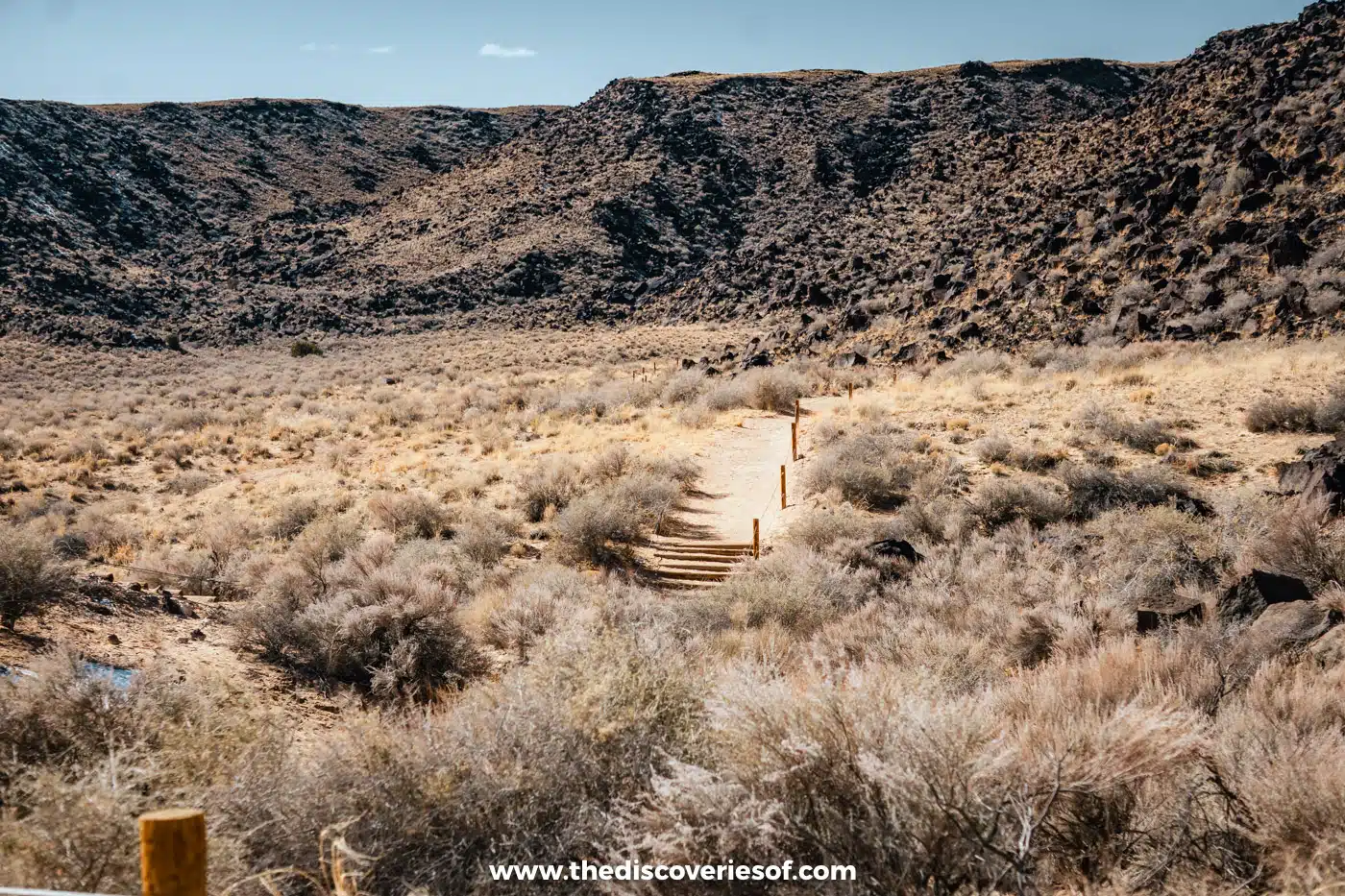
The trails are open all year. Spring and autumn are the most comfortable seasons, with mild days that are ideal for walking on sand. Summer is hot and shadeless, so arrive when the car parks open and be off the trail by late morning.
Winter is cold but often brilliantly clear. When I visited in February, it was literally zero degrees Celsius, but the sky was blue and there was snow on the Sandia Mountains. Wrap up warm and it’s a fine time to go.
How to get there
You’ll need a car, or a taxi or rideshare that drops you at a trailhead. The monument is on the West Side, across the Rio Grande from Old Town and downtown:
- Rinconada Canyon: about 15 minutes’ drive from Old Town, west on I-40 and north on Unser Boulevard
- Boca Negra Canyon and the visitor centre: a few minutes further north along Unser Boulevard
- Piedras Marcadas Canyon: about 25 minutes from Old Town, in the north-west of the city
- The volcanoes: about 25 minutes from Old Town, west of the escarpment off Atrisco Vista Boulevard
If you’re booking a rideshare, arrange your ride back in good time, as you’ll be waiting at a trailhead car park on the edge of the city.
Make a day of it on the West Side
Rinconada Canyon fits neatly into a morning. Start the day with a sunrise hot air balloon flight over the Rio Grande, walk the canyon while the light is still soft, then head back across the river for lunch in Old Town or at Sawmill Market. Finish with the Sandia Peak Tramway at sunset for a view over the whole city, petroglyph country included.
For more ideas, see my guide to the best things to do in Albuquerque, or follow my one day in Albuquerque itinerary, which fits the monument in between the balloons and Old Town.
Tips for your visit
- Bring binoculars: many of the best carvings are high up the slope, well out of reach.
- Pick your trail before you set off: the areas are miles apart, so decide where you’re going and drive straight to that car park.
- Fill your water bottle: there’s no water on the trails except at Boca Negra.
- Go early for two areas: Rinconada plus Boca Negra makes a good half day, but get to Boca Negra before its 4pm last entry.
- Explore further: for more walks across the state, see my guide to the best hikes in New Mexico.
Map
Read next
- The best things to do in Albuquerque
- One day in Albuquerque: the perfect itinerary
- Stunning hikes in New Mexico
- Brilliant day trips from Albuquerque
- Incredible New Mexico landmarks
- Unmissable things to do in New Mexico
Love this? Save and share on Pinterest

Discover the top things to do, insider tips and hidden gems in our USA Travel Guides.
Read the guides →