


Canada’s capital doesn’t shout about itself, which is exactly why it catches people off guard. Two days is enough to fall for it, as long as you know where the hidden door is, which bridge to walk back across after dark and why a small herd of horses on the edge of the city matters so much.
There are cities that hit you with their overwhelming (sometimes chaotic) energy from the very first moment. Others take more time to reveal their charms. Ottawa is one such city: a slow burner that I came away completely smitten with.

It’s a smaller city full of big surprises. I came back from a December trip to this southeast Ontario charmer and I still can’t understand why Canadians aren’t shouting from the rooftops about their laidback capital. I know they have a reputation for being self-effacing, but really, it’s too much.
On that trip I worked my way through the big national museums, ate my body weight in BeaverTails and diner food, sat through a gloriously cheesy dinner show, walked home under the winter lights and met the Ojibwe Spirit Horses on a farm just outside the city. This Ottawa itinerary is built from those days, rearranged into the order that makes most sense on the ground: one day for the market, the galleries and Gatineau across the river, and one for the museums, the farm and Parliament, finishing in a speakeasy.
It assumes you’re staying downtown and walking almost everywhere, with one taxi or ride-share out to the farm. A few stops are seasonal (the winter lights, skating on the canal), and I’ve flagged what to do instead if you’re visiting at another time of year.
Vamos people, let’s go!
Your 2-day Ottawa itinerary at a glance
- Day 1: the ByWard Market, galleries and Gatineau. BeaverTails in the market, Notre-Dame Cathedral Basilica, the National Gallery of Canada, lunch in the market, the Canadian Museum of History, the winter lights walk back across the river and dinner at the Oh Canada Eh?! dinner show.
- Day 2: museums, horses and Parliament. Breakfast (or a boozy shake) at Zak’s Diner, the Canadian Museum of Nature, the Ojibwe Spirit Horses at Mādahòkì Farm, a walk or skate on the Rideau Canal, Parliament Hill and Parliament: The Immersive Experience, dinner at Rabbit Hole and cocktails in the Jackalope.
- Best days of the week: Thursday and Friday, or Friday and Saturday. Day 1 needs a day the National Gallery is open (it closes on Mondays from mid-September to March); day 2 needs the farm, which opens Thursday to Sunday, and Rabbit Hole, which is closed on Sundays.
Suggested stay: I stayed at the Lord Elgin Hotel, a solid four-star on Elgin Street opposite Confederation Park. The rooms are spacious and cosy, the location puts both days of this itinerary within walking distance, and it’s good value for somewhere so central. Skip the hotel breakfast: there are better options a few minutes’ walk away. For something more boutique, The Metcalfe by Gray Collection is a short walk from Parliament Hill, and Le Germain Hotel Ottawa sits on Daly Avenue in Sandy Hill, between the market and the university. Or check all accommodation in Ottawa.

Day 1: the ByWard Market, the galleries and Gatineau
Day 1 is all about the culture packed into the old heart of the city. You’ll start in Lowertown, the historic French and Irish quarter around the market, cross the Ottawa River into Quebec for the best museum in the capital region, and walk back after dark under the lights.
Grab a BeaverTail in the ByWard Market


Wake up and head out from your hotel to the ByWard Market to kick off your first day.
When I say this market has been going strong for centuries, it’s no exaggeration. Lieutenant-Colonel John By, the engineer who built the Rideau Canal, laid out the market in 1826, which makes it one of the oldest public markets in Canada. It was a farmers’ market before farmers’ markets were considered cool, and it still is one: in season, stalls of produce, flowers and maple syrup spill along George, York and ByWard streets around the red-brick market building, and the four blocks around it hold the densest cluster of restaurants and bars in the capital region.


My pick for breakfast? Chowing down on a beavertail at BeaverTails is a must if it’s your first time in Ottawa. The Hooker family sold their first stretched, deep-fried pastries at a country fair in Killaloe, Ontario, in 1978 and opened their first proper stand here in the market two years later. It’s still on George Street, serving sweet and savoury flavour bombs to a queue that never quite disappears. Barack Obama famously stopped for one on his way back to the airport after his first visit as president.
Which one should you try? Go for the Killaloe Sunrise, the original: dusted with cinnamon and sugar, with a wedge of lemon to squeeze over the top. Trust me.
If you want something more substantial first, Le Moulin de Provence on ByWard Market Square does pastries, quiches and coffee, and it sells the maple leaf “Obama cookies” named after that same presidential visit.
Do
To eat your way around the market with a local guide, the ByWard Market food tour stops for seven tastings at local food businesses.
See the twin spires of Notre-Dame Cathedral Basilica

Notre-Dame Cathedral Basilica isn’t just the oldest surviving church in the city; it’s easily one of the most beautiful. Work started in 1841 on the site of a small wooden chapel, and the twin tin-clad spires that you can see from Parliament Hill were added in the 1860s, in the style of the great French-Canadian churches of Quebec.
I didn’t make it inside on my trip, but even seeing those towering spires from Sussex Drive grabs your attention. That said, I’ve heard that going inside is truly special. The understated exterior gives way to a riot of colour: a vaulted ceiling painted deep blue and scattered with gold stars, carved wood, stained glass and hundreds of statues, including 30 wooden figures in the choir by the sculptor Louis-Philippe Hébert.
It’s free to visit, from 9am to 6pm on weekdays and until 7pm at weekends, but it closes to visitors during mass. The front doors on Sussex Drive are closed for renovation, so use the side entrances on St Patrick Street or Guigues Avenue. If you’re in town around Christmas, the seasonal services and concerts are a lovely way to see the church full of Ottawa residents.
Artwork and architecture at the National Gallery of Canada


Ottawa is, at its heart, a city of galleries and museums, and the National Gallery of Canada is one of the jewels in this crown. It’s directly across Sussex Drive from the basilica.
The building itself is beautiful inside and out. Moshe Safdie’s glass and granite gallery opened in 1988, with a glass tower over the Great Hall that deliberately echoes the Library of Parliament along the river. Inside, it’s a cavernous, light-filled space that really allows the artwork to pop.
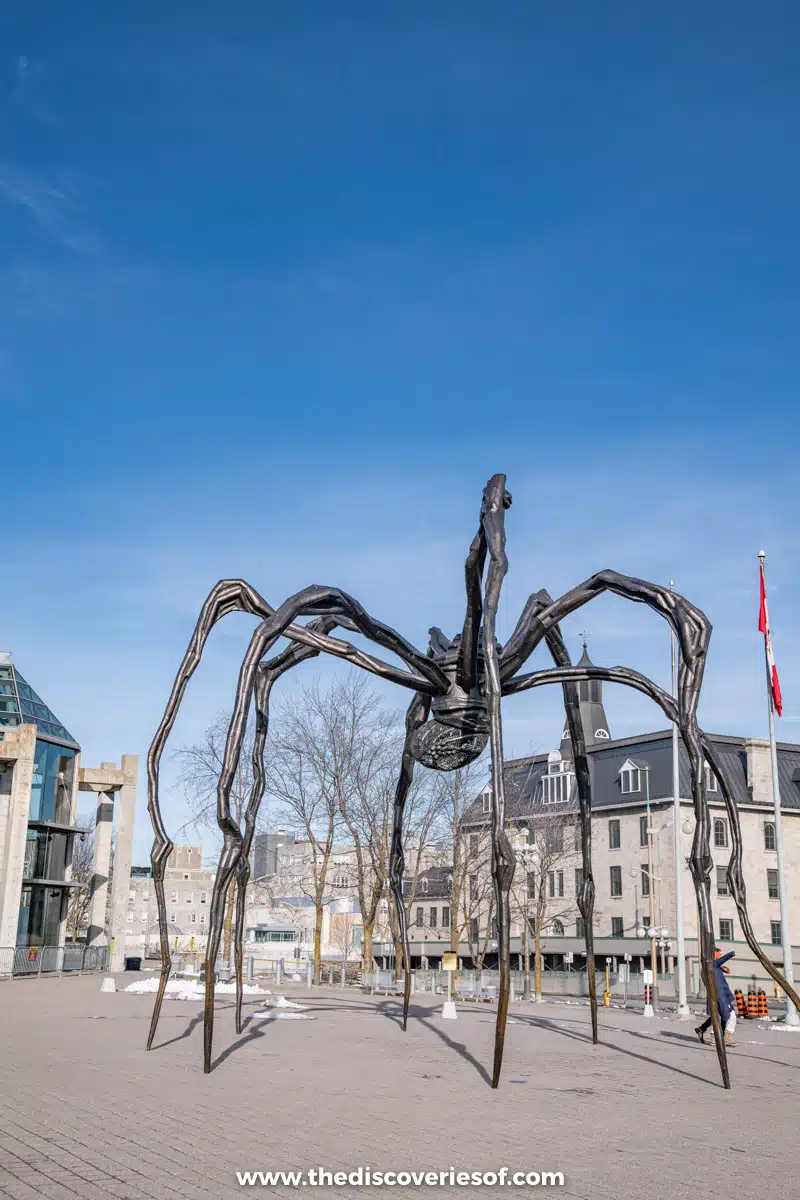
And artwork there is indeed. The collection is filled with work by Canadian artists, with whole galleries given over to Indigenous artists alongside the European and contemporary collections. Even before you go in, Louise Bourgeois’s Maman, a giant bronze spider guarding a sac of marble eggs, stops visitors in their tracks on the plaza outside.
There’s also a rolling programme of special exhibitions, so check what’s on before you go.
Tickets
Adults pay $22 (plus tax), with $3 off if you book online. From mid-September to March the gallery is open 9.30am to 5pm, Tuesday to Sunday, and until 8pm on Thursdays, when entry is free from 5pm to 8pm.
Lunch at Benny’s Bistro in the market

Wander back into the market for lunch. Benny’s Bistro is tucked away behind The French Baker on Murray Street, a five-minute walk from the gallery, and does a short, French-leaning menu of lunch plates and a daily sandwich made with bread from the bakery out front. It’s open Tuesday to Saturday until 2.30pm.
If it’s a Sunday or a Monday, The King Eddy on Clarence Street is a walk-in diner for burgers and fried chicken, and Le Moulin de Provence is good for a quiche or a sandwich to take away.
Top Tip
Bring a tote bag when you head to the market. As well as the food, you’ll find handmade jewellery and crafts at the stalls and in the boutiques around the neighbourhood.
Learn about Indigenous history at the Canadian Museum of History

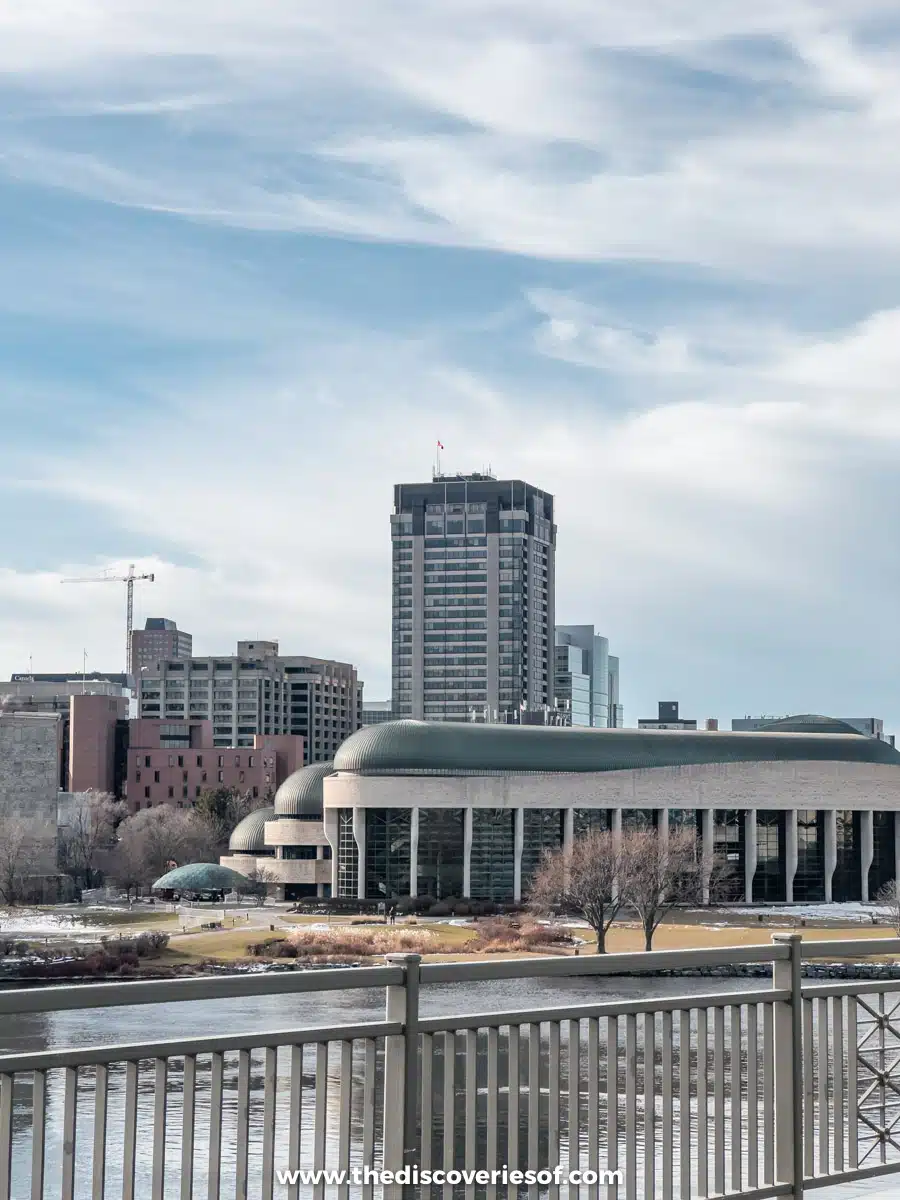
I’ll be honest, the Canadian Museum of History is actually across the river in Gatineau, Quebec, but it only takes 20 minutes or so to walk there over the Alexandra Bridge. It’s absolutely worth the effort, and a great place to take a deep dive into the history of the country: both its Indigenous peoples and its colonial history, about which the museum is refreshingly frank and open.
The museum’s story starts in Montreal in 1856, with the specimens collected by the Geological Survey of Canada. The collection moved to Ottawa in 1881 and into the Victoria Memorial Museum Building (now the Canadian Museum of Nature, on day 2) in 1911. By the 1980s it had long outgrown the space, so the national collections split up: the National Gallery opened its new building in 1988 and this museum opened in Gatineau in 1989.
Its past is interesting enough, but it’s the building you should really get excited about. The flowing, Arctic-white curves were designed by Douglas Cardinal, an Alberta-born architect of Blackfoot heritage, and it was the first building in the capital region to draw on Indigenous design. The pale stone outside represents the Arctic north, while the main entrance represents the prairies.


Step inside and the Grand Hall is shaped like a gigantic canoe, a nod to how people moved through this land after they arrived some 15,000 years ago and followed the retreating ice inland. It holds one of the world’s largest collections of totem poles. They were carved from the heart of the red cedar to tell a story, make an announcement or honour a celebration, and were originally painted in bright colours that have faded with time. Behind them, the hall recreates the facades of Pacific Coast houses, built from cedar planks by the whole community and big enough for up to 100 people under one roof.
All of the exhibits were fascinating. They carry the story from those first arrivals through the Vikings who landed around the year 1000 to the French and British who came looking for a shortcut to Asia. It’s also a sobering reminder of how colonialism played out right here: this was Algonquin land before they were pushed out, and its forests were felled and floated down the river to Montreal and on to England to build ships for the Napoleonic Wars. There’s even a full-size Ukrainian church inside, which has hosted real weddings and baptisms, not just visitors.
Ask your guide to show you the echo spot too: stand exactly in the centre of the circle and your own voice booms back at you.
Top Tip
Book a guided tour. I cannot recommend it enough: my guide brought the stories behind each exhibit to life in a way the labels alone never could. Tours run daily in English and French, cost $5 on top of admission ($25 for adults) and can be booked online with your timed ticket. Entry is free on Thursdays from 5pm to 7pm.
Walk back under the winter lights


Now, you’ll need to visit Ottawa between early December and early January for this one, but trust me, it’s worth planning a winter trip around.
Every evening during Winter Lights Across Canada, thousands of lights pick out Parliament Hill, the national museums and the monuments along Confederation Boulevard, the ceremonial loop that links Ottawa and Gatineau. From the museum, walk back over the Alexandra Bridge (its pedestrian path stays open even when the bridge is closed to cars) and follow the lights towards Parliament Hill, Confederation Park and the National War Memorial. This season they run from 7 December 2026 to 7 January 2027.
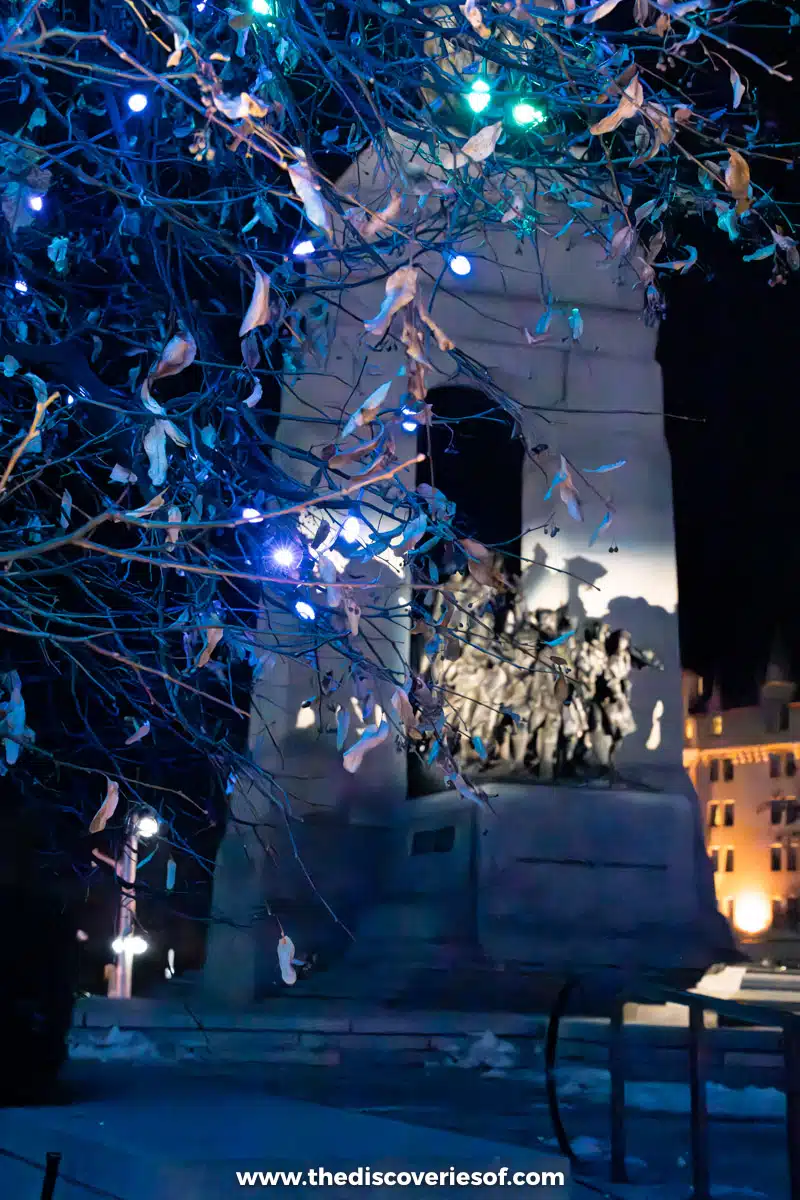
Bundle up in your warmest clothes if you choose to walk the circuit. Ottawa gets freezing cold, especially at night.
Top Tip
This walk is still worth doing in the warmer months: the same loop takes in many of the city’s top historic sights, minus the lights, and the views of Parliament from the bridge are best at sunset.
Dinner and a show at Oh Canada Eh?!

One of the cast in full song at Oh Canada Eh?!

Looking for a fun way to finish the first day of your trip? Head to Oh Canada Eh?!, Ottawa’s long-running dinner musical, at 330 Kent Street, for an exuberant show of all things Canadian.
It’s an over-the-top (read: outrageously fun) night of song and dance that celebrates all the Canadian hits you know, and plenty you probably don’t. From Céline Dion to Justin Bieber, the cast sings its way through more than 70 songs by Canadian artists in about two hours, and the singing Mounties and lumberjacks double as your servers.
The food is part of the fun. I was treated to a hearty all-Canadian menu that included split pea soup, haddock, roast chicken and roast beef, served family-style over five courses. But without a doubt, the performance was the star of the show and an absolute must for anyone visiting the city.
Do
Shows run several nights a week; check the calendar and book on the Oh Canada Eh?! website.
Day 2: museums, horses and Parliament
Now it’s time to see the city from a different angle. From a museum in a castle to a farm saving a horse breed from extinction, and from the world’s largest skating rink to a bar behind a hidden door, day 2 is packed with surprises.
Start the day at Zak’s Diner


Get your carb on at local staple Zak’s Diner, which has served residents and in-the-know visitors all-day breakfast since 1986. The retro-style diner started on ByWard Market Square and now has a handful of branches, including one at 220 Elgin Street, a short walk from the Lord Elgin Hotel. Both open at 7am, and the market branch stays open around the clock on Friday and Saturday nights.
Expect burgers, eggs, poutine and even breakfast poutine. But you go for the monster milkshakes. You just do. And if you want one of the boozy ones to start your day, I’m not judging. Neither are the locals.
The My Canadian Shake was mine: rye whisky, maple syrup and caramel, with whipped cream piled on top. It’s a ridiculously indulgent treat (does it get better than this?).
I didn’t make it for breakfast (I went for a Canadian burger, piled with Canadian bacon and cheddar, alongside that shake), but with poutine on the breakfast menu, it’s an epic place to start the day.
Explore the Canadian Museum of Nature

The Canadian Museum of Nature lives in the turreted Victoria Memorial Museum Building, which looks more like a castle than a museum and was the first home of the national collections. Inside is a cavernous space full of fascinating exhibits, from dinosaur fossils and geology to displays charting the history of the earth, its inhabitants and the evolution of animals and plant life. Not going to lie, it was a real highlight of my trip.
The permanent galleries walk you through what Canada is (and was) like, from the Pacific to the Atlantic and up to the Arctic. The Fossil Gallery has more than 30 complete prehistoric skeletons, including a Daspletosaurus, the Water Gallery is overlooked by a 19-metre blue whale skeleton and has a touch pool with sea stars and anemones, and the Bird Gallery holds more than 500 birds. There’s an Apollo 17 moon rock in the Earth Gallery and polar bears and narwhals in the Arctic Gallery. It’s seriously fascinating, with plenty to keep you entertained for at least a couple of hours.


Top Tip
Don’t miss the live creepy crawlies: when I visited they were down in the basement, in displays recreating their natural habitats. The museum opens at 9.30am and closes at 4pm (8pm on Thursdays), and it’s closed on Tuesdays (check the summer hours), so go in the morning. Adults pay $26.
Meet the horses saved from extinction at Mādahòkì Farm


From the museum, take the 20 to 25-minute drive (or a taxi) out to Mādahòkì Farm, in the Greenbelt on the southwestern edge of the city, where you can learn about the fascinating Ojibwe Spirit Horses. They’re considered Canada’s only Indigenous horse breed, and they came within a whisker of extinction. Meeting them was one of the most memorable parts of my whole trip.
First, a quick backstory. By the 1970s, the wild horses that roamed the Lac La Croix area were seen as a nuisance for eating from farmers’ fields, and most were killed. Men from the Lac La Croix First Nation captured the last four mares and, like a scene from a film, led them across the frozen lakes to Minnesota, where the breed was slowly brought back. Today there are over 180 registered horses.
Mādahòkì means “share the land” in Algonquin, and the Indigenous-run farm uses its land not just for its herd but for powwows, celebrations, education programmes and a marketplace of more than 60 Indigenous makers. When I visited, the herd boss was Fox, and the newest arrival was Makwa (“black bear”). It was a treat to meet each and every one.
Do
The marketplace is open Thursday to Sunday from 11am to 4pm. From July to early October you can book the self-guided Trail of the Spirit Horse ($20) or a Spirit Horse encounter with grooming ($90), and in late November and December the Trail of Lights and Traditions runs Thursday to Saturday evenings ($15).
Walk, cycle or skate the Rideau Canal
The Rideau Canal runs for 202km from Ottawa to Kingston on Lake Ontario. Lieutenant-Colonel By’s engineers built it between 1826 and 1832, after the War of 1812, as a military supply route that would link Montreal and Kingston without using the stretch of the St Lawrence River along the US border. It was wide enough for steamboats from the start, and it’s now the oldest continuously operated canal system in North America and a UNESCO World Heritage Site.
These days, it’s where the city comes to play. From May to October, boats work their way through the canal’s dozens of locks, starting with the flight of eight beside the Château Laurier, and you can walk or cycle the paths along its banks. In winter, the stretch through the city becomes the Rideau Canal Skateway: 7.8km of ice from downtown to Dow’s Lake, usually open from January to early March, free and open 24 hours a day, with skate rental and food stalls along the way.
I didn’t get to try it, as the canal hadn’t frozen over when I was there in December (and, for full disclosure, I hate skating), but it was recommended to me by a number of people as a must!
Do
From late spring to autumn, this Rideau Canal cruise is another great way to see the canal.
See the Parliament buildings on Parliament Hill


Walk up from the canal to Parliament Hill, the centre of Canadian democracy. The Gothic Revival buildings are quite the sight to behold, with intricate details carved into their stone.
Centre Block, the main building with the Peace Tower, is closed for a huge rehabilitation that isn’t due to finish until the early 2030s, so you’ll see cranes and hoardings at its heart. You can still go inside the other buildings: free guided tours of the House of Commons in West Block, the Senate of Canada Building (a former railway station on Rideau Street) and the restored heritage rooms of East Block can be booked through Visit Parliament.
Look out for the Centennial Flame at the foot of the lawn. It was first lit in 1967 to mark Canada’s 100th birthday, and when I visited it was still burning away in front of the construction work.
Step inside Centre Block at Parliament: The Immersive Experience

While Centre Block is closed, the best way to “step inside” the 19th-century building is Parliament: The Immersive Experience.
It’s an engaging 45-minute multimedia show that uses projections, motion video and sound to take you through the most famous parts of the building, including the Peace Tower, the House of Commons, the Senate and the Library of Parliament. It walks you through what happens in each one and the important role they’ve played in Canadian history, and it gives you a snapshot of how Canada’s Parliament works in a genuinely fun way.
Just a quick note: the experience is at 211 Sparks Street, not on Parliament Hill, so plan accordingly. It’s a few steps from dinner.
Tickets
Entry is free but timed, and same-day slots can run out, so book your 45-minute slot in advance. Expect near darkness and flashing lights.
Oysters and pizza at Rabbit Hole


After a full day, it’s time to get your food and drink on. Rabbit Hole is a cocktail bar-come-eatery at 208 Sparks Street, and one you can’t afford to miss on your first trip to Ottawa.
Local ingredients are a point of pride here, and they showcase them in the food and on the cocktail list (and they do both incredibly well).
If you’re this person, kick things off with oysters from Prince Edward Island. They’re fresher than fresh, and as my server put it, East Coast rules when it comes to seafood in Canada. After trying them, I’m never going to quibble with that.
To be honest, I wasn’t expecting pizza to be the main event. But, by goodness, the light, fluffy dough with its raised crust and high-quality toppings was one of the highlights of my time in the city. Grab a table towards the back and you can watch them come straight out of the oven.

Drinks-wise, expect modern riffs on the classics, all perfectly executed. I went for the Bad Bunny, a very drinkable mix of tequila, Martini Fiero, orgeat, lime and ginger syrup, and the friendly bartender happily whipped up something off-menu from the loosest description of what I like.
Top Tip
Rabbit Hole opens at 4pm from Tuesday to Friday and 5pm on Mondays and Saturdays, and it’s closed on Sundays. Pizzas are half price on Tuesdays and oysters on Wednesdays, from 4pm to 7pm.
Cocktails at a secret speakeasy: the Jackalope

I hope you didn’t have too many cocktails at dinner, because it’s time for one of the city’s best bars, and you don’t even have to leave the building.
The Jackalope is hidden inside Rabbit Hole. Look for what seems to be an old elevator door, step through and head down into a candlelit, windowless basement. You found it.
Achieving what so many speakeasies set out to, this is a seriously cool subterranean bar serving stellar cocktails. I’ll be frank: there is a (very tempting) menu of classics, but my advice is to hand yourself over to the bartender: tell them what you like and let them make you a custom creation. I did, and the cocktails were some of the best I’ve ever laid hands on, no word of a lie.
Top Tip
The Jackalope is 19+ and reservations are required, especially on Friday and Saturday nights: book through the Rabbit Hole website.
Have more time? Add these to your itinerary
Have a little longer? The good news is that it’s easy to tack another of the city’s best museums or a brilliant day trip onto these two days.
Go deeper at the Canadian War Museum
Another of the city’s most visited attractions is the Canadian War Museum, in the striking angular building on LeBreton Flats, about a 25-minute walk west of Parliament Hill along the river. I didn’t make it there on my trip, but its collection runs from conflicts on this land long before Europeans arrived, through the War of 1812 (when the United States invaded what is now Canada), to both world wars and modern peacekeeping.

Adults pay $23, and it’s free on Thursdays from 5pm to 7pm. Afterwards, walk on to the Chaudière Falls and the riverside paths of Pangishimo Park, just upstream.
Hike to the Plaisance Falls
If hiking and sightseeing are more your speed, the Chutes de Plaisance are a great call. You’ll need to hire a car, but it’s an easy drive of 45 minutes to an hour east into Quebec.
It’s worth the effort. The Petite-Nation River drops 63 metres here on its way to the Ottawa River, and a path of about a kilometre leads to lookouts at the top and bottom of the falls. The site is seasonal, open from spring to mid-autumn, so save this one for the warmer months.
Take the train to Montreal

Take VIA Rail to Montreal for one of the most exciting day trips you can add to an Ottawa trip. The train takes about two hours from Ottawa Station to Montreal’s Gare Centrale.
Shop along Rue Sainte-Catherine, hike up to the lookout in Mount Royal Park, and sample bagels at St-Viateur that stack up against any you’ll find in New York. Yeah, I said it.
Map
Handy tips for planning your 2 days in Ottawa

Top tips
- Book the timed tickets that matter in advance: Parliament: The Immersive Experience, any Parliament tours, the Canadian Museum of History (10% off online) and the Jackalope.
- Several museums are free on Thursday evenings: the National Gallery from 5pm to 8pm, and the Museum of History and the War Museum from 5pm to 7pm. Plan day 1 for a Thursday and you can save the gallery for the end of the day.
- If you’ll see five or more paid attractions, look at the Visit Ottawa Pass: $99 for five premium attractions over three consecutive days, plus discounts elsewhere.
- You’re going to walk a lot. So carb up throughout the day with poutine, BeaverTails and any other hearty snack you can find. You deserve it.
What to pack
- A warm outer shell or winter jacket from November to March.
- Reliable walking shoes, ideally waterproof with a good grip for icy pavements in winter.
- A scarf, gloves and a winter hat. January nights regularly drop well below -10°C, and the wind off the river makes it feel colder.
Best time to visit
- December: the winter lights (early December to early January), Christmas markets and the Trail of Lights and Traditions at Mādahòkì Farm, with fewer visitors than in summer. It’s when I went, and it’s my pick.
- February: Winterlude, the city’s winter festival, and the best odds of skating the canal.
- May: the Canadian Tulip Festival, when more than a million tulips bloom around the city.
- July: Canada Day on 1 July, the country’s biggest birthday party. Summers are hot and humid.
Getting around

- You won’t need a car for this itinerary. Downtown, the ByWard Market, Parliament Hill and the Museum of History are all within walking distance of each other.
- The O-Train’s Line 1 runs east to west through downtown, with stations at Parliament and Rideau. From the airport, Line 4 (open since January 2025) runs to South Keys, where you change to Line 2 for Bayview and Line 1 into the centre.
- Taxis and ride-shares are easy to find for the trip to Mādahòkì Farm; you’ll only need a hire car for Plaisance Falls.
- For an easy overview of the sights, the hop-on hop-off bus covers the main downtown sights.
- Canada uses the Canadian dollar, and Ottawa is on Eastern Time (UTC-5 in winter, UTC-4 in summer).
Read next
- Canada travel guides
- How to plan the perfect trip to Ottawa in winter
- Epic Canada itineraries for the perfect adventure
- 10 days in the Canadian Rockies: the ultimate road trip itinerary
Love this? Save and share on Pinterest

Discover the top things to do, insider tips and hidden gems in our Canada Travel Guide.
Read the guides →




