
Valencia drained its river after a flood and, at the far end of the empty bed, built a city of the future: bleached white bones, blue mosaic and turquoise pools. Here’s how to see the City of Arts and Sciences, what’s free, which tickets are worth buying and how long to give it.
The Ciutat de les Arts i les Ciències is the sight that ends up on every Valencia postcard, and it’s even stranger in person. A run of enormous white buildings sits in a sunken park on the edge of the city, shaped like an eye, a whale’s skeleton, a helmet and a harp, all reflected in shallow pools of impossibly blue water.
I visited during three nights in Valencia. I walked the length of L’Umbracle under its white arches, wandered between the Museu de les Ciències, the Hemisfèric and the Agora, then went into the Oceanogràfic aquarium before lunch at an oyster bar a few minutes away.
The good news is that most of what you come for is free: the buildings, the pools, the bridges and the palm walk of L’Umbracle cost nothing to see. This guide covers each building, what to pay for and what to skip, ticket prices and opening hours, how to get there and a few tips from my visit.
The City of Arts and Sciences at a glance
- Where: the south-eastern end of the Jardí del Túria, the park in Valencia’s old riverbed, about 3 km from the old town.
- Getting there: Metro line 10 to Ciutat Arts i Ciències – Justícia, a bus, or a walk or bike ride down the Turia gardens.
- Cost: free to walk around. The Museu de les Ciències costs €9.90, the Hemisfèric €8.90 and the Oceanogràfic €37, with combined tickets from €14.10.
- Opening hours: the outdoor areas are always open. The paid buildings open at 10am every day, with closing times that change with the season.
- Time needed: an hour or two to see the outside, half a day with the Oceanogràfic, a full day with the museum and a film too.
- Best time: morning, before the white stone and pale paving start bouncing the heat back at you.
A city of the future in a riverbed
In October 1957 the River Turia burst its banks and flooded much of Valencia. To stop it happening again, the river was diverted south of the city, leaving a long, dry bed curving round the old town. After locals campaigned against plans to run a motorway down it, the riverbed became a 9 km ribbon of gardens, and its far end was given over to something far more ambitious.
Santiago Calatrava, who was born in Valencia, designed most of the complex. The Hemisfèric opened first, in 1998, followed by the Museu de les Ciències, L’Umbracle, the Oceanogràfic (designed by the engineer Félix Candela), the Palau de les Arts opera house, the Assut de l’Or bridge and finally the Agora in 2009. It went hugely over budget, costing around €1.2 billion against an original plan of €300 million for three buildings, and it’s still argued about in Valencia today. Whatever you think of the cost, it’s a breathtaking place to walk around.
The buildings, and what’s inside them
The complex runs for nearly 2 km along the riverbed, so it’s easiest to see it as one long walk, from the opera house at the western end to the aquarium at the other.
Palau de les Arts Reina Sofía
The opera house at the western end, opened in 2005, looks like a helmet with a long white feather curling over its top. It hosts opera, ballet and concerts, and if you want to see inside without a performance, Les Arts runs guided tours, plus visits with an audio guide or a brochure; book through the Les Arts ticket site. On my visit I saw it only from the outside as I walked the complex.
L’Hemisfèric
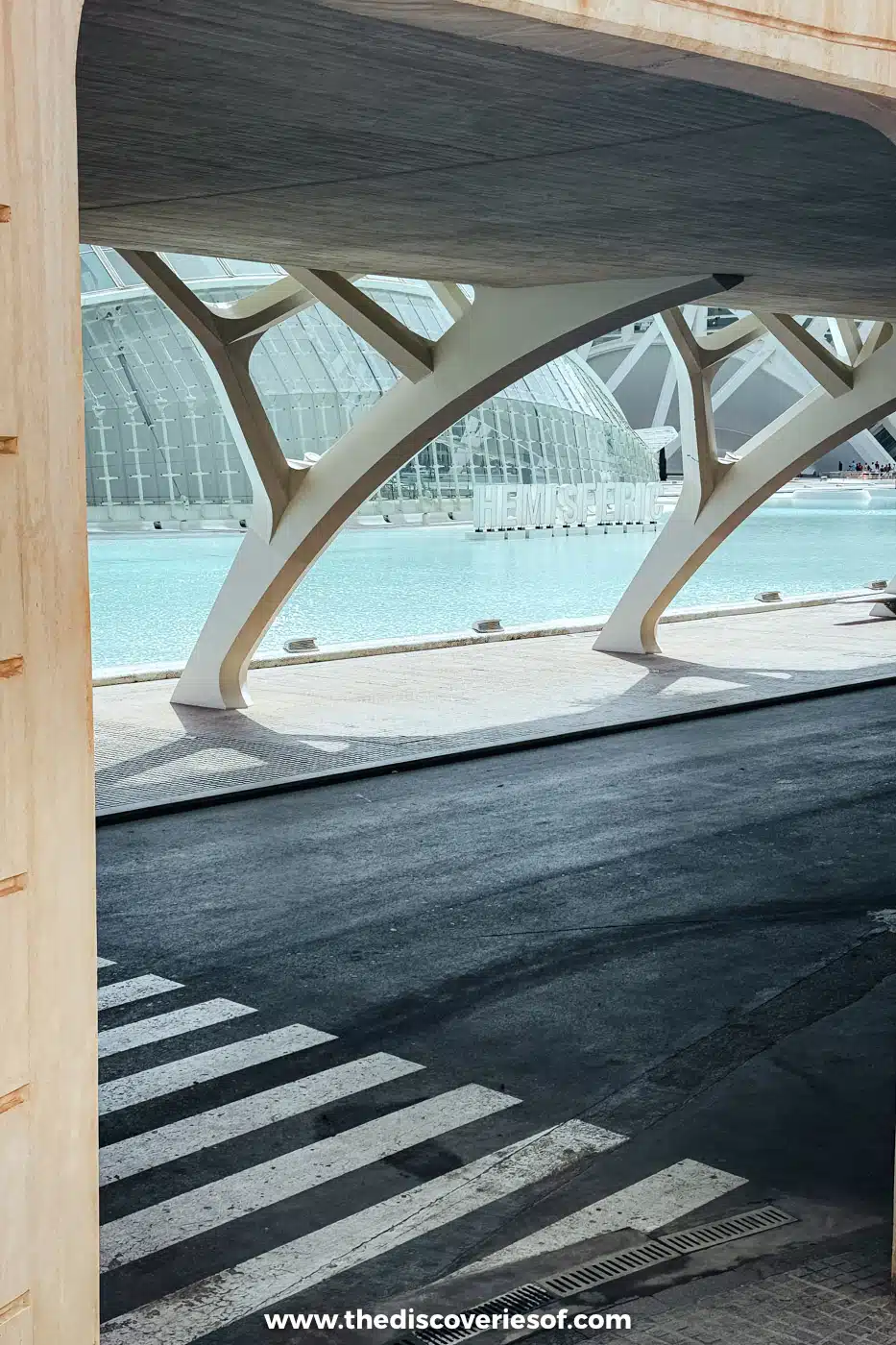
Calatrava designed the Hemisfèric as a giant eye, and the reflection in the pool around it completes the shape: the domed “pupil” looks like a full sphere when the water is still, and the long “eyelids” fold open and shut. Inside is a domed cinema showing large-format films and planetarium shows, each about 45 minutes long, in sessions through the day.
Tickets
Hemisfèric tickets cost €8.90 for adults and €6.90 for children aged 4 to 12, over-65s and visitors with a disability, from the official Visit València shop. You choose your session when you book, and you can’t go in once the film has started.
Museu de les Ciències
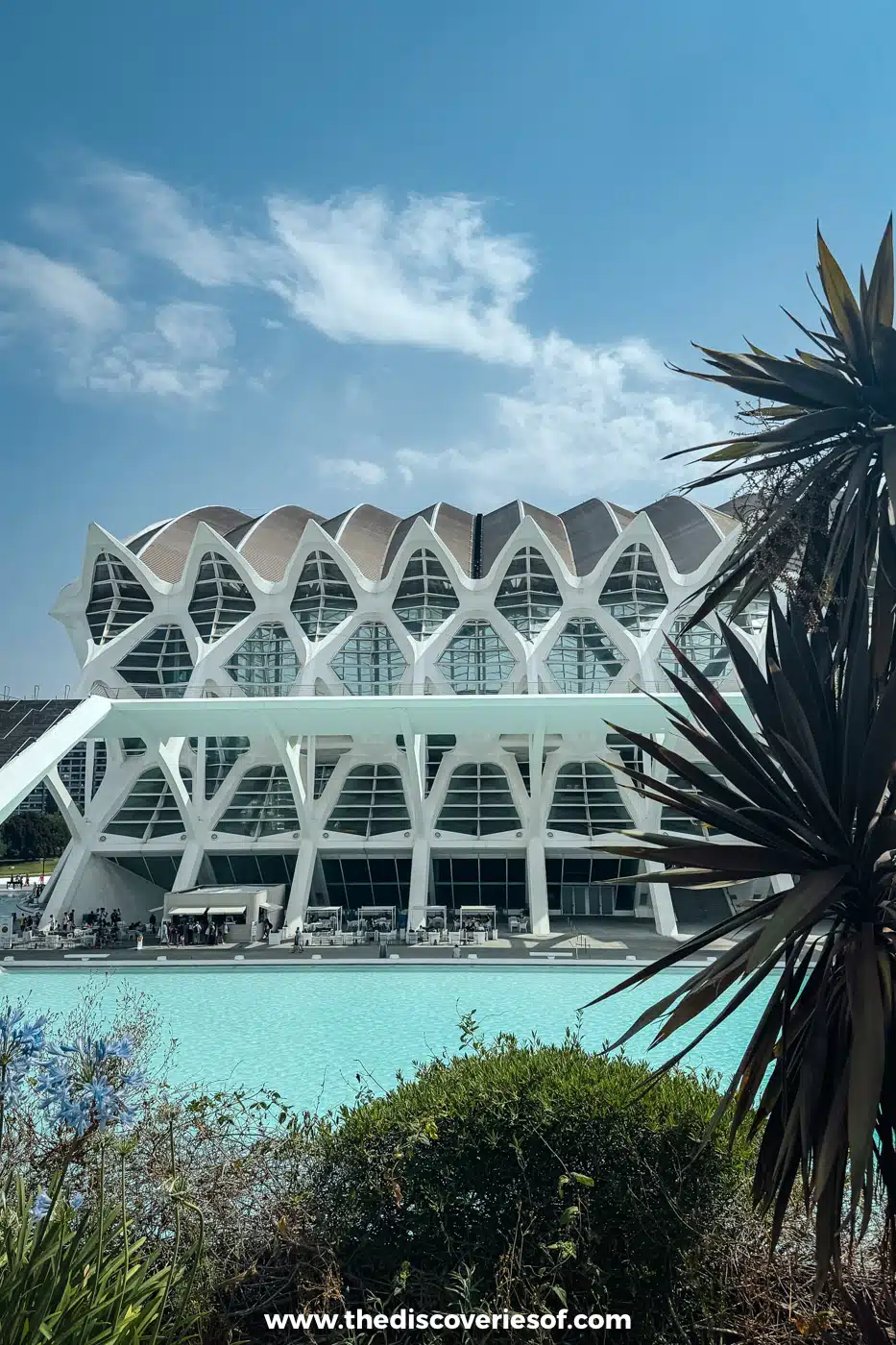
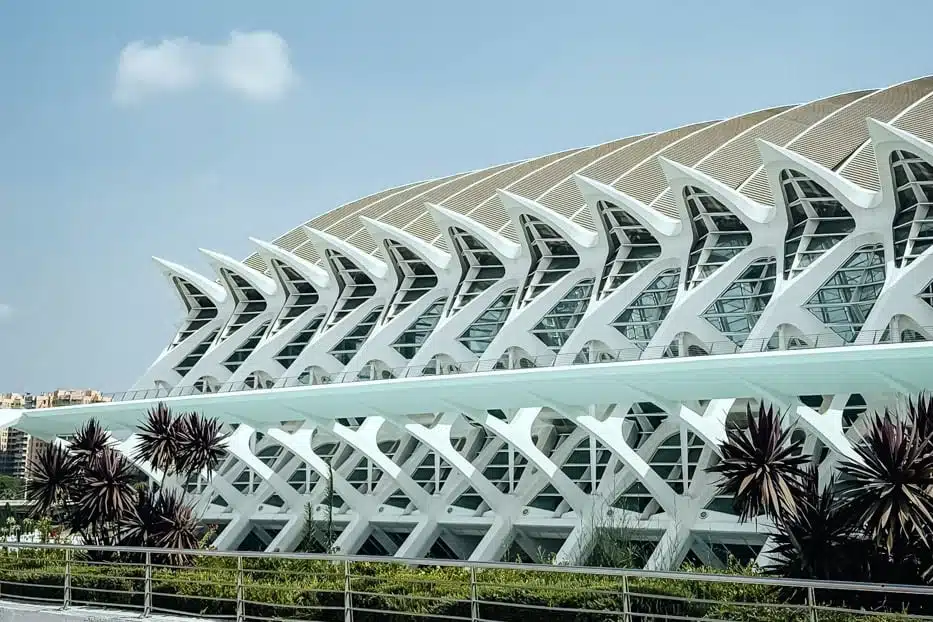
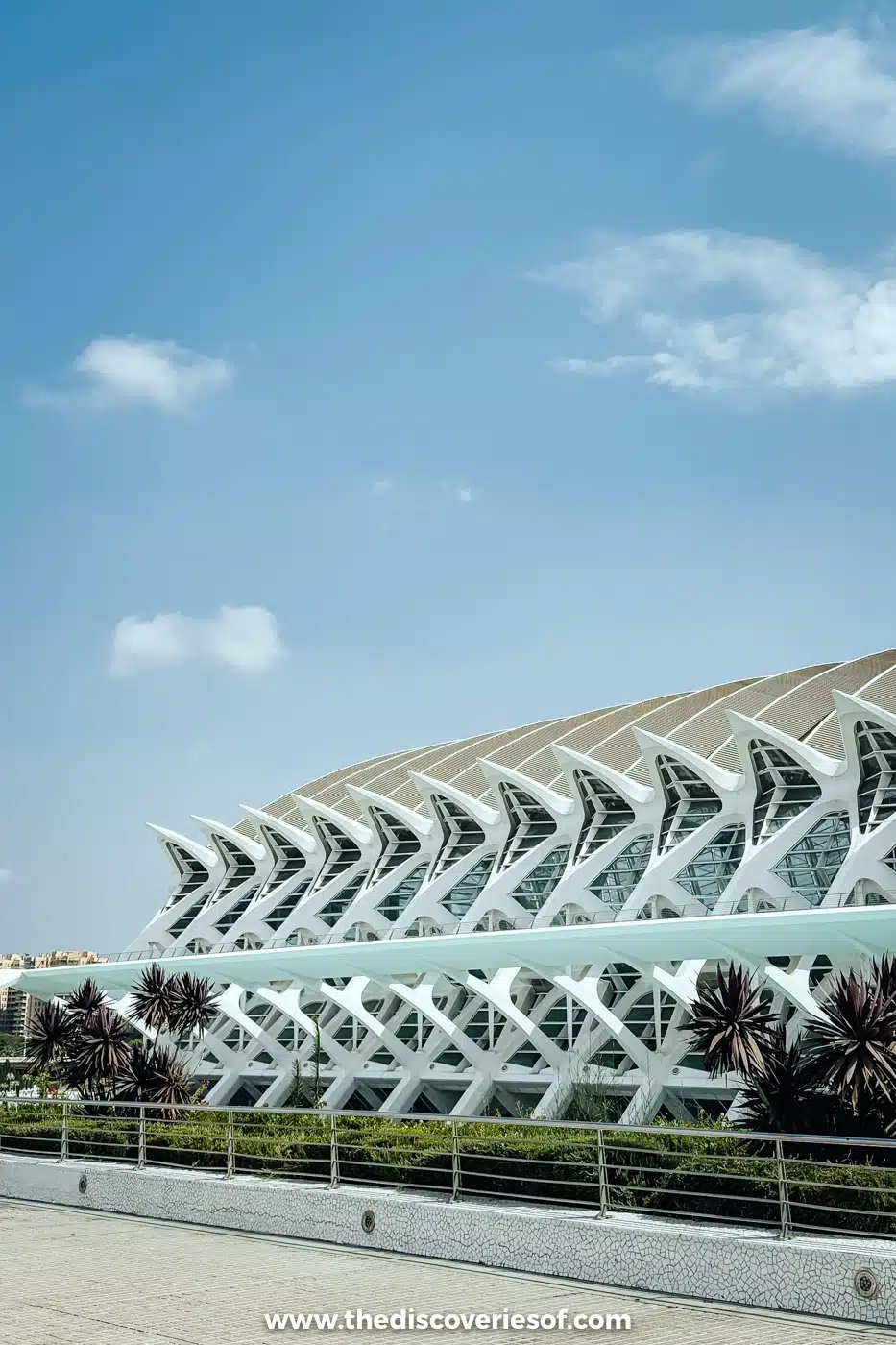
The science museum is the long building that looks like the ribcage of a whale, and from the pools in front of it, the rows of white ribs seem to go on for ever. Inside are hundreds of hands-on exhibits about science and technology, spread over several floors and aimed squarely at curious families. Allow about two hours if you go in.
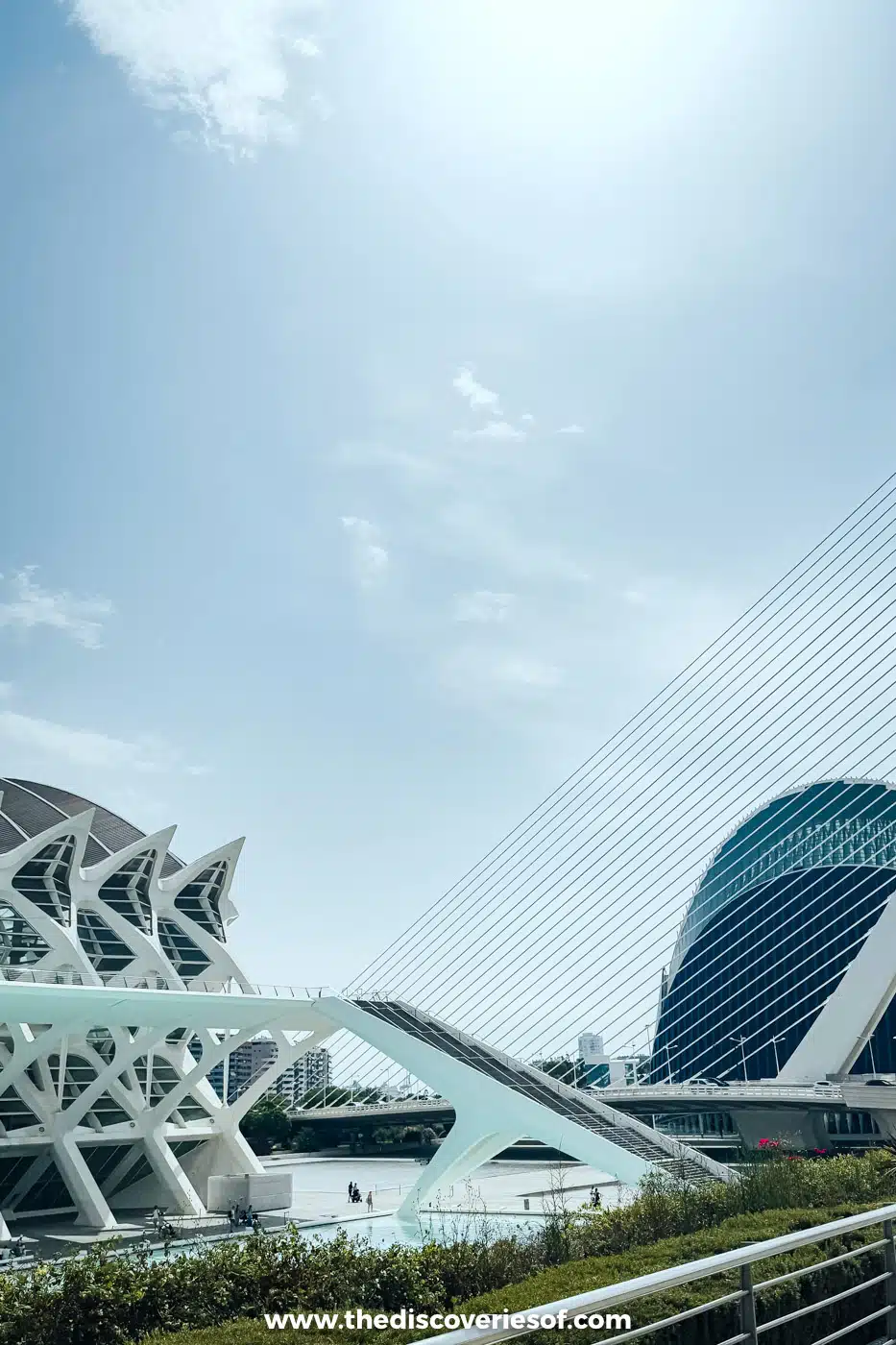
Tickets
Museu de les Ciències tickets cost €9.90 for adults and €7.60 reduced. A combined ticket for the museum and the Hemisfèric is €14.10, or €10.90 reduced, and you can use it over two days.
L’Umbracle
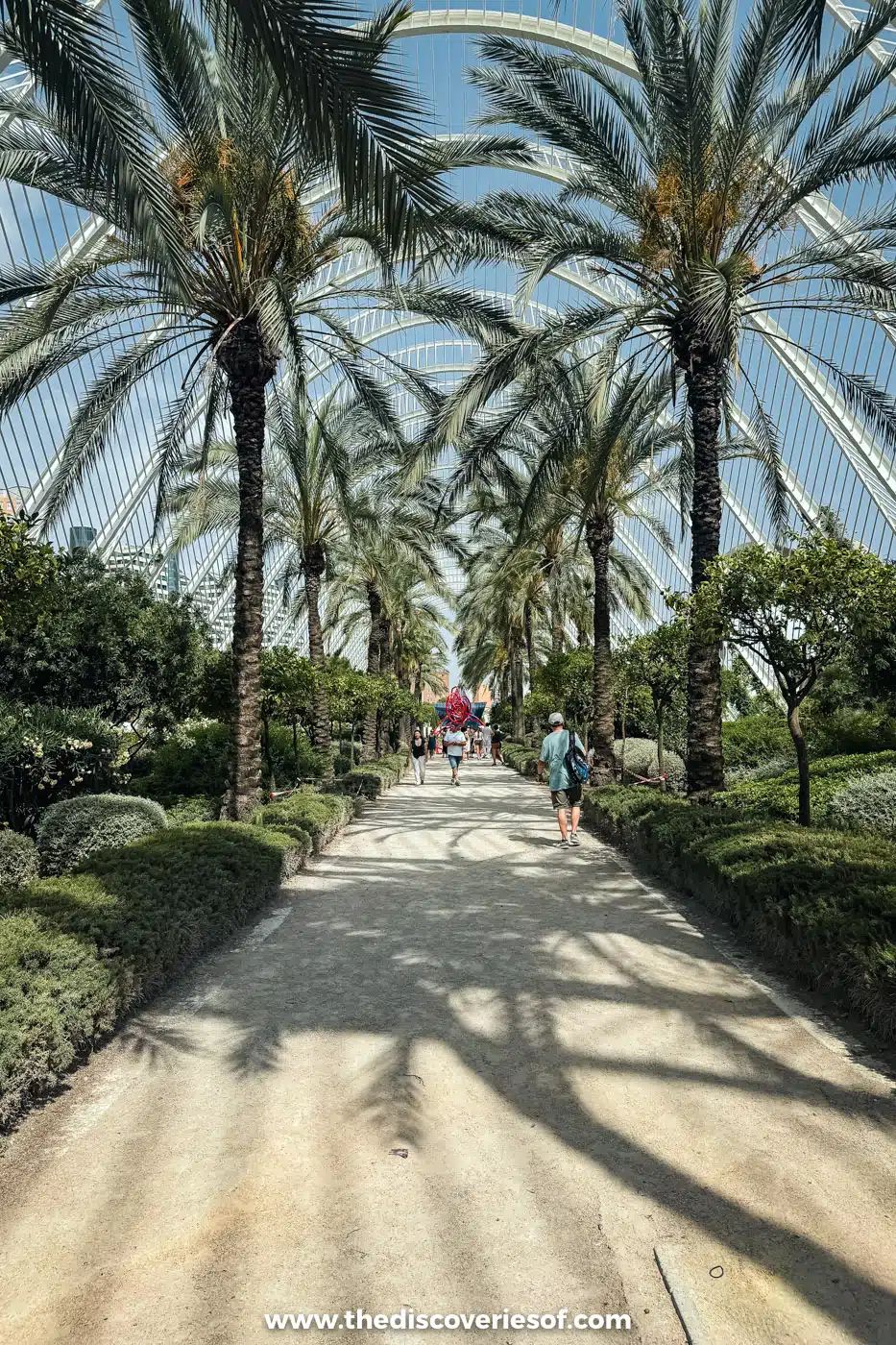
L’Umbracle is free, and it’s the easiest place to start. It’s a garden walk 320 metres long under a lattice of white arches, planted with 99 palms, bitter orange trees, climbers and aromatic shrubs, and raised up along the southern side of the complex so you look down on the pools and buildings through its ribs.
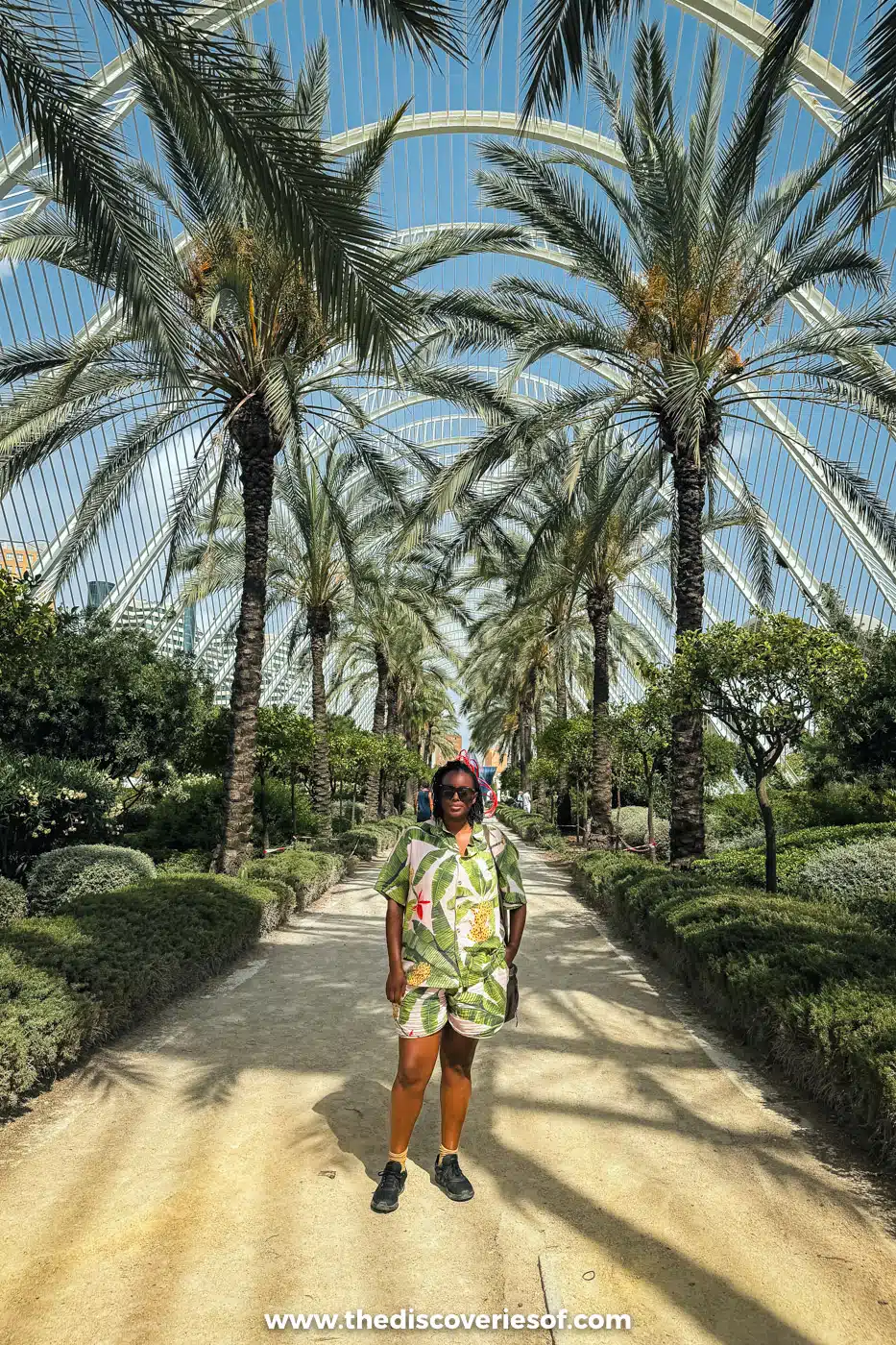
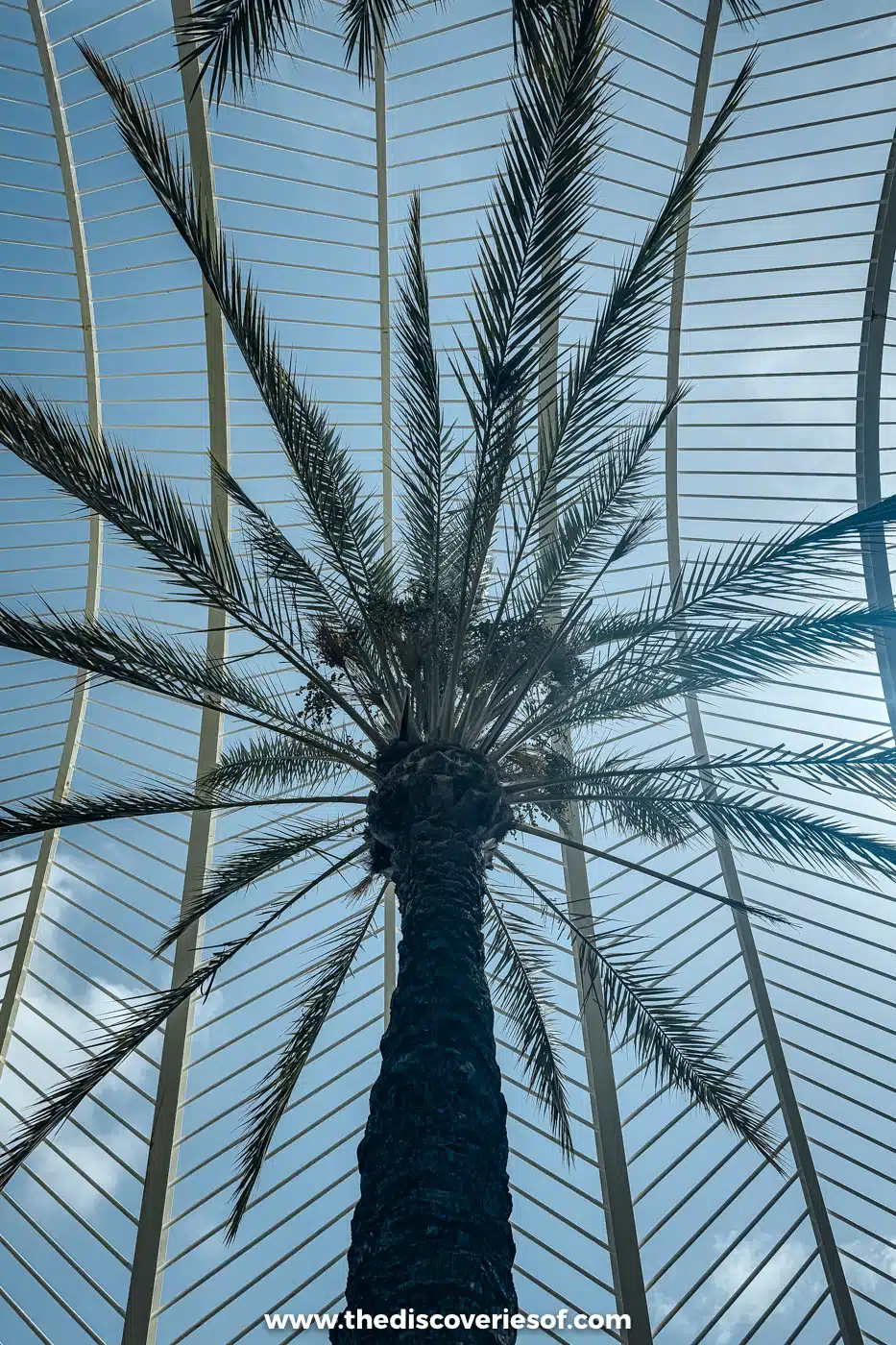
I walked the whole length of it, between the palms and past the sculptures dotted along the way, with the arches throwing stripes of shadow across the path. Look up as well as along: the palm fronds against the white ribs and the blue sky are one of the best views here.
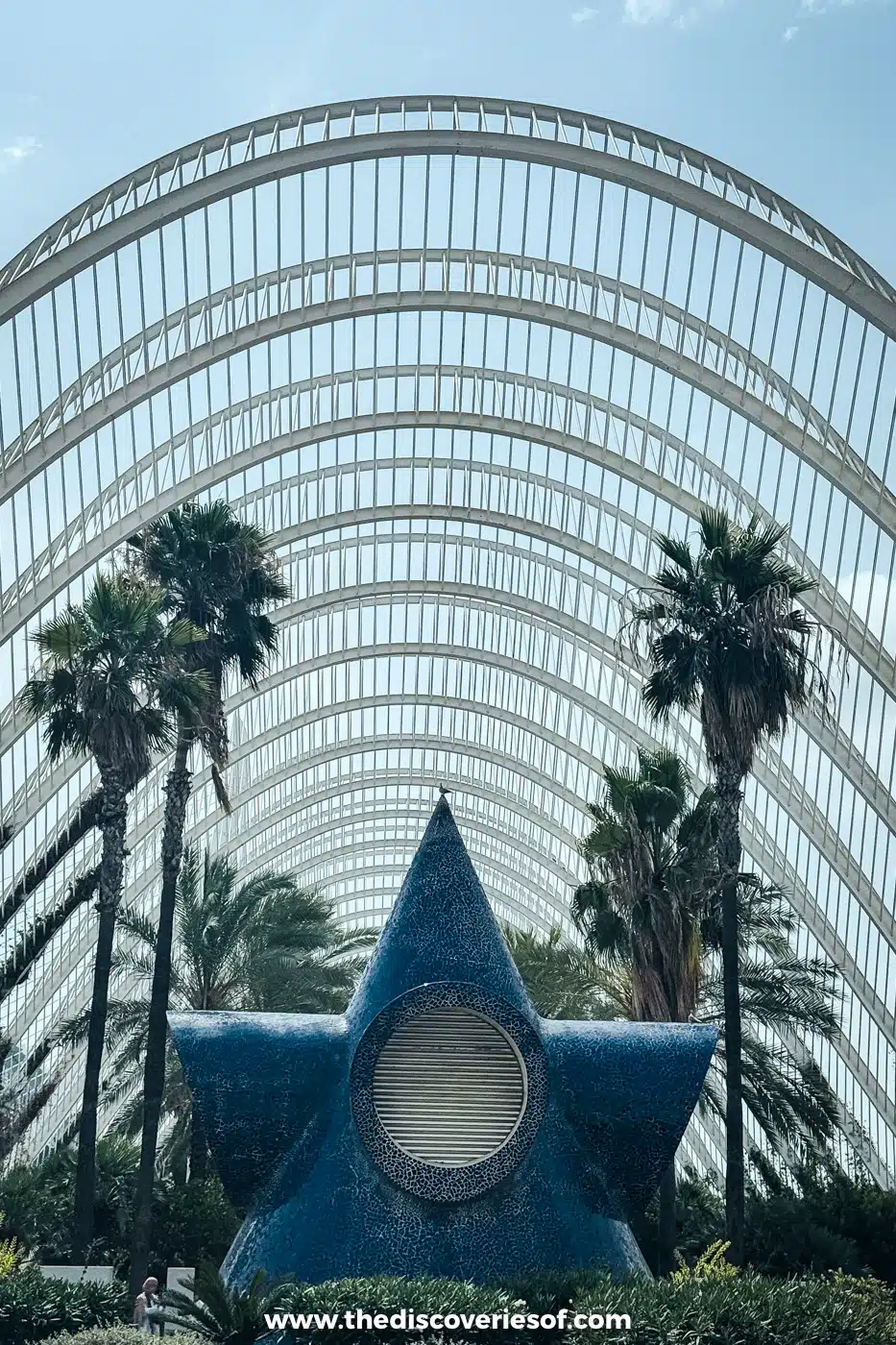
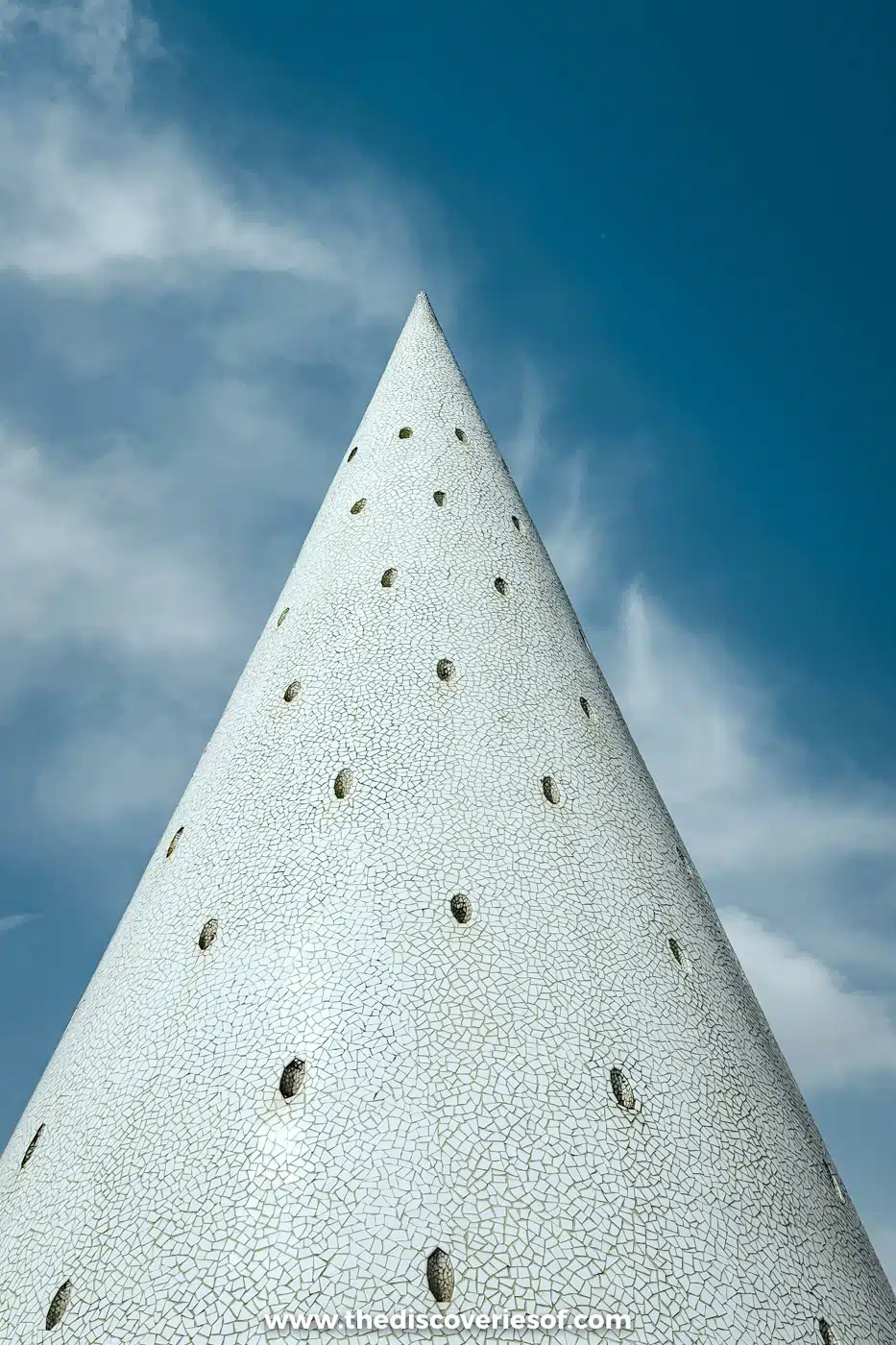
Look out for the trencadís pieces, covered in broken tiles in the style Gaudí made famous. There’s a dark blue star with round openings like portholes among the palms, and nearby a tall white cone, speckled with holes, that looks like something out of a sci-fi film.
L’Umbracle also sits on top of the complex’s underground car park, which is handy if you’re driving. On summer nights part of it becomes an open-air terrace bar and club, so the same walk feels completely different after dark.
The Assut de l’Or bridge and the Agora
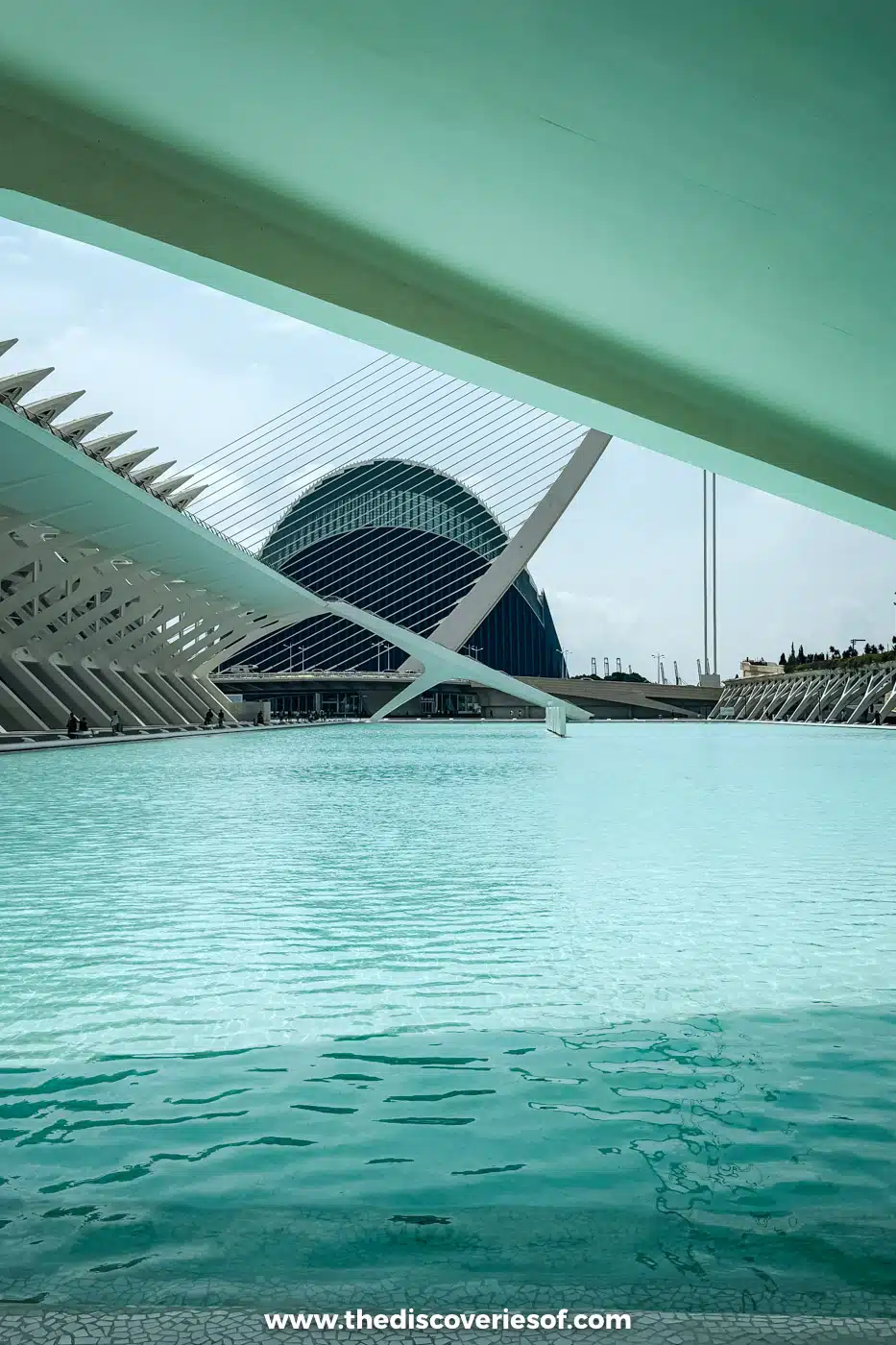
Beyond the Museu, the Assut de l’Or bridge carries traffic across the riverbed on cables strung from a single curved white pylon. At 125 metres, it’s the highest point in Valencia, and locals call it el Pont de l’Arpa, the harp bridge, or less romantically el Jamonero, after the stands used to hold a leg of ham.
Next to it, the Agora is the blue, oval building with the curved roof, the last part of the complex to be finished. It was built as a covered events space and now houses CaixaForum València, which runs changing exhibitions, talks and concerts. Entry is €6, free for under-16s, and it’s open 10am to 8pm every day. It isn’t included in the City of Arts and Sciences combined tickets.
L’Oceanogràfic
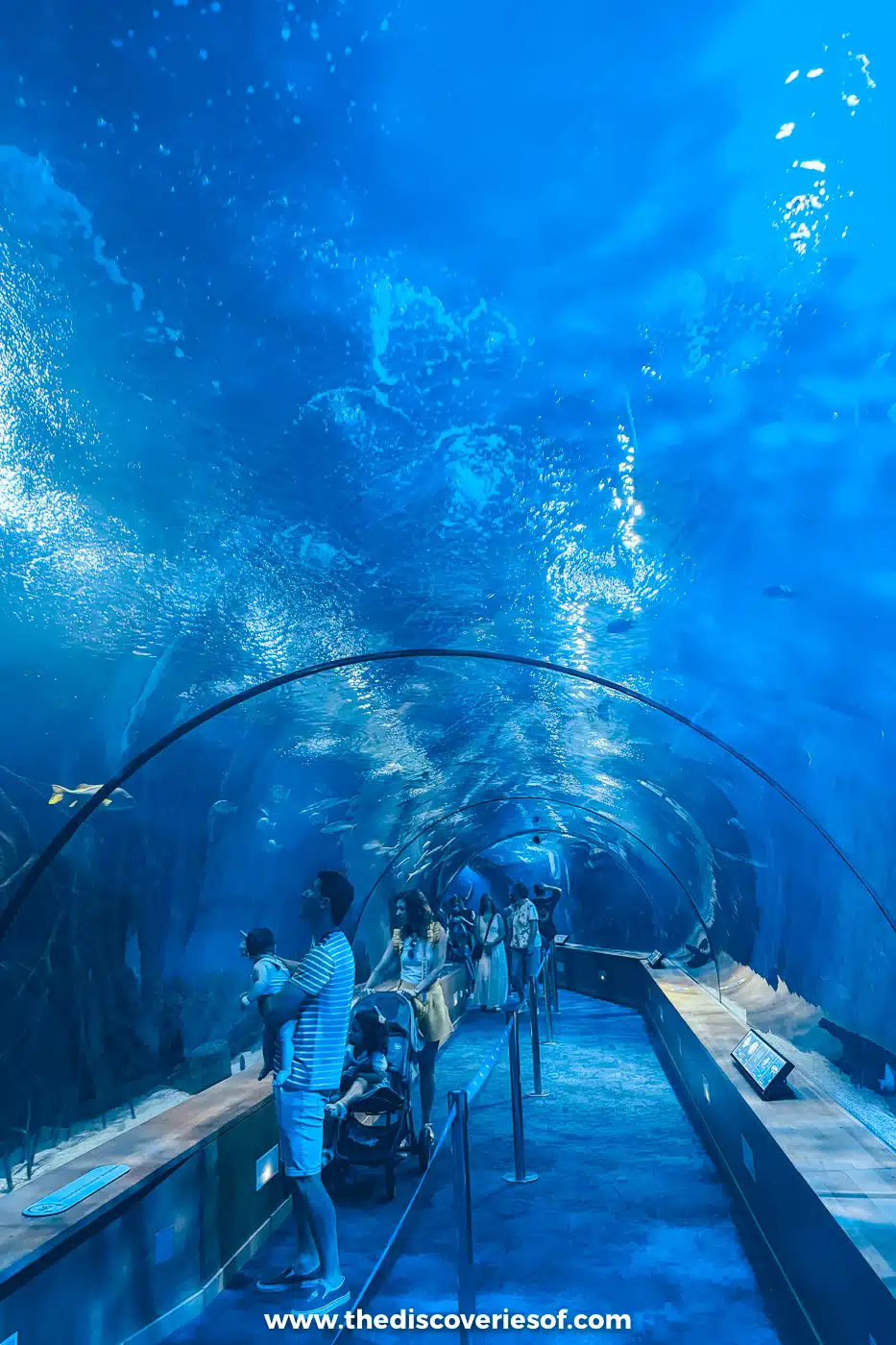
At the eastern end, across the road from the Agora, the Oceanogràfic is billed as the largest aquarium in Europe, with around 45,000 animals from 500 species in buildings themed on different seas and oceans. Its shark tunnel is the highlight, and it’s home to the only belugas in Europe.
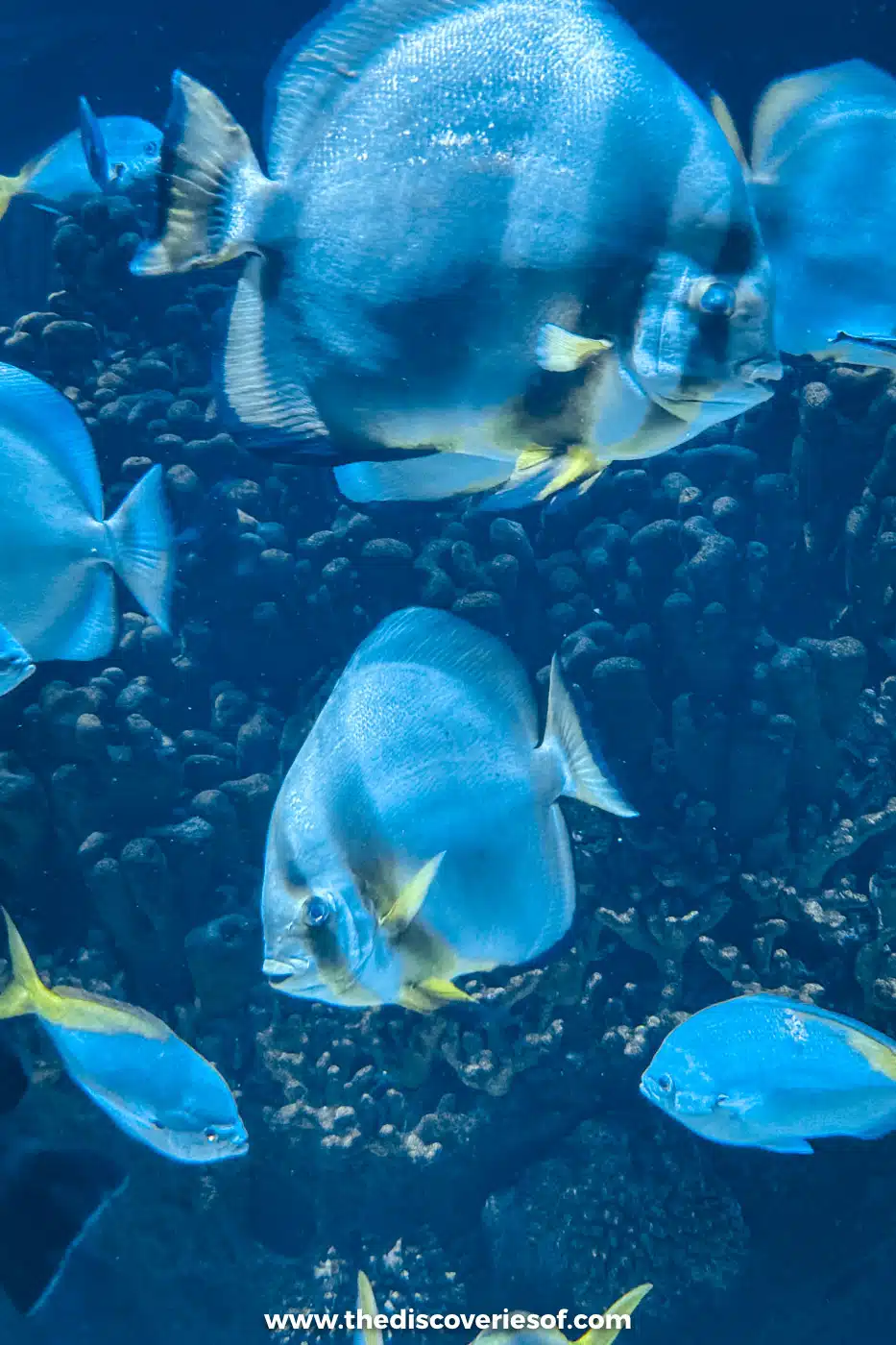
I walked through the shark tunnel, past the batfish, which look permanently surprised, and lingered at the jellyfish, pulsing through their tanks like slow-motion lanterns. Give it at least four hours if you want to see it properly, and more if you want to catch the dolphin show.
Tickets
Oceanogràfic tickets cost €37 for adults and €27.45 reduced from the official Visit València shop. Buy ahead, especially in summer and during school holidays.
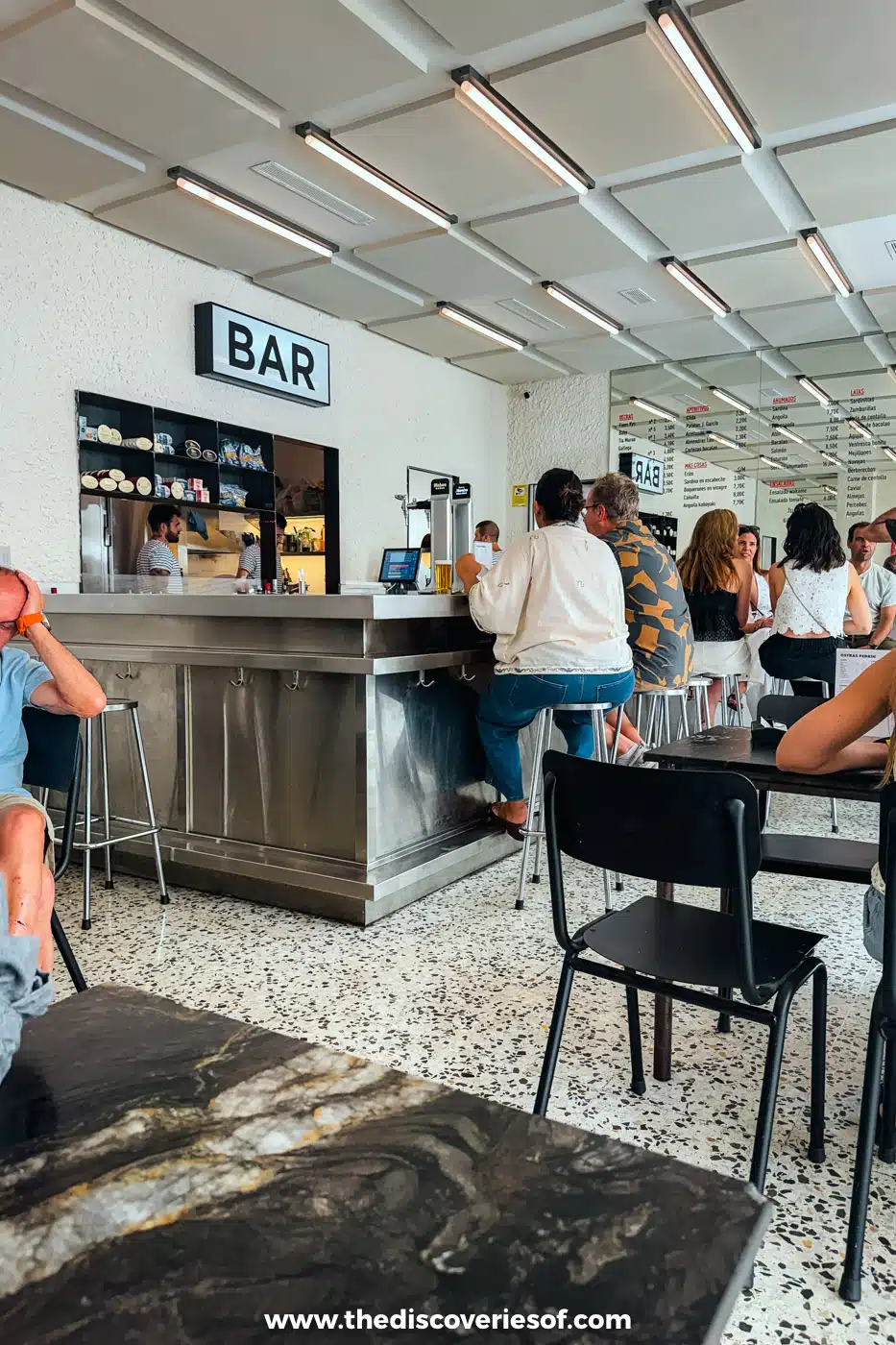
After the aquarium I walked a few minutes up the road for lunch at Ostras Pedrín Ciencias, an oyster bar built around a long counter, where I had oysters, tuna in olive oil and tomato toasts. More on it in my guide to things to do in Valencia.
What you can see for free
You can easily spend a couple of hours here without paying anything:
- The outside of every building, and the walk between them along the pools.
- L’Umbracle, its palms and its sculptures.
- The Assut de l’Or bridge, which you can walk across.
- The view from the far end of the pools back along the whole complex, with the buildings reflected in the water.
- The complex by night, when the buildings are lit and the pools glow.
Tickets: which ones are worth it
All prices are for adults from the official Visit València shop. Children aged 4 to 12, over-65s and visitors with a disability get reduced rates, and children up to 3 go free.
- Museu de les Ciències: €9.90
- Hemisfèric: €8.90
- Museu de les Ciències and Hemisfèric: €14.10
- Oceanogràfic: €37
- Oceanogràfic, Museu de les Ciències and Hemisfèric: €45.55, or €35.80 reduced
If you only have time for one, make it the Oceanogràfic, which is the only paid building most visitors really come for. The science museum is great with children, but if you’re travelling without them, the outside of the building is the showstopper. The combined ticket for all three only makes sense if you’re spending the whole day here.
Top Tip
The Valencia Tourist Card takes 10% off the three-attraction ticket in the official shop and half off CaixaForum entry, and covers public transport too, so it’s worth having if you’re also using the metro and buses.
Opening hours
- Outdoor areas, pools, L’Umbracle and the bridges: open all the time, free.
- Museu de les Ciències: 10am every day, closing between 6pm and 7pm for most of the year and at 9pm in July and August.
- Hemisfèric: daily from 10am, with films and planetarium shows through the day.
- Oceanogràfic: 10am every day, closing at 6pm for most of the year (8pm on Saturdays) and at 8pm every day from late June to September.
- CaixaForum València: 10am to 8pm every day.
Hours change with the season and on public holidays, and there are often extended hours over Christmas, Easter and Fallas, so check the official City of Arts and Sciences website before you go.
How to get to the City of Arts and Sciences
- By metro: line 10 runs from Alacant, next to the main Estació del Nord, to Ciutat Arts i Ciències – Justícia, right by the complex, with an Oceanogràfic stop at the far end.
- By bus: EMT buses 35 and 95 are among those that stop nearby.
- On foot or by bike: the nicest way to arrive is down the Turia gardens, which lead straight to it from the old town. It’s about 4 km from the Torres de Serranos, so under an hour on foot, or much quicker on a Valenbisi hire bike.
- By car: there’s a large paid underground car park beneath L’Umbracle.
Tips for visiting
- Go early: come in the morning, when the light is soft, the paths are quiet and the white buildings are easier on the eyes. By midday in summer, the heat reflects off every surface.
- Bring sunglasses and water: there’s not much shade outside L’Umbracle.
- Walk the whole length: the best views come from walking between the buildings, so allow time to cross the bridges and see each one from different sides of the pools.
- Come back at night: the buildings are lit up after dark, and the reflections in the pools are even more striking.
- Combine it with the beach: Las Arenas beach is a short bus or taxi ride away, so you can finish the day watching the sun go down by the sea.
For everything else in the city, from the cathedral and the old town to paella and horchata, see my guide to the best things to do in Valencia.
Map
Read next
- 23 things to do in Valencia
- 50 famous landmarks in Spain
- 27 brilliant things to do in Spain
- Brilliant day trips from Madrid
- The best beaches in Spain
- My Spain travel guide
Love this? Save and share on Pinterest
Discover the top things to do, insider tips and hidden gems in our Spain Travel Guide.
Read the guides →