
Where do you taste port where it’s made, and should you arrive by train, boat or car? Northern Portugal’s wine country is a place of impossibly steep vine terraces, sleepy riverside villages and quintas that have been making port for centuries. Here’s how to see it properly: the best ways onto the river, the estates worth the winding roads, where to eat and stay, and why late September changes everything.
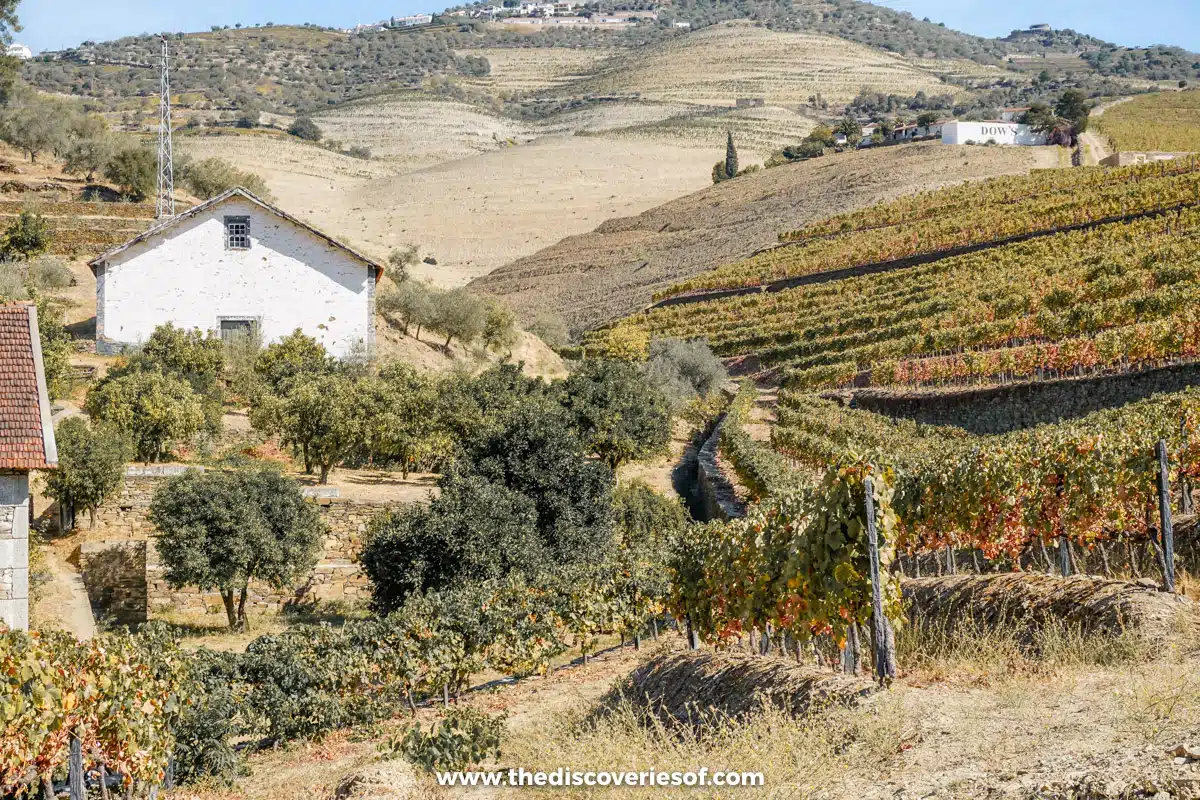
Imagine sitting on a terrace above the Douro with a glass in your hand, the river curling below and every hillside around you carved into terraces of vines. That, more or less, is the Douro Valley, and it’s every bit as beautiful as the photos suggest.
I first visited years ago and couldn’t wait to go back. When I did, it was the last week of September and the harvest was in full swing: I took a boat on the river, visited a quinta where the grapes were coming in by the boxload and went back for lunch at DOC. I’ve also stayed at Six Senses Douro Valley and the grand old Vidago Palace. I’m a huge port fan, so for me there’s nowhere better to drink it than where it’s made.
This Douro Valley travel guide covers the best things to do, from river trips and quinta tastings to Baroque staircases, Ice Age rock art and vulture-watching in the gorges near Spain, plus where to eat, where to stay, how to get there and when to go. There’s far more to the region than wine.

The Douro at a glance
- What it is: the Alto Douro Wine Region, demarcated in 1756 and one of the oldest regulated wine regions in the world, and a UNESCO World Heritage Site since 2001
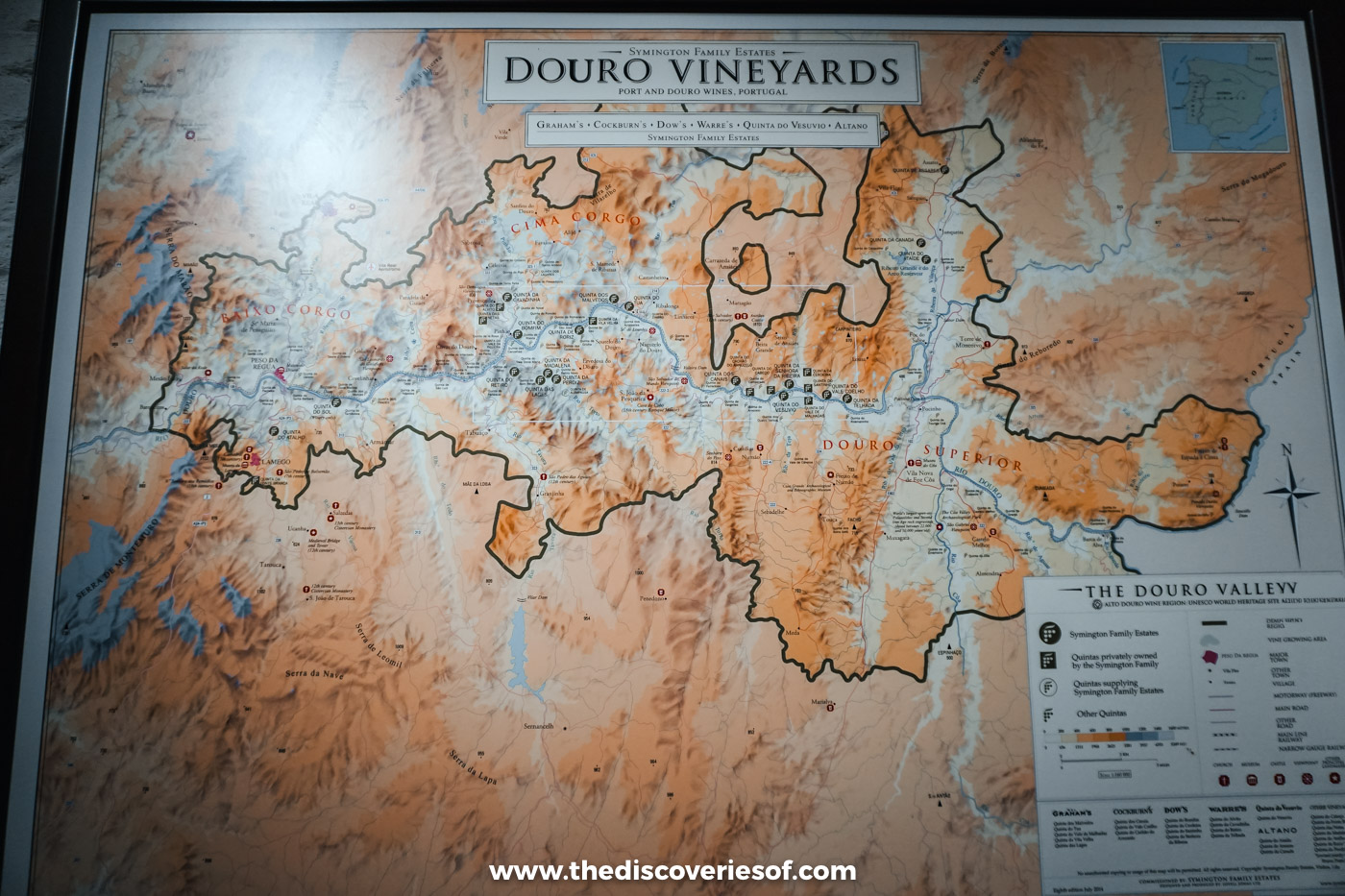
- Where: northern Portugal, starting about 100km east of Porto and running along the river towards the Spanish border
- Main bases: Peso da Régua (the gateway town), Pinhão (the heart of port country) and Lamego (for history and the Baroque sanctuary)
- Getting there: about an hour and a quarter by car from Porto to Régua, or two to two and a half hours by train from São Bento station
- Time needed: a day trip shows you the river; two or three nights let you settle in, visit several quintas and eat well
- Best time: May and June for green vines and mild weather; mid-September to early October for the harvest
- Good to know: the roads are narrow and winding, many quintas need booking ahead, and if you’re tasting, someone else should drive
The best things to do in the Douro Valley
Take to the river on a rabelo boat
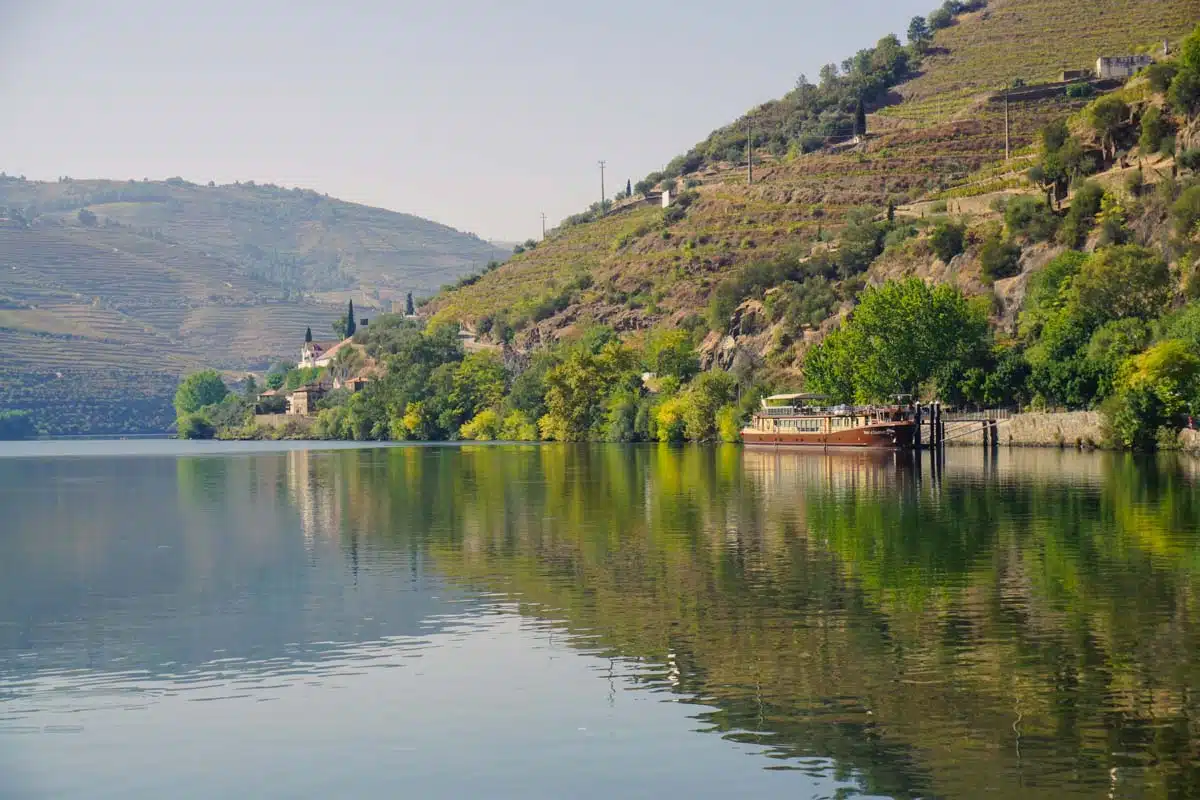
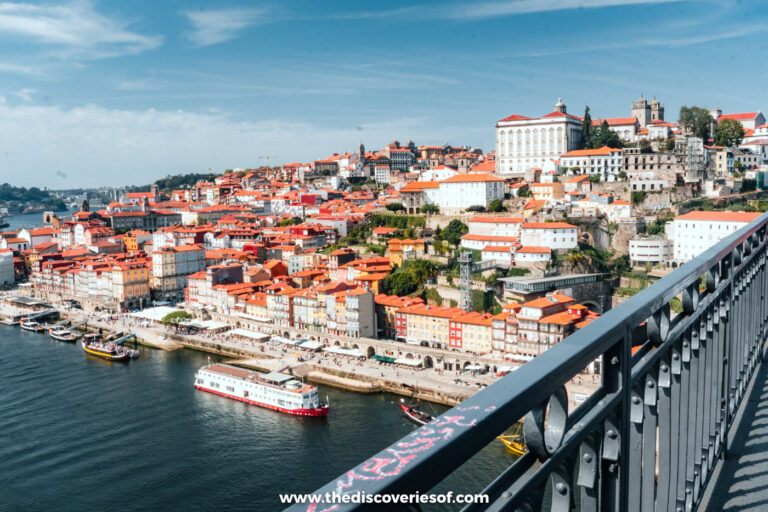
I’d really recommend a boat trip. Those terraced slopes, verdant with vines, rising sheer from the water are quite a sight, and you only grasp the scale of them from river level.
The traditional way to do it is on a rabelo, the flat-bottomed wooden boat that once carried barrels of port downriver to the lodges in Vila Nova de Gaia. Short trips leave from the pier in Pinhão, by the iron bridge, and an hour on the water costs from around €12 a person. From Régua, longer cruises head upstream past the quintas, and you can choose a private boat if you’d rather have the river to yourself.
If you’d rather not drive at all, full-day cruises leave the Ribeira in Porto in the morning and sail all the way up to Régua, rising through two huge locks in the dams on the way, with breakfast and lunch on board and a train or coach back to the city. Expect to pay from around €75.
Top Tip
Take the boat in the morning or late afternoon. The light on the terraces is softer, and in summer you’ll avoid the worst of the midday heat, which regularly tops 35°C in the valley.
Taste port at a historic quinta
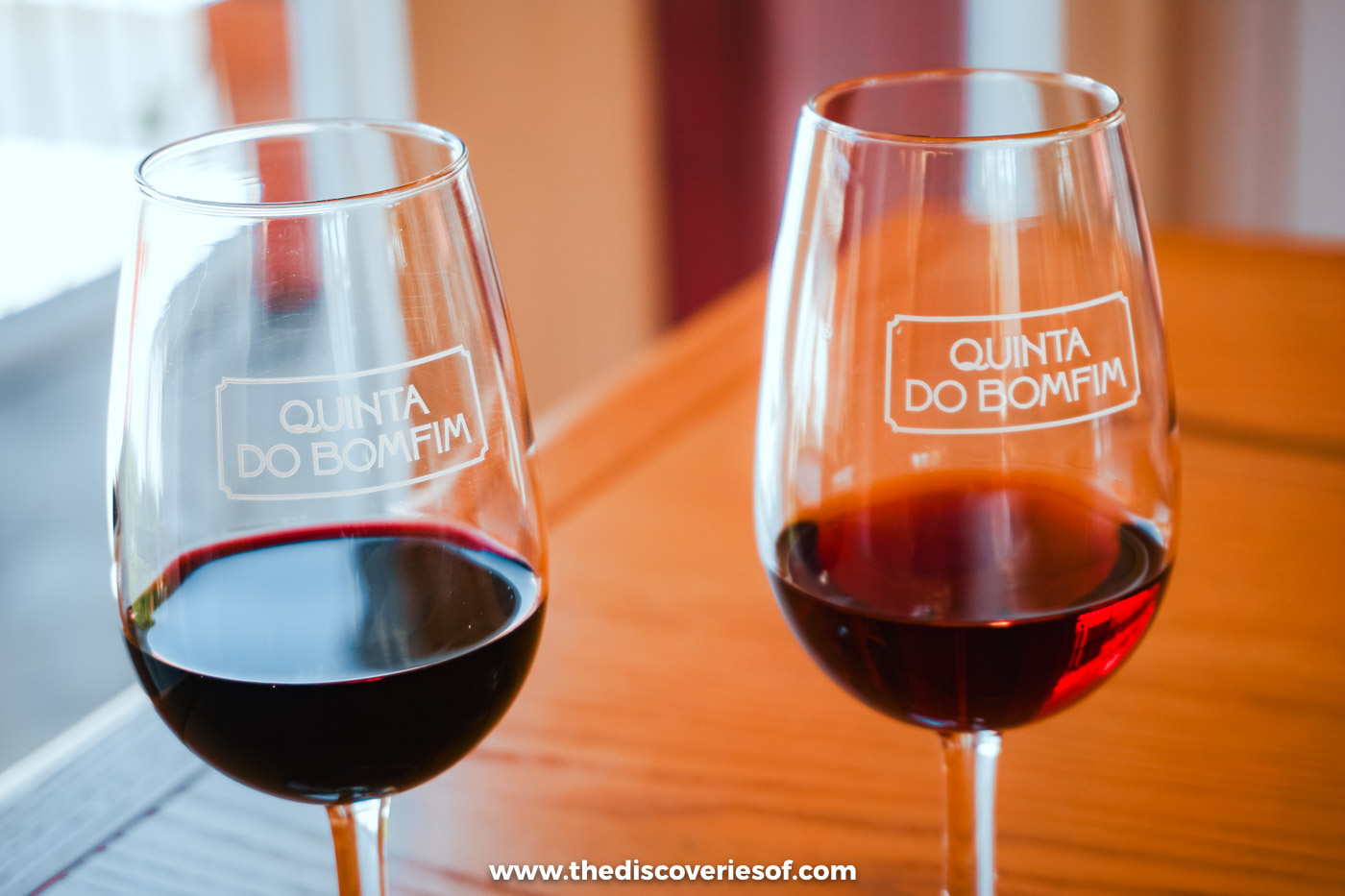
Visiting a quinta (wine estate) is the reason most people come, and you could easily fill several days with tastings. Port is made from grapes grown right here, on schist slopes so steep that many of the terraces were built by hand, and the valley’s red and white table wines (labelled DOC Douro) are every bit as good.
Symington’s Quinta do Bomfim, on the riverbank in Pinhão, is a lovely place to start. Its tastings range from three classic ports from Dow’s, Graham’s and Cockburn’s to a premium flight of 40-year-old tawny and vintage ports, and you can also take a self-guided walk through the vineyards or book a picnic on the terrace overlooking the river. It’s open daily all year (10am to 7pm from March to October, closing a little earlier in winter); book online before you go.
Quinta de Santa Eufémia, a family estate in its fourth generation at Parada do Bispo near Lamego, is a smaller, more personal option, with tours of the winery, sweeping views over the valley and tastings of its ports and wines served with snacks. It’s open most days, morning and afternoon, with a break for lunch.
If you’d like someone else to choose the quintas and do the driving, this Douro wine tour from Porto visits three producers, with tastings at each and a traditional lunch at a winery, in about ten hours, from around €105.
Time your trip for the harvest
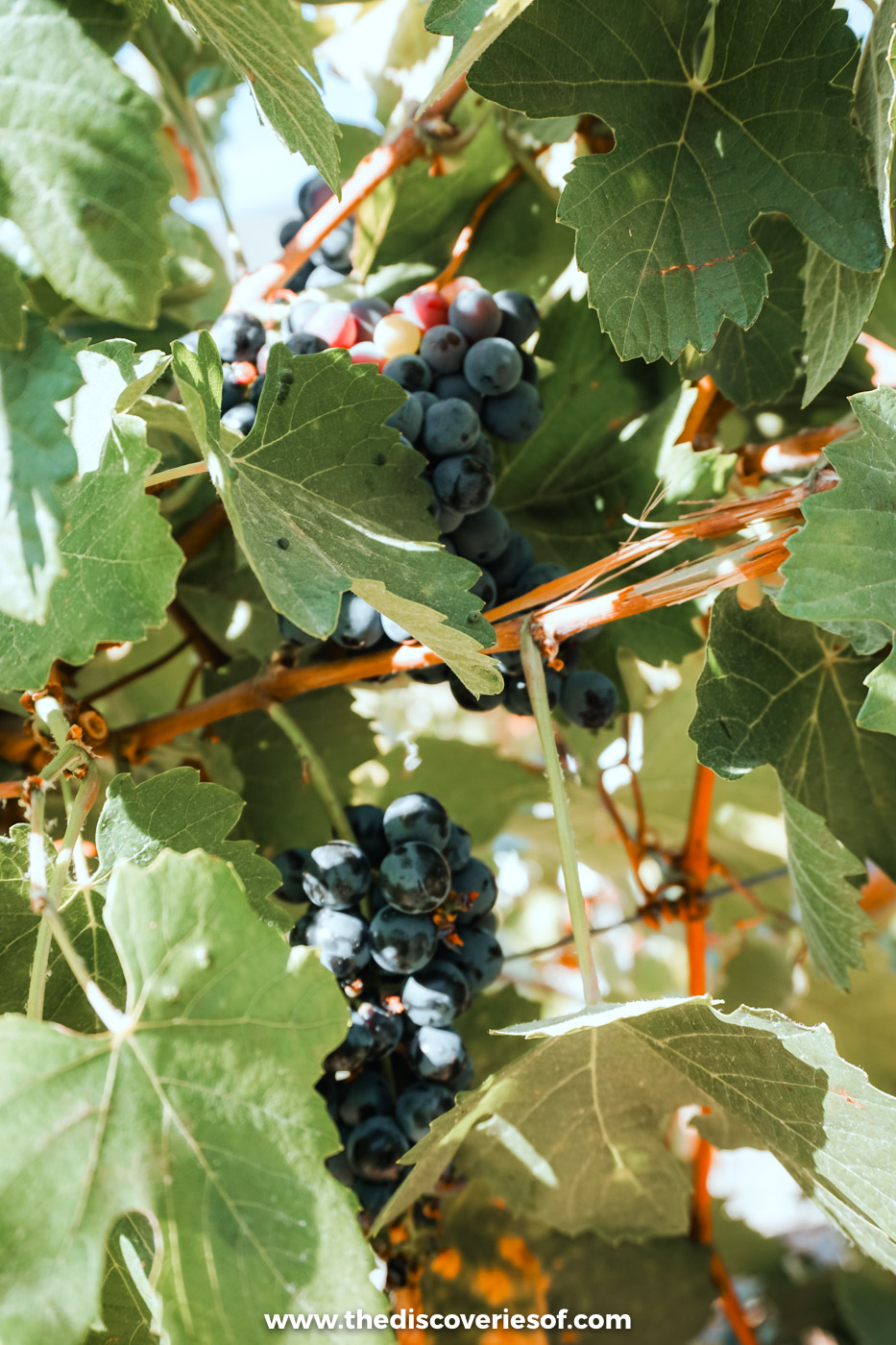
If you can be here between mid-September and the first week or so of October, do. This is the vindima, the grape harvest, and the whole valley comes alive with pickers on the terraces and tractors loaded with grapes on the roads.
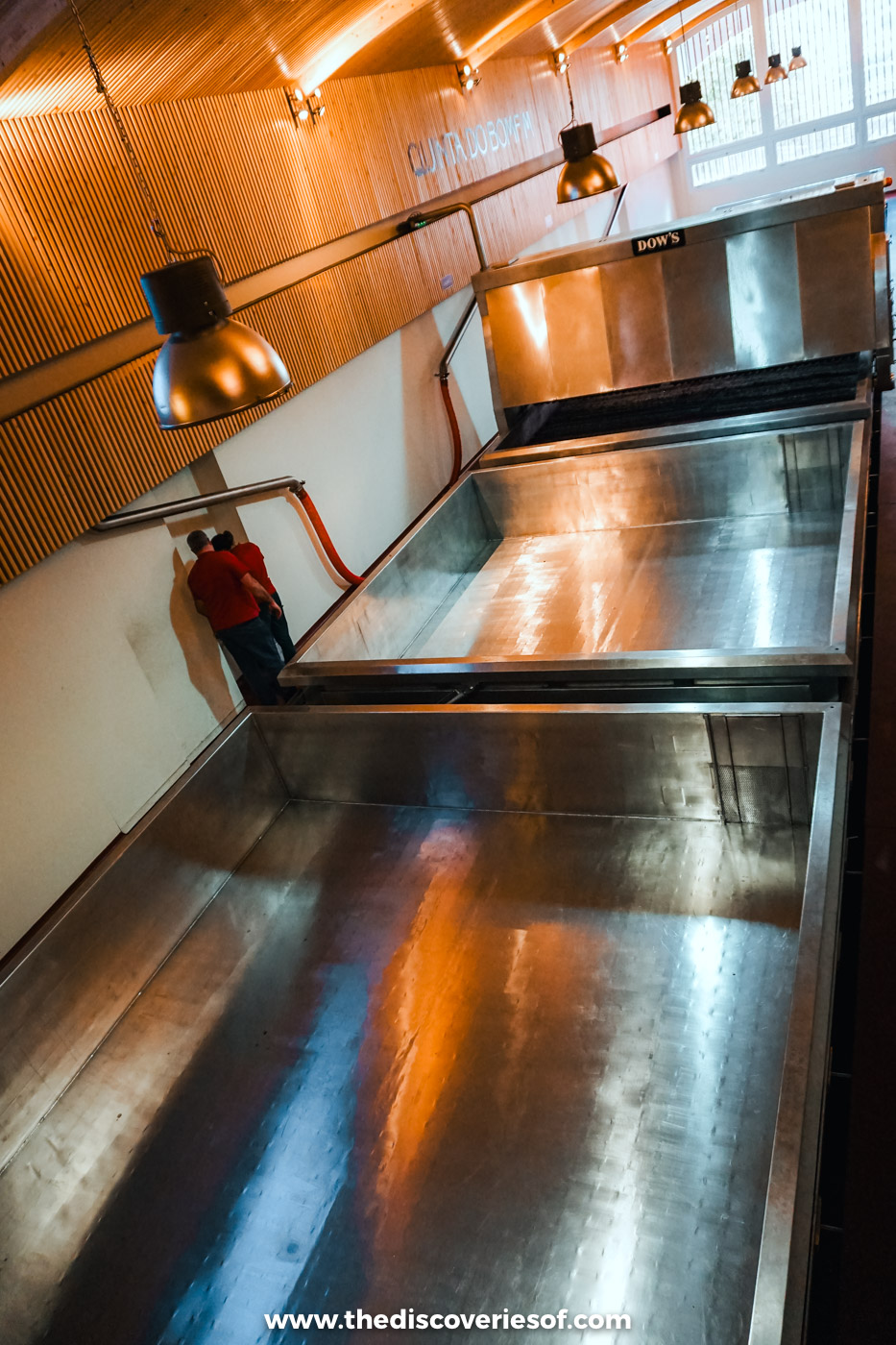
My harvest visit was to Quinta do Bomfim. It gets very little rain, which keeps the yields low but packs the grapes with flavour. Charles Symington, the head winemaker, uses a geographic plan of the estate to work out when each block is ready, and that becomes the cutting plan the pickers follow. Each crate holds around 18 kilos, and every one goes along a sorting belt so the poor bunches can be removed before the fruit is crushed.
A share of Bomfim’s port is still trodden by foot in lagares, the shallow stone tanks used across the region. Treading is as much a tradition as a technique here, with music and dancing to keep the rhythm going, and a session lasts three to four hours. Bomfim also has modern lagares designed to mimic the human foot.
Several quintas invite visitors to join in with picking and treading at harvest time. Places go quickly, so book early. For the rest of the year, month by month, read my guide to the best time to visit Portugal.
Ride the railway along the river

The Linha do Douro is one of the most beautiful train journeys in Europe. From Porto’s São Bento station, the line reaches the river and then hugs the bank for mile after mile, past Régua and Pinhão to Pocinho, near the Spanish border.
The fastest trains take about one hour 55 minutes to Régua, two hours 20 minutes to Pinhão and three hours 20 minutes to Pocinho, and a single ticket to Pinhão costs about €12.50. Seats aren’t reserved, so arrive early, and sit on the right-hand side heading east for the river views.
On summer weekends, the historic train runs between Régua and Tua, with five vintage carriages, a welcome glass of port, regional music on board and a stop at Pinhão on the way back. In 2026 it ran from June to mid-October, pulled by a diesel locomotive rather than steam, with adult tickets at €60. Book through CP.
Admire the tiles at Pinhão station
Even if you don’t arrive by train, stop by Pinhão’s little station. Its walls are covered in 24 blue and white azulejo panels, more than 3,000 tiles in all, made in Aveiro and installed in 1937. They show the valley as it used to be: the terraces, the harvest, grape treading in the lagares and rabelo boats carrying port downriver to Gaia. It takes ten minutes and costs nothing.
Look down on Pinhão from the viewpoints

Some of the best views in the valley are from above. Just north of Pinhão, the road climbs through the vines to the village of Casal de Loivos, where the viewpoint looks straight down on the town and the great curve of the river.
Near Régua, the Miradouro de São Leonardo de Galafura sits at around 640m, with a panorama over the terraces in every direction. The writer Miguel Torga, who knew this landscape intimately, called the Douro a geological poem, and from up here on a clear day it’s hard to argue.
Climb the steps to Nossa Senhora dos Remédios

For a step back in time, head to Lamego, a short drive south of Régua. Above the town, on Monte de Santo Estêvão, stands the Santuário de Nossa Senhora dos Remédios, a twin-towered Baroque and Rococo church at the top of a grand zigzag staircase.
There are 686 steps, broken up by landings decorated with blue and white tiles, fountains and statues, and the climb is as much a part of the visit as the church itself. It’s free to visit. Lamego’s old town, its cathedral and its castle are worth a wander afterwards, and the town is known for its sparkling wine too.
Stroll the gardens at Casa de Mateus
Just outside Vila Real, on the northern edge of the wine region, the Casa de Mateus is an 18th-century Baroque manor house that you may recognise from the label of Mateus Rosé. The house is still owned by a family foundation, and the formal gardens are the highlight, with clipped box hedges, a reflecting pool and a long tunnel of cedar trees.
It’s open daily from 9am to 6pm. A visit to the chapel and gardens costs €13.50, and the guided house visit is €19.
Learn the story of port at the Museu do Douro
If you’ve not had enough of the wine culture, the Museu do Douro in Peso da Régua tells the story of the region and its wine in a converted riverside warehouse. The permanent exhibition, Douro: Matéria e Espírito, covers the landscape, the people who built the terraces and the long journey of port down the river.
Tickets are €8, or €25 with lunch included at the museum’s restaurant and wine bar, A Companhia, on weekdays. Douro residents get in free on Saturdays.
See Ice Age rock art in the Côa Valley

For a deep dive into the region’s history, head east to the Parque Arqueológico do Vale do Côa, near Vila Nova de Foz Côa. Thousands of figures of horses, aurochs and ibex were engraved into the rocks along the Côa river, some of them more than 25,000 years ago, and the open-air site has been a UNESCO World Heritage Site since 1998.
Start at the Museu do Côa, then join a guided visit to one of the three main rock art sites: Canada do Inferno, Penascosa or Ribeira de Piscos. Each costs €18. There’s also a night visit to Penascosa (€22), when torchlight brings the engravings into relief, and you can reach the Fariseu site by electric solar boat, or see the valley by kayak.
Hike in the Douro International Natural Park

Further east still, where the Douro becomes the border with Spain, the vineyards give way to the deep granite gorges of the Parque Natural do Douro Internacional. It covers more than 85,000 hectares of rugged northern Portugal, with cliffs that drop hundreds of metres to the water.
There are walking trails all over the park. The PR6, the Trilho do Castro e do Contrabando, is an easy 5.6km loop from the hilltop fort at Vilarinho dos Galegos, near Mogadouro, along old smugglers’ paths, and takes about two hours. Keep an eye on the sky while you walk: the park is home to Egyptian vultures, griffon vultures, black storks and golden eagles.
Watch for vultures from the Carrascalinho viewpoint

Although this is in the Douro International park, it deserves its own entry. The Miradouro do Carrascalinho sits high above the river near the village of Fornos, a few minutes’ drive from Freixo de Espada à Cinta, and it’s one of the best places in the region to watch griffon vultures and eagles circling over the gorge.
The last 3km from Fornos is a dirt track. A normal car can usually manage it with care, but it gets tricky after rain. Bring binoculars.
Where to eat and drink in the Douro
DOC
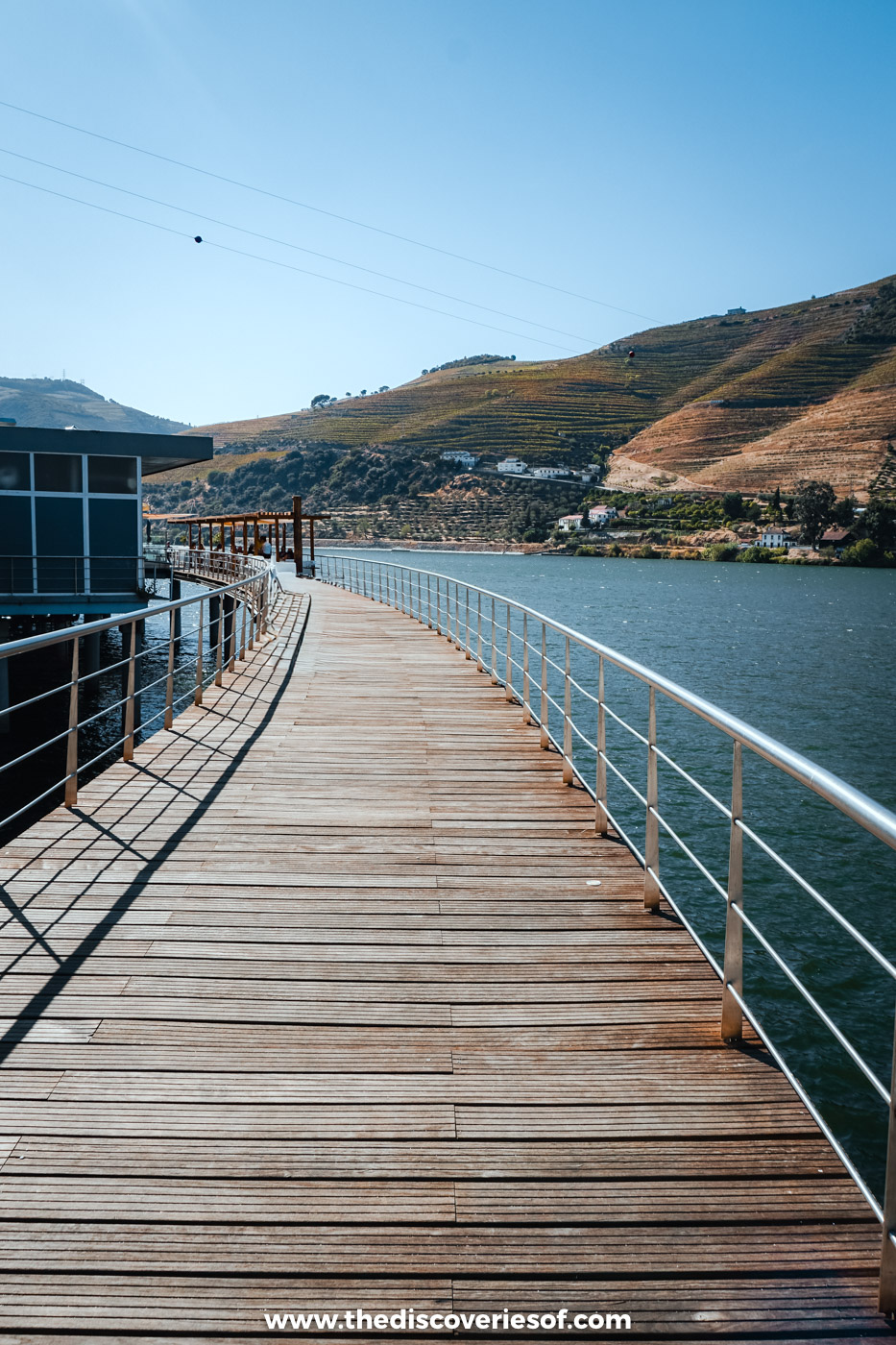

Make time for DOC, the Douro outpost of one of Portugal’s leading chefs, Rui Paula. I first ate here years ago and talked about it so much afterwards that a second visit was non-negotiable once I was back in the valley. I can’t rave enough about the food. Your wallet may weep a little, but your stomach will be delighted.
The modern dining room sits right on the water on the N222 at Folgosa, between Régua and Pinhão, with a terrace over the river. Chef Joel Paiva runs the kitchen day to day, cooking Rui Paula’s menu around the produce of the region: choose à la carte or a tasting menu of 14, 11 or 6 courses, with a serious list of local wines. It’s closed on Tuesdays and Wednesdays, and booking is essential.
Bomfim 1896
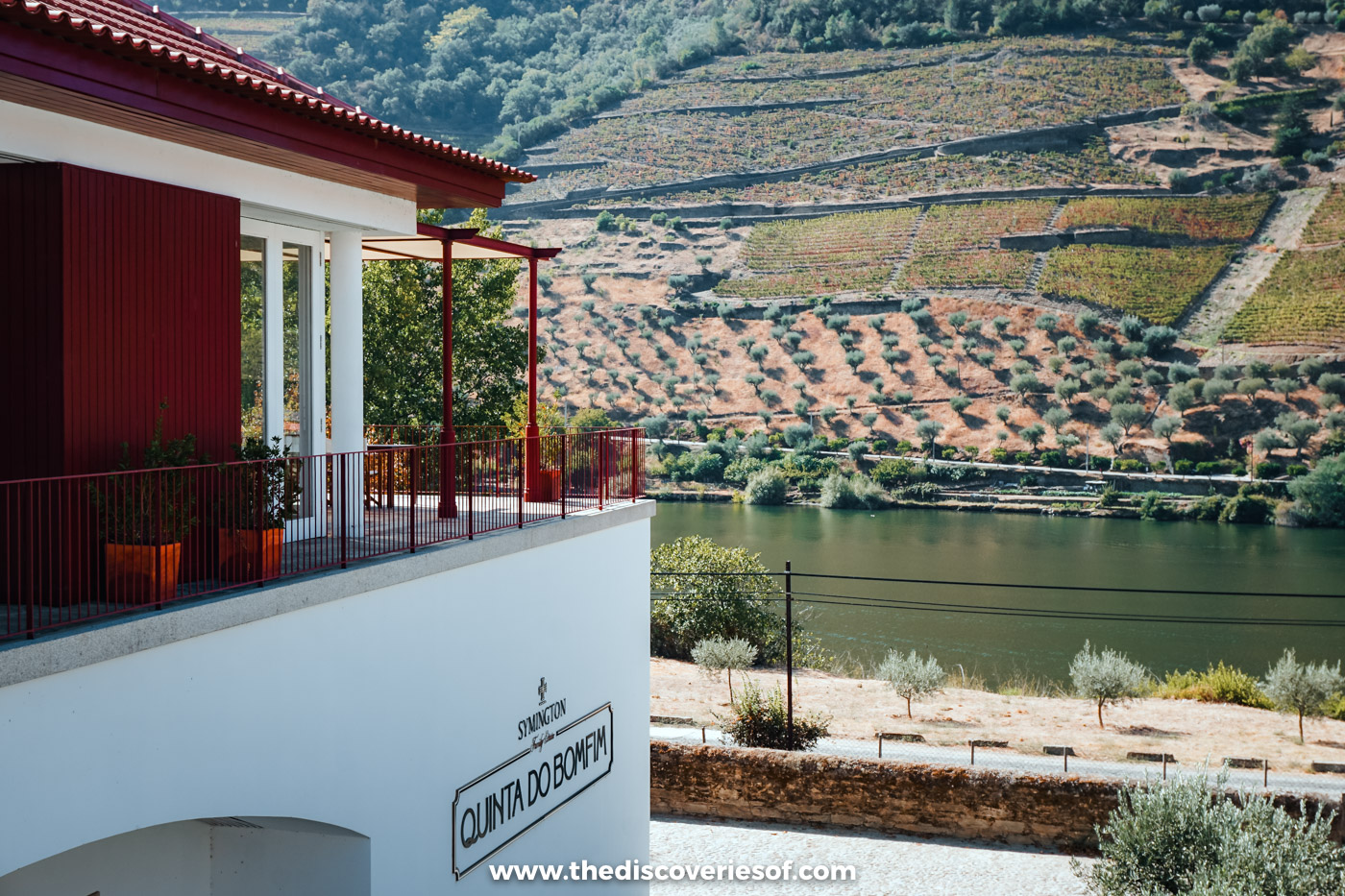
The riverside restaurant at Quinta do Bomfim in Pinhão serves traditional Douro dishes and reworked classics, and it pairs neatly with a tasting at the quinta. Sit on the terrace if the weather allows.
Calça Curta
Opposite Foz Tua station, where the Tua river joins the Douro, Calça Curta is a much more casual affair, with views of the river and plates of regional home cooking: game such as wild boar, river fish and grilled veal. It’s open from Tuesday to Sunday and very reasonably priced.
Quinta do Noval wine shop
As far as wine tasting goes, it doesn’t get much more convenient than the Quinta do Noval wine shop and tasting room on Rua da Praia in Pinhão, a short walk from the station. It pours the estate’s ports and Douro wines and is open daily from 10.30am to 7pm.
A glass of port is the perfect way to round off any of these meals. I’m a huge port fan, and nothing beats it as a digestif.
Where to stay in the Douro Valley
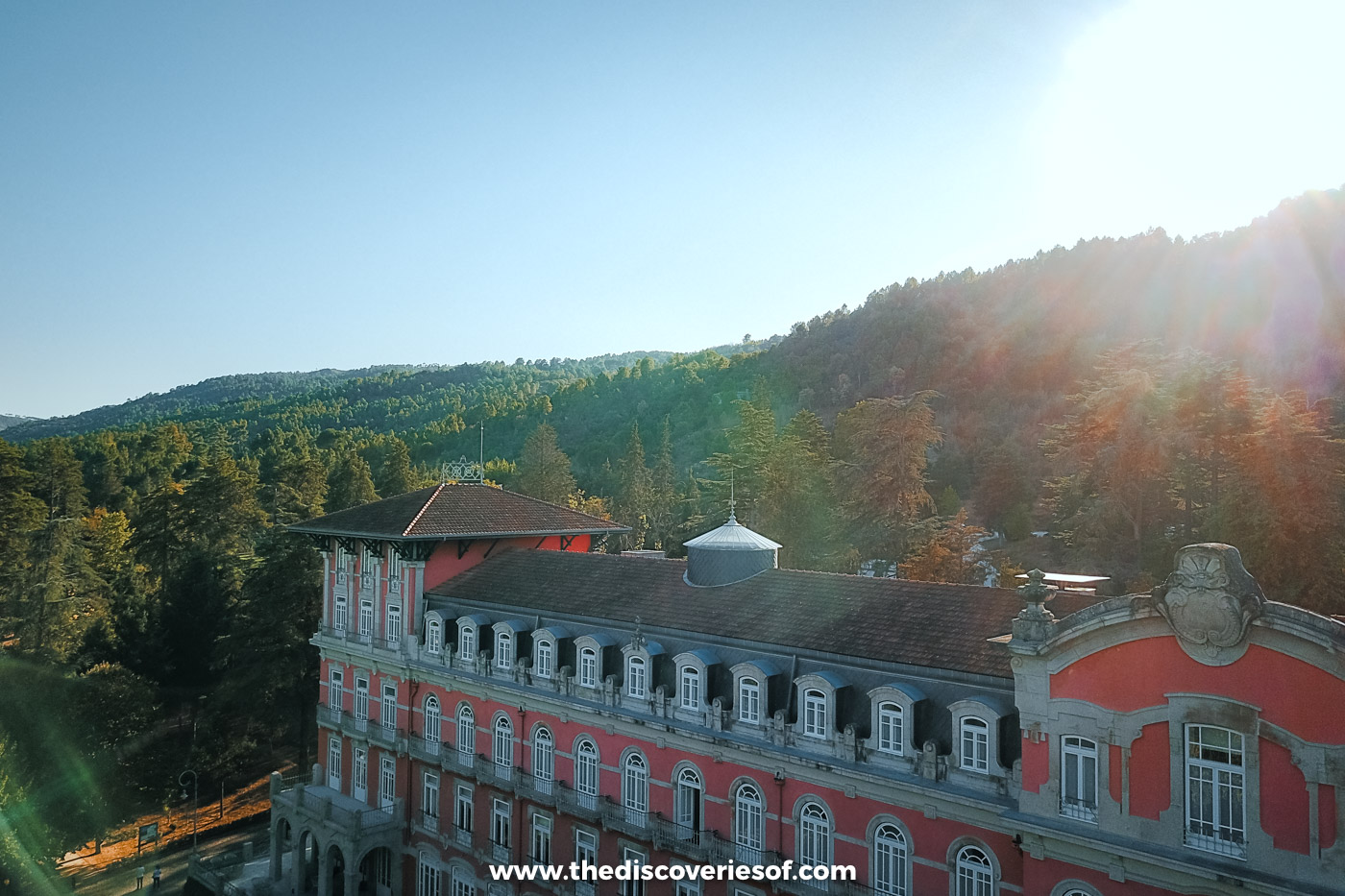
A day trip from Porto gives you a taste, but a night or two in the valley is far better. Base yourself around Pinhão for the quintas and the river, near Régua or Lamego for the gateway towns, or a little further north for a palace spa hotel. My where to stay in Portugal guide covers Porto and the rest of the country.
Six Senses Douro Valley
If you want to splurge, Six Senses Douro Valley is a great choice: I’ve stayed here, as well as at Vidago Palace. The hotel occupies a 19th-century quinta house above the south bank at Samodães, a short drive from Lamego, and its 71 rooms, suites and villas share sweeping river views, a pool, a large spa and a Wine Library stocked for self-service tastings. Expect to pay from about €785 a night.
Vidago Palace
Vidago Palace is great too, though it’s a different kind of stay. The pink Belle Époque palace stands in parkland in the spa town of Vidago, roughly an hour’s drive north of the Douro (Porto is about 90 minutes away), and it was built in the early 1900s for guests coming to take the mineral waters. Those waters still feed the spa, a striking modern building by the architect Álvaro Siza Vieira. Add 69 rooms and suites, its own 18-hole course and a grand dining room, and it’s an easy place to lose a weekend. Rates start from around €200.
The Vintage House
In the middle of Pinhão, The Vintage House puts you right on the riverbank in an old port lodge, now a 50-room hotel with a garden and pool. The rabelo boats tie up at the pier by its garden gate, and the station is a few minutes away on foot.
The Wine House Hotel
The Wine House Hotel sits on a working wine estate, Quinta da Pacheca, near Régua, which makes it easy to fit in tastings without getting in the car. As well as rooms in the main house, it has pod-like rooms built from giant wine barrels, each with a terrace facing the vines, plus indoor and outdoor pools.
Getting to the Douro and getting around
The Douro is in northern Portugal, and most people arrive from Porto, which makes it an easy add-on to any list of things to do in Porto. The nearest airport is Porto’s.
- By car: Régua is about 115km east of Porto, an hour and a quarter by motorway on the A4 and A24, and Pinhão is about 30 minutes further on. A car gives you the most freedom to reach the quintas and viewpoints, but the roads are narrow, steep and twisting, so take it slowly. The N222 between Régua and Pinhão is one of the most beautiful drives in Portugal.
- By train: direct trains run from São Bento to Régua, Pinhão and Pocinho several times a day. It’s the most relaxing way to arrive, though you’ll need taxis or tours to reach the quintas.
- By boat: day cruises sail up from Porto to Régua, and the boats from Pinhão and Régua cover the stretch through the heart of the valley.
- On a tour: day tours from Porto combine quintas, lunch and often a short boat trip, which solves the problem of who drives after the tastings.
For a day-by-day plan that fits the valley into a trip to Porto, see my three-day Porto itinerary, and for the whole country, my Portugal itinerary.
When to go for green terraces or the harvest
April, May and June are lovely: the vines are bright green, the weather is warm without being scorching, and the quintas are quieter. Mid-September to early October is harvest time, the most atmospheric (and busiest) time of year, and in late October the vines turn gold and red.
July and August bake the valley floor, often past 35°C, so plan tastings and walks for the mornings. Winter is quiet and often wet, with some quintas and boats running reduced hours, but you’ll have the place almost to yourself.
Tips for planning your trip
- Give it time. I’d recommend spending at least three days so you can explore everything the region offers; the distances look short on the map, but the roads are slow.
- Book ahead. Quinta tastings, the good restaurants and harvest experiences all fill up, especially at weekends and in September.
- Don’t drink and drive. Portugal’s limit is 0.5g/l (0.2g/l for drivers in their first three years), and the roads leave no margin for error. Take the train, join a tour or stay at a quinta.
- Check opening days. Many restaurants close one or two days a week (DOC is closed on Tuesdays and Wednesdays), and some quintas close for lunch.
- Pack layers. The valley floor can be several degrees warmer than Porto by day, and evenings cool off quickly in spring and autumn.
Map
Read next
- Where to stay in Portugal
- The best things to do in Porto
- Three days in Porto: the perfect Porto itinerary
- The best time to visit Portugal
- The best things to do in Portugal
- The ultimate Portugal itinerary
- Portugal travel tips
Love this? Save and share on Pinterest
Discover the top things to do, insider tips and hidden gems in our Portugal Travel Guides.
Read the guides →