
USA
Grand Canyon travel guide
Layer upon layer of rock dropping away to the Colorado River, sunsets that set the whole canyon glowing and a rim walk with a new view at every bend. Plan your trip to the Grand Canyon’s South Rim, from where to stay and what’s open now to the best viewpoints, hikes and a helicopter flight.

Julianna BarnabyTravel and culture writer
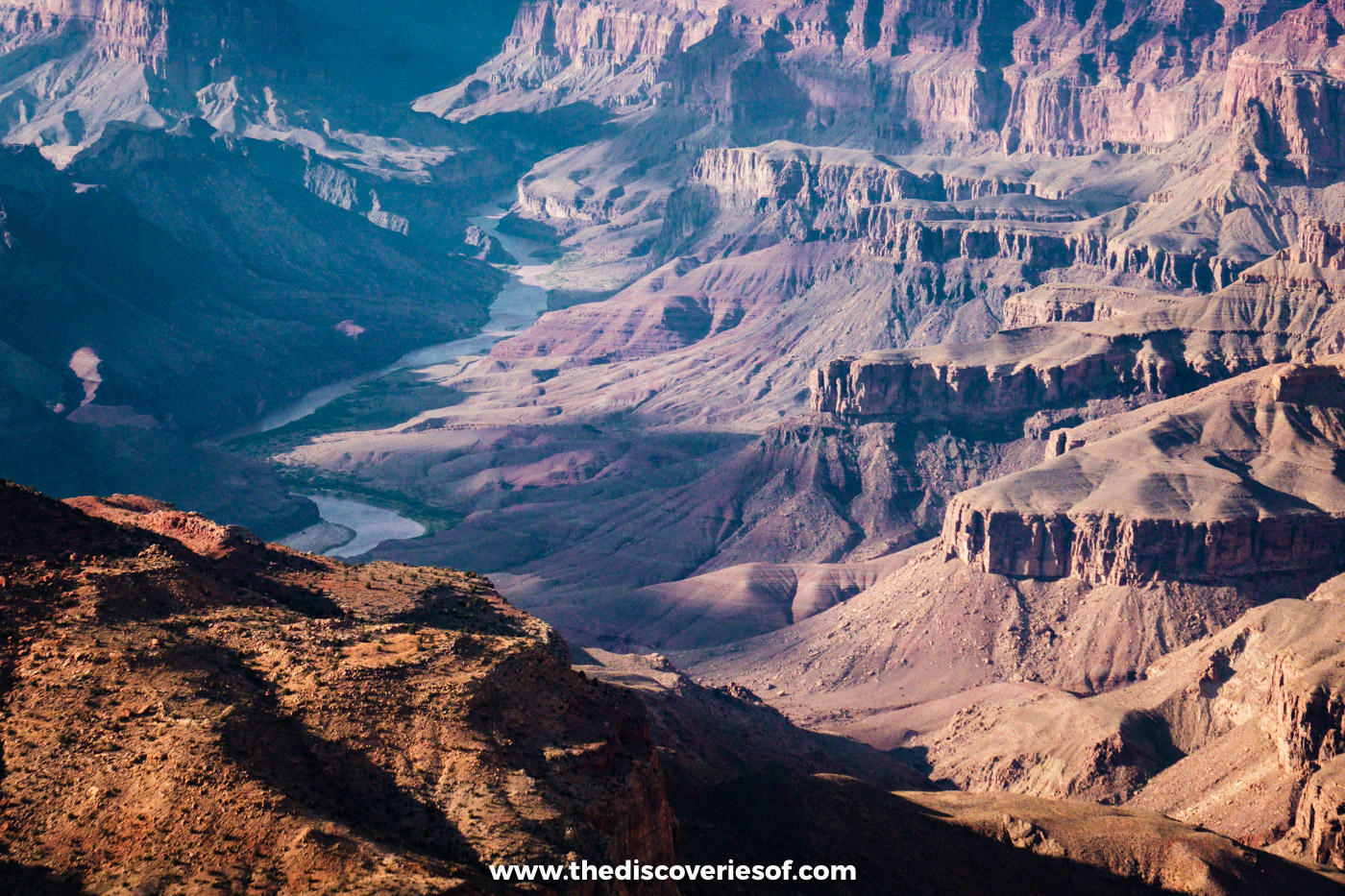
No matter how many pictures you’ve seen, nothing prepares you for the scale of the Grand Canyon: layer upon layer of rock dropping away into the abyss and winding off to the horizon as far as you can see. Most visitors come to the South Rim, which is open all year and has the most to see. The North Rim, four hours’ drive away, is higher, greener and much quieter, but it only opens from mid-May and lost its historic lodge to the Dragon Bravo Fire in July 2025.
I spent three days on the South Rim in early summer, staying at Yavapai Lodge. I walked the Rim Trail (I pooh-poohed it at first, but it’s by far my favourite walk in the park), watched the sun set from Mather Point and Lipan Point, drove Desert View Drive and flew over the canyon with Papillon. These guides combine those days with everything else worth doing in the park, and what has changed since the August 2026 flood.
Some links in this article may be affiliate links, which means we may receive a small commission, at no additional cost to you, if you decide to purchase through one of my recommended partners.
 2 days at the Grand Canyon: the perfect Grand Canyon itinerary
 The best places to see sunrise and sunset at the Grand Canyon
 Grand Canyon helicopter tour review: is the Papillon North Canyon flight worth it?
When to go
Spring and autumn bring mild days and smaller crowds. July and August are the busiest months: hot below the rim, where temperatures can top 40°C, and prone to afternoon thunderstorms. I was there in July, so I’d plan any hike below the rim for before 10am or after 4pm.
Winter is quiet and can bring snow to the rim. The South Rim is open all year, while the North Rim opens from mid-May and closes for the season on 30 November or with the first big snowstorm.
Every June, the South Rim hosts the Grand Canyon Star Party, with free telescope viewing.
Getting there and around
- NPS alerts and conditions: closures, trail conditions and water updates.
- Grand Canyon Lodges: the Xanterra-run lodges inside the park.
- Skyscanner: flights into Las Vegas or Phoenix.
- Rentalcars.com: car hire.
- GetYourGuide: helicopter flights and tours.
There’s no public transport to the park, so you’ll need a car. Las Vegas is about four and a half hours’ drive away, and Phoenix three and a half to four hours. Flagstaff is about an hour and a half, and Williams an hour, with the Grand Canyon Railway as an alternative to driving the last stretch.
In the park, the free shuttles link the village, visitor centre and Market Plaza (blue route), Yaki Point and the South Kaibab Trailhead (orange) and Hermit Road from March to November (red). From late May to early September, a free shuttle also runs from Tusayan. Page is about two and a half hours north-east via Desert View Drive and the East Entrance.
Where to stay
Grand Canyon Village
The best place to stay, minutes from the rim, the Rim Trail and the free shuttles, so you can be out for sunrise and back for dinner without moving the car. I stayed at Yavapai Lodge, which is renovated, simple and the best-value option in the park, set in the pines near Market Plaza. The in-park hotels have been closed to overnight guests since the August 2026 flood: the Xanterra lodges are due to reopen in phases from 20 November 2026, and Yavapai Lodge hasn’t given a date. Stay at Yavapai Lodge.
Tusayan
The next best thing when the park is full (or closed), just outside the South Entrance and about ten minutes’ drive from the village, with restaurants, a supermarket and the airport for helicopter flights. Its hotels weren’t affected by the flood. Stay at The Grand Hotel at the Grand Canyon.
Valle
A crossroads about 30 minutes south of the park, with lower prices and superb dark skies. Stay at Under Canvas Grand Canyon, glamping in safari tents from mid-April to late October.
Williams
The Route 66 town about an hour from the South Rim, where the Grand Canyon Railway starts. Stay at The Lodge on Route 66.
Flagstaff
About an hour and a half away, but a lively mountain town with far more restaurants and bars, and well placed for Sedona too. Stay at the Little America Hotel.


Tours
Know before you go
Top things to do
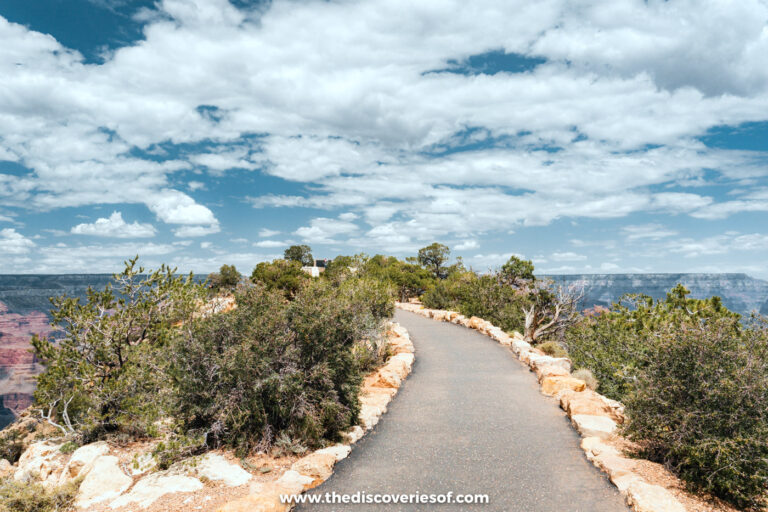
Walk the Rim Trail
About 13 miles along the South Rim, mostly paved and fairly level, with a free shuttle back from any section. It’s by far my favourite walk in the park. Between Powell Point and Monument Creek Vista it becomes a narrow dirt path close to the edge.
Watch the sunset from the South Rim
I watched my first sunset from Mather Point, five minutes’ walk from the visitor centre. For something quieter, ride the shuttle out to Mohave or Pima Point on Hermit Road, and get there an hour early in summer.
Fly over the canyon in a helicopter
I flew Papillon’s North Canyon tour from Grand Canyon Airport in Tusayan, around 25 to 30 minutes over the canyon towards the North Rim. The scrubland transforms into a miasma of colours and shapes as you cross the rim. Pay extra for the front seat if you can.
Drive Desert View Drive
A 23-mile road along the rim east of the village, open to cars all year, past Grandview Point, Moran Point and Navajo Point to Mary Colter’s Desert View Watchtower. I watched my second sunset out here, at Lipan Point (closed for repairs until 23 December 2026).
Ride the shuttle to Hermits Rest
Hermit Road is closed to private cars from March to November, so the free red shuttle takes you 7 miles west past nine viewpoints to Mary Colter’s 1914 stone rest house at the end of the road.
Hike a little way below the rim
Ooh Aah Point (0.9 miles each way) on the South Kaibab Trail and the 1.5 Mile Resthouse on the Bright Angel Trail are classic turnaround points. Every step down has to be climbed back up, and the water taps on the trails were turned off after the August 2026 flood.
Learn how the canyon formed at Yavapai Point
The free Yavapai Geology Museum has big windows looking straight out over the canyon, and the Trail of Time runs west from it to the historic district, past El Tovar, Hopi House and Kolb Studio.
Ride the Grand Canyon Railway
The vintage train runs from Williams on Route 66 to the historic depot in Grand Canyon Village, about two hours and 15 minutes each way, with time on the rim before the return.
Suggested itineraries
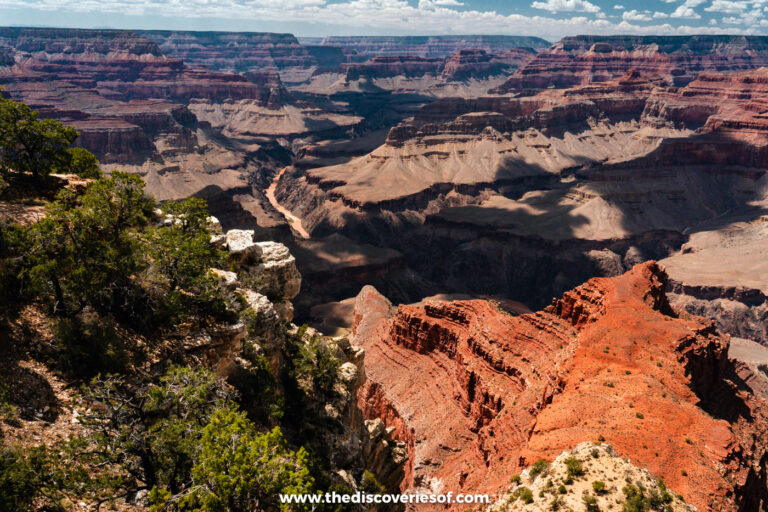
Two days on the South Rim
Two days
Mather Point – Yavapai Point – Rim Trail west – Hermits Rest – sunset on Hermit Road – helicopter flight – Ooh Aah Point – Desert View Drive – sunset at Navajo Point
My 2-day itinerary is built around the experiences I loved most.
Three days on the South Rim
Three days
The two-day route, then the South Kaibab Trail to Cedar Ridge – the Trail of Time and the historic district – sunrise at Yavapai Point
More time below the rim, with an early start.
The Grand Canyon, Page and Utah
Ten days
Las Vegas – the South Rim – Page for Antelope Canyon, Horseshoe Bend and Monument Valley – Zion – Bryce Canyon – Las Vegas
My Southwest road trip follows my own early-summer route.
Hidden Grand Canyon
Shoshone Point
A flat, mile-long dirt road through ponderosa pines from an unsigned car park on Desert View Drive leads to one of the South Rim’s quietest viewpoints. It’s occasionally closed for private events from mid-May to mid-October.
Yaki Point
Closed to private cars all year, so it’s calmer than Mather Point at sunrise. Take the orange shuttle, or walk or cycle in.
The dirt path to Monument Creek Vista
Between Powell Point and Monument Creek Vista, the Rim Trail leaves the pavement for a narrow path right by the edge, with far fewer people. Hop on the shuttle for that stretch if you don’t like heights.
Lipan Point
Most of the way along Desert View Drive, with the river curling round the Unkar Delta below. It’s where I watched my second sunset, and much quieter than Hermit Road (closed until 23 December 2026; Navajo Point is next door).
Dishes and drinks to try
Dishes to try
- Navajo tacos – fry bread topped with beans, chilli and cheese, a staple on the Navajo Nation, which you cross on the drive east towards Page.
- Southwestern steaks and ribs – the speciality of the Arizona Steakhouse at Bright Angel Lodge.
- A packed lunch – on the Rim Trail, the chances of lunchtime coinciding with anywhere selling food are slim.
Drinks to try
- Grand Canyon Brewing beer – brewed in Williams and served at the bar of the Grand Canyon Inn & Motel in Valle.
- Plenty of water – the rim is around 7,000 ft up and the air is dry, so drink more than you think you need.
Must-try bars and restaurants
Yavapai Tavern, next to Yavapai Lodge
A relaxed spot for a drink and a casual dinner on its outdoor patio, a short walk from Market Plaza, where I ended my first day. It closed after the August 2026 flood damaged the water supply, so check it has reopened before you go.
Only one entry: Yavapai Tavern is the only place to eat or drink at the Grand Canyon that her notes and pages say she went to.
Costs and budgeting
Entry covers seven days, and once you’re in, the shuttles and most sights are free. The big costs are a helicopter flight and staying in or near the park in summer.
- Park entry: $35 per vehicle for seven days
- Non-US residents aged 16 and over: an extra $100 each from 2026, unless they hold an annual pass
- America the Beautiful pass: $80 for US residents, $250 for non-residents
- North Canyon helicopter flight: from about $270 per person, plus $50 for the front seat when I flew
Safety, health and tipping
Safety
Much of the rim is unfenced, so stay well back from the edge, especially on the dirt section between Powell Point and Monument Creek Vista. After the August 2026 flood, parts of the South Kaibab and Bright Angel trails closed, so check the trail alerts before you hike, and turn round before you’re tired.
Health
The rim is around 7,000 ft up, and I felt the altitude more than I expected, so take it slowly on your first day. Below the rim it’s often far hotter, topping 40°C in summer: hike before 10am or after 4pm, carry more water than you think you need, and never try to hike to the river and back in a day.
Tipping
Tip 18% to 22% at sit-down restaurants, US$1 to US$2 a drink at bars and 15% to 20% for guides and drivers. Tips for helicopter pilots aren’t included in the tour price.
Practical tips and info
Tips for travelling
- Check the National Park Service’s alerts before you travel: the in-park hotels and several restaurants have been closed since the August 2026 flood.
- Book the in-park lodges as early as you can; they can sell out a year ahead for summer.
- Park once and use the free shuttles. You’ll only need the car for Desert View Drive.
- Arrive at the viewpoints an hour before sunset in summer to get a good spot.
- Pay by card: the park no longer takes cash at the gate.
- UK and other Visa Waiver visitors need an approved ESTA (US$40.27) before flying.
How to see the best for free
Once you’ve paid the entry fee, the best of the South Rim costs nothing. The Rim Trail and every viewpoint along it are free, the shuttle buses are free, and so is the Yavapai Geology Museum, with the Trail of Time running west from it to the historic district.
The park is an International Dark Sky Park, so on a clear, moonless night you only need to walk out to a viewpoint away from the village lights to see the Milky Way. Desert View Drive is open to cars all year, with picnic areas between the viewpoints.
Packing
Packing for the Grand Canyon? Don’t forget…
- A daypack and a hydration pack: holding at least 2 litres, plus a packed lunch and salty snacks for the Rim Trail.
- Hiking poles: if you’re heading below the rim.
- Comfortable shoes: my favourites are the Tropicfeel Canyons.
- A cap, sunscreen and layers: mornings and evenings on the rim are cool, even in summer.
- Photo ID: you’ll need it for a helicopter flight.
Travel insurance
US medical bills are notoriously high, so make sure your policy has generous medical cover for the USA, including mountain rescue if you plan to hike below the rim, and check it covers scenic flights if you’re booking a helicopter tour. Compare policies with AXA Travel Insurance.
Suggested guidebooks
Interesting facts
- The canyon is 278 river miles long, about a mile deep on average and up to 18 miles wide from rim to rim.
- It became a national park on 26 February 1919.
- Aircraft aren’t allowed to land in the national park, so helicopter tours from the South Rim are flights only.
- Mary Colter designed Hopi House, Hermits Rest (1914) and the Desert View Watchtower (1932).
- Indian Garden, halfway down the Bright Angel Trail, has been renamed Havasupai Gardens.
Time zone
Arizona stays on Mountain Standard Time (UTC-7) all year, with no daylight saving: seven hours behind the UK in winter and eight in summer. The Navajo Nation, east of the park on the road to Page, does use daylight saving time.
Electricity and adapters
Type A and B plugs, at 120V and 60Hz.
Map
Insider tips, straight to your inbox
All Grand Canyon guides
 10 days in the American Southwest: the perfect Southwest road trip itinerary
 Hiking the Grand Canyon Rim Trail: my favourite walk on the South Rim
 Grand Canyon helicopter tour review: is the Papillon North Canyon flight worth it?
 The best things to do at the Grand Canyon: 14 unmissable experiences
 Where to stay in and near the Grand Canyon: the best places to stay, area by area
 Stunning hikes in Grand Canyon National Park
 2 days at the Grand Canyon: the perfect Grand Canyon itinerary
 The best places to see sunrise and sunset at the Grand Canyon
Follow me on Instagram for travel inspiration, tips and guides.