
Portugal
The Alentejo travel guide
White storks nesting on sea cliffs, a fishing harbour that only dates back to the 1960s and a farmhouse kept exactly as it was generations ago, with a glass of medronho at the end of the visit. Plan your trip to the Alentejo, from when to walk its trails to where to stay on the coast and in the cork hills.

Julianna BarnabyTravel and culture writer
While I’ve been to Portugal many times, the Alentejo was the part I came to last. It sits between Lisbon and the Algarve and covers about a third of the mainland, yet most visitors drive straight through it on the way to the beach. They’re missing out. Its wild south-west corner is all clifftop fishing paths, coves and dunes, with hills of cork oak behind them where you can walk all day and barely see a soul.
One October, I picked up a very small hire car in Faro and drove north to walk the Rota Vicentina, moving on every day between four very different places to stay. I walked the clifftops south of Zambujeira do Mar with a guide, followed the Historical Way out of Santiago do Cacém into the cork country and puffed my way up to a hilltop chapel. In between, I watched the fishermen of Azenha do Mar mend their lines, learnt how azulejos are made in a tilemaker’s workshop in Brejão and was poured a glass of medronho in Odete’s farmhouse.
Below are the essentials for planning your own trip, with links to every Alentejo guide I’ve written.
Some links on this page are affiliate links, which means I may earn a small commission, at no extra cost to you, if you book through them.
 How to walk the Rota Vicentina, from clifftop fishing paths to cork oak hills
 Odeceixe beach, where a river slips into the Atlantic at the edge of the Algarve
When to go
Spring and autumn are the times to come. From March to May, the dunes and hills turn green and fill with wildflowers; from September to November, the light is golden, the sea has had all summer to warm up and the trails are quiet. The walking season on the Rota Vicentina runs from September to June. July and August are best avoided on foot: inland, the Alentejo is the hottest part of Portugal, regularly above 35°C, and the coast fills with Portuguese families on their summer holidays.
I walked here in October, and the weather changed constantly, from warm sunshine on the red earth tracks of the Historical Way to low cloud and a pewter sea on my last morning. Expect days in the low 20s on the coast, cold nights inland (Évora averages 24°C by day in October and about 12°C after dark) and a few seasonal places closing at the end of the month. My guides to Portugal in October and the best time to visit Portugal go month by month.
Getting there and around
- Skyscanner: flights to Faro or Lisbon.
- Holiday Autos: car hire, which you’ll need for almost everywhere in the Alentejo.
- Rede Expressos: buses from Lisbon to Santiago do Cacém, Vila Nova de Milfontes and Odeceixe.
- Rota Vicentina: maps, GPS tracks and the warning map for every trail.
- Booking.com: rural stays, farmhouses and hotels across the region.
You’ll want a car. Buses link the bigger towns, but almost every characterful place to stay is out in the countryside, often down a dirt track, and the distances between villages are longer than they look. I flew into Faro and drove north: it’s roughly 90 minutes from the airport to Odeceixe at the southern end of the coast. From Lisbon, Santiago do Cacém is about an hour and a half down the A2, and Évora about the same to the east.
Without a car, Rede Expressos buses run from Lisbon’s Sete Rios terminal to Santiago do Cacém in about two hours and to Vila Nova de Milfontes in about two and a half, and local taxis can fill some gaps. If you’re walking, luggage transfer companies will move your bags between bases along the Rota Vicentina.
Where to stay
Vila Nova de Milfontes and the coast
The best single base for the beaches and the Fishermen’s Trail, where the Mira river meets the Atlantic, with river beaches on one side of town and wild surf on the other. My last night was at Herdade do Freixial, on a hillside above the Mira, and it was the hardest place to leave. Porto Covo and Zambujeira do Mar are smaller, quieter alternatives.
Santiago do Cacém
A castle town of cobbled lanes at the start of the Historical Way, 20 minutes from the coast and the easiest base to reach by bus from Lisbon. My first night was at what was then the Hotel Santiago, now Octant Santiago.
Odemira and the cork hills
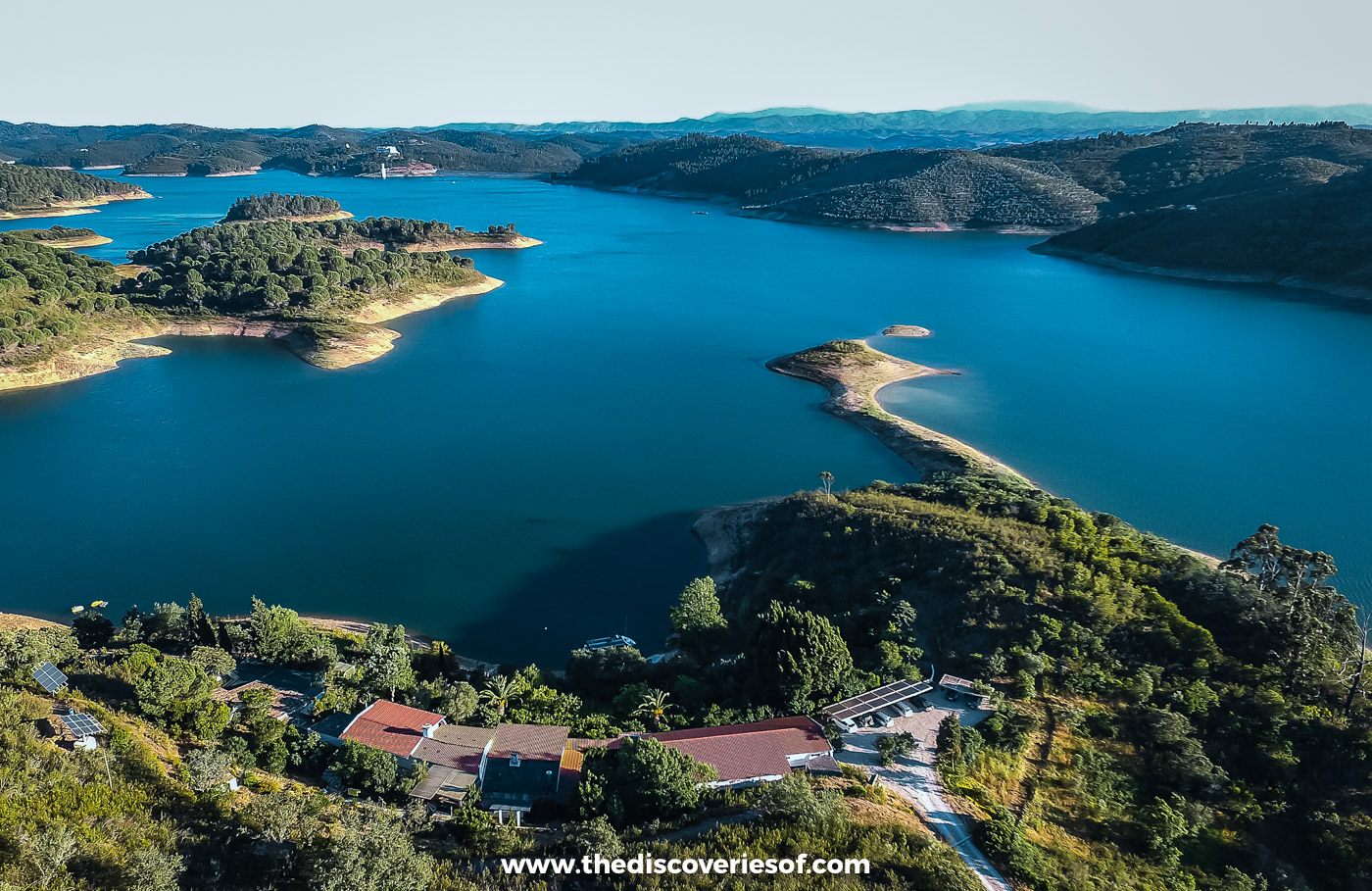
Farm stays in the cork oaks, a reservoir full of birds and home cooking at a shared table. I spent a night at Figueirinha Ecoturismo near Monte da Estrada, where Paula cooks dinner for everyone around one big table, and another at Quinta do Barranco da Estrada above the Santa Clara reservoir.
Évora and the plains
A walled university city of Roman ruins and wine estates, two hours east of the coast, for history and food rather than beaches.
My guide to where to stay in the Alentejo has hotels in every area.


Tours
Know before you go
Top things to do
Walk the Fishermen’s Trail
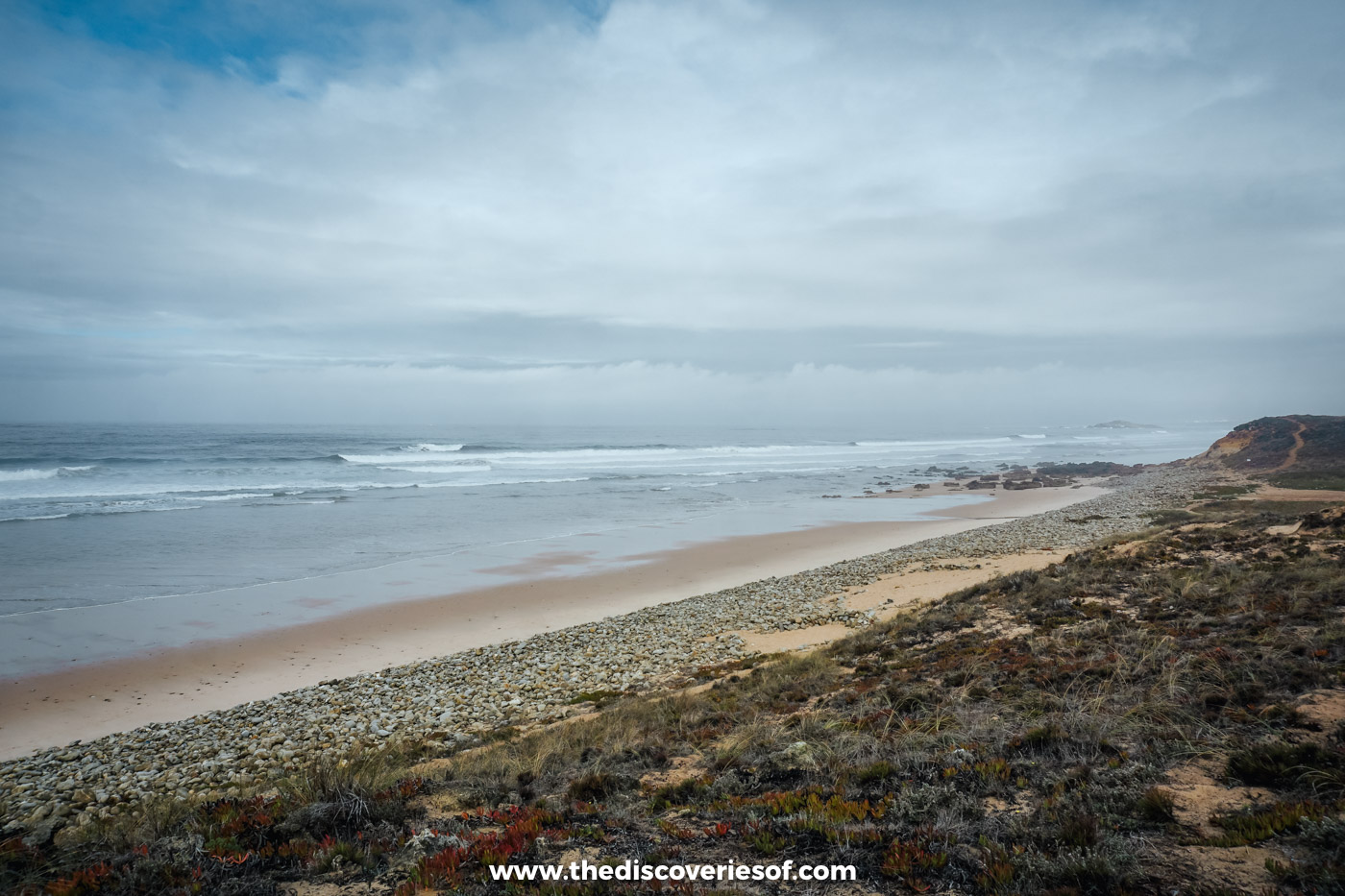
Sandy paths along crumbling sea cliffs, fishing harbours wedged into coves and long empty beaches: the coastal half of the Rota Vicentina runs 226.5km from São Torpes to Lagos. My walking began on the clifftops south of Zambujeira do Mar, with a guide, and ended with a toast of local rosé on a boardwalk above the sea.
Read next: How to walk the Rota Vicentina, from clifftop fishing paths to cork oak hills
Follow the Historical Way out of Santiago do Cacém
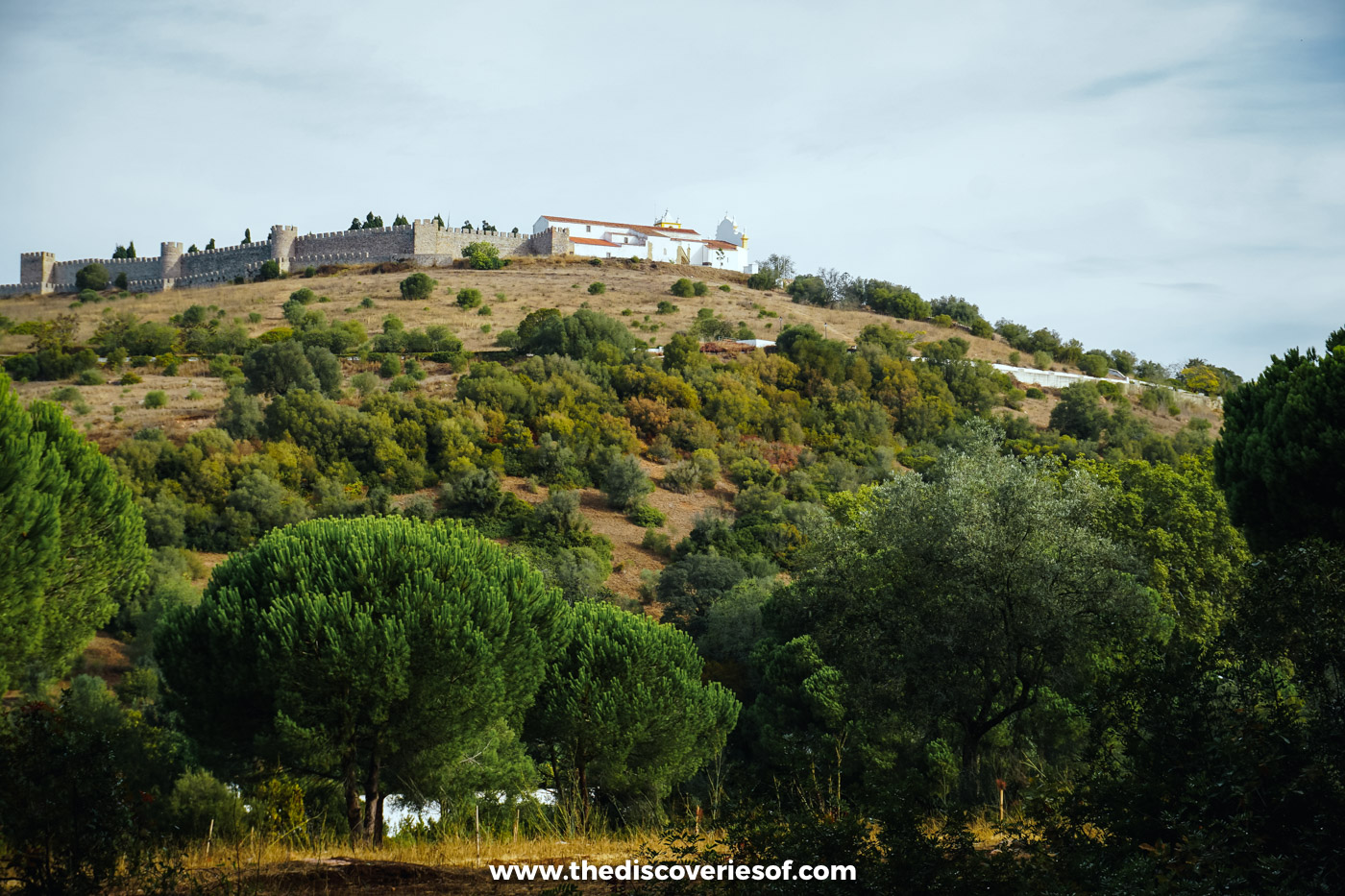
The inland route starts below the ten-towered castle of Santiago do Cacém and heads 263km south through cork forests and remote villages to Cape St Vincent. I walked its first day, on red earth tracks deep into the montado. The first two stages were rerouted in September 2024, and the new line is waymarked.
Climb to the chapel of Senhora das Neves
A circular walk from Monte da Estrada through cork oaks and golden meadows, past the rather unsettling Anjo Homem statue, to a chapel on a hilltop with views for miles. It’s a steep puff to get there.
Watch the fishermen of Azenha do Mar
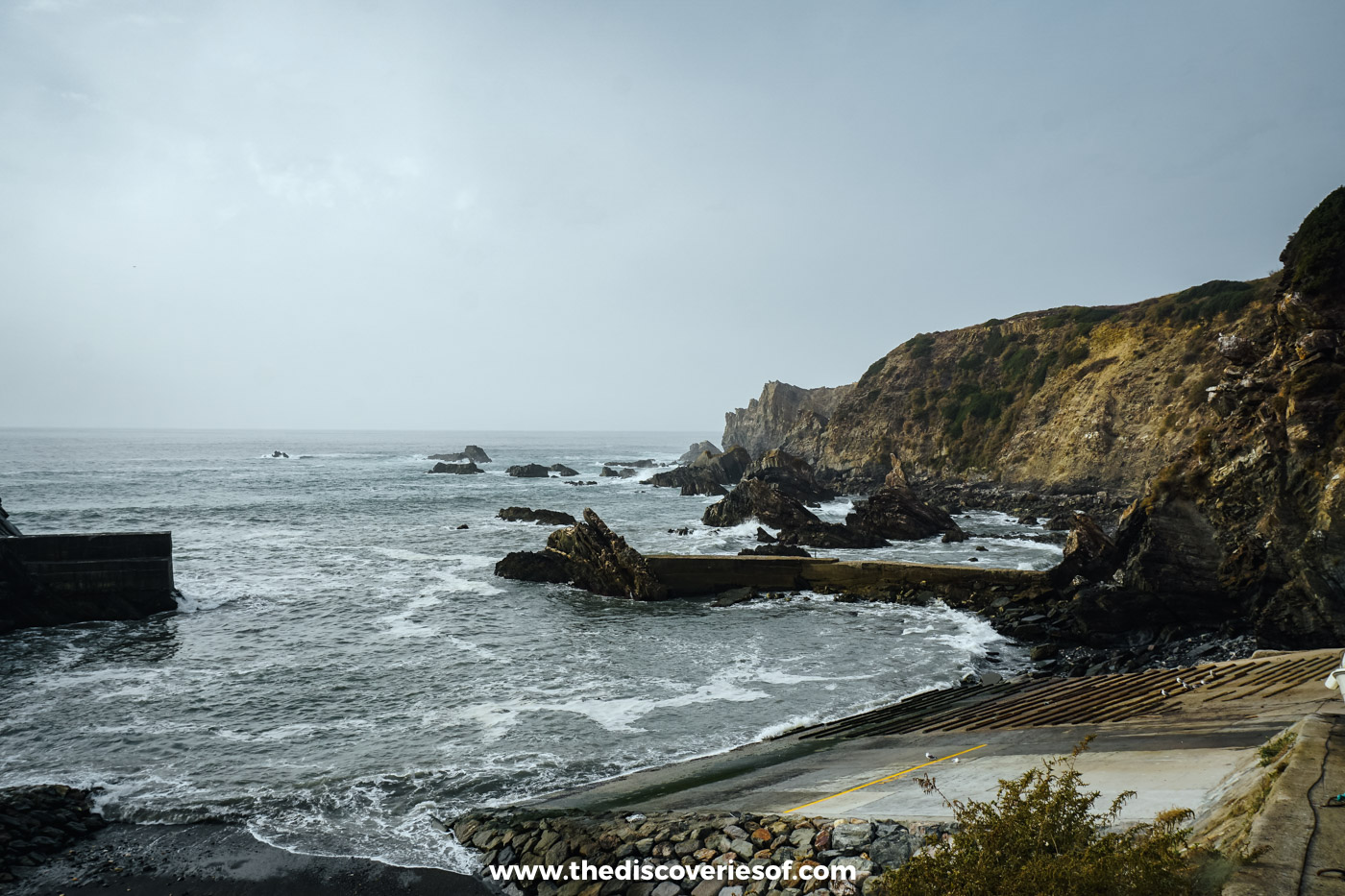
A tiny harbour below the cliffs, founded only in the 1960s, where fishing is still the living. When I visited, the sea was too rough for the boats, so the fishermen were ashore, mending their lines one hook at a time.
Read next: Five secret spots in the Alentejo, from fishing coves to cork forests
Swim where the river meets the sea at Odeceixe
On the border with the Algarve, the Seixe river loops around the back of a horseshoe bay, so you get Atlantic surf on one side and calm, shallow water on the other.
Read next: Odeceixe beach, where a river slips into the Atlantic at the edge of the Algarve
Step back in time at Odete’s farmhouse
Near Santa Clara-a-Velha, Maria Odete Ramos de Oliveira has kept her family’s farmhouse just as it was generations ago, from the mill and the oven to the schoolroom. If you’re lucky, she’ll pour you a small glass of medronho, as she did for me.
Learn how azulejos are made in Brejão
In her workshop in the hamlet of Brejão, the tilemaker Rita Silvério Morais still makes tiles the traditional way, building tiny raised walls on each one to keep the colours apart.
Read next: A deeper look at Portuguese azulejos, and why the famous blue and white came late
See the storks of Cabo Sardão
North of Zambujeira do Mar, white storks nest on the sea stacks and clifftops below the lighthouse, thought to be the only storks anywhere that breed on sea cliffs. They’re back on their nests from early spring.
Explore Évora
A walled, UNESCO-listed university city on the plains, with a Roman temple, a cathedral roof you can climb and the Chapel of Bones. It’s European Capital of Culture in 2027.
Suggested itineraries
Five days on the Rota Vicentina
5 days
The Fishermen’s Trail from Zambujeira do Mar and Azenha do Mar > the Historical Way from Santiago do Cacém > Senhora das Neves from Monte da Estrada > Santa Clara-a-Velha and Odete’s farmhouse > Praia do Malhão to Vila Nova de Milfontes
A long weekend on the coast
3 days
Porto Covo and Ilha do Pessegueiro > the Fishermen’s Trail to Vila Nova de Milfontes > Cabo Sardão, Zambujeira do Mar and Odeceixe
Évora and the coast in a week
7 days
Évora and the wineries > Santiago do Cacém > Vila Nova de Milfontes and the Mira > Zambujeira do Mar and Azenha do Mar > Odeceixe and the Seixe
My guide to walking the Rota Vicentina has every stage, with distances and when to go.
Hidden The Alentejo
Praia da Amália
A hidden cove below the land where the fado singer Amália Rodrigues had her holiday home, with a little waterfall at one end. It’s where my first walk ended. The clifftop path south of it has been closed since January 2022, so follow the signed diversion.
Miróbriga
Just outside Santiago do Cacém, the ruins of a Roman town on a quiet hillside, with a temple, baths and a rare Roman hippodrome.
Carrasqueira
On the Sado estuary near Comporta, a fishing harbour built on stilts, with rickety wooden walkways out across the mud to the boats. It’s at its most photogenic at sunset.
Dishes and drinks to try
Dishes to try
- Açorda alentejana: bread soup with garlic, coriander, olive oil and a poached egg.
- Carne de porco à alentejana: fried pork and clams with potatoes, the region’s signature dish.
- Migas: fried bread, often with pork or wild asparagus.
- Seafood rice and fish stews: on the coast, straight from the harbour, as at Azenha do Mar.
- Sericaia: a cinnamon egg pudding, served with a sugared plum from Elvas.
Drinks to try
- Alentejo wines: one of Portugal’s biggest wine regions, best known for its reds, and still making wine the Roman way in clay amphorae.
- Medronho: the fiery spirit distilled from the fruit of the strawberry tree, which ripens on the hillsides in autumn. Odete poured me a glass of hers.
- Costa Vicentina rosé: the young vineyards near the coast make fresh whites and rosés, and a glass of rosé marked the end of my first walk.
Must-try bars and restaurants
Azenha do Mar
The seafood restaurant by the harbour is the obvious lunch stop on the Fishermen’s Trail, and worth the queue: it doesn’t take reservations. Order the seafood rice or whatever came in on the boats. It’s closed on Wednesdays.
Read next: Five secret spots in the Alentejo, from fishing coves to cork forests
À Terra at Octant Santiago, Santiago do Cacém
The hotel’s restaurant was incredibly good when I stayed, back when the hotel was the Hotel Santiago and food was at its heart. It now serves Mediterranean dishes in an open-plan dining room.
Paula’s table at Figueirinha Ecoturismo
Not a restaurant, but about as good a way to end a day on foot as there is: Paula cooks hearty, delicious dinners for her guests, served around one big communal table.
Stress Free, Vila Nova de Milfontes
A small restaurant run by a couple from Lisbon who moved for the town’s laid-back, outdoorsy life, with a menu full of fresh Portuguese flavours and plenty for vegetarians and vegans.
Costs and budgeting
- Octant Santiago: doubles from about €120 a night
- Figueirinha Ecoturismo: rooms and tents from about €85 a night
- Herdade do Freixial: doubles with breakfast from about €75 a night
- Luggage transfer on the Rota Vicentina: about €15 a stage for one bag
- Boat across the Mira at Vila Nova de Milfontes: about €5
- Tourist tax in Évora: €1.50 a person a night, for up to three nights
Safety, health and tipping
Safety
The Alentejo is very safe. The real hazards are natural: the sea cliffs are constantly eroding, so keep to the marked path and well back from the edge, the Atlantic currents are strong, and most beaches only have lifeguards in the summer season.
Health
The heat is the main risk: inland, summer temperatures regularly pass 35°C, and there’s very little shade on the coastal trails, so carry plenty of water and high-factor sunscreen. The tap water is safe to drink.
Tipping
Rounding up or leaving around 10% for good service is appreciated, but never compulsory. My guide to tipping in Portugal has the details.
Practical tips and info
Tips for travelling
- Book dinner when you book the room: in the countryside, the nearest restaurant can be a long drive down a dark track, and many farm stays cook only if you ask ahead.
- Check the minimum stay: many rural places insist on two to four nights, especially in summer.
- Watch for seasonal closures: some smaller places close for the winter, Quinta do Barranco da Estrada from November to mid-March.
- Carry water and some cash: several trail stages have no shop for 15km or more, and the smaller villages have few cash machines.
- Check the Rota Vicentina warning map before you set out: it flags flooded crossings, fallen trees, cliff falls and wildfire risk.
How to see the best for free
The Alentejo’s best experiences cost nothing. Every trail on the Rota Vicentina is free and waymarked, from a two-hour circular walk to the full 226.5km of the Fishermen’s Trail, and so are the beaches, the storks on the sea stacks at Cabo Sardão, the view from the hilltop chapel of Senhora das Neves and the columns of Évora’s Roman temple, which stand in the open at the top of the old town.
Packing
- Proper walking shoes: around two-thirds of the Fishermen’s Trail is on sand, and the inland tracks are rough.
- A refillable bottle that holds at least a litre and a half: several stages have no shop or café for 15km or more.
- A wide-brimmed hat: there’s almost no shade on the coast.
- A windproof layer and a jumper: the Atlantic wind is cool even in summer, and inland nights get cold in autumn.
Travel insurance
Travel insurance is the fail-safe that will help any trip go to plan, from medical emergencies to lost luggage and cancellations. I use AXA Travel Insurance. If you’re walking the Rota Vicentina or surfing, check your policy covers it.
Interesting facts
- The name comes from “além Tejo”, beyond the Tagus: the land south of the river from Lisbon.
- Portugal produces about half the world’s cork, most of it from the Alentejo’s montado of cork and holm oak.
- Cante alentejano, the region’s slow, unaccompanied group singing, is on UNESCO’s list of the intangible cultural heritage of humanity.
Handy phrases
- Hello: olá
- Thank you: obrigado (or obrigada, if you’re a woman)
- How much is it?: quanto custa?
- The bill, please: a conta, por favor
Time zone
Western European Time (UTC+0), with summer time (UTC+1) from the last Sunday of March to the last Sunday of October.
Electricity and adapters
230V, with type C and F plugs.
Map
Insider tips, straight to your inbox
All The Alentejo guides
 Where to stay in the Alentejo, from surf-town guesthouses to farmhouses in the cork hills
 Five secret spots in the Alentejo, from fishing coves to cork forests
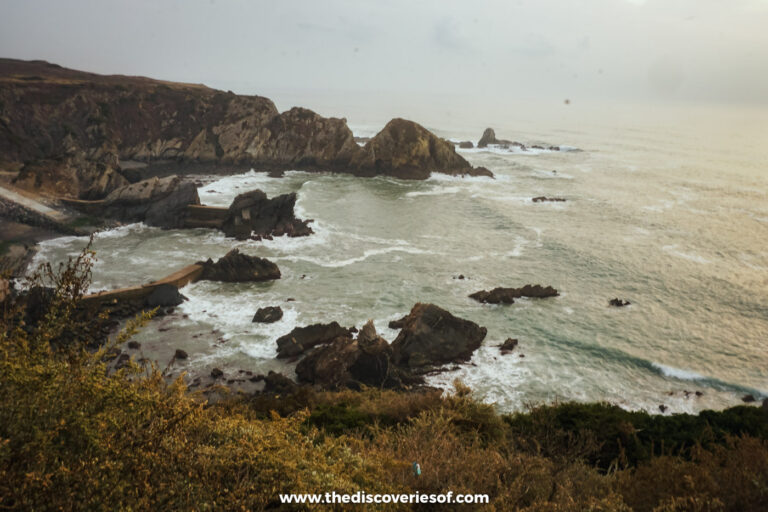 Odeceixe beach, where a river slips into the Atlantic at the edge of the Algarve
 How to walk the Rota Vicentina, from clifftop fishing paths to cork oak hills



Watch on YouTube
See the places before you go
Short films from the places in my guides, so you can see what a destination really looks and feels like before you go.
Subscribe on YouTube youtube.com/@thediscoveriesof