


Drive south past the last beach club on the hotel strip, through a stone arch, and the tarmac gives way to sand, potholes and a forest of mangroves. Keep going and you reach beaches without a lounger in sight, lagoons where crocodiles bask on the banks, and, after a couple of hours of bumping along, a lobster-fishing village at the very end of the road.
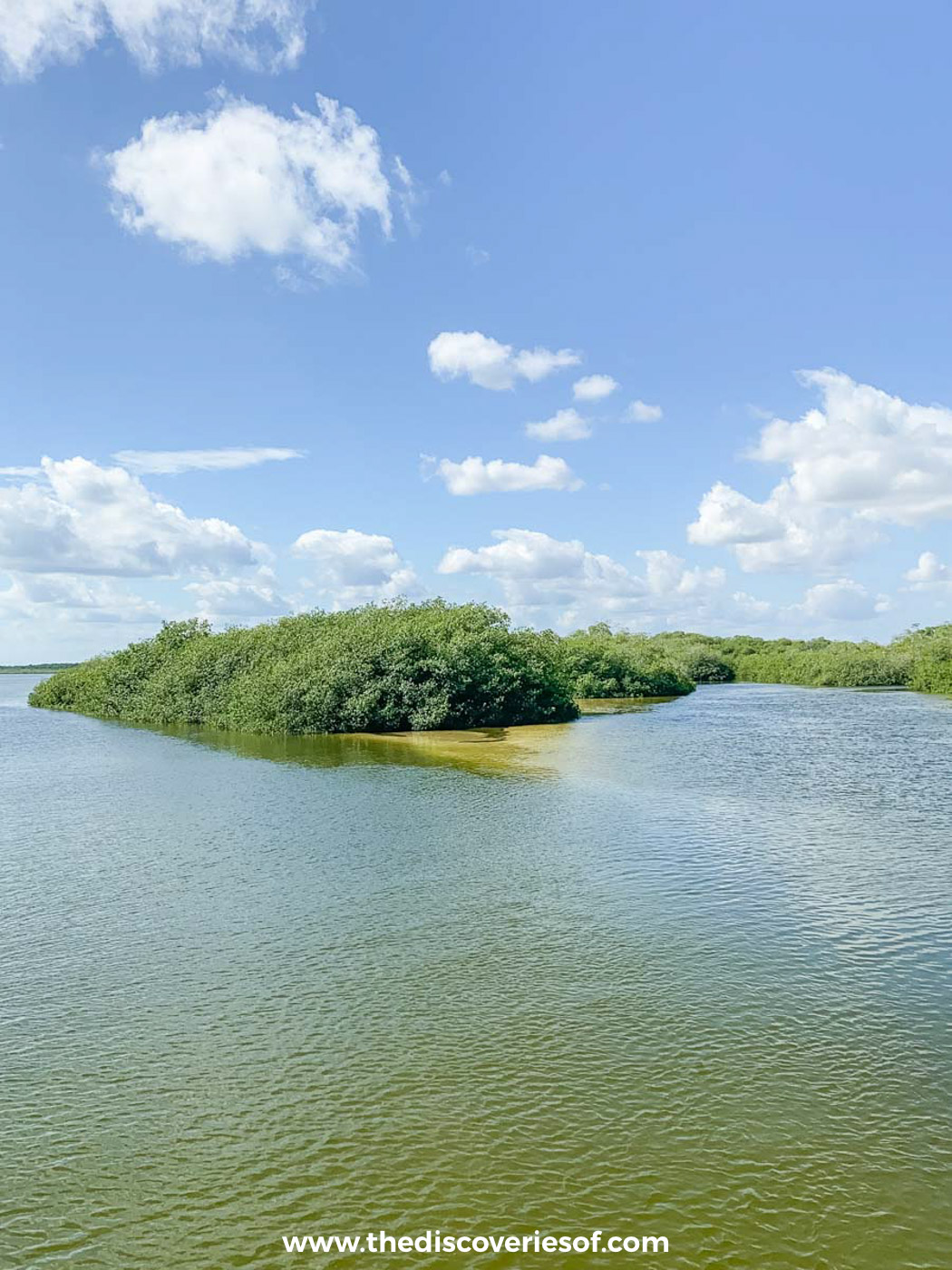
Sian Ka’an was honestly one of my favourite spots in the whole Tulum area. It’s the part of the Riviera Maya that hasn’t been built on, and it shows: the further south you drive, the emptier it gets. This guide covers the two ways in, what to see along the coast road, whether to drive yourself or take a tour, the 2026 fees, the best time to go and the rules worth knowing before you set off.
Why visit Sian Ka’an?
Tulum’s beach road is lined with boutique hotels and beach clubs for more than 10km. The reserve is everything that strip isn’t: wild beaches with nothing behind them but palms and dunes, lagoons the colour of weak tea fading to turquoise, and some of the richest wildlife on the Mexican Caribbean.
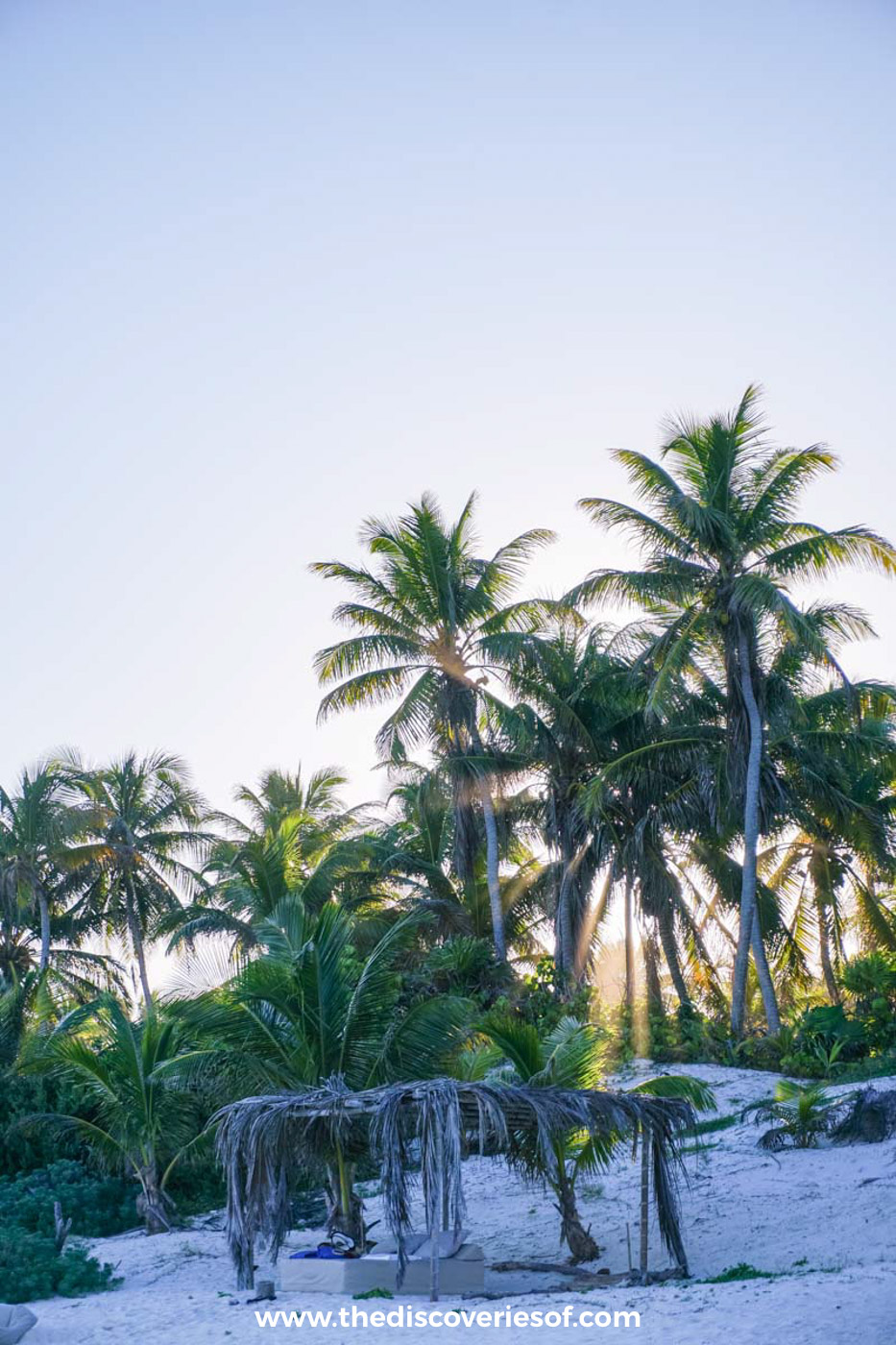
It’s the antidote to the crowds. On the stretch I drove, I could pull over, walk through the palms and have a beach entirely to myself, which is something you’ll struggle to find anywhere else on this coast. If you only leave the beach road once, this is where to go.
What is the biosphere reserve?
The name comes from Yucatec Maya and is usually translated as “where the sky is born”, which feels about right once you’re standing on one of its empty beaches. Mexico protected the area by decree in 1986, and UNESCO listed it as a World Heritage Site the following year.
It’s vast: 528,148 hectares, or about 1.3 million acres, of tropical forest, palm savannah, marshes and wetlands, plus around 120,000 hectares of sea. Mangroves cover about a third of it, and offshore runs a section of the Mesoamerican Barrier Reef, the second-largest reef system in the world.
The wildlife list is long. More than 300 bird species have been recorded here, along with jaguars, pumas, tapirs, spider and howler monkeys, a small population of West Indian manatees, American crocodiles and four species of nesting sea turtle. You’re unlikely to see a jaguar, but birds, crocodiles and, on the water, dolphins are all common sightings.
The Maya were here long before the reserve was. Muyil, on its northern edge, was a lagoon port for well over a thousand years, and the canals they cut through the wetlands are still used by boats today.
The two ways in
There are two entrances within easy reach of town, and they’re very different experiences. With a long drive between them, it’s best to visit them on separate days.
The coast road to Punta Allen

This is the classic way in. Follow the beach road south from Tulum’s hotel zone and you’ll come to the Arco Maya, the arch and checkpoint that marks the boundary of the reserve. From there, an unpaved road runs for roughly 40 to 50km down a narrow strip of land between the Caribbean and the lagoons, all the way to Punta Allen.
Be realistic about the road. It’s sand and limestone, with deep potholes, standing water after rain and stretches where cars get stuck. Repairs are under way in phases, with a 10km stretch south of the hotel zone done and a further 20km announced in 2026, but the final 12km or so into Punta Allen has no date yet. Allow at least two and a half hours each way to the village, longer after heavy rain.
You don’t have to drive the whole way. Plenty of beaches and lagoons sit within the first stretch south of the arch, and turning back after a few hours of exploring makes a perfectly good day.
Getting There
You need a car with decent clearance for the coast road; a four-wheel drive is safest for the full run to Punta Allen. Check your rental agreement before you set off, because many companies don’t allow their cars on this road. Fill the tank before you leave town.
The Muyil entrance
The second way in is through the Muyil ruins, off Highway 307 about 23km south of Tulum town. Behind the main temple, a boardwalk leads through the forest to a lagoon, where cooperative boats take you across the water and along a Maya canal for a float through the mangroves. It’s the easier half day of the two, with no dirt road involved, and it’s where the reserve’s lagoon side is at its best.
What to see along the coast road
The empty beaches

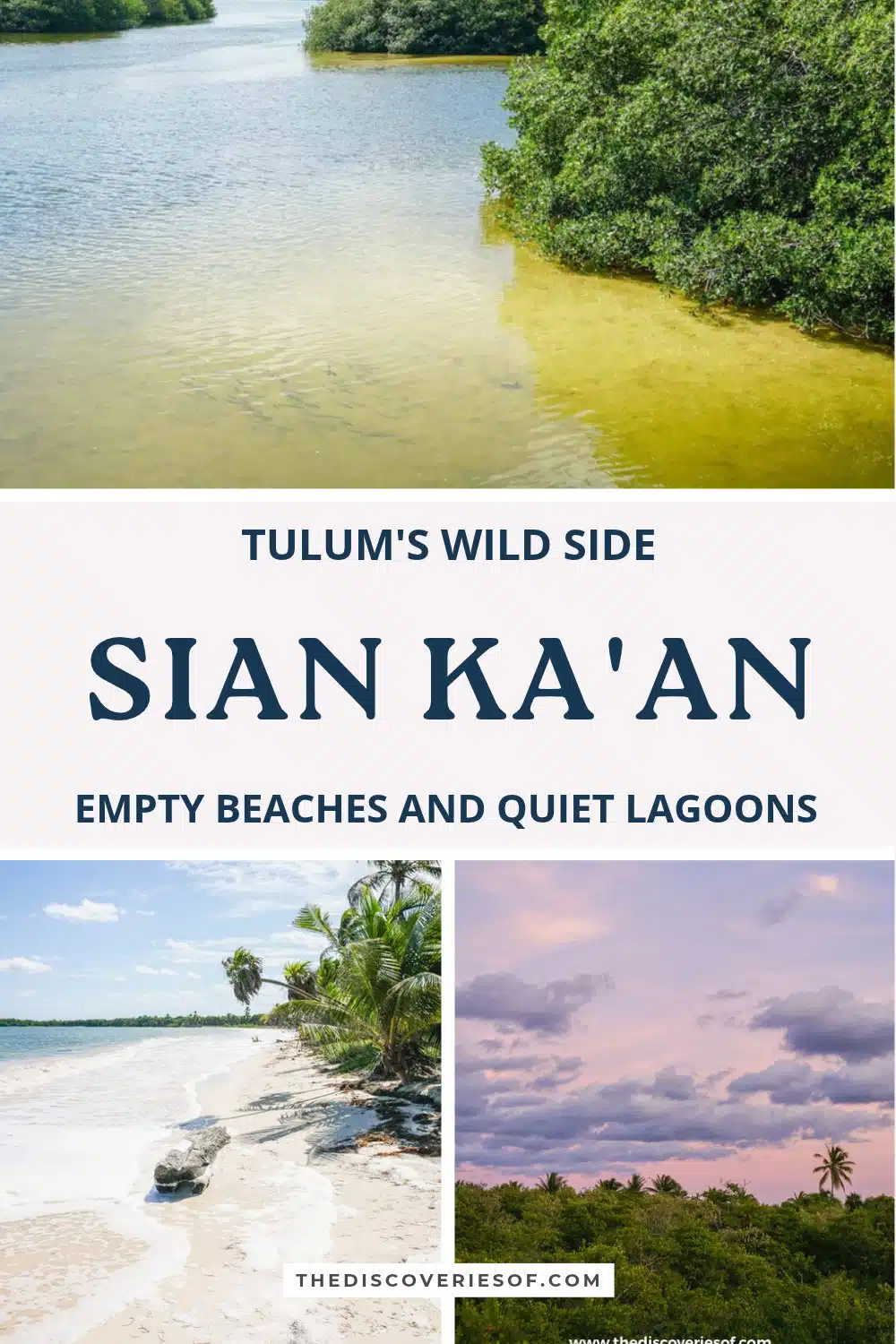
This is why you come. Along the coast road, sandy tracks lead through the palms to beach after beach of soft white sand with nothing on it but driftwood and footprints, often only your own. The water is the same shade of Caribbean blue you’ll find up the coast, just without a single beach club.
I wouldn’t blame you for just finding an empty stretch of sand and staying there. Take everything you need for the day, because there are no facilities along most of the road, and leave nothing behind.
The coastal lagoons

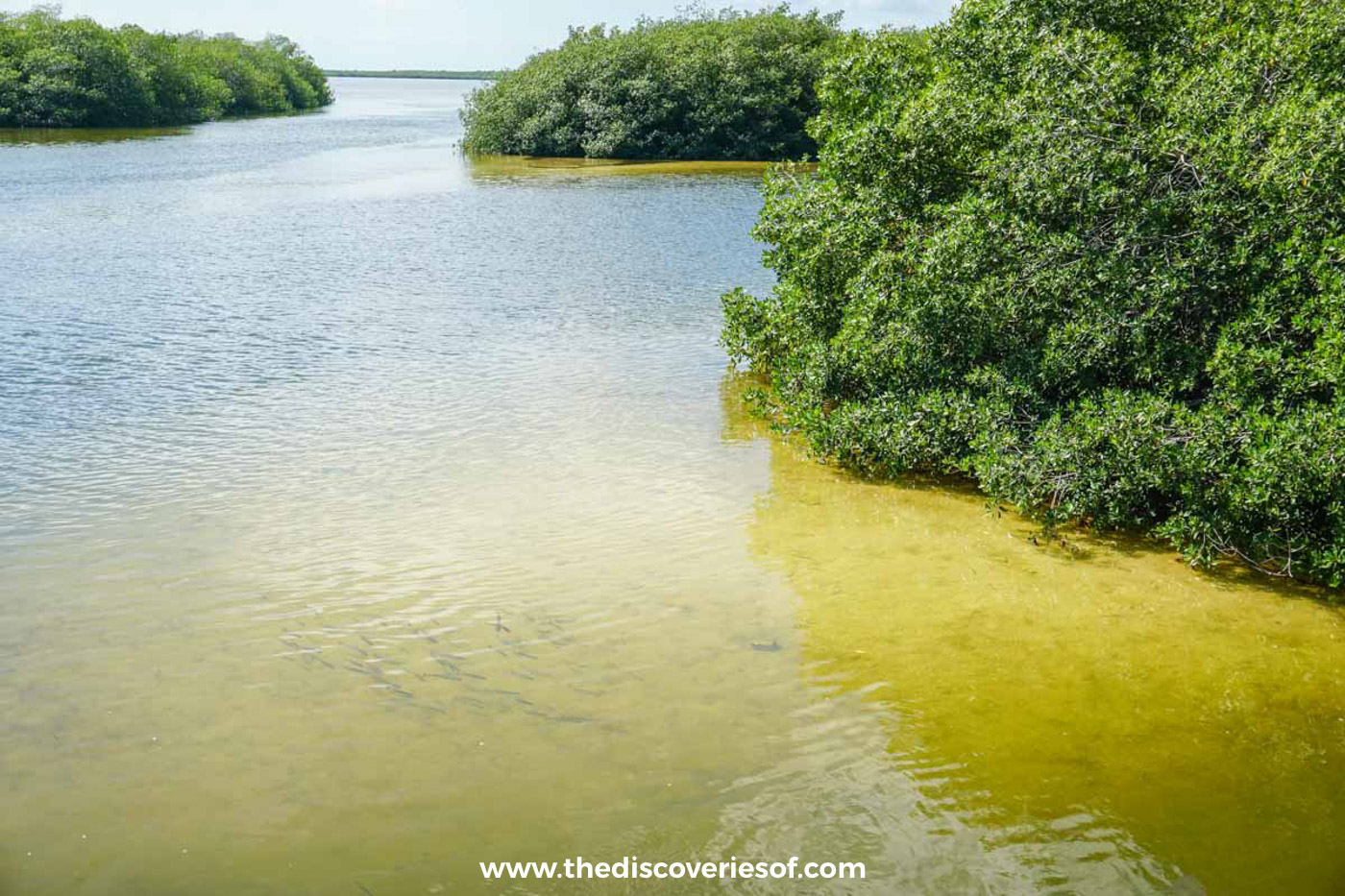
On the other side of the road, the lagoons are the other half of the picture: still, shallow water edged with mangroves, where herons and ospreys hunt and crocodiles sun themselves on the banks. Pull over and walk to the water’s edge for a look, but don’t swim. These are crocodile waters, so only get in where a local guide says you can.
Boca Paila bridge
Further down the road, the bridge at Boca Paila crosses the channel where the lagoon system meets the sea, and you can watch the water change from tea-brown to bright blue below you. It’s one of the best spots on the drive for crocodiles, and manatees are seen here too.
Punta Allen
The road ends at Punta Allen, a small fishing village on a spit of land between the sea and the Bahía de la Ascensión. Its cooperative is famous for spiny lobster, caught from July to the end of February, and lunch here should involve some of it.
Punta Allen is also the base for boat trips into the bay. This marine side of the reserve is where you can often spot several species of dolphins. A typical outing looks for them and for sea turtles, stops to snorkel on the reef and finishes on a beach, with frigatebirds overhead. Sightings are never guaranteed, but the bay is rich in wildlife.
Drive yourself or take a tour?
“I recommend hiring a car if you can” is the advice I give everyone. Driving yourself means you stop wherever a track through the palms looks promising, and the reward is beaches with no one else on them, which is the whole point of coming. Just go in knowing the road is slow and rough, and that you’ll probably turn round well before Punta Allen.
A tour makes sense if you want to reach Punta Allen without driving, or if the boat trip and the wildlife are what you’re really after. Full-day tours handle the road for you, take you out on the bay with a local boat crew and include lunch in the village.
Do
This Sian Ka’an boat trip from Tulum is a full day with transport, a boat outing from Punta Allen to look for dolphins and turtles, and a Caribbean lunch in the village. Prefer the lagoon side? The Muyil ruins and canal float tour takes half a day.
Fees and opening hours
The reserve fee is set by CONANP, Mexico’s national commission for protected areas, and it’s charged per person per day. CONANP’s figure for 2026 is 225 pesos, and it can change each year. When I went in through the Muyil side, it was around 120 pesos, so expect it to have risen since. Tours don’t always include it, so check what you’re paying for when you book.
Tickets
The reserve fee is 225 pesos a person per day in 2026 (CONANP). Bring cash and don’t count on finding a cash machine. The reserve is open daily from 7am to 6pm. The Muyil ruins charge their own separate entry fee.
Sunset over the mangroves at Nativus
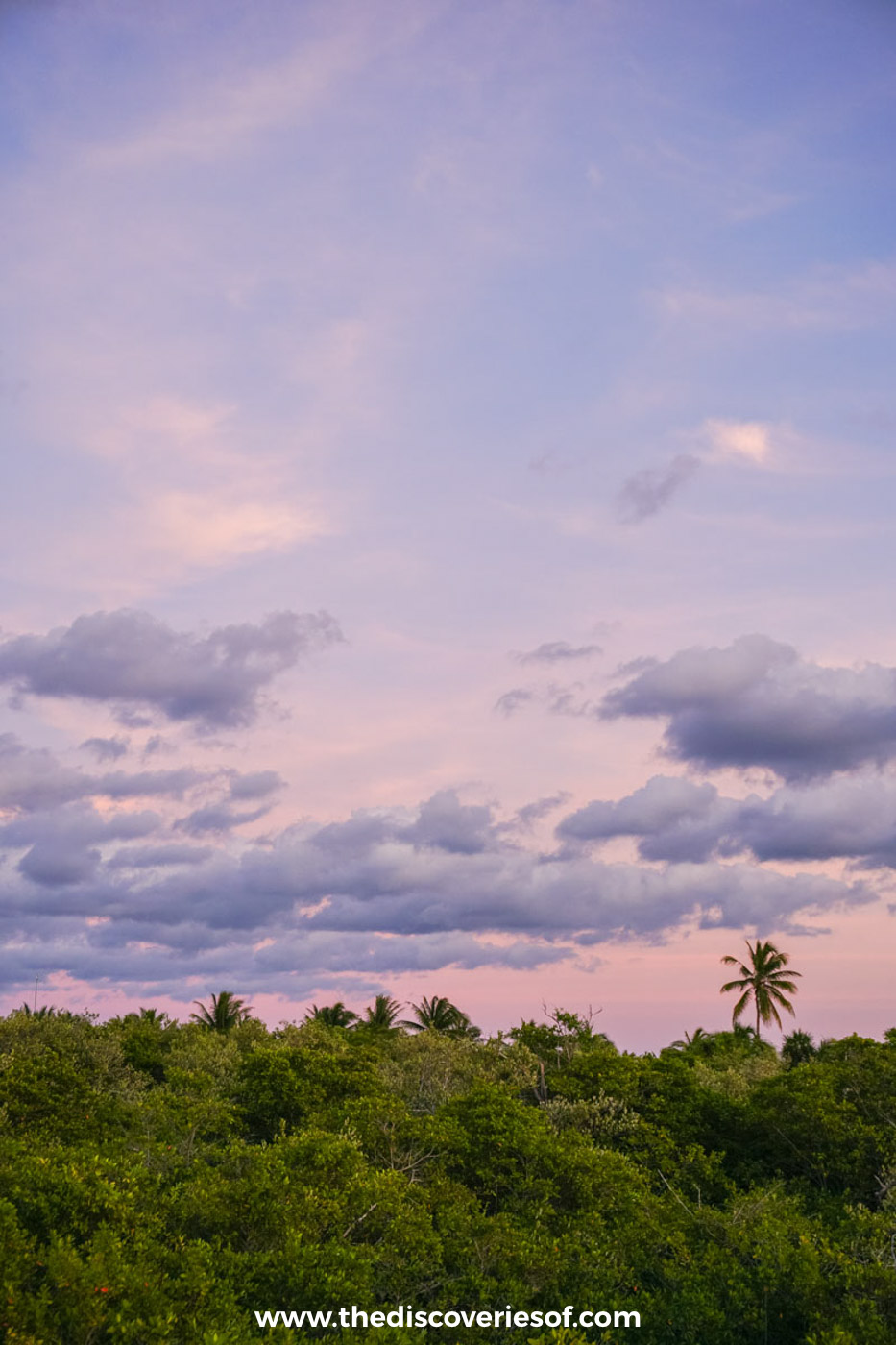
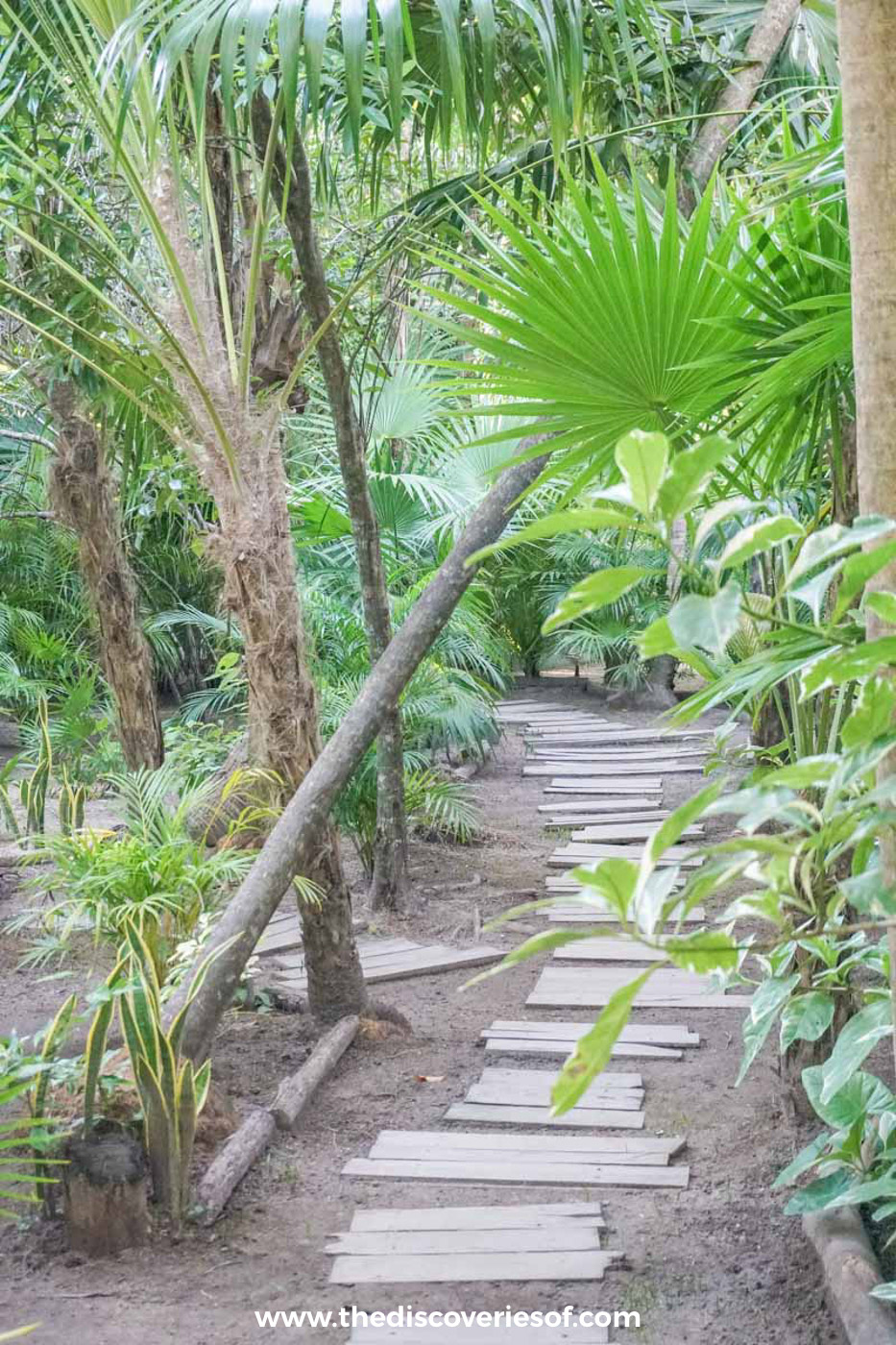
For sunset, head away from the sea. Down where the hotel strip peters out, close to the edge of the reserve, Nativus is a small glamping spot with its own cenote set among the mangroves, and from its wooden deck I watched the sun go down over the forest and the lagoon beyond.
It’s a quiet, unshowy place, and the sky over the mangroves turned pink, violet and gold. The cenote has company, too: there was a crocodile in the water when I was there, so look before you jump in. It’s private property, so check whether it’s open to visitors before you turn up.
When to go
The dry season, from December to April, is the best time to visit. The road is at its most passable, the skies are clear and the mosquitoes are kinder. November is a good shoulder month once the rains ease.
From roughly May to October, the rains can turn the coast road into a mudbath, and the hurricane season runs from June to November. Sargassum seaweed tends to wash up on the coast from spring into summer, arriving as early as February in 2026, and because the reserve’s beaches aren’t raked, it can pile up. Sea turtles nest on these beaches from about May to October, so keep away from marked nests and never use a torch on the sand at night.

Rules to know
The reserve’s rules exist to protect a fragile ecosystem, and they’re easy to follow:
- Sunscreen: use biodegradable sunscreen only, and none at all before swimming in the lagoons or canals. A long-sleeved swim shirt does the job better.
- Drones: flying a drone needs a permit from the reserve authorities.
- Wildlife: don’t touch, feed or chase anything, from crocodiles to turtles.
- Take nothing: the signs at the entrance ask you not to hunt, fish or take coral, and that goes for shells and plants too.
- Rubbish: take everything out with you, fruit peel included.
- On the water: stay with an authorised guide, and swim only where they tell you it’s safe.
Tips and what to pack
- Start early: aim to be at the arch when the reserve opens. You’ll have the beaches to yourself and avoid driving the rough road back in the dark.
- Bring cash: for the reserve fee, lunch in Punta Allen and boat trips. Cards are rarely accepted out here.
- Pack food and water: there’s almost nothing along the coast road until you reach the village.
- Insect repellent: the mangroves are mosquito country, especially around dusk.
- Swimwear and a towel: you’ll want to be in the sea at the first empty beach.
- Download offline maps: phone signal is weak or absent for long stretches of the road and in Punta Allen.
Watch my Tulum video
Map
Read next
- A guide to the Muyil ruins, the quiet Maya city on the edge of Sian Ka’an
- 12 things to do in Tulum that still make it worth the hype
- Is Tulum overrated? Only if you never leave the beach
- Inside the Tulum ruins, the walled Maya port city perched above the Caribbean
- 2 weeks in Mexico: the perfect road trip itinerary
Love this? Save and share on Pinterest

Discover the top things to do, insider tips and hidden gems in our Mexico Travel Guide.
Read the guides →




