
Valencia’s great summer drink isn’t made from milk or nuts, but from a small, wrinkled tuber grown in the fields just north of the city. Here’s what horchata is, how to order it, and where to drink it, starting with Horchatería Daniel, which has been making it since 1949.
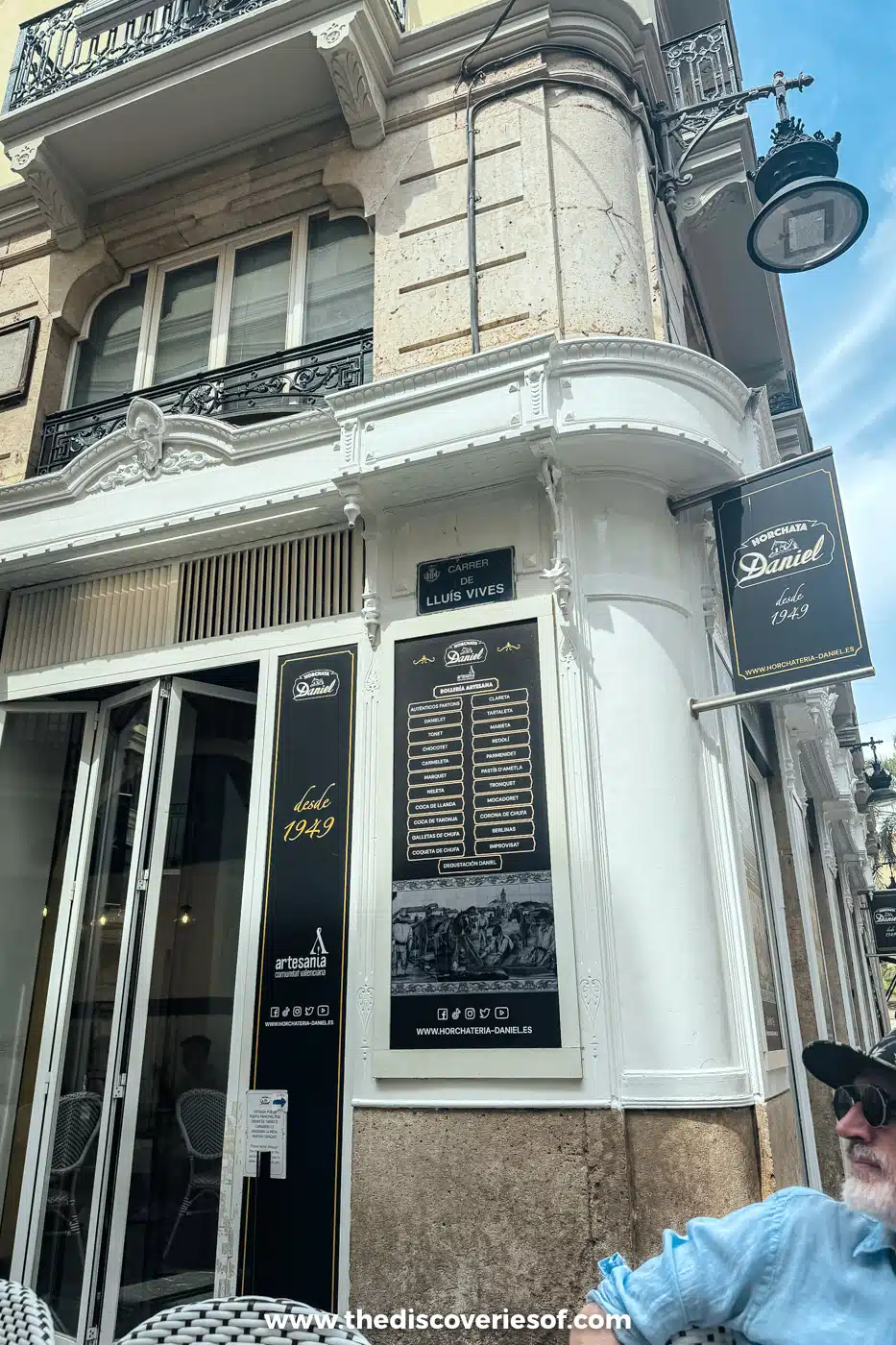
Around midday on my last day in Valencia, I stopped at Horchatería Daniel’s corner shop just off Plaza de la Reina and took a table outside. I had a glass of horchata there before a long paella lunch, and it was great: creamy and nicely spiced, and very refreshing on a hot summer’s day.
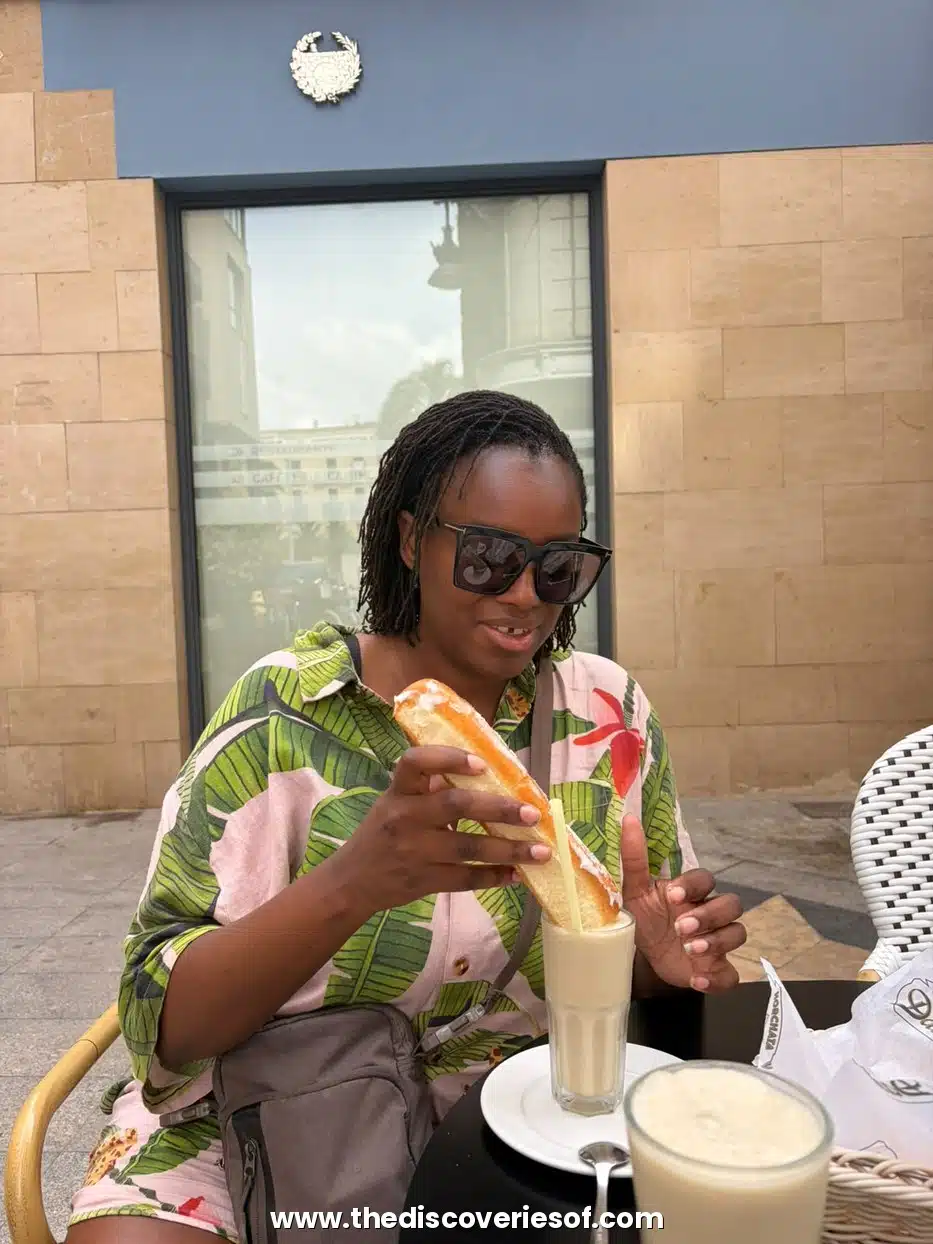
Horchata, or orxata in Valencian, is to Valencia what tea is to Britain: everyone has an opinion on where to drink it, and the city’s horchaterías have been arguing their case for generations. This guide covers what it is, how to order it, what to eat with it, Horchatería Daniel’s three shops and a few other places worth a stop.
Horchata in Valencia at a glance
- What it is: a cold drink made from tiger nuts, water and sugar. It’s naturally dairy-free.
- Where to try it: Horchatería Daniel, either at its old-town shop off Plaza de la Reina, in the Mercado de Colón or at the original in Alboraya. Horchatería de Santa Catalina is the classic old-town alternative.
- What to eat with it: fartons, long, soft, sugar-glazed buns made for dunking.
- Cost: around €3 to €6 a head for a horchata and something to dunk.
- When: it’s a summer drink, at its best from spring to early autumn.
What is horchata?
Horchata de chufa is made by soaking, grinding and pressing tiger nuts (chufas), then sweetening the milky liquid with sugar and serving it ice-cold. Despite the name, tiger nuts aren’t nuts at all but the small tubers of a sedge plant, and they give the drink its sweet, earthy, almond-like flavour.
The tiger nut is thought to have arrived in Valencia with the Moors, and Valencian writings were already mentioning “llet de xufes”, tiger nut milk, in the 13th century. Today it’s grown in l’Horta Nord, the farmland north of the city around the village of Alboraya, and Valencian tiger nuts carry their own protected designation of origin, Chufa de Valencia. They’re planted in spring, harvested in November and December, then dried for around three months before they’re ready to use.
Every Valencian knows the story of how the drink got its name. King Jaume I, so the legend goes, was handed a cup by a young woman and declared, “Això no és llet, això és or, xata!”: “That’s not milk, that’s gold, girl!” It’s almost certainly not true, but you’ll hear it everywhere.
How to order horchata
Most horchaterías offer horchata three ways:
- Líquida: the classic, poured ice-cold from the machine. This is the purest way to taste the tiger nut.
- Granizada: half-frozen into a slush, which is perfect on a really hot day.
- Mixed: a combination of the two.
It’s usually served in a choice of sizes, and it’s sweeter than you might expect, so the smallest glass is plenty for a first try.
To eat with it, order fartons. These long, soft buns with a thin sugar glaze were created in Alboraya by the Polo family in the 1960s specifically to go with horchata, and the done thing is to dunk them straight into your glass. Horchatería Daniel also makes its own smaller version, the danielet.
Proper artisanal horchata is slightly off-white, a little grainy and may settle in the glass, so give it a stir. It’s made fresh and only keeps for a few days, which is why the best of it is drunk where it’s made.
Horchatería Daniel
Horchatería Daniel is one of the best-known names in Valencian horchata, and it’s run by the Tortajada family. The business dates its horchata to 1949, opened its first shop in 1960 on the ground floor of the family home in Alboraya, and moved in 1979 to the road that later became the Avenida de la Horchata, the village’s horchata strip. The family also credits Daniel Tortajada with helping win the tiger nut’s protected designation.
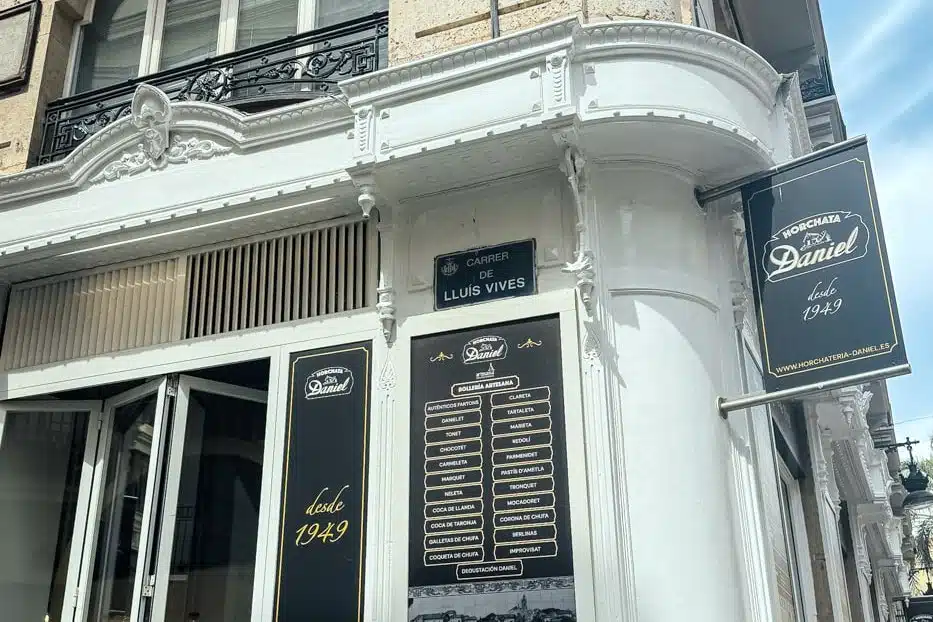
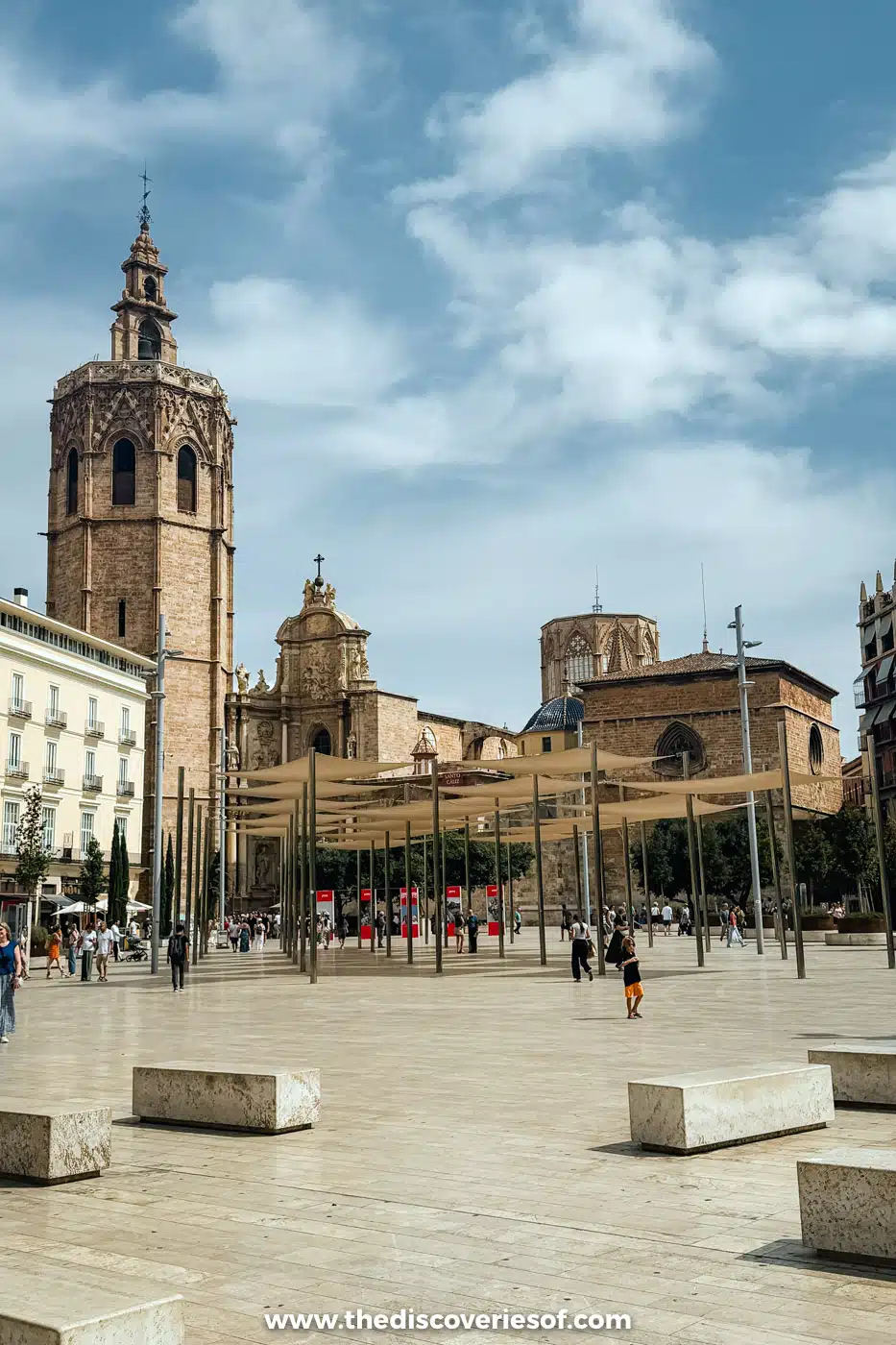
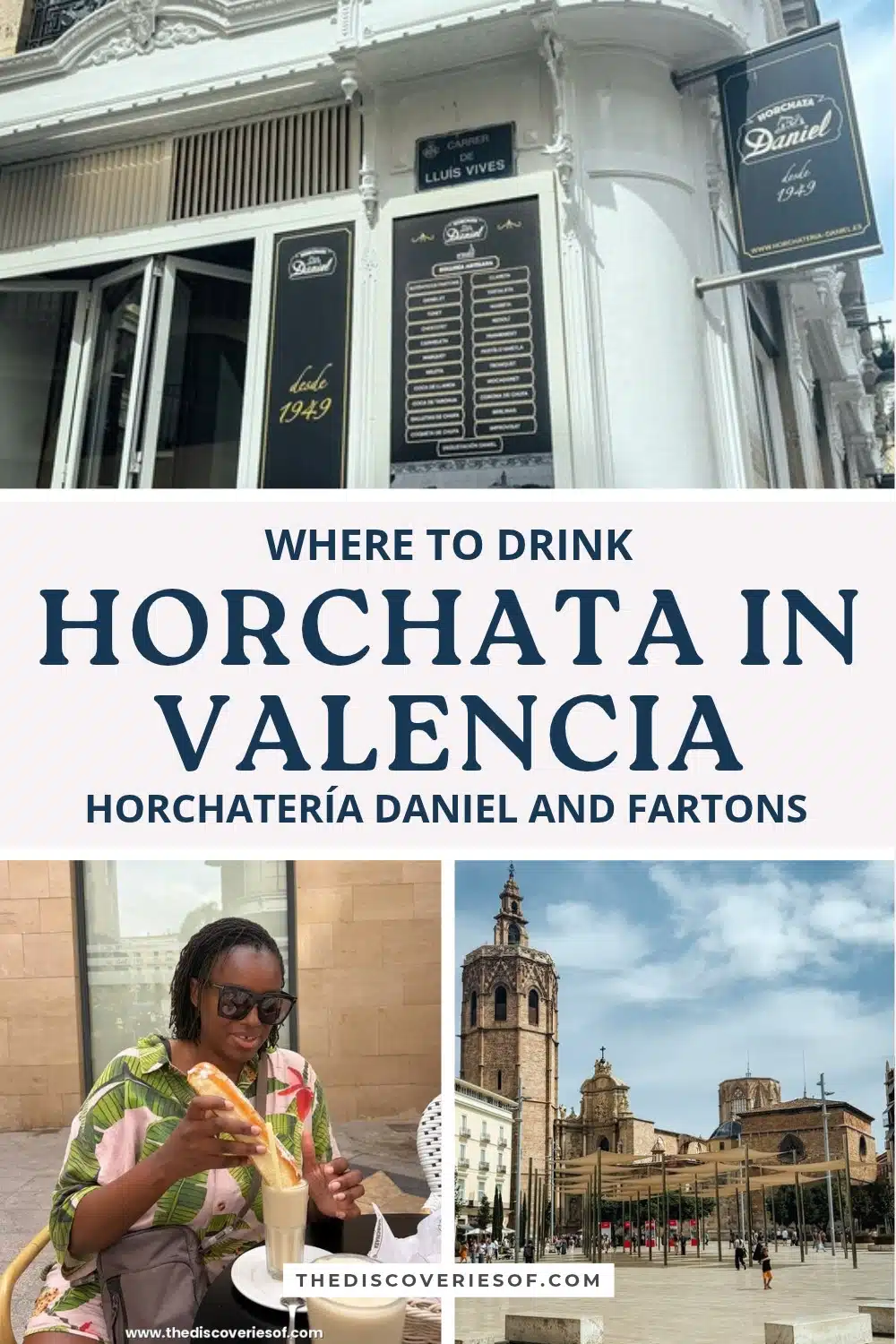
Daniel’s old-town shop is the easiest to fit into a day of sightseeing. It sits on the corner of Calle del Mar and Carrer de Lluís Vives, a minute’s walk from Plaza de la Reina and the cathedral, with a handful of tables outside where you can watch the old town go by.
The board outside lists its bollería artesana, the pastries it bakes to go with the horchata. Alongside the authentic fartons and danielets, there’s a whole menu of Valencian treats: tonets, chocotets, coca de llanda (a simple sponge), coca de taronja (orange cake), tiger nut biscuits and cakes, almond cake and a tiger nut crown, among others. If you can’t decide, there’s a “degustación Daniel” tasting selection.
Daniel has three shops:
- Plaza de la Reina: Calle del Mar 4, on the corner of Carrer de Lluís Vives. Open daily from 10am, until 9pm Sunday to Thursday and 10pm on Friday and Saturday.
- Mercado de Colón: inside the modernista market on Carrer de Jorge Juan. Open daily from 10am, until 9pm Sunday to Thursday and 10pm on Friday and Saturday.
- Alboraya: the original, at Avenida de la Horchata 41. Open daily from 10am, until 10pm Monday to Thursday, 10.30pm on Friday and Sunday and midnight on Saturday.
If you have time, the Alboraya shop is the one to make a trip for. It’s surrounded by the tiger nut fields that the drink comes from, and Alboraya is around 15 minutes from the centre on Metrovalencia.
Other places to drink horchata in Valencia
Horchatería de Santa Catalina
On Plaza de Santa Caterina, a few minutes’ walk from Plaza de la Reina, Horchatería de Santa Catalina has been serving horchata for around two centuries. Its walls are covered in hand-painted Manises tiles, which makes it as much a sight as a café, and it also serves hot chocolate and churros. It’s open daily from 8.30am to 9pm.
Alboraya and Món Orxata
To see where horchata comes from, head out to Alboraya itself. As well as Daniel’s original shop, the village’s Avenida de la Horchata is home to several other horchaterías, and Món Orxata runs guided visits of its small artisan workshop, where you can see how horchata is made by hand. Book through its website or the Alboraya tourist office.
Tips for drinking horchata in Valencia
- Go in the heat of the day: horchata is at its best as a mid-morning or afternoon cooler, when the old town is at its hottest.
- Start small: it’s sweeter than it looks, so order the smallest size first.
- Dunk your fartons: that’s what they’re for.
- Check winter hours: some smaller horchaterías cut their hours or close between November and March, when Valencians switch to chocolate and churros.
- Drink it there: fresh horchata only keeps for a few days, so the bottled supermarket version isn’t the same thing.
For more of the city, see my guide to the best things to do in Valencia and my 3 days in Valencia itinerary, which fits horchata in on day three.
Map
Read next
- 23 things to do in Valencia
- 3 days in Valencia: the perfect Valencia itinerary
- A guide to the City of Arts and Sciences
- 27 brilliant things to do in Spain
- My Spain travel guide
Love this? Save and share on Pinterest
Discover the top things to do, insider tips and hidden gems in our Spain Travel Guide.
Read the guides →