Under a long arched roof in Jongno, cooks fry pancakes by the dozen, slice raw beef to order and roll tiny gimbap faster than you can count them, while diners squeeze onto benches shoulder to shoulder. Gwangjang Market has been feeding Seoul since 1905, and few places in the city let you eat your way through so much Korean food in a single afternoon.
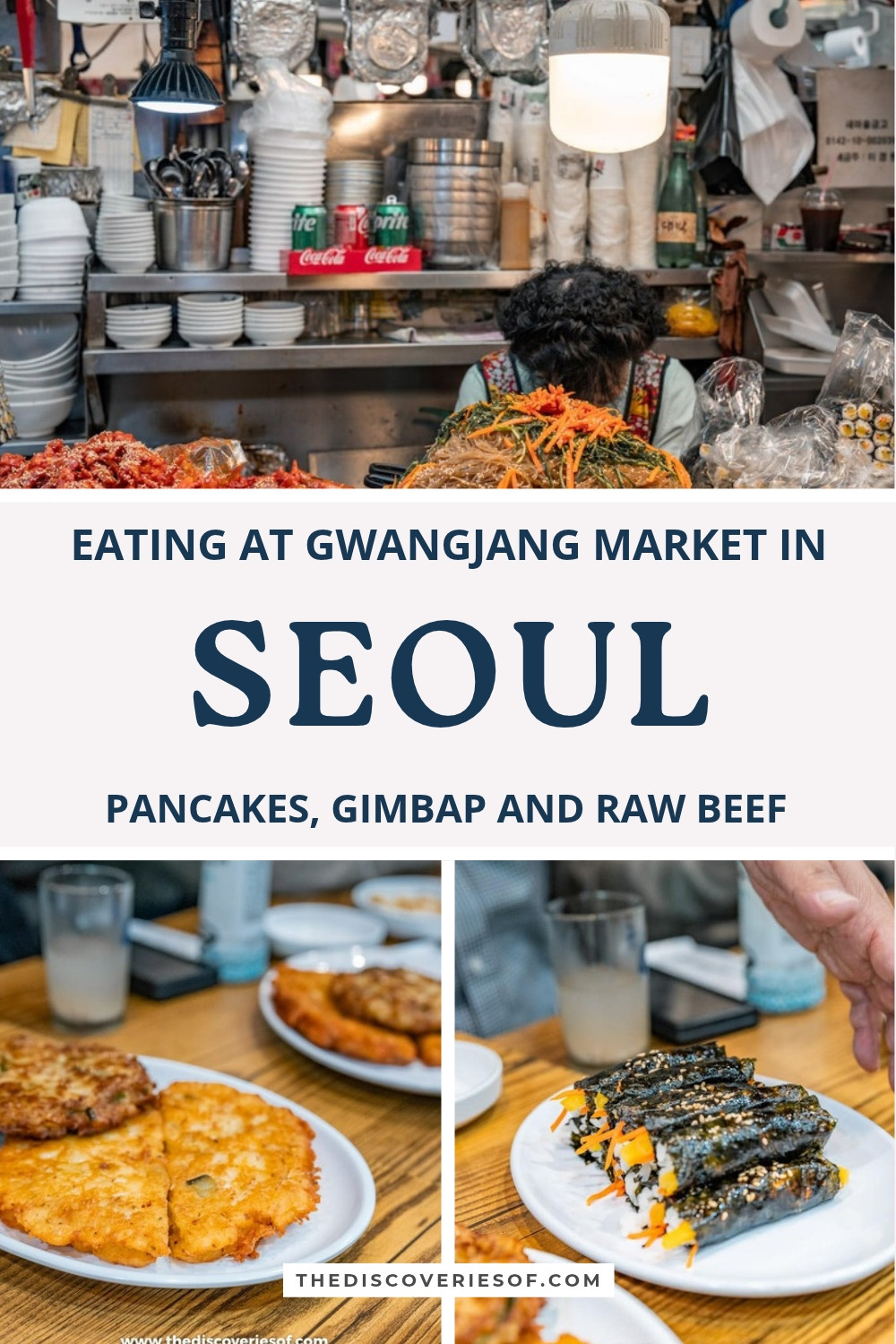
When I was in Seoul in October, my guide, Johan, let me in on an insider tip: go to Sunhui-ne Bindaetteok, a shop in Gwangjang that specialises in one thing, mung bean pancakes. I’m glad I took his advice, and if you only eat one thing here, make it those pancakes.
The rest of the market is just as tempting. Its stalls serve almost anything you could want to try in Korea, from hand-cut noodles in broth to fish cake soup, raw beef and mini rice rolls. Some people are going to tell you that Gwangjang is touristy. Maybe so, but you’re a tourist too, and you’re here for the food, which is the whole point.
This guide covers where to find the pancakes, what else to eat, how to avoid paying over the odds, the best time to go and how to get there.

Gwangjang Market at a glance
- Where: 88 Changgyeonggung-ro, Jongno-gu, between Jongno 5-ga and Euljiro 4-ga subway stations. Search for 광장시장 in Naver Map or KakaoMap, which work far better in Korea than Google Maps.
- Opening hours: the shops open from 9am to 6pm and close on Sundays. The food alley runs from 9am to 11pm every day of the year, though each stall keeps its own hours.
- Sunhui-ne Bindaetteok: open daily from breakfast time until the evening. A mung bean pancake costs about 5,000 won (under £3).
- Budget: 15,000 to 20,000 won a head buys a filling lunch of two or three dishes.
- Paying: bring cash in small notes. The bigger restaurants take cards, but many of the open stalls don’t.
- How long: an hour for a quick lunch, two or three if you want to graze and look round the fabric and vintage floors.
- Best time: before noon or mid-afternoon to dodge the lunch rush, or early evening if you want the market at its liveliest.
Head to Sunhui-ne for the mung bean pancakes
Bindaetteok is a pancake made from soaked mung beans ground into a thick batter, then mixed with pork, kimchi, bean sprouts and spring onions and fried in plenty of oil. Done well, it’s crunchy at the edges and soft in the middle, and it’s been a cheap, filling snack in Seoul for generations.
Sunhui-ne is the name everyone knows in Gwangjang. At the front of the shop, staff grind soaked mung beans into batter and fry the pancakes in batches on hot griddles from morning to night. The menu is short: the classic mung bean pancake, a meat patty (gogi wanja) to go with it and a pricier shrimp version. Orders come with a little dish of soy sauce and sliced onion for dipping.
They lived up to Johan’s billing: crispy, savoury and outrageously moreish, and full of flavour from the succulent pork, spicy kimchi and vegetables inside. One between two makes a good snack, and two each will keep you going well into the evening.

The catch is the queue. Sunhui-ne gets really busy, so either arrive for an early lunch or come back in the afternoon, because the midday rush is real. There are tables inside, so you can sit down to eat rather than perch on a bench in the alley.
Top Tip
Order a bowl of makgeolli, the milky, lightly fizzy rice wine, with your pancakes. Jeon and makgeolli are a classic pairing in Korea, and the drink’s tang cuts through the oil.
What else to eat at Gwangjang Market
The covered crossroads at the heart of the market is the food alley proper, lined with open stalls where you grab a space on the bench, point at what you want and eat it on the spot. Around it, side alleys specialise: one for raw beef, others for fish and for noodles.
Yukhoe in the raw beef alley
I had yukhoe here too, and if you’re happy eating raw beef, it’s one to add to your list. It’s Korea’s answer to steak tartare: finely sliced raw beef seasoned with sesame oil, garlic and soy, served with matchsticks of Korean pear and often a raw egg yolk on top. Gwangjang has a whole alley of yukhoe restaurants. The best known is Buchon Yukhoe, which opened in 1965 as a short rib soup shop and now holds a Bib Gourmand in the Michelin Guide. Its yukhoe bibimbap is the cheapest way in, and the adventurous order yukhoe tangtangi, raw beef tossed with chopped live octopus. Expect a long wait at weekends.
Kalguksu, the knife-cut noodles
Kalguksu means “knife noodles”: dough rolled out and cut by hand, then cooked in a light anchovy and kelp broth with courgette and a spoonful of seasoned chilli on top. Several stalls make it in front of you. The one with the biggest queue is Gohyang Kalguksu, whose cook, Cho Yoon-sun, featured on Netflix’s Street Food: Asia. A bowl costs well under 10,000 won, and neighbouring stalls serve much the same thing without the wait.
Mayak gimbap
These are the market’s signature snack: finger-sized rolls of rice and seaweed wrapped around pickled radish, carrot and spinach, brushed with sesame oil and dipped in a mustard and soy sauce. “Mayak” means narcotic, a nod to how hard they are to stop eating. I had a plate of them alongside my pancakes. They cost about 4,000 or 5,000 won, and plenty of stalls sell them to take away in plastic bags.

Tteokbokki, sundae and mandu
The stalls in the food alley also cover the street food staples: tteokbokki (chewy rice cakes in a sweet, spicy chilli sauce), sundae (Korean blood sausage stuffed with glass noodles), steamed or fried mandu dumplings, japchae and eomukguk, the fish cake soup that’s best on a cold day. If you’ve room for something sweet, look for kkwabaegi, twisted doughnuts rolled in sugar.
Raw fish and live octopus
The seafood stalls lay out their catch in glass counters, and you can sit down to a plate of hoe (sliced raw fish) or sannakji, octopus chopped and served while the tentacles are still moving, dressed with sesame oil and seeds. Chew it properly: the suckers really do grip.

Is it too touristy, and will you be overcharged?
It’s busy and it’s firmly on every visitor’s list, and the food is still the reason Seoul’s own residents keep coming. What you do need to know about is prices. In late 2023 a viral video showed a plate of mixed jeon that looked meagre for its 15,000 won price, and in 2024 the market brought in fixed portion labelling while the city sent in mystery shoppers. Then in November 2025 a food reviewer was charged 10,000 won for a dish listed at 8,000 won, and the vendor was suspended for 10 days. The complaints have centred on a handful of street stalls in the central alley, not on the established shops around it, but they’ve dented the market’s reputation.
None of that is a reason to stay away. Just eat with your eyes open:
- Check the price on the board and agree it before you order.
- Pay for each dish as it arrives rather than running up a tab.
- If you want a recommendation, the shops with their own premises (Sunhui-ne, Buchon Yukhoe) are a safer bet than an unpriced platter.
Look beyond the food alley
Food is only half of Gwangjang. The upper floors and outer arcades are given over to shops selling silk and other fabrics, including the bright silks used for hanbok, as well as bedding, handicrafts and lacquerware inlaid with mother-of-pearl. Up the stairs is the secondhand clothing arcade, a warren of vintage stalls selling jackets, knitwear and denim, which keeps hours of 10am to 7pm, Monday to Saturday.
The name comes from its spot between two old bridges over the Cheonggyecheon stream, Gwanggyo and Janggyo, and the market claims to be the first in Korea to open every day rather than on set market days. It was called Dongdaemun Market at first and took the name Gwangjang in 1960.
The best time to go
Mornings are the calmest time: the stalls are setting up, the fabric shops are opening and there’s room on the benches. Sunhui-ne and the busiest noodle stalls fill up from about noon, so an early lunch or a mid-afternoon visit works best for eating.
Evenings are a different scene, with office workers piling in for pancakes and makgeolli and the food alley at its loudest between 6pm and 8pm. Come late in the evening and some popular stalls may have run out.
On Sundays the shops close but the food alley stays open, so it’s a good day to eat and a poor one for fabric. Around the big holidays of Seollal and Chuseok many stalls shut for a day or two, so check before you go if your dates fall then.
How to get there
- Subway, line 1: Jongno 5-ga Station, exit 8, brings you out by the market.
- Subway, lines 2 and 5: Euljiro 4-ga Station, exit 4, about 100 metres from the market’s south side, across the Cheonggyecheon stream.
- Transport cards: a T-money card covers the subway and buses, but you’ll need cash or a bank card at the stalls.
The market sits in the middle of the old city, a short walk from the stream, so it fits neatly into a day of sightseeing. My 3 days in Seoul itinerary builds it into day two, and my list of things to do in Seoul will fill the rest of your stay.
Map
Read next
- How to spend 3 days in Seoul, from royal palaces to a loo with a view
- 32 things to do in Seoul, from a virtual royal banquet to cocktails in an old teahouse
- How to spend 10 days in South Korea, from Seoul’s palaces to live octopus in Busan
- 30 South Korea travel tips to know before you go, from cash to hidden cameras
Love this? Save and share on Pinterest

Discover the top things to do, insider tips and hidden gems in our South Korea Travel Guide.
Read the guides →