
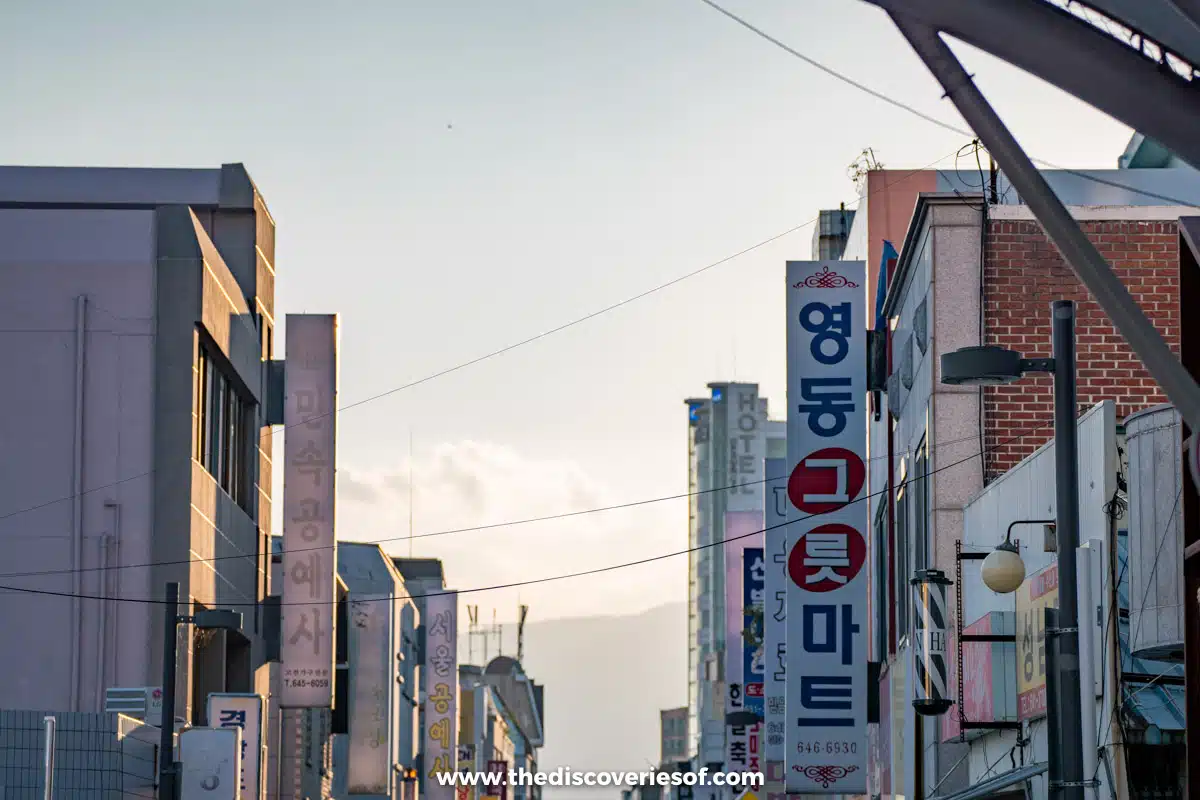

Gangneung is slowly gaining popularity on the tourist map. I’m not surprised. I’ll help you plan a perfect getaway lounging on the beach, grilling up fresh BBQ, and finding the best spots for photos along the way.
Gangneung is an ancient city in north-eastern South Korea, with written records going back to 129 BC.
You’ll understand why people have settled here for so long when you look in from the banks of the East Sea at the beautiful rolling hillsides dotted with fragrant pine forests. The city offers the perfect balance of land and sea.
What was once a fairly well-kept secret is slowly becoming a must-visit for many travellers touring South Korea. I spent a couple of days there in October, and it gave me some of the best meals of my whole trip.
The food scene alone is worth a visit. I found great local and international cuisine, most of which was surprisingly affordable.
Browsing Gangneung Jungang Market and picking out the catch of the day, or riding a railbike along the waterfront, shows off the treasures this oceanside city has to offer.
But there are less obvious surprises, like the mesmerising immersive exhibits at Arte Museum Valley and an entire stretch of seafront given over to coffee shops (Coffee Street) that make this a surprisingly exciting destination to visit.
So what are you waiting for? Here’s why Gangneung is somewhere you need to visit right now.
Things to do in Gangneung
Ride the Jeongdongjin Railbike

Taking a ride on the Jeongdongjin Railbike is a must when you’re in Gangneung. It’s short but sweet, and the 45-minute ride goes a whole lot faster than you’d think.
So, what exactly is it like? Hop onto a sit-down covered bike, and you’ll set off on the rails to see a different side of Gangneung. It’s at once scenic and exhilarating.
The semi-powered bike is set up on an old railway, and honestly, the machine does a lot of the hard work for you.
You’ll cruise along the beach, taking in the coastline and the wooded hills behind it. The spectacular views offer a nice juxtaposition of natural and urban landscapes. Oh, and if you think you see a giant cruise ship beached on the clifftop, it’s actually the Sun Cruise Resort & Yacht, a hotel built in the shape of a ship.
You can do the ride one way or both ways, but I’d suggest the latter. You get a little break by Jeongdongjin Beach before you hop back on.

The beach itself is quite nice, and you’ll want to catch a sunrise before your bike ride if you can: Jeongdongjin is one of Korea’s most famous spots to watch the sun come up over the East Sea, and seeing it slowly rise out of the water around dawn is magic.
Bikes leave from Jeongdongjin Station, where the KTX from Seoul stops, roughly once an hour from 8.45am to 4.45pm, every day of the year. A two-seater costs 25,000 won (about £14) and a four-seater 35,000 won (about £20).
Top Tip
This is a popular tourist activity, so you’ll want to book your tickets in advance if possible, which you can do here.
Gangneung Jungang Market

To get to know a market is often to get to know a city.
You can learn local customs, explore fresh ingredients, and (especially in South Korea) you can eat some of the most delicious street food ever.
Gangwon’s best-known traditional market, Jungang Market opened in 1980 as a pretty standard neighbourhood market and slowly evolved into what it is today.

At street level, you’ll find street food, clothing vendors, and places to grab coffee. Downstairs, in the underground fish market, you’ll discover fresh and dried seafood of nearly any type imaginable. Go to both.
It’s a great place to try all kinds of traditional Korean food, but be sure to get some Korean fried chicken from Baenni. Why? It was an explosion of flavours and textures, and one of my favourite memories of my time here.
But you’ll also want to save room for a few other items while you’re here. Stands selling fried shrimp and fish cakes (eomuk, often called odeng (오뎅)) are the most popular.
Arte Museum Valley

South Korea has a wonderful tradition and history of art that spans centuries and mediums and is quickly making a name for itself in the international art world. Visiting Arte Museum Valley paints a clear picture of why that is.
The immersive art gallery features large-scale digital art. I mean really large scale. There’s lots of movement and colour, and the scale of the interactive exhibitions makes for a pretty cool experience.

So what should you see when you’re here? The nature exhibits are particularly cool. The museum’s theme is the valley, a nod to the mountains, waterfalls and pine forests of Gangwon Province, and the rooms change with special exhibitions through the year.
The visual and audio effects combine for a trippy experience that reminds me a bit of Meow Wolf in Santa Fe, New Mexico. It’s a bit of a sensory overload, but in the best way.
It’s open every day from 10am to 8pm (last entry 7pm), and an adult ticket costs 19,000 won (about £11). You’ll find it near Gyeongpo Lake, close to Chodang-dong.
Top Tip
Head there around opening. The museum fills up later in the day, and it’s a lot more fun when you have the room to yourself.
Coffee Street
Coffee culture is strong in South Korea, and the first coffee shop opened in Seoul at the turn of the 20th century. Since then, locals have been sipping coffee in cosy cafés for decades, and it has evolved into a thing to do for tourists as well.
Gradually, trends shifted a bit, slowly transforming from more formal teahouse experiences to cafés more similar to what you find in Western cultures, but still with some uniquely Korean decor.
Nowadays, the coffee in South Korea is wonderful, and there’s an energy buzzing through the cafés in big cities and small towns alike. Gangneung takes this reputation to new heights by boasting its very own “Coffee Street” on Changhae-ro along Anmok Beach, which grew up from the 1990s and now hosts the city’s annual coffee festival.
With almost all of the local cafés roasting their own coffee beans, you’ll have quite a few excellent choices to decide from, which is why it’s known as the city of coffee. While Starbucks is available, do yourself a favour and try a local option.
Terarosa, which started here, is the name to know. Its original coffee factory is a short drive inland in Gujeong-myeon, with seating across a beautiful space, latte art that’s seriously good, and even a small coffee museum in the building.
Top Tip
Order an iced Americano if you want to sip what the locals drink.
Anmok Beach

After you grab a coffee from Coffee Street, the next thing you’re going to want to do is head down to Anmok Beach.
Located right next to Gangneung Port, where the ferries leave for Ulleungdo, the golden sands look out over deep blue waters that make for a scenic start to your day.
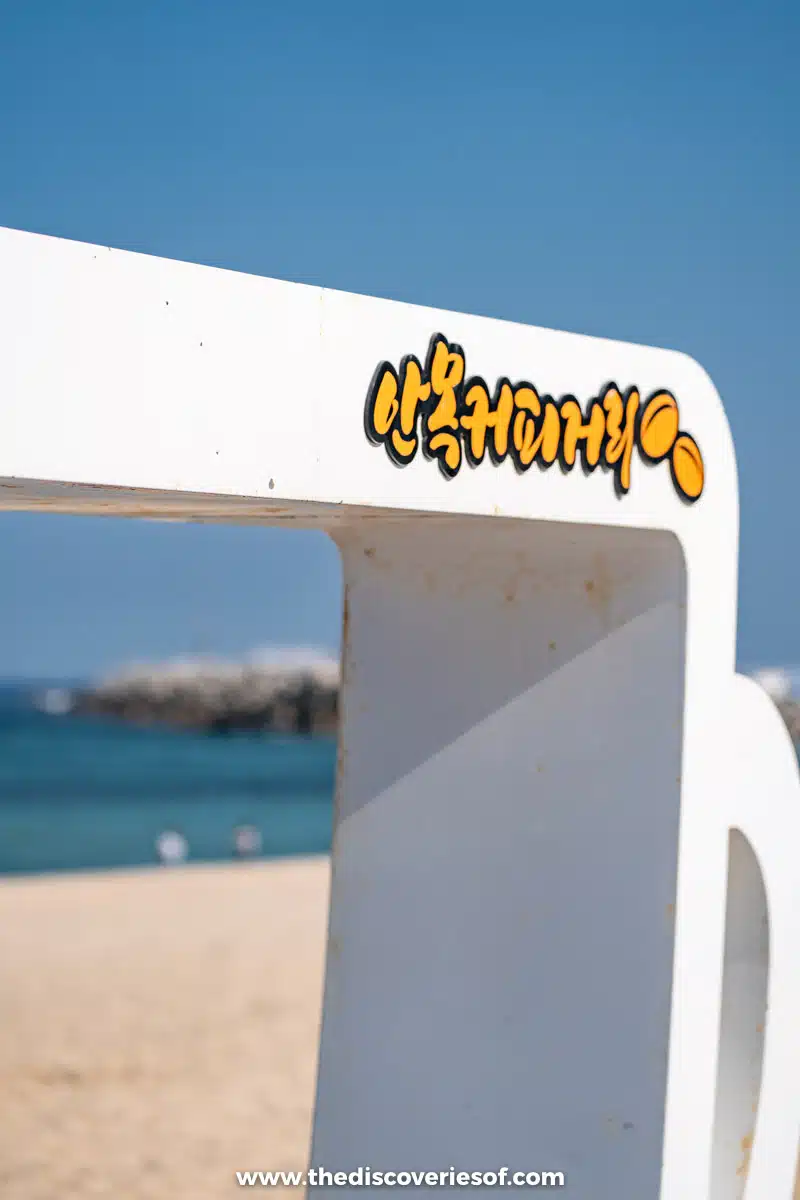
There are plenty of photo opportunities here, from the rocky coastal shores to clever art installations like a giant coffee mug balancing three blue eggs and another that you can use as a life-sized photo frame. I had fun just seeing what photo op was next when exploring the beach.
There’s lots to do in the area on land and water (the speed boat tours from the nearby harbour are popular), but it’s most famous for the coffee street that runs right alongside it.
Top Tip
This beach is trending on all the socials right now and, as such, gets really busy. Go during the week to avoid crowds.
Daegwallyeong National Recreational Forest
One thing that Gangneung is well known for is the beautiful nature that surrounds the city, home to over 200,000 residents. The busiest areas sit between the ocean to the east and the mountains and forests to the west.
If you get the chance to head inland for a hike while you’re here, don’t pass up on the opportunity.
Where should you lace up and hit the hills? Daegwallyeong National Recreational Forest is the place to do it.
You’ll hike the gentle mountain trails under hundreds of pine trees, some stretching well above your head and providing much-needed shade in the summer. The area is well maintained, and there’s a tourist centre where you can grab a coffee and a snack before your hike.
You can choose from several hikes, all with wooden signs clearly indicating the distance. You can also study a map at the trailhead, giving you a better idea of where you want to go. The forest is open from 9am to 6pm and there’s parking on site.
Top Tip
None of the trails take much longer than an hour, so you can combine several if you want a more strenuous hike.
Best places to eat and drink in Gangneung
Gangneung has some of the best seafood dishes in South Korea, which is no surprise as the East Sea is the backdrop for many of the most popular hotels and restaurants.
Korean pancakes (pajeon) are the thing to get when you’re here: a crispy blend of seafood and vegetables served with a soy and sesame-based dipping sauce.
Korean BBQ is also delicious here, with assorted meat options you can grill right at your own table.
Owole Chodang Korean pancake restaurant 오월에 초당
£

Owole Chodang Korean Pancake Restaurant 오월에 초당 was one of my favourite stops in town.
Why? The succulent pajeon were absolutely packed with ingredients and flavour, and the squid pancake was one of my favourite dishes of the whole trip.
These thick, crispy-crunchy omelettes came with veggies and fresh seafood, which really hit the spot after a day at the beach. Each comes with large rings of squid and julienned scallions, and it was cooked perfectly: crunchy on the outside, soft on the inside, with an addictive layer of crisp covering the top.
But this restaurant has another trick up its sleeve. The noodles here are quietly divine. I chose a brothy bowl with seaweed, sesame, fresh veggies, and just enough heat.
Not to mention, the space itself is comfortable and charming. There’s a beautiful garden out back, and some succulents and flowers adorn the hardwood interior inside.
It’s casual and inexpensive, with the squid pancake at 15,000 won (about £8.50) and noodles from 8,000 won, making it a perfect option for a late lunch or early dinner. It closes for a break between 2.30pm and 5pm and all day on Wednesdays.
Chodang-Og Japanese restaurant
££

I stopped by this Japanese speciality restaurant to order sukiyaki for lunch. I’m so glad I did. Both the quality and quantity were excellent value, at 25,000 won (about £14) a head.
This spot is just south of Gyeongpo Lake and Arte Museum Valley, making it an excellent place to refuel before you spend an afternoon exploring the beaches or heading to the railbike.
What’s the vibe like? You walk through a wooden pavilion and a garden of young trees leading up to the restaurant. Step inside, and the smells of fresh veggies and tender meats waft through the air of the unassuming interior.

I cooked the beef in a large hotpot with mushrooms, sprouts, and tofu. You put it into the simmering broth and then dip it in raw egg with sesame oil and spring onions. Honestly, it was mind-blowingly delicious.
Gangnamchon KBBQ restaurant
££

This is a fabulous KBBQ restaurant, located just off Nambu-ro.
When you sit down at your table, you’ll find your own personal grill, which you’ll soon be taking full advantage of with delicious cuts of raw beef and pork ready for you to stick on the BBQ. Everything I had was excellent, grilled to perfection right in front of me.
Once your meat is cooked, dig into the banchan, which includes pickled and fresh veg, rice, and kimchi.

My favourite touch was the ample raw garlic. It featured large cloves you could cook at your table for fresh-grilled garlic to enjoy with your meal.
It was one of the best meals I had on my South Korea trip.
Paldo Jeonbok Haemul Ttukbaegi seafood restaurant 팔도전복해물뚝배기
££
If you’re at Gangmun Beach, you won’t need to walk far to get some of the best seafood in town. Head to Paldo Jeonbok Haemul Ttukbaegi (팔도전복해물뚝배기) on Changhae-ro, where you can try the famous bowl of soft tofu in a seafood broth served with piles of prawns, abalone, clams, and mussels (16,000 won, or about £9). The full abalone seafood hotpot is 24,000 won.
The seafood is incredible, but it’s actually the soft tofu that’s the main draw. It’s a neighbourhood speciality in nearby Chodang-dong, and you’ll know why when you taste the velvety, briny goodness in the piping hot broth.
Chodang tofu is traditionally set with seawater rather than brine, which many think is the secret to its texture and flavour.
Pair the stew with each and every banchan on the table, which adds crunch, spice, and a depth of flavour to the dish.
Top Tip
This is an extremely popular spot with locals. It’s open every day from 7.25am to 8.30pm, so arrive during off-peak hours in the late morning or late afternoon to avoid the long lines.
Know before you go: practical tips to plan your Gangneung trip
- Eat at as many restaurants as you can: Gangneung features a treasure trove of restaurants.
- Avoid January to March, as temperatures are too cold to appreciate the beaches.
- Keep your eyes open for K-drama filming locations, as there are a few. The breakwater at Yeonggjin Beach in Jumunjin was the location of Goblin, and the BTS bus stop is on Hyangho Beach nearby.
Typical cost of travelling

You can get by here for about 140,000 to 210,000 won (£80 to £120) per day with lodging and food.
How long to visit?

The beaches and pine forests offer a relaxing respite from city life, but there’s still a lot to do. Go for at least two to three days.
Best time to visit

Visit Gangneung in May or September for great weather and better hotel rates.
Where to stay in Gangneung
Stay by the beaches for ocean views and close proximity to the best food and landmarks.
Skybay Hotel Gyeongpo (high-end)
My base for my stay. A beautiful, modern hotel right on the beach at Gyeongpo with a trendy rooftop infinity pool. Rooms are spacious and stylish, with insane ocean views.
Hotel Tops 10 (mid-range)
Perched on a sea cliff near Jeongdongjin, close to the Heonhwa-ro coastal road and a short walk from Geumjin Beach, this property features ocean-view rooms, a pool, a hot spring sauna and a popular breakfast.
How to get there
You can get to Gangneung from Seoul on the KTX in about one hour 45 minutes to two hours, from Seoul Station or Cheongnyangni. Standard tickets cost about 27,600 won (about £16) from Seoul Station.
Suggested itineraries
Day trip to Gangneung
Coffee Street, Anmok Beach, Arte Museum Valley, Gangneung Jungang Market
This day trip will give you a small sample of the coffee, art scene, and food that make Gangneung a popular stop on the tourist trail.
Beaches and BBQ
Jeongdongjin Railbike, Anmok Beach, Gangnamchon KBBQ restaurant, Gangmun Beach, Owole Chodang Korean pancake restaurant
Spend one or two nights exploring the beaches and cuisine.
Pine forests, markets and sightseeing
Daegwallyeong National Recreational Forest, beaches and railbike, Arte Museum Valley, Gangneung Jungang Market
Spend two to three days exploring the top destinations and some hidden gems.
Recommended tours

Map
Read more South Korea travel guides
- 10 days in South Korea: the perfect South Korea itinerary
- 22 things to do in South Korea
- South Korea travel tips: 30 things you need to know
Love this? Save and share on Pinterest!

Discover the top things to do, insider tips and hidden gems in our South Korea Travel Guide.
Read the guides →




