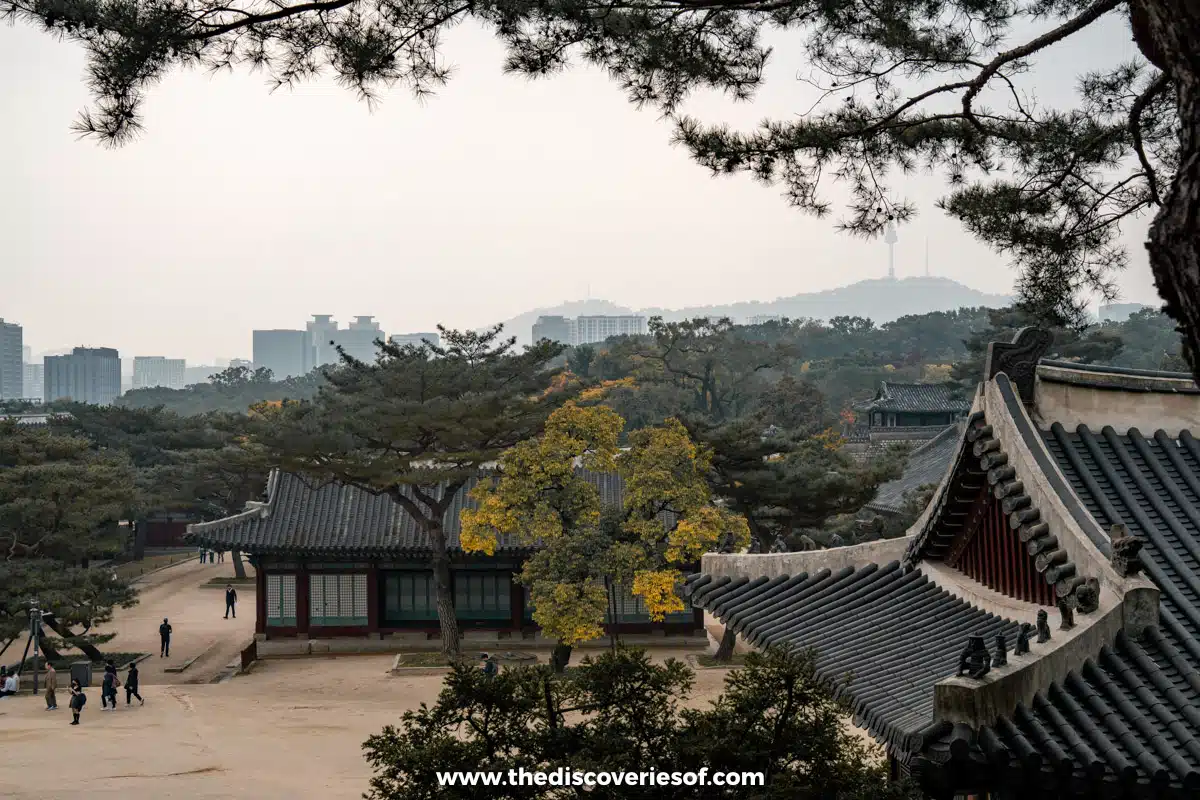

This palace faces east instead of south, keeps the oldest throne hall in Seoul and hides a lake, a stone pagoda and a 1909 glasshouse behind its halls. For most of the 20th century it was a zoo, which makes it all the more remarkable that it’s here at all. Give it a couple of hours and it repays you more than its better-known neighbours.
Of the royal palaces I saw in Seoul in late October, Changgyeonggung Palace was my favourite. If you only have time for one and you’re torn between this and Gyeongbokgung, I’d come here: the grounds feel more expansive and the gardens are beautiful. If you can fit in both, though, do; my 3 days in Seoul itinerary has room for each.
What really won me over was an invitation to a party that took place long ago. Inside one of the halls, an augmented reality experience casts you as a guest at a royal 60th birthday celebration. I hadn’t seen anything like it before.
This guide covers what to see, the history that explains why the palace looks the way it does, the pond and gardens at the back, and the practical details for planning your visit.

Changgyeonggung Palace at a glance
- Where: 185 Changgyeonggung-ro, Jongno-gu, on the eastern side of the old royal quarter. Type 창경궁 into Naver Map or KakaoMap to find it.
- Opening hours: 9am to 9pm, last entry 8pm.
- Closed: Mondays (or the following day when a Monday is a public holiday).
- Tickets: 1,000 won (well under £1) for adults. Free for over-64s and for anyone wearing hanbok, and free for all on Culture Day, the final Wednesday of each month.
- Guided tours in English: 11am and 4pm.
- How long: a couple of hours, longer if you linger in the gardens.
- Nearest subway: Hyehwa (line 4), exit 4, then a 10-minute walk.
Join a royal birthday party in augmented reality
Seeing old buildings is one thing. Understanding how they were used is another, and that’s where this palace stood out for me. Step inside for the AR experience and you “attend” a royal 60th birthday banquet as one of the invited guests, while it talks you through the celebration as it happens.
It sounds like a gimmick, but it isn’t. Watching the event unfold gave me a real sense of how these halls were used when the court filled them, which is exactly what’s missing when you walk through empty rooms.
It suits the place, too. The inner court here was home to the royal women, and some of the grandest celebrations of the late Joseon court were held in its halls. In 1848, Tongmyeongjeon hosted a lavish banquet for the 60th birthday of Queen Dowager Sunwon, recorded in such detail by the court’s scribes that historians can still reconstruct its menus and dances.

Top Tip
Digital experiences at the royal palaces change from season to season, so ask at the ticket office what’s running on the day you visit.
Walk in through Honghwamun and across Okcheongyo
The main gate, Honghwamun, is a two-storey wooden gatehouse rebuilt in 1616, after the Japanese invasions of the 1590s burned the original. Unusually for a royal palace, it faces east rather than south, and so does the throne hall behind it. The likely reason is the lie of the land: the palace was squeezed between low hills, and its builders followed the ground instead of fighting it.

Inside, you cross Okcheongyo, a twin-arched stone bridge from 1483, over a channel of water that Joseon palaces placed between the outside world and the throne. Look for the goblin faces carved between the arches, put there to keep evil spirits out.
See the oldest throne hall in Seoul
Beyond Myeongjeongmun gate, Myeongjeongjeon rises on its stone terrace. It was rebuilt in 1616, which makes it the oldest main hall of any of the city’s palaces. Kings received officials and held state ceremonies here, and the stone markers in the courtyard show where each rank of the court lined up.

Next door, Munjeongjeon, the king’s council hall, holds the palace’s darkest story. In 1762, King Yeongjo ordered his son, Crown Prince Sado, into a wooden rice chest in the courtyard here, and the prince died inside it eight days later. Sado’s widow, Lady Hyegyeong, later wrote one of the great memoirs of the Joseon court about it, and their son grew up to become King Jeongjo.
The architecture is subtly different from the other royal palaces in the city, and there’s a reason for it. King Seongjong built Changgyeonggung in 1483 as a home for the queens dowager of his family rather than a seat of government, so the halls are fewer, lower and more domestic, with open ground between them.
Wander the halls of the inner court
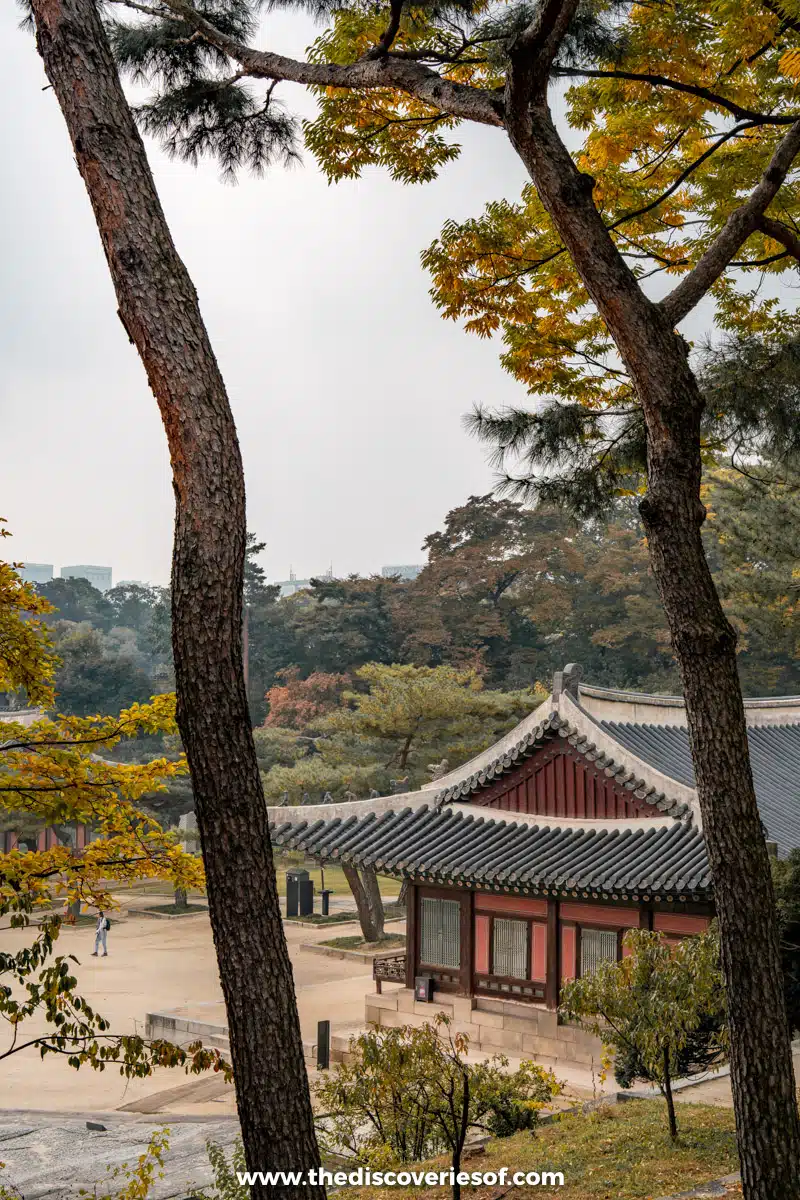
The real charm lies behind the throne hall, in the quarters where the royal women lived. Tongmyeongjeon, the largest, was the queen’s hall, and you’ll notice its roof has no ridge along the top. Gyeongchunjeon, next to it, is where both King Jeongjo and King Heonjong were born, while Hwangyeongjeon and Yanghwadang complete a cluster of residences that feel lived in rather than ceremonial.


Take the path up the slope behind these halls. Terraced flower beds lead to the site of Jagyeongjeon, a hall King Jeongjo built for his mother, Lady Hyegyeong, looking out towards the shrine of her husband. Only its terrace remains, but from the slope the view back over the palace roofs to N Seoul Tower on Namsan is one of the best in the grounds.
From royal palace to city zoo
The palace burned in 1592, again in part in 1624 and almost completely in 1830, and it was rebuilt each time. What it couldn’t come through intact was the Japanese colonial period. In 1909, a zoo and a botanical garden were laid out inside the walls, and in 1911 the palace was downgraded to a public park called Changgyeongwon. Halls were pulled down to make room for enclosures, and Japanese cherry trees were planted along the paths.
For decades, families came here to see the animals rather than the architecture. The zoo finally moved out to Seoul Grand Park in the 1980s, the palace got its name back in 1983, and restoration has continued ever since. That history explains the wide, open spaces between the buildings: they mark where lost halls once stood.
Find Chundangji pond and the glasshouse
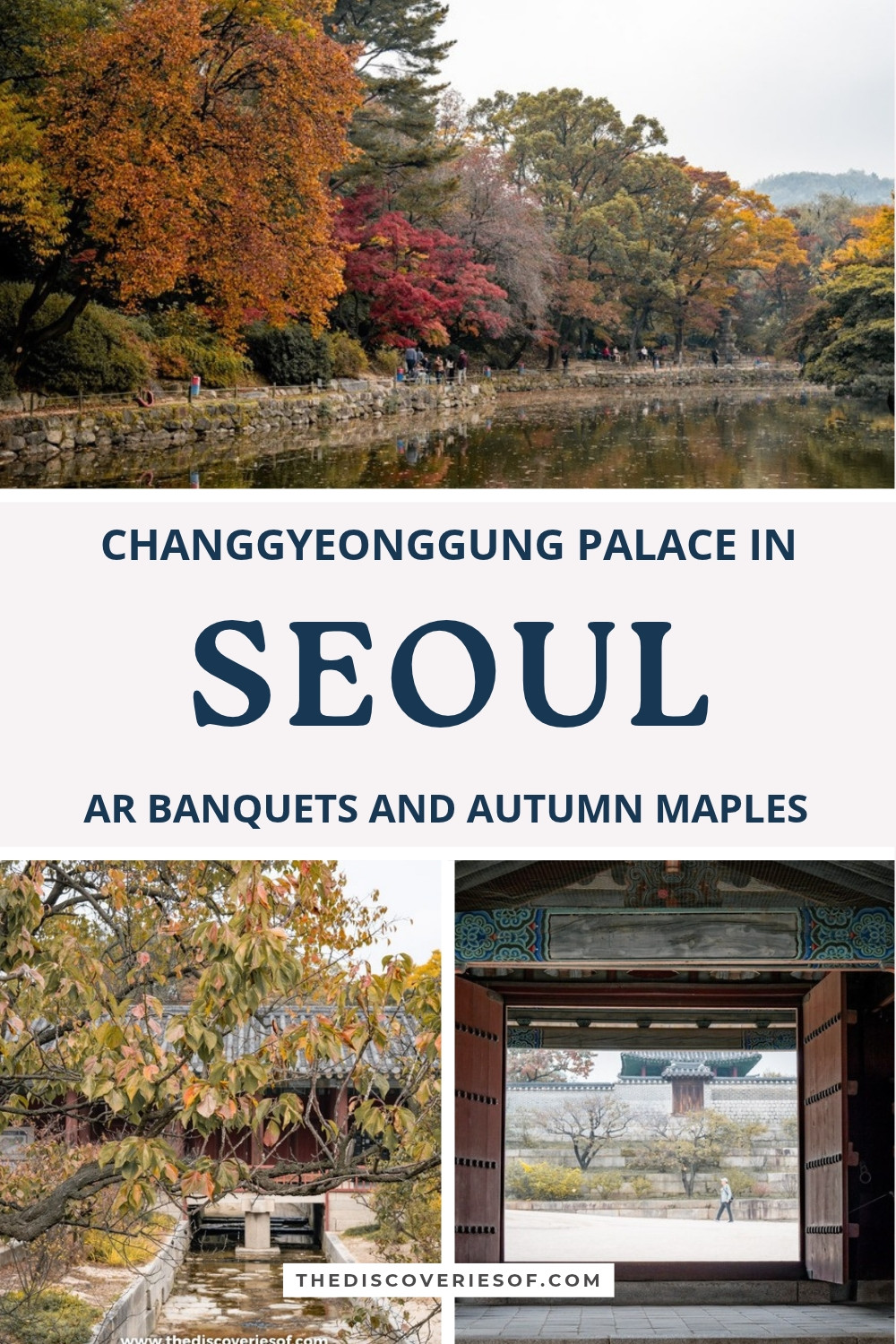
The northern half of the grounds is a garden, with pavilions, a large pond and paths lined with old trees, and it’s every bit as much a highlight as the halls. When I visited, the trees around the water had turned gold, orange and crimson, and their reflections on the still surface were spectacular.

Chundangji is really two ponds. The small upper one is the original. The large lower pond was once a royal paddy, where the king performed a ritual planting of rice to show his care for the country’s farmers, and it was dug out into a pond in 1909 before being reshaped in a traditional Korean style during the restoration. On its bank stands an octagonal seven-storey stone pagoda, brought here in the colonial period, whose inscription dates it to 1470 in Ming China.
Beyond it is Daeonsil, a white-framed glasshouse built in 1909 and the first Western-style greenhouse in Korea. Today it’s filled with Korean native plants.
When to visit Changgyeonggung Palace
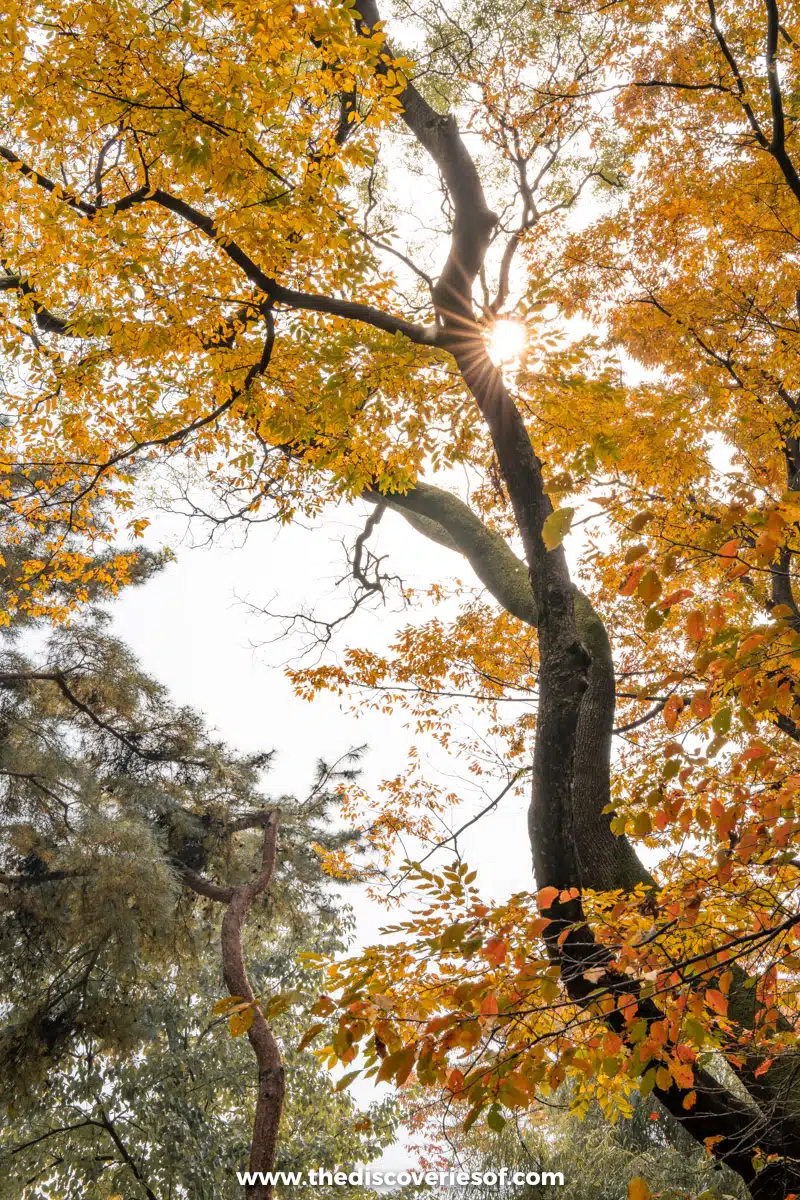
Autumn is the obvious choice. The leaves turn from mid-October, at their best from late October into November, and the gardens glow. Spring is the other big season, when cherry and plum blossom frame the ponds.
Because the gates stay open until 9pm, this is one of the few palaces in the city you can explore into the evening. Mornings are the quietest time, and weekday afternoons are rarely crowded outside the blossom and foliage peaks.
Tips for your visit
- Leave plenty of time. Allow a couple of hours for the halls and the gardens together, so you aren’t rushing the pond at the end.
- Plan around Mondays. Changdeokgung and its Secret Garden are right next door, but they’re a separate palace with their own ticket, and both close on Mondays.
- Wear hanbok and get in free. Entry is free in hanbok, as it is at all the royal palaces in the city.
- Bring a card or a little cash. Tickets are only 1,000 won, and the booth by the main gate usually takes both, but it’s worth carrying some won for the rest of the day (more in my South Korea travel tips).
Getting to Changgyeonggung Palace
- Subway: take line 4 to Hyehwa and leave by exit 4, then walk south along Changgyeonggung-ro for about 10 minutes to Honghwamun.
- On foot from Anguk: it’s around 20 minutes from Anguk station (line 3) if you’re coming from Insadong or Bukchon.
- From Jongmyo: a restored walkway links the north gate of Jongmyo Shrine with the palace’s Yulgok-ro gate. It opens at weekends, on public holidays and on Culture Day, and each site needs its own ticket.
Seeing more of the country? My 10-day South Korea itinerary starts in Seoul with the palaces, and there’s plenty more in my list of things to do in South Korea.
Map
Read next
- 32 things to do in Seoul, from a virtual royal banquet to cocktails in an old teahouse
- How to spend 3 days in Seoul, from royal palaces to a loo with a view
- How to spend 10 days in South Korea, from Seoul’s palaces to live octopus in Busan
- 30 South Korea travel tips to know before you go, from cash to hidden cameras
Love this? Save and share on Pinterest

Discover the top things to do, insider tips and hidden gems in our South Korea Travel Guide.
Read the guides →