A century ago, San Diego threw up a city of Spanish palaces for a two-year fair and then simply kept them. Today they hold 17 museums, a theatre inspired by Shakespeare’s Globe, the world’s largest fully outdoor pipe organ and a famous zoo. Here’s what to see, which days are free and how to make the most of a visit.
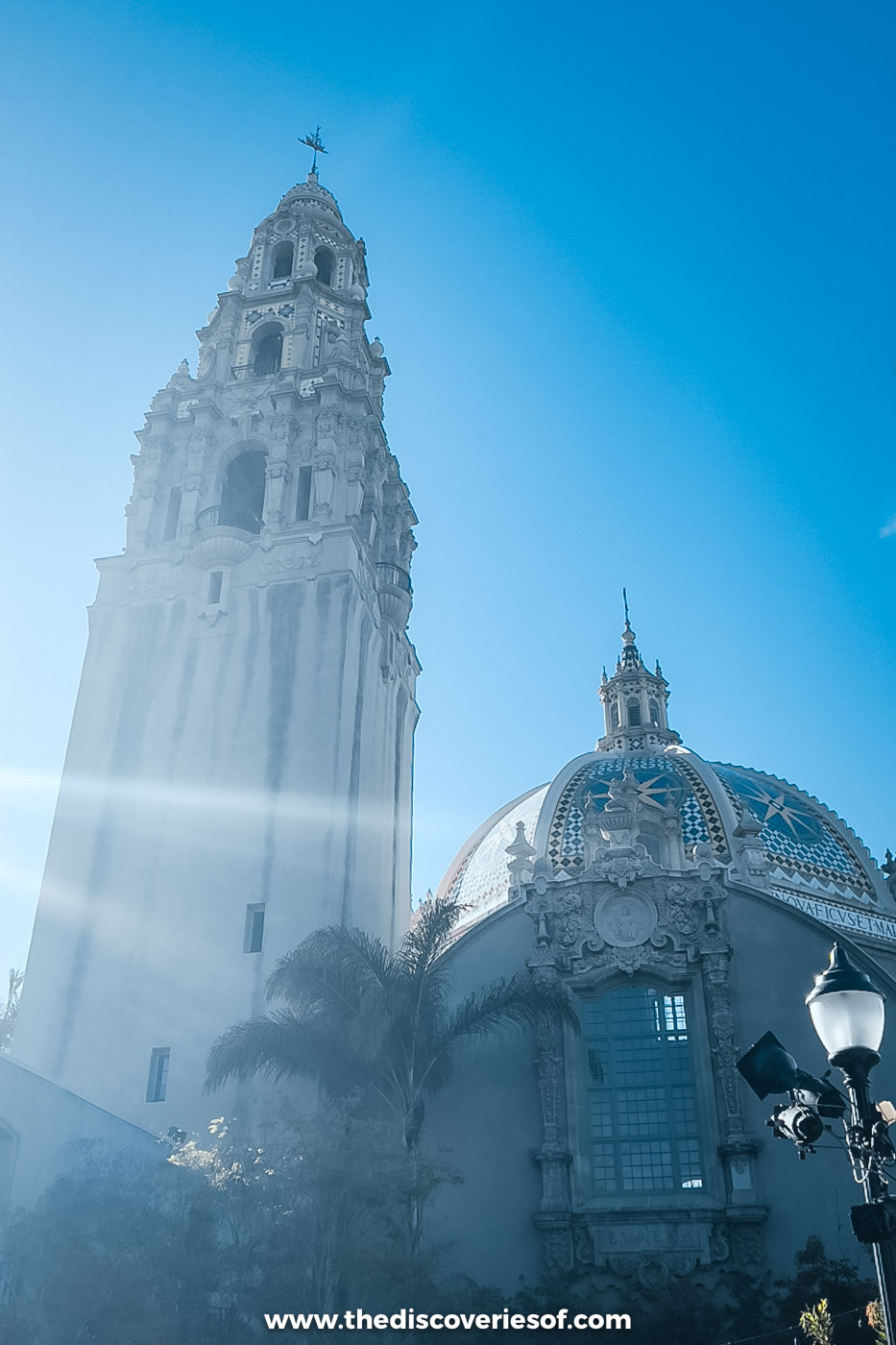
My November afternoon in Balboa Park began at the curved colonnades of the Spreckels Organ Pavilion, just after two o’clock. From there I wandered up to the Plaza de Panama, past the carved front of the San Diego Museum of Art, and on to the California Tower and the Old Globe, all within a few minutes’ walk of each other.
That’s the beauty of the layout. The park covers about 1,200 acres, but its finest buildings sit close together along one long promenade, El Prado, so you can see a great deal in an afternoon. Stay longer and there are enough things to do in Balboa Park to fill a week, from museums and gardens to a play at the Globe and a day at the zoo.
Balboa Park at a glance
- Where: on the mesa just north-east of downtown San Diego, about 2 miles from the Gaslamp Quarter.
- Cost: free to walk around, along with most of the gardens. Museums charge from nothing (the Timken) to about $25, and the zoo is $78 for adults.
- Opening hours: the grounds never close. Most museums open from 10am to 5pm, and each has its own closing day.
- How long to allow: half a day for El Prado and a museum or two; a full day for the zoo on its own.
- Getting around: a free tram loops the museum district every 10 to 15 minutes, from 8am to 8pm daily.
- Parking: most lots charge non-residents until the end of 2026. From 1 January 2027, parking is free again.
How a world’s fair built the park
The city set this land aside as a park in 1868, but it stayed mostly scrub until the horticulturist Kate Sessions, the so-called mother of Balboa Park, agreed in 1892 to plant trees here every year in return for land for her nursery. The park took its present name in 1910, after Vasco Núñez de Balboa, the Spanish explorer who became the first European to see the Pacific from the Americas.
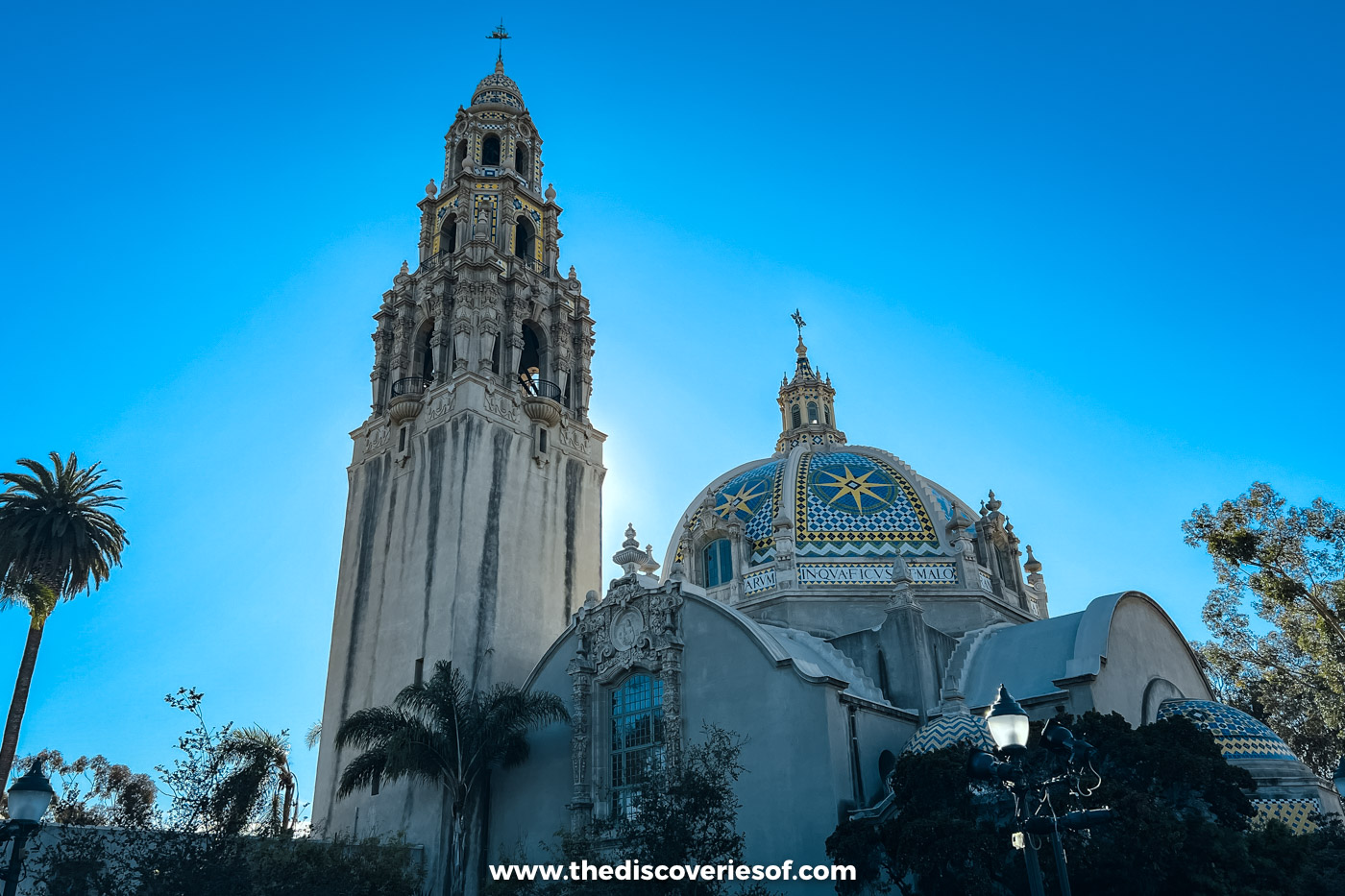
Its look comes from the Panama-California Exposition of 1915 and 1916, held to celebrate the opening of the Panama Canal. The architect Bertram Goodhue dressed the fairground in ornate Spanish Colonial Revival style, which went on to shape buildings across California. The pavilions were only meant to last as long as the fair, but they proved so popular that the city kept the best, and a second fair in 1935 and 1936 added the Old Globe, Spanish Village and the International Cottages. Since 1977, the park’s historic core has been a National Historic Landmark district.
Things to do in Balboa Park
Climb the California Tower above El Prado
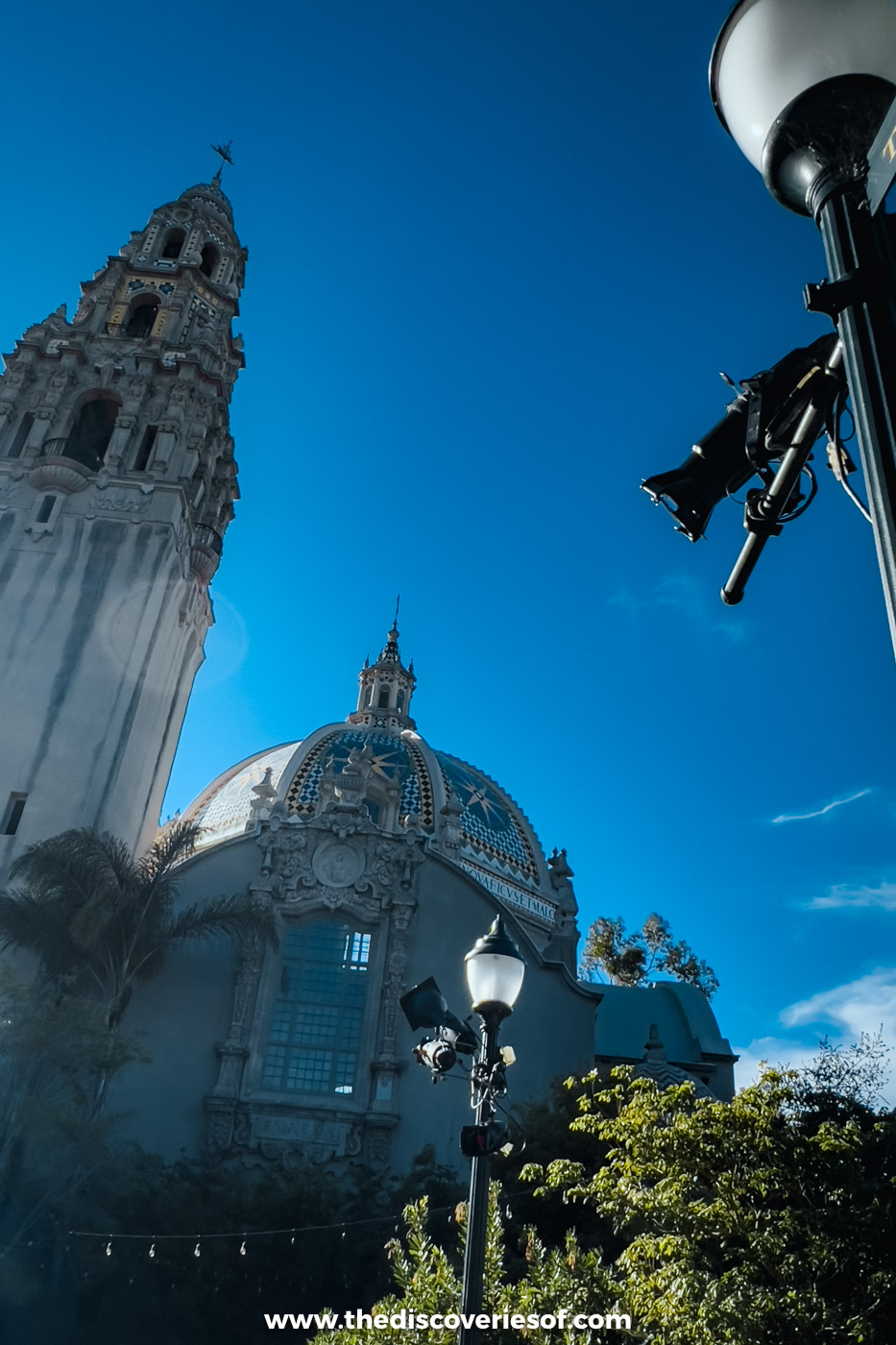
The tower is the park’s signature, rising about 198 feet over the California Building, the exposition’s showpiece from 1915. Its carillon chimes every quarter of an hour. The building below houses the Museum of Us, an anthropology museum that explores what it means to be human.
You can go up the tower itself on a guided tour run by the museum. It’s about 40 minutes in all, with 125 steps up to an eighth-floor deck and 360-degree views over the city. Tours cost $10 on top of museum admission ($21.95 for adults), take up to six people and often sell out, so book ahead. Children must be at least six, and there’s no lift.
Spend a morning museum-hopping
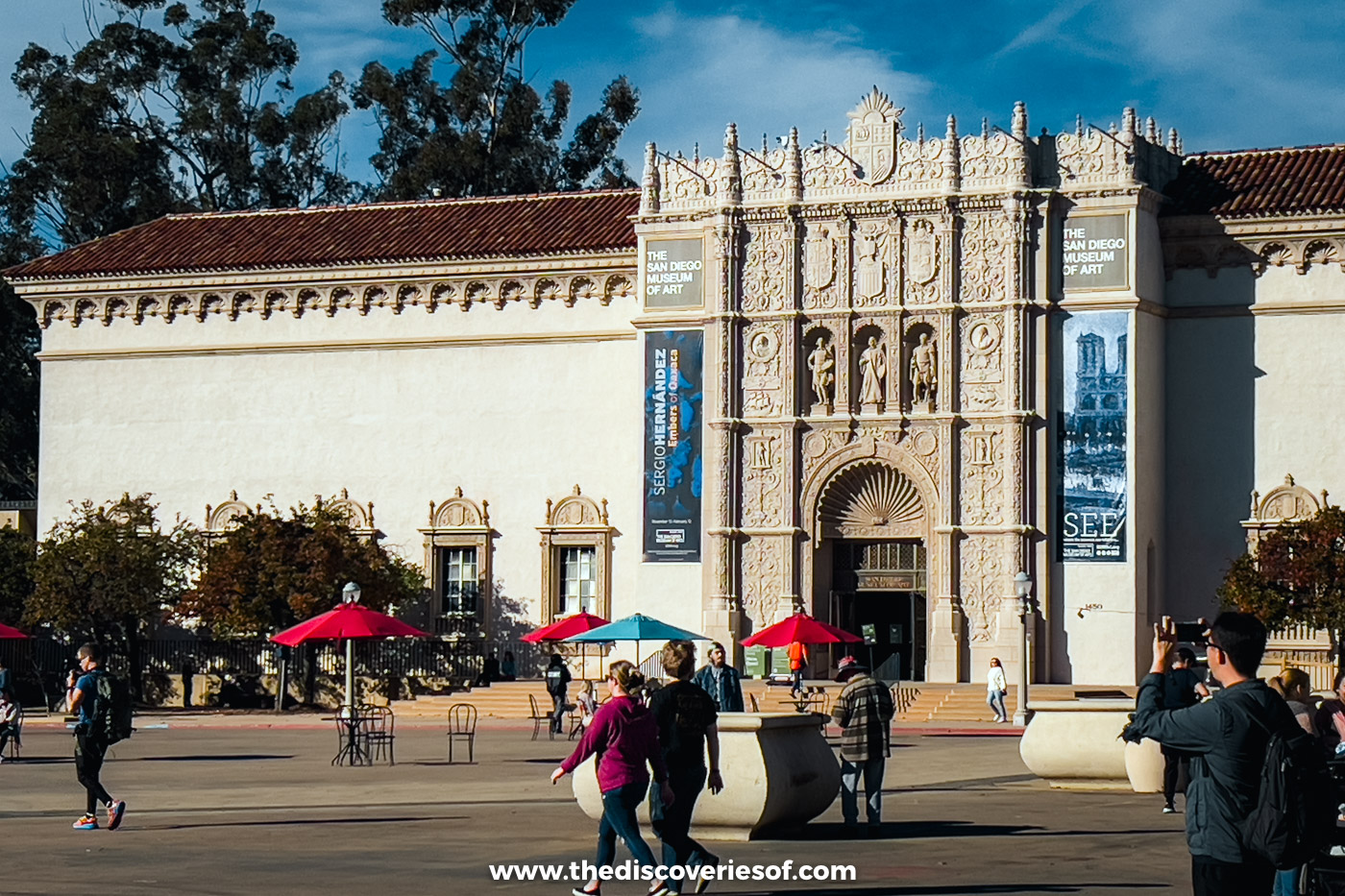
Most of the museums line El Prado or its side plazas. If you only have time for a few, start with these.
- The San Diego Museum of Art sits behind the most elaborate facade on the Plaza de Panama, modelled on the University of Salamanca. Its strengths are Spanish old masters, including El Greco, Goya and Ribera, alongside Asian and Latin American art. Adults pay $25 (under 18s go free), and it closes on Wednesdays. Its Museum of Photographic Arts opens from Thursday to Sunday.
- The Timken Museum of Art, right next door, is free and small enough to see in half an hour. Its European paintings include a Rembrandt. It opens from Tuesday to Sunday.
- The San Diego Air & Space Museum fills the round Ford Building from the 1935 fair with aircraft and spacecraft.
- The San Diego Natural History Museum (known as The Nat), the Fleet Science Center and the Mingei International Museum of folk art, craft and design are the other big hitters. Mingei’s entry level is free to wander.
Tickets
The Explorer Parkwide pass covers all 16 museums for seven consecutive days ($78 for adults, $52 for children aged 3 to 11). The Limited pass covers four museums in one day ($66 and $43). Neither includes the zoo or the Comic-Con Museum.
Catch a free concert at the Spreckels Organ Pavilion
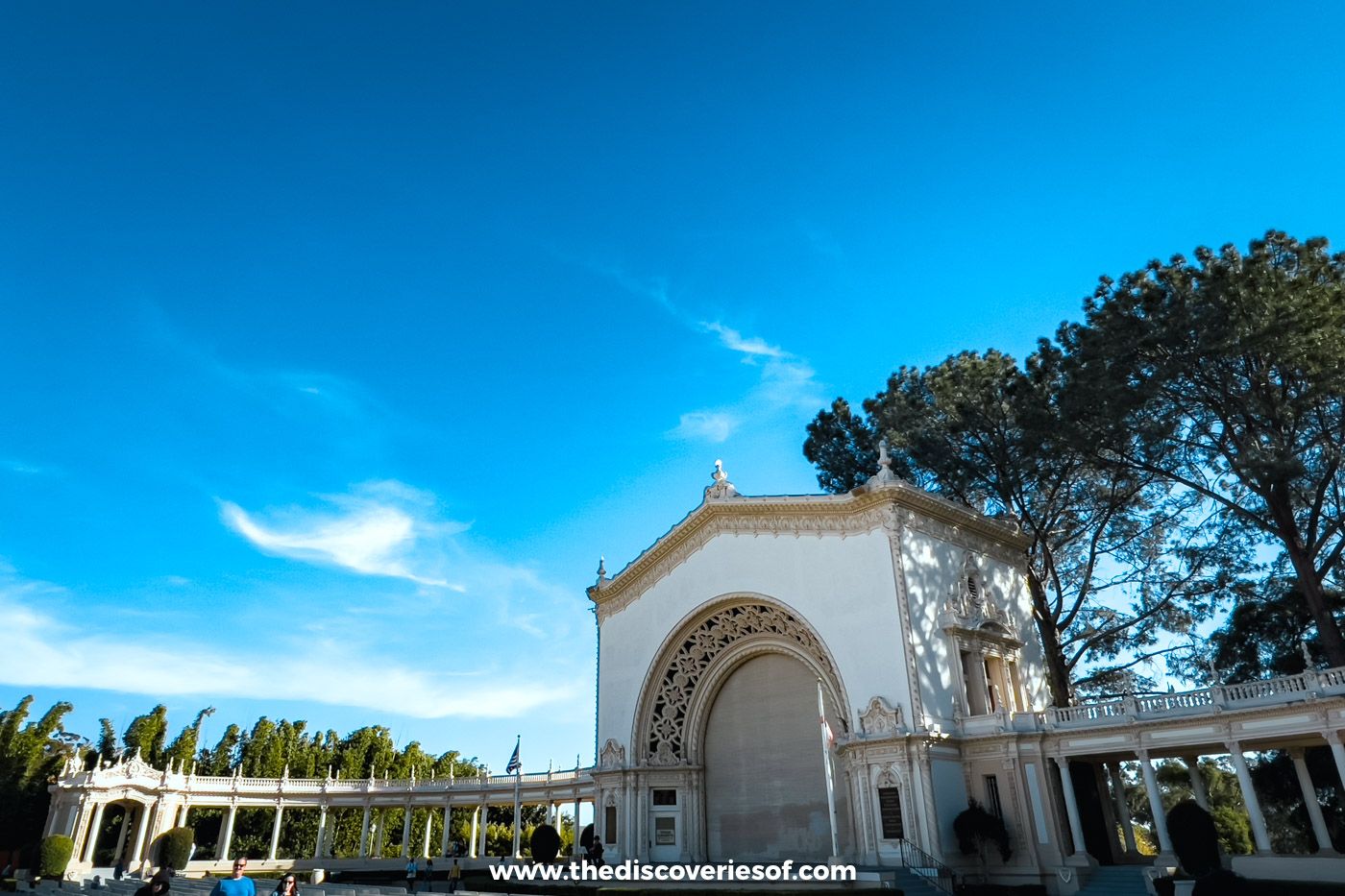
The sugar heirs John and Adolph Spreckels gave this organ and its pavilion to the city on New Year’s Eve 1914, in time for the exposition. It has grown from about 3,400 pipes to more than 5,000, and it is the world’s largest pipe organ in a fully outdoor venue.
The civic organist plays a free hour-long concert every Sunday at 2pm, year-round and rain or shine. In summer, the San Diego International Summer Organ Festival adds evening concerts on Mondays at 7.30pm.
Wander the gardens, starting at the Botanical Building
The Botanical Building, a long, latticed wooden structure from 1915 reflected in the Lily Pond, is one of the park’s most photographed sights. It reopened in December 2024 after a three-year restoration and holds more than 2,100 plants, from orchids to ferns. Entry is free, from 10am to 4pm daily except on city holidays.
The rest of the gardens are free too. Look for the Alcazar Garden, with its Moorish tiled fountains; the Inez Grant Parker Memorial Rose Garden, with about 1,600 roses; the Desert Garden beside it; and the Zoro Garden, a sunken butterfly garden that was a staged nudist colony during the 1935 fair. The Japanese Friendship Garden is the one that charges ($16 for adults, 10am to 6pm daily), and it’s worth it for its koi pond and its tea pavilion.
See a play at the Old Globe
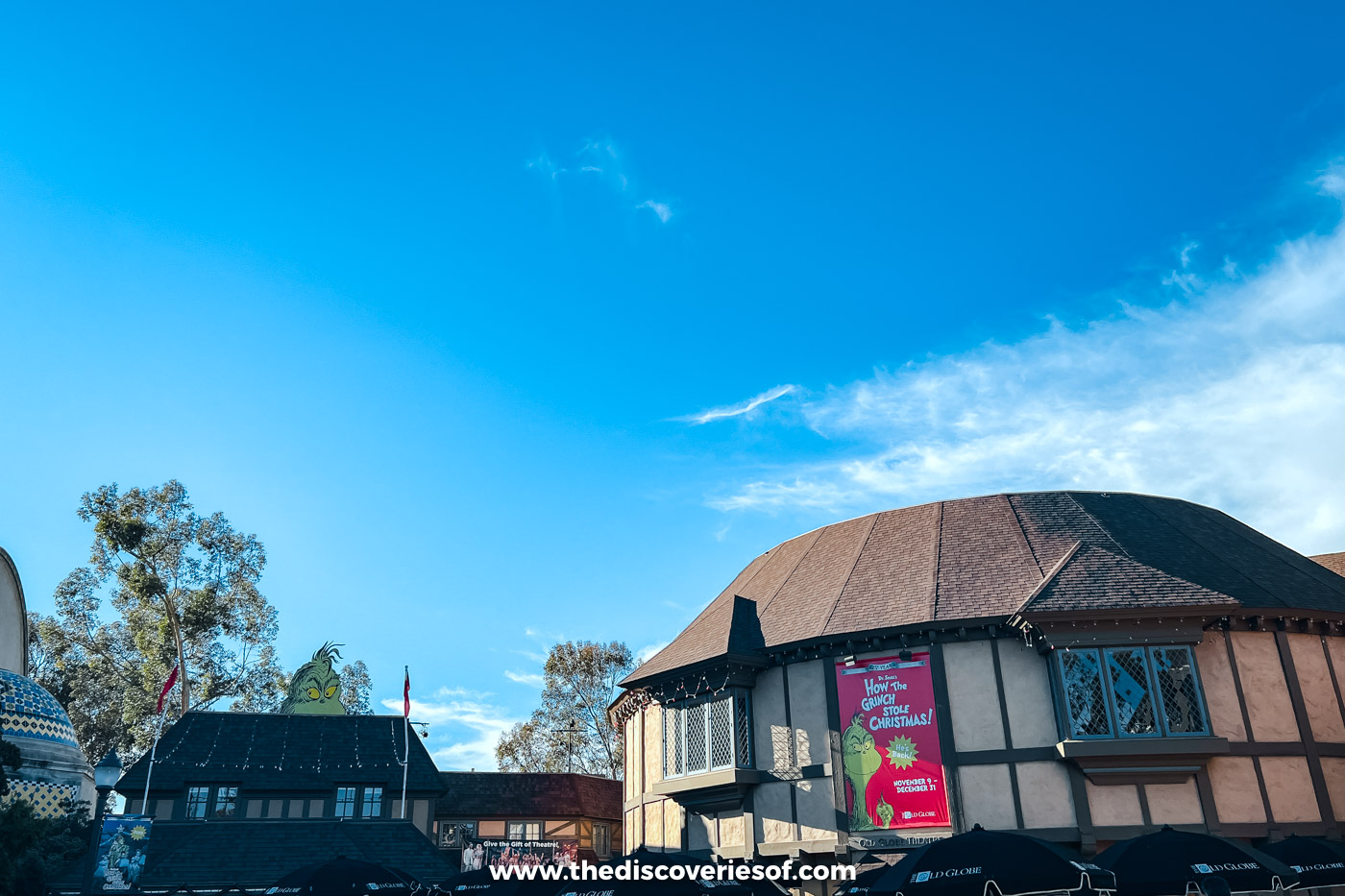
The Old Globe was built for the 1935 fair as a version of Shakespeare’s Globe. It burned down in an arson attack in 1978 and reopened in 1981, and it’s now one of the best regarded theatres in the country, with three stages. In summer, Shakespeare plays under the stars on the outdoor Lowell Davies Festival Theatre, and every holiday season since 1998 has brought Dr Seuss’s How the Grinch Stole Christmas!.
Spend a day at the San Diego Zoo
The zoo was founded in 1916, after the exposition left a handful of exotic animals behind, and it was one of the first to swap cages for open, moated habitats. It now covers 100 acres of the park, with more than 650 species, including giant pandas, back since 2024.
A one-day pass costs $78 for adults and $68 for children aged 3 to 11 (a little less on off-peak “value days” booked online), and it includes the guided bus tour and the Skyfari aerial tram, which glides over the zoo. It opens at 9am every day. Arrive at opening, when the animals are most active, and give it the whole day: it’s hilly and bigger than it looks.
Browse Spanish Village and the International Cottages
Built for the 1935 fair, Spanish Village is a cluster of small studios around a tiled courtyard between the zoo and The Nat, where local artists, potters and jewellers work and sell (daily, 11am to 4pm). Nearby, the House of Pacific Relations International Cottages represent more than 30 cultures and open from 11am to 4pm at weekends, with music and dance on the lawn on selected afternoons.
Plan your visit
Free days for residents
San Diego city and county residents, and active military and their dependants, get into many of the museums free on one Tuesday a month, with photo ID that shows your address. The first Tuesday covers the Fleet Science Center and The Nat; the second the Air & Space Museum, the Veterans Museum and the Comic-Con Museum; the third the Museum of Art, the Japanese Friendship Garden, Mingei and free tours of the Old Globe; and the fourth the Automotive Museum and the Museum of Us. Special exhibitions are excluded and some museums skip certain months, so check before you go. Everyone else gets the best value from the Explorer pass.
Getting there
The park is about ten minutes’ drive from downtown. By bus, MTS route 7 and the Rapid 215 run up Park Boulevard through the east side of the park, while routes 3 and 120 stop near Laurel Street on its west side. From there, walk east across the Cabrillo Bridge, which has framed the approach to the California Tower since 1914.
Parking
Until 31 December 2026, most of the park’s lots charge visitors who aren’t city residents: $10 for up to four hours or $16 a day in the lots closest to El Prado, $10 a day further out, and three free hours at Lower Inspiration Point, where the tram starts. Charges apply from 8am to 6pm. After a public backlash, the city council voted to scrap the charges, so from 1 January 2027 parking is free again. The zoo has its own car park with its own charges.
Getting around
The free green tram runs every 10 to 15 minutes from 8am to 8pm, rain or shine, from Inspiration Point at Park Boulevard and Presidents Way. It stops at the Plaza de Panama, where the visitor centre sits in the House of Hospitality, at the Spreckels Organ Pavilion and at Pan American Plaza. Every tram has a wheelchair ramp.
When to go
San Diego’s mild weather makes the park a year-round visit, though early summer can be grey. Weekdays are quieter than weekends, which bring the International Cottages and, on Sundays, the organ concert, and the first Friday and Saturday of December bring December Nights, the city’s biggest free holiday festival, when the whole park is lit up.
Tips for visiting
- Check closing days before you plan. Several museums close one day a week (the Museum of Art on Wednesdays, the Timken on Mondays), and many shut on Thanksgiving and Christmas.
- Book the California Tower early. Tours take six people at a time and are often the first thing to sell out at weekends.
- Eat in the park. Panama 66, in the Museum of Art’s sculpture garden, is the easy choice for a drink and lunch, and the Japanese Friendship Garden has its own tea pavilion.
- Make it part of a bigger trip. The park is a short drive from the Gaslamp, so it slots into a day with the rest of my guide to San Diego.
Map
Read next
Love this? Save and share on Pinterest

Discover the top things to do, insider tips and hidden gems in our USA Travel Guides.
Read the guides →