

Travel
South America travel guide
Welcome to South America A vast continent, full of possibilities. From the snow-capped peaks of the Andes to the silvery-sand beaches of Bahia in Brazil, it’s a continent brimming with cultures, adventures, not to mention those landscapes. Explore with this South America travel guide.




Julianna BarnabyTravel and culture writer
If you’re a regular reader, you’ll know that one of my formative travel trips was to Rio when I was eighteen. In two short weeks, I fell in love with the beaches, the sights, the food… oh and the caipirinhas and samba.
You could say I’ve been hooked on South America ever since, returning countless times to what I have to admit is my favourite continent.
So now, It’s time to visit South America. Check out this South America travel guide to help you plan your trip.

 Things to do in South America – The Ultimate South America Bucket List
 Got 2 weeks in South America? Six itineraries that actually work
 The best things to do in the Atacama Desert: salt lagoons, geysers and starry skies
When to go
Let’s get this straight. There is no best time to travel to South America. The sheer size and difference in climates and altitude means that the weather is always good somewhere in South America and dreadful somewhere else.
It’s not just about temperature either – a bad rainy season can put a real damper on your trip: they vary from country to country so you will need to check before you go.
Southern Hemisphere winter (June to August) is pretty much a no-go for large parts of Patagonia – by contrast it’s a great time to go to the north of Argentina (which can be unbearably hot in the summer), or to set off on the Inca Trail or around the Galapagos.
If you want to play it safe, spring and autumn – from March to May and September to November are good bets.
Getting there and around
- Skyscanner for Flights
- Compare Rental Car Prices with Holiday Autos
- Busbud for Buses
- Omio for Trains, Buses and Flights
- Accommodation via Booking.com
- G Adventures for Multi-Day Guided Trips
Bus
Once you’re in South America, the easiest way to get around is by bus. The bus system is huge – there’s not a destination that I’ve ever tried to get to that I couldn’t get to by bus.
If you pay a little more for your bus you can nab yourself a super-comfortable reclining sleep and spend the journey having a doze and watching the scenery roll by.
Plane
Some bus journeys are bum-numbingly-long, in which case you should consider flying. Same if you need to cover large distances on a limited timescale.
Flying in South America used to be prohibitively expensive, but a recent crop of low-cost airlines and airfares has made it a much more feasible option. Domestic flights tend to be significantly cheaper than international ones though.
Car
Unless you are planning on doing a big South America road trip and turning it into a big adventure, it’s not really worth the hassle of driving. Buses go everywhere and see previous references to dozing.
Where to stay
Atacama Desert
Venture out into the reaches of the world’s driest desert – the Atacama is home to some of the most mind-blowing landscapes you could ever hope to lay eyes on. Stay at Nayara Alto Atacama.
Rio de Janeiro
Bursting with its own brand of infectious energy, I dare you not to fall head over heels for Rio de Janeiro. Spend long days on the beaches, caipirinha in hand, then head to Lapa for some late-night fun. Book a stay at Le Relais de Marambaia.
Torres del Paine National Park
Pretty much deserving of every superlative you can throw at it, Torres del Paine really is that spectacular. Hike the 4-day W Trek, or the longer O Trek if you have time, then bed down at Explora en Torres del Paine.
Santiago
It took four trips to South America before I finally made it to Santiago. Gritty but charming, with the ever-present Andes towering in the background, it’s full of cool museums, street art and just a short hop from wine regions such as the Maipo and Casablanca Valleys. Stay at The Singular Santiago.
Atacama Desert, Chile

Machu Picchu Pueblo, Peru

Mashpi, Ecuador

Tours
Know before you go
Top things to do
Picking the best places to visit in South America is tough – no doubt about it. But really, there are some places that you just shouldn’t miss. Here are the top places to visit in South America that made the cut.
Machu Picchu and the Sacred Valley, Peru
Sure it’s arguably the biggest sight in South America, and the chances of you having it to yourself are a big fat zero, but seeing the sunrise over Machu Picchu is an experience to remember.
Read Next: Planning Your Trip to Machu Picchu
Buenos Aires: The Enchanting Capital, Argentina
A South American city with a European vibe, whenever I think that I’ve seen most of what Buenos Aires has to offer, there’s always another surprise around the corner to reel me in for more.
Read Next: The Best Things to do in Buenos Aires
Rio de Janeiro: The Most Beautiful City? Brazil
Oh Rio, where do I start? With the eye-popping beaches? With the larger than life sights? The carnival? The parties? The samba. Wherever you start, it always ends with you wanting to extend your stay.
Read Next: Unmissable Things to do in Rio de Janeiro
Iguazu Falls, Thundering Waterfalls, Brazil, Argentina & Paraguay
Get up, close and personal with the largest system of waterfalls in the world. The Brazilian side offers wide panoramas, while the Argentinean offers a chance to get close to the falls. Visit both.
The Galapagos Islands, Ecuador
Walk in the footsteps of Charles Darwin and explore these remote islands – along with the abundance of wildlife and striking natural sceneries for which they are famed. Hands up who wants to go to the Galapagos.
La Paz: The City in the Sky, Bolivia
It might not be Bolivia’s capital but La Paz captures visitors’ attention with its heady mix of colonial buildings, ancient traditions and high-speed modernity – all at a breathtaking 3,500m above sea level.
Tierra Del Fuego, Chile & Argentina
Tierra del Fuego National Park – filled with forests, lakes and, of course, mountains galore is nature’s way of showing off her charms. The ultimate outdoor adventure playground. Prepare to be wowed – big time.
Bolivia Salt Flats, Bolivia
Visit in the rainy season, when a thin layer of water sits atop the flats and turns them into a giant mirror, or in the dry season when you’re dazzled by the unending gleaming white.
Read Next: The Best Time to Visit the Bolivia Salt Flats
Perito Moreno Glacier, Argentina
So, you think you’ve seen it all.. And then you see Perito Moreno in El Calafate – a vast expanse of torturous peaks, gleaming white and blue – thundering as chunks break off and fall into the water. Worth the trip to Patagonia alone.
Mindo Cloud Forest, Ecuador
Expect 100 square miles of cloud forest with endless hiking trails meandering through the clouds. What’s more, you get to explore one of the highest concentrations of biodiversity in the world.
Cusco: Inca Meets Colonial, Peru
Cusco boasts an unrivalled combination of Incan and Colonial-era buildings and architecture. Spend time visiting Inca ruins such as Sachsayhuaman and, if you can time your visit to coincide with the ancient Inti Rayman festival, do.
Read Next: Cusco: Travelling to Peru’s Ancient City
Lake Titicaca: Peru & Bolivia
Lake Titicaca is the highest navigable lake in the world, the largest in South America and sits at an altitude of over 3,800 metres. What does that mean for you? A lot of opportunities for exploration and adventure.
Amazon Jungle
The largest rainforest on the planet. Sounds impressive right? Wait until you see it.
One of the most biodiverse regions on Earth and home to 10% of all known species, the Amazon is the place to go for wildlife-spotting and jungle adventures. Just don’t forget your mozzie spray. They’re pretty brutal.
South America: Country by Country
Ask what the best countries to visit in South America are to 100 different people and I guarantee you will get 100 different answers. The real answer is there’s pretty much something to appeal to everyone, no matter what kind of traveller or adventurer you are. That’s why I love it so much.
Argentina
Vast. If you only have one word to describe Argentina, that would be it. From the dramatic vistas of the Tierra del Fuego to arid beauty of the altiplano region, with almost everything else in between, Argentina is an assault on the senses.
Ride with the gauchos, feast on some of the best steak you’ll ever taste from an asado and hike in the Fitzroy range. You’re going to have a blast.
Bolivia
Landlocked Bolivia is a land of superlatives – the largest salt flat in the world (the Salar de Uyuni) and the highest capital in the world (La Paz), among them. Blistering hot days, freezing cold nights in the Altiplano.
Red lakes, green lakes, white lakes, The Amazon. You haven’t seen it until you’ve seen it in Bolivia.
Everything here is an adventure. Plan yours.
Brazil
The biggest country in South America, Brazil is a destination that’s large in size and impact. Spend a night partying in the streets in Rio and you’ll see what I mean.
But it is much more than just crazy caipirinha-fuelled parties. One of the most diverse countries in the world, you can venture into the great unknown with jungle treks in the Amazon, get soaked trying to get up close and personal with Iguazu falls or just settle down onto one of Brazil’s absolutely incredible beaches.
Chile
Chile’s the long and skinny country perched on the southwest of the continent. But it’s got a lot more to offer you than its rather bizarre appearance on the map.
Driving around the Atacama in a campervan has to go down as one of the most ridiculously awesome experiences of my life. Where else can you stargaze at some of the clearest night skies in the world every night, then visit geysers, volcanoes and salt lakes by day?
Not to be outdone, the rest of the country won’t disappoint. Hike in the Torres del Paine National Park, indulge in the country’s first-rate wines, paraglide over the beach or party hard in underrated Santiago. It’s up to you.
Colombia
For a long time Colombia had a bit of a reputation as mad, bad and dangerous to know thanks to the civil war and drug trade that plagued its history. These days though, it’s quite rightly emerged as one of the best places to visit in Latin America – not to mention one of the coolest too.
What’s so special? An enchanting mix of quaint colonial towns like Villa de Leyva, all out Caribbean charm in Cartagena and the laid-back cosmopolitan cool of Bogota go some way towards Colombia’s charm.
But that’s not all. Digital nomads have started flocking to Medellin, while backpackers revel in the pristine beaches along the Caribbean coast and on Colombia’s several picture-perfect islands.
Oh, and there’s cloud forest, salsa, an ancient lost city trek in the middle of the jungle and the Amazon. Not much then.
Ecuador
Offering travellers the chance to travel from beach to jungle in one day, Ecuador is a small country (well, by South American terms anyway) that packs a big punch.
Start your Ecuadorian adventure in Quito, the country’s capital. Tempting as it is to hare off into the wilds, spend some time in the city and it will reward you with a unique culture, beautiful architecture and a laid-back vibe that you can’t help but love.
Hikers will want to tackle the Quilotoa loop, one of South America’s great hikes around the lake of a now-extinct volcano, whilst nature lovers shouldn’t skip the awesome Oriente – Ecuador’s section of the Amazon.
The Guianas
You’ll meet a lot of people who have travelled to South America. People who’ve ventured as far as the Guianas? Not so much.
The Guianas are made up of English-speaking Guyana, Dutch-speaking Suriname and (I’ll leave you to guess the language of the last country) French Guiana.
Diverse and offbeat, all three have a relaxed atmosphere and a tropical climate. The beaches aren’t as incredible as you might think, but the rainforest really is – and is what most people venture here to explore.
Paraguay
Slowly gaining a reputation as South America’s not-so-hidden secret, Paraguay is one of the continent’s lesser-known wildlife hotspots.
Split into two by Rio Paraguay, there’s not much to see in the capital, Asuncion. Instead, head out into the dry wilderness of the Chaco or the pristine rainforests in the country’s east. While other travellers skip around Paraguay, you’re free to explore its remote beauty in peace and quiet.
Peru
People. Can we talk straight here? Peru is more than just Cusco and Machu Picchu.
On my first trip to Peru, I made the mistake of making a beeline for the country’s two biggest draws, blithely ignoring the country’s many, many other draws along the way. Don’t make the same mistake.
Lima might not make many lists of the best cities in South America, but that’s a shame. Filled with cool street art, absolutely awesome cevicherias and a spectacular coastal walk, you should spend at least a couple of days soaking up its charms.
The Amazon makes up almost two-thirds of Peru, so it should come as no surprise that Amazonian adventures are another big draw. Peru’s one of the easiest countries in South America to venture into the Amazon – but that doesn’t make it any less of an experience.
Of course, you have to swing by Machu Picchu – it’s one of the new wonders of the world after all and hands down one of the top places to visit in South America.
Sure the Inca Trail gets a lot of attention, but with the ever-rising cost and worries about sustainability, consider taking one of the alternative hikes – Salkantay is my favourite but Lares takes in a lot of the local culture.
Uruguay
Uruguay is the beautiful girl at the party you’re a little scared of speaking to but find out she’s a real darling when you do.
Glitzy Punta del Este is where South America comes to party during the summer months, while smaller Punta del Diablo is the place where hippy meets hip.
Cutesy Colonia de Sacramento is an easy day trip from Buenos Aires, but you should spend at least a night to get the most out of its somewhat sleepy appeal.
Move on to Montevideo – where fin-de-siecle architecture, chic eateries and liberal attitudes reign supreme.
Away from the towns, remote surfer beaches and gorgeous wine country (yes, they make wine, they just keep it for themselves) lure you into the same happy-go-lucky, cheerful attitude of the locals. And that is no bad thing.
Venezuela
In the northeast of South America, Venezuela is a stunner – one that most travellers don’t see thanks to high crime rates and security concerns. Let’s just say it’s sitting pretty low on the Global Peace Index right now.
It’s a shame: the country boasts a coastline with beaches that could have been plucked straight out of paradise, not to mention natural wonders like Angel Falls.
It’s probably worth noting that the FCO advises against all but essential travel to most of the country, and no travel at all to the section bordering Colombia. That’s warning enough for me – but the decision is yours.
Suggested itineraries
Brazilian Adventures
10 Days
Rio de Janeiro – Paratay – Ilha Grande – Florianópolis – Foz do Iguaçu
Venture from lively Rio to sleepy Paratay and even sleepier Ilha Grande before spending some serious beach time at Florianopolis and rounding it off at Iguazu Falls.
Peru’s Highlights
Two Weeks
Lima – Cusco – Machu Picchu – Lake Titicaca – Arequipa – Nazca – Ballestas Islands – Lima
Stuff your eyes with cities, UNESCO World Heritage Sites and the unexplained on this two-week adventure around Peru.
The Gringo Trail
One Month
Quito – Cotopaxi – Quilotoa – Baños – Lima – Paracas – Huacachina – Cusco – Machu Picchu – La Paz – Amazon – Salar de Uyuni – La Paz
Yes, it’s a pretty well-established route, but The Gringo Trail is the tried and tested way to see the best of Ecuador, Peru and Bolivia in one month.
Hidden South America
Ballestas Islands, Peru
Nicknamed the Poor Man’s Galapagos, The Ballestas Islands are a chance to see some of the region’s bird and sealife on an easy day trip from Paracas.
Cafayate, Argentina
Argentina’s more southerly wine regions may hog the limelight, but Cafayate is an up-and-coming area whose unique terrains make for some very unique (in a good way) wines.
The Pantanal, Brazil, Peru & Paraguay
The world’s tropical wetland region should get more of a shout out than it does – sprawling across sections of Brazil, Peru and Paraguay, it’s perfect for a waterborne adventure.
Ruta 40
The ultimate road trip down western Argentina on one of the longest highways in the world.
Costs and budgeting
Costs vary significantly from country to country. On my first backpacking trip around South America I found myself living like a king in countries such as Bolivia and Ecuador, and like a pauper in Brazil and Argentina.
Budget
If you’re on a tight budget i.e. less than £30 per day, your money will go a lot further in Bolivia, Ecuador, Paraguay, Colombia and Venezuela, which are the cheapest countries in South America. Though it’s worth repeating that travel to Venezuela is not recommended at the moment.
Hostels are abundant across all of South America, so you’re never going to be stuck for a low-cost place to bed down.
Mid-Range
Those of you with a bigger budget can travel relatively easily across the continent. Prices in Brazil, Chile, Argentina and Peru can sometimes be on a par with those at home. A budget of £30 to £80 means private rooms, eat out in restaurants, take excursions and get around with some planning.
High-End
At the higher end of the market, a budget of more than £80 per day means that you can afford to splash out more on accommodation, internal flights and can also take some of the pricier multi-day organised excursions such as hiking the Inca trail and a sailing trip to the Galapagos Islands.
Safety, health and tipping
Safety
The first time I set off for South America my parents were basically convinced that I was going to my certain death.
People will talk about the safest countries in South America and ask about the safest places to travel in South America – my answer would be most places. Of course there are some caveats and you should always use your common sense.
Ask around, check for each country and don’t flash expensive belongings.
Take copies of all of your important documents and save them on a cloud server before you go in case they’re lost or stolen.
If you are the victim of a crime – make sure you report it to the police as you will need the police report to file any insurance claim.
There are more crimes in cities – Buenos Aires, Rio, Cusco, Lima and Salvador particularly – but that’s not to say they are inherently unsafe.
Health
Exercise caution when it comes to food hygiene and what you eat and drink. Ceviche from a roadside stall in Paracas = not recommended (don’t ask me how I know, I just know alright).
Protect yourself from the sun and take it slow when it comes to altitude.
Malaria is widespread across some regions of South America – if you’re travelling to a malarial area, wear clothes impregnated with Permethrin (insect repellent) and wear insect repellent with DEET (a minimum of 30% DEET is recommended).
Practical tips and info
Tips for travelling
- Pare back your itinerary. Sure, there’s so much to see in South America, but with long distances, it can be easy to pack your itinerary with too much with the result being a rushed and frazzled trip.
- Take it slow when it comes to altitude. Ascend gradually to avoid getting caught by an unpleasant (or even dangerous) bout of altitude sickness.
- Bring cash. Lots of places outside of cities don’t take cards – particularly in remote regions.
- Consider a backpack if you’re moving around a lot. I don’t care if it’s not your “style”, you’ll be grateful when you’re trying to get around.
- Watch out for scams. South America generally is safe to travel in (with some exceptions), but petty crime exists – it’s worth reading up on current scams to be aware of.
Packing
Packing for a South America trip can be difficult. On the one hand you want to go hiking in the mountains, on the other, sunning yourself on the beach and partying in the streets don’t sound like bad options either.
Ultimately, what you pack for South America will depend on the type of trip you are planning. Here are some general items you should make sure that you have…
- Steripen – Sterilizes water, killing harmful bacteria to ensure that it is safe to drink. Diarrhoea is not fun. Not fun at all.
- Hiking boots – You’d have to be insane to come all this way and not go on at least one of South America’s incredible hikes. Bring your boots – you’ll need them.
- Camera / Drone – You’re going to want pictures. It’s not the same as being back when you come home but checking out your kick-ass pictures will help you feel less sad. I use the Sony A7RV but the Sony A6500 is a great mirrorless option. For drones, I recommend the DJI Mini 3 Pro.
- A Good Backpack – Even if you don’t consider yourself as a backpacker (I’ll be the first to say my true budget backpacking days are behind me), they’re the most portable and easiest option for moving between destinations and withstanding the rather rough handling of the joy that is South American transportation.
- Packing Cubes – Particularly handy if you are travelling to lots of different destinations with different climates as you can separate items into different cubes. I never travel without them anymore as I think they make life so much easier.
- Headlamp – Because you get to light your own path and wear a torch on your head at the same time: a combination that is commonly referred to as living the dream.
- Comfortable walking sandals – You don’t want to be stomping around in your hiking boots all the time. A pair of comfortable walking sandals will help you put your best foot forward (sorry, sorry, couldn’t resist).
- Collapsible Water Bottle – Combine this with the Steripen for a much more sustainable way to stay hydrated during your travels.
- Universal Travel Adapter – Honestly, you’ll come across plug configurations in South America you had no idea even existed (hello Brazil, what’s that weird three pin one about) and getting adapters for each one is, quite frankly, both a nightmare and a colossal waste of time. Get a universal travel adapter and save yourself a world of headache.
Travel insurance
The dreaded I word. Get it and hope that you don’t need it. I use AXA Travel Insurance.
Suggested guidebooks
- Lonely Planet South America
- The Rough Guide to South America on a Budget
- The South America Wine Guide
Interesting facts
- The Atacama is the driest desert in the world, which results in some other-worldly landscapes. Nasa road-tests the Rovers in the Valle de La Luna as it’s the closest habitat to Mars here on earth.
- Despite being made up of only 12 countries, South America is one of the most linguistically diverse places on earth.
- The Andes are the longest continental mountain range, running 8,900 kilometres through seven countries.
- Aconcagua, the highest peak in the Andes, is the highest point in the Western Hemisphere.
- South America has over 200 volcanoes
Time zone
Varies from country to country: here they are at a glance. You can see that Brazil makes it difficult by spanning an impressive four time zones, but hey it is the biggest country in South America after all.
| Time Zone | Countries |
| UTC-6 | Easter Island (Chile) and the Galapagos (Ecuador) |
| UTC -5 | (Part of) Brazil, Colombia, Ecuador and Peru |
| UTC -4.5 | Venezuela |
| UTC -4 | Bolivia, (part of) Brazil, Chile, and Paraguay |
| UTC-3 | Argentina, (part of) Brazil and Uruguay |
| UTC -2 | Fernando de Noronha and other Brazilian islands |
Electricity and adapters
220V, 50Hz is the standard. One that has almost endless exceptions though.
Bring an external battery pack to power your devices or get by on a wing and a prayer. I’ve never had a long trip in South America that hasn’t screwed up my phone battery yet. Small price to pay though.
I talked about the importance of a universal travel adapter above so I won’t bore you with all that again. Just get one.
Map
Insider tips, straight to your inbox
All South America guides
 Got 2 weeks in South America? Six itineraries that actually work
 Brazilian kissing culture: one kiss, two or three, and when to just shake hands
 El Chaltén: hikes to Fitz Roy and Cerro Torre and how to plan your trip
 Perito Moreno Glacier: how to visit, from the boardwalks to walking on the ice
 The Singular Santiago review: a five-star treat in Lastarria
 How to plan a solo trip to Chile: route, stays, tours and safety
 Hotel Cumbres Lastarria review: a well-placed four-star in Santiago
 Ckamur and the Valle de la Muerte at sunset
 Atacama campervan road trip: the altiplanic lagoons
 Laguna Cejar: floating in the Atacama’s salt lagoon
 Santiago street art tour: Bellavista and Barrio Yungay
 Boragó review: 14 courses at Chile’s top-ranked restaurant
 The best restaurants in Santiago, Chile: where I ate on my trip
 San Pedro de Atacama to Uyuni: my honest guide to the four-day tour
 Piedras Rojas and the Salar de Talar: hiking the Atacama’s red rocks
 When’s the best time to visit Chile? A region-by-region guide
 The best things to do in Valparaíso, Chile: stair murals, Neruda and the hills
 Visiting the Casablanca Valley, Chile: wineries, tours and tips
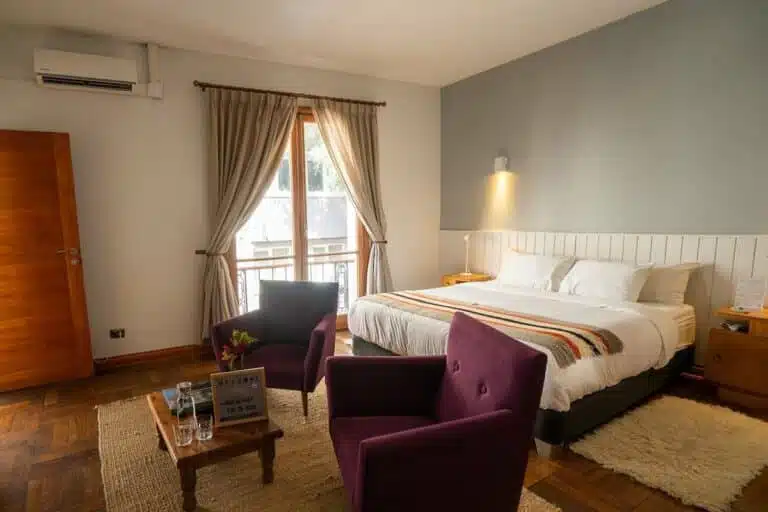 Santiago’s cutest hotel hideaway: a review of Casa Noble Boutique Hotel
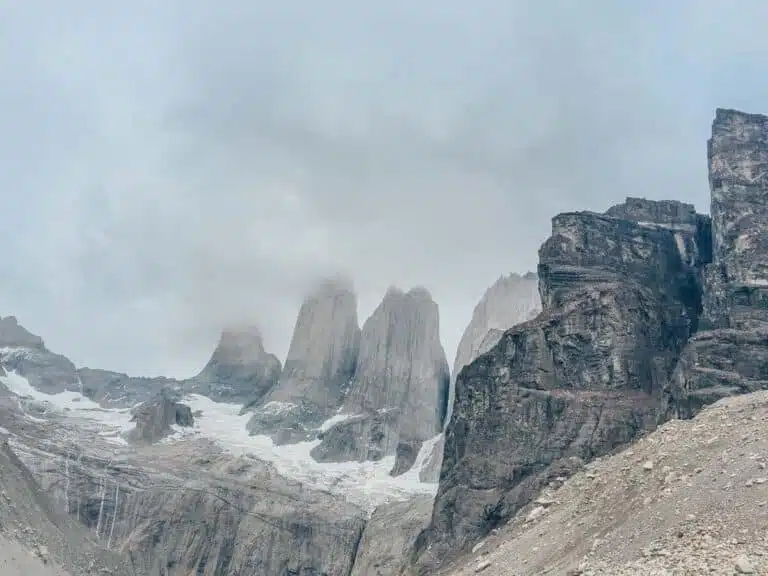 The ultimate guide to camping in Torres del Paine
 17 best hikes in Chile, from the W Trek to the Atacama’s red rocks
 Hotel Desertica review: boutique luxury in San Pedro de Atacama
 The best Atacama Desert tours: 20 stunning adventures await
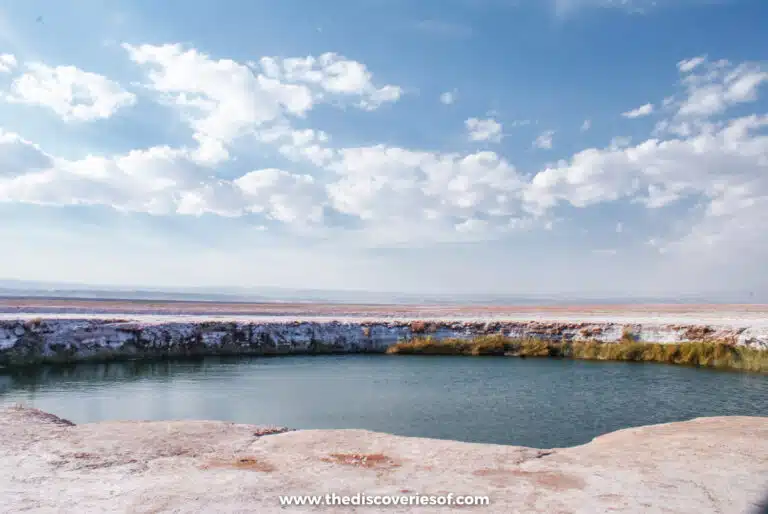 Visiting the Ojos del Salar: the Atacama’s eyes of the salt flat
 Nayara Alto Atacama review: a desert escape like no other
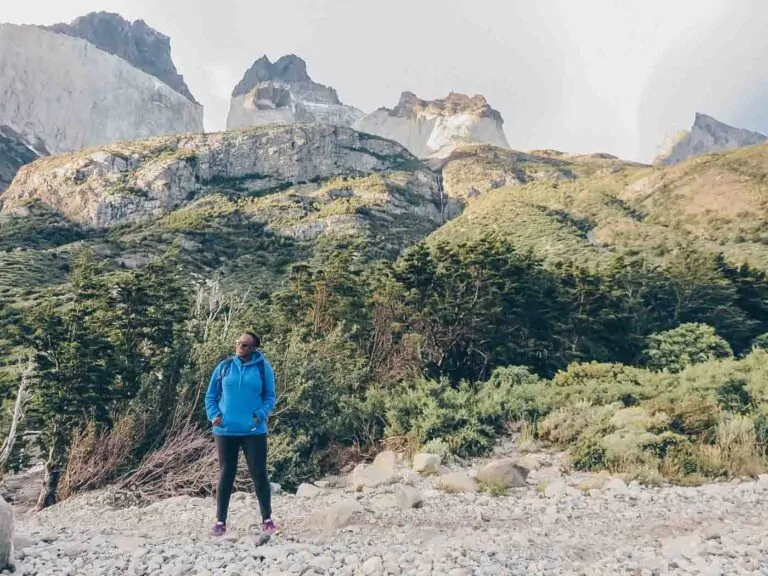 The ultimate Torres del Paine W Trek packing list
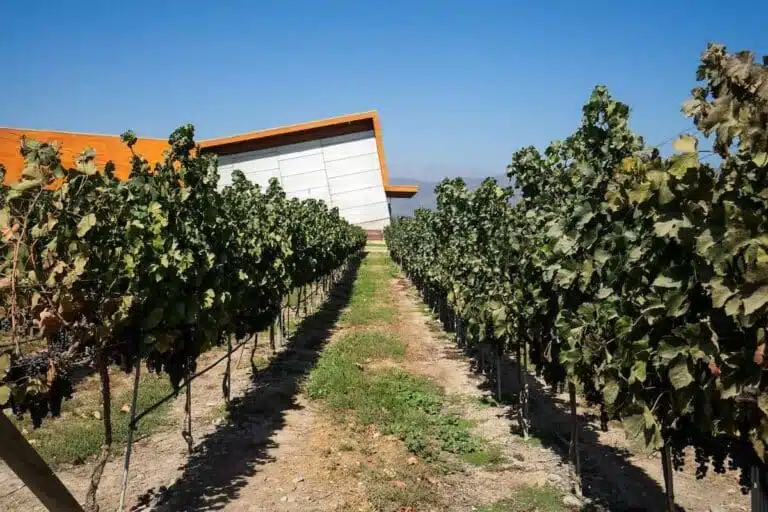 How to go wine tasting in Maipo Valley, Chile
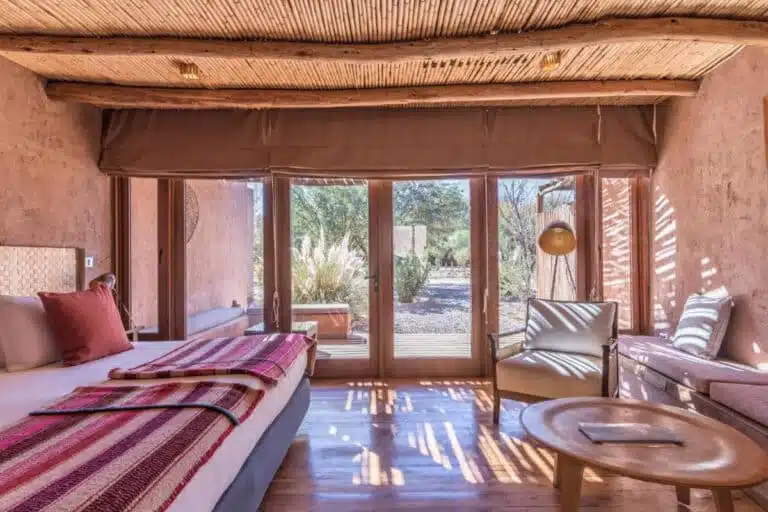 The best hotels in the Atacama Desert: where I stayed and where to book in San Pedro de Atacama
 Lagunas Miscanti and Miñiques: visiting the Atacama’s striking altiplanic lagoons
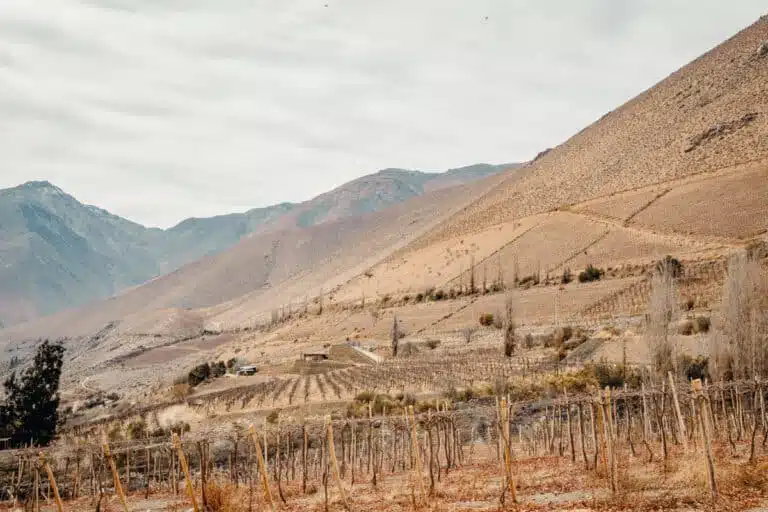 Elqui Valley travel guide: stargazing, pisco and villages in Chile’s mystical valley
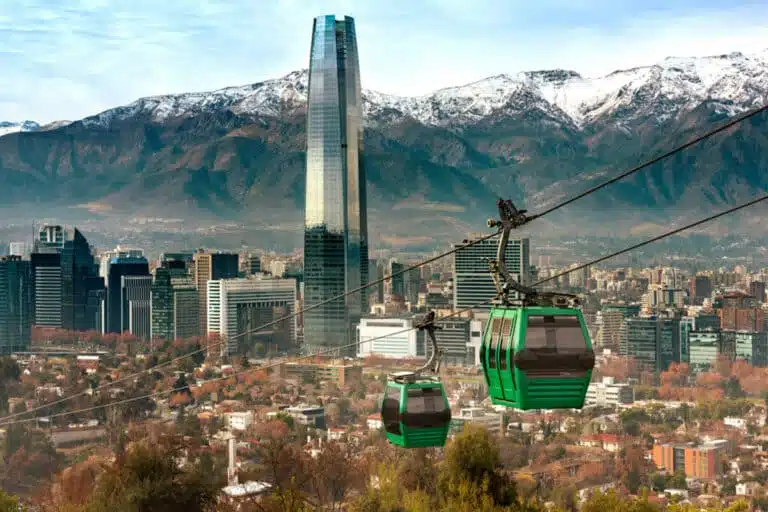 Where to stay in Santiago, Chile: the best areas and hotels
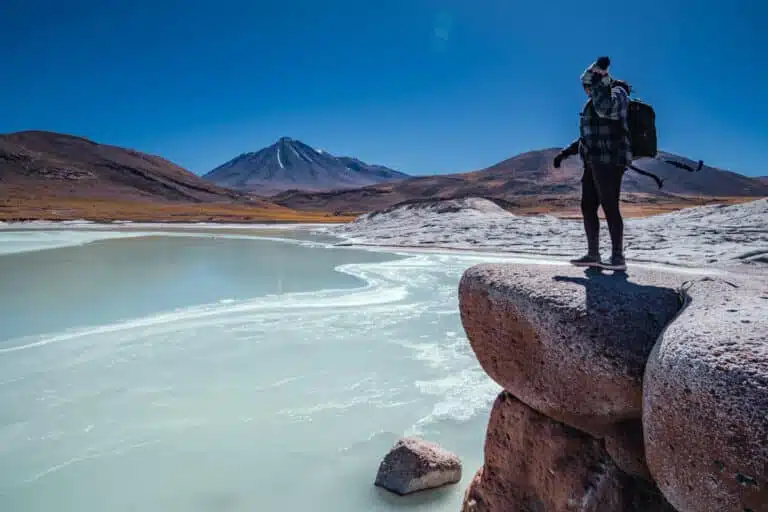 3 days in the Atacama Desert: my perfect Atacama itinerary
Follow me on Instagram for travel inspiration, tips and guides.