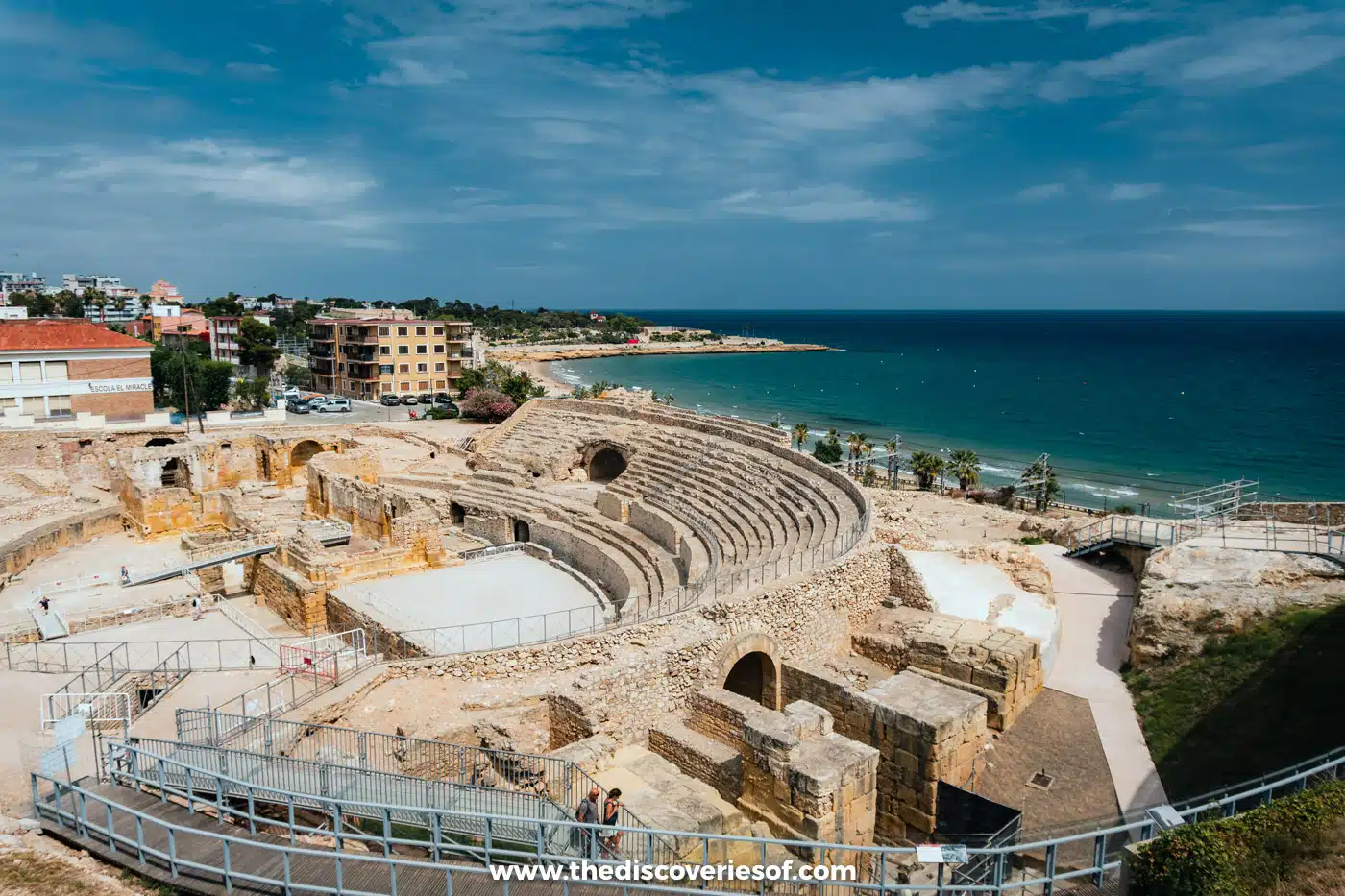

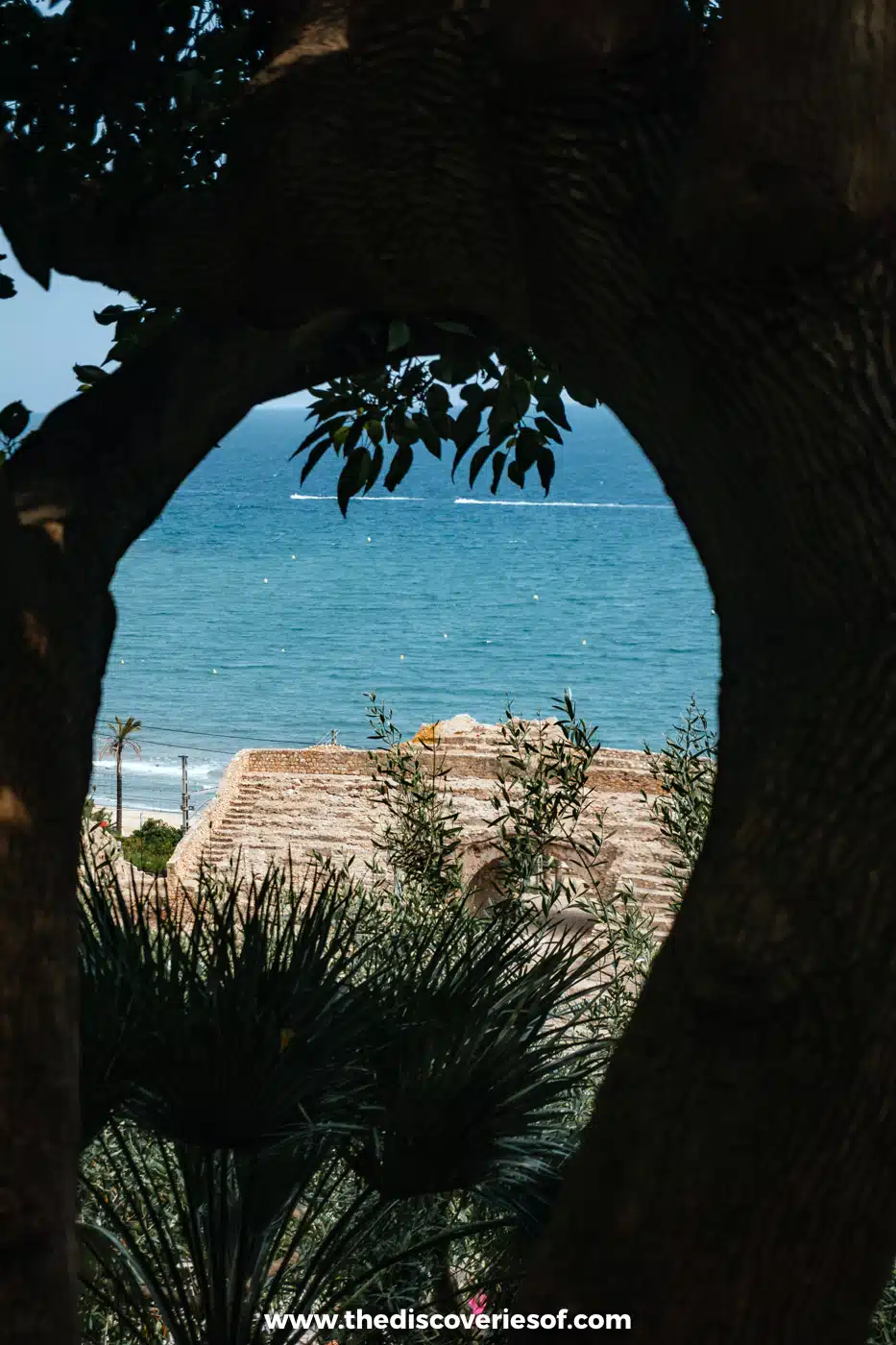
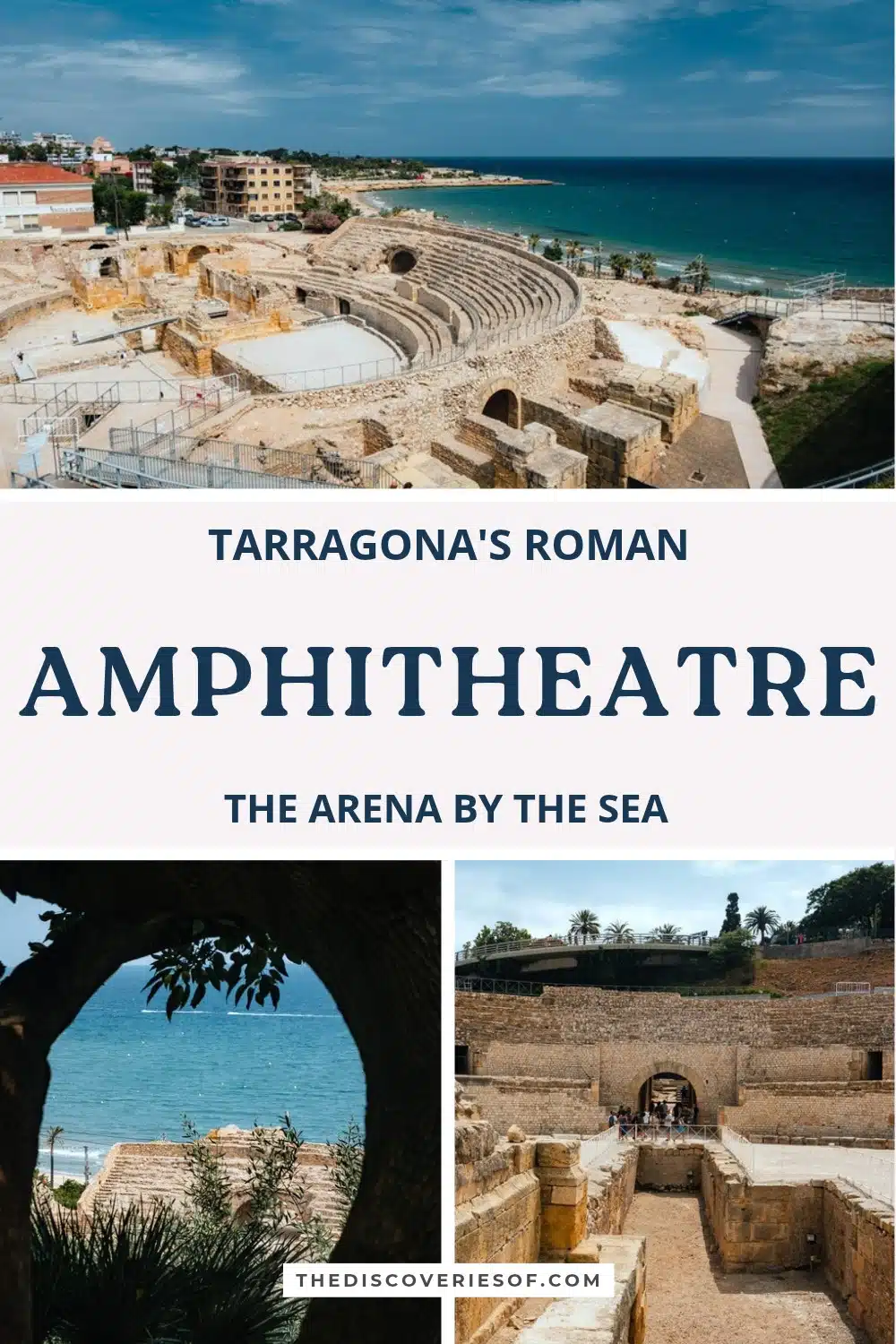
Tarragona’s Roman amphitheatre sits on the slope just above the beach, so its stone tiers seem to run straight down into the sea. Here’s the story of the arena, what to see as you walk round it, what tickets cost and when to go.
The Romans landed in Tarragona in 218 BC and turned it into Tarraco, the capital of one of the biggest provinces of the empire. The amphitheatre was built outside the city walls, between the end of the 1st century AD and the start of the 2nd, on the slope between the town and the shore. Part of its seating was cut straight into the rock, and it held around 14,000 spectators for gladiator fights, wild beast hunts and public executions. Today it’s one of the sites of the archaeological ensemble of Tárraco, a UNESCO World Heritage Site since 2000.
I saw it twice on my day in Tarragona. At the start of the day I looked down on it from the clifftop at the end of the Rambla Nova. In the afternoon, after walking the Roman walls, I came back, looked over it from the park above, then went in, walked round the upper tiers and went down to the arena floor.
What struck me most was the location. I’ve been to plenty of ancient theatres, including the ancient theatre in Milos and Kourion in Cyprus, but I’d never seen one sitting right on the seafront like this. I can only imagine what it would have been like to sit in the crowd watching the games, with the sea gently crashing in the background.
This guide covers the history, what to see, tickets, opening hours and how to get there.
If you would like a guide to bring the stones to life, this Roman heritage walking tour of Tarragona takes in the amphitheatre and the city walls.
Tarragona amphitheatre at a glance
- Where: Parc de l’Amfiteatre, below the Balcó del Mediterrani, between the old town and Platja del Miracle.
- Cost: €5, or €2.50 reduced; under-12s go free. It’s also one of the five sites on the €15 combined ticket.
- Opening hours: closed on Mondays. From April to late October, Tuesday to Saturday 9am to 8.45pm and Sunday 9am to 2.30pm; in winter it closes at 6.30pm from Tuesday to Saturday.
- Time needed: about an hour.
- Don’t miss: the view from the upper tiers, the pits under the arena floor and the remains of the two churches in the middle.
Gladiators, martyrs and a church in the arena
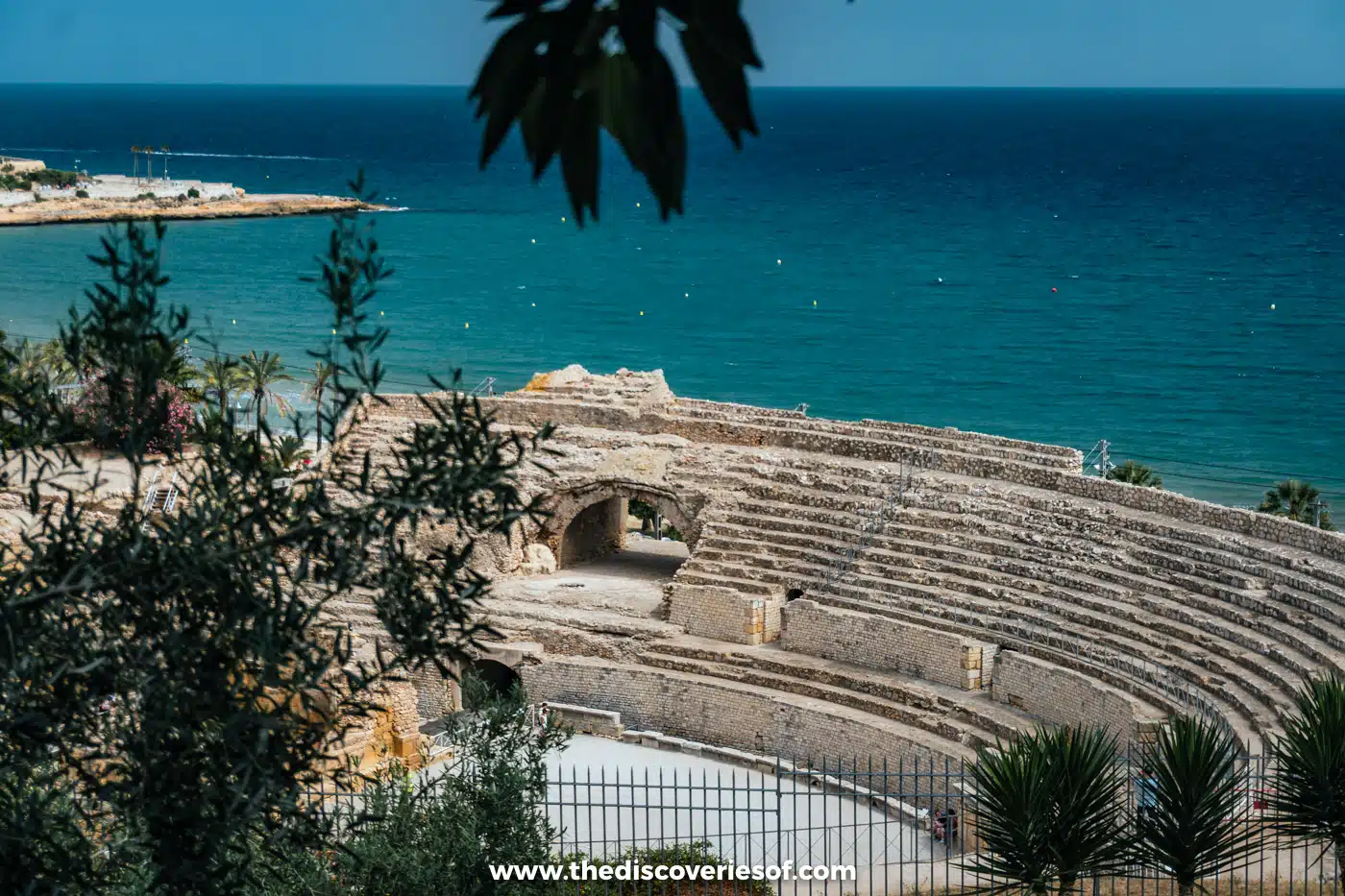
The amphitheatre hosted the bloodiest of Roman entertainment: gladiators, fights between animals and hunts, as well as executions. In 221 AD the emperor Elagabalus had an inscription set into the podium wall around the arena, thought to have been the longest in the Roman Empire.
The arena’s most famous story is a dark one. On 21 January 259, during the Emperor Valerian’s persecution of Christians, Bishop Fructuosus of Tarraco and his deacons Augurius and Eulogius were burned alive here. They became the city’s martyr saints, and in the 6th century a basilica was built in the middle of the arena in their memory, partly from the amphitheatre’s own stones.
In the 12th century a Romanesque church, Santa Maria del Miracle, was built over the basilica. From 1576 it became a convent of the Trinitarian order, and later the site was used as a prison for the convicts building the city’s port. The arena was only excavated and restored in the 20th century.
Walk round the upper tiers
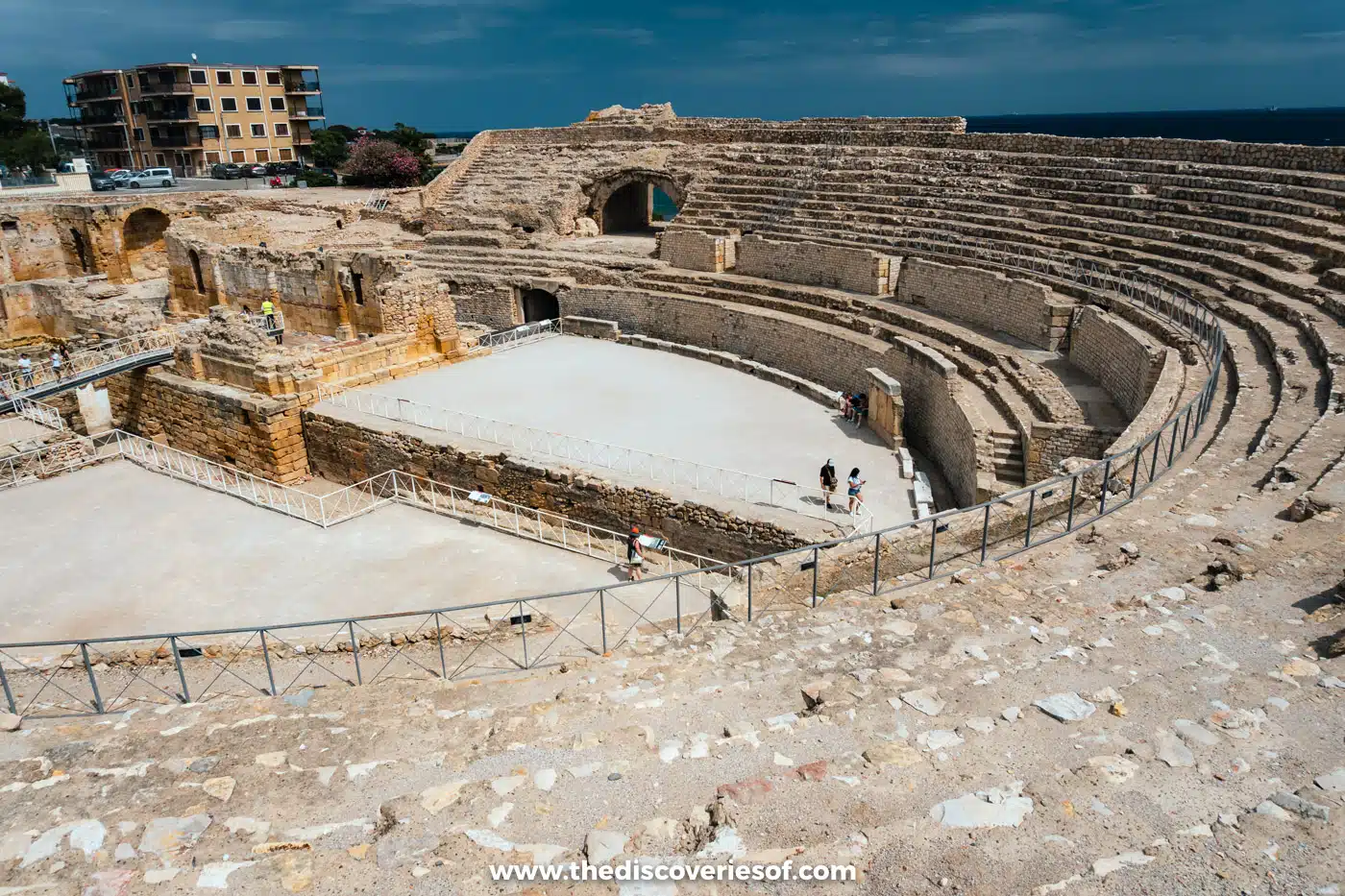
The best of the seating survives on the side cut into the hill. From the upper tiers you look across the arena floor and out to the sea behind it, and you get the clearest sense of the shape of the place: the lower, middle and upper rows of seats, the podium wall around the arena and the two great gates at either end of the ellipse.
On the side nearest the sea was the platform where the city’s officials sat to preside over the games. Bring water and a hat in summer, as there’s no shade on the tiers.
Go down to the arena floor
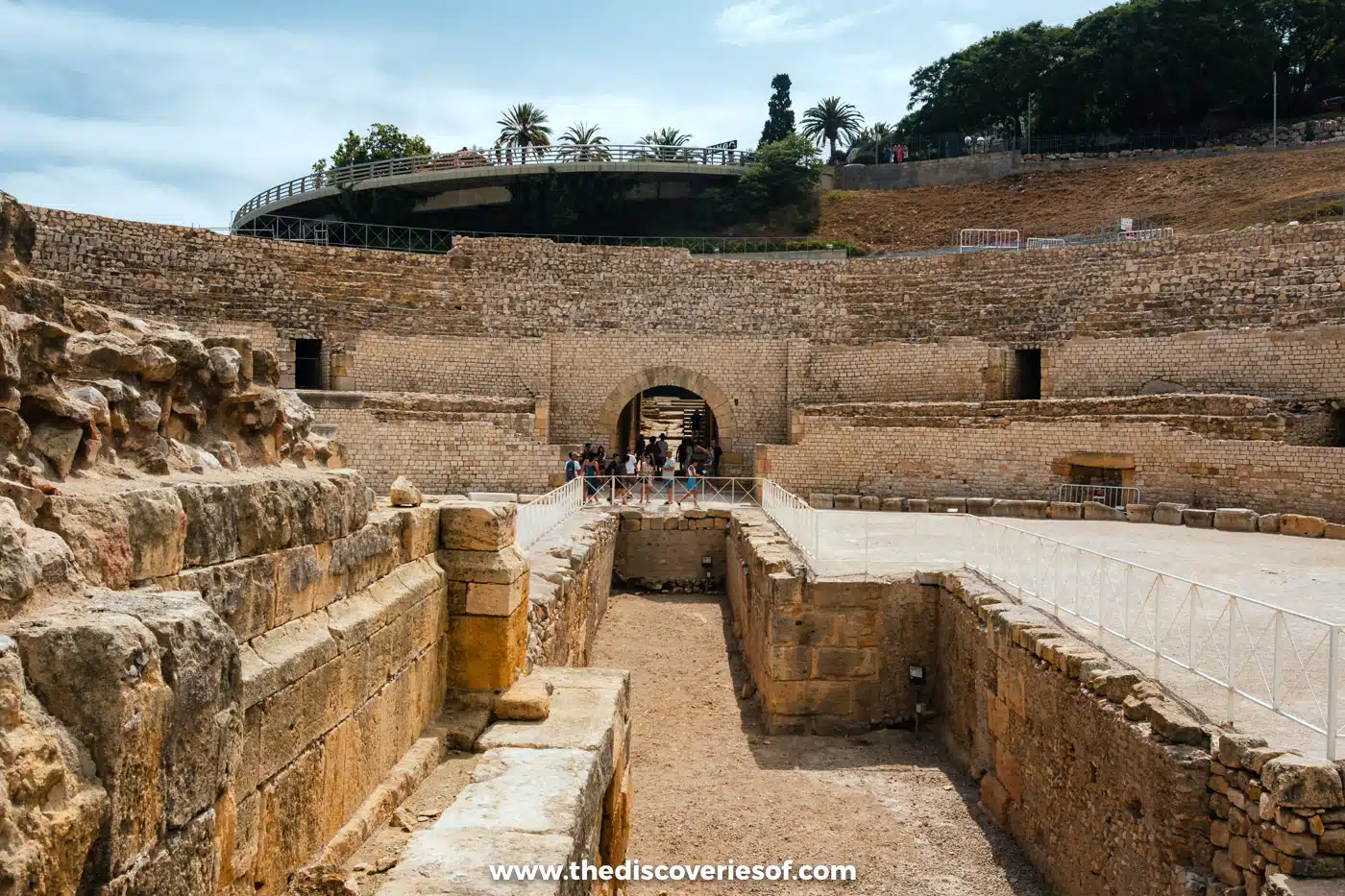
Down on the arena, you can look into the fossae, the pits dug under the floor. They were covered with wooden planks, and the Romans used them for changing scenery and for special effects, raising animals and props up into the arena during the shows.
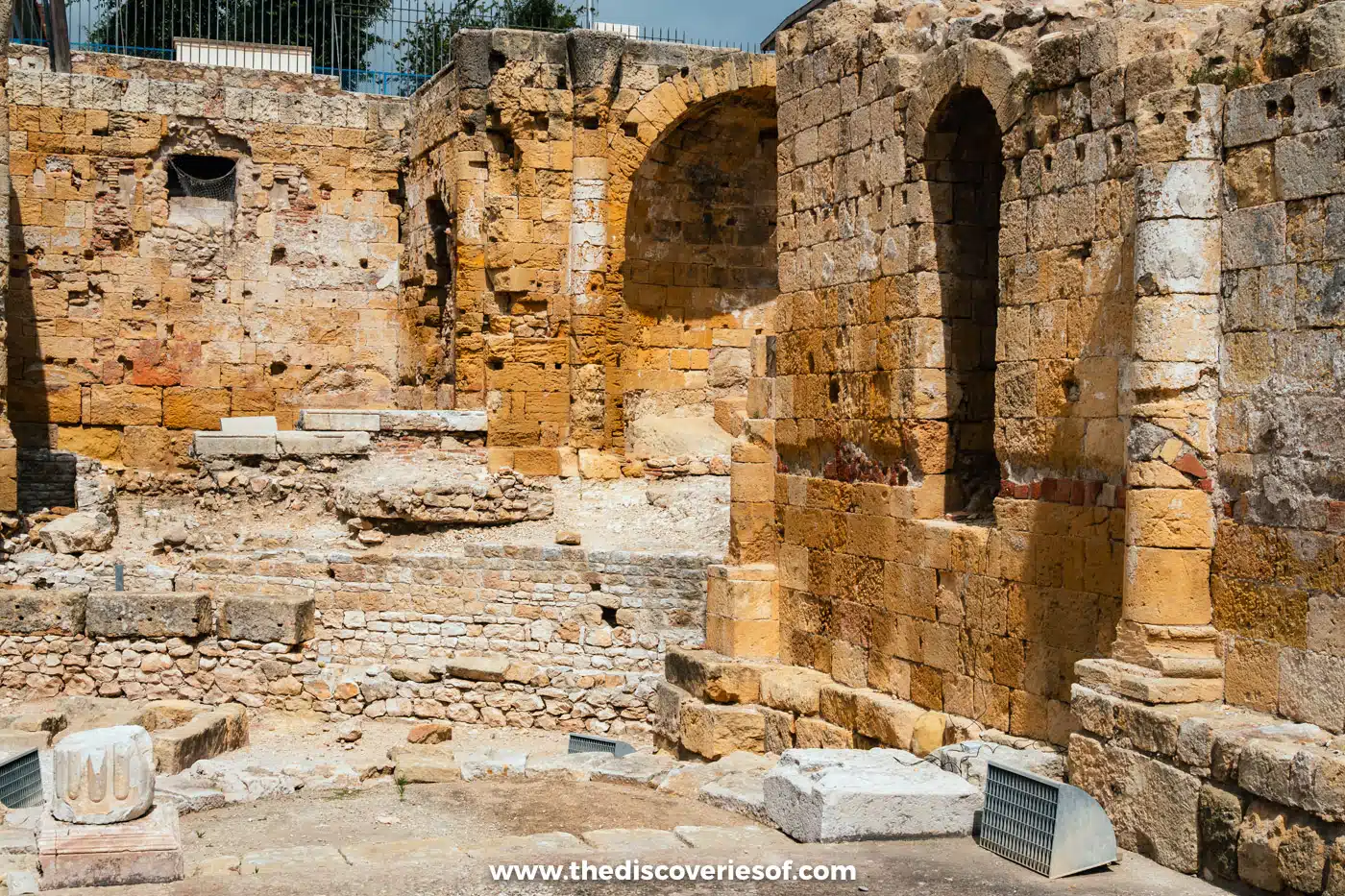
In the middle of the arena stand the walls of the churches, with their arched niches, built over the spot where the martyrs died. Look out, too, for the small chapel to Nemesis, the goddess of fate, who was popular with gladiators.
Tickets and prices
- Amphitheatre only: €5, or €2.50 reduced
- Combined ticket: €15 (€7.50 reduced) for the amphitheatre, the Roman circus and Praetorium, the Passeig Arqueològic walls walk, the colonial forum and Casa Canals. It pays for itself from the fourth site.
- Free: under-12s, and a few other groups such as teachers and the unemployed
Tickets
Tickets are sold at the entrance. If you plan to see the walls and the circus too, buy the combined ticket at your first stop.
Guided Tours
Short on time? Book a guided Roman heritage walking tour of Tarragona, or let someone else handle the transport with this half-day Tarragona tour from Barcelona.
Opening hours
- 1 April to late October: Tuesday to Saturday 9am to 8.45pm; Sunday and public holidays 9am to 2.30pm
- Late October to 31 March: Tuesday to Saturday until 6.30pm; Sunday 9.30am to 2.30pm
- Closed: every Monday, apart from a few public holidays
Works to improve the route down to the arena through the main gate were due to start at the end of 2026, so check the city’s heritage site before you go in case parts of the visit are closed.
How long to allow
Allow about an hour to walk round the tiers and the arena. Add time before or after to look down on it from the Balcó del Mediterrani, the clifftop viewpoint at the end of the Rambla Nova, which gives you the classic view of the arena with the sea behind.
Getting there
The amphitheatre is a short walk from the Rambla Nova and from Tarragona station, which sits just below the Balcó del Mediterrani.
Getting There
Trains from Barcelona Sants take about an hour and ten minutes to Tarragona, with around 30 a day. From the station, it’s about ten minutes’ walk to the amphitheatre.
Where to stay
Tarragona is an easy day trip from Barcelona, but staying the night lets you see the amphitheatre and the walls in the cooler hours. Hotel Plaça de la Font sits on the square built over the Roman circus, a few minutes’ walk away, or you can browse places to stay in Tarragona.
Tips for your visit
- Avoid the midday heat: the tiers and the arena have no shade, so in summer go in the morning or the late afternoon.
- See it from above too: walk to the Balcó del Mediterrani for the view down over the arena and the beach.
- Combine it with the walls: the Passeig Arqueològic and the Roman circus are a short walk away and on the same combined ticket.
- Go in May for Tarraco Viva: the city’s Roman history festival brings re-enactments and talks to the Roman sites.
- Hassle-free option: this Tarragona and Sitges day trip from Barcelona includes transport and a guide.
For everything else in the city, from the walls and the cathedral to the Pont del Diable aqueduct, see my guide to the best things to do in Tarragona.
Map
Read next
- 13 things to do in Tarragona
- A guide to the Passeig Arqueològic, Tarragona’s Roman walls
- Pont del Diable: walking across Tarragona’s Roman aqueduct
- Priorat wine day trip from Barcelona
- 25 brilliant day trips from Barcelona
- A guide to the Dalí Theatre-Museum in Figueres
- A guide to Girona Cathedral
- My Spain travel guide
Love this? Save and share on Pinterest
Discover the top things to do, insider tips and hidden gems in our Spain Travel Guide.
Read the guides →