
Spain
Mallorca travel guide
Stone villages under the mountains, a wooden tram rattling down to the sea and vineyards in the foothills. Plan a trip to Mallorca, from when to come and where to stay to the drives, walks and guides to read first.

Julianna BarnabyTravel and culture writer
Mallorca is the largest of the Balearic Islands, out in the Mediterranean off Spain’s east coast. Palma, the capital, sits on a wide bay in the south-west, below its Gothic cathedral. Along the whole north-west coast runs the Serra de Tramuntana, a range of limestone peaks, terraced valleys and honey-stone villages listed by UNESCO in 2011, while the centre of the island is a plain of vineyards and almond groves and the long sandy beaches lie to the south and east.
I spent four nights at a vineyard stay in the foothills near Esporles in September, with a hire car. I rode the wooden tram down to Port de Sóller and walked out to the Cap Gros lighthouse, stopped for a wine tasting in Binissalem before driving the mountain road over the Tramuntana, and watched the evening light turn the stone of Fornalutx gold. I only had a short time in Palma, so my guides lean towards the mountains and the north-west coast.
Everything you need to plan a visit is below, along with links to all my Mallorca guides.
Some links in this article may be affiliate links, which means we may receive a small commission, at no additional cost to you, if you decide to purchase through one of my recommended partners.
 Ride a 1913 tram to the sea, and 15 more things to do in Sóller and Port de Sóller
 The Serra de Tramuntana drive: hairpins, stone villages and sea views on Mallorca’s Ma-10
When to go
April to June and September to October are the best months: warm enough to swim, cool enough to walk the mountain paths and calmer than high summer. July and August are hot and busy, and the roads to Sa Calobra and Formentor fill up early.
I went in September, when the sea was still warm and the late light on the mountains was beautiful. In winter, the island is quiet and green, but the Sóller train stops running from 23 November 2026 to 1 February 2027, the tram is replaced by a bus until 22 December, and some coastal hotels close for the season.
Getting there and around
- TIB: Mallorca’s island bus network, with routes from Palma to Valldemossa, Deià and Sóller.
- Tren de Sóller: timetables and fares for the train from Palma and the tram to the port.
- Barcos Azules: boat trips from Port de Sóller to Sa Calobra.
- Skyscanner: flights to Palma.
- Rentalcars.com: car hire from Palma airport.
- GetYourGuide: boat trips, tours and tickets across the island.
Palma airport is on the edge of the city, about 25 minutes by car from the foothills around Esporles. Hire cars are the easiest way to reach the mountains. TIB buses run from Palma across the island, including route 204 to Sóller through the tunnel in about 40 minutes, and the old wooden train takes about an hour over the mountains to Sóller.
Where to stay
The Tramuntana foothills
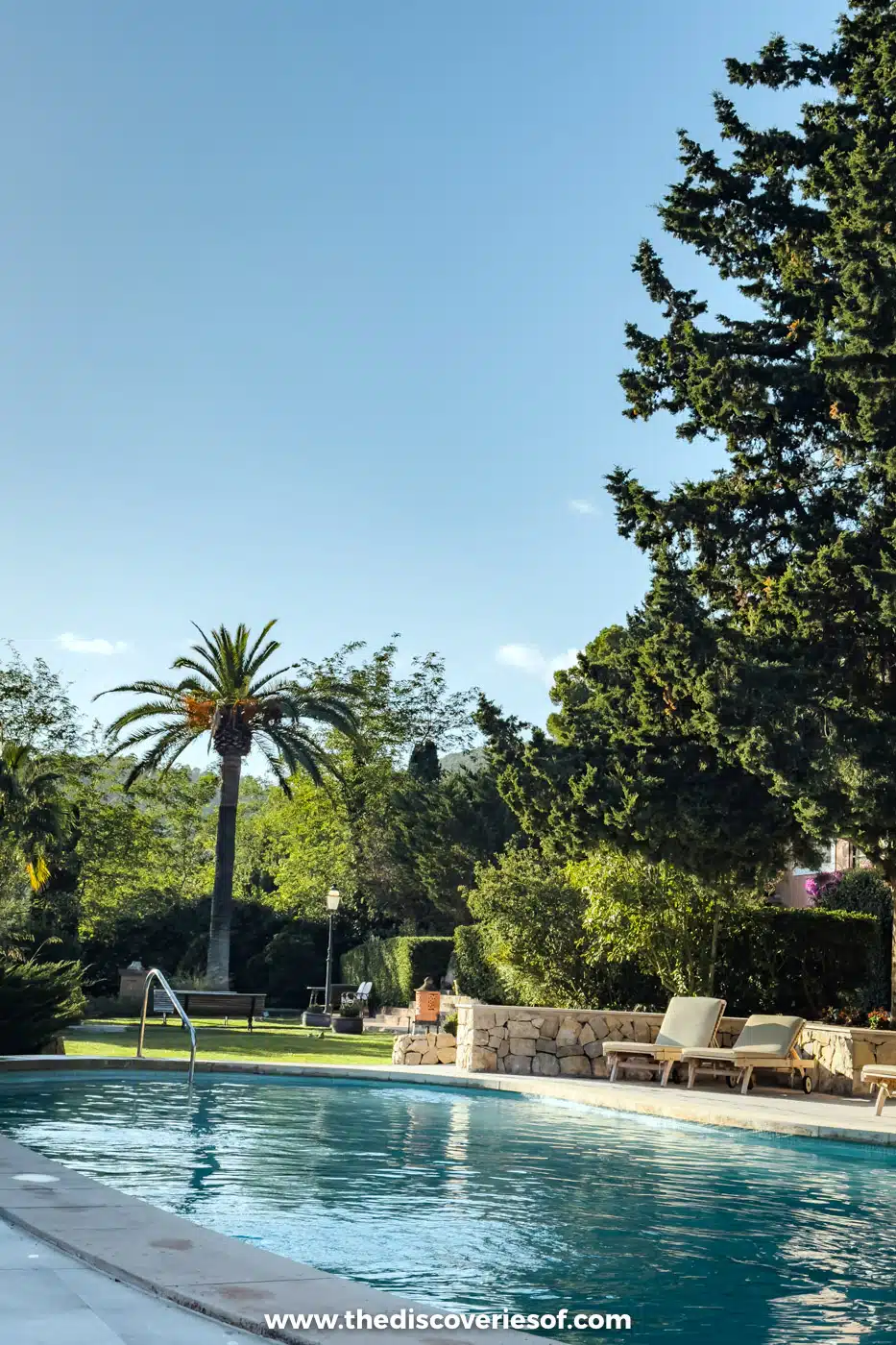
The quiet valleys around Esporles and Valldemossa put you 25 minutes from the airport and within easy reach of Palma, Sóller and the mountain road. My base was Rondaia, a vineyard stay with a 1960s pool outside Esporles. I’d give it four out of five: there’s no restaurant on site, so stock up before you arrive, and you’ll need a car.
Sóller and Port de Sóller
The best base for walkers and anyone without a car, with the tram, the coast path and the boats to Sa Calobra on the doorstep. The Gran Hotel Sóller is a five-star with a spa, two minutes from the main square, and Jumeirah Mallorca is the splurge, on the clifftop above the port.
Palma
Stay in the city for the cathedral, the old town lanes, the restaurants and the shortest airport transfer, and add day trips into the hills. Compare hotels in Palma.
Tours
Know before you go
Top things to do
Ride the wooden tram to Port de Sóller
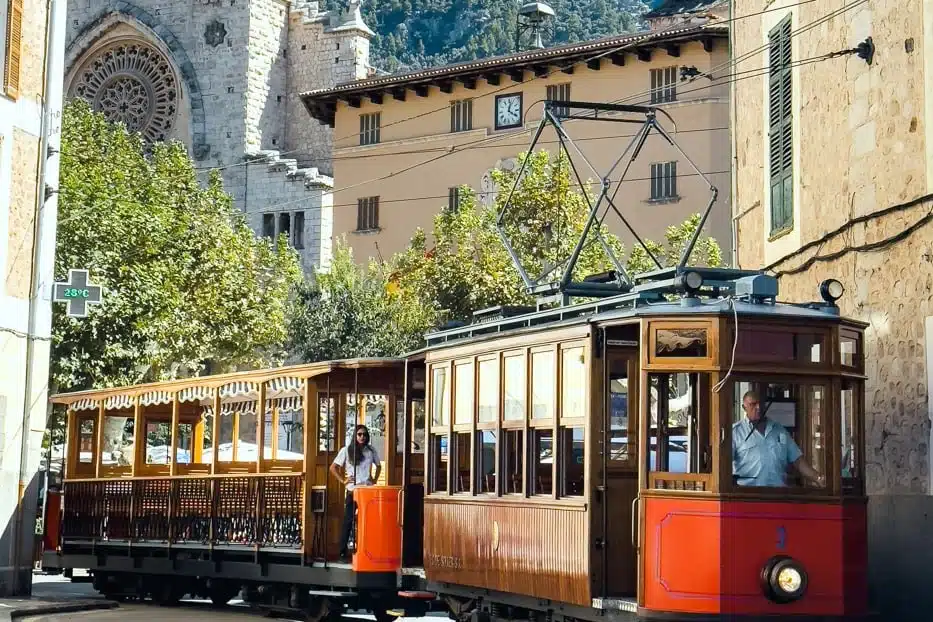
The orange and wood tram has run the five kilometres from Sóller’s main square to the sea since 1913, squeezing past the church and out through the orange groves. I rode it down to the port, and on a warm day it’s worth waiting for a seat in an open carriage. My Sóller guide has the rest of the town.
Walk out to the Cap Gros lighthouse
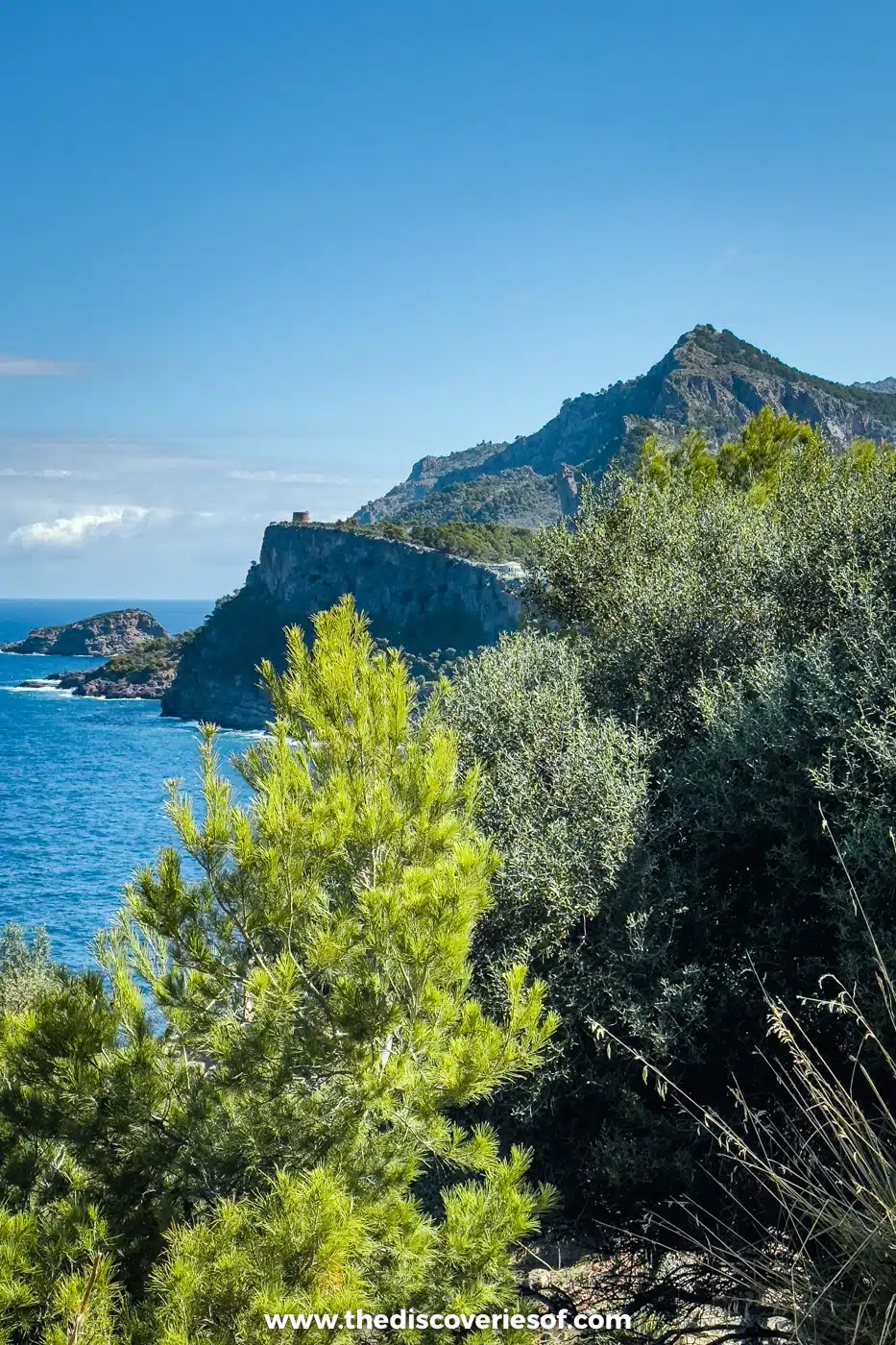
A lane climbs from the beach at Port de Sóller to a lighthouse that has guided boats into the bay since 1859. I kept going along the GR221 beyond it, through pines and wild olives above deep blue water. The lighthouse walk guide has the route and timings.
Drive the Ma-10 over the Tramuntana
The mountain road runs the length of the north-west coast. I drove its highest stretch, past the Gorg Blau reservoir and down into the Sóller valley as the late sun broke through. Follow my Serra de Tramuntana drive stop by stop.
Taste the island’s wine in Binissalem
Binissalem is the heart of Mallorca’s wine country, with the local Manto Negro grape in its reds. I stopped for a tasting at José L. Ferrer, the town’s best-known winery, founded in 1931.
Catch the evening light in Fornalutx
A village of steep stone steps, green shutters and orange terraces below the peaks. I came up in the evening, when the stone turns gold and most of the day trippers have gone.
See La Seu in Palma
Palma’s Gothic cathedral rises straight from the old sea walls, with one of Europe’s tallest naves, a canopy by Gaudí over the altar and a ceramic chapel by Miquel Barceló.
Visit the monastery in Valldemossa
Chopin and George Sand spent the winter of 1838 to 1839 in the Real Cartuja, and you can see their cells and the monks’ old pharmacy. Arrive before 10am, as the car parks fill fast.
Take the boat to Sa Calobra
Boats run from Port de Sóller along a coast of sheer cliffs and sea caves to Sa Calobra, where a path through the rock leads to the gorge of the Torrent de Pareis.
Suggested itineraries
Sóller and the coast in a day
One day
The tram to Port de Sóller, the Cap Gros lighthouse walk, then the town and an evening in Fornalutx
Built from my own time in the valley; my lighthouse walk guide has the route.
The mountain loop
One day
A tasting in Binissalem, Selva and Caimari, Lluc, the Gorg Blau and down into the Sóller valley
The loop I drove; my Serra de Tramuntana drive has every stop.
Four days in Mallorca
Four days
Palma and the vineyards, Valldemossa and Deià, the mountain road, then Sóller and the lighthouse
Built around my own trip from one base near Esporles; follow my 4-day Mallorca itinerary for every day.
Hidden Mallorca
Selva
A hilltop village at the foot of the mountains, its stone houses climbing a steep street to the church of Sant Llorenç. I stopped here on the way up to Lluc, and it’s a quiet place to stretch your legs.
The Gorg Blau
A still, blue reservoir below the Puig Major, Mallorca’s highest mountain, right beside the Ma-10. I pulled over in the late afternoon, with pale scree slopes and peaks rising straight out of the water.
The cliff path beyond Cap Gros
Most people turn round at the lighthouse. Carry on along the GR221 past the Refugi de Muleta and the crowds thin out fast, leaving the pines, the limestone outcrops and the sea views.
Dishes and drinks to try
Dishes to try
Ensaïmada
A spiral of light, sugar-dusted pastry made with pork lard, eaten for breakfast or with coffee all over the island.
Pa amb oli
Bread rubbed with tomato and olive oil, topped with cheese or cured meat: Mallorca’s everyday lunch.
Coca de patata
The soft, sugar-dusted potato bun of Valldemossa, sold from the bakeries on its main street.
Drinks to try
Mallorcan wine
Look for Manto Negro and Callet in the reds and Malvasia and Moll (Prensal Blanc) in the whites, the island’s own grapes.
Herbes
The island’s herb liqueur, flavoured with anise, fennel and other mountain plants, poured sweet or dry after dinner.
Must-try bars and restaurants
José L. Ferrer, Binissalem
The winery behind some of Mallorca’s best-known wines, founded in 1931. I stopped for a tasting here on my way into the mountains; the Visita Moll, three wines with Mallorcan snacks, costs around €21.
Costs and budgeting
Hotels and car hire are the biggest costs, especially in July and August; the walks, viewpoints and villages are free.
- Sóller tram: €10 each way
- Sóller train from Palma: €23 single, €30 return, or €40 return with the tram
- Boat from Port de Sóller to Sa Calobra: returns from around €26
- Palma cathedral: about €10
- Balearic tourist tax: €1 to €4 a night for each guest aged 16 or over from May to October, less out of season, added to your hotel bill
Safety, health and tipping
Safety
Mallorca is a safe island. Watch for pickpockets in Palma’s old town and at the busiest viewpoints in summer, take care on the hairpins of the Ma-10 and the road to Sa Calobra, and stay back from crumbling cliff edges on the coast paths.
Health
The tap water is safe but hard and often salty, so most people drink bottled. The sun is strong from May to October, so carry water and cover up on the exposed cliff paths. In an emergency, call 112.
Tipping
Tipping isn’t obligatory. Leave around 10% at sit-down restaurants for good service, and round up in bars and cafés.
Practical tips and info
Tips for travelling
- Hire a car if you want the mountains and villages: buses link Palma with Valldemossa, Deià and Sóller, but not the inland wine towns or the high viewpoints.
- Book the smallest car you’re comfortable with. The Ma-10 is well surfaced but narrow, with tight hairpins.
- Give cyclists room: Spanish law says at least 1.5 metres when you overtake.
- Start early at Valldemossa, Deià and Sa Calobra, which are far calmer before 10am.
- Stock up on food if you stay in the countryside, as rural stays often have no restaurant.
- Check the Sa Calobra boat the day before, as sailings are cancelled in rough seas.
How to see the best for free
The best of the Tramuntana costs nothing: the coast path beyond Cap Gros, the viewpoints on the Ma-10, the lanes and steps of Fornalutx and the promenade round the bay at Port de Sóller. The Museu de la Mar in Port de Sóller is free to visit, and so are the beaches. Pay for the tram or the boat, and walk the rest.
Packing
Packing for Mallorca? Don’t forget…
- Walking shoes with some grip: for the coast path beyond Cap Gros and the stone steps of the villages. I wear my Tropicfeel Canyons.
- A light jacket: it’s noticeably cooler up in the mountains, 850 metres above the sea.
- Sunscreen and a swimsuit: for the coves and a swim at Port de Sóller.
- A refillable water bottle: there’s little shade or water on the cliff paths.
For the full list, see my Spain packing list.
Travel insurance
UK travellers should carry a GHIC for state healthcare in Spain, but it doesn’t cover private clinics, mountain rescue or getting you home, so take out a full policy too, and check it covers hiking if you plan to walk the GR221. You can find a policy with AXA Travel Insurance.
Interesting facts
- The Sóller tram has run to the port since 1913, a year after the train from Palma opened.
- The Austrian Archduke Ludwig Salvator bought up long stretches of the north-west coast in the 19th century to protect it.
- The poet Robert Graves lived in Deià from 1929 and is buried in the churchyard at the top of the village.
Handy phrases
Mallorquí, the island’s form of Catalan, is spoken alongside Spanish, and a few words go a long way:
- Bon dia: good morning
- Bon vespre: good evening
- Gràcies: thank you
- Per favor: please
- Adéu: goodbye
Time zone
Mallorca runs on Central European Time: UTC+1 in winter and UTC+2 in summer, one hour ahead of the UK.
Electricity and adapters
Sockets take Type C and Type F plugs, at 230V and 50Hz.
Map
Insider tips, straight to your inbox
All Mallorca guides
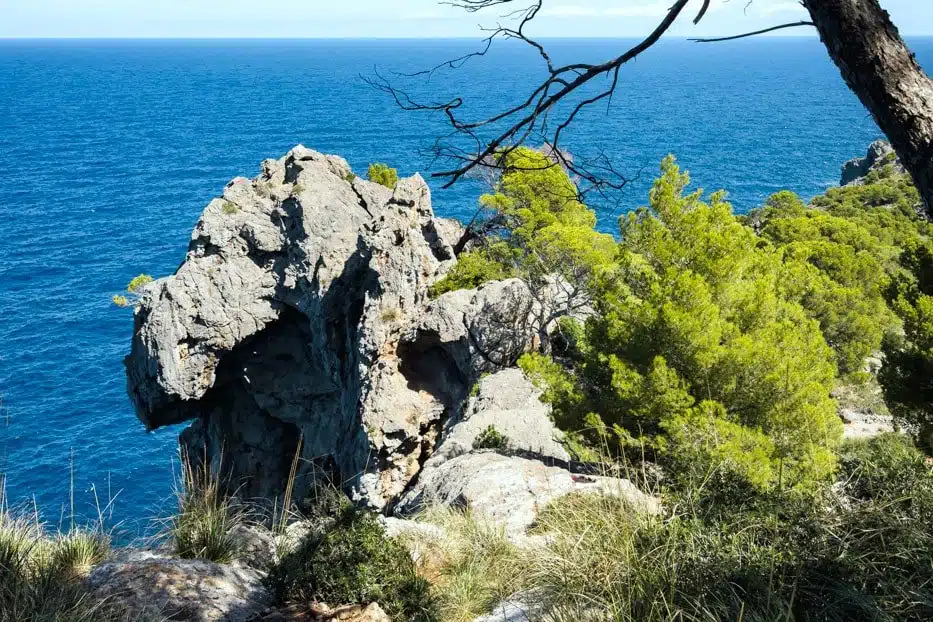 A guide to the Port de Sóller lighthouse walk, out to Cap Gros and the cliffs beyond
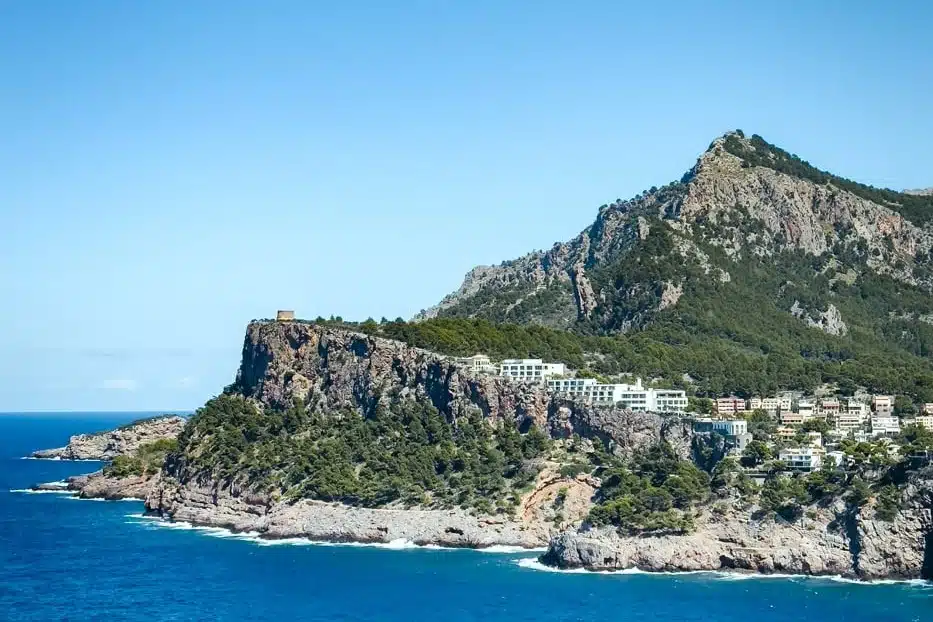 4 days in Mallorca: the perfect Mallorca itinerary, from vineyards to mountain villages
 The Serra de Tramuntana drive: hairpins, stone villages and sea views on Mallorca’s Ma-10
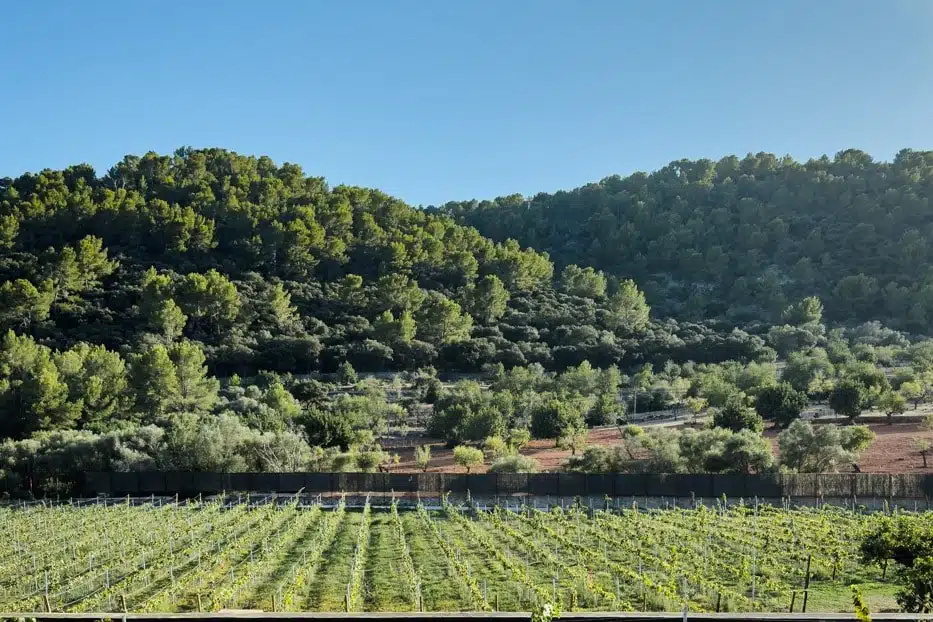 Rondaia review: the Mallorca vineyard stay that pours its own Malvasia
 Ride a 1913 tram to the sea, and 15 more things to do in Sóller and Port de Sóller


Watch on YouTube
See the places before you go
Short films from the places in my guides, so you can see what a destination really looks and feels like before you go.
Subscribe on YouTube youtube.com/@thediscoveriesof