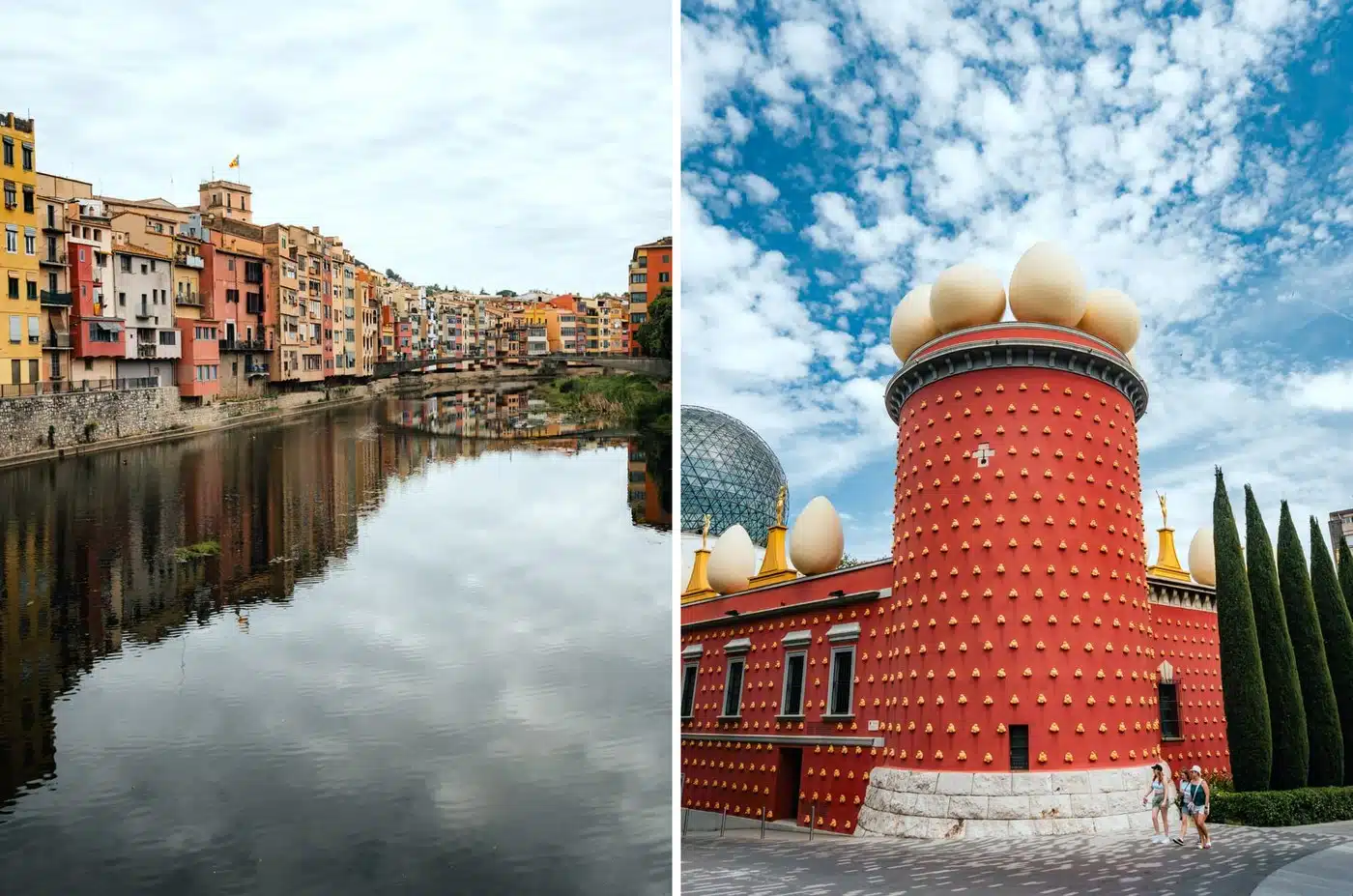

Few small cities charm with as much success as Girona. Painted houses lean over the river, a cathedral with the widest Gothic nave in the world crowns the old town, and the lanes of one of Europe’s best-preserved Jewish quarters climb the hill behind it. Here are the best things to do in Girona, with tips for planning your visit.
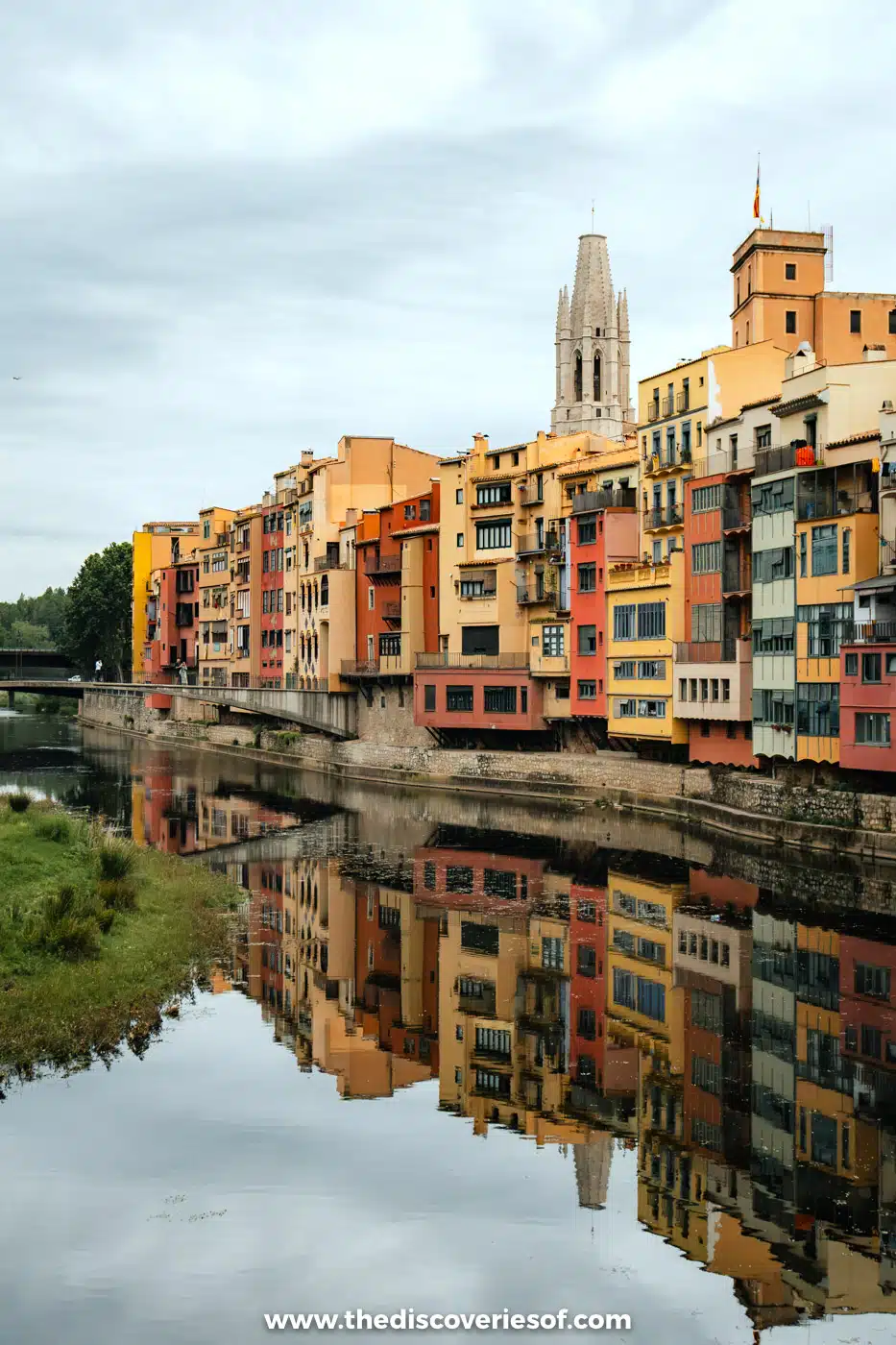
With near-perfect medieval architectural masterpieces, ancient Arab Baths and cobbled streets fit for an epic television series (more on that later), Girona is a must-add to any visit to Catalonia.
I spent a morning wandering the old town on a day out from Barcelona, before carrying on to Figueres in the afternoon, and it’s a city that rewards you for slowing down. Girona was a Roman city, but most of the old part you see today dates from medieval times: Charlemagne’s Franks took the town in 785 and fortified it to protect it from the Moors. The city pulled down much of its old walls in the 19th century, which is why there’s such a contrast in the architecture as you walk out of the old town. Before that, Girona was only the medieval city.
Here’s my pick of the best things to do in Girona, from the river and the cathedral to the Jewish quarter, the city walls and the pastry you have to try.
The best things to do in Girona
Walk the Onyar and its painted houses
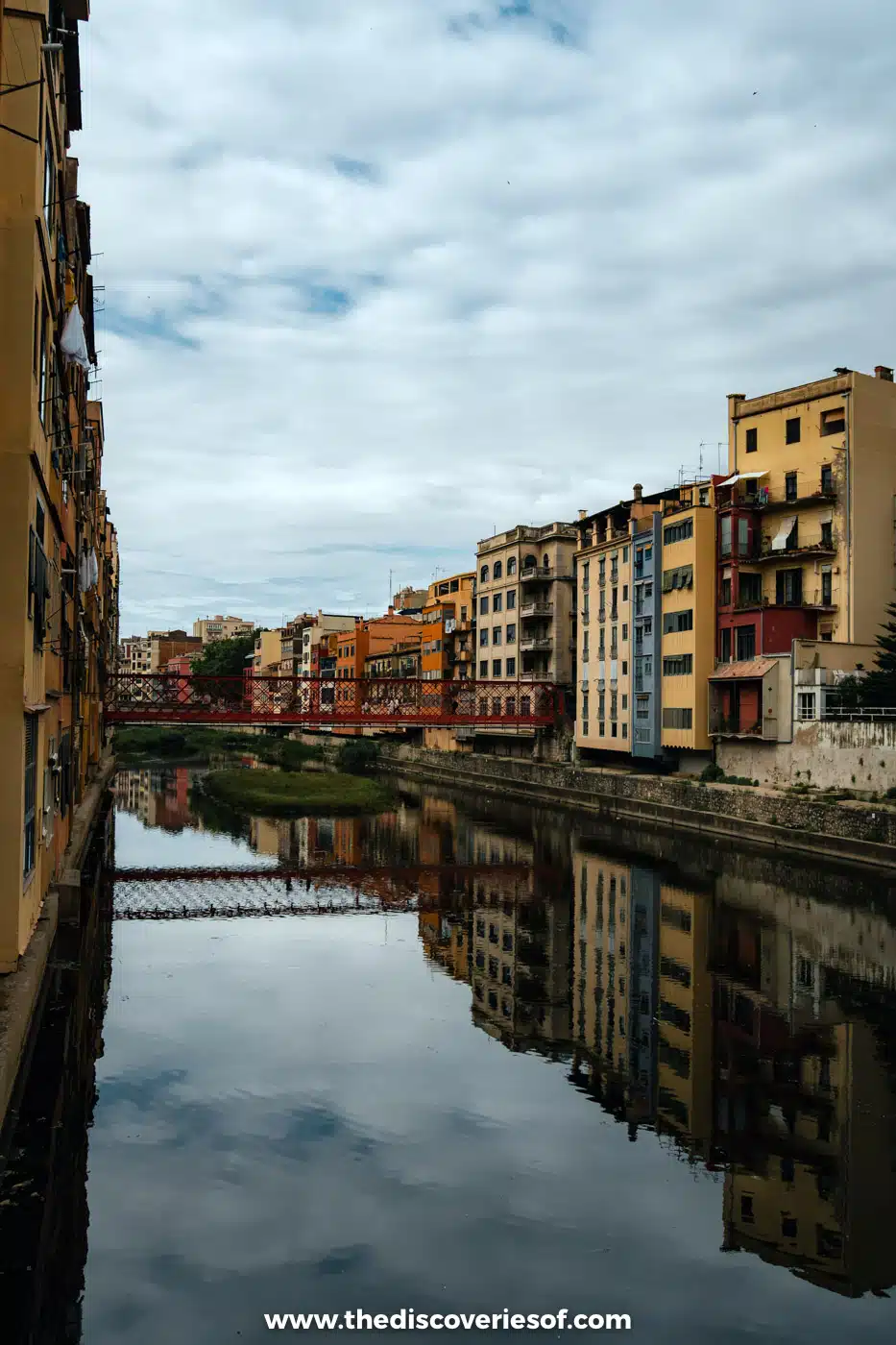
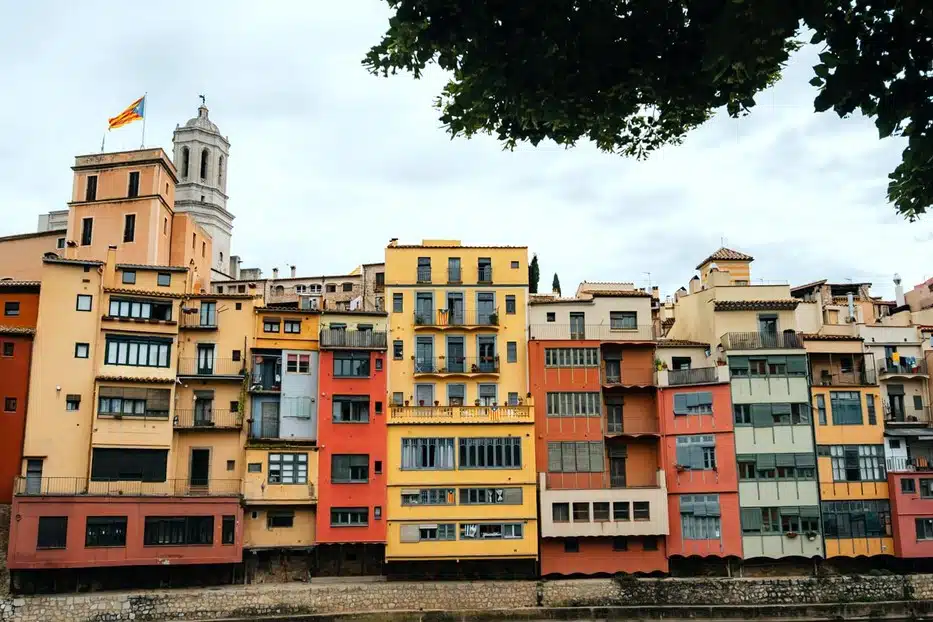
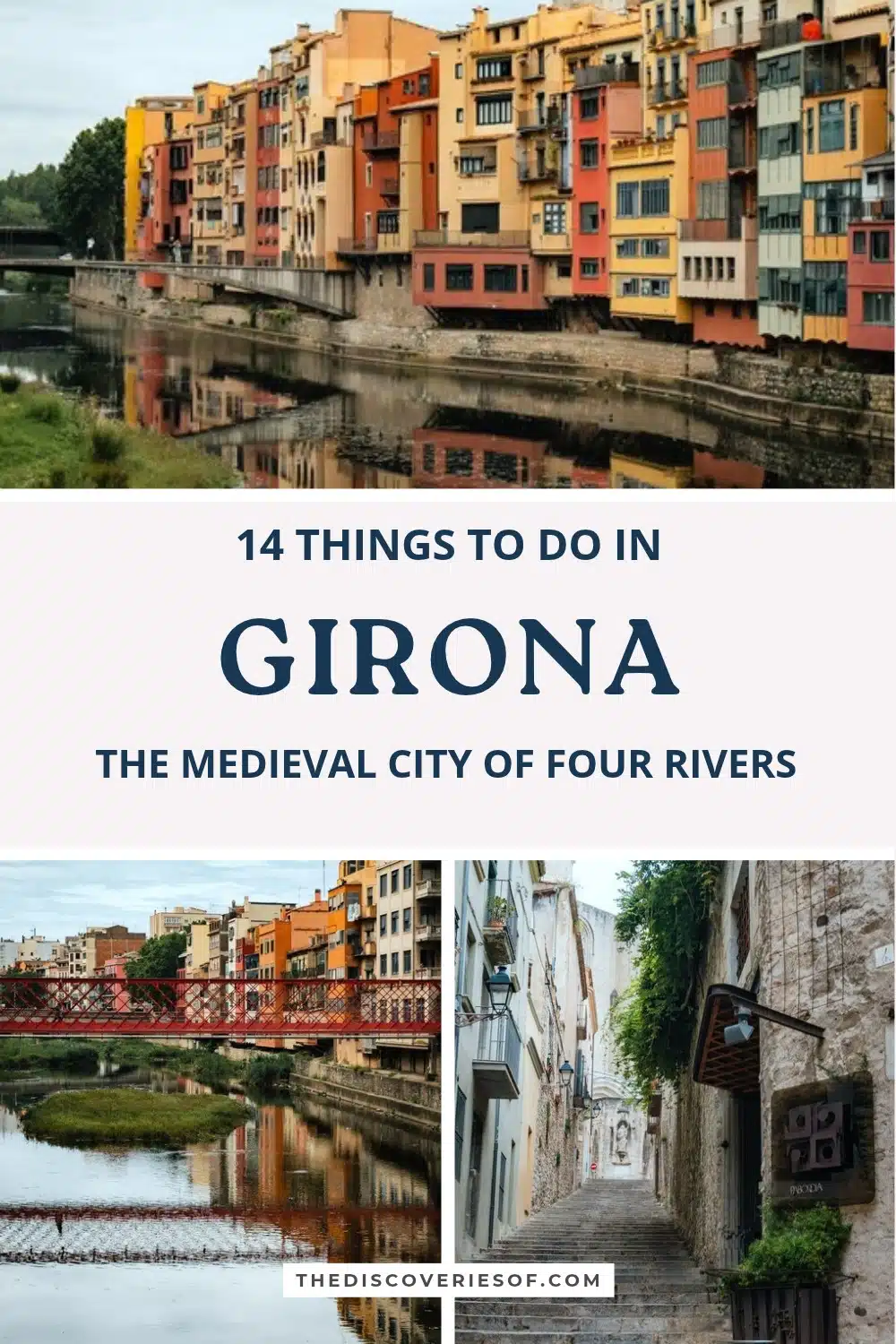
Girona has four rivers, the Onyar, the Ter, the Güell and the Galligants, and the Onyar is the one that gives the city its postcard view. The tall houses along its eastern bank are painted in ochres, oranges and reds, and on a still morning they’re mirrored perfectly in the water.
Taking a slow stroll along the Onyar is easily one of the most fun things to do in Girona. Cross from bank to bank on its bridges, marvel at the architecture and take in the city scenery, day or night. The stone Pont de Pedra and the Pont de Sant Agustí give the best views of the houses.
Top Tip
You can go inside one of the riverside houses, Casa Masó, where the architect Rafael Masó i Valentí was born and raised. See below for how to visit.
Cross the red Eiffel bridge
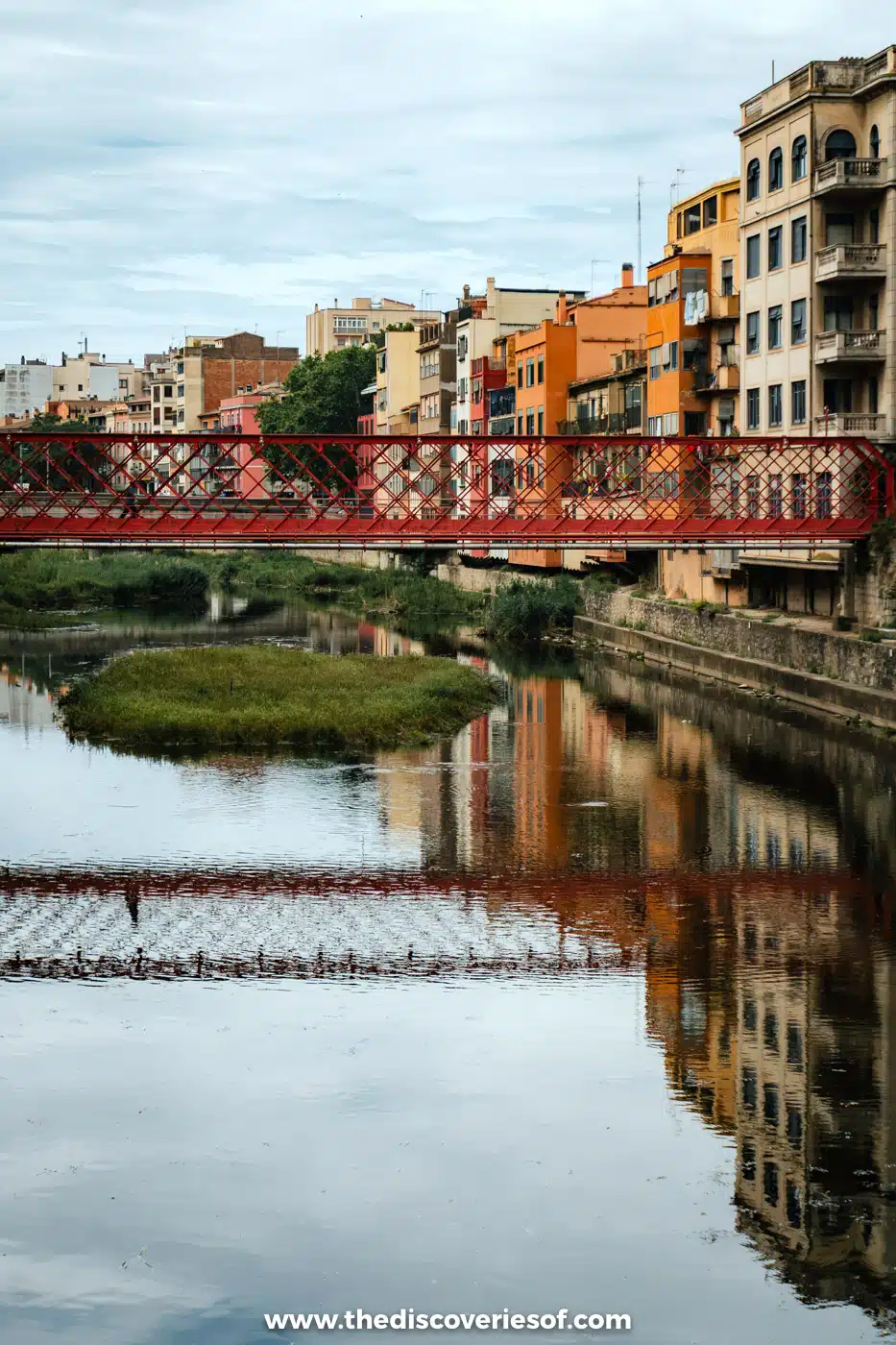
Trying to remember where that Spanish Eiffel bridge is? You’ll find it in Girona. The Pont de les Peixateries Velles, the old fishmongers’ bridge, was built in 1877 by the company of Gustave Eiffel, a decade before the tower in Paris, and its red iron lattice is one of the most photographed spots in the city.
It only takes a few minutes to cross and get the picture, so pair it with your walk along the river.
Climb the steps to Girona Cathedral
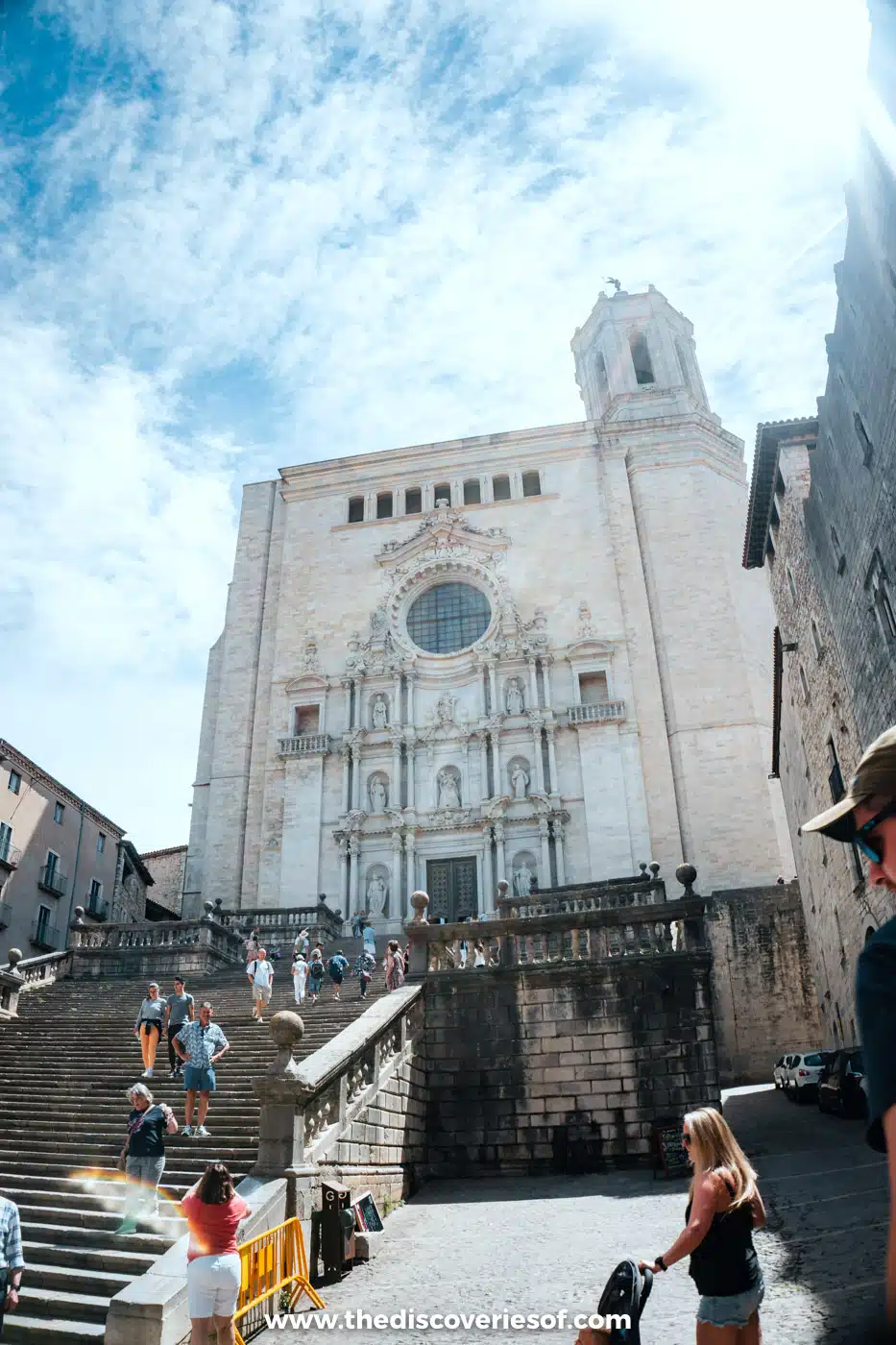
Girona Cathedral towers over the city, poking up above the skyline pretty much wherever you are. The Baroque façade sits at the top of a grand flight of steps, and seeing the grandiose architecture in real life is an absolute must, but you shouldn’t just leave it there. For the history, tickets and everything to see inside, read my full guide to Girona Cathedral.
Head inside and you’ll discover the Gothic nave, at almost 23 metres the widest of its kind in the world, then the Romanesque cloister and the Tapestry of Creation, an embroidery from around 1100 depicting Genesis and the cosmos.
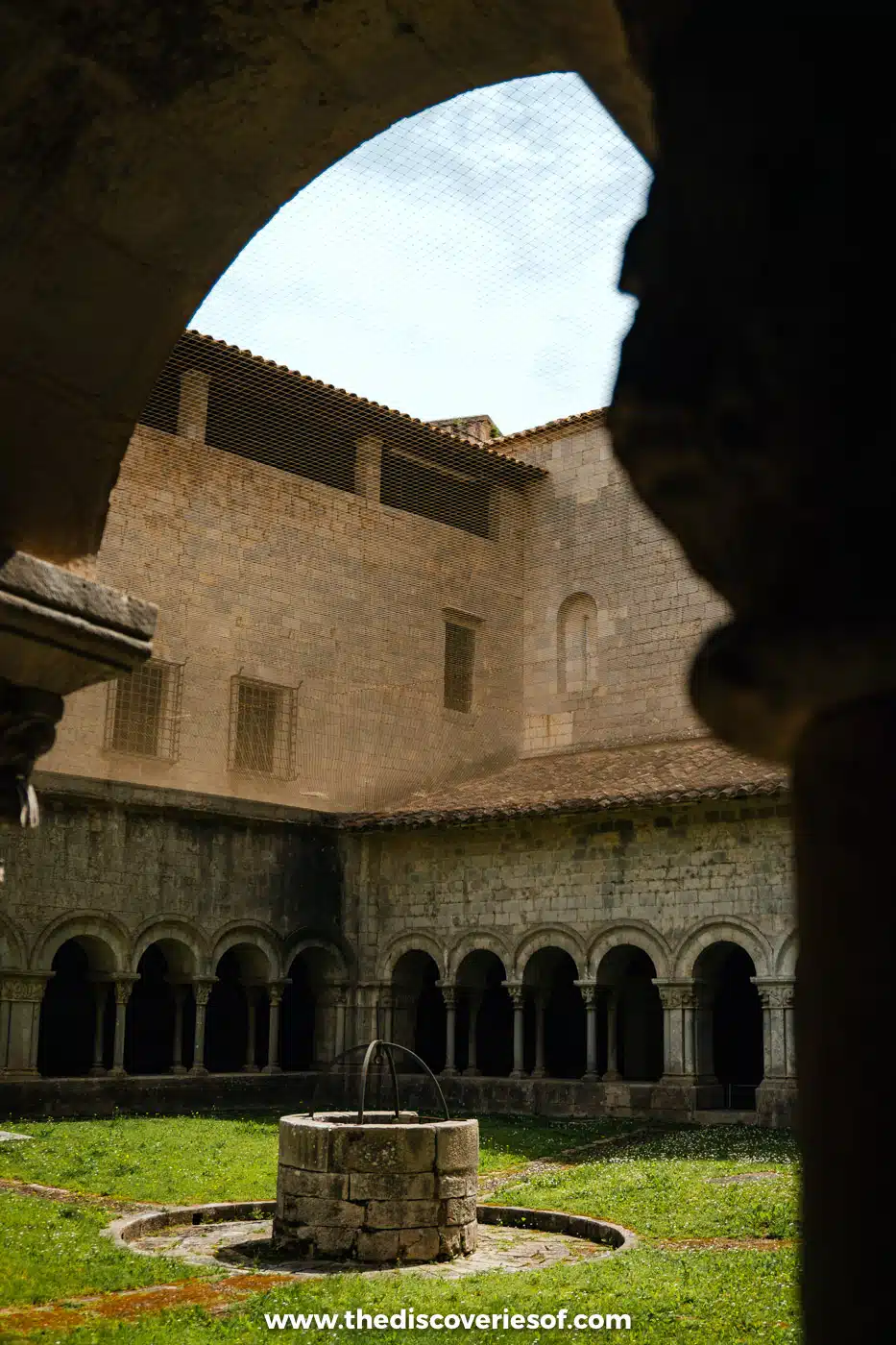
Tickets
One ticket covers the cathedral and the Basilica of Sant Feliu, and it’s valid for 12 months. From November to mid-March the cathedral opens from 10am to 4.30pm (Sundays from 12pm), with longer hours in spring, summer and autumn; check the cathedral’s website before you go, as it closes for services.
Get lost in the Call, Girona’s Jewish quarter
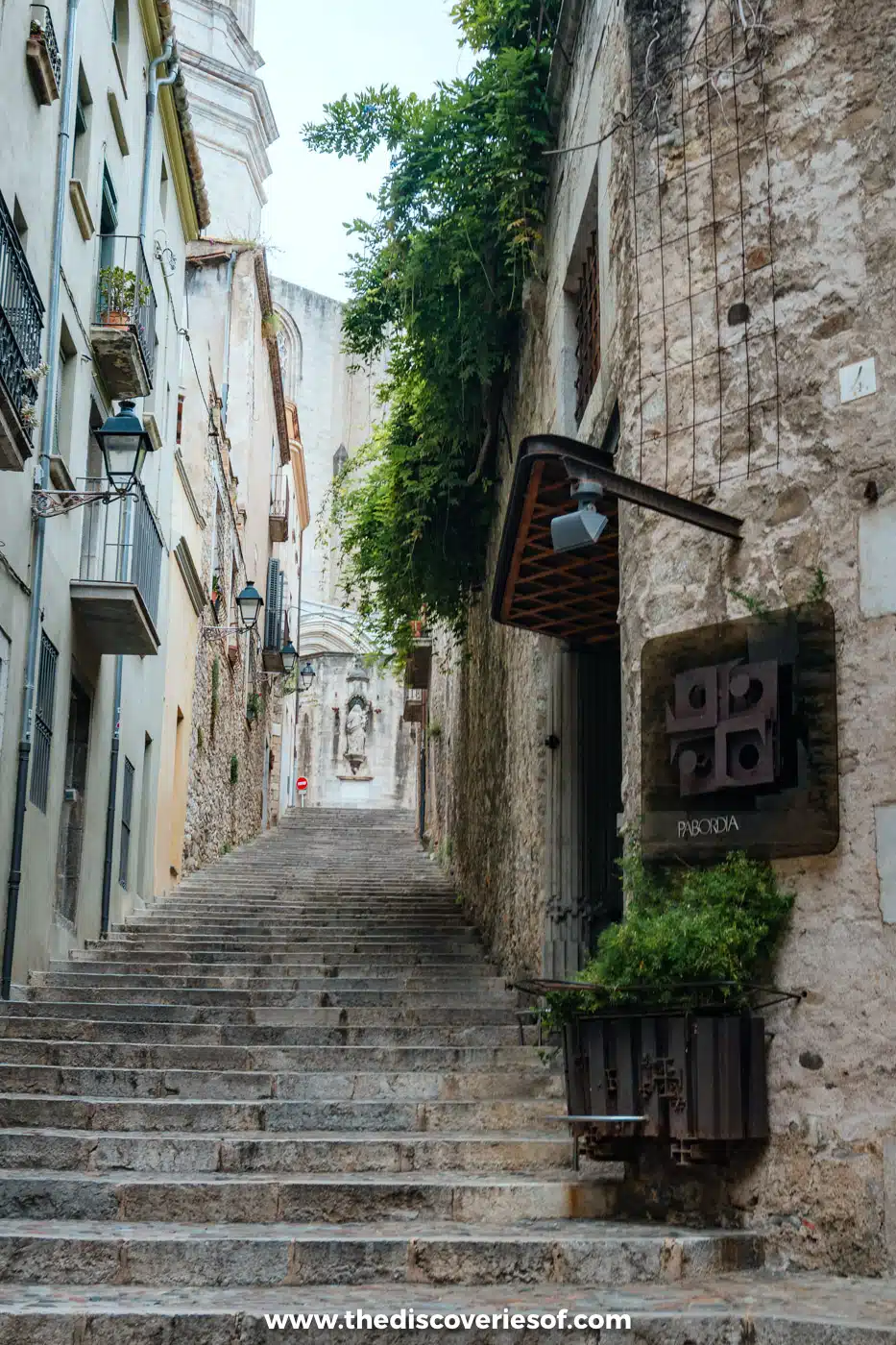
The historic architecture and ancient alleys draw visitors to the Jewish quarter, El Call, time and again. No surprise. Girona had a Jewish community from the 9th century until the expulsion of 1492, and its narrow lanes and stairways are among the best-preserved in Europe.
So what is there to do besides getting lost in the streets lined with stone walls and soaking up the history of this famous neighbourhood? Lots. You can learn much more about the area at the Museum of Jewish History, in the Bonastruc ça Porta centre, which holds medieval tombstones and artefacts from the Jewish community and is built around a courtyard on the site of the last synagogue.
You can visit the museum alone or as part of a guided Jewish heritage tour. Either option is a good one, but I enjoy getting lost in the meandering cobbled streets at my leisure.
Kiss the lioness of Girona
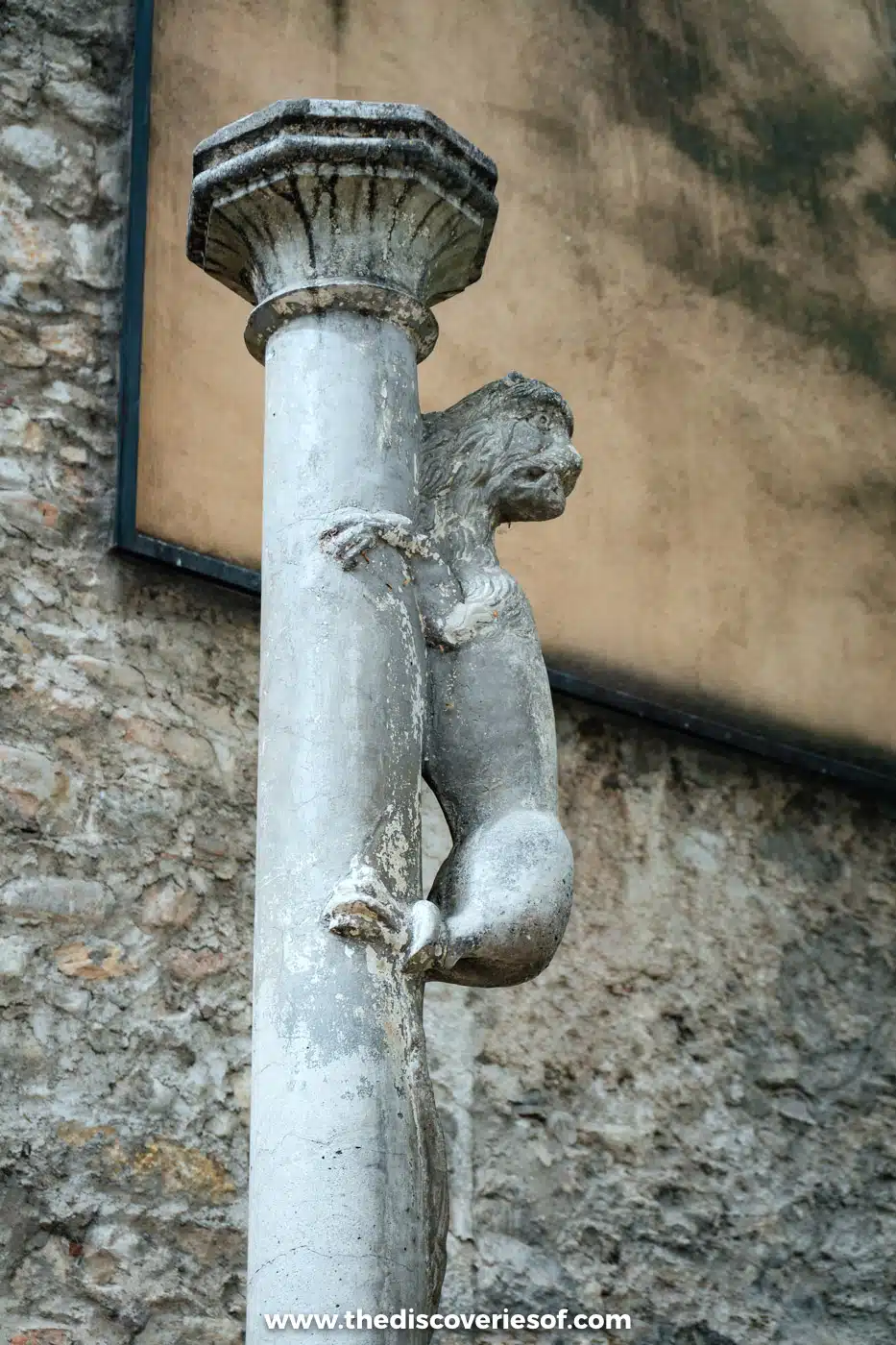
On the corner of Plaça de Sant Feliu, a little stone lioness clings to the top of a column. The saying goes that you’re not a true citizen of Girona until you’ve kissed her bottom, and that anyone who does will come back to the city. There’s a set of steps so you can reach her, and usually a queue. The one in the square is a copy; the 12th-century original is in the Girona Art Museum.
Look up at the broken spire of Sant Feliu
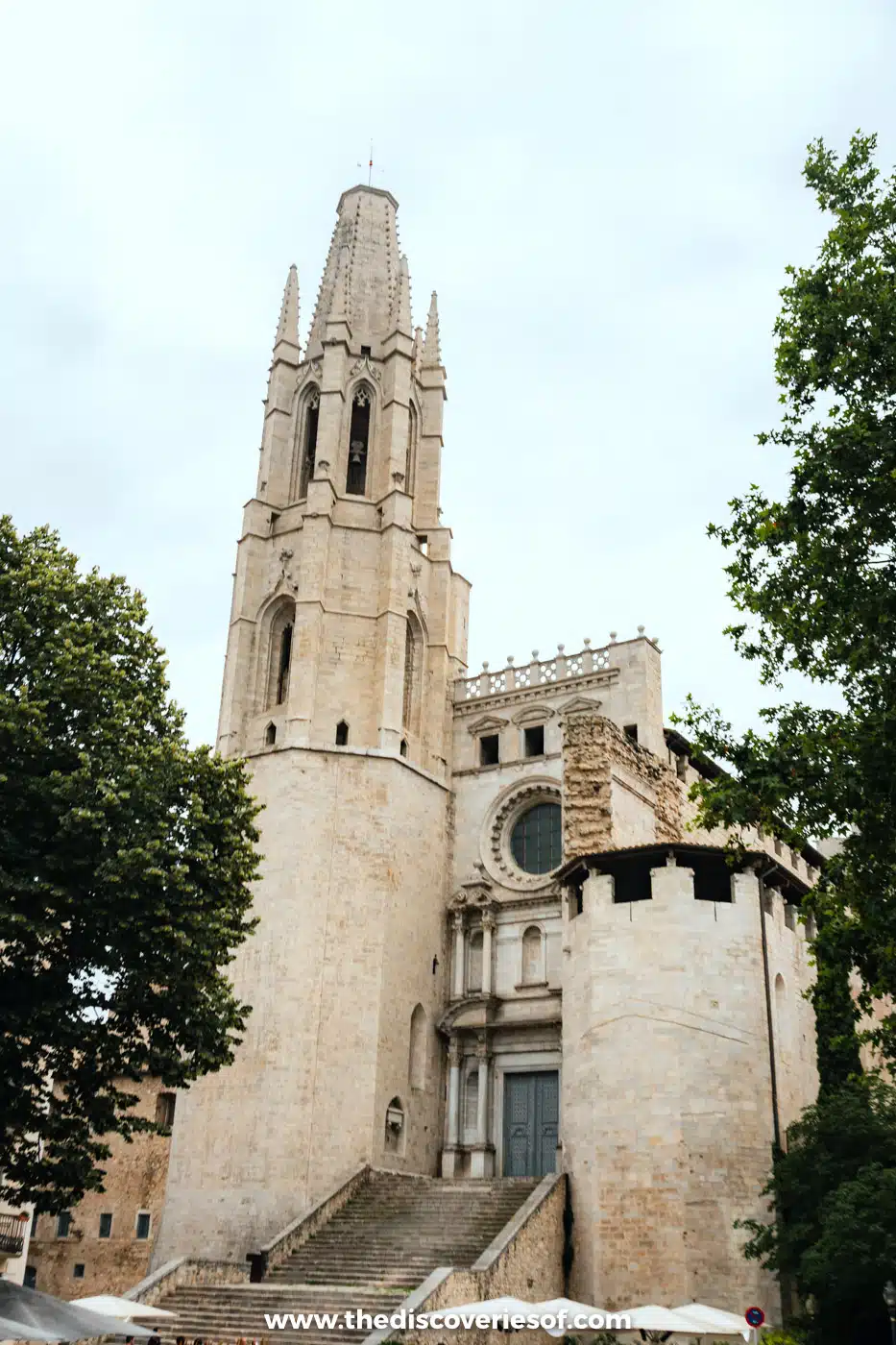
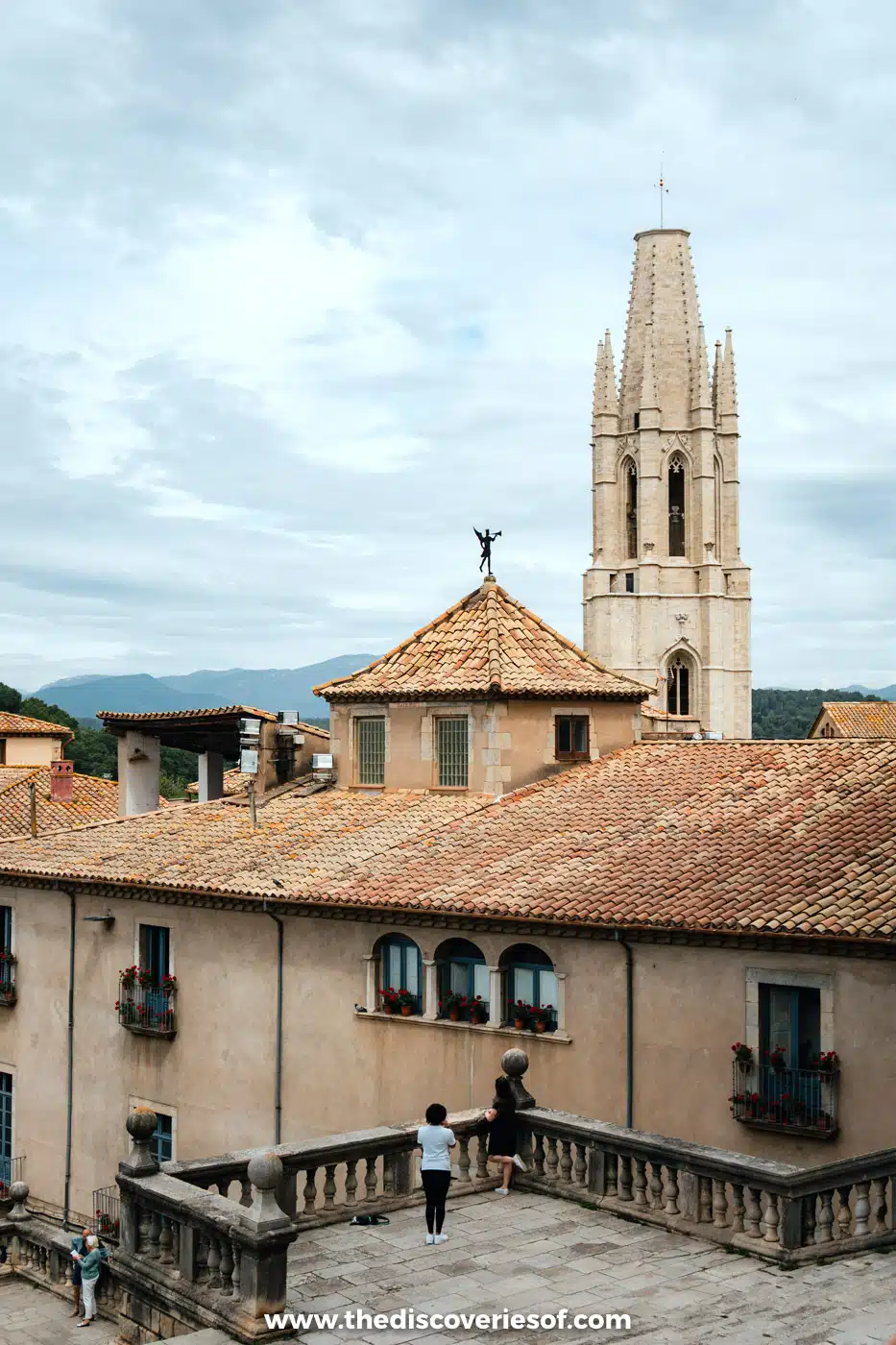
Just below the cathedral, the Basilica of Sant Feliu was Girona’s first cathedral. Its tall bell tower has a curiously flat top: the spire lost its tip to a lightning strike in 1581 and was never rebuilt. Inside are early Christian sarcophagi set into the walls of the apse, and your cathedral ticket gets you in.
Walk the old city walls
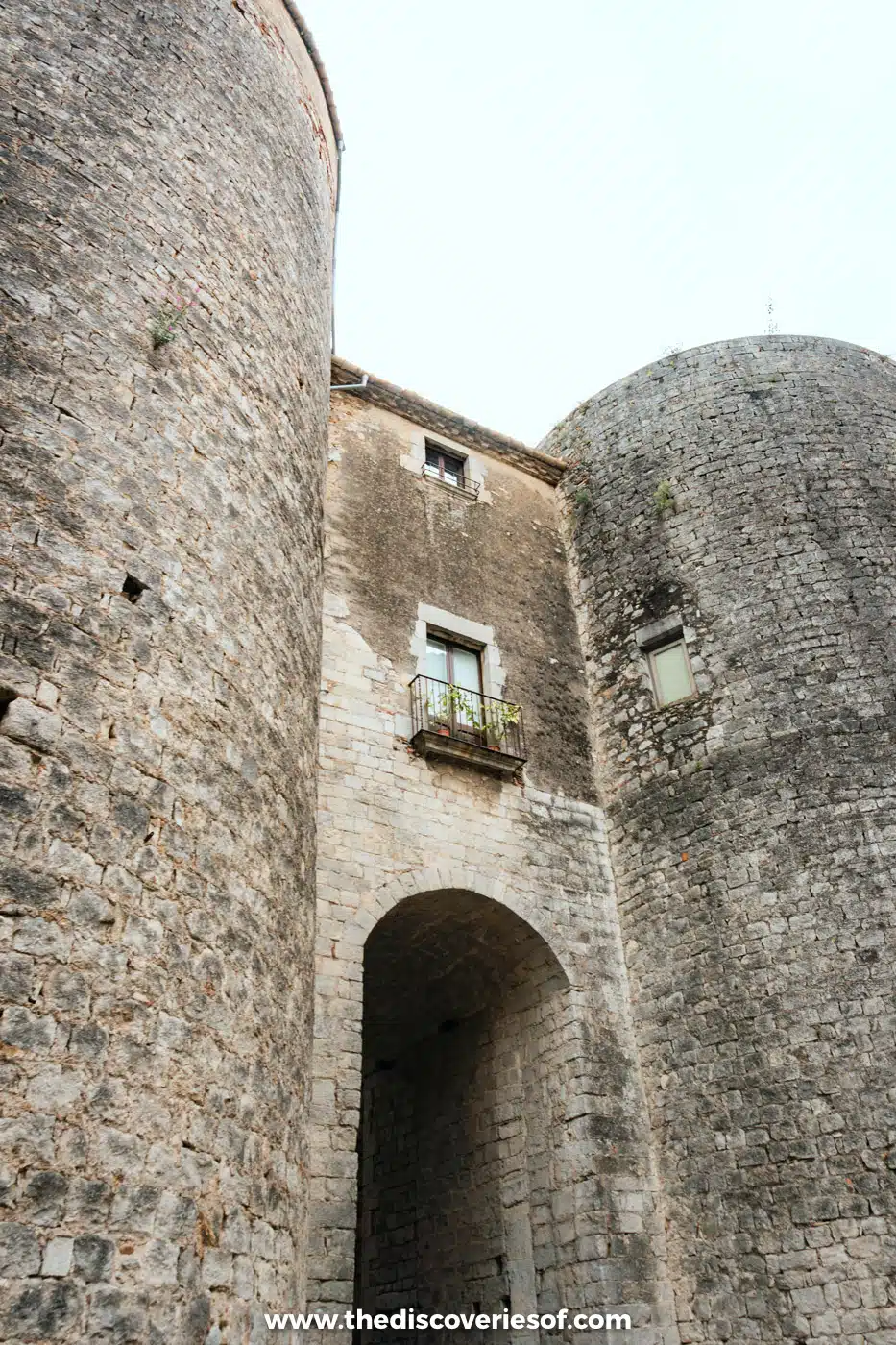
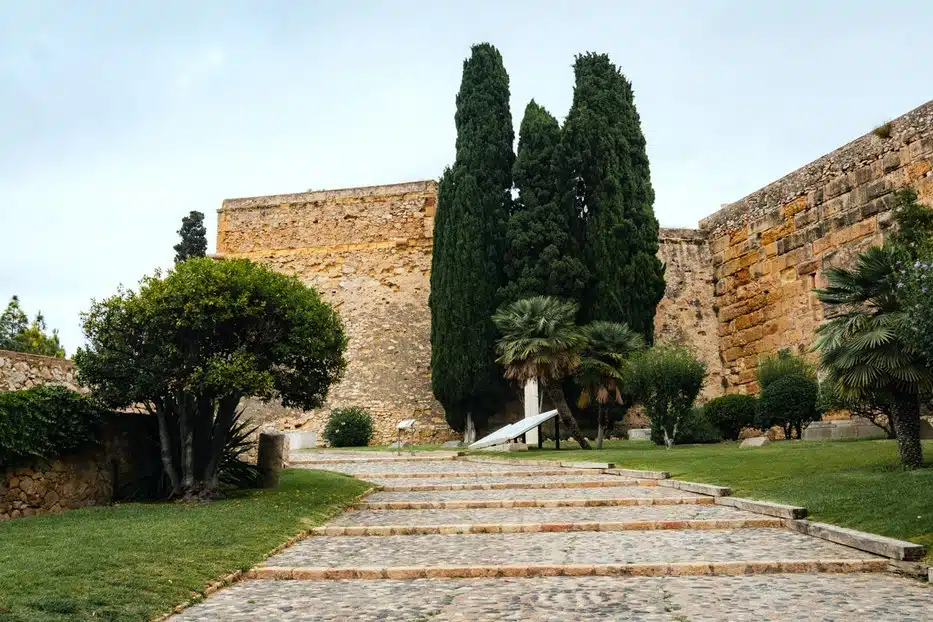
You can sense the city’s history when you look across the Onyar at the towering walls that have protected the old town since Roman and Carolingian times. Walking the walls, the Passeig de la Muralla, puts it in an entirely different perspective, with a long stretch open for you to take a stroll, free, past watchtowers with views over the rooftops and, on a clear day, out to the Pyrenees.
I don’t know about you, but it’s easy to see why the creators of Game of Thrones considered Girona the perfect location when you look over the city from the ancient walls.
Top Tip
The walk is open every day and is free. Join it near the cathedral or by the Jardins de la Francesa, and go early or late in the day in summer, as there’s little shade.
Tour the Arab Baths
Take a short walk from the Jewish quarter and you’ll find one of the most important historical sites in town. Despite the name, the Banys Àrabs are a Christian building in the Romanesque style, first recorded in 1194 and modelled on the bathhouses of the Islamic world. The highlight is the cool room, where a lantern of slender columns holds up an octagonal skylight.
Tickets
€3, or €2 for over-65s, €1 reduced and free for under-8s. Open Monday to Saturday from 10am to 6pm, and Sundays and holidays from 10am to 2pm.
See the Romanesque monastery of Sant Pere de Galligants
Across the little Galligants river, the Romanesque monastery of Sant Pere de Galligants houses the Museu d’Arqueologia de Catalunya-Girona. It’s worth a visit to browse the ancient artefacts, from prehistoric finds to Roman mosaics, and stroll through the cloister, paying attention to the ornate carving on the columns. You may recognise the interior from Game of Thrones too.
Linger over lunch in Plaça de la Independència
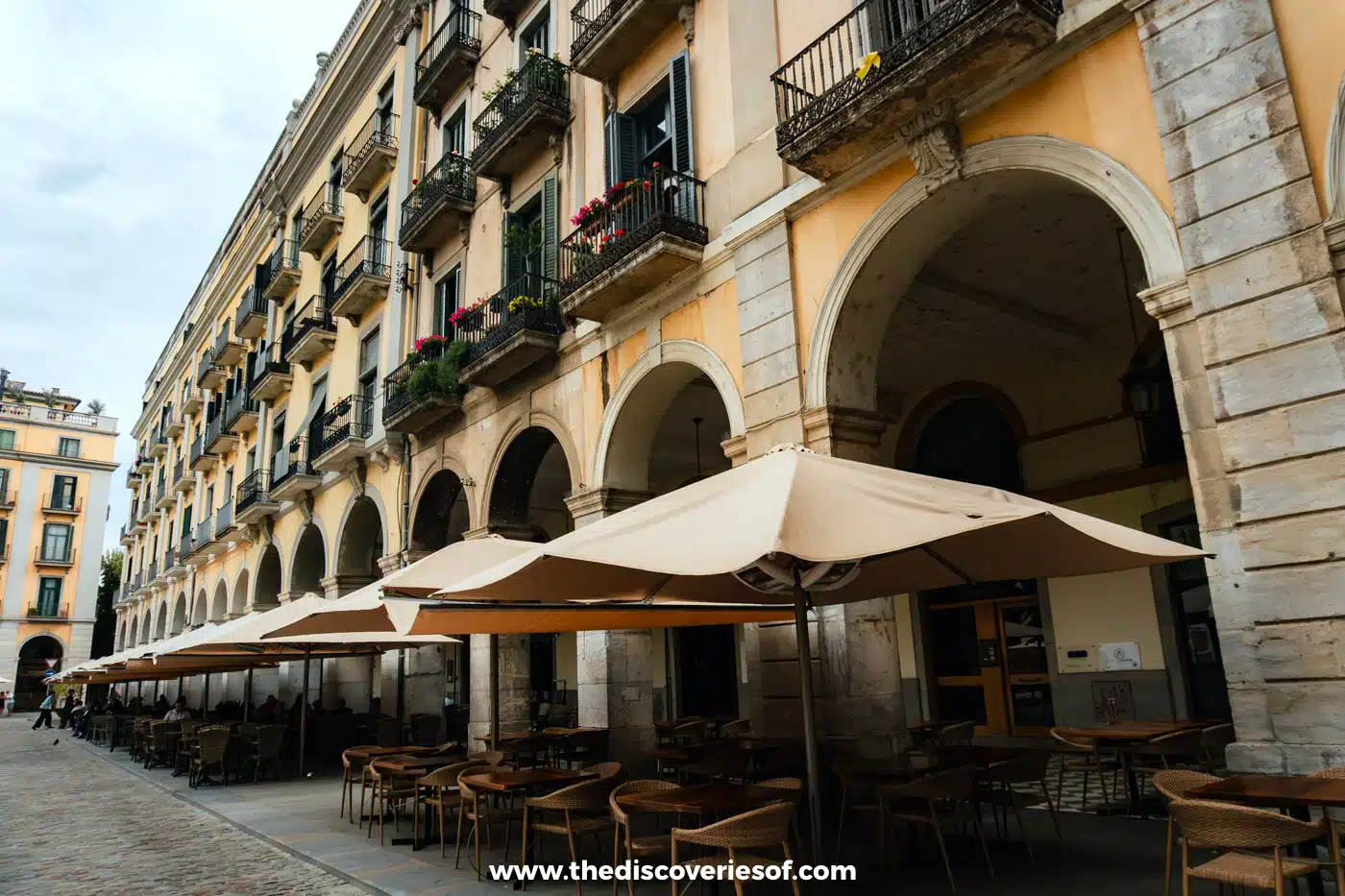
On the other side of the river from the old town, the arcaded Plaça de la Independència is one of the city’s liveliest squares, lined with restaurant terraces under its 19th-century porticoes. It’s the place to sit with a drink and watch Girona go by after a morning of climbing steps.
Follow the Game of Thrones filming locations
If the cobbled streets, ancient buildings and narrow alleyways all look a bit familiar, it’s because some of the best scenes of Game of Thrones season 6 were filmed around the medieval city of Girona, which played Braavos and King’s Landing. The cathedral steps became the Great Sept of Baelor, Arya ran through the lanes and stairways of the old town, and the Arab Baths appear too. My Game of Thrones in Girona guide takes you round every filming location on foot.
Walking the same winding alleys and climbing the ancient steps is one of the best things to do in Girona. Trust me.
Top Tip
Hotel Ultonia has put together a handy Game of Thrones route to explore the filming locations in the old town, or you can join a Game of Thrones small-group tour.
Visit Casa Masó
Catalan architect Rafael Masó i Valentí made a lasting impression during the Noucentisme period, the movement that reacted against the Modernisme of Gaudí’s generation. Casa Masó, the riverside family home he remodelled, is the best place to see his work, down to the lamps and furniture he designed himself.
Tickets
Visits are by guided tour only, from Tuesday to Saturday, so book a time slot in advance on the Casa Masó website. It’s closed on Sundays and Mondays.
Feast on a xuixo
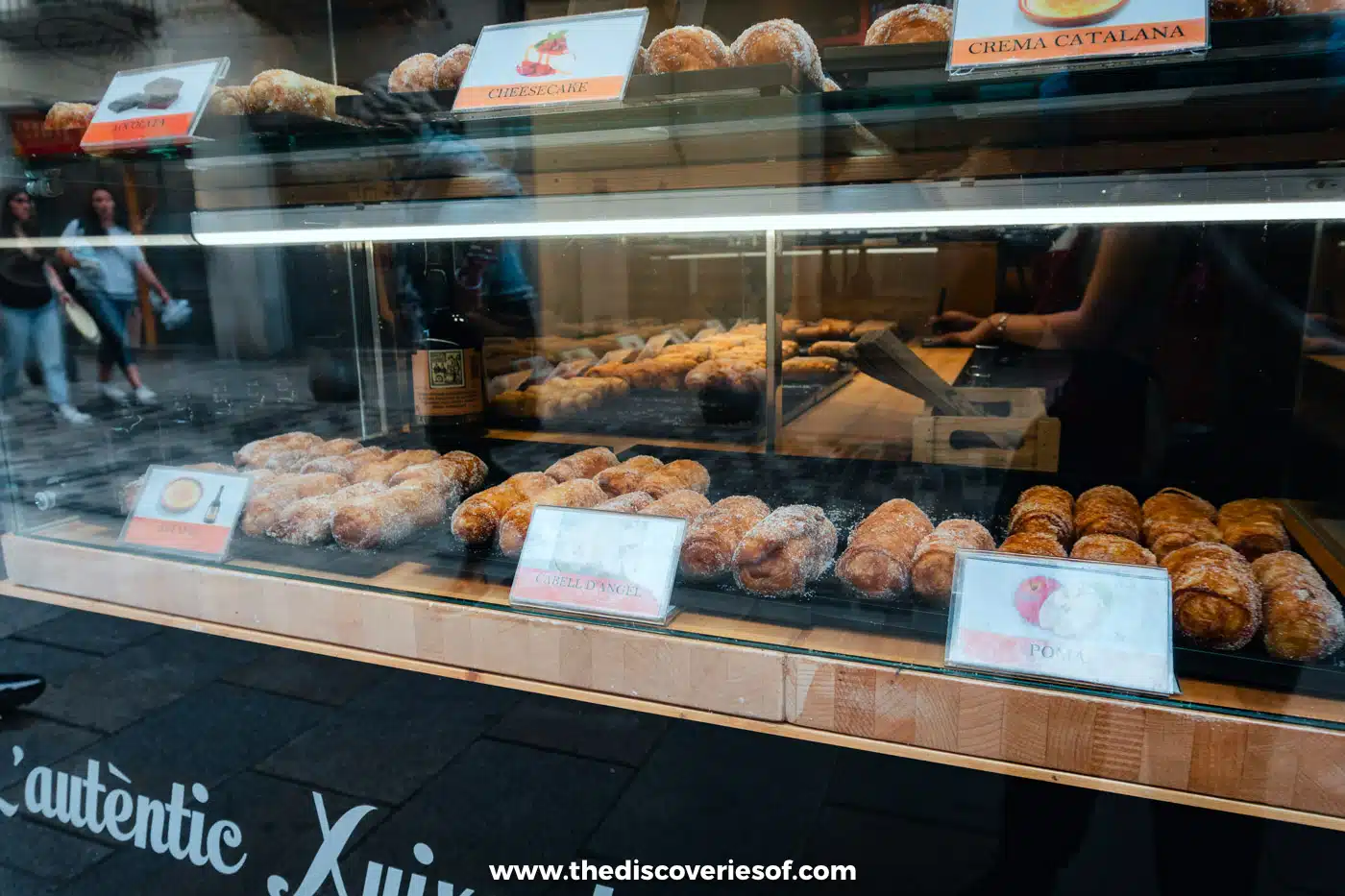
When people ask me if Girona is worth visiting, I look at them with a playfully solemn stare and slowly nod yes.
Apart from the beautifully preserved Jewish quarter and idyllic bridges crossing the Onyar, there’s a lot of excellent food, and you’ll see the city’s own pastry in bakery windows all over the old town. The devilishly scrumptious xuixo is a fried roll of dough filled with crema catalana and rolled in sugar, with a back story to match. Local legend has it that a young acrobat courting a baker’s daughter hid among the sacks of flour and sneezed, hence the name.
He offered a secret recipe to the baker, and the rest is history (or fable). Either way, they’re delicious.
Book a table at El Celler de Can Roca
Looking for one of the best things to do in Girona at night? Head to the family-run El Celler de Can Roca, where the Roca brothers surprise guests with inventive cuisine, excellent wine and an inviting atmosphere. The three-Michelin-starred restaurant, twice named the best in the world, sits on the western edge of the city, with limited seating for lunch and dinner, so book months ahead.
Tips for planning your trip to Girona
- How long to spend in Girona: you can see most of the main sights of the old town in a few hours, which makes Girona a perfect day trip from Barcelona. Alternatively, spend a couple of nights and really dive deep into the history, food and culture, or carry on to Figueres and the Dalí Theatre-Museum, as I did.
- When to go: Girona enjoys a pleasant climate for most of the year, but it gets crowded in the summer months. I recommend visiting during the off-peak season (in autumn or spring) to avoid the queues in this increasingly popular small city.
- Getting there: high-speed trains from Barcelona Sants reach Girona in about 40 minutes, and slower regional trains take around an hour and a quarter. From the station it’s a 15-minute walk to the river. If you’d rather not plan it yourself, this full-day tour of Girona and the Costa Brava leaves from Barcelona.
- Where to stay: base yourself near the river and the old town. The impossibly charming Hotel Nord 1901 is a boutique gem within walking distance of the top attractions, and Hotel Ultonia is a popular choice on the Gran Via, close to the heart of the old town.
For more ideas, see my guide to the best day trips from Barcelona.
Map
Read next
- Girona and Figueres in one day from Barcelona
- A guide to Girona Cathedral
- 25 brilliant day trips from Barcelona
- A guide to the Dalí Theatre-Museum in Figueres
- Priorat wine day trip from Barcelona
- 13 things to do in Tarragona
- Best things to do in Barcelona
Love this? Save and share on Pinterest
Discover the top things to do, insider tips and hidden gems in our Spain Travel Guide.
Read the guides →