
Spain
Tarragona travel guide
A Roman arena on the edge of the Mediterranean, walls you can walk along and an aqueduct hidden in the pine woods. Plan a trip to Tarragona, from when to come and where to stay to the Roman sites, the food and the guides to read first.

Julianna BarnabyTravel and culture writer
Tarragona sits on a low hill above the sea, about an hour south of Barcelona by train. Two thousand years ago it was Tarraco, the capital of Roman Spain, and it still wears that past in the open: an amphitheatre right above the beach, the vaults of a chariot circus under the streets, walls more than 2,000 years old and an aqueduct in the pines outside town. So much survives that UNESCO listed the archaeological ensemble of Tárraco as a World Heritage Site in 2000. Above it all, the medieval Part Alta climbs to a cathedral built on the site of a temple to Augustus.
I came down for the day during a three-month stay in Barcelona. I started at the clifftop viewpoint at the end of the Rambla, had a seafood rice lunch in the old town, walked up to the cathedral and round the Roman walls, went down into the amphitheatre and finished by driving out to the Pont del Diable to walk across the top of the aqueduct.
Everything you need to plan a visit is below, along with links to all my Tarragona guides.
Some links in this article may be affiliate links, which means we may receive a small commission, at no additional cost to you, if you decide to purchase through one of my recommended partners.
 A guide to Tarragona’s Roman amphitheatre, the arena that drops into the Mediterranean
When to go
Spring and autumn are the best times to visit: warm enough to sit out on a terrace and, from late spring, to swim, without the heavy heat of high summer. July and August are hot, and the walls walk and the amphitheatre have little shade, so see them in the morning or late afternoon.
Come in May for Tarraco Viva, the city’s Roman history festival, when re-enactments and talks fill the Roman sites. The biggest party of the year is Santa Tecla, in honour of the city’s patron saint, which peaks around 23 September with human towers, giants and fire-running devils in the old town. Every two years, in early October, Tarragona also hosts the Concurs de Castells, the biggest human tower competition in Catalonia.
The Roman sites are closed on Mondays all year, so plan your day round that.
Getting there and around
- Tarragona Turisme: the city’s tourist board, with events, festivals and opening times.
- Museu d’Història de Tarragona: the five Roman sites run by the city, including the amphitheatre, the circus and the walls walk, with hours and ticket prices.
- Renfe: trains from Barcelona Sants to Tarragona.
- Skyscanner: flights to Barcelona and Reus.
- Rentalcars.com: car hire, if you want to drive out to the Pont del Diable or on to the Priorat vineyards.
- GetYourGuide: guided walks round Roman Tarragona and day trips from Barcelona.
Trains from Barcelona Sants to Tarragona station take about 1 hour 10 minutes, with around 30 a day, and the station is a short climb from the Rambla Nova. High-speed trains stop at Camp de Tarragona, outside the city, so check which station you’re booking. The old town is compact and easy to walk. For the Pont del Diable, about 4 kilometres north of the centre, drive out along the N-240 or take city bus 5 or 85 to the Pont del Diable stop.
Where to stay
Most people visit Tarragona as a day trip from Barcelona, as I did, but staying the night lets you see the Roman sites in the cooler hours of the morning and evening.
The Part Alta
Stay in the old town for the cathedral, the walls and the circus on your doorstep. Hotel Plaça de la Font looks onto the square built over the Roman circus, a few minutes’ walk from the amphitheatre. For more space, there are apartments in the lanes around Carrer Major and the cathedral.
By the sea
The clifftop promenade above the amphitheatre has the views. H10 Imperial Tarraco is a large four-star hotel there, looking out over the Mediterranean, a short walk from the Balcó del Mediterrani and the Rambla Nova.


Tours
Know before you go
Top things to do
Watch the sea from the amphitheatre’s stone tiers
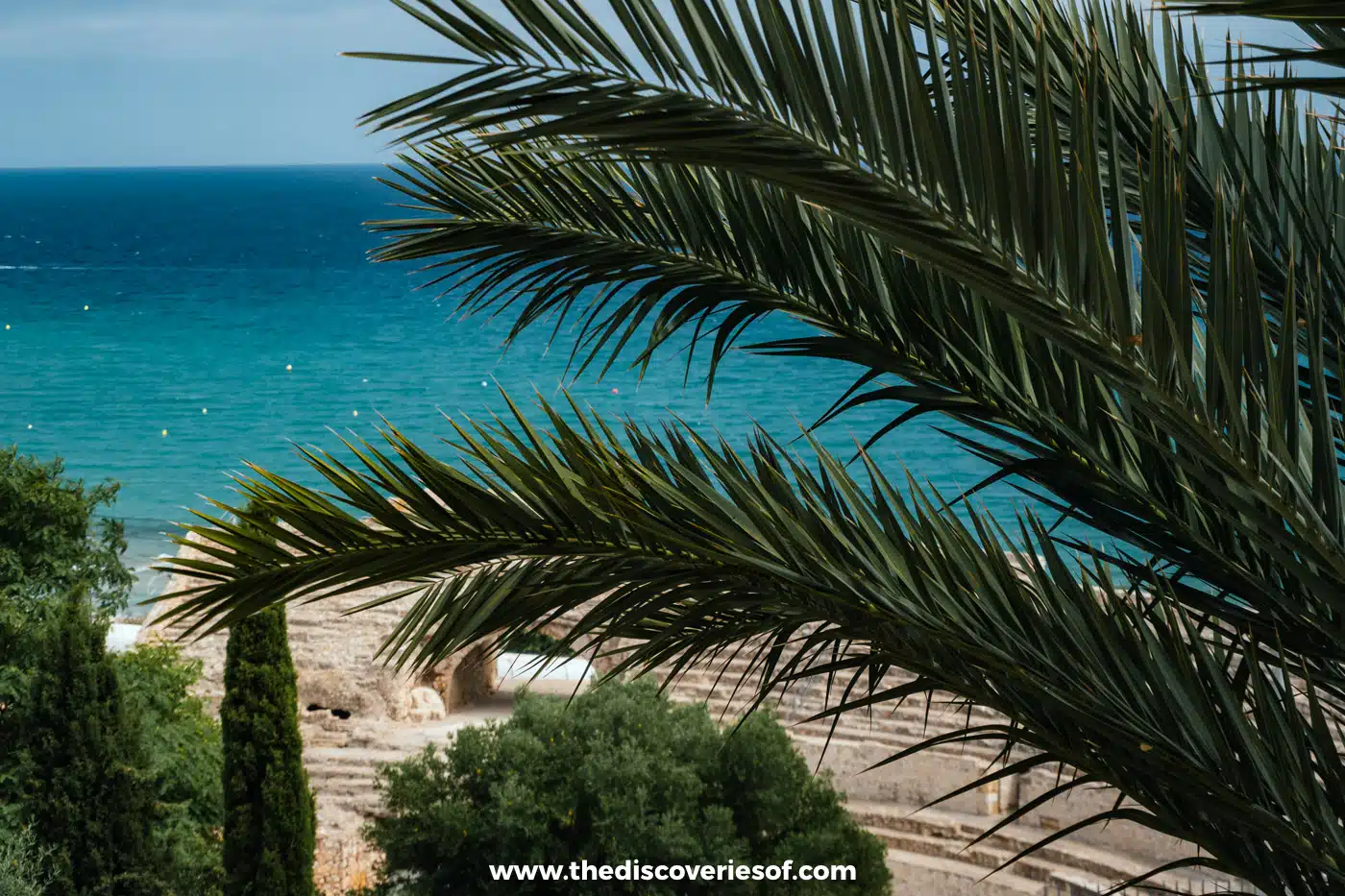
The amphitheatre was built into the slope just above the beach in the 2nd century AD, so its tiers seem to drop straight into the Mediterranean, and it held around 14,000 spectators for gladiator fights and wild beast hunts. I looked down on it from the clifftop first, then went in, walked round the upper tiers and down to the arena floor. What struck me most was the location: I’ve been to plenty of ancient theatres, but I’d never seen one sitting right on the seafront like this. My guide to Tarragona’s amphitheatre has tickets, hours and the best viewpoints.
Walk the Roman walls on the Passeig Arqueològic
Tarraco’s walls are more than 2,000 years old, the oldest Roman construction still standing outside Italy, and the Passeig Arqueològic follows the best of them through a garden of cypresses, cannons and brick sentry boxes. I walked it in the early afternoon, past the bronze statue of Augustus, and stepped into one of the sentry boxes for a photo. My Passeig Arqueològic guide covers what to look out for along the way.
Walk across the top of the Pont del Diable
The Pont del Diable, or Devil’s Bridge, carried water to Tarraco in the 1st century AD: two tiers of arches, 217 metres long and almost 27 metres high, built without mortar. It was my last stop of the day. I drove out of the city and walked across the top, along the channel that once carried the water, with the pines below on both sides. It’s free and always open. My Pont del Diable guide explains how to get there with or without a car.
Climb Carrer Major to the cathedral
The main street of the old town ends at the cathedral’s great rose window and Gothic doorway. The cathedral stands on the highest point of the city, on the site of a temple to Augustus, and was consecrated in 1331. I walked up Carrer Major and round the outside; inside, the cloister has 295 carved capitals, including one of rats carrying a cat to its funeral.
Start at the Balcó del Mediterrani
The Rambla Nova runs straight to the sea and ends at a clifftop railing above the water, where local people walk down to “tocar ferro”, touch the iron, before turning back. It’s where I started my day, with the view over Platja del Miracle, the port and the curve of the amphitheatre below.
Go under the Roman circus
At the end of the 1st century AD, Tarraco built a chariot-racing circus more than 300 metres long. The later city was built on top of it, so today you walk through its vaulted passages under the streets, then climb the Praetorium tower for a view over the old town and the sea.
If you’d like the stories behind the stones, this Roman heritage walking tour of Tarragona takes in the amphitheatre, the walls and the old town with a local guide.
For all 13 of my favourite things to do, read my guide to the best things to do in Tarragona.
Suggested itineraries
Tarragona in a day
One day
This is the day I had: the Balcó del Mediterrani first thing, then down the Rambla Nova into the old town for lunch, up Carrer Major to the cathedral, round the walls on the Passeig Arqueològic, down through Plaça del Fòrum to the amphitheatre, and out to the Pont del Diable in the late afternoon. Without a car, swap the aqueduct for the Roman circus and the Praetorium tower.
A day trip from Barcelona
One day
Trains from Barcelona Sants take about 1 hour 10 minutes, with around 30 a day, and Tarragona station sits right below the Balcó del Mediterrani. Buy the combined ticket at your first Roman site, and remember the sites are closed on Mondays. If you’d rather not plan it yourself, this half-day Tarragona tour from Barcelona includes transport and a guide.
Tarragona and Priorat
Two days
Spend a day on the Roman sites, then drive inland to the vineyards of Priorat, about an hour away, for a day of tastings around Gratallops. My Priorat wine day trip guide has the wineries I’d book.
Hidden Tarragona
Plaça dels Sedassos
A small square in the Part Alta where the whole end wall is a trompe l’oeil mural, painted in 1995, with balconies, figures and the artist himself at work. Most people walking between the cathedral and the forum miss it.
El Serrallo
The old fishermen’s quarter by the port, about 15 minutes’ walk from the Rambla Nova, where the fleet still lands its catch and the waterfront is lined with seafood restaurants.
The Torre dels Escipions
A Roman funerary tower about 6 kilometres east of the city, beside the old coast road, and one of the lesser-visited parts of the World Heritage Site. It’s free to see from the outside.
Dishes and drinks to try
Dishes to try
Seafood rice
Rice cooked with the catch of the day, dry or creamy, is what the coast here does best. Mine at El Llagut came crowded with crab, langoustines and mussels.
Romesco
The region’s great sauce, made with dried ñora peppers, roasted tomatoes, garlic, almonds and hazelnuts, served with grilled fish and vegetables.
Calçots
From winter into spring, the long sweet onions of nearby Valls are charred over a fire and dipped in romesco at a calçotada, a feast that’s as messy as it is fun.
Drinks to try
Priorat and Montsant reds
Two of Spain’s most prized wine regions are an hour inland, and their powerful reds are on every wine list in town. Read my Priorat wine day trip guide if you want to taste at source.
Vermouth
Nearby Reus is one of the capitals of Catalan vermouth, and a glass on a terrace before lunch is a local ritual.
Must-try bars and restaurants
El Llagut
A small, nautical-themed restaurant on Carrer de Natzaret, by Plaça del Rei in the old town, known for its rice. I had lunch here: a pot of rice crowded with crab, langoustines and mussels, a fish stew and a plate of sardines. Expect to pay around €45 a head without drinks, and book ahead, as it’s a small room.
El Serrallo
The seafood restaurants along the fishermen’s quarter by the port are the obvious place for a long fish lunch or dinner by the boats.
Mercat Central
The modernista market on Plaça Corsini, just off the Rambla Nova, has stalls of fish, cured meats and cheese, and bars where you can eat at the counter. Go in the morning, when it’s busiest.
Costs and budgeting
The Roman sites are cheap, and the best views are free.
- Amphitheatre, Roman circus and Praetorium, Passeig Arqueològic, colonial forum or Casa Canals: €5 each (€2.50 reduced)
- Combined ticket for all five: €15 (€7.50 reduced)
- Tarragona Cathedral: €12.50 (€8.50 reduced), with a free audio guide
- Pont del Diable: free
- Lunch at El Llagut: around €45 a head without drinks
Safety, health and tipping
Safety
Tarragona is a safe city. Watch for pickpockets in busy spots and on trains, don’t leave bags unattended on the beach, and take care on the open top of the aqueduct.
Health
The tap water is safe to drink, though many people prefer bottled. Summer is hot and the Roman sites are exposed, so carry water, wear a hat and keep out of the midday sun. In an emergency, call 112.
Tipping
Tipping isn’t obligatory. Leave around 10% at sit-down restaurants for good service, and round up in bars and cafés.
Practical tips and info
Tips for travelling
- The Roman sites are closed on Mondays. From April to late October they open Tuesday to Saturday 9am to 8.45pm and Sunday 9am to 2.30pm, closing earlier in winter.
- Buy the €15 combined ticket at your first Roman site if you plan to see four or more; under-12s go free.
- See the walls and the amphitheatre in the morning or late afternoon in summer, as there’s little shade.
- The top of the Pont del Diable is narrow and open, so take it slowly and wear proper shoes.
- Eat on Catalan time: lunch from about 2pm and dinner rarely before 9pm.
How to see the best for free
A lot of Roman Tarragona costs nothing. The Pont del Diable is free and always open, the arches of Plaça del Fòrum stand in the open street, and from the Balcó del Mediterrani and the park above the amphitheatre you can see the whole arena without a ticket. Walk up Carrer Major to the outside of the cathedral, find the castellers monument halfway down the Rambla Nova, and end the day on Platja del Miracle.
Packing
Packing for Tarragona? Don’t forget…
- Comfortable walking shoes: for the cobbles of the Part Alta, the gravel of the walls walk and the uneven top of the aqueduct. I wear my Tropicfeel Canyons.
- Sunscreen and a hat: the amphitheatre and the walls have very little shade.
- A refillable water bottle: there’s nowhere to buy a drink at the Pont del Diable.
- A swimsuit: Platja del Miracle is right below the old town.
For the full list, see my Spain packing list.
Travel insurance
UK travellers should carry a GHIC for state healthcare in Spain, but it doesn’t cover private clinics, lost luggage or getting you home, so take out a full policy too. You can find a policy with AXA Travel Insurance.
Interesting facts
- Tarraco was the capital of Hispania Citerior, later Hispania Tarraconensis, the largest province of Roman Spain, and Augustus stayed here over the winter of 26 to 25 BC.
- The city walls, begun in the 2nd century BC, are the oldest Roman construction still standing outside Italy.
- The Pont del Diable was built without mortar, its stone blocks held in place by their own weight.
- The castells, Catalonia’s human towers, are on UNESCO’s list of the Intangible Cultural Heritage of Humanity, and Tarragona is one of their homes.
- The bronze Augustus on the walls walk is a copy of the Augustus of Prima Porta, given to the city by Italy in 1934.
Handy phrases
Catalan is spoken alongside Spanish, and signs are often in Catalan first:
- Bon dia: good morning
- Bona tarda: good afternoon
- Si us plau: please
- Moltes gràcies: thank you very much
- Adéu: goodbye
Time zone
Tarragona runs on Central European Time: UTC+1 in winter and UTC+2 in summer, one hour ahead of the UK.
Electricity and adapters
Sockets take Type C and Type F plugs, at 230V and 50Hz.
Map
Insider tips, straight to your inbox
All Tarragona guides
 A guide to Tarragona’s Roman amphitheatre, the arena that drops into the Mediterranean
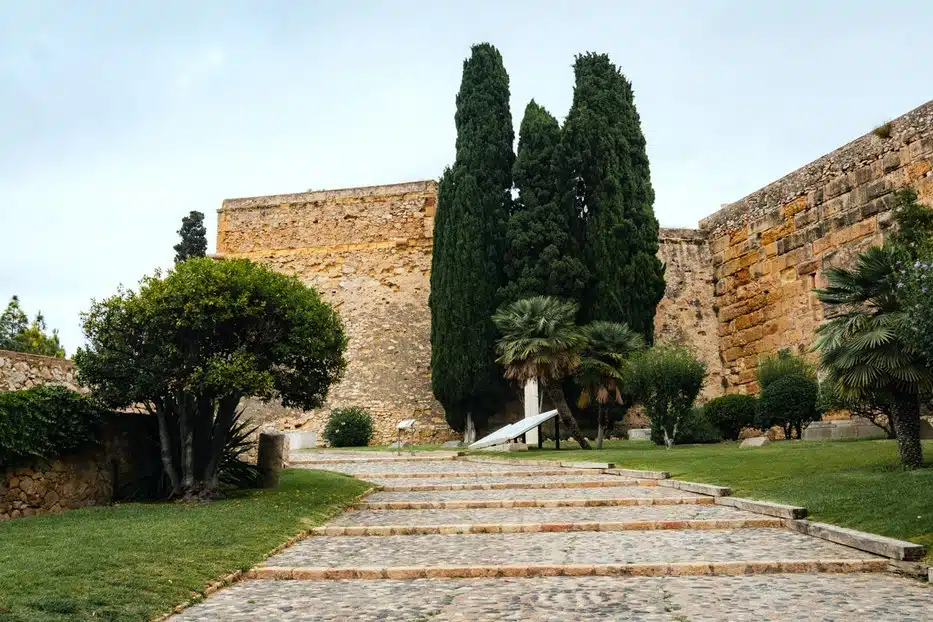 A guide to the Passeig Arqueològic, the garden walk along Tarragona’s Roman walls
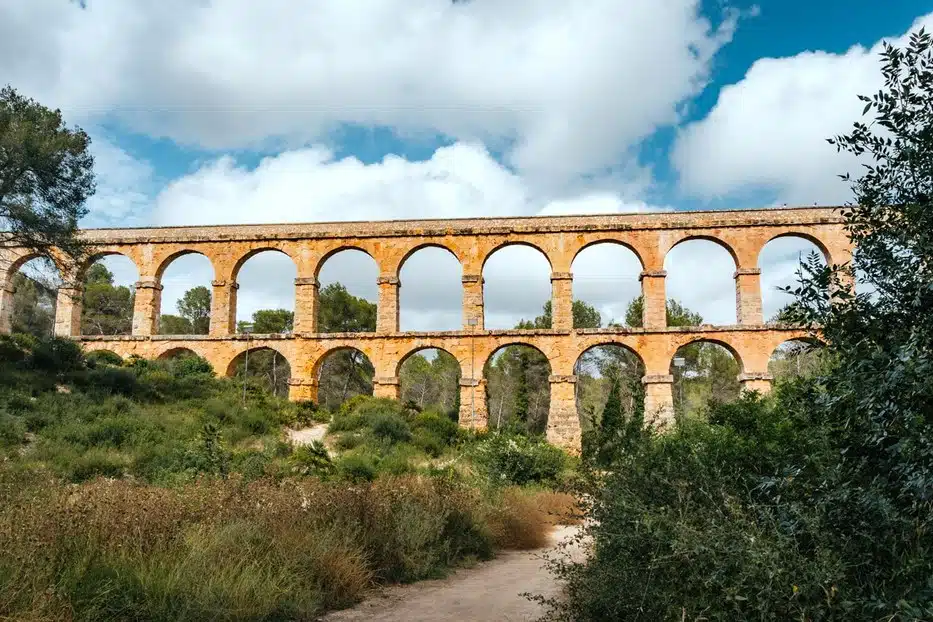 A guide to the Pont del Diable, the Roman aqueduct you can walk across outside Tarragona
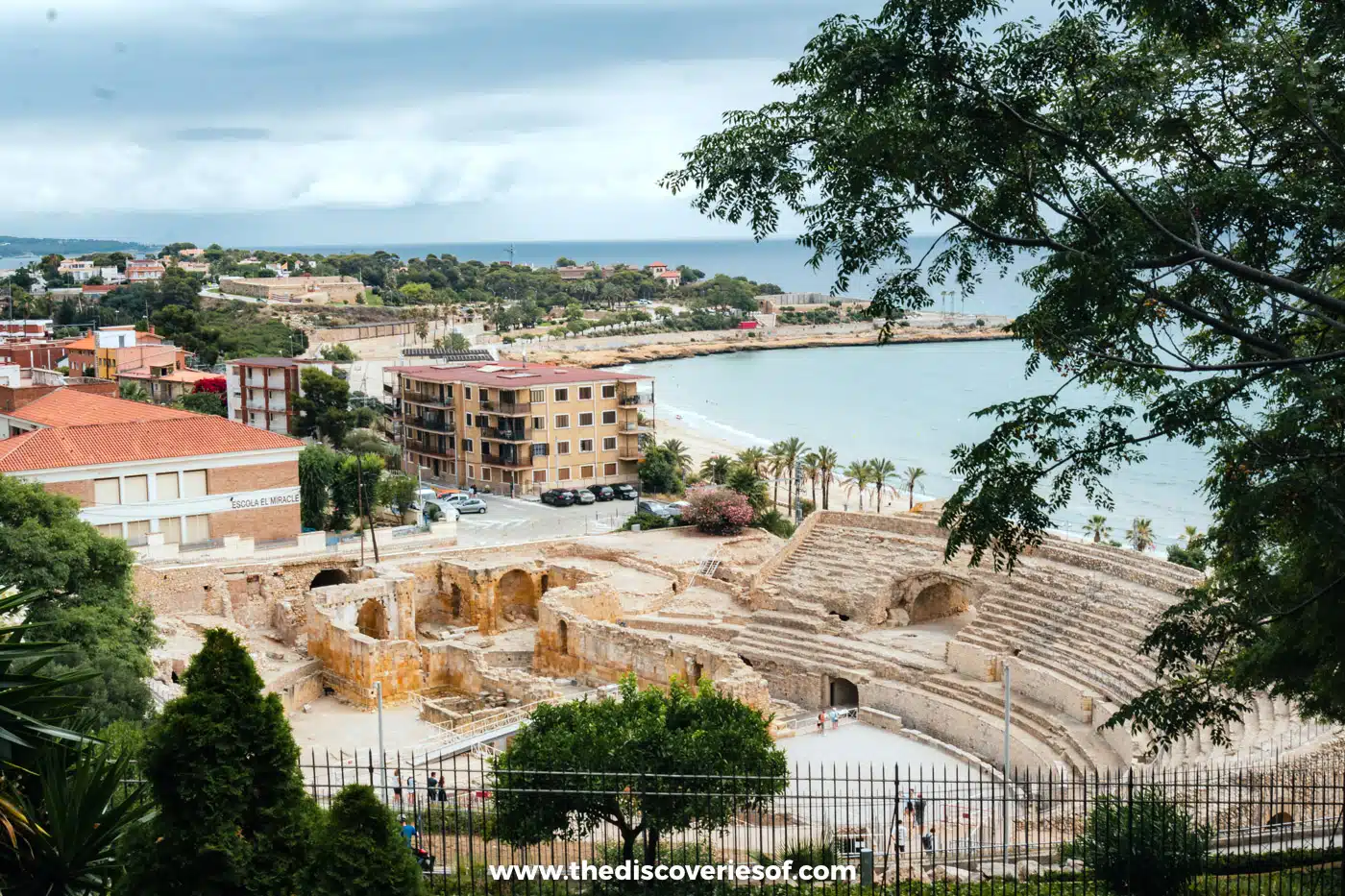 13 things to do in Tarragona, where a Roman arena looks out to sea



Watch on YouTube
See the places before you go
Short films from the places in my guides, so you can see what a destination really looks and feels like before you go.
Subscribe on YouTube youtube.com/@thediscoveriesof