

USA
New York City travel guide
Plan a trip to New York City: when to go, which neighbourhood to base yourself in, the views, walks and bites I’d put first (pastrami included), and how to make the subway and the free ferry work for you, plus every New York guide on the site.

Julianna BarnabyTravel and culture writer
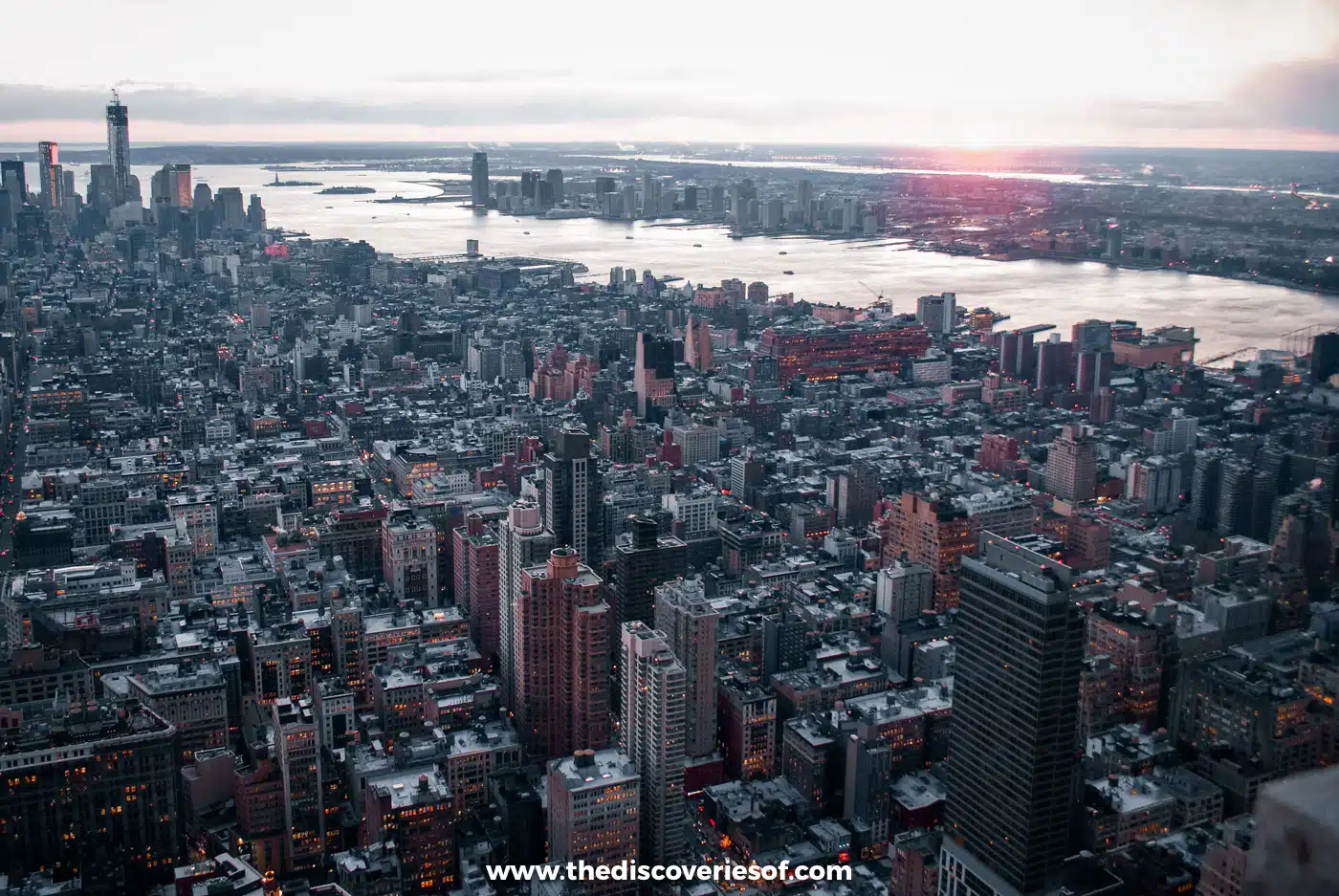
Everyone arrives in New York with a version of it already in their head, pieced together from films and skyline postcards. I based myself at The Westin New York at Times Square and set out on foot: up the Empire State Building for the view down Manhattan to the harbour, along the High Line, over the Brooklyn Bridge and across the water on the free Staten Island Ferry. Some of the best moments cost nothing, and some of the best food I ate came out of a kitchen run by grandmothers on Staten Island.
This page brings together the essentials and every New York guide I’ve written, from the best things to do in the city and its famous landmarks to a two-day itinerary and where to stay.
 28 famous landmarks in New York City, from Lady Liberty to the Joker stairs
 2 days in New York: the perfect itinerary, from pastrami at Katz’s to dinner cooked by nonnas
 Where to stay in New York, neighbourhood by neighbourhood (and the hotels worth booking)
When to go
Spring (April to June) and autumn (September to November) are the sweet spots: mild enough to walk all day, with cherry blossom in the parks from late March and the leaves turning in Central Park from late October. They’re also when I’d go for better hotel rates than the Christmas peak.
Summer is hot and humid but brings outdoor concerts and baseball at Yankee Stadium. Winter is cold, with short days, though from late November the city does Christmas properly: the Rockefeller Center tree, the ice rinks and the Fifth Avenue windows.
Getting there and around
- The best things to do in New York
- Famous landmarks in New York City
- 2 days in New York: the perfect itinerary
- Where to stay in New York, neighbourhood by neighbourhood
- USA travel guides
From JFK, the AirTrain ($8.75, tap a contactless card) runs to the subway at Jamaica and Howard Beach, or to the faster Long Island Rail Road at Jamaica, and a yellow cab to Manhattan is a flat $70 plus tolls, tip and surcharges. From LaGuardia, the free Q70 bus runs to the subway at Jackson Heights. From Newark, NJ Transit trains reach New York Penn Station in about 30 minutes ($17.25, including the AirTrain).
In the city, walk and take the subway, which runs around the clock. Every ride is $3, paid by touching a bank card or phone to the OMNY reader, and OMNY stops charging after your 12th paid ride in any seven-day stretch, so a week of travel never costs more than $35. Buses use the same system, with a free transfer within two hours.
Where to stay
Midtown, around Times Square, is the easiest base for a first visit: Broadway, the observation decks and most subway lines are on the doorstep, and you pay for that in crowds and noise. Chelsea and the Flatiron District are calmer but central, SoHo, Tribeca and the West Village have the boutique hotels, and Brooklyn gives you skyline views and better value.
I stayed at The Westin New York at Times Square, a few minutes’ walk from the square, and being able to stroll back through the neon after dinner made it an easy first base. For hotels in every area, read my guide to where to stay in New York.
Tours
Know before you go
Top things to do
Go up for the view first. I took my skyline photos from the Empire State Building, but if you only pick one deck, make it the Top of the Rock: it’s the view with the Empire State Building in it. Then walk the High Line, a disused freight railway turned park, from the Meatpacking District to Hudson Yards, and cross the Brooklyn Bridge early in the morning, when the promenade is quieter.
See Times Square after dark, when the screens are brightest, and give the 9/11 Memorial the quiet time it deserves. Rent a bike for Central Park, which is far too big to cover on foot, and make room for a Broadway show and the Guggenheim’s spiral. All 34 of my picks are in my guide to the best things to do in New York, and the stories behind the big sights are in my guide to the city’s famous landmarks.
Suggested itineraries
Three to five days is the sweet spot for a first visit. With two, my 2-day New York itinerary heads south through Manhattan on day one, from the Guggenheim to the 9/11 Memorial, and gives day two to Katz’s, the Brooklyn Bridge and the harbour.
With a third day, add MoMA or the Top of the Rock and an afternoon in Williamsburg. With four or five, take the subway to Coney Island, catch a game at Yankee Stadium in season, or eat your way around Flushing in Queens.
Hidden New York City
Under the tiled arches outside the Grand Central Oyster Bar, stand in opposite corners, face the wall and speak softly: the curve of the vault carries a whisper clean across. Ride the Roosevelt Island Tram over the East River for the price of a subway fare, then walk to the Gothic shell of the old Smallpox Hospital at the island’s southern tip. Uptown, the Little Red Lighthouse hides beneath the George Washington Bridge.
Dishes and drinks to try
Dishes to try
- Pastrami on rye, hand-sliced and piled high, with sour and half-sour pickles at Katz’s (mine didn’t last long)
- A bagel with lox and cream cheese from a Lower East Side appetising shop
- A New York slice: thin, wide and folded in half to eat on the go
- Dim sum and hand-pulled noodles in Chinatown
- New York cheesecake, dense and rich with cream cheese
Drinks to try
A Manhattan (rye, sweet vermouth and bitters) in the borough it’s named after, and a Brooklyn Lager from Brooklyn Brewery, which I visited at its old Williamsburg taproom before its move to Wythe Avenue. For something alcohol-free, try an egg cream: milk, chocolate syrup and seltzer, with neither egg nor cream.
Must-try bars and restaurants
Go to Katz’s Delicatessen on East Houston Street for pastrami on rye (around $30), and keep hold of the paper ticket you’re handed at the door, as you pay on the way out. Take the ferry to Staten Island for Enoteca Maria, where grandmothers from Italy and around the world take turns in the kitchen; I had some of the best food of my trip here. It opens Friday to Sunday only, with a three-course menu at $87 a head including service, so book ahead.
Russ & Daughters, on East Houston Street, has been selling smoked fish and bagels since 1914. For drinks, try The Dead Rabbit, an award-winning Irish bar on Water Street, or the Village Vanguard, the West Village basement jazz club with sets most nights.
Costs and budgeting
Hotels are the biggest cost: rates are quoted before 14.75% tax and a $3.50 nightly charge, and many add a destination fee. A subway ride is $3, observation decks start at about $44 for the Empire State Building and $46 for the Top of the Rock, the Statue of Liberty ferry is $26 and a pastrami sandwich at Katz’s is around $30. Most prices exclude 8.875% sales tax, and restaurants expect a tip of about 20%.
Safety, health and tipping
Safety
New York is one of the safer big US cities, with murders and shootings near record lows in 2025. Take the usual precautions: keep your phone and wallet out of reach on the subway and in crowds, pick a busy carriage late at night, and know that the costumed characters in Times Square expect a tip for photos.
Health
No special vaccinations are needed beyond the routine ones, the tap water is safe to drink, and pharmacies such as CVS and Walgreens are everywhere for minor ailments. Medical bills are high, so don’t travel without insurance.
Tipping
Tipping is expected. Leave about 20% of the pre-tax bill at sit-down restaurants (check for an automatic service charge first), $1 to $2 a drink at the bar, and 15 to 20% for taxis. In hotels, $1 to $2 a bag for porters and $5 to $10 a day for housekeeping are the norm, and 10 to 20% for tour guides.
Practical tips and info
Tips for travelling
Tickets for the Statue of Liberty’s crown go months ahead, and sunset deck times and the biggest Broadway shows are next to vanish, so book those first. British and other Visa Waiver travellers need an approved ESTA before flying (just over $40, valid for two years). In my experience the food in New York can be hit and miss, so check reviews before you walk into a restaurant at random, especially around Times Square.
How to see the best for free
The Staten Island Ferry is free, runs 24 hours a day and slides past the Statue of Liberty on its 25-minute crossing: it was from the water that I took my photos of her. The High Line, Central Park, the Brooklyn Bridge, the 9/11 Memorial pools and Grand Central’s main concourse are all free too.
Packing
- Trainers, not sandals: I packed pretty sandals for my first New York trip and would leave every pair at home next time, because you walk miles here without noticing
- Layers, plus a warm coat, hat and gloves from December to March
- A crossbody bag or small backpack for crowded pavements and the subway
- A refillable water bottle and a US plug adapter
Travel insurance
Medical care in the US is excellent but among the most expensive in the world, so choose a policy with generous medical cover. Compare policies with AXA Travel Insurance.
Time zone
New York is on Eastern Time (UTC-5, or UTC-4 from mid-March to early November), five hours behind the UK for most of the year and four for a few weeks in March and a week around the end of October, when the clocks change on different dates.
Electricity and adapters
Plugs are type A and B (two flat pins, with a round earth pin on type B), at 120V and 60Hz. UK and European visitors need an adapter, and check hairdryers and straighteners are dual voltage before plugging them in.
Map
Insider tips, straight to your inbox
All New York City guides
 Where to stay in New York, neighbourhood by neighbourhood (and the hotels worth booking)
 2 days in New York: the perfect itinerary, from pastrami at Katz’s to dinner cooked by nonnas
 28 famous landmarks in New York City, from Lady Liberty to the Joker stairs
 The 34 best things to do in New York (and the free ferry with a skyline view)



Watch on YouTube
See the places before you go
Short films from the places in my guides, so you can see what a destination really looks and feels like before you go.
Subscribe on YouTube youtube.com/@thediscoveriesof