
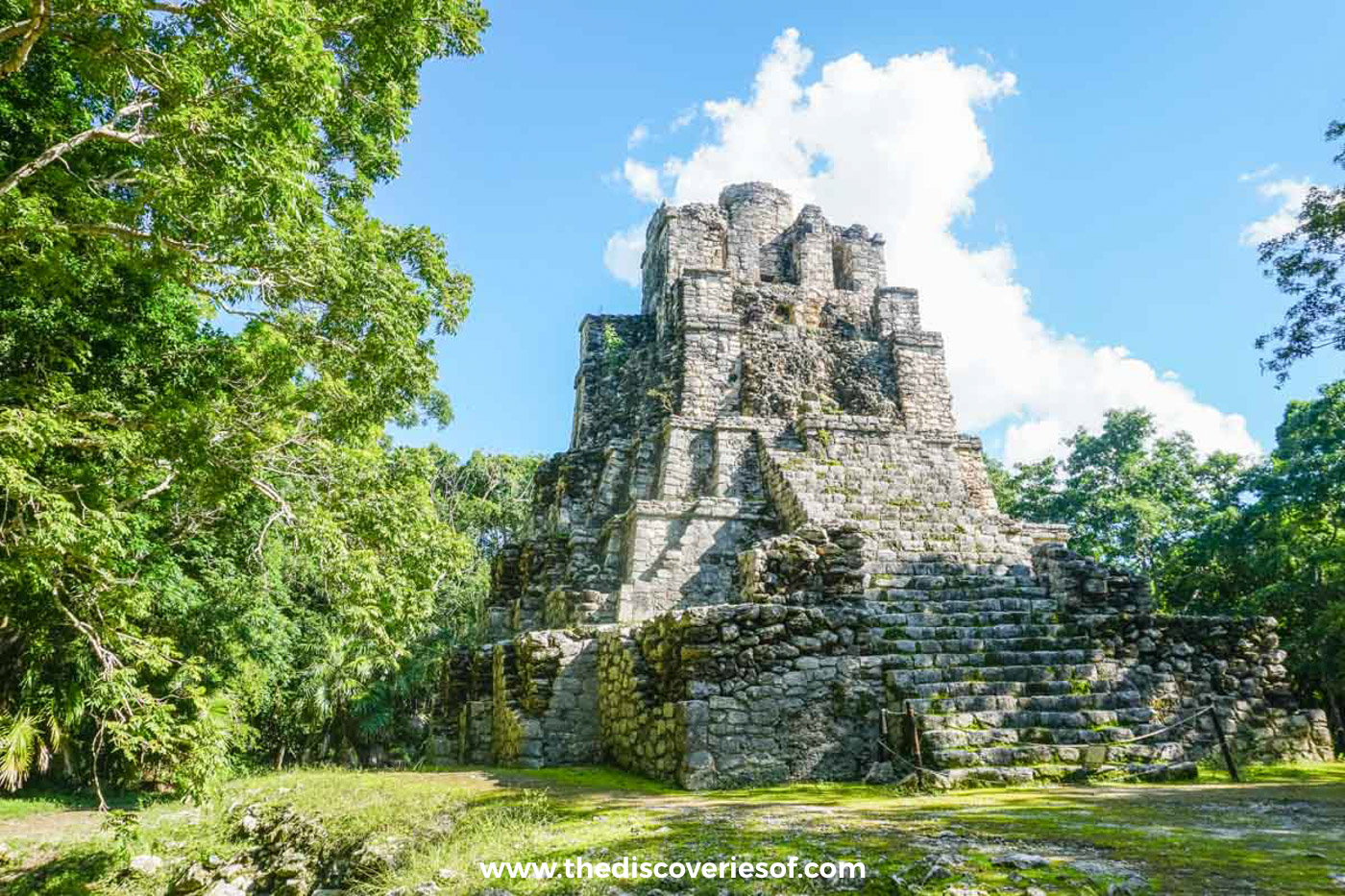

Twenty minutes south of Tulum, a 17-metre pyramid pokes out of the jungle, a boardwalk leads off into a UNESCO biosphere reserve, and a Maya canal carries you downstream on nothing but the current. Most people heading for Maya ruins on the Riviera Maya never make it this far.

Muyil, also known as Chunyaxché, is a little-visited site just off Highway 307. When I went, it was a world away from the crowds at Tulum: the site is never very busy, and wandering between temples half swallowed by the jungle is the closest thing to being Lara Croft you’ll experience in real life.
It’s also the back door into Sian Ka’an. Past the ruins, a jungle trail leads to a lagoon where boats wait to take you through ancient canals, and that combination of ruins, wildlife and water is what makes the trip worth the effort. Here’s what to see, what it costs and how to plan your visit.
Why visit the Muyil ruins?
Everyone heads for the Tulum ruins for the clifftop view, and they’re worth seeing. But the crowds there are relentless, and Muyil gives you the other side of Maya history on this coast: a city that lived off the lagoons rather than the sea, set in deep jungle, with room to wander.
It reopened in February 2026 after a major restoration, with two building groups open to visitors for the first time, so there’s more to see now than there has ever been. And because it sits on the edge of Sian Ka’an, you can pair a morning among temples with an afternoon on the water.
A short history of Muyil
Muyil’s story runs for more than a millennium. Settlement began in the Late Preclassic, around 300 to 400 BC, and people were still living here when Spanish ships arrived on the coast in the 1500s, although most of the buildings you see date from the city’s final few centuries.
Its wealth came from water. The Muyil lagoon connects to the larger Chunyaxché lagoon, and from there channels, some of them cut by the Maya, run towards the Caribbean. That made the city a trading stop between the interior of the peninsula and the coast, handling goods such as salt, honey, cacao, feathers and obsidian.
The architecture follows the Petén style seen at Tikal in Guatemala, and the star of the site, El Castillo, is about 17 metres high and topped with a small round shrine. The recent restoration also turned up a temazcal (a Maya sweat bath) where archaeologists found a ceramic vessel decorated with the face of a god and a necklace with a carved shell and jade pendant.
What you’ll see on the ruins walk
The route through the site takes 30 to 45 minutes at a steady pace, longer if you stop for every carving and photo. Since the reopening, the paths take in three groups:
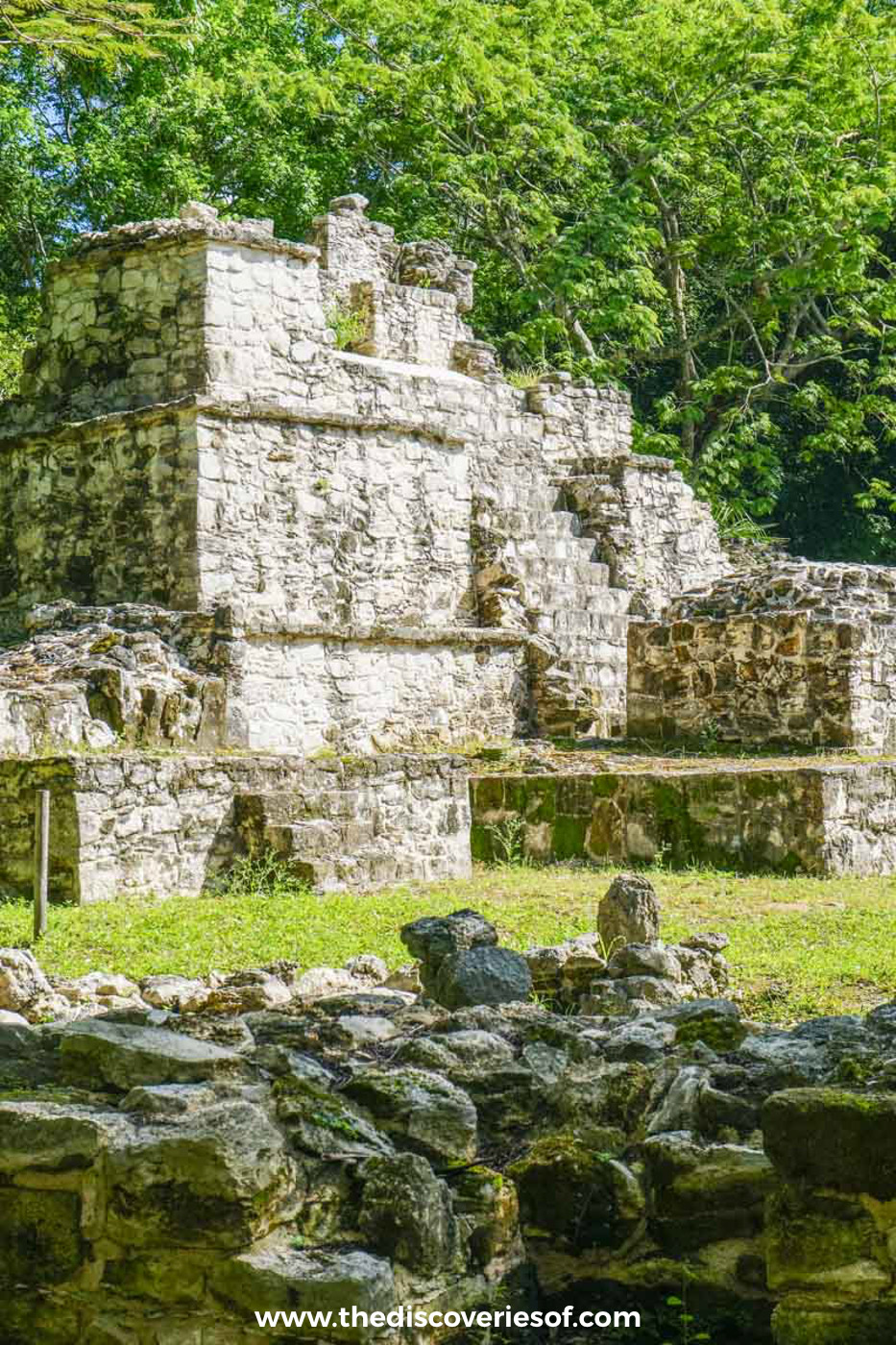
- La Entrada, the cluster of platforms and small temples near the entrance, some now under protective roofs.
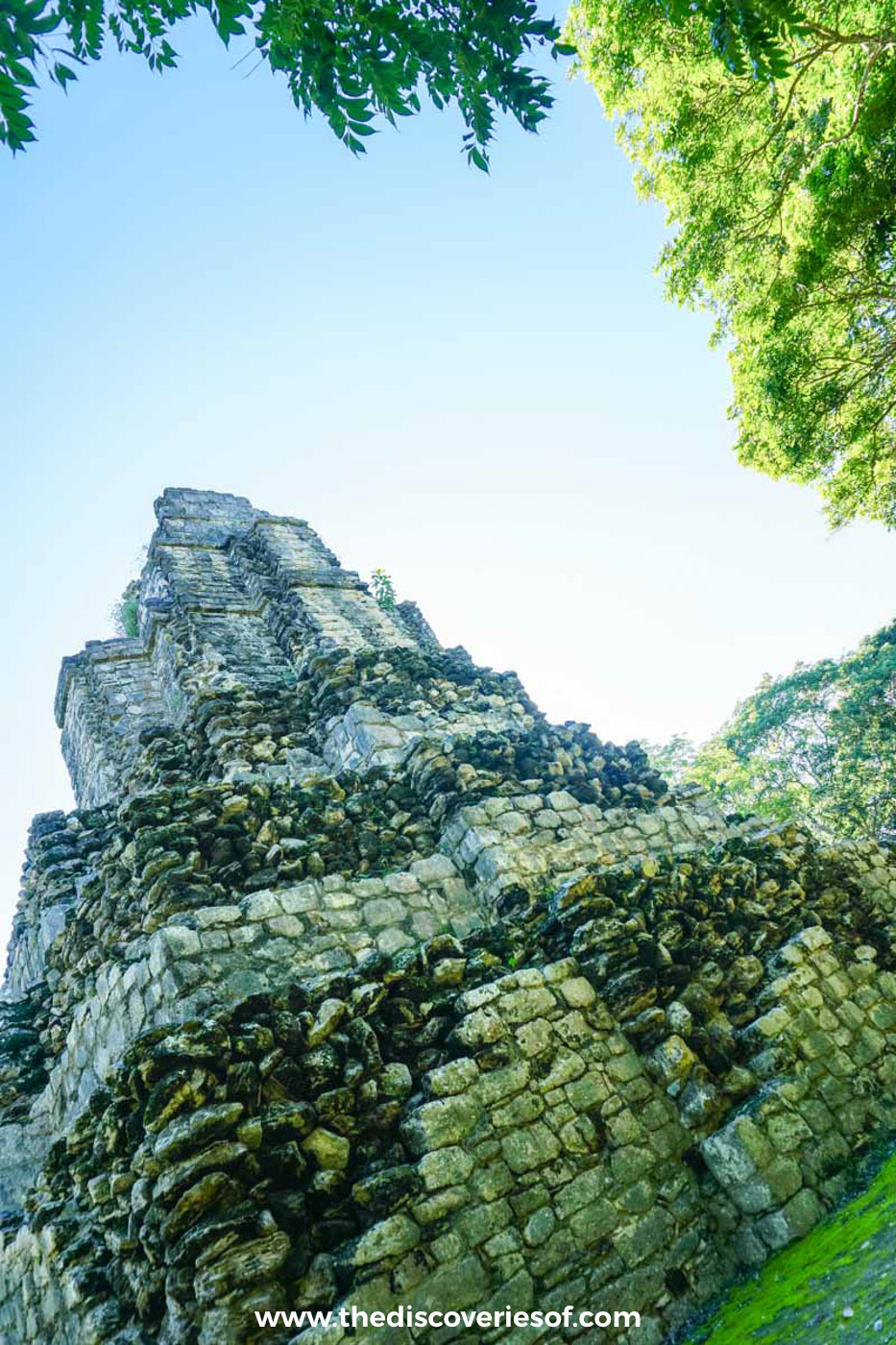
- El Castillo, the tall pyramid with its round shrine on top, framed by palms and tall trees.
- The Sacbé and Gran Plataforma groups, newly opened, including a raised white road (a sacbé) and a large platform complex with storage rooms in its base.
Climbing the structures isn’t allowed, so the joy here is in the setting rather than the views from the top. Stone temples rise straight out of the greenery, the birdsong is loud and, outside the middle of the day, you may well have whole corners to yourself.
Top Tip
The new visitor centre at the entrance has an introductory room explaining the site’s history. Spend ten minutes there first: the ruins make far more sense once you know what you’re looking at.
Into Sian Ka’an: the boardwalk, the tower and the lagoon
Once you’ve looked around the ruins, take the path behind El Castillo through to the northern section of the Sian Ka’an Biosphere Reserve. You pay a separate entry fee for the reserve (around 120 pesos), and it’s worth every peso once you’re inside.
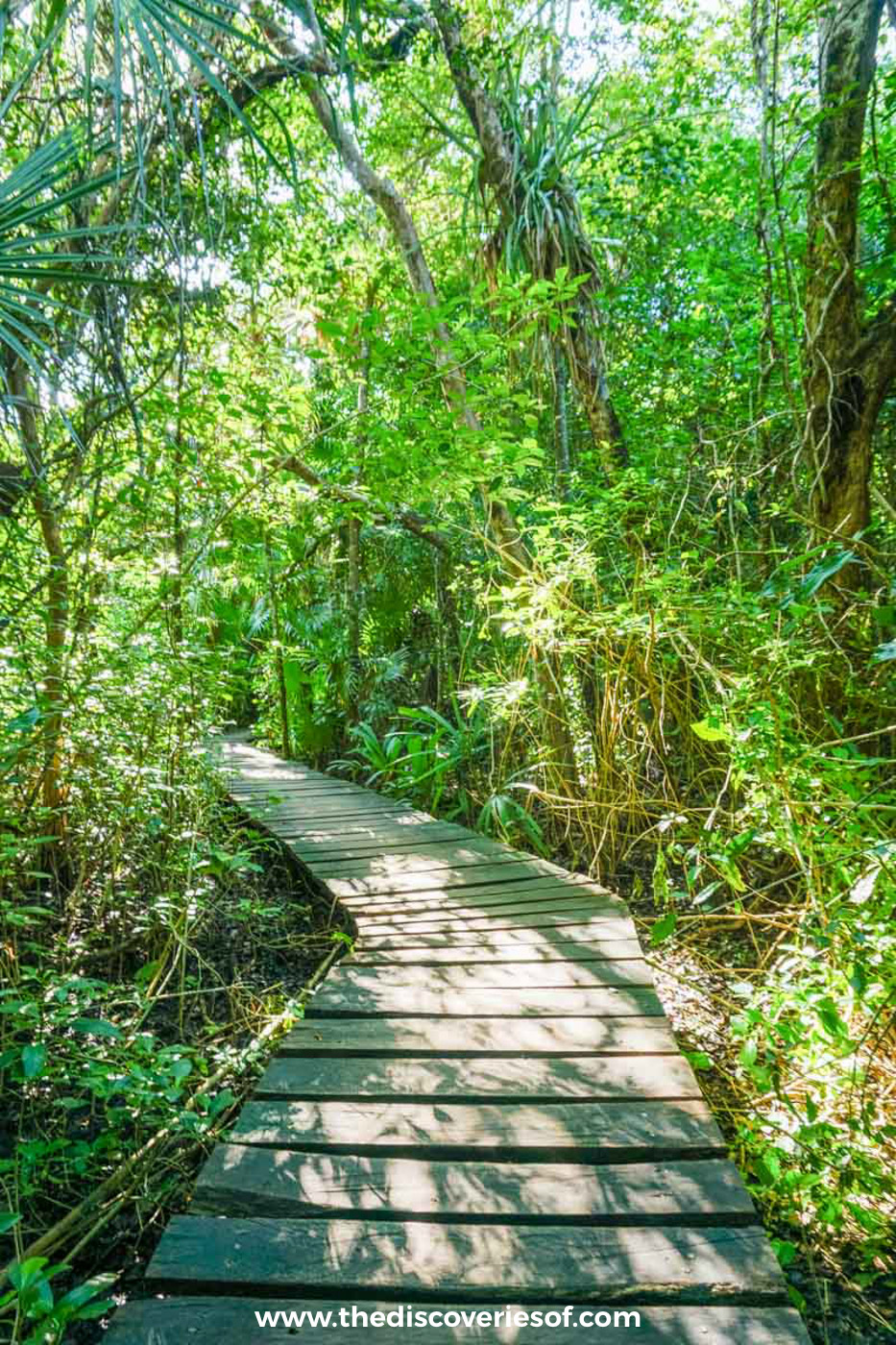
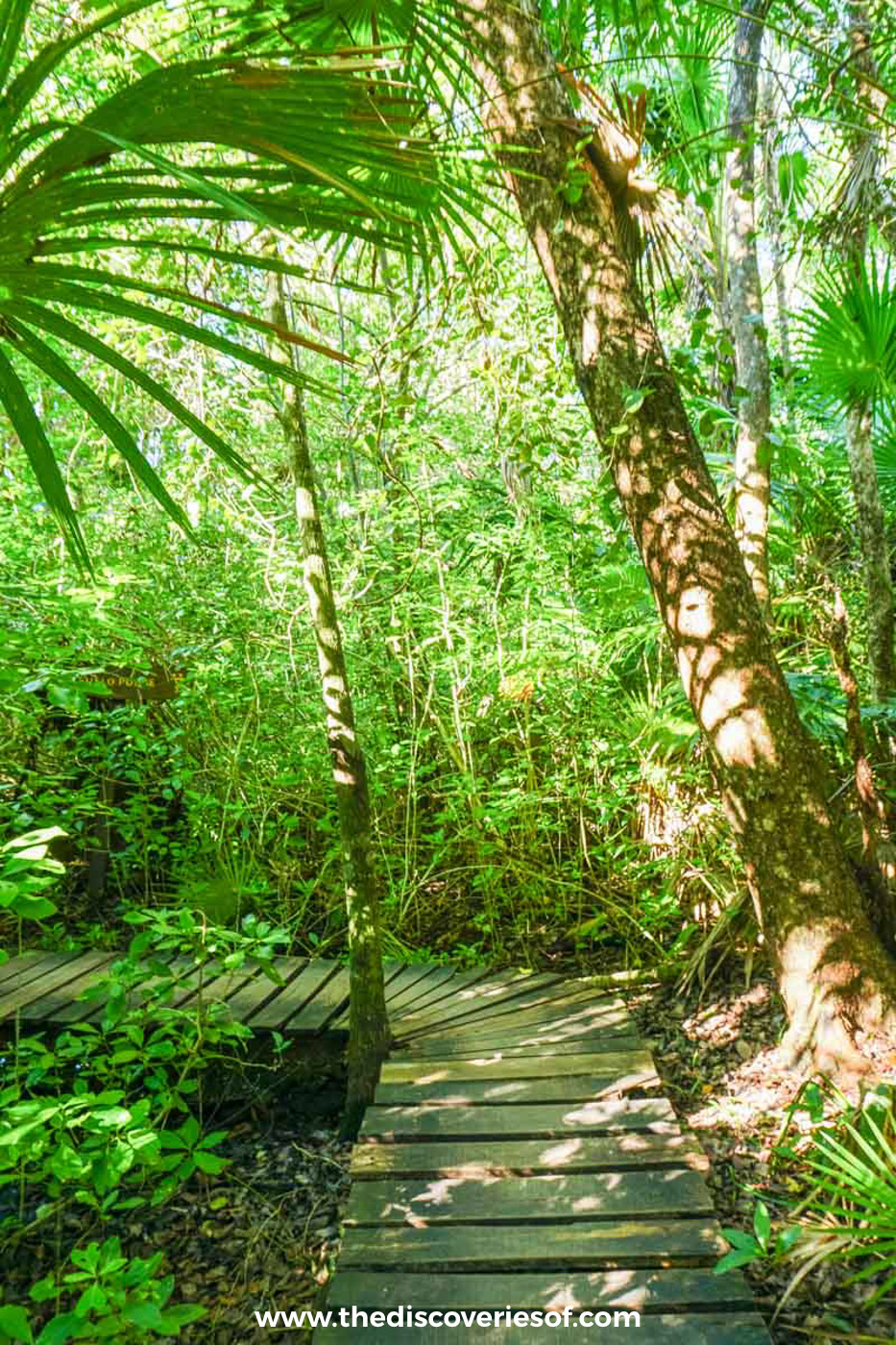
A wooden boardwalk winds through the jungle for 20 to 30 minutes. About halfway along there’s a wooden observation tower above the treeline, with views over the canopy to the lagoons. It’s signed as a climb at your own risk, so take it slowly.
The boardwalk ends at a jetty on the Muyil lagoon, and the first sight of it is quite something after the closeness of the jungle: a huge sheet of pale blue water, still enough to mirror the clouds. You can hire a boat here, or simply sit on the jetty and soak up the space and the silence, which is what I did.

Floating the Maya canal
The boat trip is run by the local ejido cooperative, and it is the reason many people come. Boats cross the Muyil lagoon, follow mangrove channels into the Chunyaxché lagoon, and drop you at the start of a canal the Maya used as a trade route.
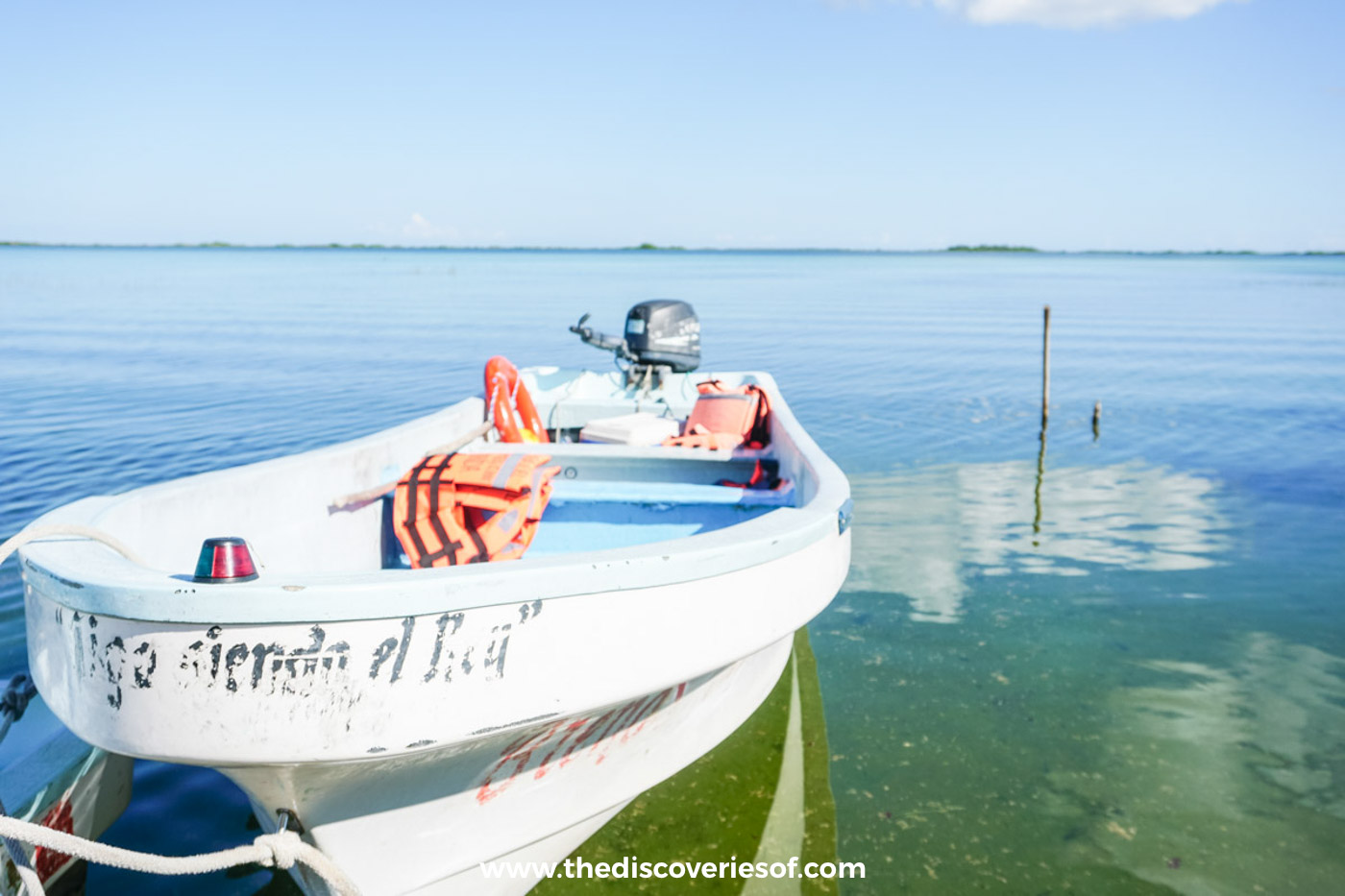
From there you put on a life jacket, leave your belongings in the boat and let the current carry you downstream through the mangroves for about a kilometre, roughly 20 minutes. The water is clear, cool and gentle, and the boat waits for you at the far end. The whole trip takes about two hours.
The most recent price reports put it at around 1,000 pesos per person, a fixed price paid in cash at the jetty. Boats run when there are enough visitors and the weather allows, so arriving earlier gives you the best chance of getting a place.

Do
Rather have it all arranged? The Muyil ruins and Sian Ka’an lazy river tour bundles transport from Tulum, a guide at the ruins, the lagoon crossing and the canal float into a single morning or afternoon.
Getting there
The site is 23 kilometres south of Tulum on Highway 307, at kilometre 211, about a 20-minute drive. A car makes life easiest, and the new visitor centre has a car park, toilets and ticket booths.
Without a car, take a colectivo (shared minivan) heading south from Tulum towards Felipe Carrillo Puerto and ask to be dropped at the ruins; the fare is about 35 pesos. Coming back, flag one down on the highway, and allow for a wait, as they leave when full. The Tren Maya stops at Tulum, about 20 minutes away by taxi.
Tickets
145 pesos for foreign visitors and 80 pesos for Mexican nationals and residents (INAH’s 2026 rates), plus the separate Sian Ka’an fee for the boardwalk. Open daily, 8am to 5pm. Bring cash: there are no cash machines nearby.
When to go
Go at opening time. The light is softer, the heat is bearable and the birds are at their busiest. The dry season, from November to April, is the most comfortable time to visit. In the wet season, from roughly May to October, afternoon storms can stop the boats and the mosquitoes come out in force.
Tips for your visit

Top Tip
Bring mosquito repellent. Never is it clearer that you’re in the middle of the jungle than when a swarm of mosquitoes decides you’re lunch.
- Pack for the water: swimsuit, a towel and a dry bag for your phone if you’re doing the float. Skip the sunscreen in the canal or use a biodegradable one, and wear a long-sleeved swim top instead.
- Stay on the paths: climbing the structures is forbidden, and the boardwalk exists to protect the wetland.
- Swim only where your boatman says: like much of the Yucatán, the wider lagoons of Sian Ka’an are home to crocodiles. The float canal is the place to get in.
- Make a day of it: with the ruins, the boardwalk and the boat trip, plan on half a day. My guide to the things to do in Tulum has ideas for the rest of it.
Watch my Tulum video
Map
Read next
- The Sian Ka’an Biosphere Reserve begins where Tulum’s hotel road runs out
- Is Tulum overrated? Only if you never leave the beach
- Things to do in Tulum
- The Tulum ruins
- 2 weeks in Mexico: the perfect road trip itinerary
Love this? Save and share on Pinterest

Discover the top things to do, insider tips and hidden gems in our Mexico Travel Guide.
Read the guides →




