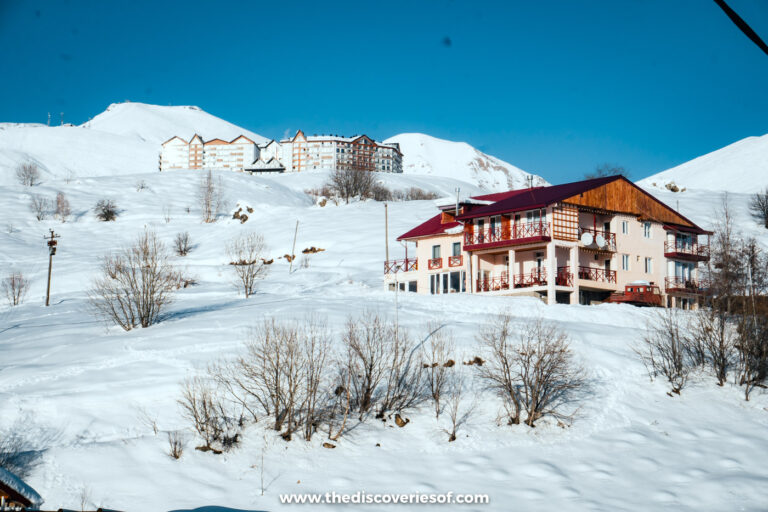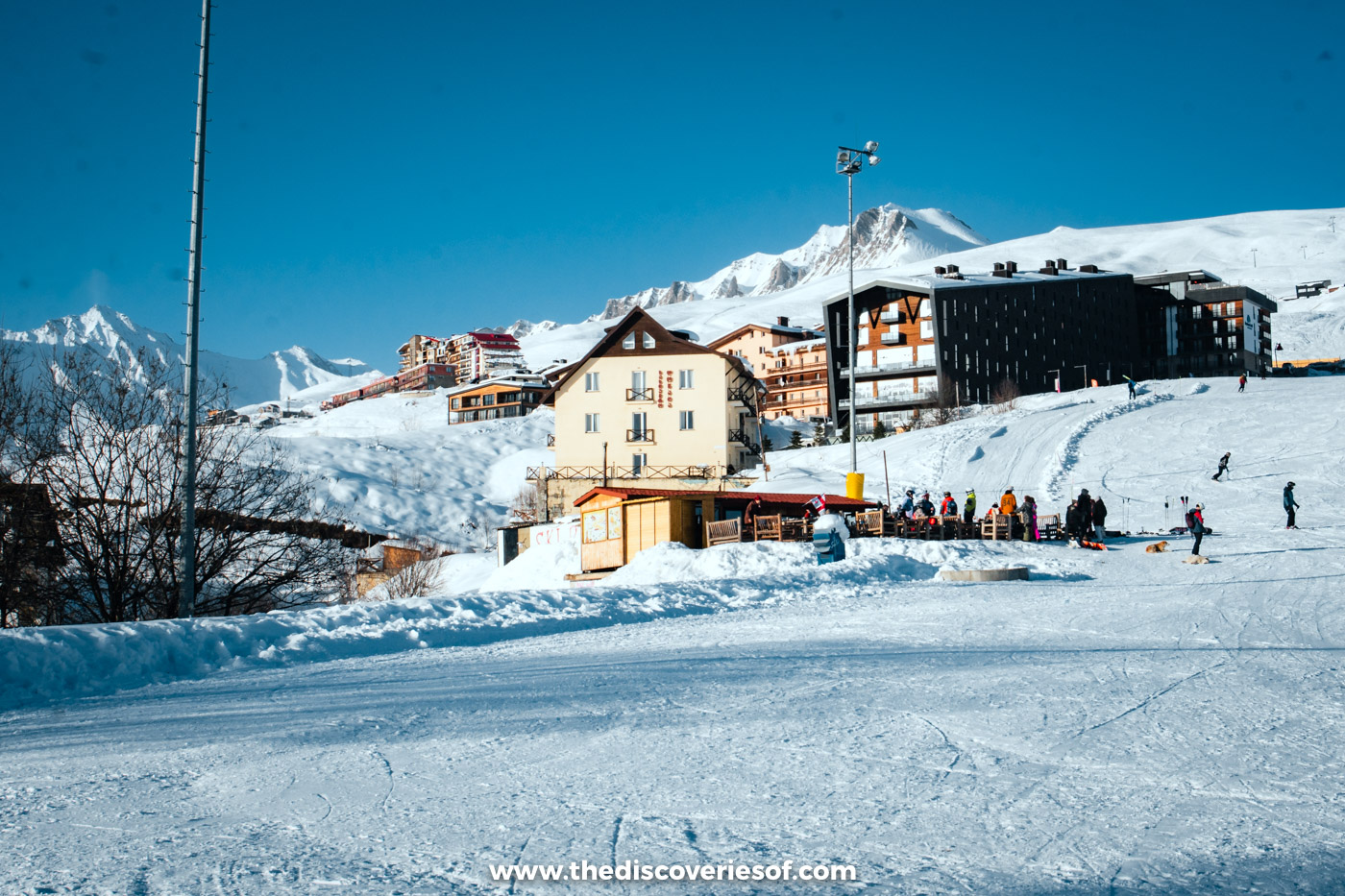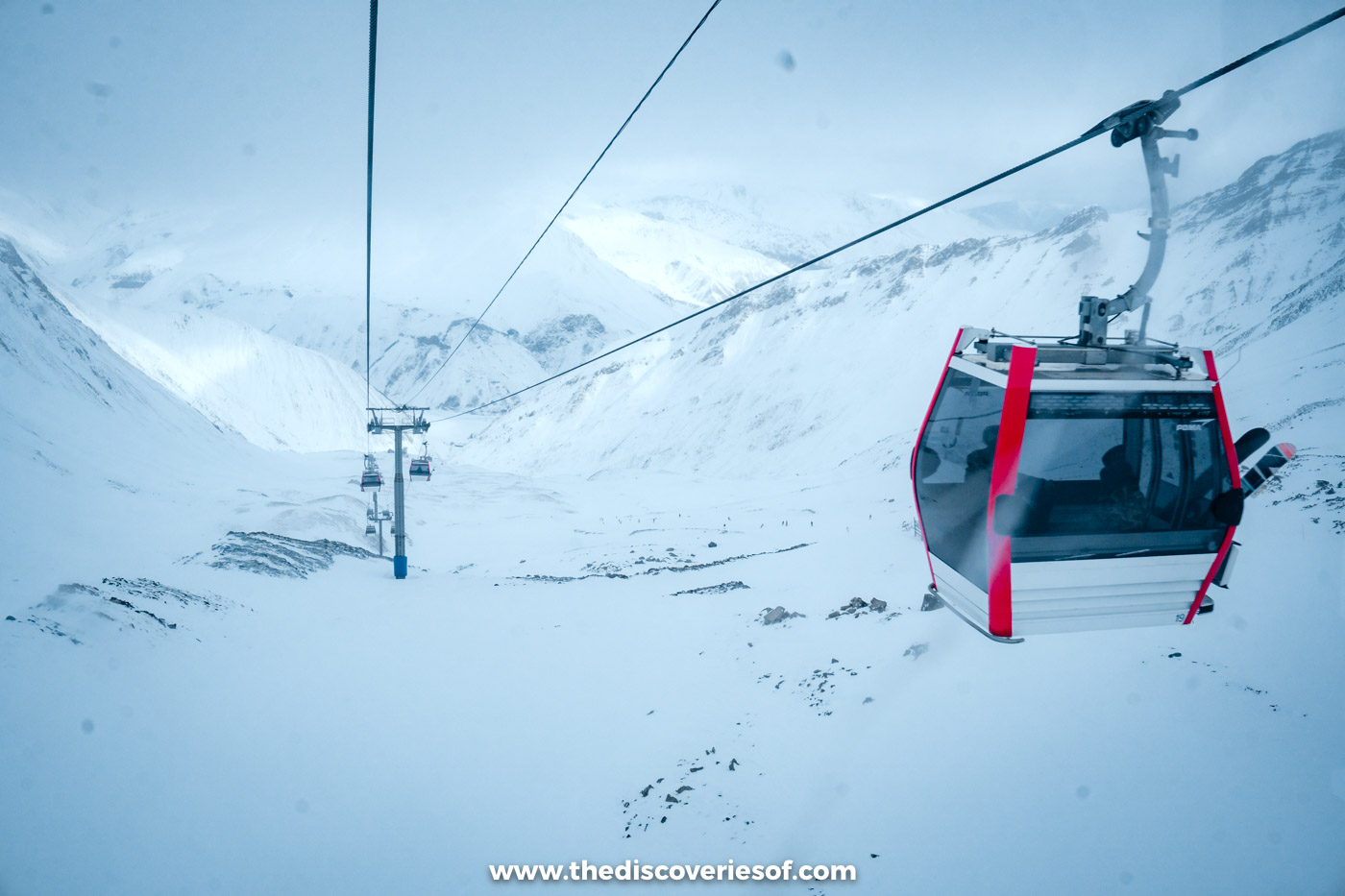

A chain of red gondolas links Gudauri’s ski slopes with the village of Kobi on the far side of the Jvari Pass, swinging high over snowy valleys on the way. It’s one of the most spectacular lifts in Georgia, whether you ski or not, and this guide covers the route, the views, tickets and how to make the most of it.
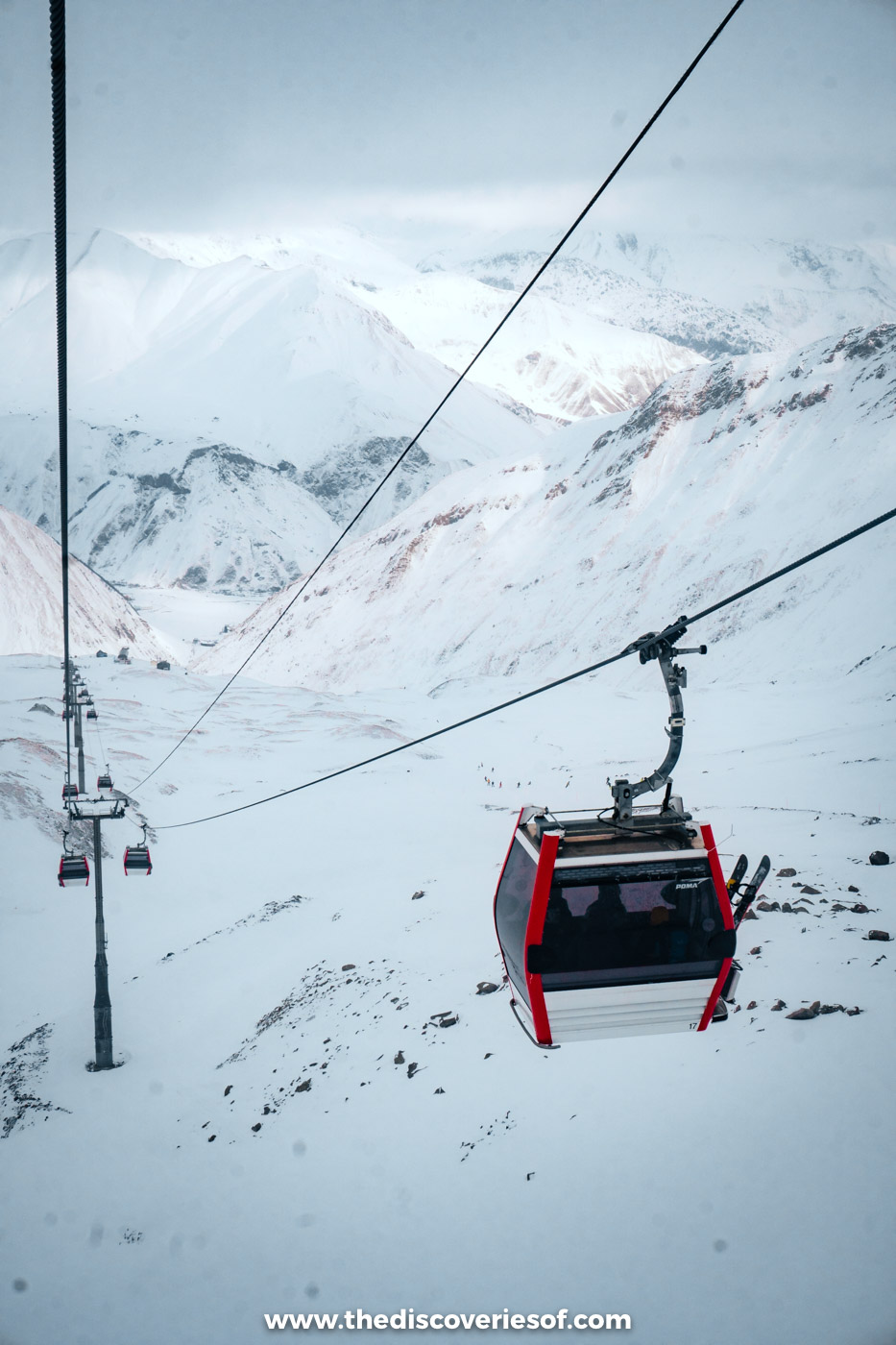
I rode the Kobi cable car on my last full day in Gudauri, on a hosted creator trip with Traverse and Georgia Tourism, with ski passes provided by MTA (Mountain Trails Agency). After a morning on the slopes, I took the gondolas down into the Kobi valley, watching the red cabins swing out over the snow ahead of me and the road snaking through the valley far below. Here’s everything you need to know about the Kobi Gudauri cable car.
The Kobi Gudauri cable car at a glance
- Route: from New Gudauri, over the Kobi Pass, down to Kobi village on the Kazbegi side of the mountains.
- Length: officially about 7.5km across three lines, or around 9.5km including the first gondola up from New Gudauri.
- Journey time: around 30 minutes in good conditions, but allow up to an hour one way.
- Highest point: about 2,900 metres at the Kobi Pass.
- Cabins: fully enclosed gondolas seating 10.
- Opened: December 2018, built by the French lift company Poma.
- Winter hours: 10am to 5pm daily from December to February, and 9am to 4pm in March and April.
The route, gondola by gondola
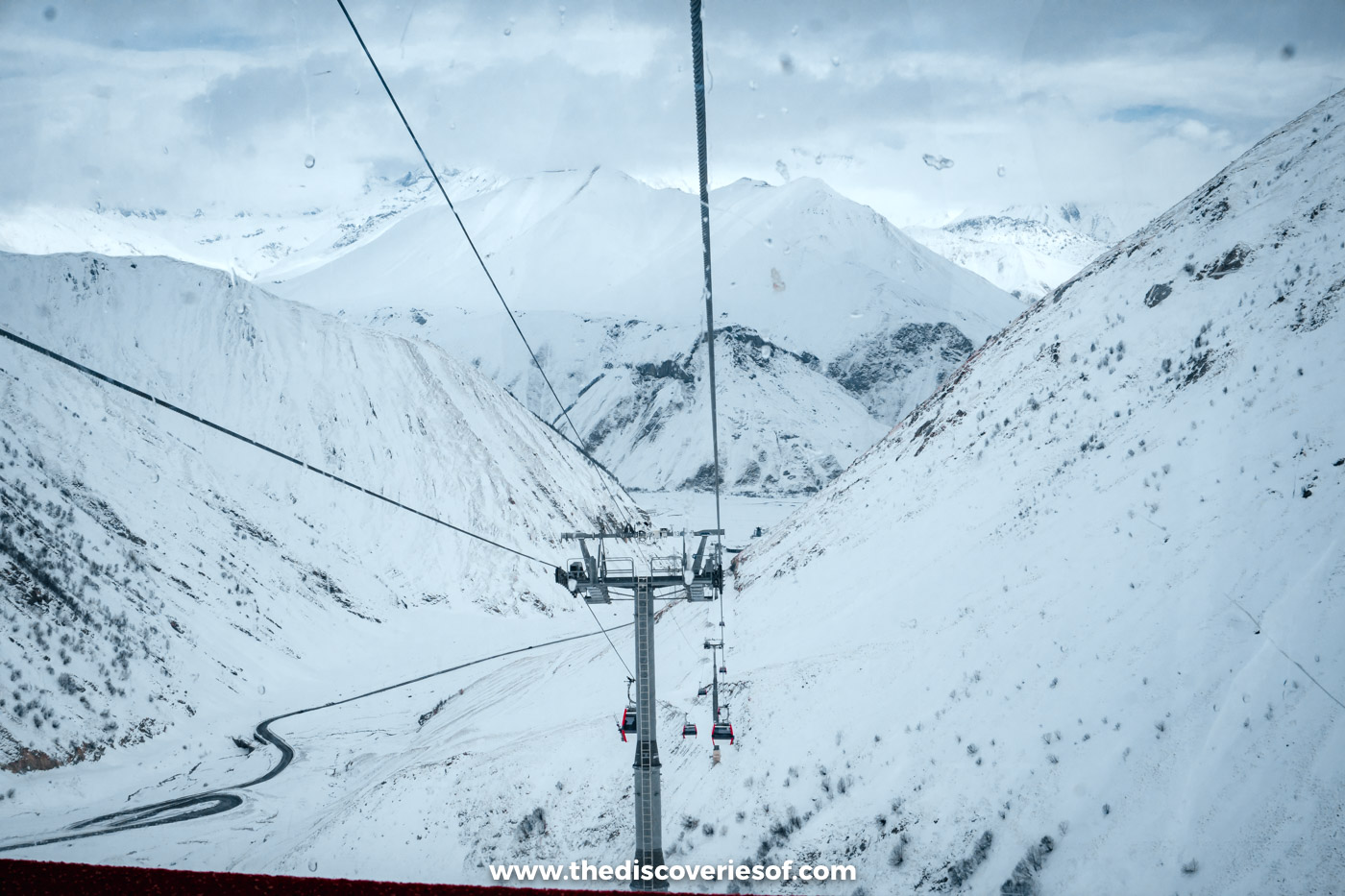
The ride is made up of four gondolas and five stations, with three changes on the way. Each change is quick: you step out of one cabin, walk a few metres and into the next.
- Goodaura: from New Gudauri up to the Gudauri recreation area, the main hub of the ski area.
- Kobi: from the recreation area up to the Kobi Pass, the highest point of the ride. This stretch heads almost straight towards Mount Kazbek.
- Firni: from the Kobi Pass down to the Truso station.
- Truso: the longest section, dropping down into the valley to Kobi village, with views over the village and the Georgian Military Road.
Top Tip
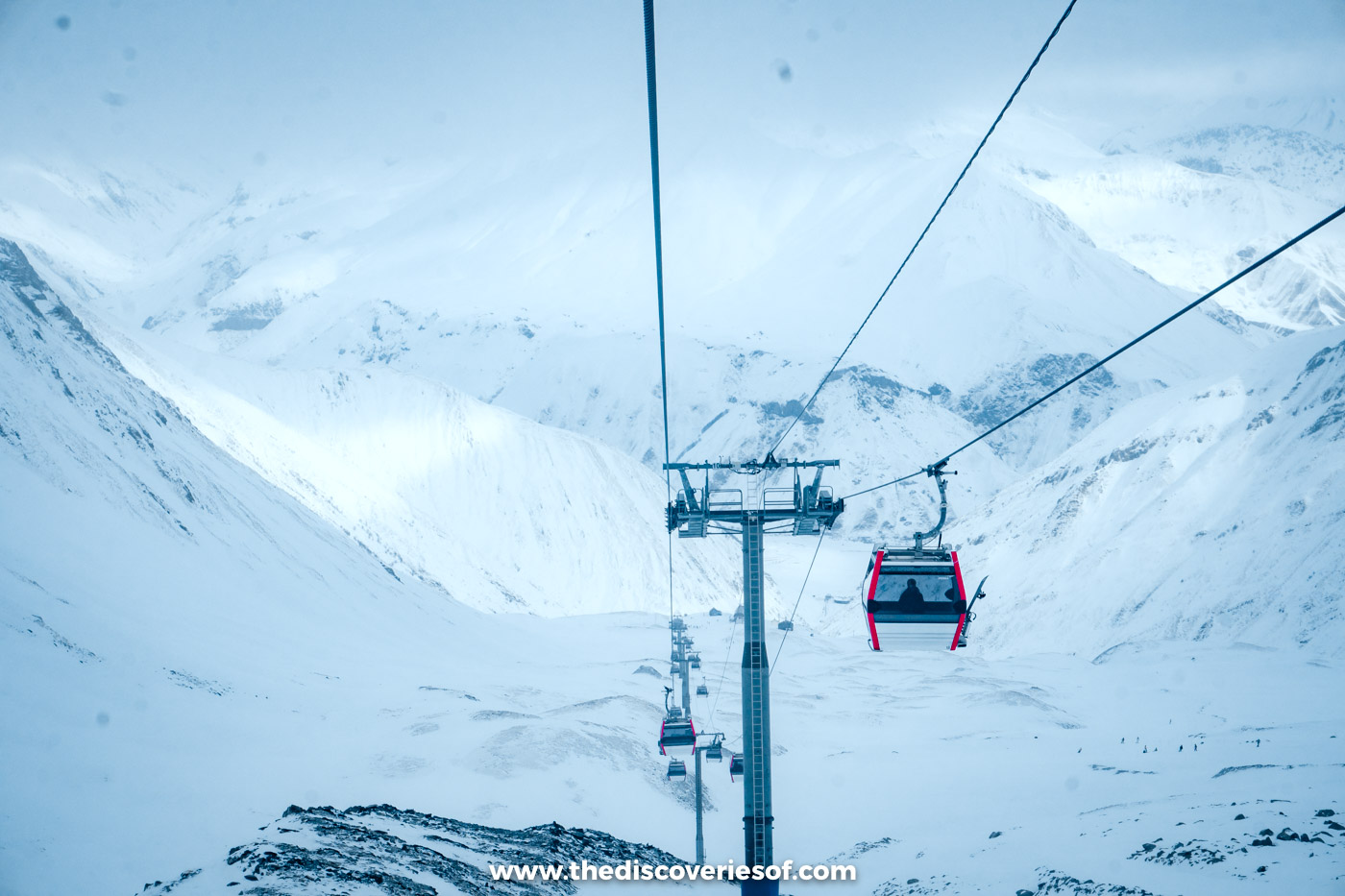
For the best views of Mount Kazbek, sit facing north on the way down from Gudauri. The Kobi Pass station and the second gondola have the clearest views of the mountain on a fine day.
What the ride is like
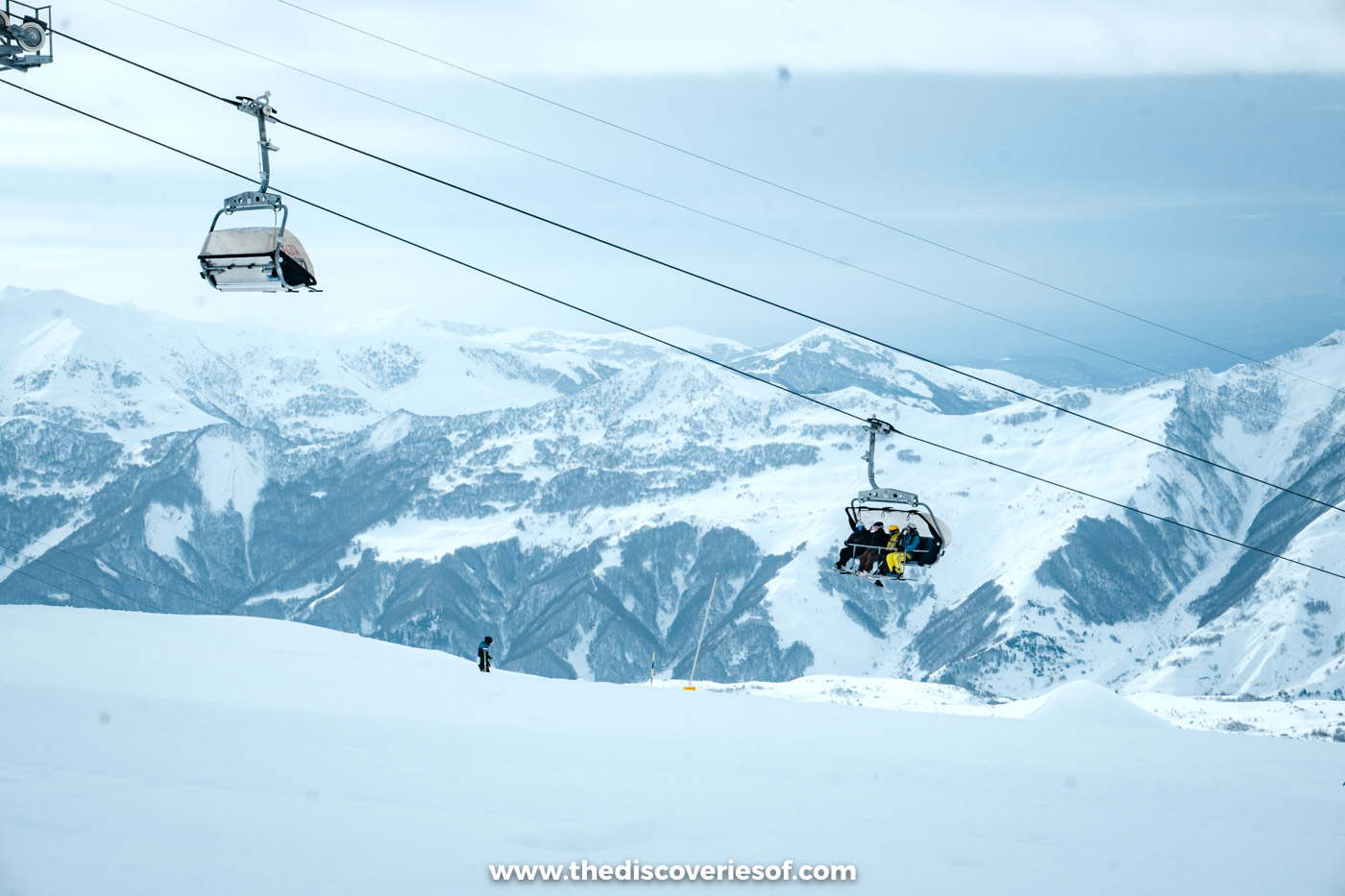
This isn’t a quick hop between two pistes. For most of the ride you’re floating high above wide, empty valleys, with nothing below but snow, the occasional fence line and the thin grey line of the road. With every station the landscape gets wilder.
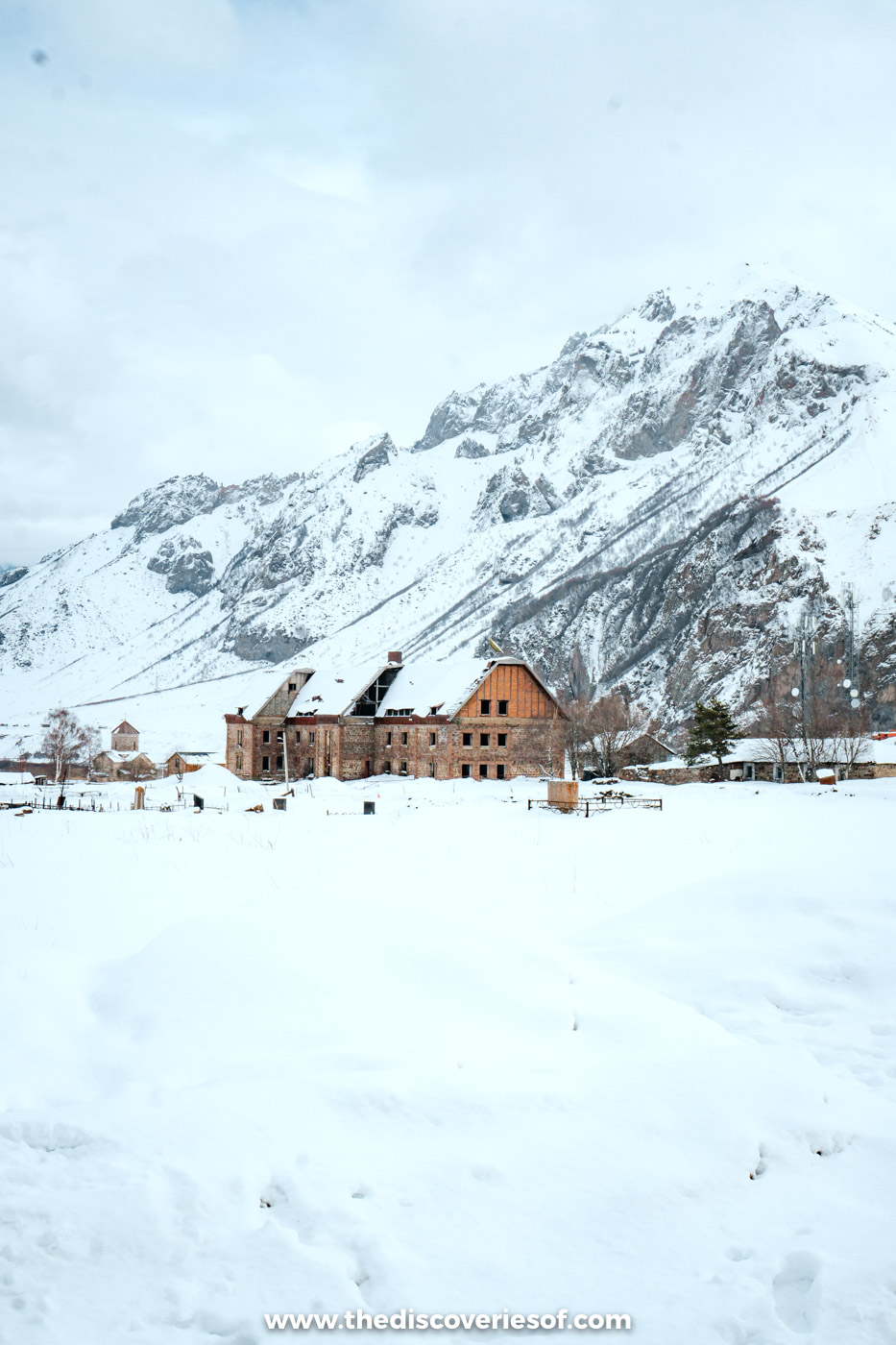
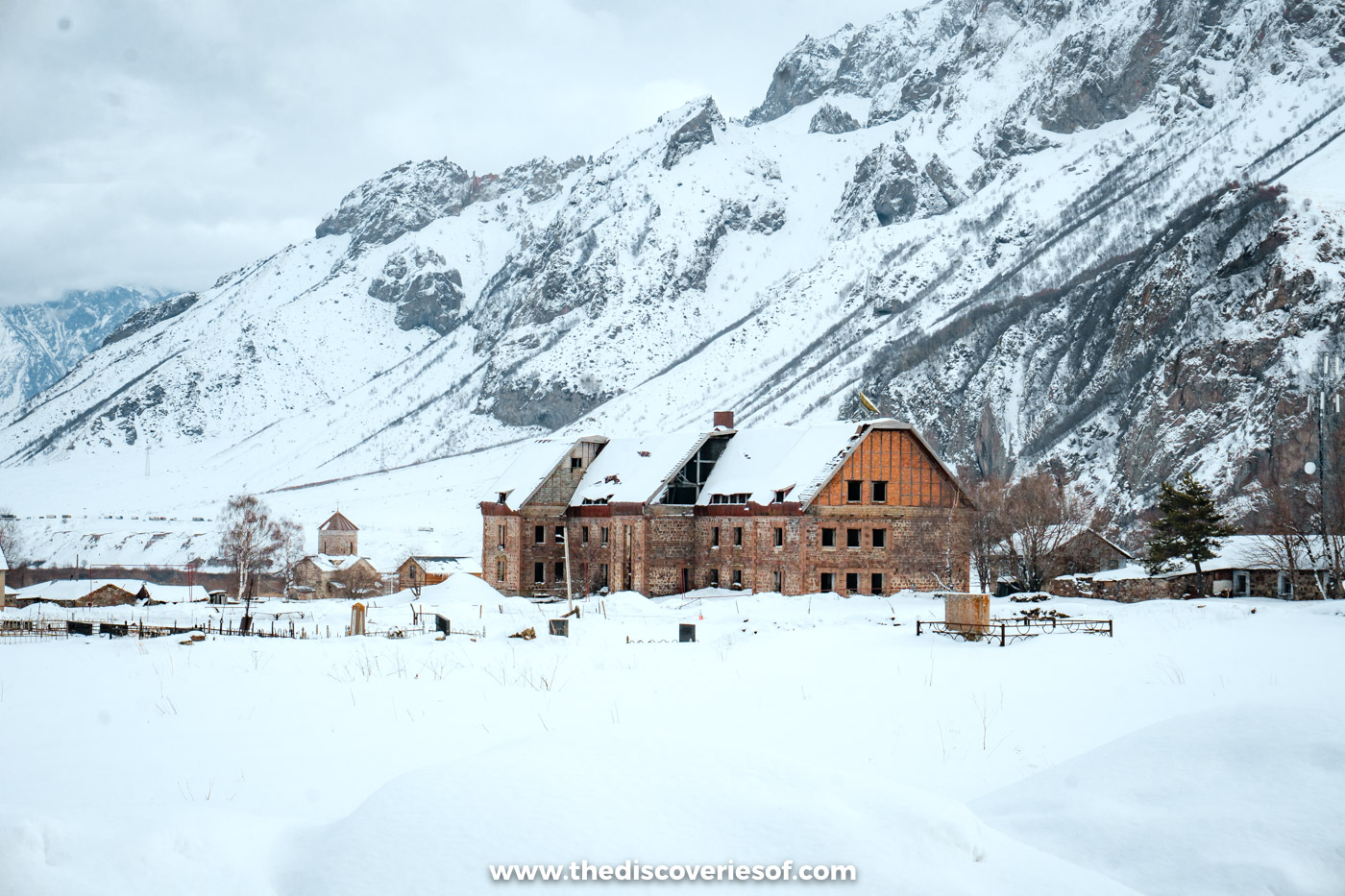
At the bottom, Kobi feels a world away from the busy slopes of Gudauri. The village sits in a broad white valley ringed by mountains, and near the station an old stone building sits half-buried in snow, with the peaks rising behind it.
Skiing the Kobi side
For skiers, the cable car opened up a whole new side of Gudauri. The upper stations give access to long, open slopes and some of the resort’s best freeride terrain, with big, wide bowls between the marked runs. These are exposed, high-altitude slopes and avalanches happen most seasons, so only go off-piste with a guide and the right kit.
If you’re a confident intermediate, riding over to the Kobi Pass for a few runs is a great way to escape the busier slopes around New Gudauri. My guide to skiing in Gudauri covers the rest of the resort.
Kobi cable car tickets and prices
- Adult return: 90 GEL
- Children aged six to 12: 45 GEL
- Under-sixes: free
- Skiers: Gudauri lift passes on a Multicard cover the cable car, so there’s nothing extra to pay.
Tickets for non-skiers are sold as returns, covering both directions, and you can pay in lari cash or by card at the ticket booths.
Tickets
These are the 2026/27 winter prices. The season opens on 20 December 2026, and the cable car usually runs in summer too, from July to September, from 11am to 5pm.
When the Jvari Pass is closed
The road over the Jvari Pass between Gudauri and Kobi closes whenever heavy snow or avalanche risk makes it unsafe, sometimes for days at a time. When that happens, the cable car becomes the only way across the mountains, and non-skiers travelling between Gudauri and Kazbegi can often ride it for free (ask at the ticket booth).
Strong winds can also pause the cable car, so if the weather looks wild, check before you set off.
Getting to Kobi and on to Kazbegi
From the bottom station at Kobi, it’s about 18km, or roughly 30 minutes by road, to Stepantsminda (Kazbegi), the village below the Gergeti Trinity Church and Mount Kazbek. Taxis wait at the station and charge around 80 to 100 GEL per car, and Bolt works here too, though you may have to wait for a car.
That makes the cable car a scenic way to combine skiing in Gudauri with a trip to Kazbegi, and it fits neatly into a week in Georgia in winter. My guide to things to do in Tbilisi includes the drive along the Georgian Military Road to Kazbegi.
Tips for riding the Kobi cable car
- Allow an hour each way: especially if there are queues at the changes.
- Dress for the top, not the bottom: the Kobi Pass is close to 2,900 metres and much colder and windier than Gudauri.
- Check the last ride down: if you’re heading back to Gudauri, make sure you catch the last gondolas before the lifts close.
- Bring cash: the station cafés and taxis at Kobi are easier with lari.
- Look out for the weather: cloud can hide Mount Kazbek completely, so ride on a clear day if you can.
Map
Read next
- Skiing in Gudauri, Georgia’s big-sky ski resort in the Caucasus
- Things to do in Tbilisi
- The best places to visit in winter
- The best holiday destinations in February
Love this? Save and share on Pinterest
Discover the top things to do, insider tips and hidden gems in our Georgia Travel Guide.
Read the guides →