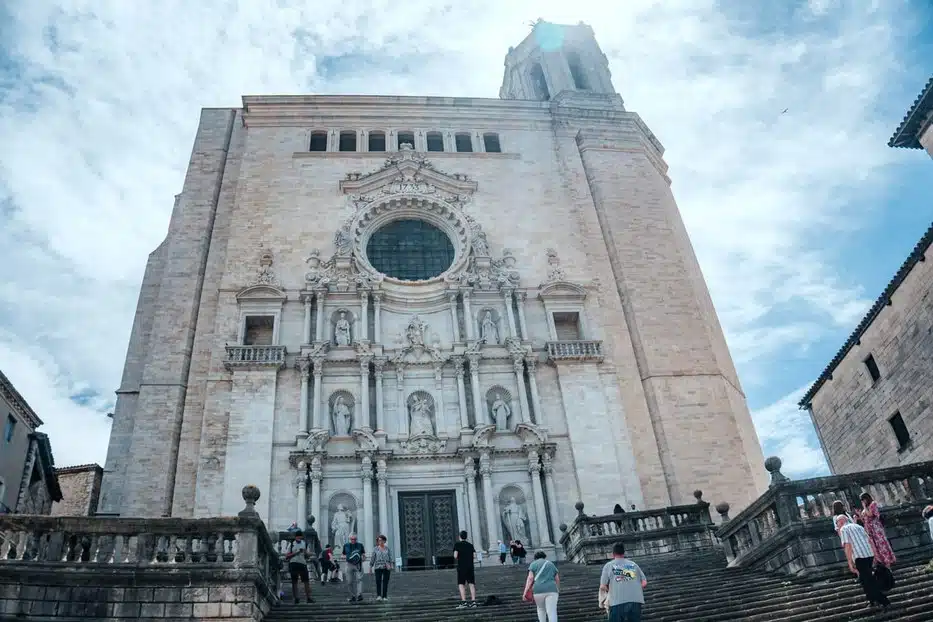

Girona Cathedral crowns the old town at the top of a sweeping Baroque stairway, and inside it hides the widest Gothic nave in the world, a Romanesque cloister and an 11th-century bell tower. Here’s what to see, what tickets cost and when to go for free.
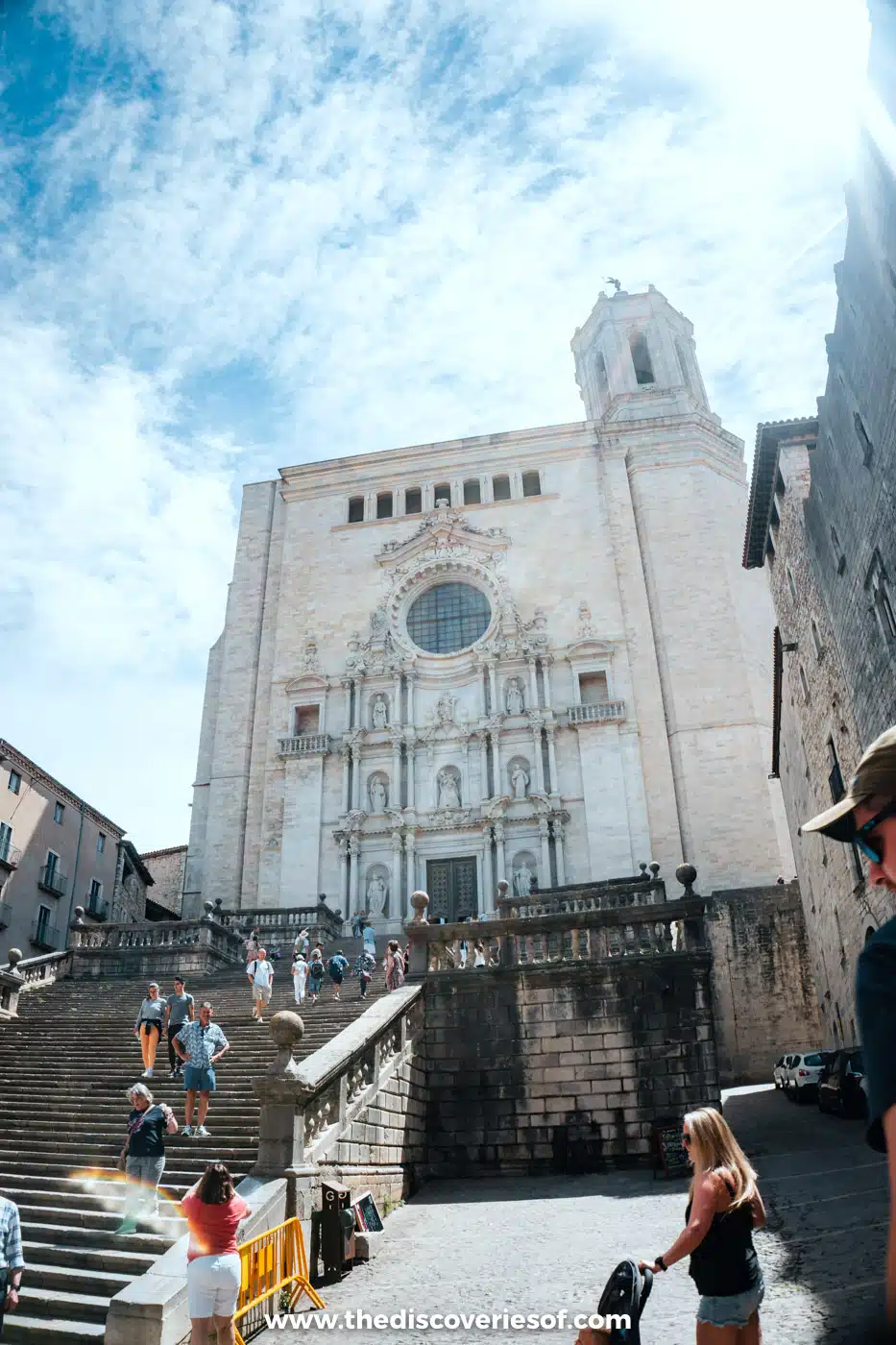
Girona was a Roman city, but most of the old part you see today is medieval, and the cathedral sits right at the top of it, on the hill of the Força Vella. You’ll see its tower poking above the rooftops from almost anywhere in town. It took around 700 years to build, so it’s a layer cake of styles: a Romanesque cloister and bell tower from the 11th and 12th centuries, a vast Gothic nave and a Baroque façade and stairway that weren’t fully finished until the 20th century.
I came to Girona on a day trip from Barcelona and went on to Figueres for the afternoon. I walked up the cathedral steps first thing, then came back mid-morning to go inside, into the nave, the side chapels, the Romanesque cloister and the treasury, to see the Tapestry of Creation.
This guide covers the history, what to see inside, tickets, opening hours and how to get there.
To see the cathedral with a guide, this walking tour of the cathedral, old town and Jewish quarter takes in the highlights of the Barri Vell.
Girona Cathedral at a glance
- Where: Plaça de la Catedral, at the top of the old town (the Barri Vell).
- Cost: €7.50 for the cathedral and the Basilica of Sant Feliu, with an audio guide, or €5 for students and pensioners. Children under eight go free.
- Opening hours: from 10am every day except Sunday, when it opens at 12pm; closing time varies from 4.30pm in winter to 7.30pm on summer Saturdays.
- Free entry: the cathedral is free to enter from 8.45am to 9.45am Monday to Saturday, and from 8.45am to 11.45am on Sundays.
- Time needed: about an hour for the cathedral, plus half an hour for Sant Feliu.
- Don’t miss: the view from the top of the steps, the nave, the cloister and the Tapestry of Creation.
A thousand years on one hilltop
There has been a church on this spot since the early Christian era. When the Moors took Girona in the 8th century it became a mosque, and when Charlemagne’s Franks retook the city in 785 it went back to being a church. That’s why Charlemagne’s name turns up all over the cathedral, from the bell tower to a carved stone chair.
The Romanesque cathedral was consecrated in 1038. Of that building, only the cloister and the bell tower known as the Charlemagne Tower survive. In the 14th century the builders started replacing it with a Gothic cathedral, and in 1416 they made the bold decision to roof the nave with a single vault rather than splitting it into a central nave and aisles. A panel of master builders was called in to judge whether such a wide vault would stand, and not all of them thought it would. It has stood ever since.
The steps and the Baroque façade
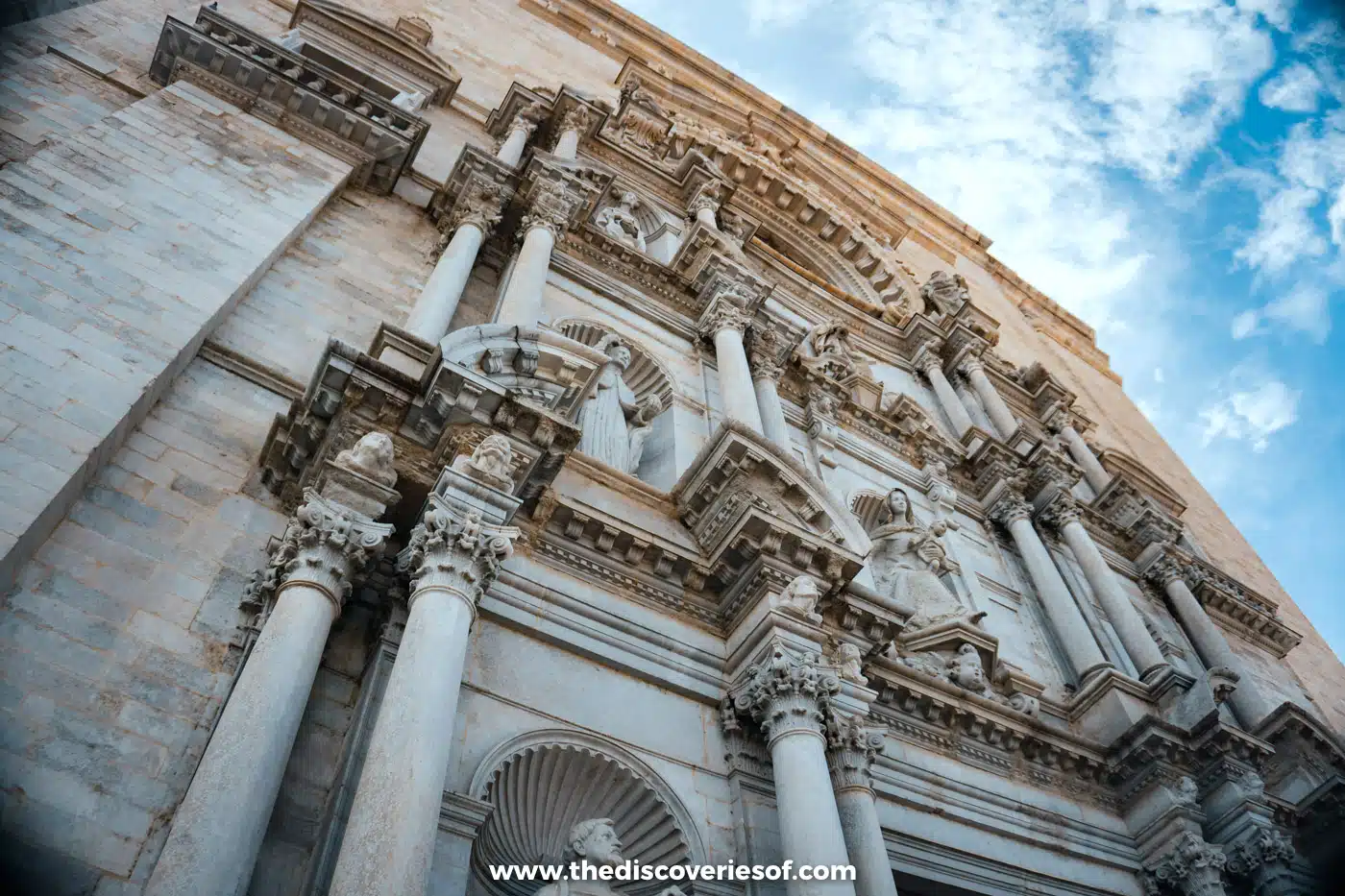
The cathedral’s grand entrance is all about the climb: a stairway of around 90 steps rising from Plaça de la Catedral to the Baroque façade, which was begun in 1606 and only finished in the 20th century. The rose window above the door dates from the early 1700s.
The steps also had a starring role in season six of Game of Thrones, when they stood in for the Great Sept of Baelor in King’s Landing. Find the rest of the filming locations in my self-guided Game of Thrones tour of Girona.
Walk up them first thing in the morning, before the tour groups arrive. From the top, turn round for the view over the rooftops of the old town.
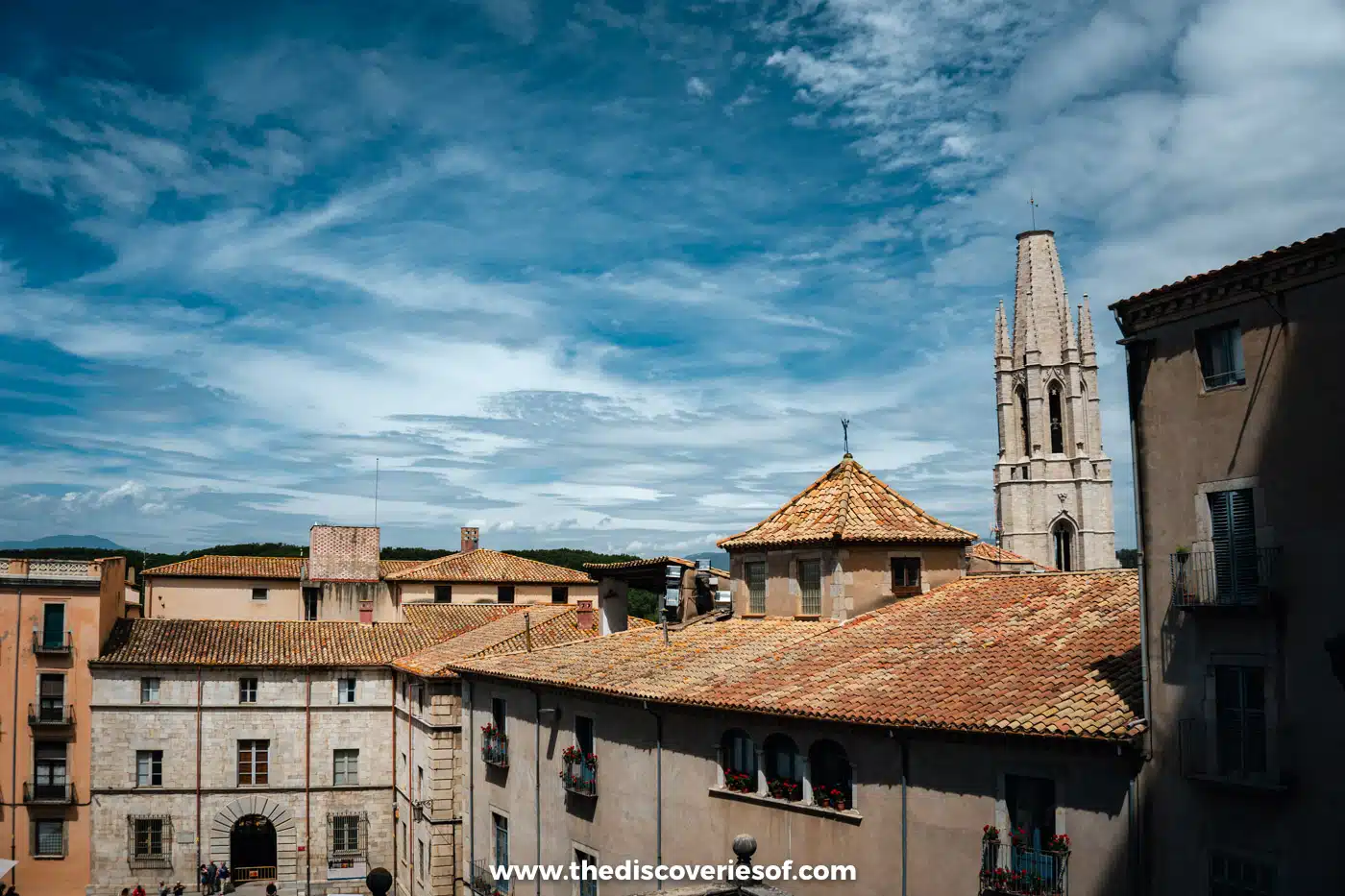
Inside: the widest Gothic nave in the world
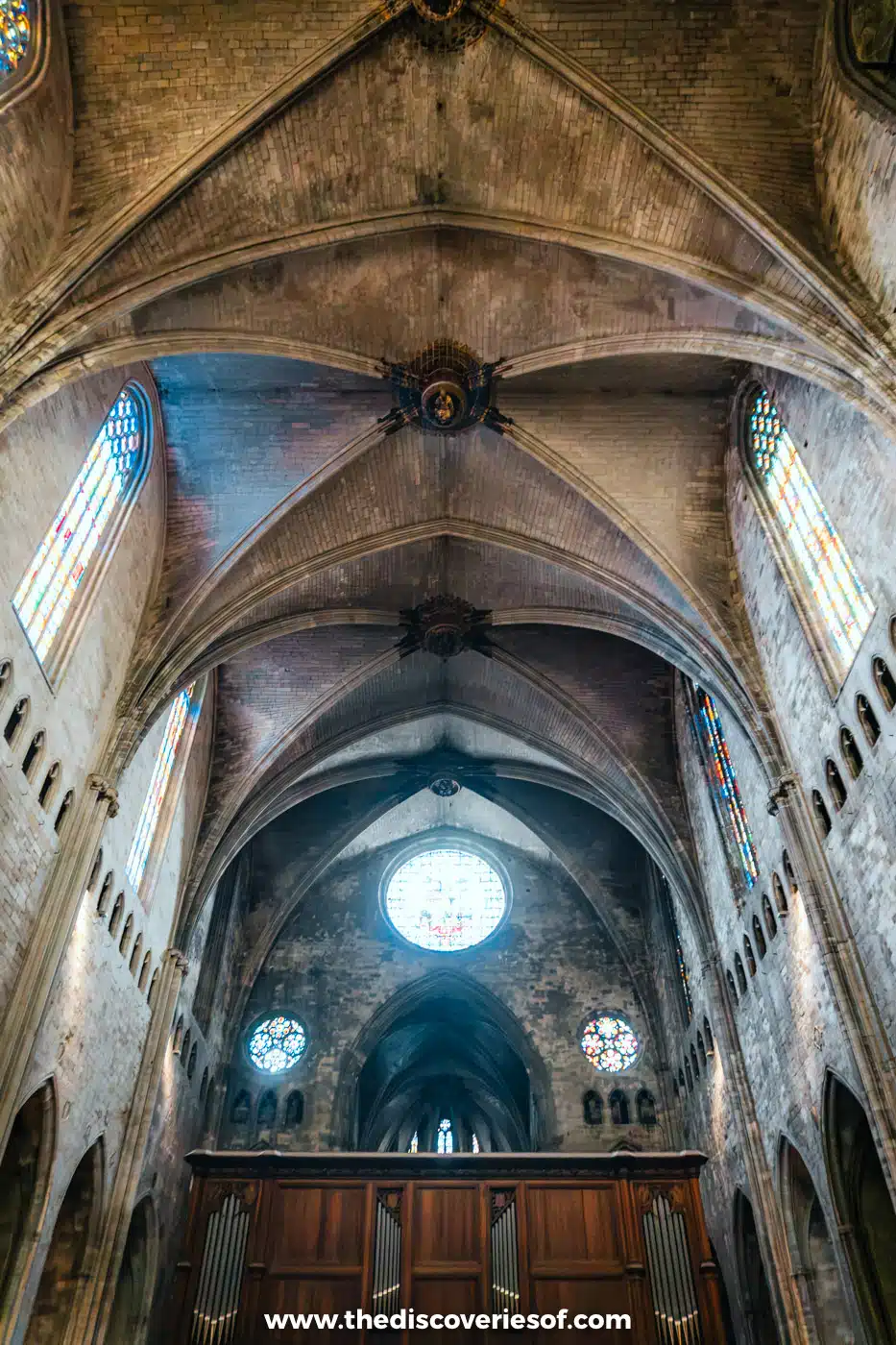
Step inside and the scale is what hits you. The nave is almost 23 metres wide, which makes it the widest Gothic nave in the world and, of any church, second only to St Peter’s in Rome. The vault rises 35 metres overhead, and with no columns to break it up, the space feels enormous.
The scale is what struck me most. As with any medieval cathedral, I’m always blown away by the idea that they did it by hand, without computers or AI, and that the people who laid the first brick could never hope to live to see the project complete. They built in the faith that they were creating something beautiful, and so many centuries later, that beauty lives on.
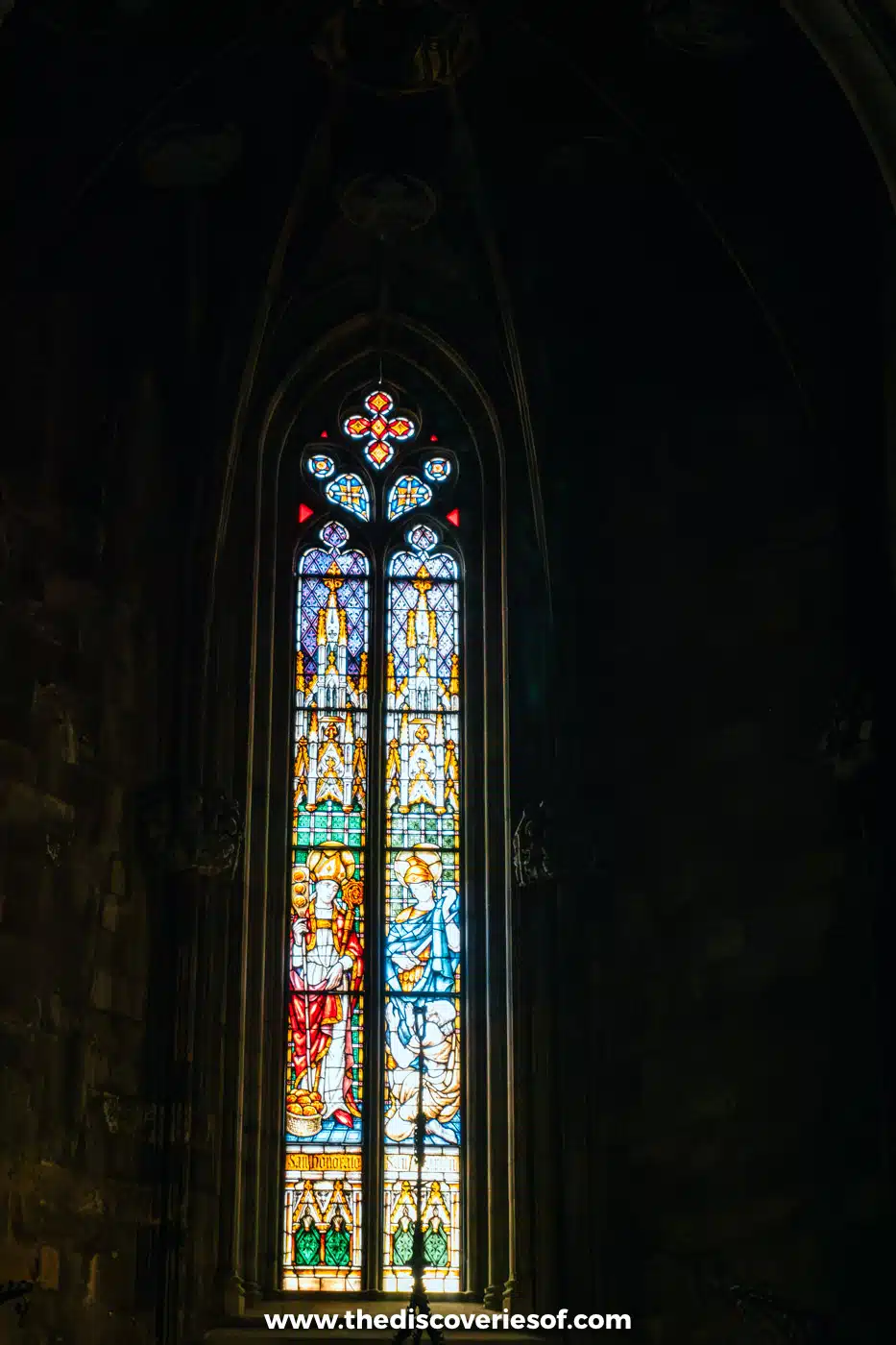
Look up at the stained glass, then walk the side chapels that line the nave. Many of them are filled with gilded Baroque altarpieces.
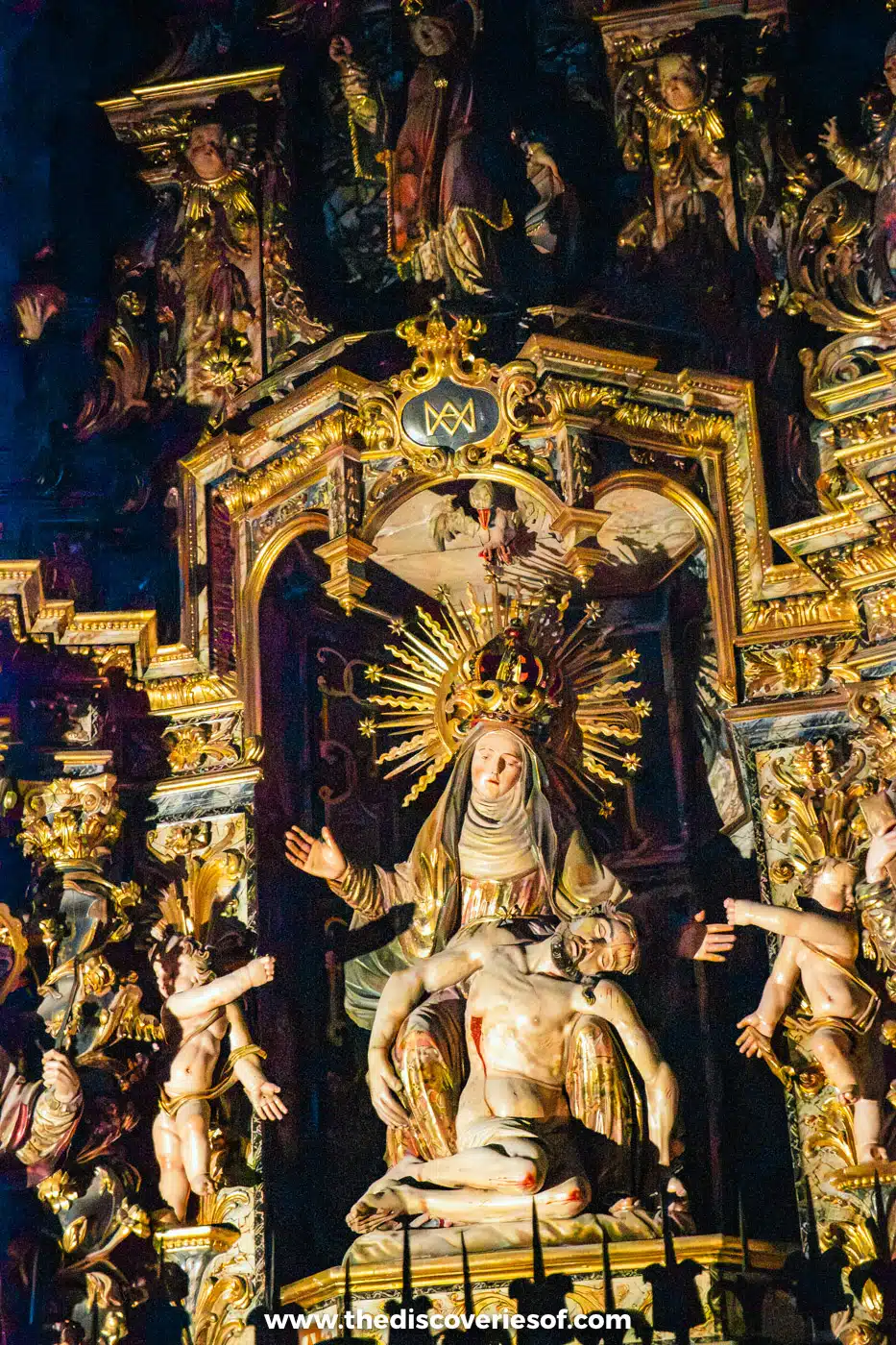
The high altar
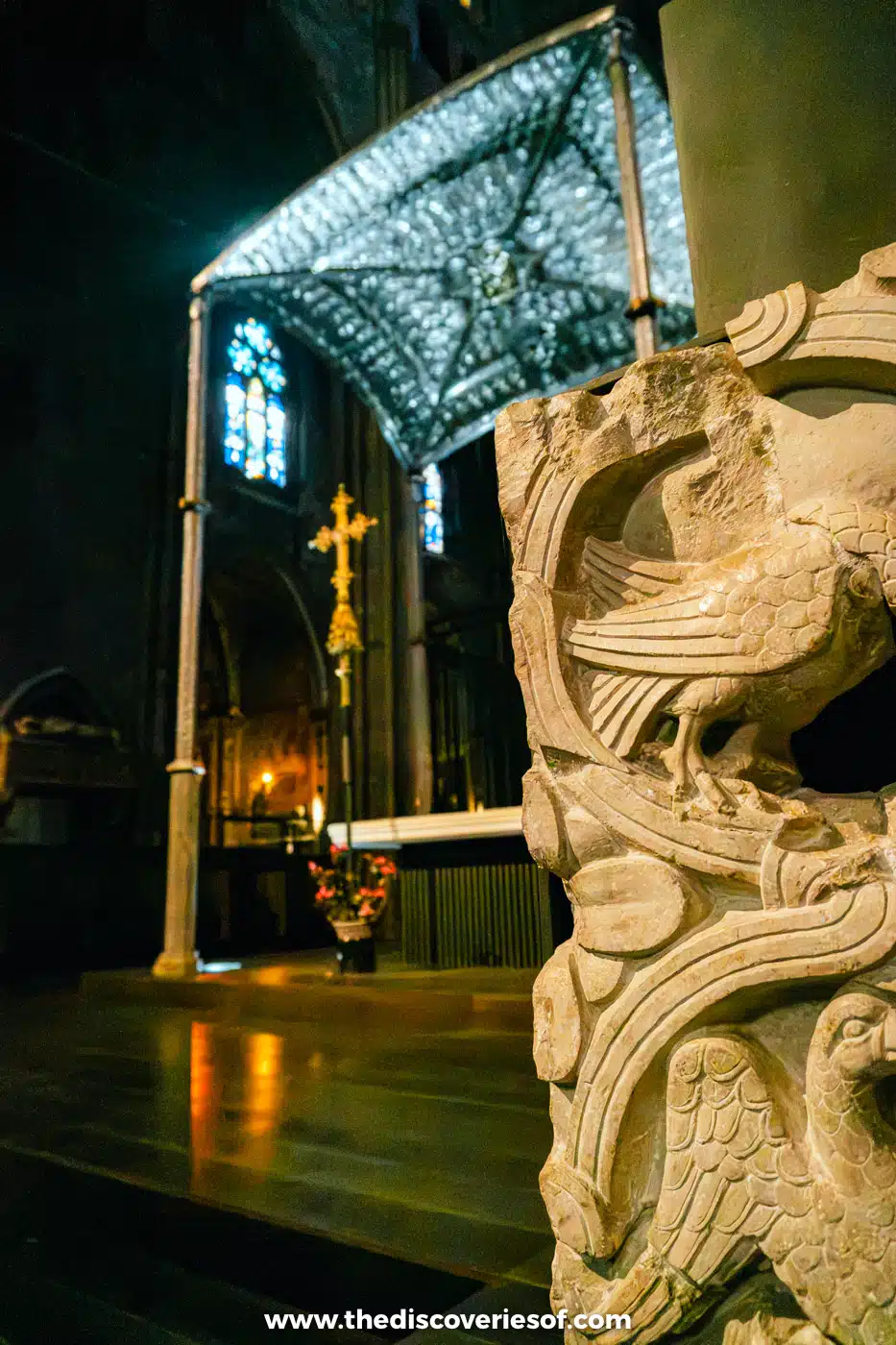
At the far end, the high altar sits under a silver canopy, with a silver altarpiece behind it. Behind the altar stands a Romanesque marble throne known as Charlemagne’s chair, although it was carved long after his death.
The chapels and the font
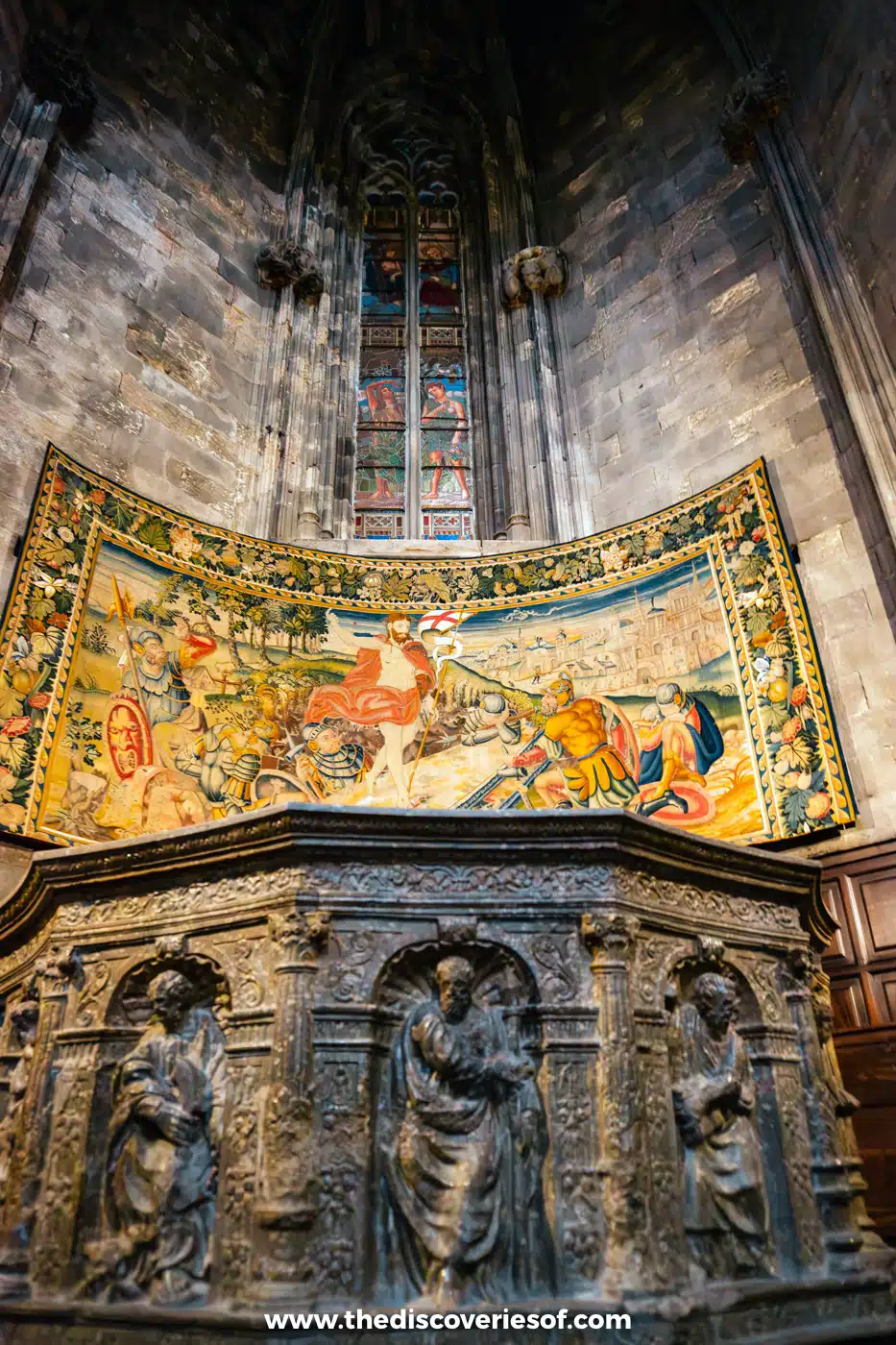
Take your time around the edges. The chapels hold Gothic tombs, including that of Count Ramon Berenguer II, carved altarpieces and the carved stone font, with a tapestry of the Resurrection hanging above it.
The Romanesque cloister and the Charlemagne Tower
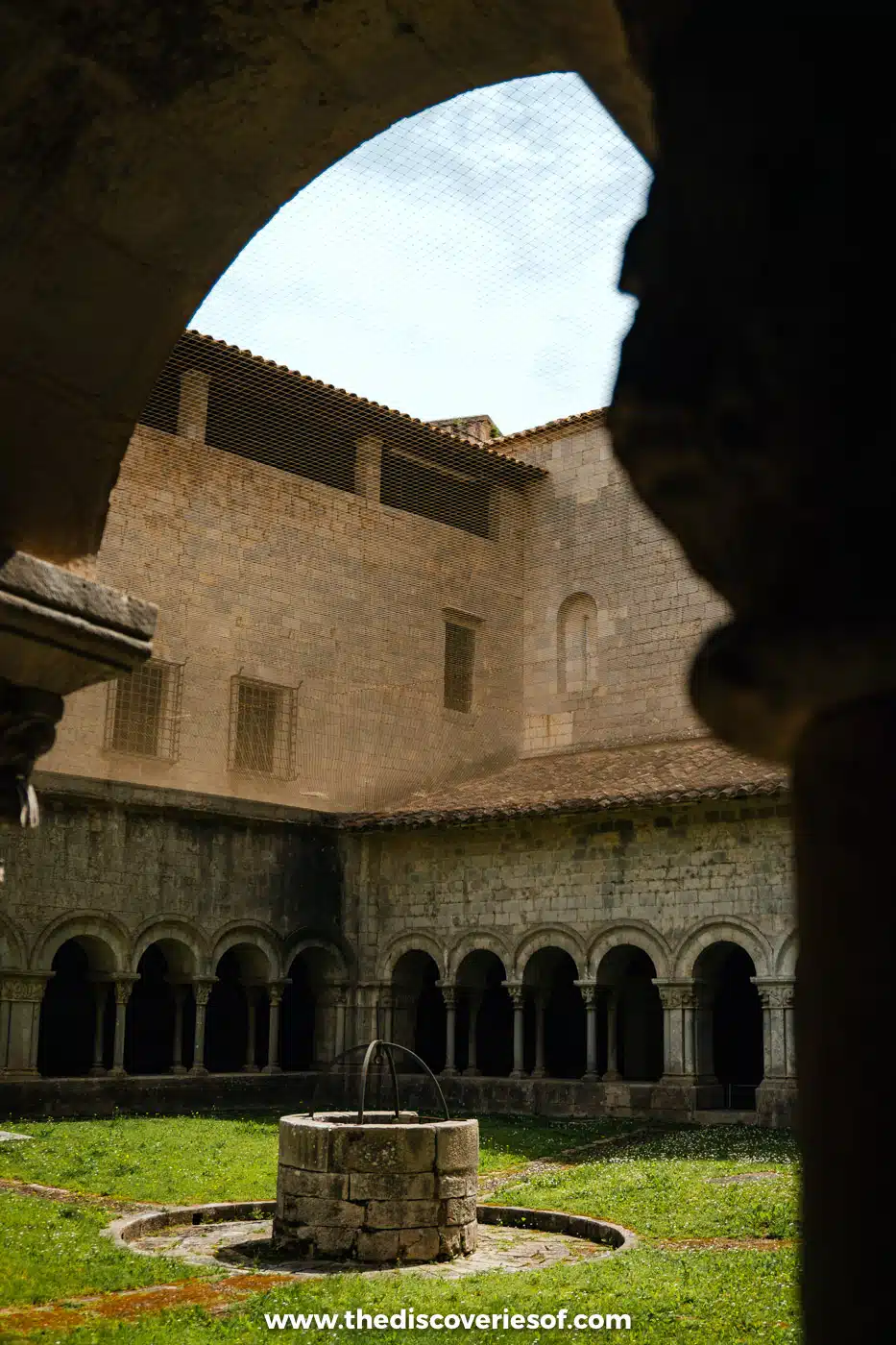
The cloister is one of the oldest parts of the cathedral and one of the finest Romanesque cloisters in Catalonia. It has an unusual trapezoid shape, squeezed in by the hillside, with a well in the middle of its garden.
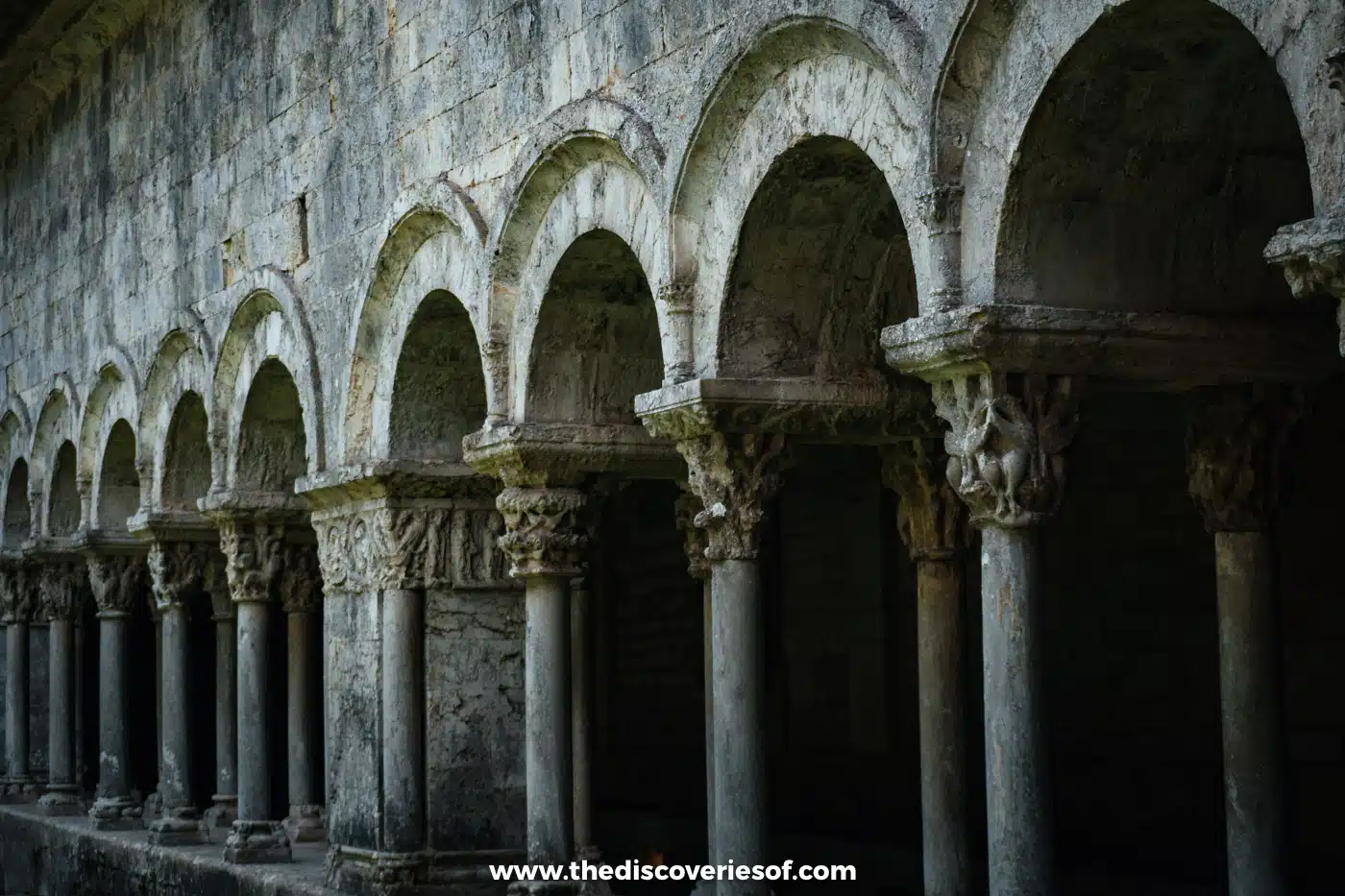
Look closely at the capitals on top of its twin columns. They’re carved with fantastic animals, plants and scenes from the Bible, and a carved frieze runs around the cloister with scenes from the Bible.
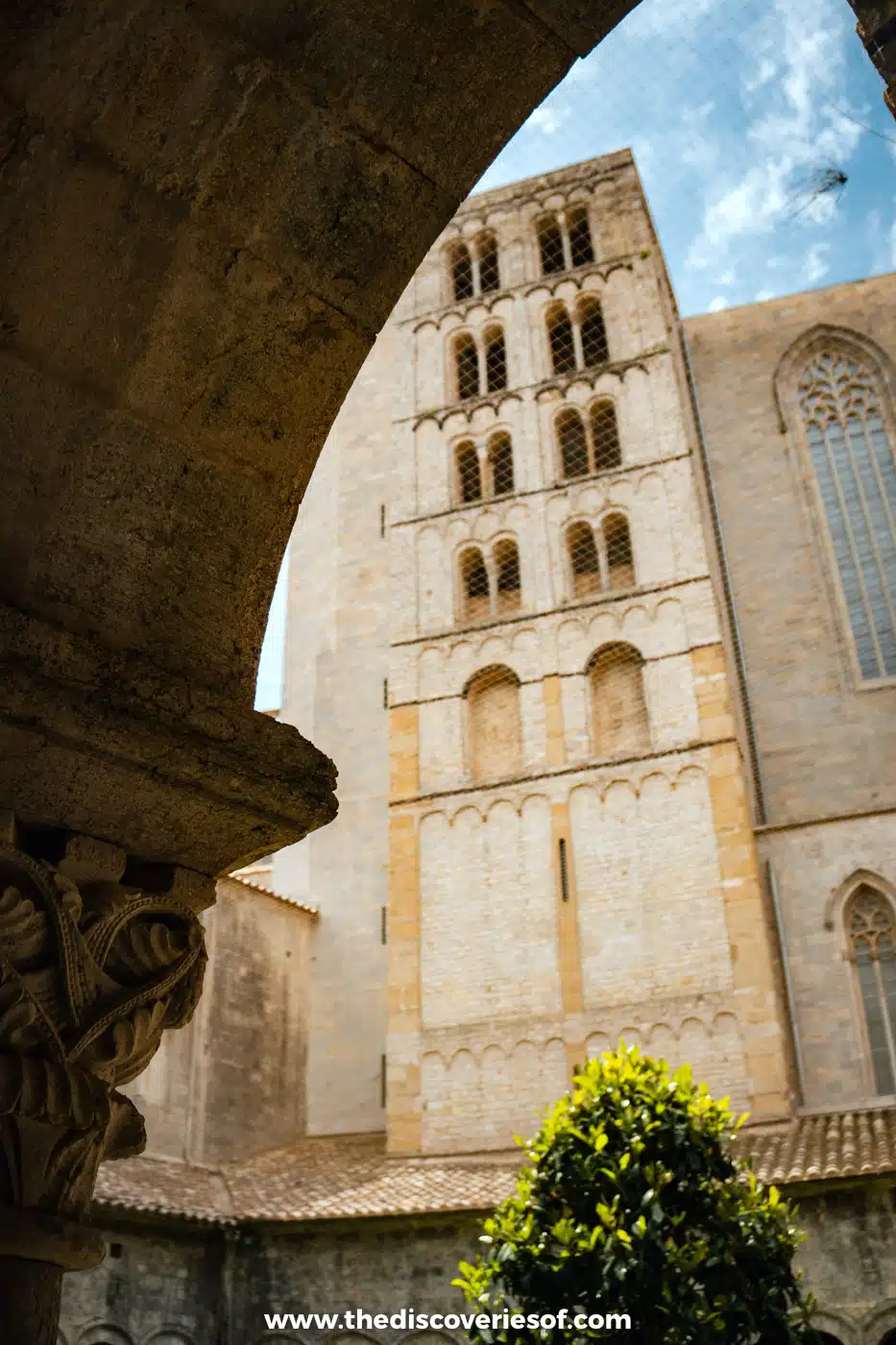
From the cloister you can see the Charlemagne Tower, the cathedral’s 11th-century Romanesque bell tower, rising over the arches.
The Tapestry of Creation and the treasury
The cathedral’s treasury museum holds its most precious pieces, and I saw the star of them, the Tapestry of Creation, an embroidered textile from the 11th or early 12th century, with Christ at the centre of a wheel of scenes from Genesis. It’s one of the few Romanesque textiles to survive anywhere.
Alongside it is the Beatus of Girona, a 10th-century illuminated manuscript of the Commentary on the Apocalypse, with more than 100 full-page illustrations, as well as Gothic silverware, sculptures and paintings.
The Basilica of Sant Feliu
Your ticket also covers the Basilica of Sant Feliu, just below the cathedral steps, and you’ll spot its Gothic bell tower from all over the old town. It was Girona’s first cathedral, and its presbytery holds eight early Christian sarcophagi from the 3rd and 4th centuries.
Tickets and prices
There are two tickets, both valid for 12 months, so you can see the cathedral and Sant Feliu on the same day or on different days:
- Girona Monumental (cathedral and Sant Feliu, with an audio guide): €7.50, or €5 for students and pensioners, and €1.50 for under-16s
- Girona Episcopal (adds the Girona Art Museum next door): €12, or €8 reduced
- Free: children under eight, people born or living in Girona and visitors with a disability over 66%
Tickets
Buy your ticket on the cathedral’s official site: Girona Cathedral tickets. Free tickets for children still need to be booked alongside the adult tickets. The cathedral is free to enter from 8.45am to 9.45am Monday to Saturday and from 8.45am to 11.45am on Sundays, but the audio guide isn’t included and services may be taking place.
Guided Tours
Book a guided walk round the cathedral, old town and Jewish quarter, or see the steps that played the Great Sept of Baelor on this Game of Thrones tour of Girona.
Opening hours
- 1 November to 14 March: Monday to Saturday 10am to 4.30pm; Sunday 12pm to 4.30pm
- 15 March to 14 June, and 16 September to 31 October: Monday to Friday 10am to 5.30pm; Saturday 10am to 6.30pm; Sunday 12pm to 5.30pm
- 15 June to 15 September: Monday to Friday 10am to 6.30pm; Saturday 10am to 7.30pm; Sunday 12pm to 6.30pm
It’s closed on 25 December, 1 January and Good Friday, and it can close at short notice for special services.
How long to allow
The cathedral suggests about an hour for the cathedral and the cloister, and half an hour for Sant Feliu. Add an hour if you buy the ticket with the art museum.
Getting there
The cathedral is at the top of the old town, about 20 minutes’ walk from Girona station, across the river Onyar.
Getting There
High-speed trains run from Barcelona Sants to Girona in under 40 minutes, and slower regional trains (R11) take around an hour and a half. By car, it’s about an hour from Barcelona on the AP-7. Girona is also an easy stop on the way to Figueres, a short train ride further north.
Where to stay
Most people visit Girona as a day trip from Barcelona, but the old town is lovely in the early morning and the evening, when the day-trippers have gone. If you’d like to stay over, browse places to stay in Girona and look for somewhere in the Barri Vell, within walking distance of the cathedral.
Tips for your visit
- Go early: the steps and the square are at their quietest first thing, and the cathedral is free to enter before 9.45am, Monday to Saturday.
- Check for services: the cathedral is a working church, so it can close to visitors during special services.
- Cover up: it’s a place of worship, so cover your shoulders and knees.
- Make a day of it: Girona and Figueres pair well in a day from Barcelona. I went on to Figueres for the afternoon and the Dalí Theatre-Museum.
- Game of Thrones fans: the cathedral steps were the Great Sept of Baelor, and this small-group Game of Thrones tour visits them along with the other filming locations.
For the rest of the city, see my Girona travel guide, or find more ideas in my guide to the best day trips from Barcelona.
Map
Read next
- Girona and Figueres in one day from Barcelona
- Girona travel guide
- A guide to the Dalí Theatre-Museum in Figueres
- 25 brilliant day trips from Barcelona
- 13 things to do in Tarragona
- Priorat wine day trip from Barcelona
- My Spain travel guide
Love this? Save and share on Pinterest
Discover the top things to do, insider tips and hidden gems in our Spain Travel Guide.
Read the guides →