
Georgia
Tbilisi travel guide
Slurp khinkali, sip amber wine in a brick-vaulted cellar and hear a choir sing centuries-old harmonies over dinner. Plan your trip to Tbilisi with the best things to do, where to stay, where to eat and how to get around.

Julianna BarnabyTravel and culture writer
Tbilisi takes its name from the Georgian word for warm, after the hot springs that still bubble up beneath the brick domes of Abanotubani. It’s a capital squeezed into a gorge, with a 4th-century fortress on the ridge, carved wooden balconies leaning over the Old Town, Soviet modernism a few streets away and a wine culture that goes back 8,000 years.
I spent the first and last nights of a week in Georgia here, in late January and early February, at the Radisson Blu Iveria, where a corner room looked down the Mtkvari River at sunrise. In between came a long lunch at Satchashnike, a candlelit tasting in the cellars of the Wine Museum, a walk across the Bridge of Peace and a supra at Kartuli Sakhli, with a male choir singing a few metres from my table.
This guide gathers every Tbilisi guide on the site, with when to go, where to stay, what to eat and how to get around.
Some links on this page are affiliate links, which means I may earn a small commission, at no extra cost to you, if you book through them.

 Delving into 8,000 years of Georgian wine at the Tbilisi Wine Museum
 Radisson Blu Iveria review: the Soviet icon with Tbilisi at your feet
When to go
Spring (April to June) and autumn (September and October) are the sweet spots in Tbilisi: warm enough to sit out on a balcony bar, without the heat of high summer, when the city regularly passes 30°C and the stone streets hold the heat well into the evening. October brings Tbilisoba, the city’s harvest festival, and the new wine.
Winter is quiet, cheap and usually just above freezing, which is exactly when a private sulphur bath or a candlelit wine cellar makes most sense. I visited in late January and early February, at either end of a ski trip to Gudauri.
Getting there and around
- Skyscanner: flights to Tbilisi.
- Booking.com airport transfers: a car waiting when you land.
- Bolt: fixed-price taxis around the city.
- GetYourGuide: tastings, food tours and day trips from Tbilisi.
Tbilisi International Airport is about 25 to 30 minutes from the centre by car. Bus 337 runs from the airport past Freedom Square and along Rustaveli Avenue for 1 GEL (about 30p), or book a transfer and have a car waiting.
In the city, the metro, buses and minibuses cost 1 GEL for 90 minutes of travel when you tap a Metromoney card or a contactless bank card. You’ll want a Metromoney card anyway for the cable car up to Narikala. Bolt is cheap and fixed-price, at about 4 to 8 GEL across town, and safer than flagging a taxi down.
The Old Town is best on foot, but it’s steep and cobbled, so wear shoes with grip.
Where to stay
Rustaveli Avenue and First Republic Square
Central, on the metro and a 20-minute walk from the Old Town. I stayed at the Radisson Blu Iveria, a Soviet-era tower rebuilt in glass, where the corner rooms look straight down the river. It gets 4 out of 5 from me.
Vera
Leafy, residential and full of cafés and peeling old balconies, just off the top of Rustaveli Avenue. Stamba Hotel fills a former Soviet publishing house, and Rooms Hotel Tbilisi is next door.
The Old Town and Sololaki
For atmosphere, stay among the wooden balconies and wine bars, a short walk from the sulphur baths. It’s steep and the streets can be noisy at night. Browse hotels in Tbilisi.

Tours
Know before you go
Top things to do
Taste amber wine at the Tbilisi Wine Museum
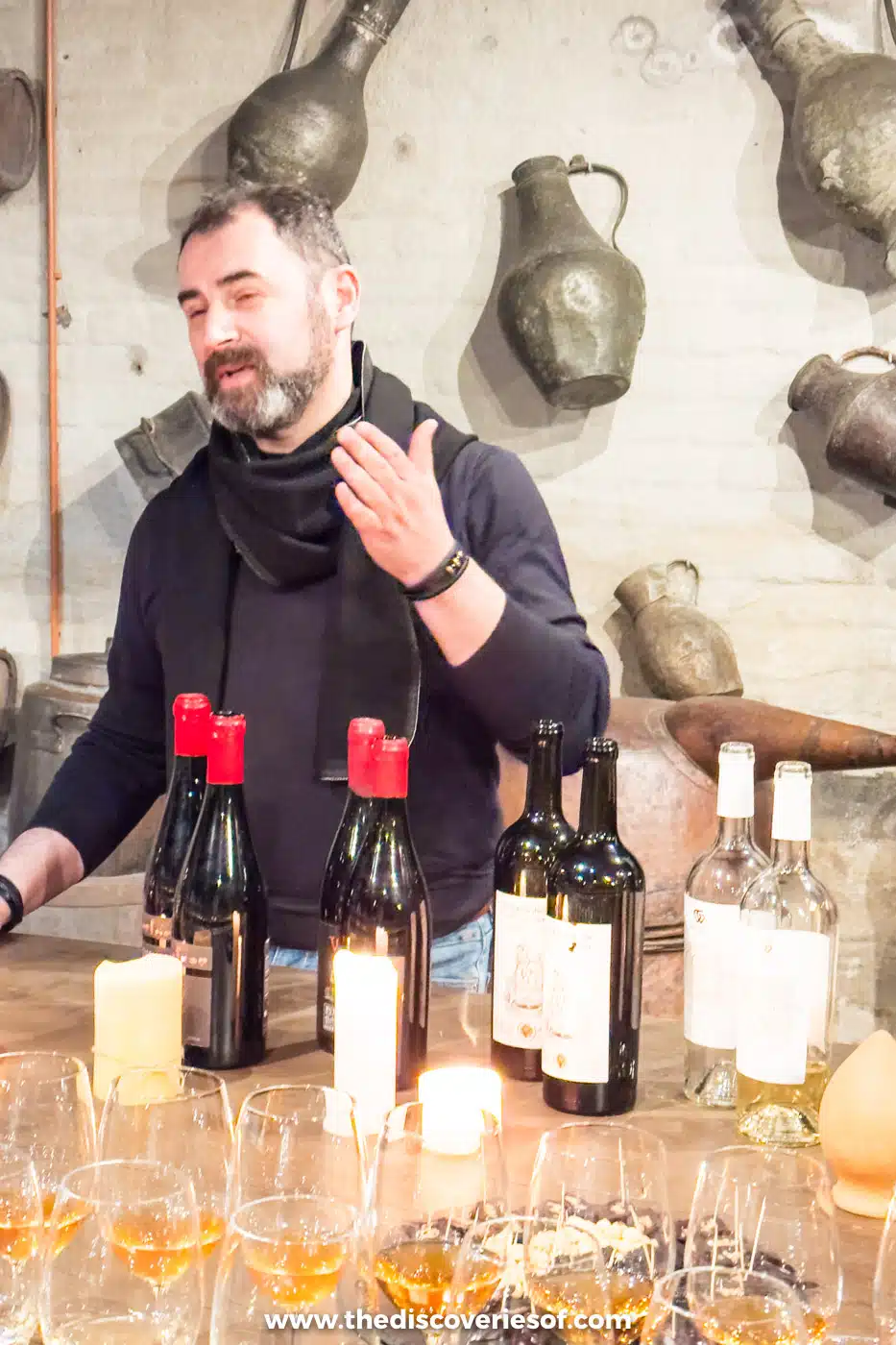
In brick-vaulted cellars on Sioni Street, the museum tells the story of qvevri winemaking and ends with a candlelit tasting. Mine was a run of Georgian wines, each one talked through by my host.
Read next: Tbilisi Wine Museum: amber wine in a 17th-century cellar
Book a supra at Kartuli Sakhli
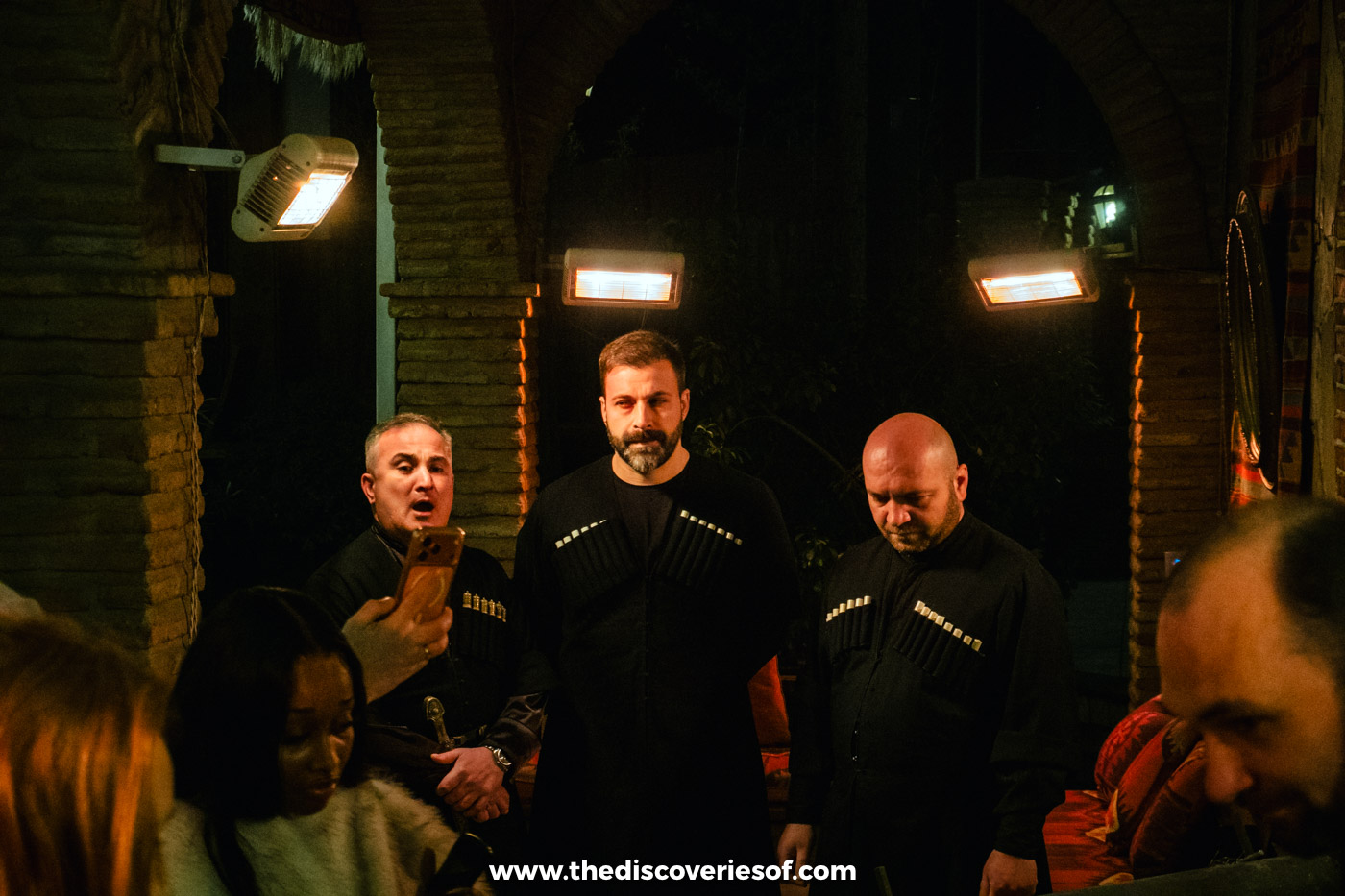
Plate after plate of Georgian food, a male choir singing polyphonic songs and a dancer in red performing in front of the stage. Book ahead.
Read next: Kartuli Sakhli, the Tbilisi restaurant where dinner comes with polyphonic singing
Soak in a sulphur bath in Abanotubani
The brick domes of the bathhouse quarter sit over the hot springs the city was named for. Private rooms cost from about 120 GEL an hour; the public halls at Bathhouse No. 5 are a fraction of that.
Ride the cable car to Narikala
From Rike Park, gondolas cross the river to the 4th-century fortress and the Mother of Georgia, who holds a bowl of wine for her friends and a sword for her enemies.
Cross the Bridge of Peace at dusk
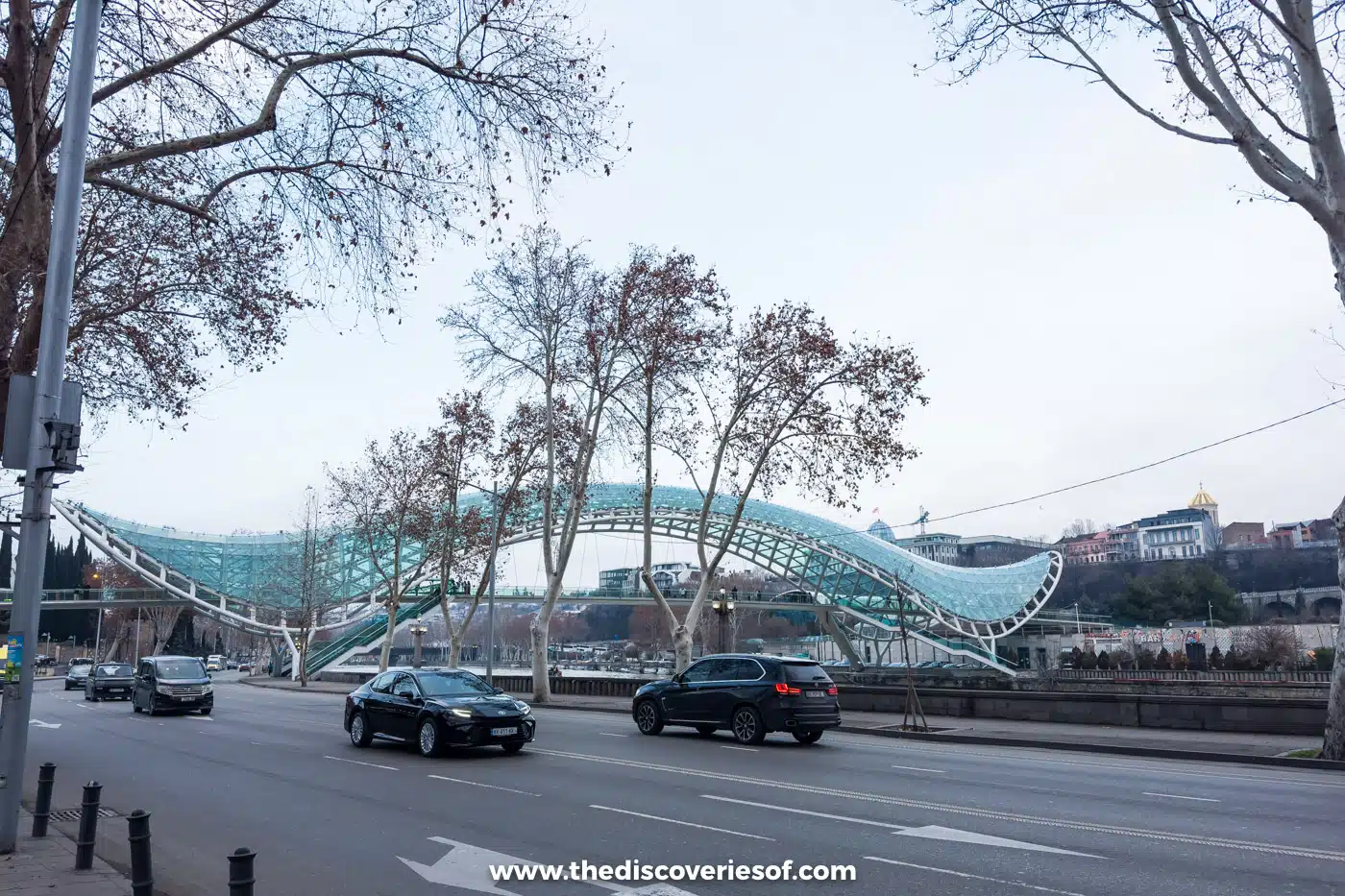
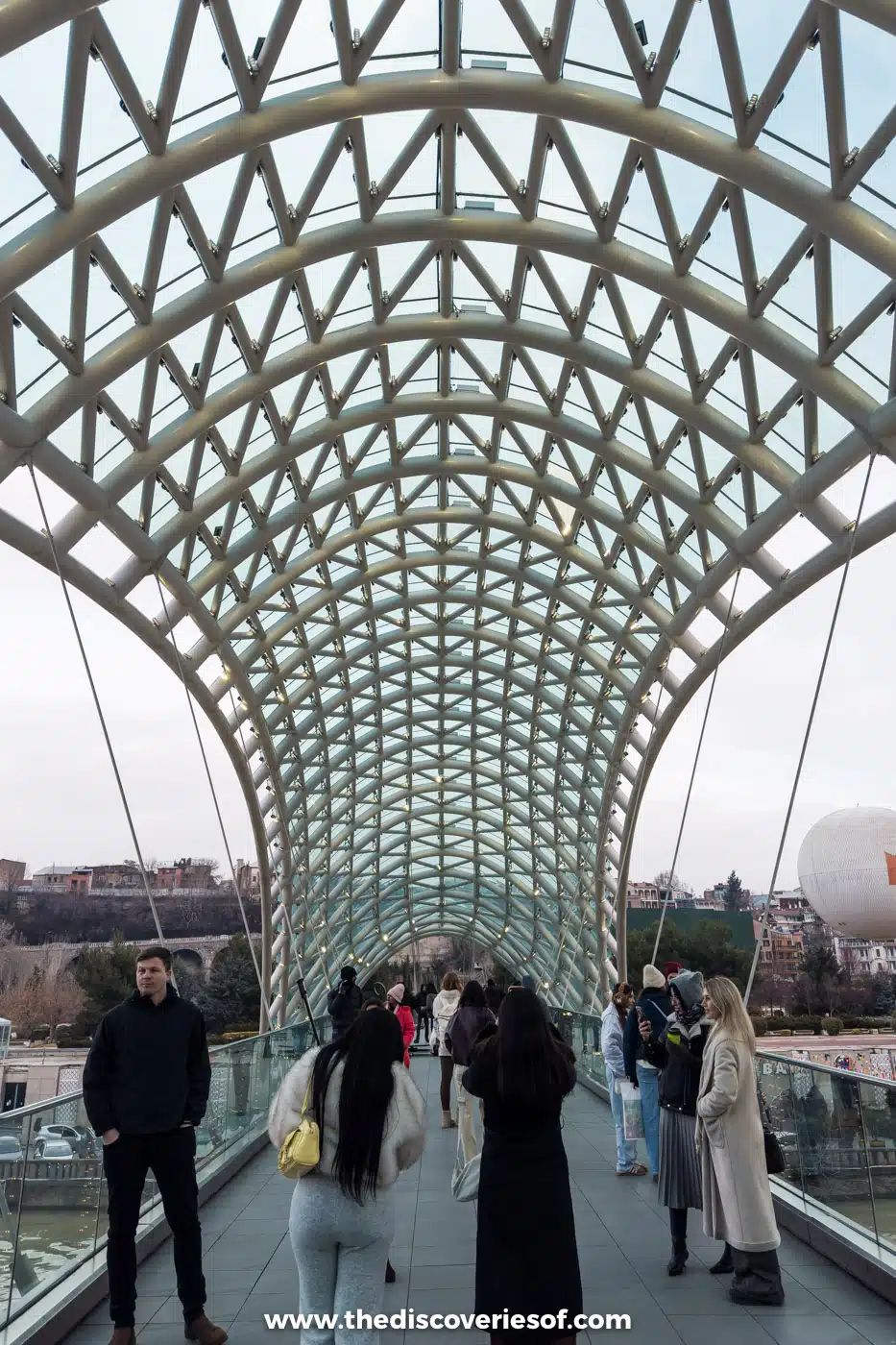
The curving glass-and-steel footbridge over the Mtkvari is at its best as the lights come on.
Wander the Old Town early
Carved balconies, the leaning Gabriadze clock tower with its puppet show at noon and 7pm, and the city’s only mosque, before the crowds arrive.
Do: Book a wine tasting with a sommelier in Tbilisi
Read next: 37 things to do in Tbilisi, including the hidden gems most visitors walk straight past
Suggested itineraries
One day in Tbilisi
The Old Town early > the cable car to Narikala > a sulphur bath in Abanotubani > the Wine Museum > the Bridge of Peace at dusk > a supra at Kartuli Sakhli
Three days in Tbilisi
Day one as above > a long lunch at Satchashnike, the National Museum and Rustaveli Avenue > Vera, Fabrika and the Dry Bridge market > a day trip to Mtskheta
Read next: 37 things to do in Tbilisi, including the hidden gems most visitors walk straight past
Tbilisi and the mountains
Two days in Tbilisi > the Georgian Military Road > skiing in Gudauri > the Kobi cable car > back via Ananuri
Read next: A week in Georgia in winter, from Tbilisi’s wine cellars to the slopes of Gudauri
Hidden Tbilisi
The waterfall behind the sulphur baths
Follow the path past the bathhouses into the Leghvtakhevi gorge and you reach a 22-metre waterfall in the middle of the city. Entry is free.
Fabrika
A Soviet sewing factory turned hostel, bar and studios, with a big graffiti-covered courtyard that fills up in the evenings.
The Dry Bridge market
Soviet badges, old cameras, drinking horns and silver jewellery, spread along the bridge and through Dedaena Park every day.
The Chronicle of Georgia
Sixteen carved pillars, 30 to 35 metres tall, on a hill above the Tbilisi Sea. It’s free, always open and often empty.
Turtle Lake
A six-minute cable car ride from Vake Park takes you up to a small lake in the wooded hills, next to the Open Air Museum of Ethnography.
Read next: 37 things to do in Tbilisi, including the hidden gems most visitors walk straight past
Dishes and drinks to try
Dishes to try
- Khinkali: order the city-style kalakuri, flecked with herbs. Hold the knot, bite, slurp the broth, then eat.
- Khachapuri: the cheese bread. Stir the egg and butter into an Adjaruli boat at the table.
- Pkhali: jewel-bright walnut pâtés of spinach and beetroot.
- Churchkhela: walnuts dipped in thickened grape juice, sold from stalls all over the Old Town.
- Shotis puri: canoe-shaped bread slapped onto the wall of a clay tone oven. Watch the bakers at work in the Old Town.
Read next: Georgian food might be the best cuisine you’ve never tried. Start with these 14 dishes
Drinks to try
- Amber wine: white grapes fermented on their skins in qvevri. Start at the Wine Museum.
- Lagidze Waters: the Tbilisi institution for fruit and herb sodas, including bright green tarkhuna.
- Chacha: a fierce grape brandy, poured for toasts. Sip it.
Must-try bars and restaurants
Satchashnike
First opened in 1969 and revived as a modern Georgian pub on Merab Kostava Street. My lunch was a long, leisurely spread of salads with pomegranate, cured meats, grilled fish and dessert.
Kartuli Sakhli
A full supra with live polyphonic singing and folk dance, and a brilliant way to try a bit of everything.
Barbarestan
A menu built on a 19th-century cookbook by Barbare Eristavi-Jorjadze, found at a flea market. Book ahead, especially at weekends.
Fabrika
For a glass of Georgian wine or a beer in the courtyard of a converted Soviet sewing factory.
Costs and budgeting
Tbilisi is good value. Expect about 250 to 450 GEL (£75 to £130) a day on a mid-range trip, including your hotel.
Average costs:
- Hotels: mid-range about 120 to 200 GEL (£35 to £60) a night; luxury about 300 to 700 GEL (£90 to £205)
- Food: khinkali from about 1 GEL (30p) each; dinner for two in a mid-range restaurant 120 to 200 GEL (£35 to £60)
- Wine: a glass from about 6 to 12 GEL (£2 to £3.50)
- Sulphur baths: public halls about 6 to 10 GEL an hour; private rooms from about 120 GEL (£35) an hour
- Transport: 1 GEL (30p) per journey; a Bolt across town 4 to 8 GEL (£1 to £2.50)
- Museums: the Georgian National Museum is 40 GEL (£12) for foreign visitors
Safety, health and tipping
Safety
Tbilisi is generally safe and welcoming, though pickpockets work the busy Old Town and the metro. Political protests have taken place for nearly two years around Parliament on Rustaveli Avenue, often on Saturday evenings, so avoid large gatherings. In bars, buy your own drinks and keep them in sight, and be wary of strangers offering to take you to a restaurant or club.
Health
There’s no reciprocal healthcare agreement with the UK and private treatment can be expensive, so make sure your insurance is in order. Tap water quality varies, so many visitors stick to bottled water. Stray dogs are common: get any bite or scratch seen straight away, as rabies treatment is available in the city.
Tipping
Tipping isn’t expected, but it’s increasingly common. Many restaurants add a service charge of 10 to 18%, so check the bill first; if there isn’t one, 10% is generous. In the sulphur baths, the kisi scrub (about 10 to 30 GEL) is paid in cash to the attendant.
Practical tips and info
Tips for travelling
- Bring proof of travel insurance: it’s a legal requirement for every visitor.
- Book private sulphur baths a few days ahead, and up to a week in summer.
- Get a Metromoney card on arrival: it covers the metro, buses and the Narikala cable car.
- Use Bolt rather than street taxis.
- Carry some cash for markets, baths attendants and small cafés.
- Give the protests on Rustaveli Avenue a wide berth.
How to see the best for free
Plenty of Tbilisi’s best moments cost nothing. The Bridge of Peace, the Old Town lanes and Rike Park are free, and so are the Leghvtakhevi waterfall and the Chronicle of Georgia. Narikala is free if you walk up. Slip into Anchiskhati, the city’s oldest church, during the Sunday morning liturgy and you’ll hear Georgian polyphony sung where it belongs. Cover up before you go in.
Packing
Packing for Tbilisi? Don’t forget:
- Shoes with grip for the steep, cobbled Old Town.
- An old swimsuit for the sulphur baths, as the water can stain.
- A scarf to cover your head and something to cover your shoulders and knees in churches.
- Layers in winter: it’s usually just above freezing.
- A universal adaptor for the round-pin sockets.
- Space in your case for a bottle or two of amber wine.
Travel insurance
Every visitor to Georgia must have health and accident insurance of at least 30,000 GEL for the whole stay, and you can be asked to show it. I use AXA Travel Insurance.
Suggested guidebooks
- Bradt Georgia: the most detailed guide to the country, with plenty on Tbilisi.
- Lonely Planet Georgia, Armenia and Azerbaijan: handy if you’re combining the Caucasus countries.
Interesting facts
- Tbilisi’s name comes from tbili, the Georgian word for warm, after its hot springs.
- Legend says King Vakhtang Gorgasali founded the city in the 5th century after his falcon fell into a hot spring.
- The Mother of Georgia statue was put up for the city’s 1,500th anniversary in 1958.
- Anchiskhati, built in the 6th century, is the oldest surviving church in the city.
Handy phrases
- Hello: gamarjoba (გამარჯობა)
- Thank you: madloba (მადლობა)
- Please: tu sheidzleba (თუ შეიძლება)
- How much is it?: ra ghirs? (რა ღირს?)
- Delicious: gemrielia (გემრიელია)
- Cheers: gaumarjos (გაუმარჯოს)
Time zone
Tbilisi is on Georgia Time (UTC+4) all year, four hours ahead of the UK in winter and three in summer.
Electricity and adapters
Sockets take type C and F plugs at 220V. A universal adaptor covers you.
Map
Insider tips, straight to your inbox
All Tbilisi guides
 Radisson Blu Iveria review: the Soviet icon with Tbilisi at your feet
 Kartuli Sakhli, the Tbilisi restaurant where dinner comes with polyphonic singing
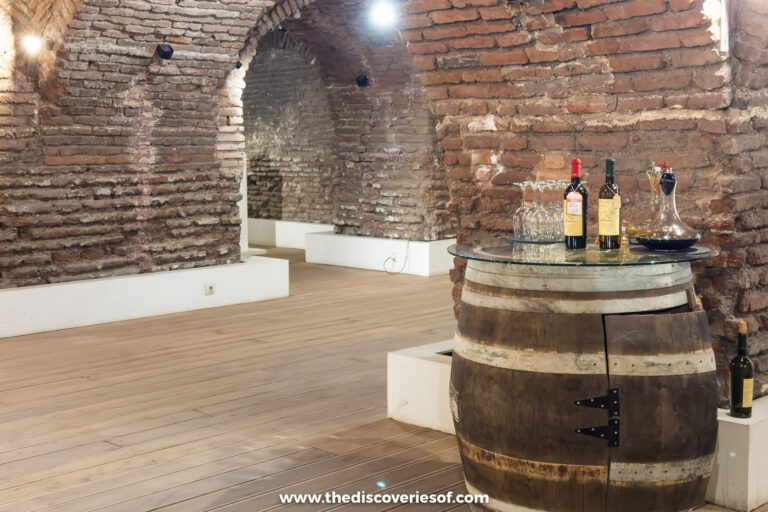 Delving into 8,000 years of Georgian wine at the Tbilisi Wine Museum
 37 things to do in Tbilisi, including the hidden gems most visitors walk straight past



Watch on YouTube
See the places before you go
Short films from the places in my guides, so you can see what a destination really looks and feels like before you go.
Subscribe on YouTube youtube.com/@thediscoveriesof