
Cheese boats oozing butter, dumplings you drink before you eat, and walnuts and pomegranate in almost everything. Georgian food is generous, garlicky and wildly underrated, and once you’ve had a proper spread, it’s hard to go back to anything else.
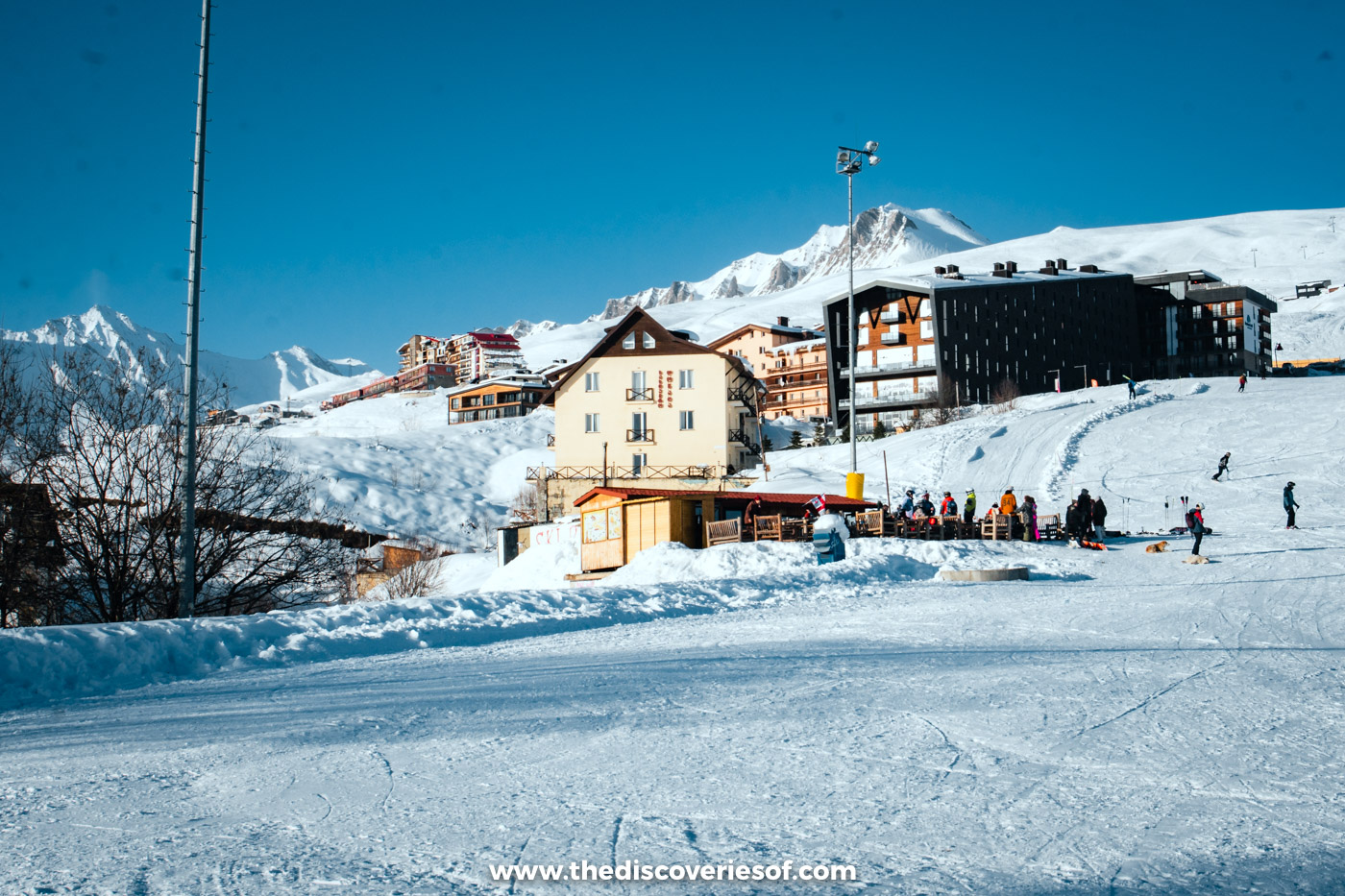
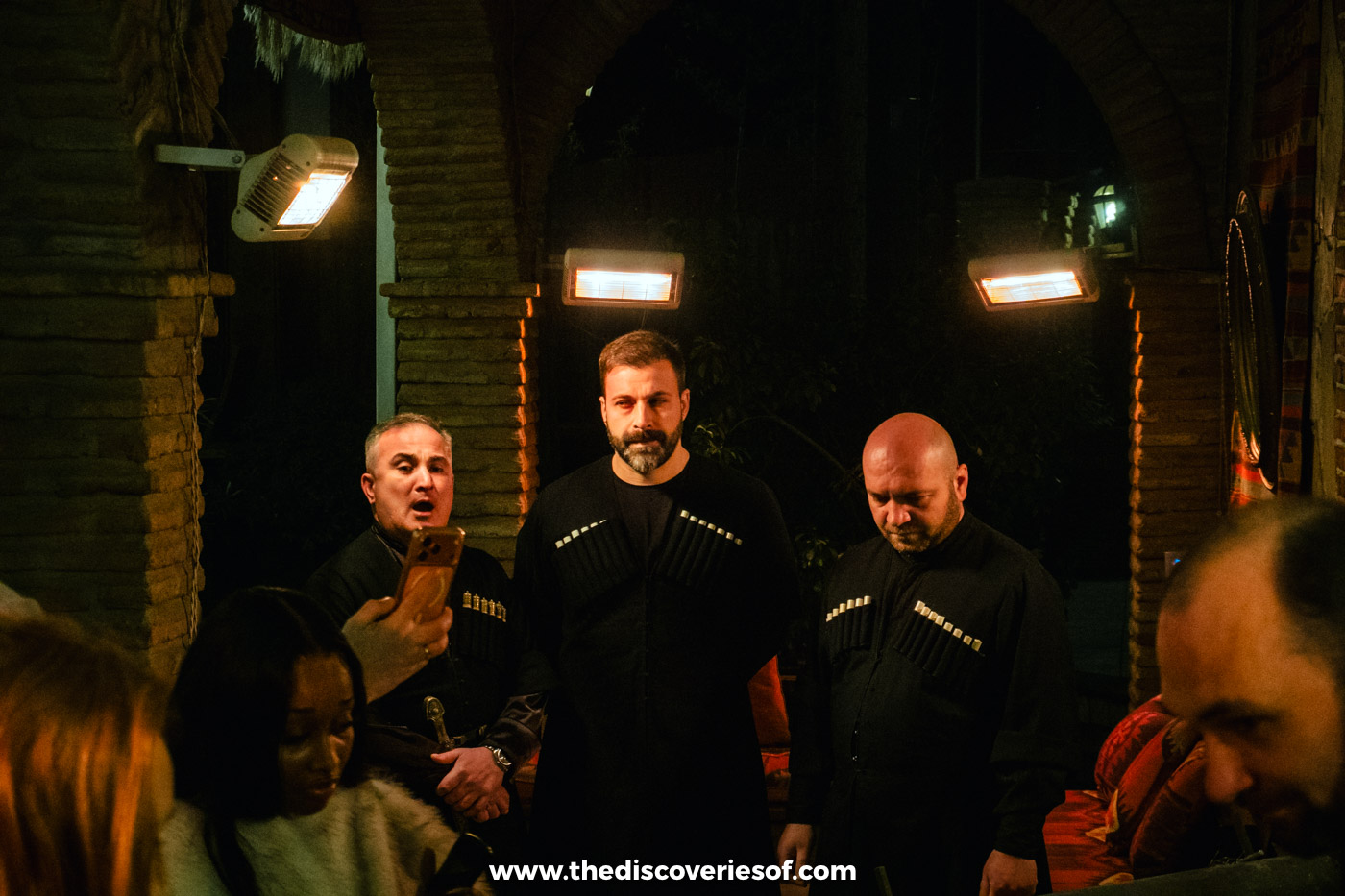
I spent late January and early February eating my way from Tbilisi to the slopes of Gudauri: long lunches in the capital, a feast with polyphonic singing, and big, warming dinners after days in the snow. Plates of pkhali and pomegranate turned up on table after table. These are the dishes to order, how to eat them without embarrassing yourself, what to drink alongside and where I ate best.
14 Georgian dishes you have to order
Georgia sits where the old Silk Road routes crossed, and you can taste it: a bit of Persia, a bit of Turkey, a bit of Russia, but a flavour that’s entirely its own. Walnuts get ground into pastes and sauces, herbs come by the fistful (coriander, tarragon, dill and purple basil), pomegranate seeds go on top of everything, and the spice blend khmeli suneli, built around blue fenugreek, gives dishes their warm, earthy hum. Nothing comes in courses. It all lands in the middle of the table at once, and you dive in.
Khachapuri, the cheese boat you stir with a fork
Khachapuri was on my table on this trip, and if you only order one thing, make it this. Every region has its own. Imeruli is a round bread with cheese baked inside, Megruli piles on a second layer of cheese for good measure, and Adjaruli is the showstopper: a boat-shaped loaf filled with molten cheese, with a raw egg and a fat knob of butter dropped into the middle just before it hits the table.
Here’s how to tackle it. Stir the egg and butter through the bubbling cheese with your fork until it’s glossy, then tear off the crust and dunk. It’s gloriously rich, so share one between two or three of you, or you won’t have room for anything else.
Khinkali: hold the knot, slurp the broth
Khinkali are fat, pleated dumplings filled with spiced meat and a mouthful of hot broth. Tbilisi-style (kalakuri) ones are flecked with herbs; mountain-style (mtiuluri) ones keep it simple with meat, onion, salt and pepper. There are mushroom, potato and cheese versions too.
I ate khinkali on this trip too, and there’s an art to it. Pick one up by the twisted knot, bite a small hole in the side, slurp out the broth, then eat the rest. The knot stays on your plate, and in some places people count the knots to see who ate the most. Order them by the piece, and don’t be shy with the black pepper.
Top Tip
Never attack khinkali with a knife and fork. Cut one open and all the broth, the best bit, ends up on the plate.
Pkhali, the jewel-bright walnut pâtés
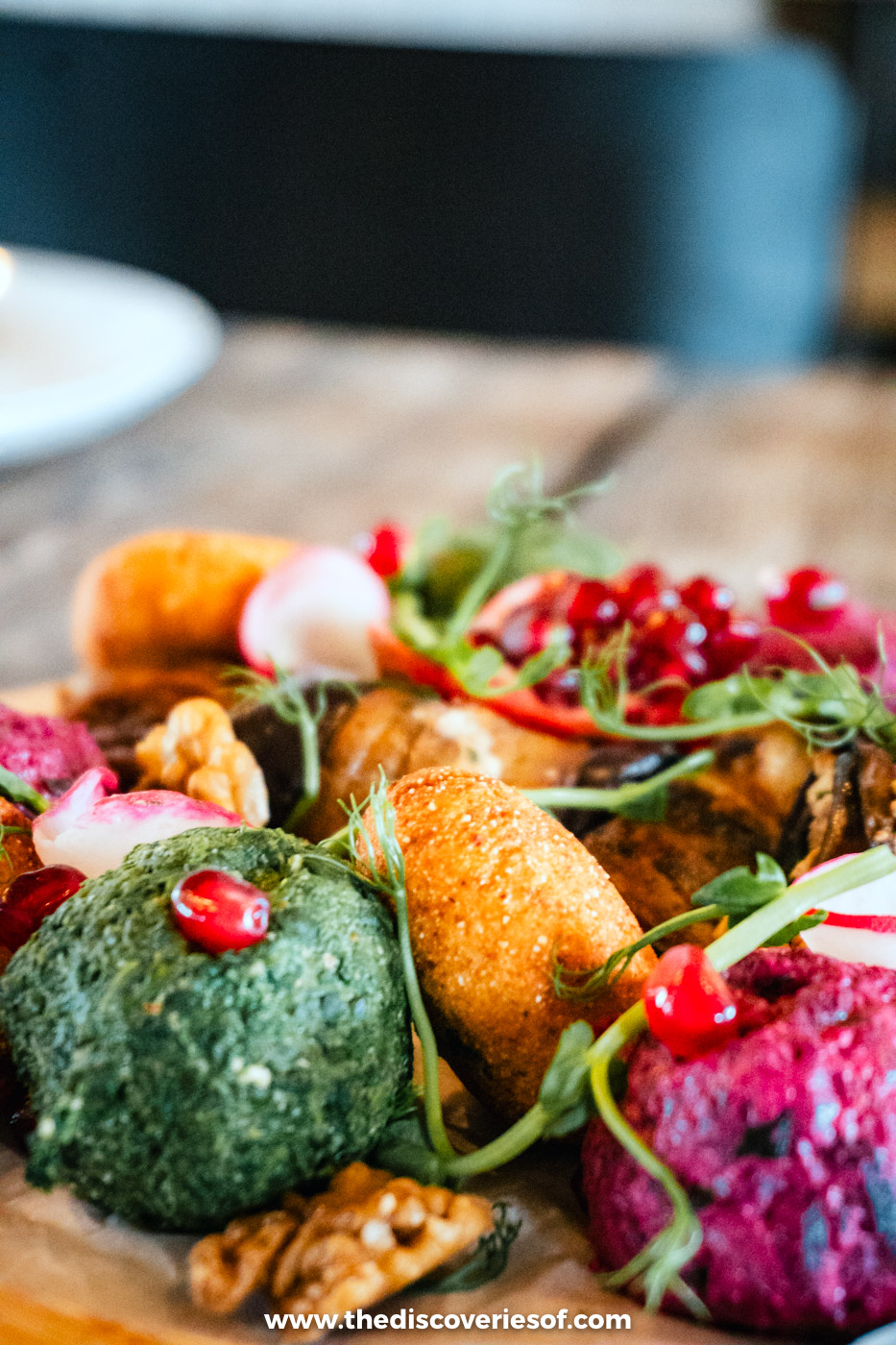
Pkhali is the dish that converts people who think they don’t like vegetables. Spinach, beetroot, leek or cabbage is cooked, chopped finely and pounded with walnuts, garlic, vinegar and herbs, then shaped into little balls and studded with pomegranate seeds. At lunch in Gudauri I had deep green and ruby-red pkhali side by side, with bread to scoop them up, and there was more at the supra in Tbilisi.
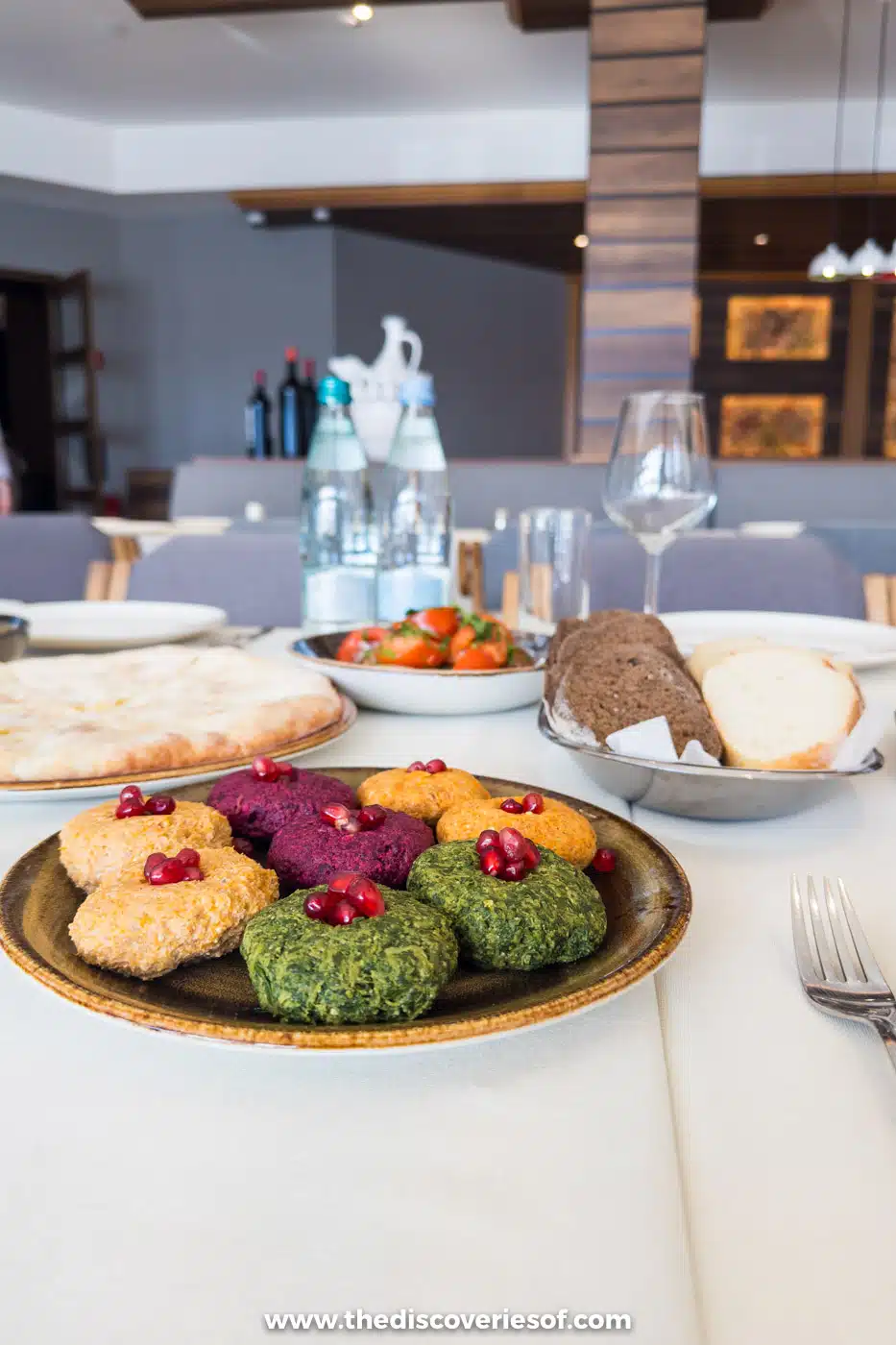
It’s naturally vegan too. The Orthodox calendar has long fasting periods with no meat or dairy, which is why so many Georgian vegetable and bean dishes are this good.
Badrijani, aubergine rolled around garlic and walnuts
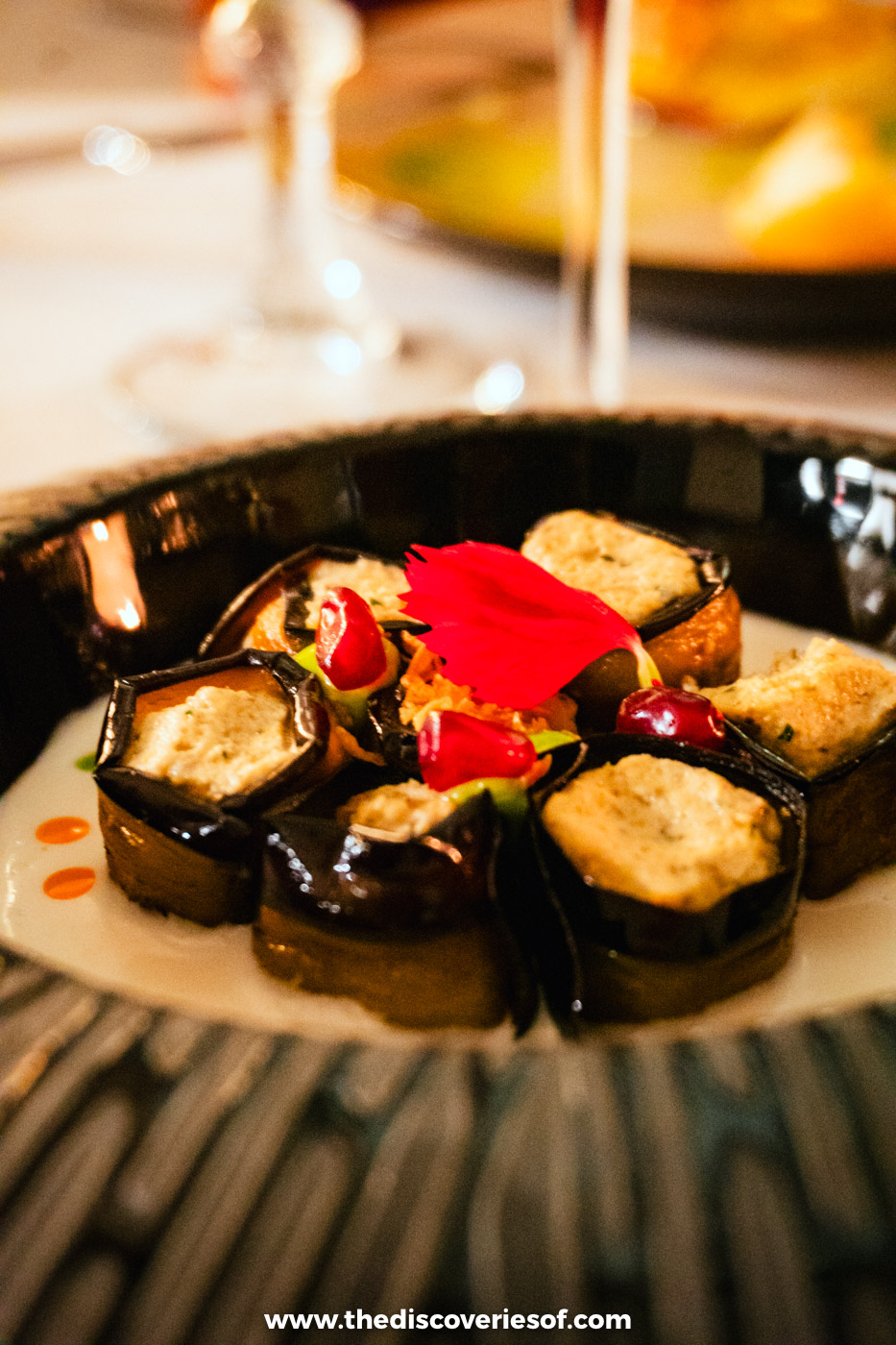
Strips of fried aubergine are spread with garlicky walnut paste, rolled up and scattered with pomegranate. They’re soft, rich and sharp all at once, they look like little presents on the plate, and a plate of them disappears alarmingly fast.
Lobio, the bean stew made for snowy days
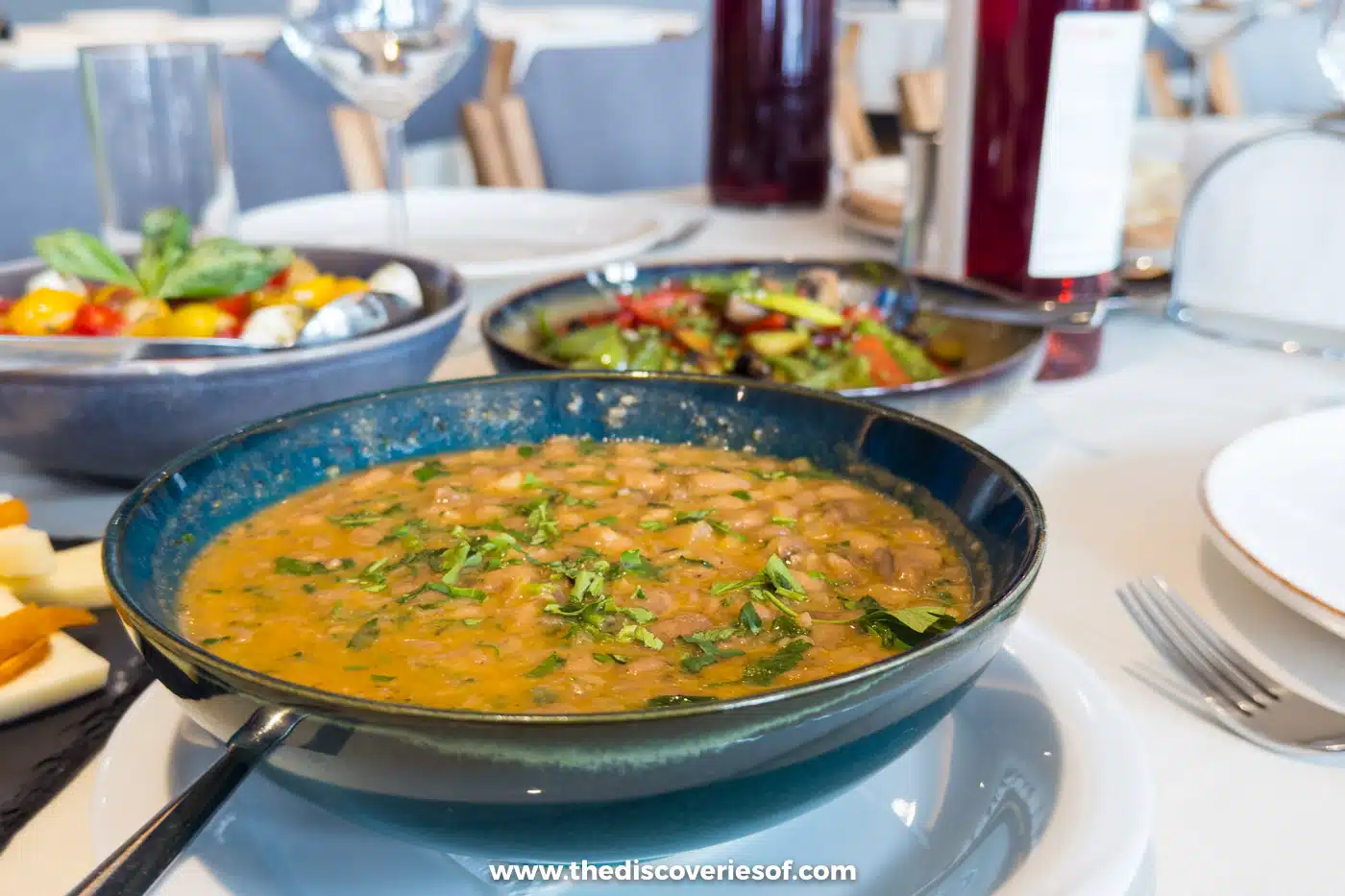
Lobio is red kidney beans slow-cooked with onion, garlic, coriander and spices until they’re just starting to collapse. Traditionally it comes bubbling in a clay pot with mchadi (crisp cornbread) and pickles, and it’s exactly what you want with snow outside. I had mine topped with fresh herbs at lunch in Gudauri.
Love beans? Look out for lobiani too, a bread stuffed with spiced beans that’s khachapuri’s less famous cousin.
The Georgian salad that tastes like summer
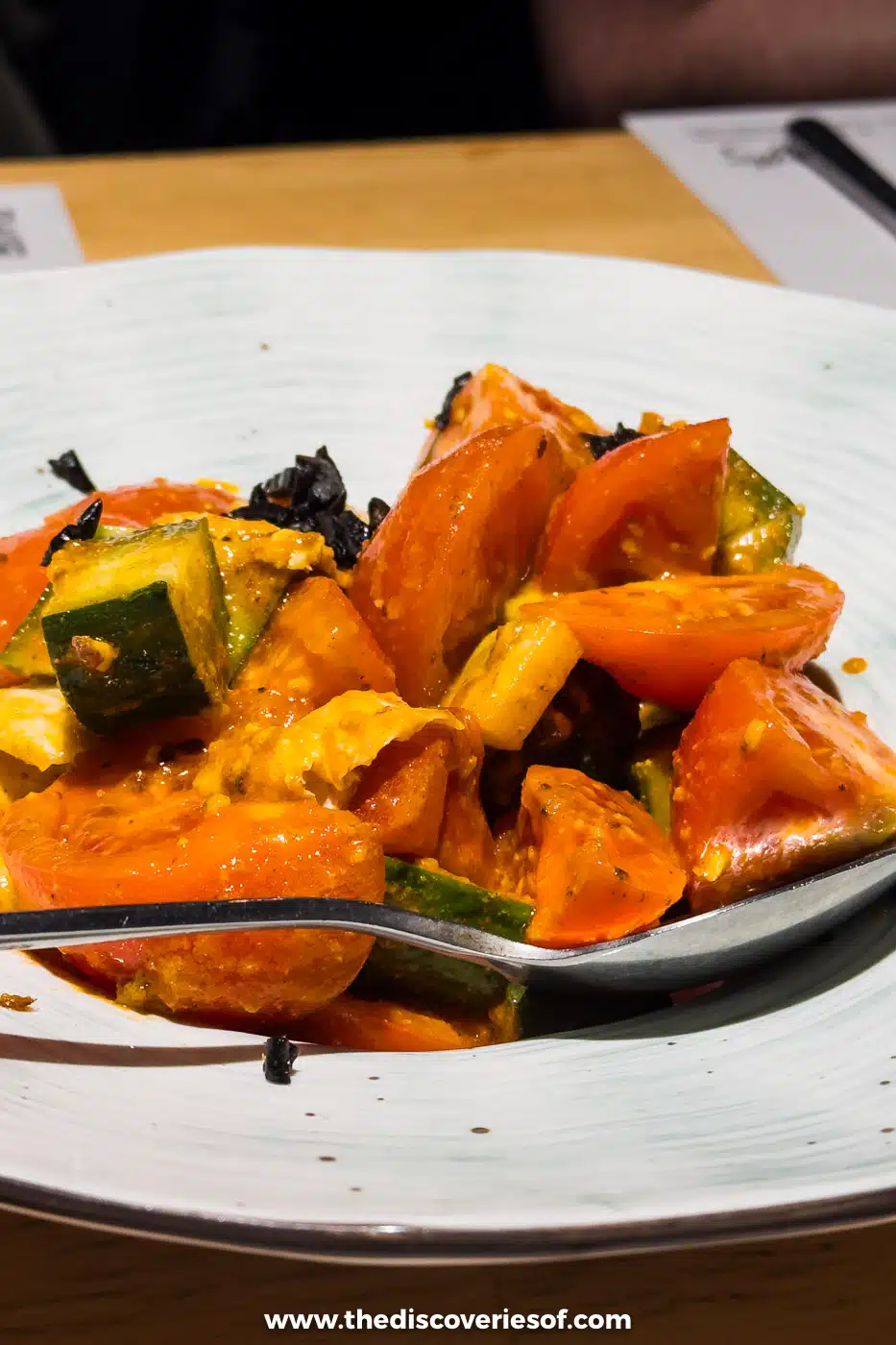
On paper, a Georgian salad is nothing special: tomatoes, cucumbers, red onion and herbs. On the plate, it’s a different story, because the produce actually tastes of something. In Kakheti it’s dressed with fragrant, unrefined sunflower oil; elsewhere, it often comes with a walnut dressing. I had a classic one at Guda in Pasanauri, on the drive back to Tbilisi from the mountains.
Sulguni and imeruli, the cheeses in everything
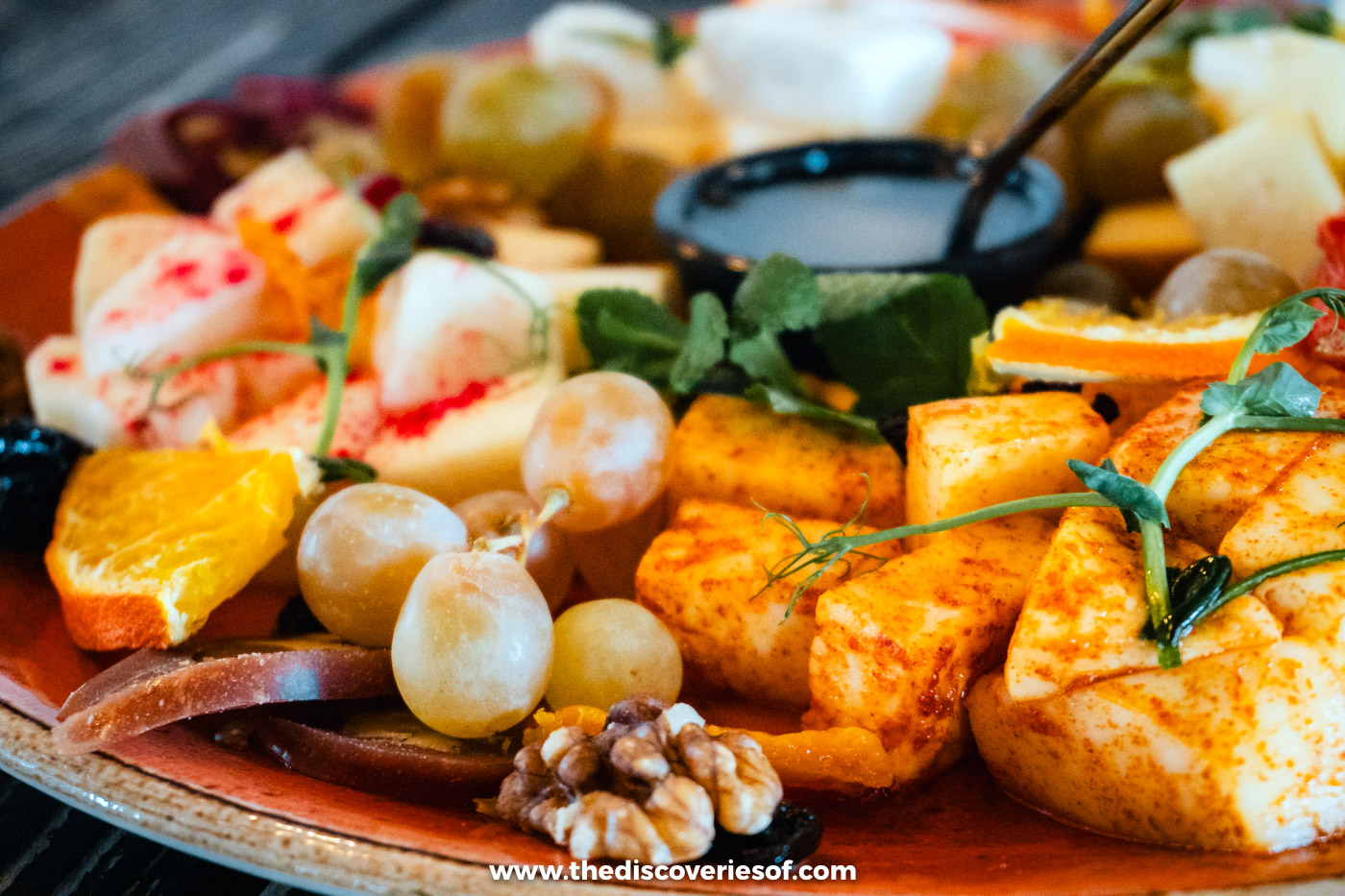
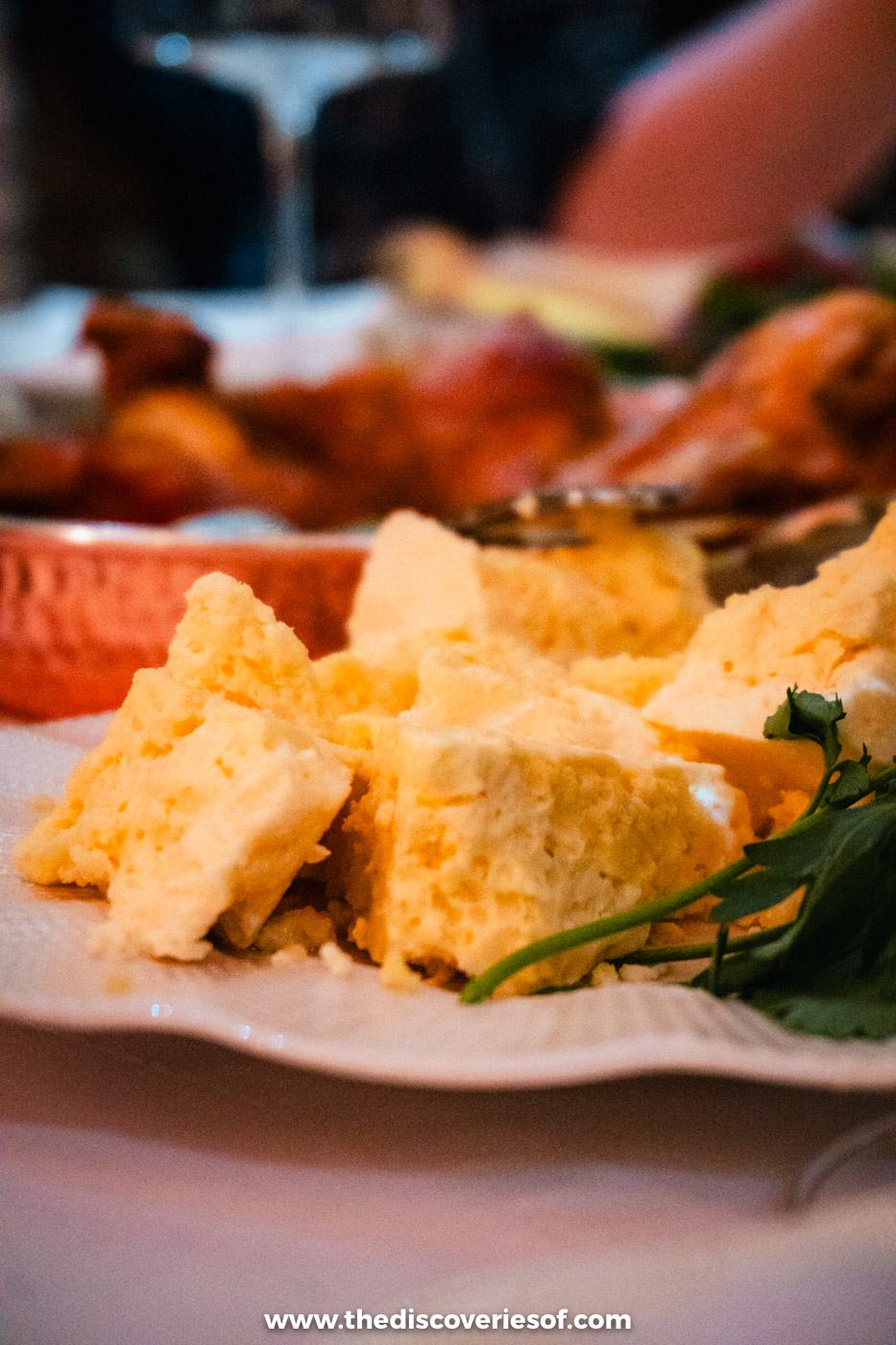
Georgians take cheese seriously. Sulguni is a stretchy, salty, brined cheese from Samegrelo, often smoked, and it’s the one melting on top of Megruli khachapuri. Imeruli is fresh and crumbly, from Imereti, and it’s what usually goes inside Imeruli khachapuri. Plates of both start most feasts, and at Kartuli Sakhli in Tbilisi slices of cheese were part of the spread.
Mtsvadi, barbecue over vine cuttings
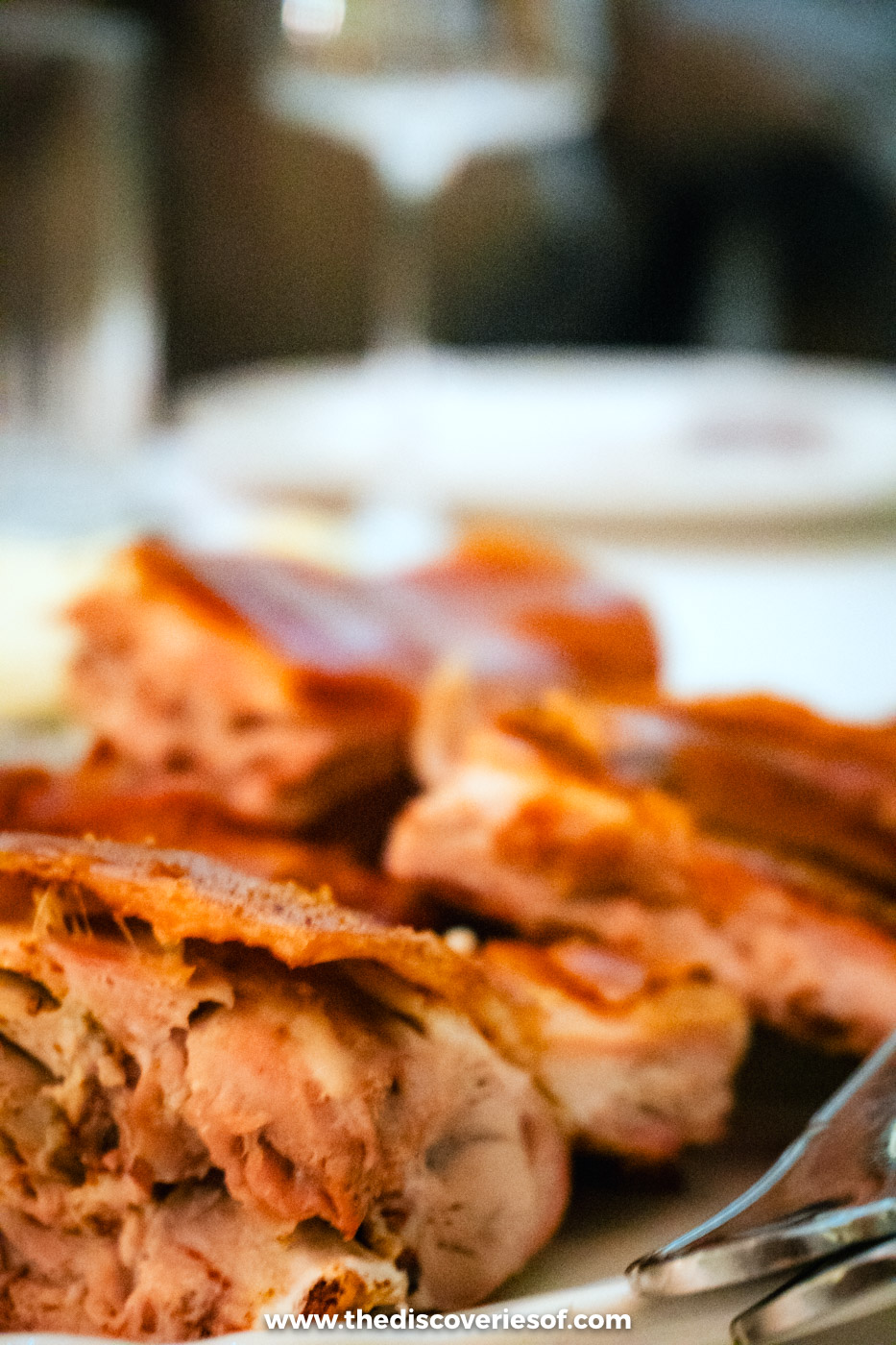
Mtsvadi is Georgian barbecue at its simplest: chunks of pork (sometimes veal or lamb) threaded onto skewers and grilled over vine cuttings, which give the meat a gentle, smoky sweetness. It comes with raw onion and a sour plum sauce. At a supra, the big platters of roast meat arrive just when you think you can’t possibly eat any more.
Kupati, and sausages with a bowl of melted cheese
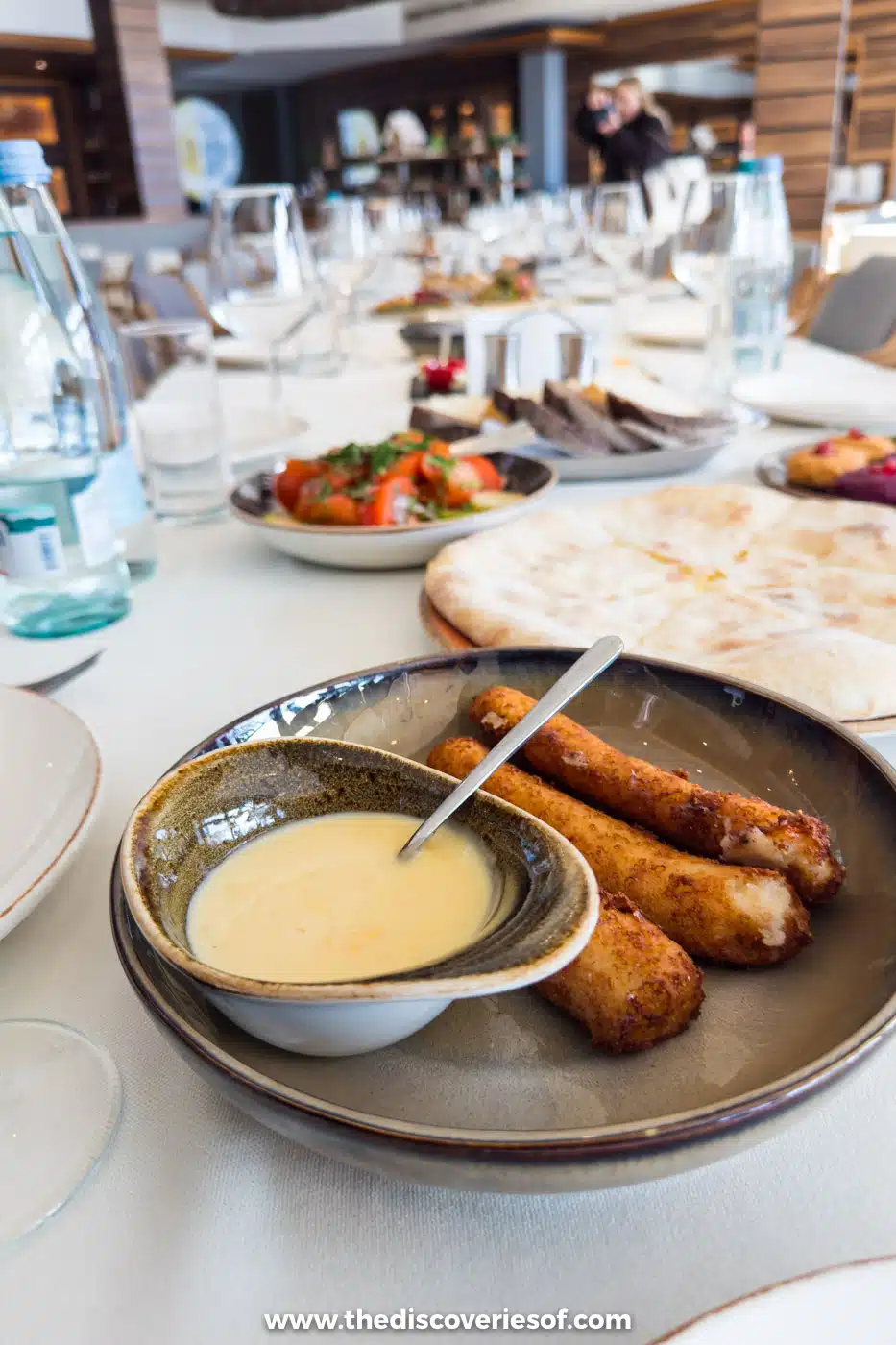
Kupati are spiced sausages from western Georgia, traditionally made with pork and fragrant with coriander, garlic, cinnamon and pepper, then fried or grilled. Most menus have a sausage or two. At lunch in Gudauri I had grilled sausages with a bowl of melted cheese sauce and flatbread for dipping, which is about as comforting as food gets on a cold day.
Chakhokhbili, the gentle chicken stew
Chakhokhbili is the kind of dish a Georgian grandmother makes: chicken (originally pheasant) slow-cooked with tomatoes, onions, garlic and a big handful of herbs. It’s mellow and homely, and a good order when you need a break from cheese.
Satsivi and chkmeruli, chicken in sauces worth mopping up
Georgians love a sauce, and these two chicken dishes prove it. Satsivi is chicken or turkey served cold in a thick, spiced walnut sauce, and it’s a New Year classic. Chkmeruli, from the mountain region of Racha, is chicken roasted and then baked in a sizzling clay dish with a ridiculous amount of garlic and milk or cream. Keep some bread back for both.
Tkemali and ajika, the sauces to put on everything
Tkemali is a tangy sour plum sauce, green or red depending on the plums, made for grilled meat and potatoes. Ajika is a fiery red pepper, garlic and herb paste from Samegrelo. Ask for both and put a little on everything.
Shotis puri, bread slapped onto the wall of a clay oven
Shotis puri is a long, canoe-shaped loaf that bakers slap onto the inside wall of a round clay oven called a tone. Eat it warm, torn straight from the loaf. Look for the little bakeries, often a few steps below street level, all over Tbilisi; my guide to things to do in Tbilisi has more on watching the bakers at work.
Churchkhela, the walnut “candles” made from grape juice
You’ll spot churchkhela hanging from market stalls like knobbly candles. They’re strings of walnuts (or hazelnuts) dipped again and again in grape juice thickened with flour, then left to dry into something chewy and not too sweet. Pelamushi is the same grape juice set into a soft pudding. Both are made after the autumn harvest, and churchkhela travel well, so pack a few to take home.
What to drink: amber wine, chacha and tarragon soda
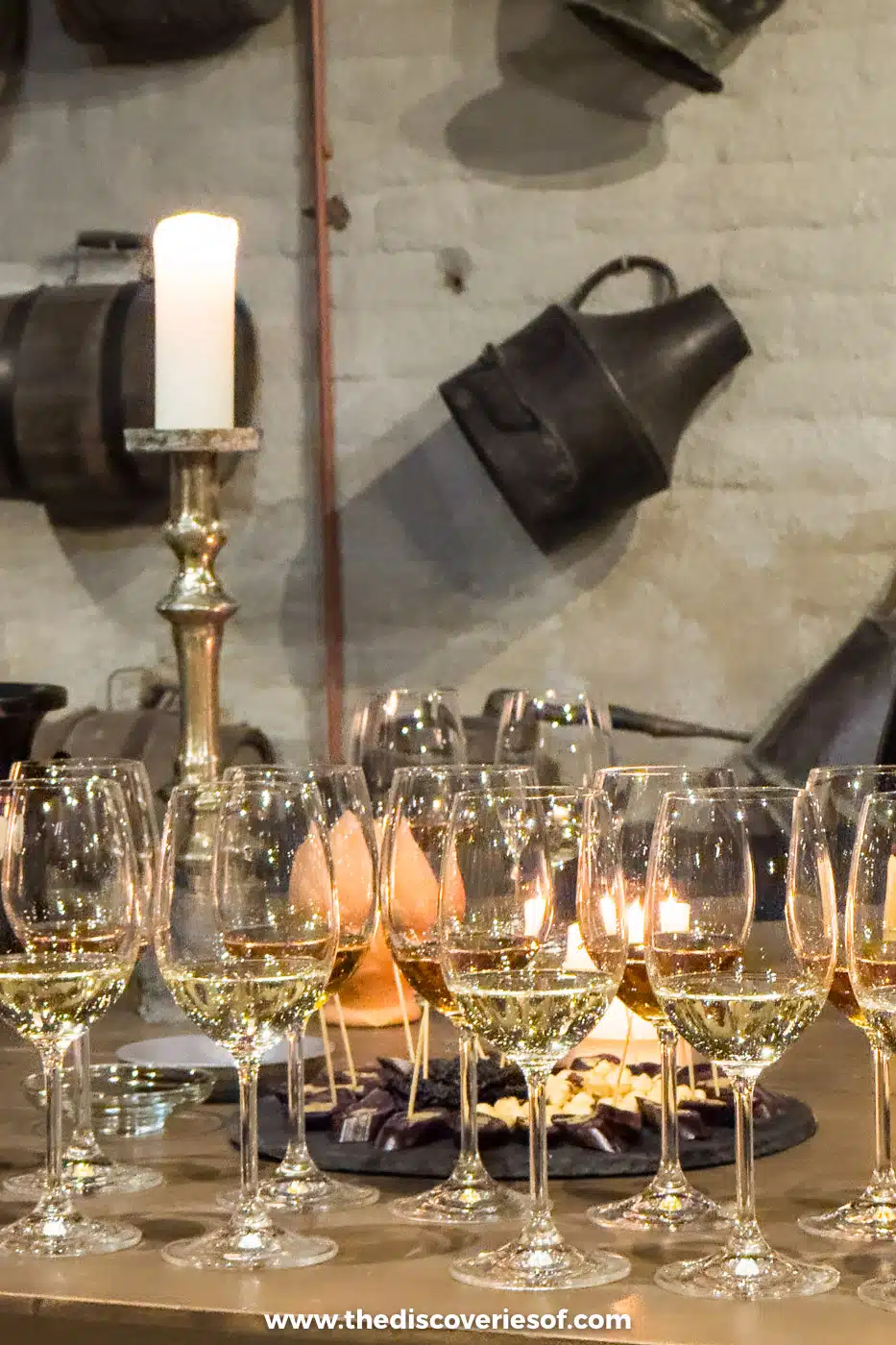
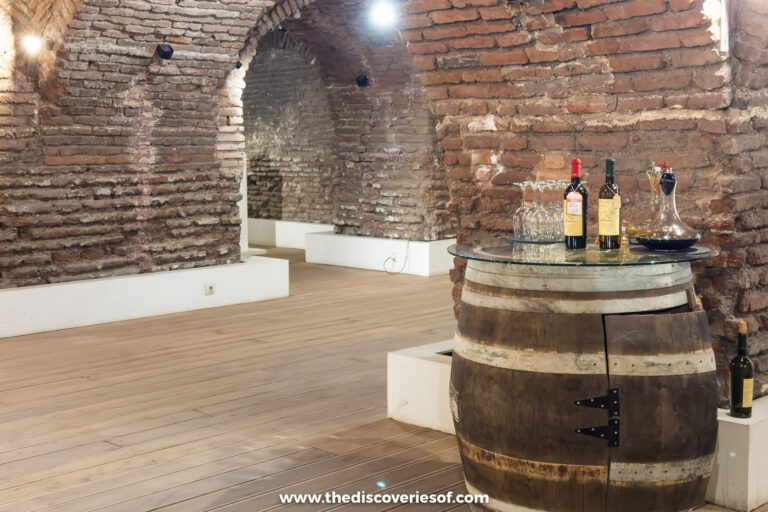
- Qvevri wine: Georgia has been making wine for around 8,000 years, fermenting the grapes in huge clay vessels called qvevri buried underground. Leave white grapes on their skins and you get the deep amber wines the country is famous for. I tasted my way through a run of them in the brick-vaulted cellars of the Tbilisi Wine Museum, which is the best place to start.
- Chacha: a clear, fierce grape brandy made from what’s left after winemaking. It’s often poured as a welcome or with toasts. Sip it.
- Tarkhuna: a luminous green tarragon soda. Lagidze Waters, a Tbilisi institution, makes the classic fruit and herb sodas.
- Mulled wine: in the ski resorts, it’s the après drink of choice. I warmed up with a glass at Drunk Cherry in Gudauri as the light faded.

Where I ate best in Tbilisi and Gudauri
Satchashnike, Tbilisi
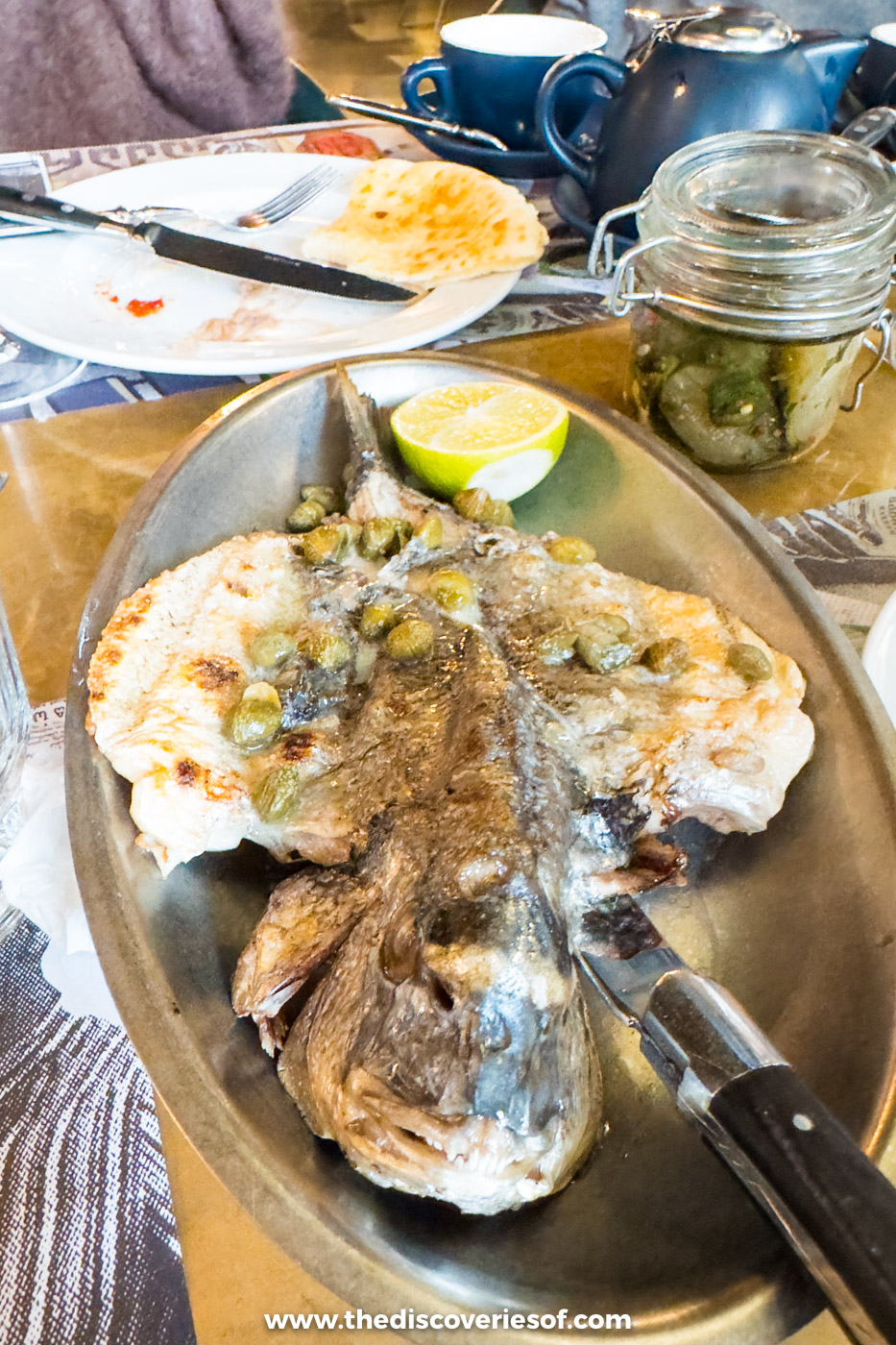
First opened in 1969 and brought back to life as a modern Georgian pub, Satchashnike on Merab Kostava Street does the classics alongside a big grill menu. My lunch here was a long, leisurely one: salads with pomegranate, cured meats and grilled fish to share, and dessert to finish.
Kartuli Sakhli, Tbilisi
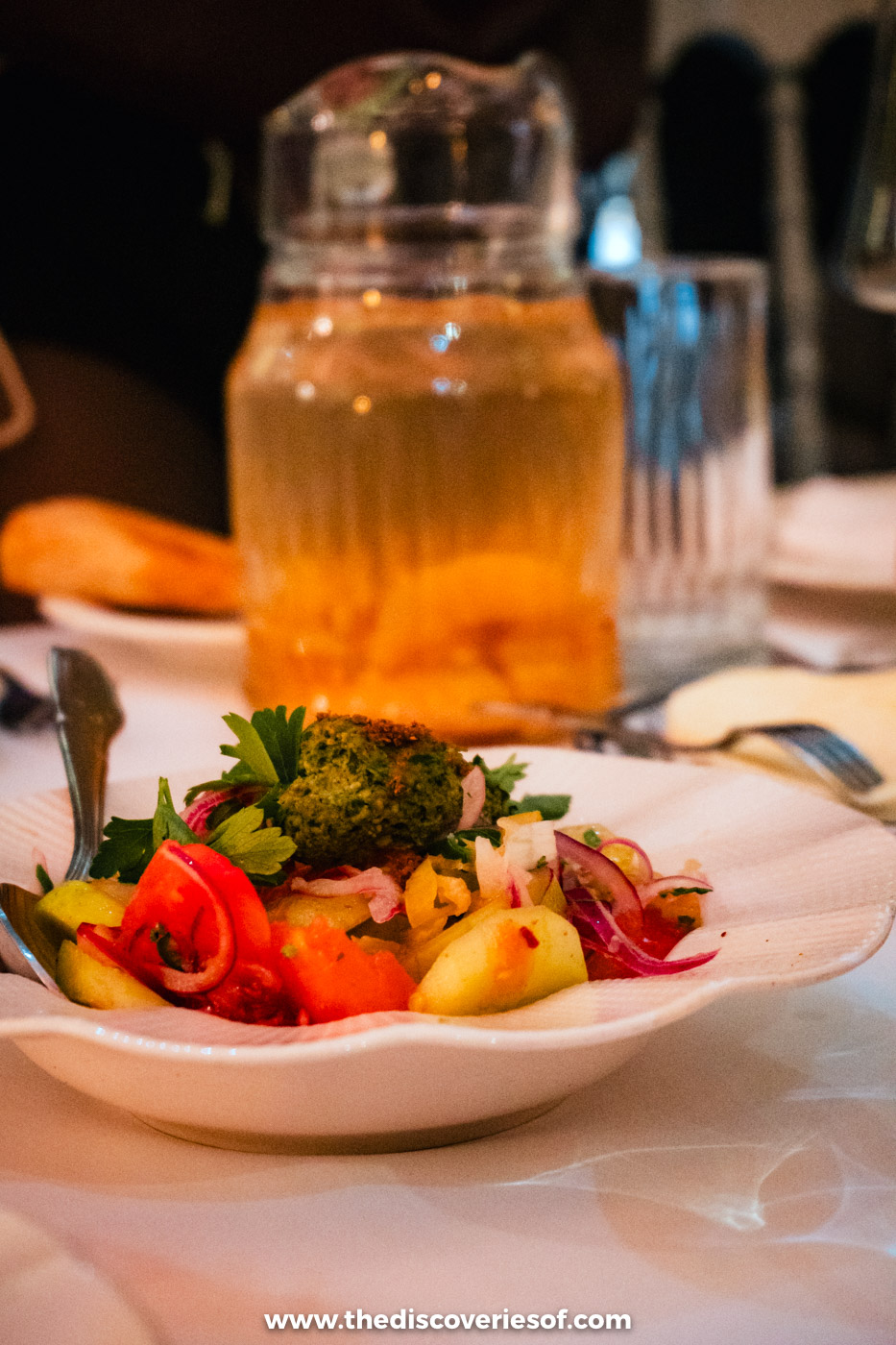
For a full supra, book a table at Kartuli Sakhli, where plate after plate of food comes with live polyphonic singing and folk dance. If you only have one big night out in Tbilisi, it’s a brilliant way to try a bit of everything.
Soliko at the Hotel Marco Polo, Gudauri
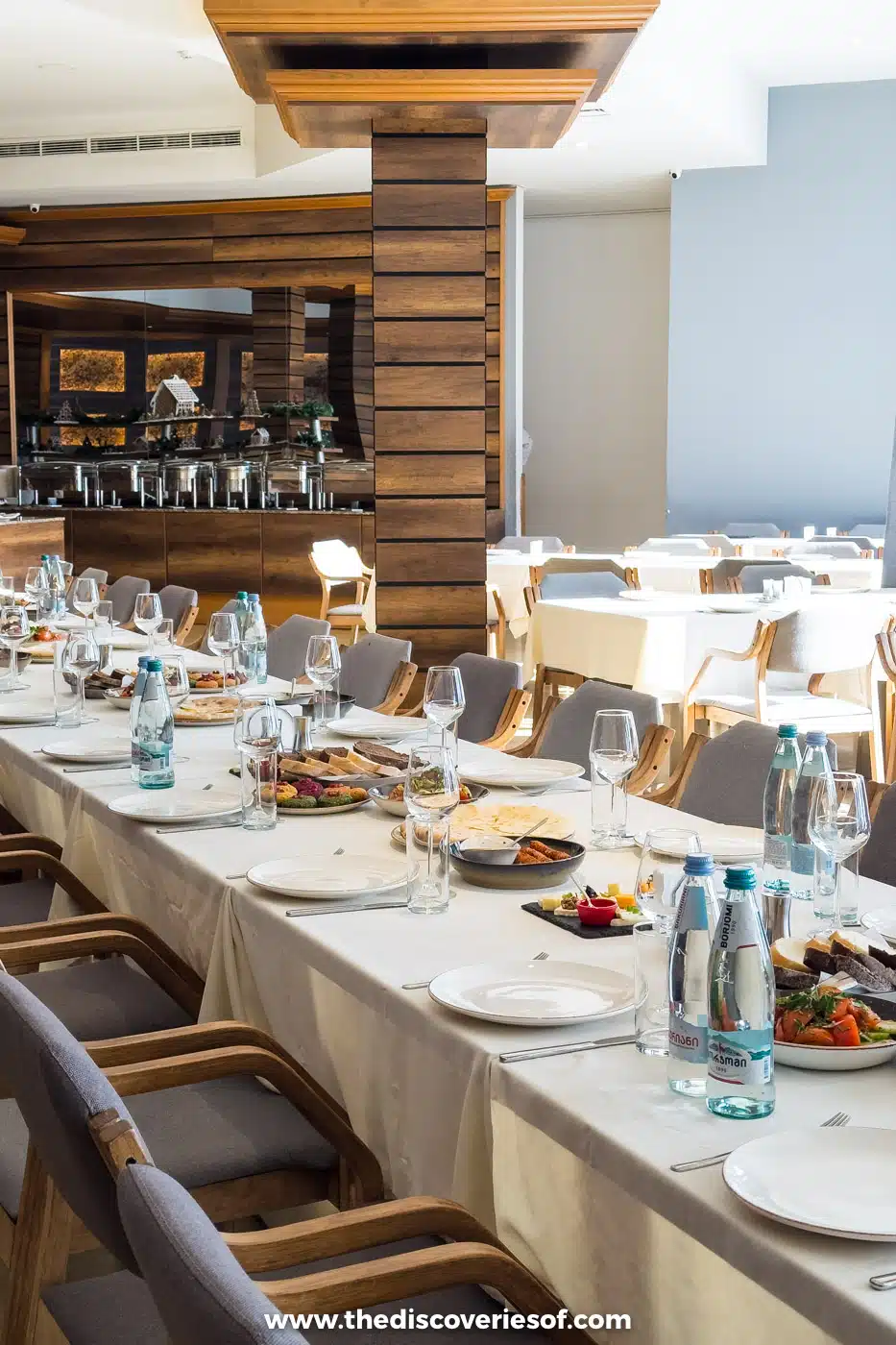
The restaurant at the Hotel Marco Polo was stellar: long tables laid with pkhali, salads, bread and wine, and the lunches of pkhali, lobio and sausages above.
Ati Ambavi, Gudauri
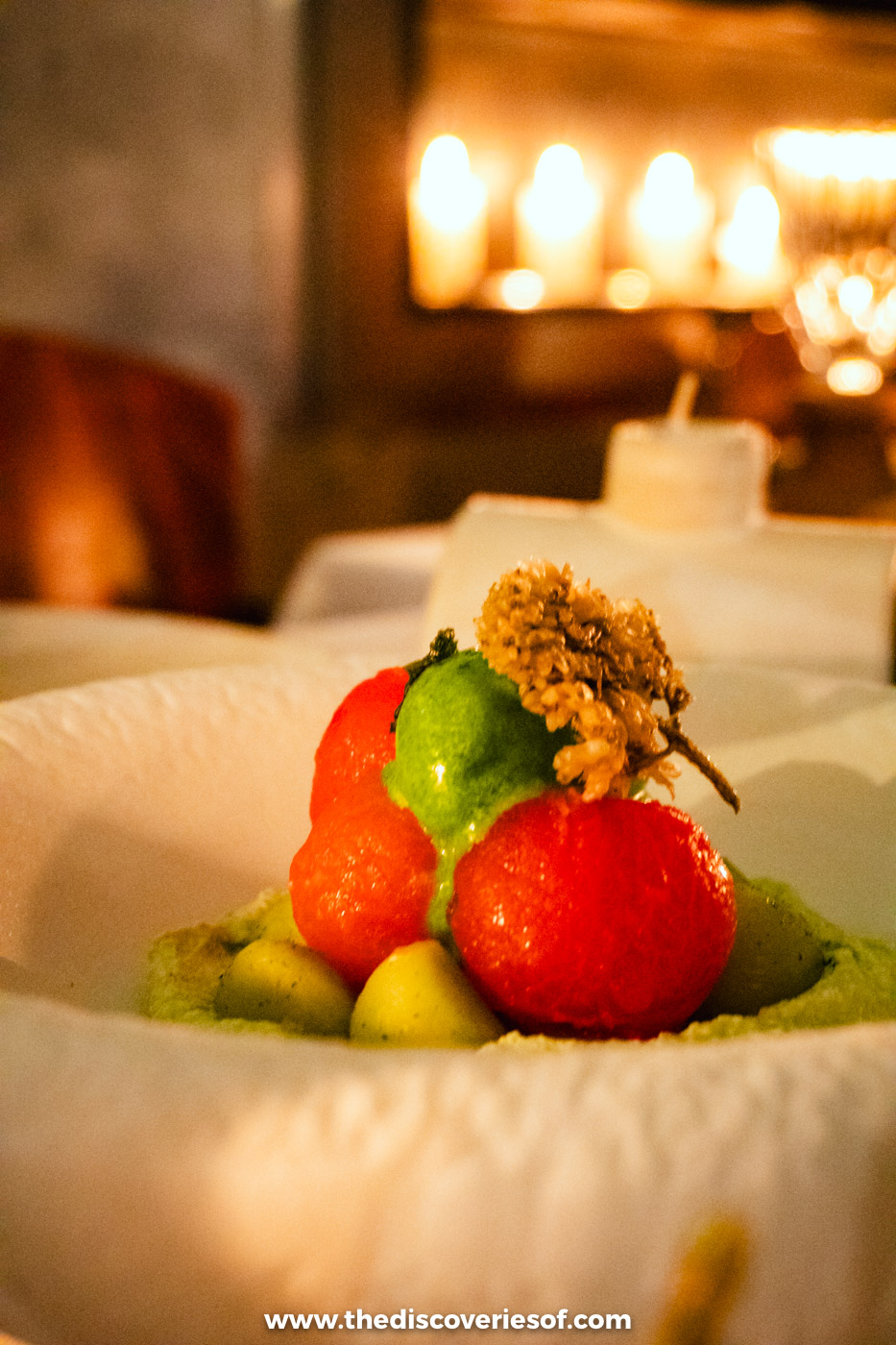
For a special night in the mountains, Ati Ambavi is a boutique hotel with a candlelit dining room and a tasting menu that gives Georgian classics a modern twist.
Guda, Pasanauri
Pasanauri, a village on the Georgian Military Road between the Ananuri fortress and Gudauri, is often called the home of khinkali, and it’s a natural lunch stop on the drive. Guda keeps things simple, with fresh Georgian classics.
How to eat like a Georgian
- Order to share: everything comes at once and goes in the middle, so order a spread and try it all.
- Respect the toasts: a supra is led by a tamada (toastmaster), and you drink after each toast, not whenever you fancy. Pace yourself: the food keeps coming long after you think it’s over.
- Don’t worry about being vegetarian: pkhali, badrijani, lobio, salads and mushroom khinkali are all meat-free, and there’s plenty more.
- Check the bill: many restaurants add a service charge, so look before you tip.
Map
Read next
- Things to do in Tbilisi
- Delving into 8,000 years of Georgian wine at the Tbilisi Wine Museum
- Kartuli Sakhli, the Tbilisi restaurant where dinner comes with polyphonic singing
- Skiing in Gudauri, Georgia’s big-sky ski resort in the Caucasus
Love this? Save and share on Pinterest
Discover the top things to do, insider tips and hidden gems in our Georgia Travel Guide.
Read the guides →