Georgia has been making wine for around 8,000 years, longer than almost anywhere else on earth, and the Tbilisi Wine Museum is the best place to get to grips with it: a guided walk through centuries-old cellars in the Old Town, the story of the qvevri and a tasting of Georgian wines at the end.
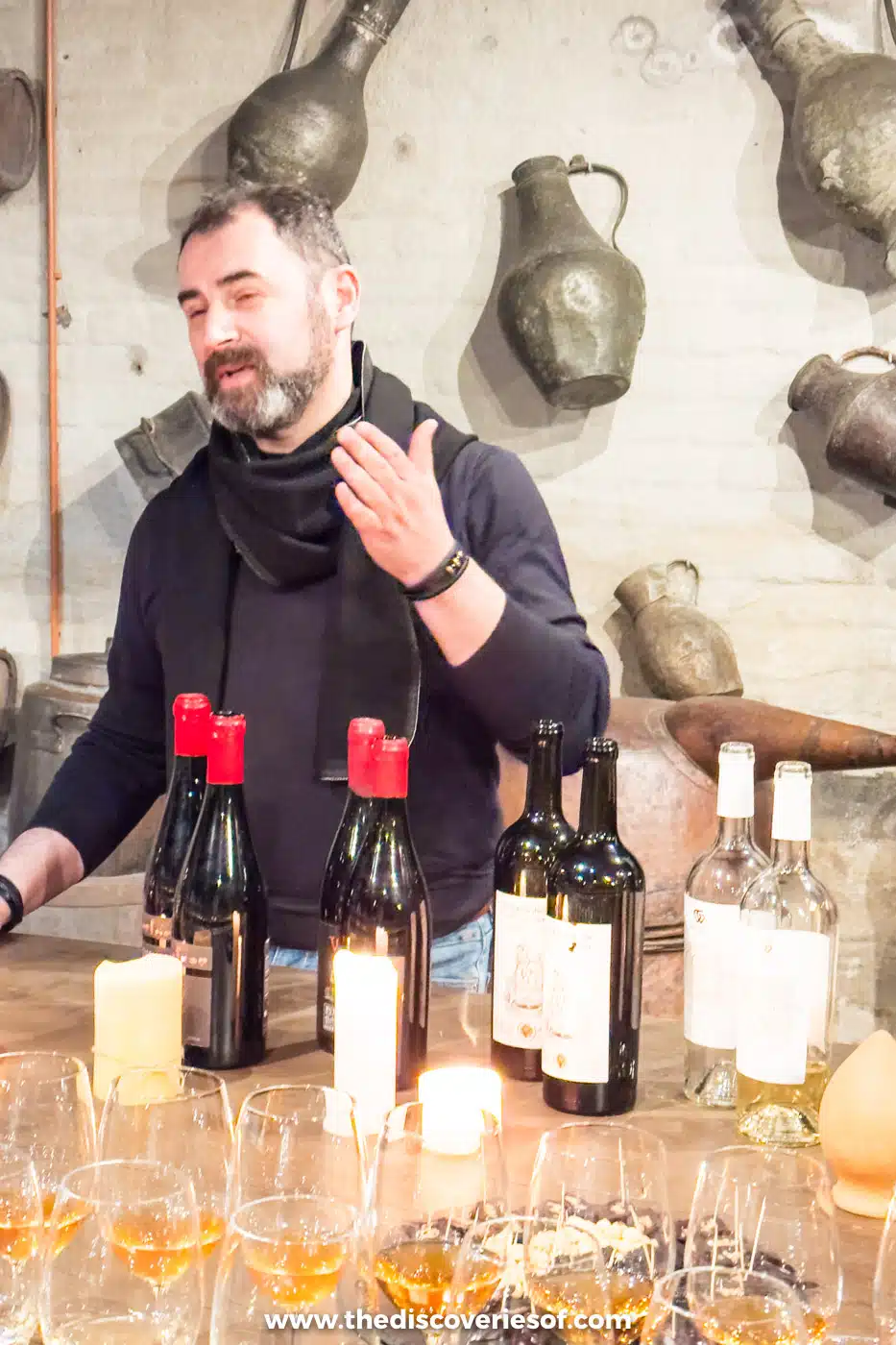
I visited the Tbilisi Wine Museum on my first afternoon in the city. Down in the cool cellars, my host walked me through Georgian winemaking, from the ancient qvevri to the grape varieties and styles that make Georgian wine so distinctive, and the visit finished with a tasting. Here’s what the visit involves, what you’ll learn and how to plan it.
Why Georgian wine is so special
Archaeologists have found traces of wine in clay jars in south-eastern Georgia dating back to around 6000 BC, which makes Georgia one of the oldest winemaking countries in the world. Wine is woven into everything here, from the supra feasts and toasts to the grapevine cross of St Nino, who brought Christianity to Georgia.
The heart of it all is the qvevri, a large, egg-shaped clay vessel buried underground up to its neck. Grapes are crushed and left to ferment in the qvevri, often with their skins, stalks and pips, and then sealed for months. The traditional qvevri method is on UNESCO’s list of intangible cultural heritage.
White grapes made this way take on a deep amber colour and a dry, slightly tannic taste. These amber (or orange) wines are what Georgia is famous for, alongside bold reds made from saperavi, the country’s best-known red grape.
Inside the 17th-century cellars
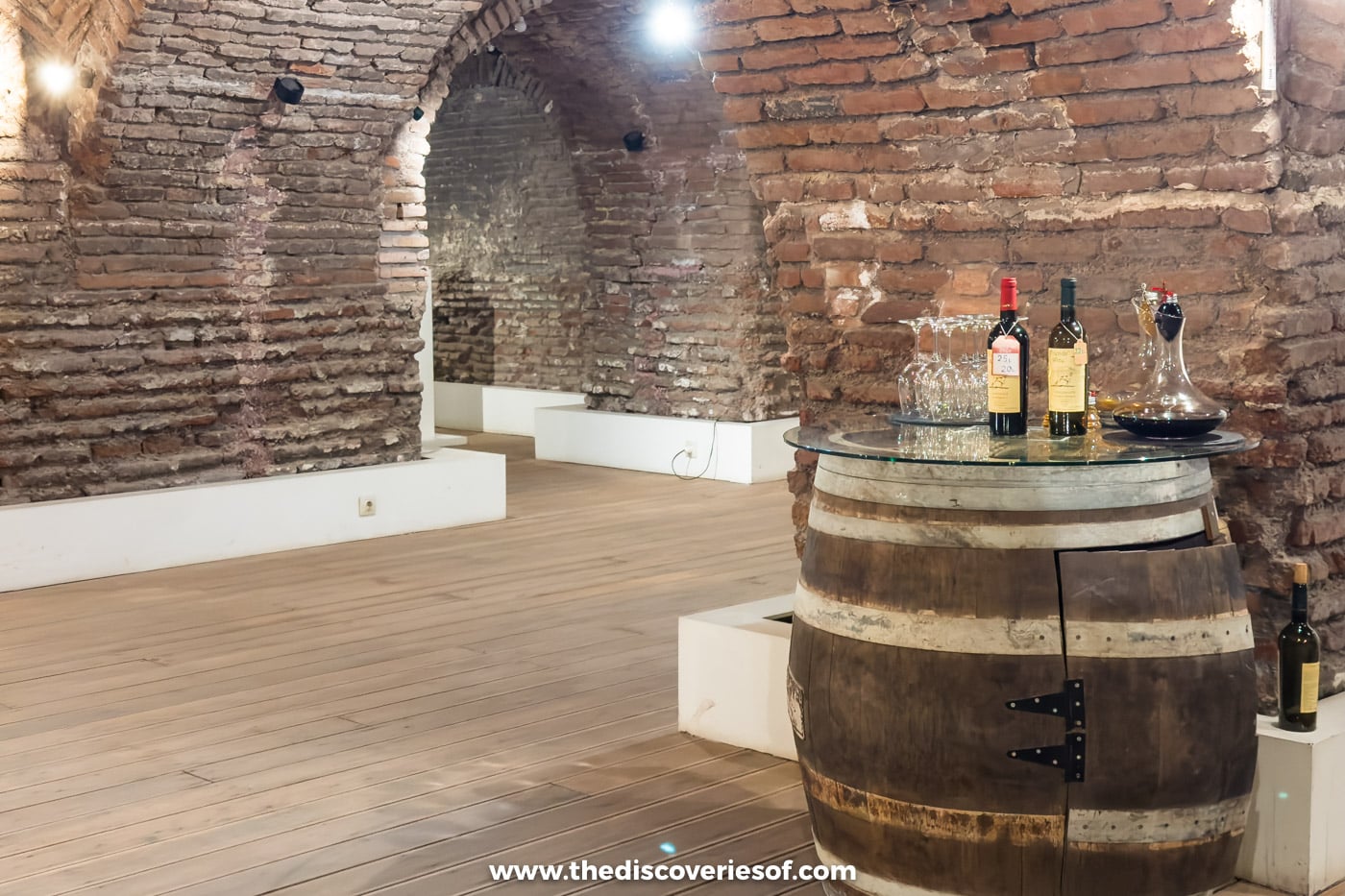
The museum is set in the cellars of the Karvasla, a merchants’ caravanserai built in the 17th century on the old trading route through the city, close to Sioni Cathedral. The original cellars survive below street level, linked by tunnels, and walking down into them feels like stepping back several centuries.
Inside, you’ll find displays of archaeological finds and old winemaking tools, from clay drinking bowls to qvevri, with the story of Georgian wine told from its earliest days to the present.
The tasting, and what to ask for
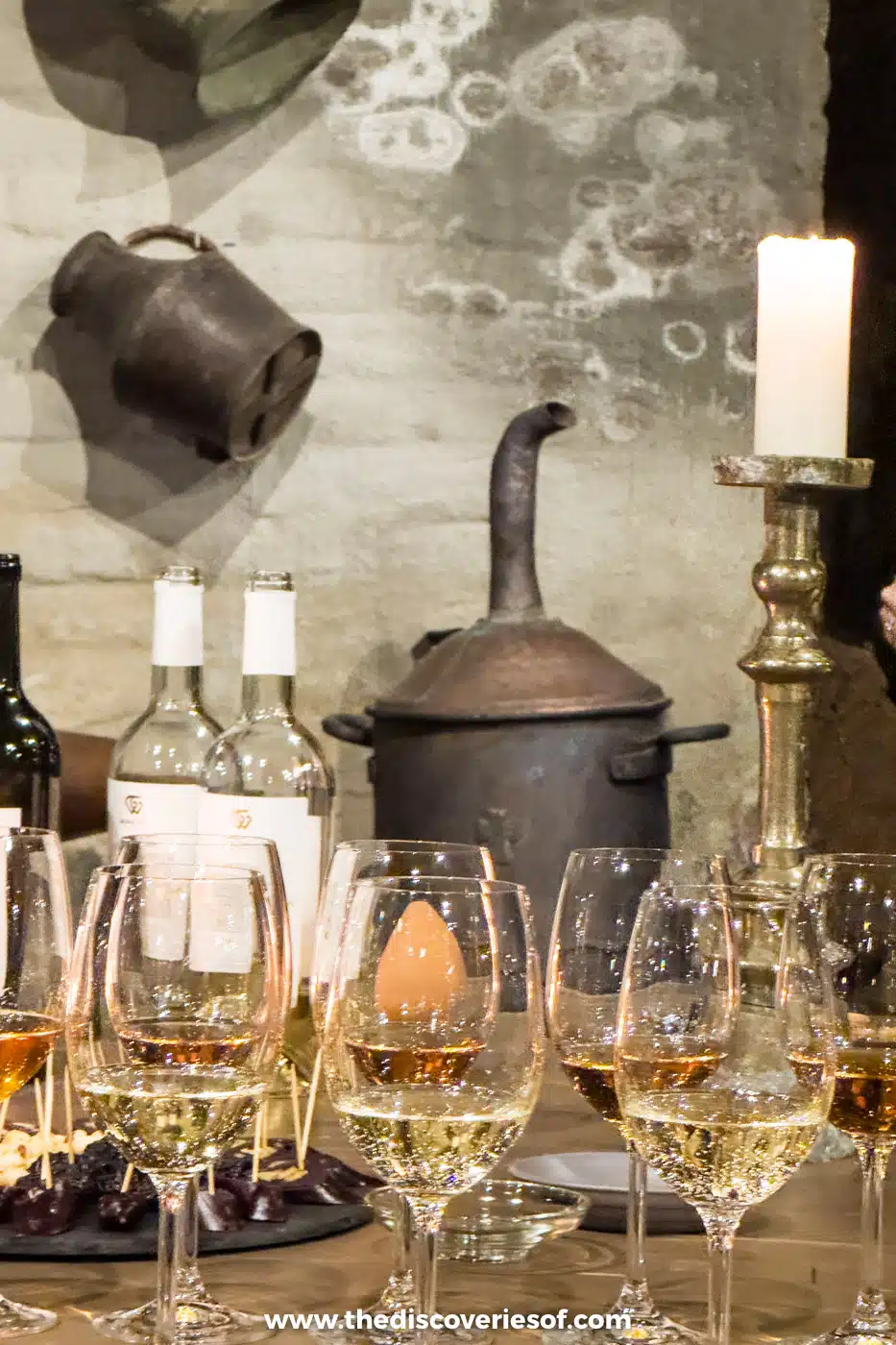
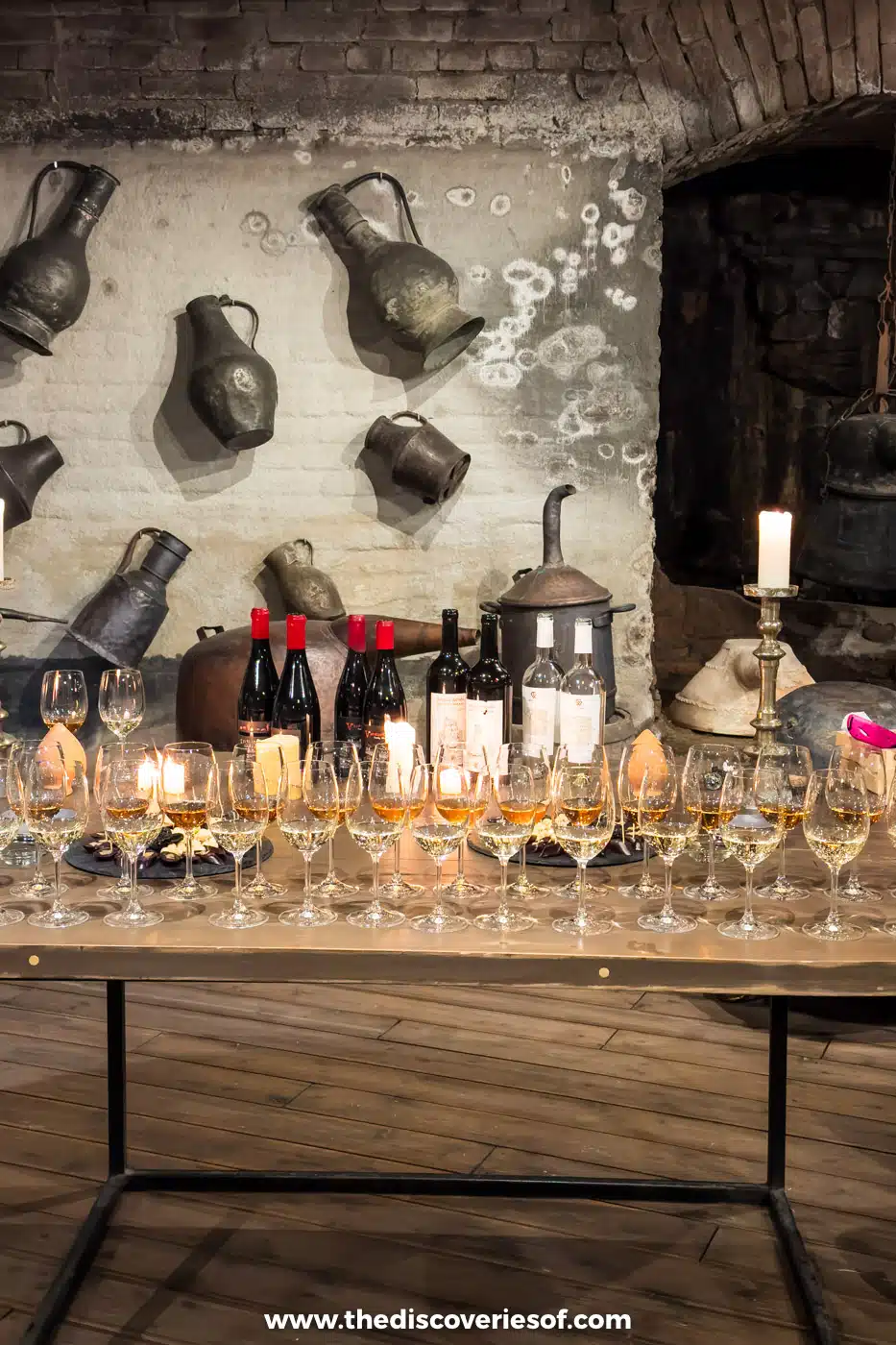
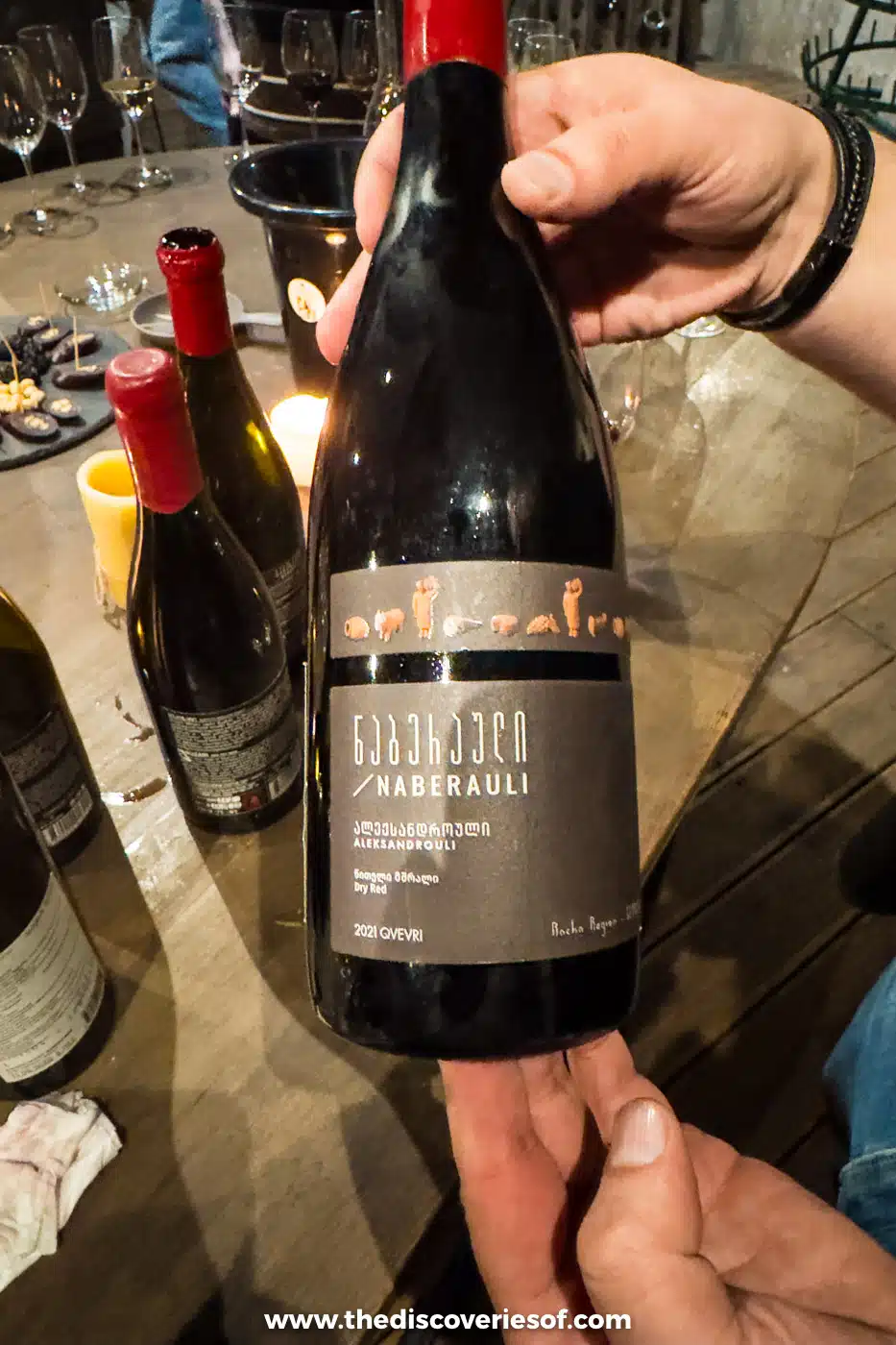
The visit ends with a tasting, and it’s the best part. My host lined up bottles on the candlelit table and talked through each wine as it was poured. It’s a great way to get your bearings before you start ordering Georgian wine in restaurants, because the grape names and styles can be confusing at first.
Top Tip
Ask your host to include at least one amber wine made in qvevri. It’s the style Georgia is famous for, and it tastes like nothing else.
Planning your visit to the Tbilisi Wine Museum
- Where: in the cellars of the Karvasla, beside the Tbilisi History Museum on Sioni Street, in the Old Town.
- Opening hours: usually daily from late morning until early evening, but hours change, so check before you go.
- How long: allow about an hour for the tour and tasting.
- Combine it with: the Old Town, Sioni Cathedral, the sulphur baths of Abanotubani and the Bridge of Peace, all within a short walk.
Do
If you want to go further, wine tastings and Kakheti wine tours from Tbilisi can be booked in advance.
Georgian wine words to know
- Qvevri: the clay vessel buried underground for fermenting and ageing wine.
- Amber wine: white wine made with long skin contact, often in qvevri.
- Saperavi: Georgia’s best-known red grape, deep in colour and full-bodied.
- Rkatsiteli: the most widely planted white grape, often used for amber wines.
- Kakheti: the eastern region where most of Georgia’s wine is made.
- Gaumarjos: cheers!
Map
Read next
- A week in Georgia in winter, from Tbilisi’s wine cellars to the slopes of Gudauri
- Things to do in Tbilisi
- Skiing in Gudauri, Georgia’s big-sky ski resort in the Caucasus
- Riding the Kobi to Gudauri cable car
Love this? Save and share on Pinterest
Discover the top things to do, insider tips and hidden gems in our Georgia Travel Guide.
Read the guides →