
From walking the Rim Trail and watching the sun set over the South Rim to flying over the canyon in a helicopter, these are the best things to do at the Grand Canyon, with what’s open now and how to plan your visit.
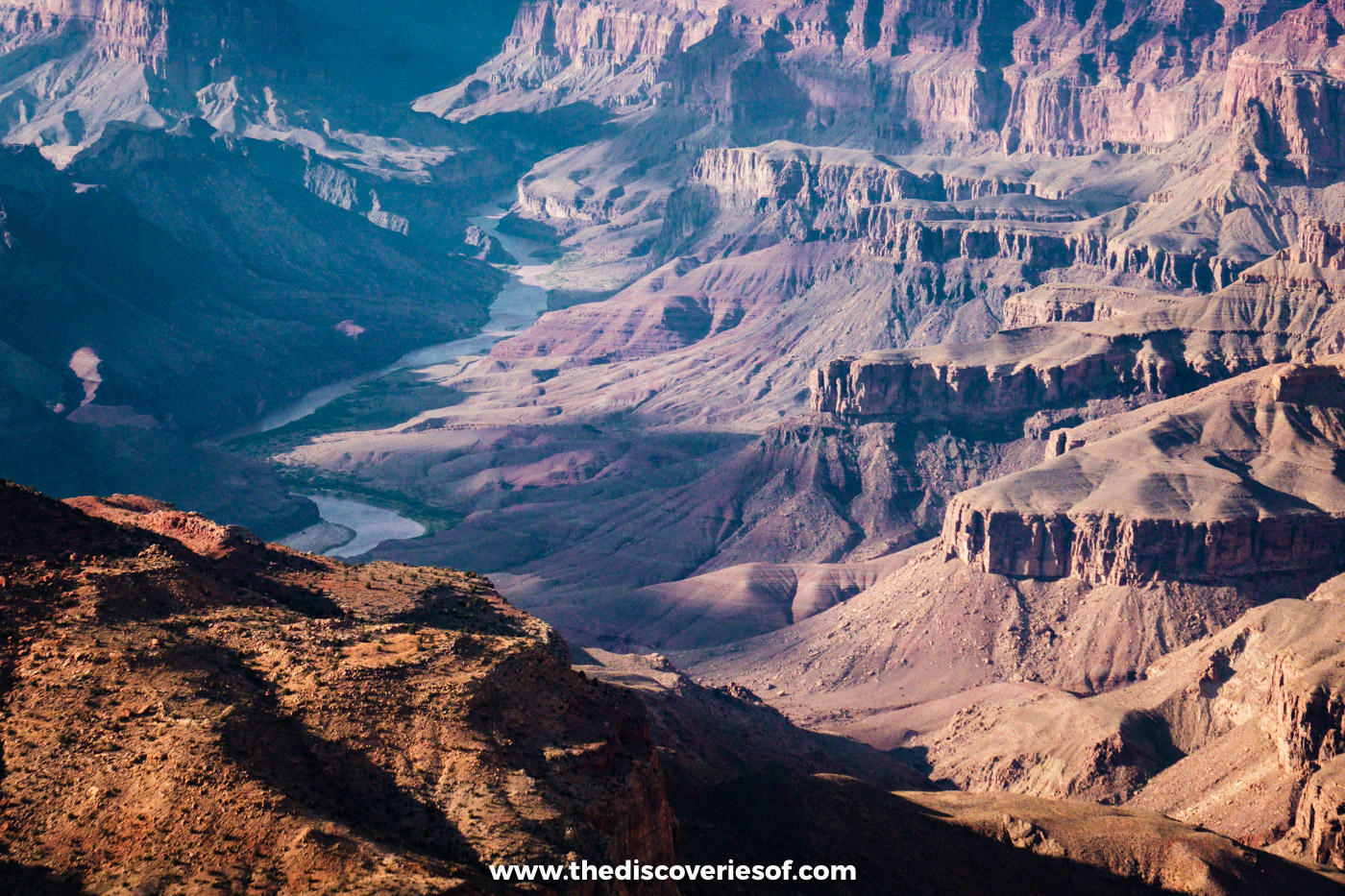
No matter how many pictures you’ve seen, nothing prepares you for the scale of the Grand Canyon: layer upon layer of rock dropping away into the abyss and winding off to the horizon as far as you can see.
I spent three days on the South Rim in early summer, staying at Yavapai Lodge, walking the Rim Trail, watching sunsets from Mather Point and Lipan Point and flying over the canyon in a helicopter. This guide combines those experiences with everything else worth doing in the park, from historic buildings to hikes below the rim, and what’s changed recently (including the 2025 fire on the North Rim).
Before you go: at the end of August 2026, a flash flood damaged the pipeline that supplies the South Rim with water. Since then, the hotels inside the park have been closed to overnight guests and several restaurants, including Yavapai Tavern, have shut. The Xanterra-run lodges (El Tovar, Bright Angel, Kachina, Thunderbird and Maswik) are due to reopen in phases from 20 November 2026; Yavapai Lodge hasn’t given a date yet. Hotels in Tusayan, just outside the South Entrance, are unaffected. Check the National Park Service’s alerts before you travel.
The best things to do at the Grand Canyon
Walk the Rim Trail
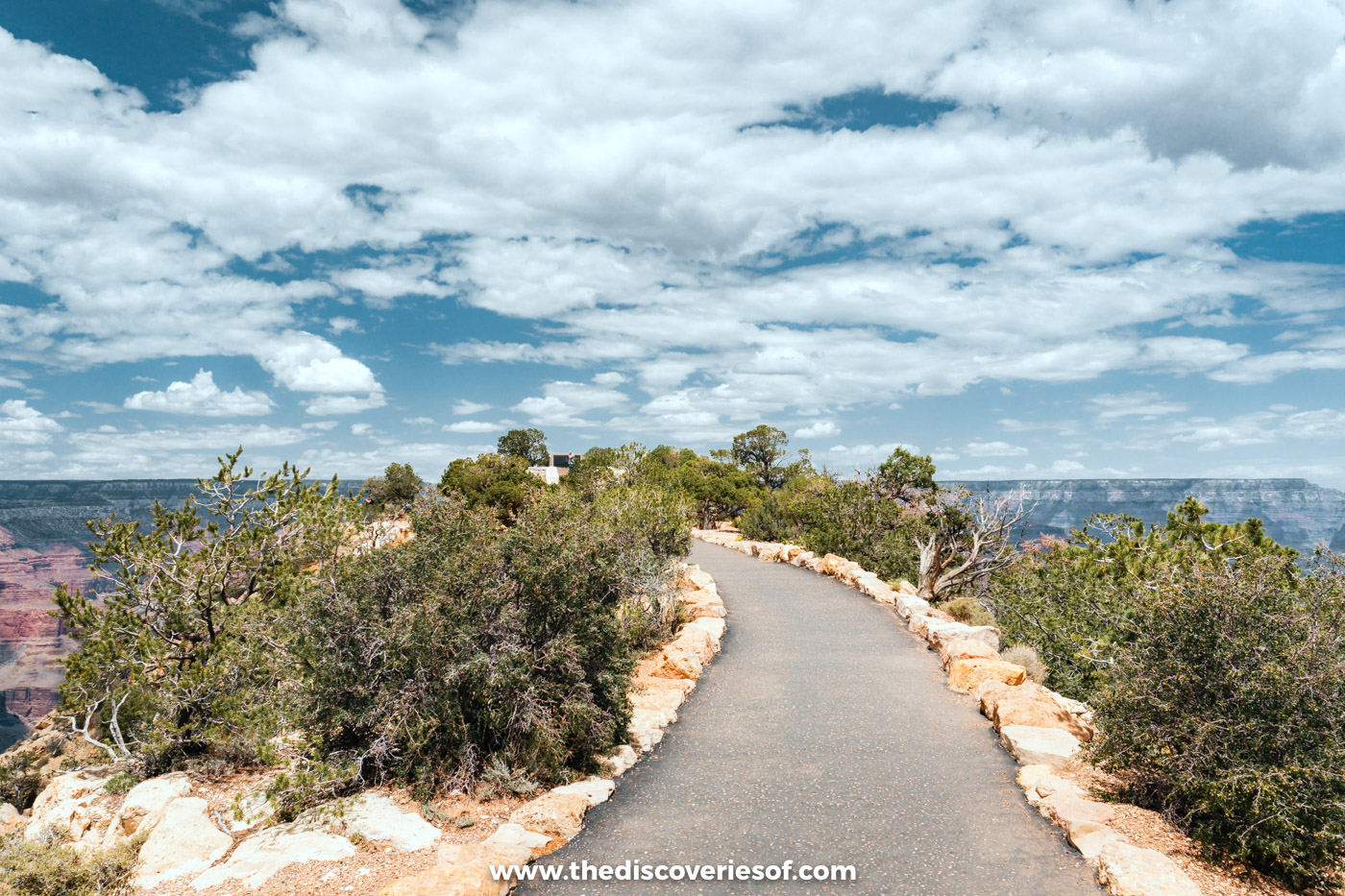
If you only do one thing at the Grand Canyon, make it the Rim Trail. It’s by far my favourite walk in the park. I’ll admit I pooh-poohed the idea at first because it sounded too easy, but I’m so glad I did it: the views change at every bend, and you get a real sense of the canyon’s size.
The trail runs for about 13 miles along the South Rim, from the South Kaibab trailhead in the east to Hermits Rest in the west. Most of it is paved and fairly level, but between Powell Point and Monument Creek Vista it becomes a narrow dirt path very close to the edge, so take care (or hop on the shuttle for that stretch if you don’t like heights).
You don’t have to walk it all. Shuttle stops sit along most of the route, so you can walk a section and ride back.
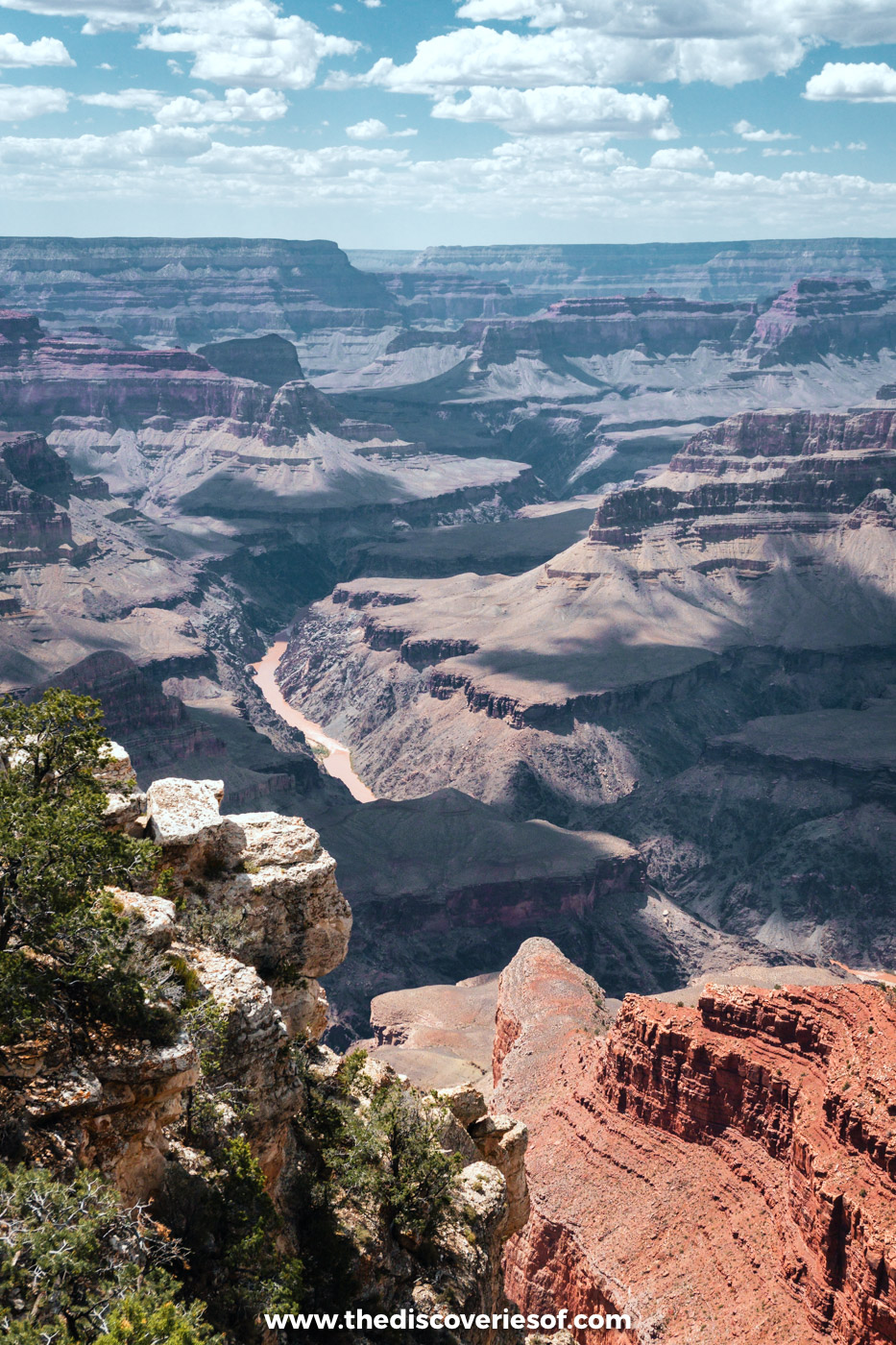
Top tip: Pack a lunch, as the chances of lunchtime coinciding with somewhere selling food are slim. Bring salty snacks and a big water bottle too; there are refill taps along the way, but they’re spread out. The rim is around 7,000 ft up, and I felt the altitude more than I expected.
Watch the sunset from the South Rim
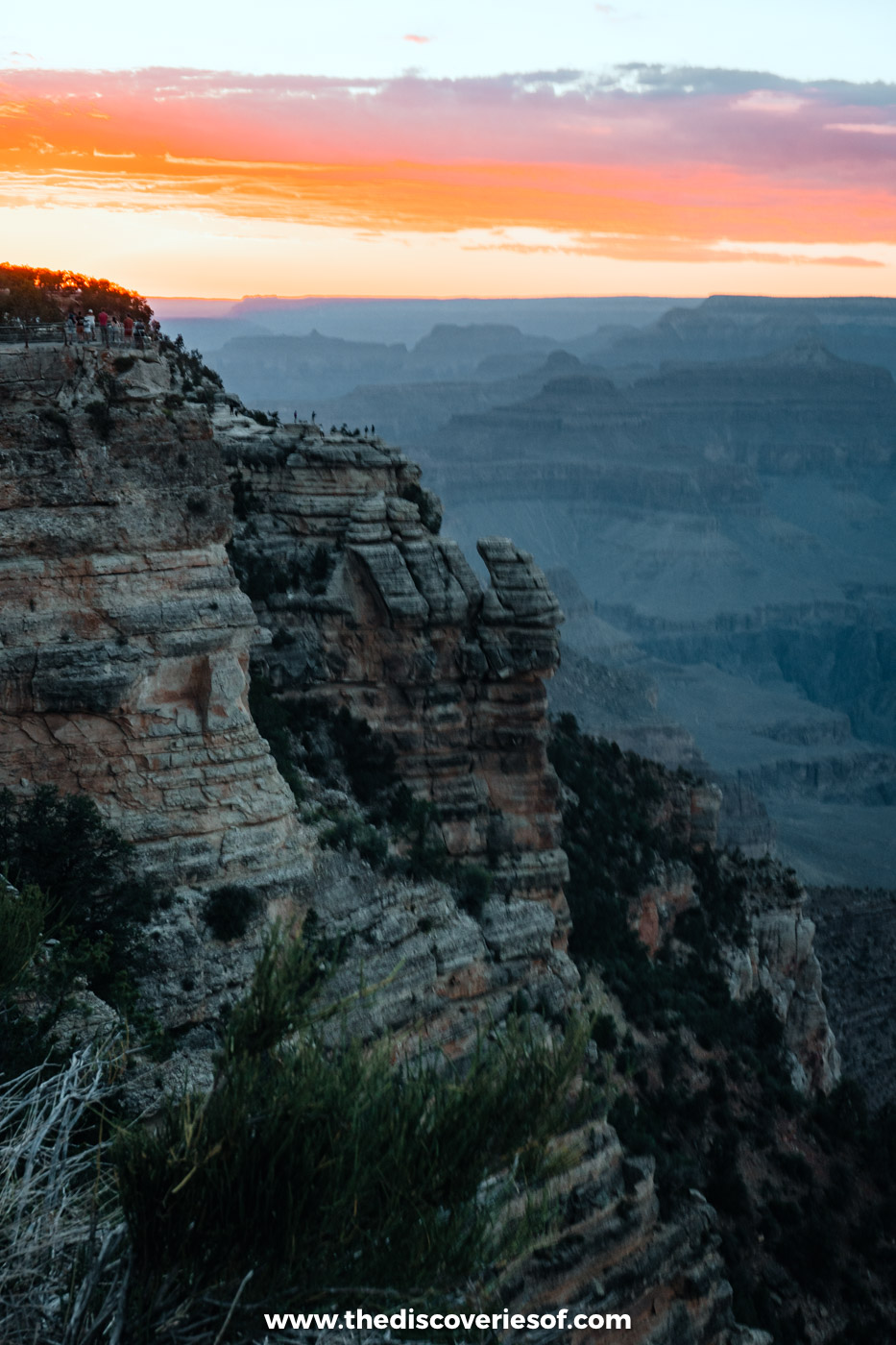
Sunset at the Grand Canyon is something I’d plan a whole trip around. I watched my first one from Mather Point, the classic viewpoint a five-minute walk from the visitor centre, as the sky turned orange and the canyon walls glowed.
Mather is busy, so for something quieter, head west along Hermit Road to Mohave Point or Pima Point, or east to Navajo Point and Desert View. Hopi Point is another favourite, but it’s packed in summer.
Drive Desert View Drive
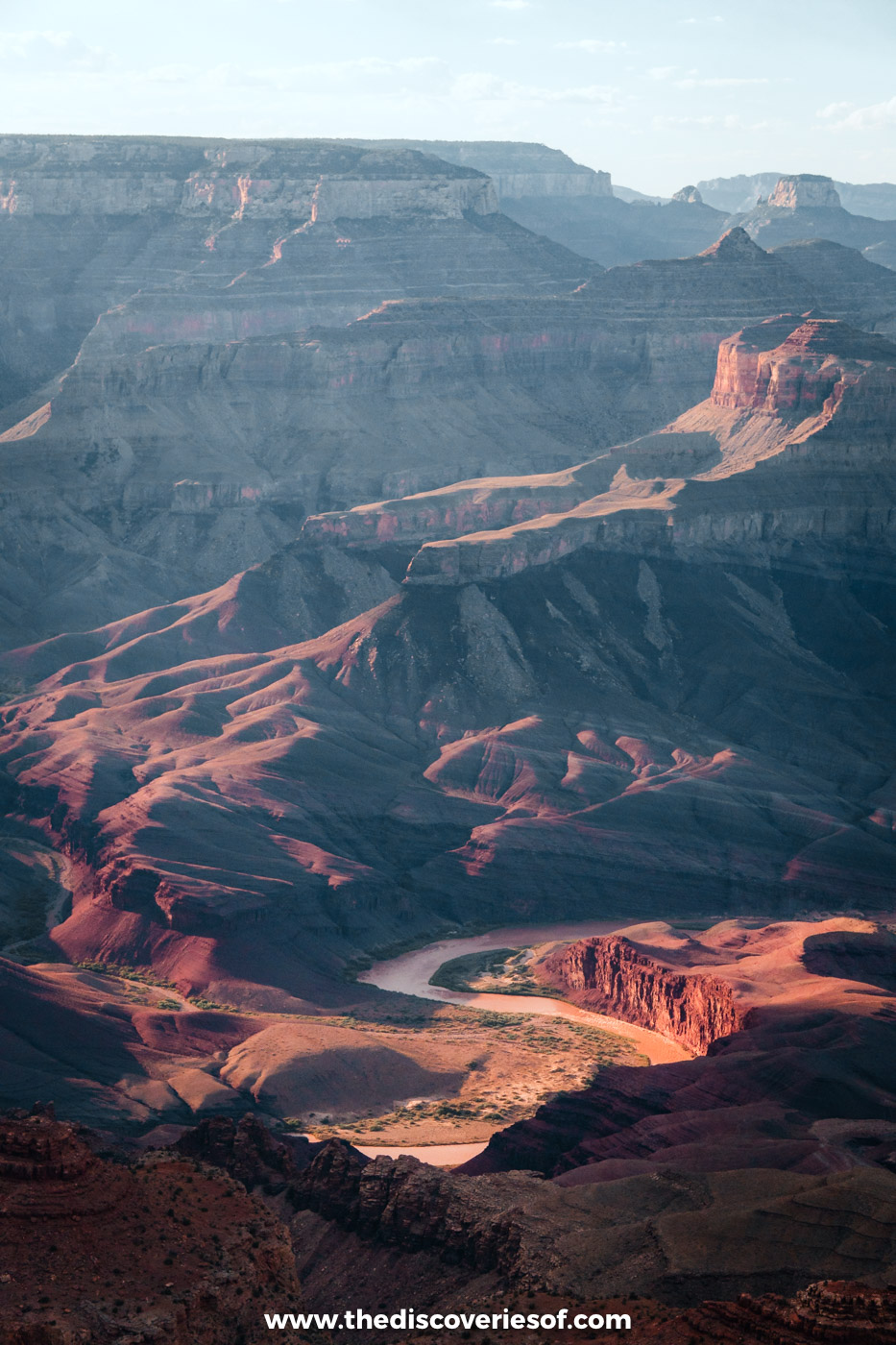
Desert View Drive runs for about 23 miles along the rim east of Grand Canyon Village, from the junction near Mather Point to the park’s East Entrance. It’s open to private cars all year, and it’s where I headed on my second evening.
Along the way you’ll pass Grandview Point, Moran Point, the Tusayan Ruin and Museum, Lipan Point and Navajo Point, with picnic areas in between. At the far end is Desert View, where the Watchtower, designed by Mary Colter and finished in 1932, has murals inside and some of the widest views on the South Rim.
Top tip: Lipan Point and its access road are closed for rehabilitation until 23 December 2026, so check the National Park Service’s alerts before you go. Navajo Point next door is a good alternative.
Fly over the canyon in a helicopter
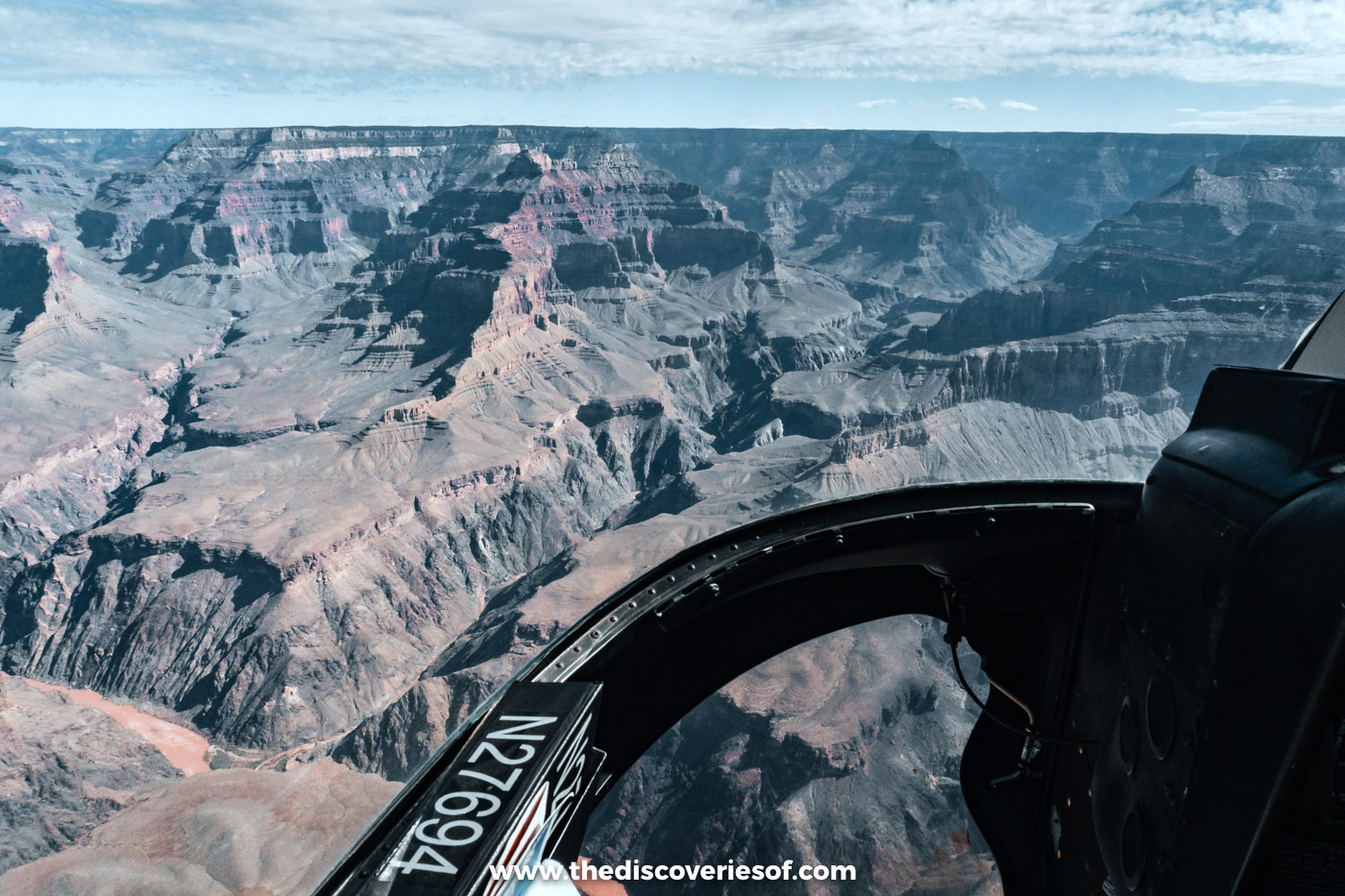
If you want to see the canyon from a completely different angle, take a helicopter flight. I flew with Papillon on their North Canyon tour from Grand Canyon Airport in Tusayan, and I’d highly recommend it.
You take off over the pine forest of the Kaibab National Forest, and then the ground suddenly falls away at the rim and the scrubland transforms into a miasma of colours and shapes. You see far more of the inner canyon than you ever can from the rim, and you fly towards the North Rim, the side most visitors never see.
The North Canyon flight lasts around 25 to 30 minutes.
Top tip: Pay the extra (it was $50 when I flew) for a front seat next to the pilot, and bring photo ID. There was also a fuel surcharge at check-in when I flew. It can be bumpy on windy days.
Do
Book the North Canyon helicopter flight in advance, especially in summer.
Ride the shuttle out along Hermit Road
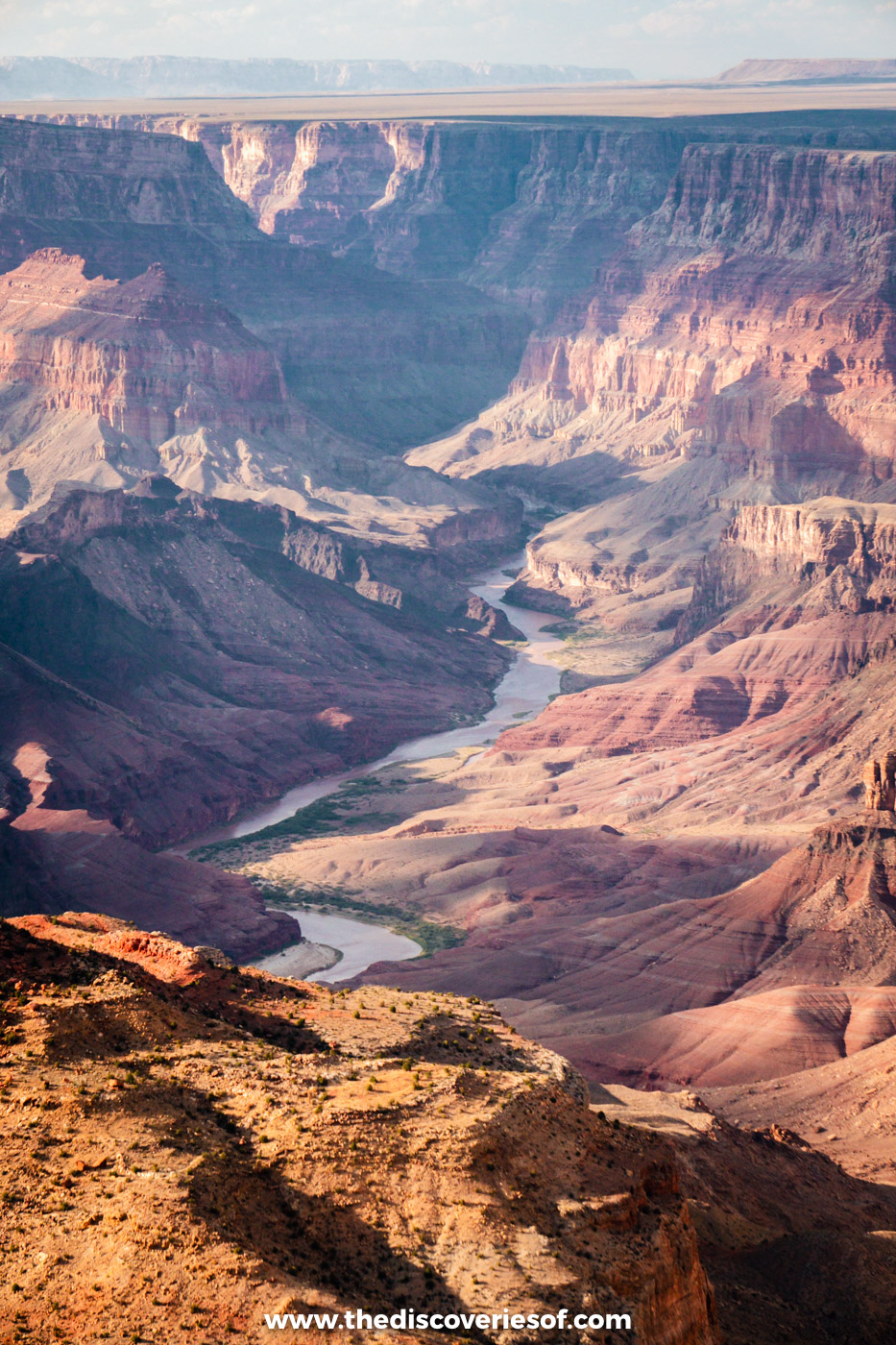
Hermit Road follows the rim for 7 miles west of Grand Canyon Village to Hermits Rest, passing nine viewpoints including Powell Point, Hopi Point, Mohave Point and Pima Point. From March to November it’s closed to private cars, so you ride the free red shuttle or walk the Rim Trail alongside it.
Go all the way to the end at Hermits Rest, where Mary Colter’s stone rest house from 1914 has a gift shop and a huge fireplace.
Visit Yavapai Point and the Geology Museum
Yavapai Point, a short walk west of Mather Point along the rim, has one of the best panoramas on the South Rim, and the Yavapai Geology Museum there explains how the canyon formed, with big windows looking straight out over it. It’s free and open daily.
From here, the Trail of Time follows the Rim Trail west towards the village, with markers showing the age of the rocks beneath your feet.
Explore the Grand Canyon Village historic district
The historic heart of the South Rim is packed with early 20th-century buildings. Look out for El Tovar Hotel (1905), Hopi House, designed by Mary Colter as a shop for Native American crafts, and the Lookout Studio and Kolb Studio, both perched right on the rim.
Kolb Studio, once the home and photography studio of the Kolb brothers, now hosts art exhibitions, and Verkamp’s Visitor Center tells the story of the village’s pioneer days.
Eat and drink with a view
After a day on the rim, Yavapai Tavern, next to Yavapai Lodge near Market Plaza, is a relaxed spot for a drink and a casual dinner on its outdoor patio. For something more special, book a table at El Tovar Dining Room, or try the Arizona Steakhouse at Bright Angel Lodge for southwestern steaks, chicken and ribs with a canyon view.
Some of the park’s restaurants, including Yavapai Tavern, closed after the August 2026 flood damaged the water supply, so check what’s open before you go.
Hike below the rim
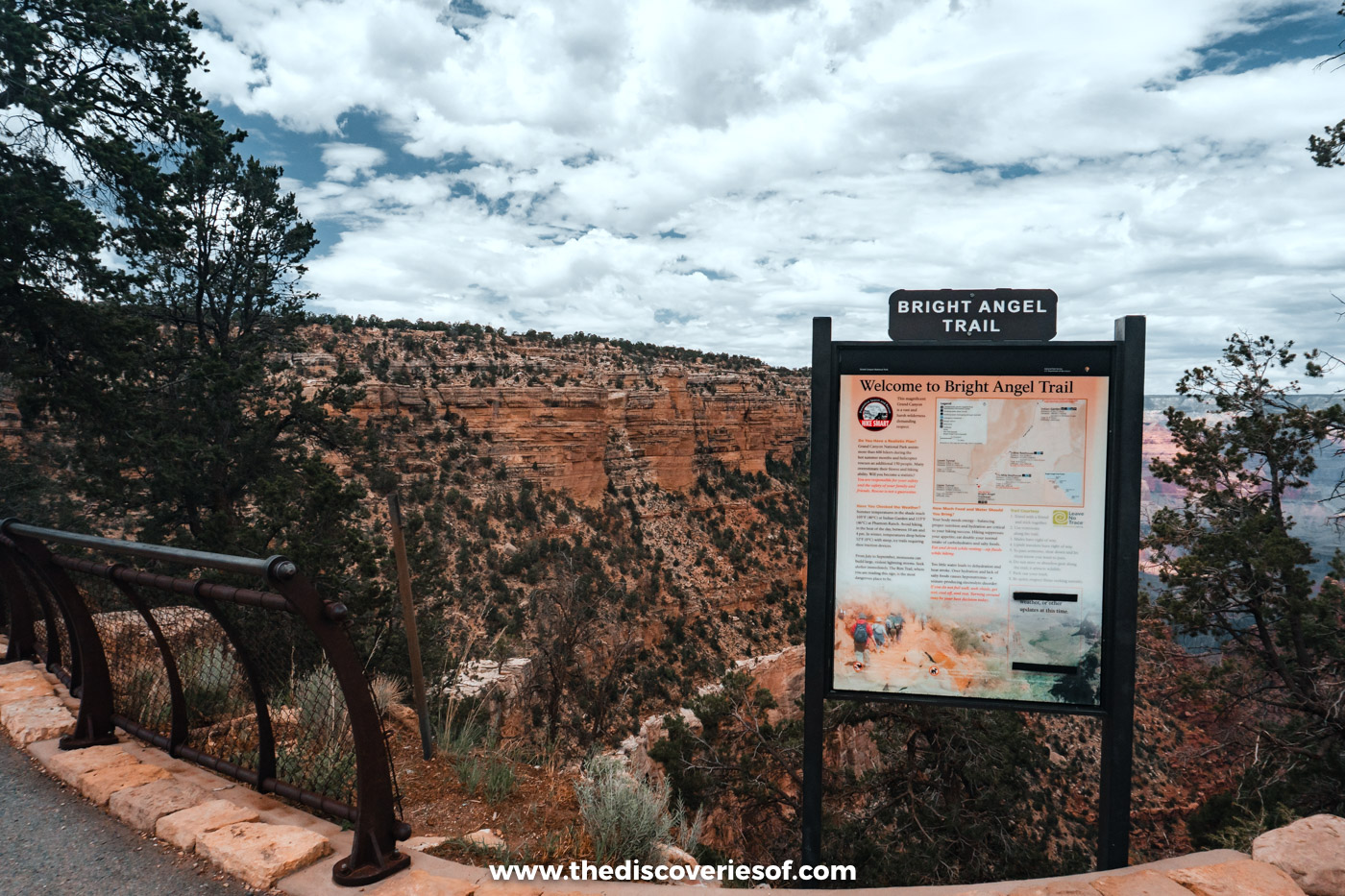
To feel the canyon’s scale from the inside, walk a little way down one of the corridor trails. Even a short descent is worth it, but remember that every step down has to be climbed back up, and it’s often far hotter below the rim.
On the South Kaibab Trail, Ooh Aah Point (0.9 miles each way) and Cedar Ridge (1.5 miles each way) make good half-day turnaround points. On the Bright Angel Trail, the 1.5 Mile Resthouse and 3 Mile Resthouse are the classic turnaround points. Havasupai Gardens (formerly Indian Garden) is 4.5 miles down and is a full-day hike, not a stroll.
Top tip: Don’t try to hike to the river and back in a day. After the August 2026 flood, parts of the South Kaibab and Bright Angel trails closed and the water taps on the trails were turned off, so check the National Park Service’s trail alerts before you set off.
Read Next
Go stargazing
The Grand Canyon is an International Dark Sky Park, and on a clear, moonless night the Milky Way stretches right across the sky. You don’t need a telescope: just walk out to a viewpoint away from the village lights (Mather Point and Yavapai Point are close and easy) and give your eyes 20 minutes to adjust.
Rangers run night sky programmes, and every June the South Rim hosts the Grand Canyon Star Party, with free telescope viewing.
Ride the Grand Canyon Railway from Williams
If you’d rather leave the car behind, the Grand Canyon Railway runs from the Route 66 town of Williams to the historic depot in Grand Canyon Village, a journey of about two hours and 15 minutes each way, with entertainers on board and time on the rim before the return.
Do
Book the Grand Canyon Railway round trip.
Take a mule ride
Mule rides have been part of the Grand Canyon experience for more than a century. On the South Rim, the Canyon Vistas ride follows a trail along the rim, with morning and midday departures. Overnight rides down to Phantom Ranch at the bottom of the canyon are hugely popular and booked through a lottery, but they’re suspended while Phantom Ranch is closed.
Raft the Colorado River
Seeing the canyon from the river is the ultimate Grand Canyon adventure. Full trips through the canyon last from about a week to more than two weeks and need booking well ahead with a licensed outfitter (river trips were suspended after the August 2026 flood, so check the latest). If you’re short on time, the half-day smooth-water float from Glen Canyon Dam near Page runs from March to October and is an easy taster.
See the North Rim or the Skywalk

The North Rim is higher, greener and much quieter than the South Rim, but it’s a four-hour drive away and only opens from mid-May. In July 2025, the Dragon Bravo Fire destroyed the historic Grand Canyon Lodge and the North Rim Visitor Center. The North Rim reopened for day visits in 2026 with very limited services, and several trails and roads have been closed for repairs, so check the National Park Service’s North Rim page before you plan a visit.

The glass Skywalk at Grand Canyon West is not in the national park: it’s run by the Hualapai Tribe at Eagle Point, about 250 miles (around five hours’ drive) from the South Rim and much closer to Las Vegas, with its own entry pass.
Practical tips
- How long to spend: two or three days on the South Rim lets you walk the Rim Trail, drive Desert View Drive and catch a couple of sunsets. See my 2-day Grand Canyon itinerary.
- When to go: spring and autumn bring mild days and fewer crowds. Summer is busiest and hot below the rim; winter can bring snow on the rim.
- Fees: entry is $35 per vehicle for seven days. From 2026, visitors aged 16 and over who aren’t US residents pay an extra $100 each unless they hold an annual pass.
- Getting around: park once and use the free shuttles; Hermit Road and Yaki Point are shuttle-only for much of the year.
Where to stay
I stayed at Yavapai Lodge, which is renovated, simple and the best-value option inside the park, a short walk from the rim and Market Plaza (see the note above about the current closure). For more options in the park and nearby Tusayan, see my guide to where to stay at the Grand Canyon.
Map
Read next
- The best places to see sunrise and sunset at the Grand Canyon
- 2 days at the Grand Canyon: the perfect itinerary
- The best Grand Canyon hikes
- Where to stay at the Grand Canyon
- 20 unmissable things to do in Arizona
Love this? Save and share on Pinterest

Discover the top things to do, insider tips and hidden gems in our USA Travel Guides.
Read the guides →